Village Life Part Two

So, if you read the previous blog you will have seen me raise a quizzical eyebrow at the woman who said she was so looking forward to village life where everyone was equal and everyone joined in everything….

More vignettes from the village festivities:

One:

A stallholder arriving and asking where was her chair, her table ( neither of which she had asked for/ordered/paid for) her help to get stuff from her car, and someone to help erect her gazebo ( none of which we have people on hand just waiting to do) and, by the way, where was Tim. 

‘Tim’ I asked, ‘Do you mean Tim running the bookstall? because I think he is sorting books.’ 

‘No,Tim my son’

‘I’m sorry I don’t know your son.’

‘Really? you don’t know Tim. Have you lived here long?’

‘Nine years.’

‘Well, when you see him, please send him to me immediately.’

Two:

Most of the village street has pavements either side but there is a stretch with houses and no pavements, and that makes it difficult to walk into the village without flattening yourself against a wall as posh cars on their way to Goodwood, or indeed many other vehicles on their way somewhere or another, come through.

At 8 am as the street was closed, a man stepped down into the road and stated painting his wall.

‘Nice day for it’ we said as we walked past.

‘The only bloody day for it’ he said.

Three:

A phone call at 9pm a day or two before the festivities.

‘Just checking you can organise me a lift.’

It turned out the caller was a man who sells homemade stuff and lives in the outskirts of the village and is no longer allowed to drive.

I was not sure that organising a pick up was in my remit but the Best Beloved said he’d do it.

Delivered, and set up, and sold out by early afternoon, I decided it was best to get the man home safely.

Called my Best Beloved who was on the Downs with the dog and asked him to come and get the chutney man.

A few minutes later BB called to say he had fallen and badly sprained his ankle so no, he couldn’t do pick ups and deliveries.

So, now I had a man waiting for a lift home, and an injured husband.

I grabbed the son of friends, handily having a nice time at the event and not looking like he was about to do anything important, and asked that he would walk man down the street, wait with him whilst I got my car, and I would collect him, deliver him home and then drive to find my injured BB.

He did that with a lovely good grace and all was done.

Man was delivered hime safely. BB delivered home, bag of peas on his ankle and me back to the festivities.

Now, if I tell you that the badly sprained ankle turned out to be a pretty serious and unusual injury and needed two hours of surgery to fix, there was various and somewhat eccentric other stuff around the homemade stuff man which involved a mysterious bottle of martini, you might begin to think, ‘there is more to running a village festivities than I would have imagined’ and you’d be right.

Inside A Book

One of the things about working in the Oxfam bookshop is that you don’t often get chance to really look at the books.

For a start, there is always a mountain of incoming donations to sort, and sift, assign, and price, and display.

Then there are the collections we need to build up to make a good table or window display – if the title fits put it in the box and keep on going.

And then there is making the shop look good, and then, and then, and then.

So, looking in detail at books is a rare pleasure and often outside the shift hours.

This is the story of one book and the people involved in it – at least as far as I can find out.

The Bridge of San Luis Rey by Thornton Wilder. Not a first edition – that was 1927 – but the 1931 edition illustrated by Clare Leighton (and owned by someone called Leopold Horwood.)

Clare Leighton

I would like to tell you a bit more. Though not about Leopold as I can’t find anything about him…..

This is the American writer’s second novel and he won the Pulitzer Prize for it. (The commercial success he got from the book meant he could give up being a French teacher and concentrate on writing.)

It tells the story of several interrelated people who die in the collapse of an Inca rope bridge in Peru, and the events that lead up to their being on the bridge. A friar, who witnesses the accident , then goes about inquiring into the lives of the victims, seeking some sort of cosmic answer to the question of why each had to die. ( Wikipedia)

Meanwhile, as they say, Clare Leighton was born in 1898 (died in 1989) and lived her early life in the shadow of her older brother – her family’s nickname for her was the bystander. (That must have helped her self confidence.)

(He was Roland Leighton and despite being described as rather cold and conceited by his friends, he fell in love and got engaged to Vera Britten and was immortalised in her Testament of Youth.

He died aged 20 in the World War One and his grave has one of his poems to Vera inscribed on it.

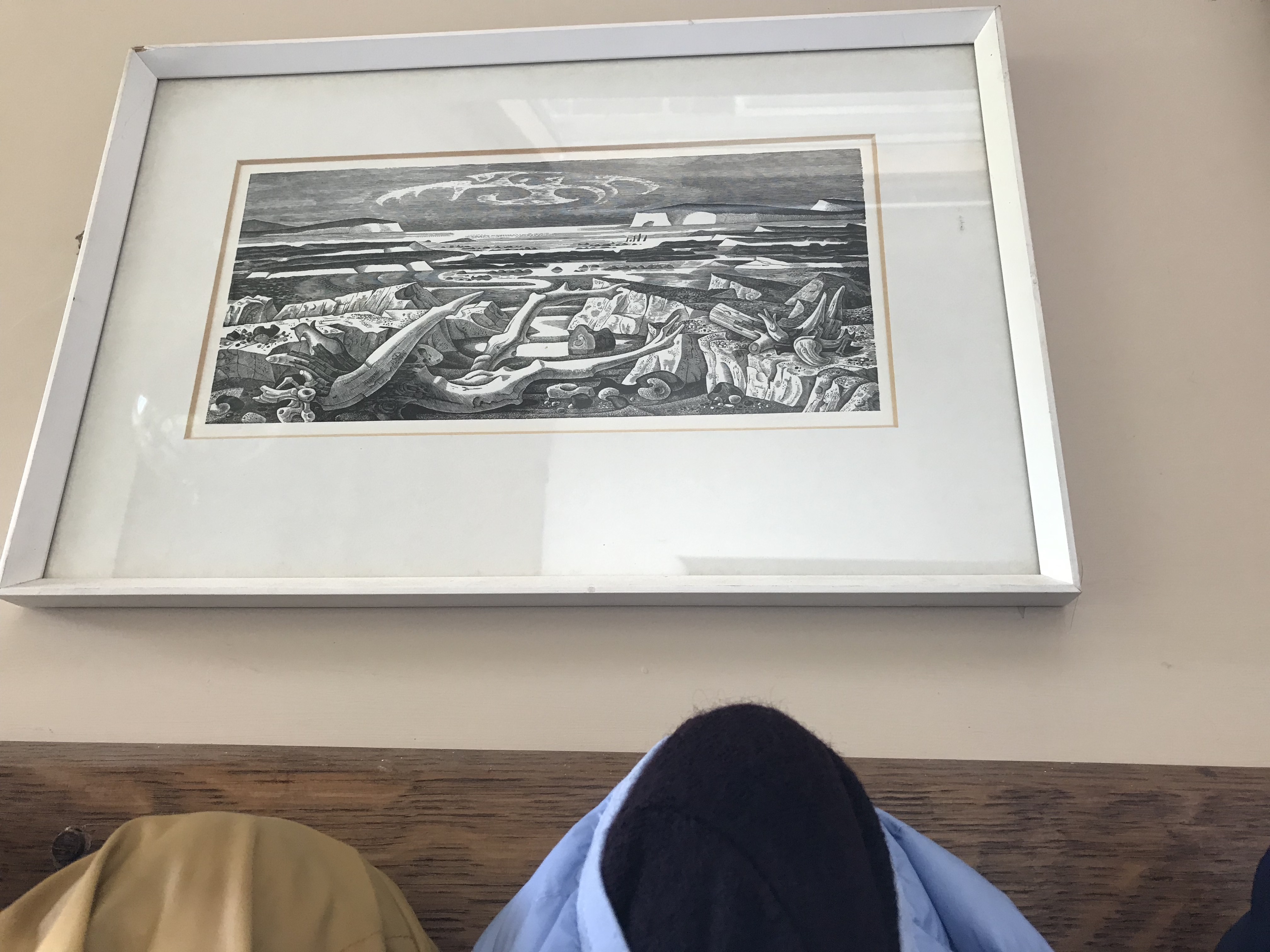
But this is not about him, but his sister. We have one of her woodcuts hanging about our coat rack.

She did her first training at Brighton College of Art – which is the only link I can find to Deepest Sussex but it will get a mention when the book goes on sale as we like a local link.

(Clare Leighton met the radical journalist H. N. Brailsford in 1928,and they lived together for several years because his wife refused him a divorce.

But when the wife died in 1937, leaving the way clear for the couple to marry, he suffered an emotional breakdown, destroying his relationship with Clare Leighton who left for a new life in the US in 1939 and eventually became a naturalised American citizen.She never married. )

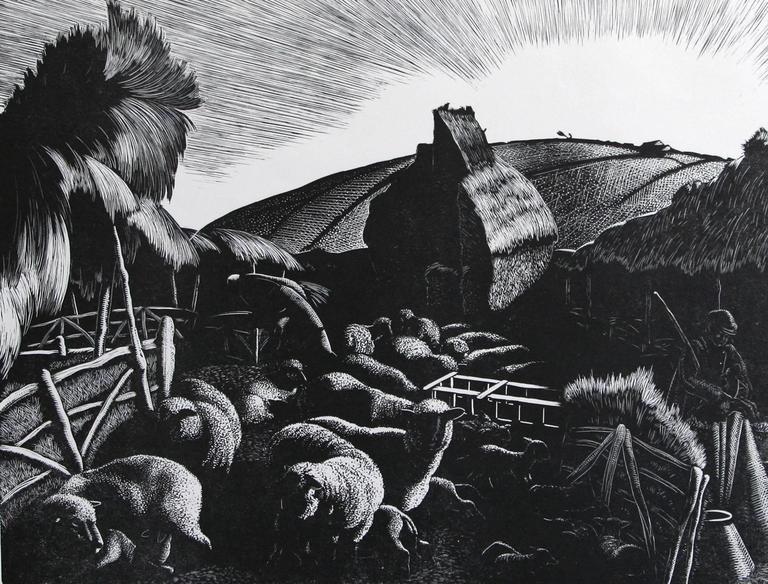
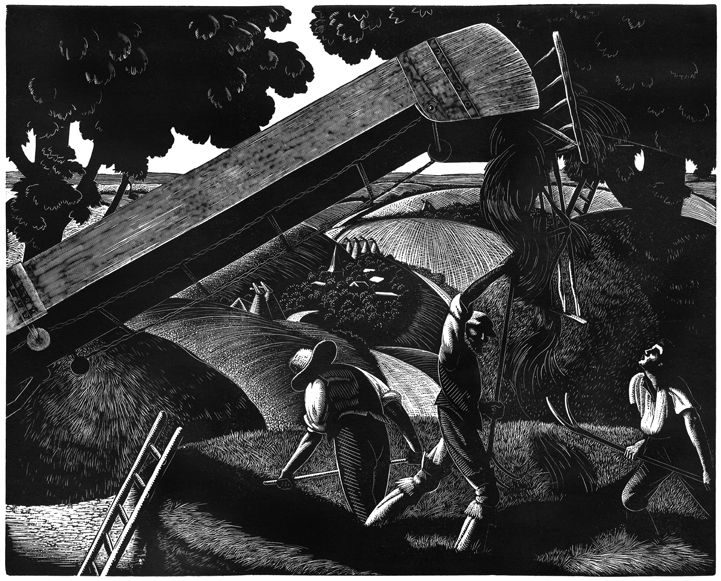
She had a fascination with the countryside and her woodcuts are often of rural people and scenes.

One of her most famous books – The Farmer’s Year – was published by Longmans Green which also published The Bridge of San Luis Rey.

And that is the only connection I can find between Leighton and this book. Perhaps she owed them a favour, or was asked by a very nice member of staff or perhaps she did a deal with them.

It is just that if you look at these images they jar slightly and though dark, like most of her woodcuts and clearly by her, they don’t seem to work – at least not for me.