Not for the first time, I had a lovely time recently because of strange things donated to our Oxfam bookshop.
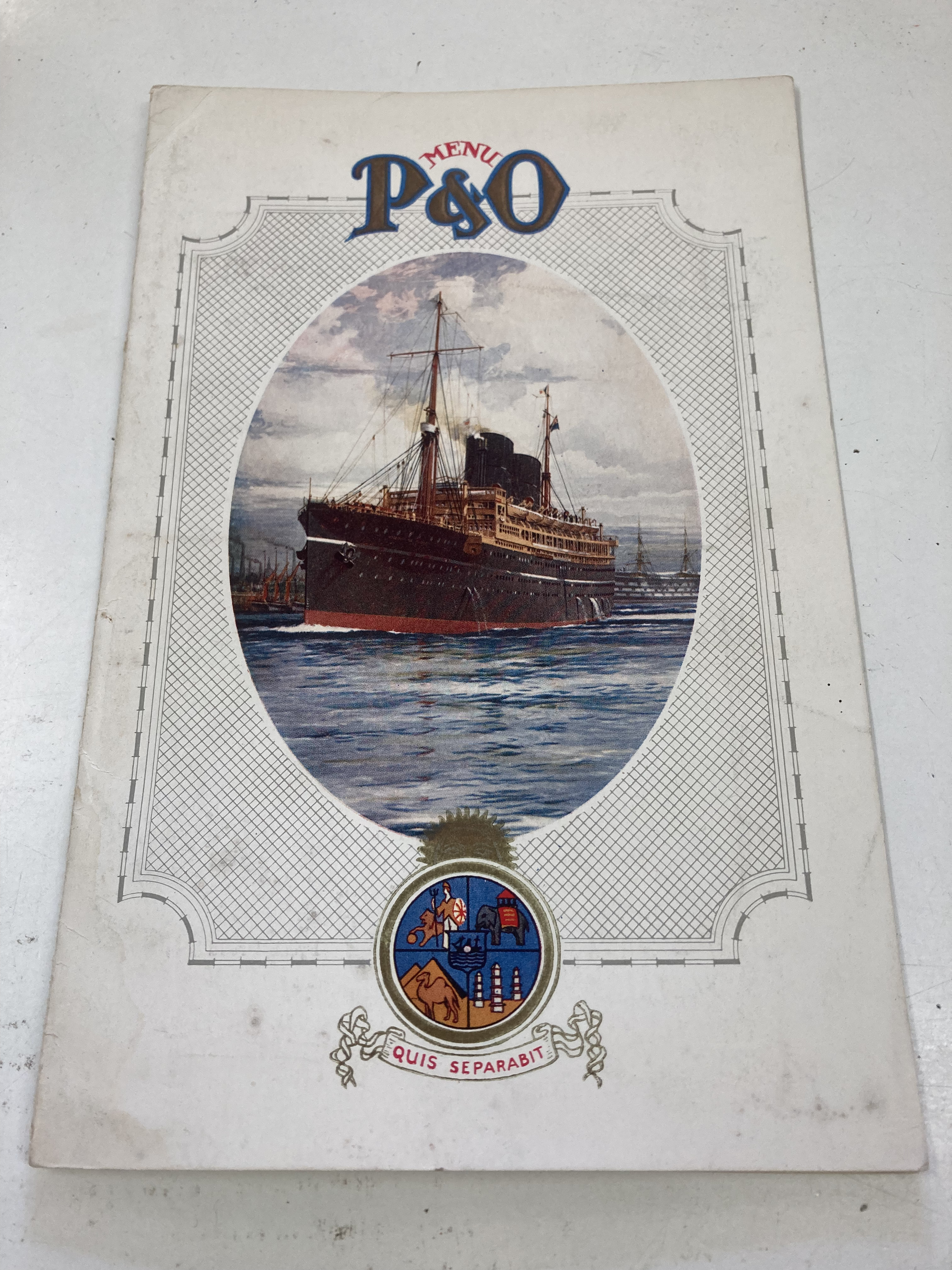
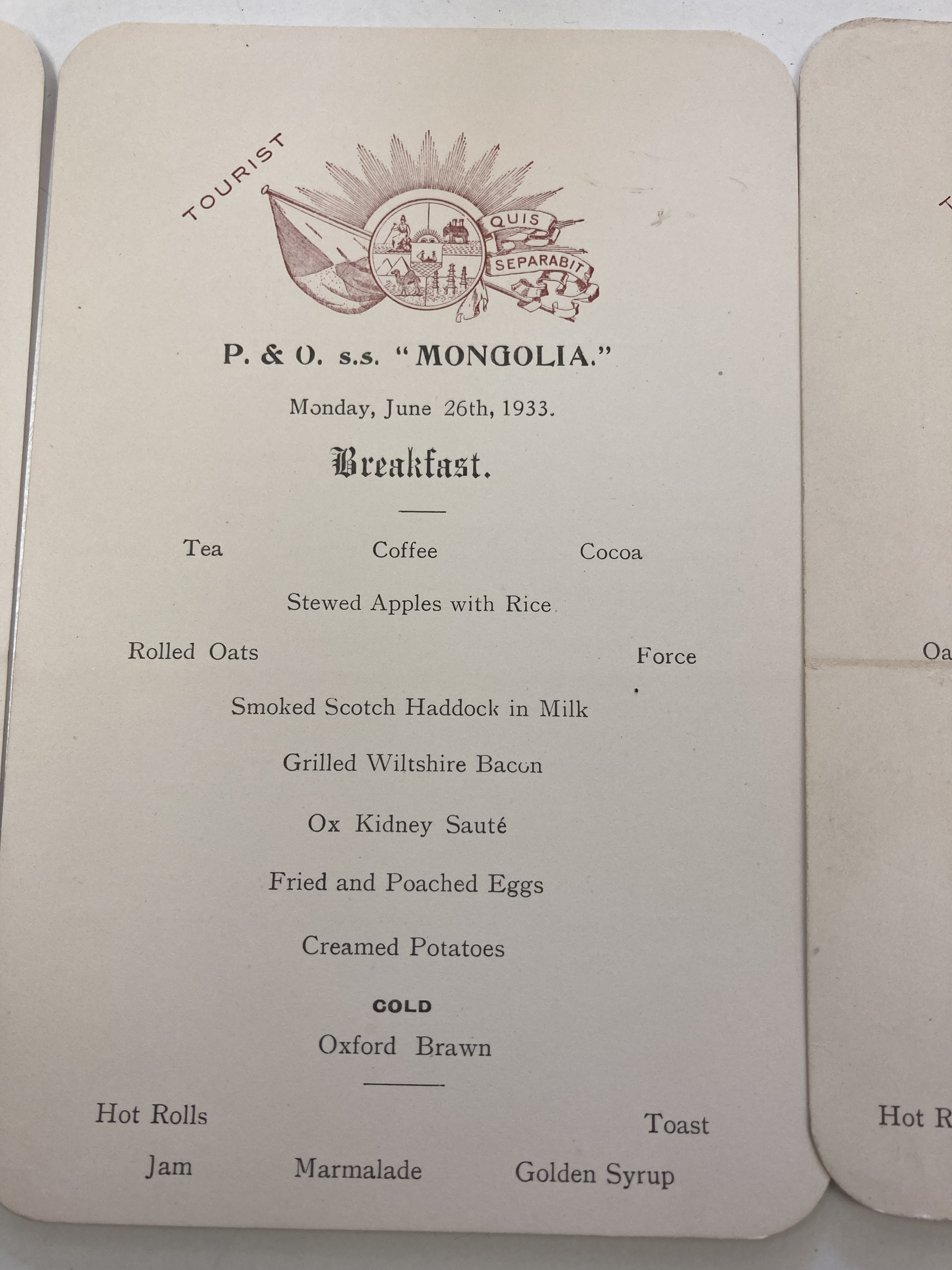
Who would, I ask myself, keep the breakfast menus from a 1933 cruise and then keep them long enough to be donated to an Oxfam shop in Petersfield in 2023.
(Wait dear reader and you will find out what cruisers had on offer for breakfast in 1933.)
In 1950 she was sold to become the SS Europa, carrying immigrants to the United States from Europe; later, she became a Bahamascruise ship, the SS Nassau. Its final incarnation was under a Mexican flag as a Los Angeles to Acapulco cruise liner, SS Acapulco, making her the only ocean liner to ever fly the Mexican flag. The ship was scrapped in 1964.
Thank you (again) Wikipedia.
Now that was all interesting stuff, but there is more:
Notable incidents included a collision on 16 July 1933 with the tanker British Venture and a breakwater in Copenhagen, followed by running aground.’
Our breakfast menus are from late June 1933 and despite Wikipedia saying she was sailing to Australia or New Zealand at that time, she was in fact sailing around Denmark and Norway (and btw she had also done trips to Japan and China.)
So, it is at least possible that our cruisers who kept their breakfast menus, were on board when she went aground – or they had disembarked,and felt not little relieved.
Now, what were they eating?
I am an omelette fan but an ‘omelet’ with added fried eggs? Golden syrup on your toast?
What is broiled Wiltshire bacon? Mmm…grilled maybe and maybe that means they had an American ‘audience’.
You do get the option of stewed fruit – but always with rice.
Sadly we only have one dinner menu and I am dithering between choosing the fish, lamb or Surrey fowl.
Now, I am a potato lover but even I can see that they took on board a lot, a lot, of potatoes, given they appear at breakfast and in several guises for dinner – panaches is a potato stew and you get an option of baked and boiled ones too.
Who knows why these little gastronomic treats ended up in our shop but it is culinary and cruising delight to have seen them.
Provenance (is everything as they say on Antiques Roadshow, and) seems to be the word of the moment in Oxfam Bookshop Petersfield.
Actually, not every other volunteer has this ‘mot juste’ on their lips – but I do.
Two books with unprepossessing covers have driven me down more research rabbit holes than I can remember.
(So, the big book involves a hunt for who was Patrick, Sir John, Maria and her grandfather but that will have to wait.)
The small book is what this is all about.
And, as you can see,
‘Front hinge is broken and front endpaper is detached’ And the rear hinge is holding on but only just, and will probably break sometime soon.
Normally that would devalue a book considerably but actually the ‘block’ of the pages are holding together well so with an expert bit of tlc, this book could be repaired easily.
And this is a rare book – with added history.
There are lots of versions of the First Book of Indian Botany right up to print-on-demand for sale, but none (as far as I can see) of the first edition – 1869.
(Bear in mind this was written/published and aimed at colonial residents of India rather than the Indian population who, no doubt, knew their own botany.)
Now if you just want to know what the book said, then a re-print is fine but if you want a rare first edition – and then owned by someone who created:
‘Perdana Botanical Gardens, formerly Perdana Lake Gardens, Lake Gardens and Public Gardens, is Kuala Lumpur‘s first large-scale recreational park. Measuring 91.6 hectares (226 acres), it is located in the heart of the city and established in 1888.The park served as place of refuge from the hustle and bustle of the city during colonial times. It contains large sculpted and manicured gardens and a host of attractions.’
He was Alfred Venning.
Then you need our book.
(Emma, who is amateur researcher extraordinaire follows up my Facebook posts asking for help when I am more than stuck, and comes up trumps. I couldn’t decipher Venning’s name in our book but she could…. thank you Emma.)
And actually, it is even before the first edition, with bound-in handwritten notes from the author.
So, who was the author?
Well, Daniel Oliver knew Charles Darwin and there are letters between the two of them.
And here is what Christies said about the letter between the two:
‘You have been very kind,’ Darwin tells Oliver, the botanist from the Royal Botanical Gardens at Kew, ‘to take so much trouble for me; the information is amply sufficient, as I wished to learn how far the roots cd act on rocks, not caring about the nutrition of the plants.’
Darwin recommended Oliver for a job at Kew and so Oliver became:
In 1864, while at UCL, he published Lessons in Elementary Biology, based upon material left in manuscript by John Stevens Henslow, and illustrated by Henslow’s daughter, Anne Henslow Barnard of Cheltenham.
He was elected a member of the Linnean Society, awarded their Gold Medal in 1893, and awarded a Royal Medal by the Royal Society in 1884.’ Wikipedia.
(Interestingly, his short Wiki entry does not mention our book.)
In case you need more provenance (connections), Henslow (1796-1861) was a ‘friend and mentor to his pupil Charles Darwin.’
And, ‘ Soon after Oliver’s arrival at Kew, Hooker, the assistant director, asked him to perform crossing experiments of Darwin’s behalf. Darwin was clearly impressed by Oliver’s abilities as an experimenter …..Soon they were both carrying out experiments ….and regularly exchanging notes and specimens.
When the chair of botany at UCL fell vacant Darwin strongly recommended Oliver for the post praising’ the range of his knowledge of facts buried in all sorts of foreign publications.’ Christies.
So, back to the book:
As you can see Oliver was concerned about Natural Orders – from his hand-written note on the endpaper and the printed preface.
And his bound-in notes are from pages 130-145.
And he has written a note in the margin of p 135 referring to Hooker.
Joseph Hooker: ‘was a founder of geographical botany and Charles Darwin‘s closest friend. For 20 years he served as director of the Royal Botanical Gardens, Kew, and was awarded the highest honours of British science.’
So, Oliver has impressive connections with Darwin and Hooker – he knew them both and, again, we are pretty sure this little book was his own.
Some later unknown owner ( Alfred Venning?), underlined words and sentences which meant something to them – a botanist no doubt.
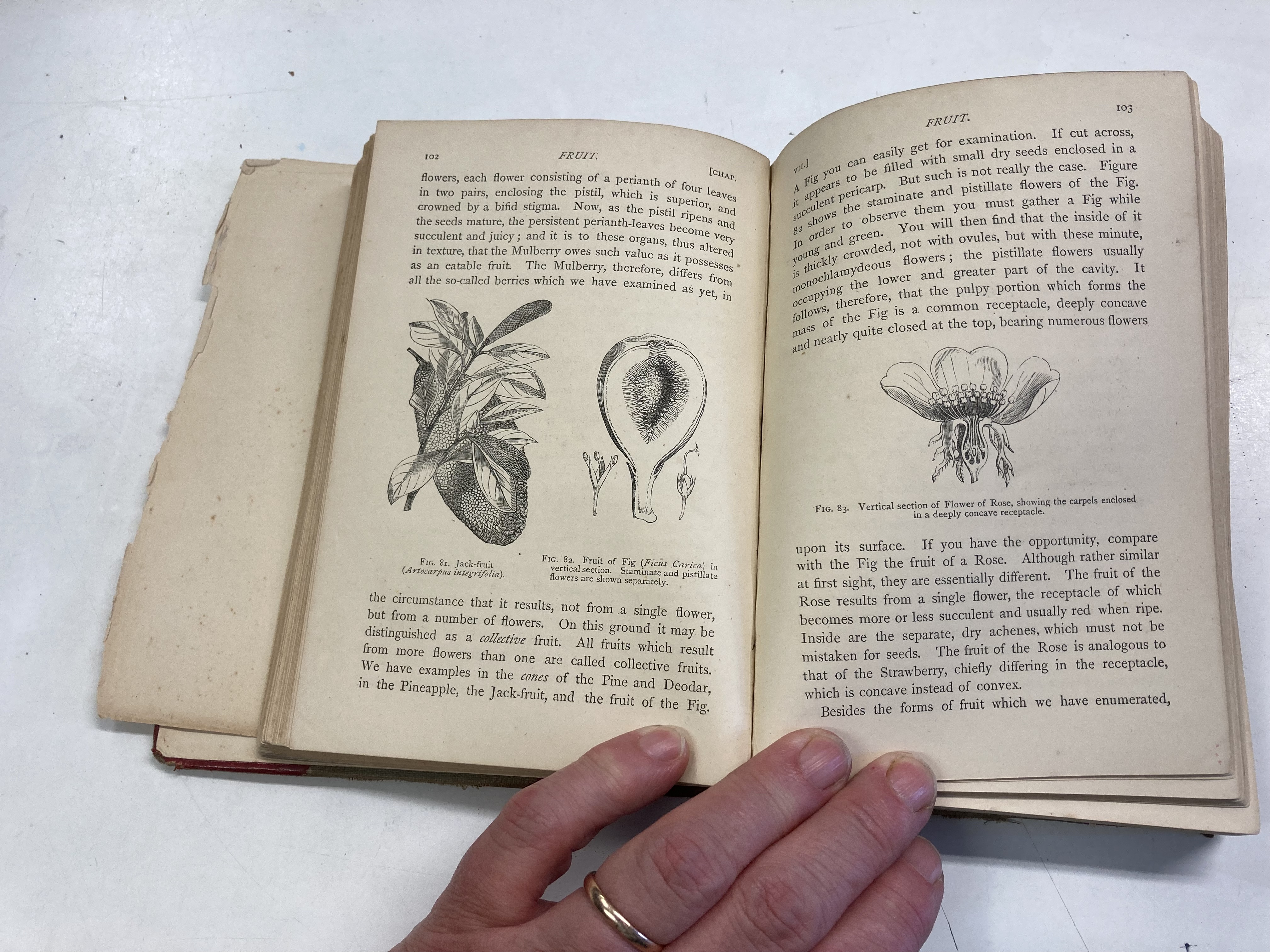
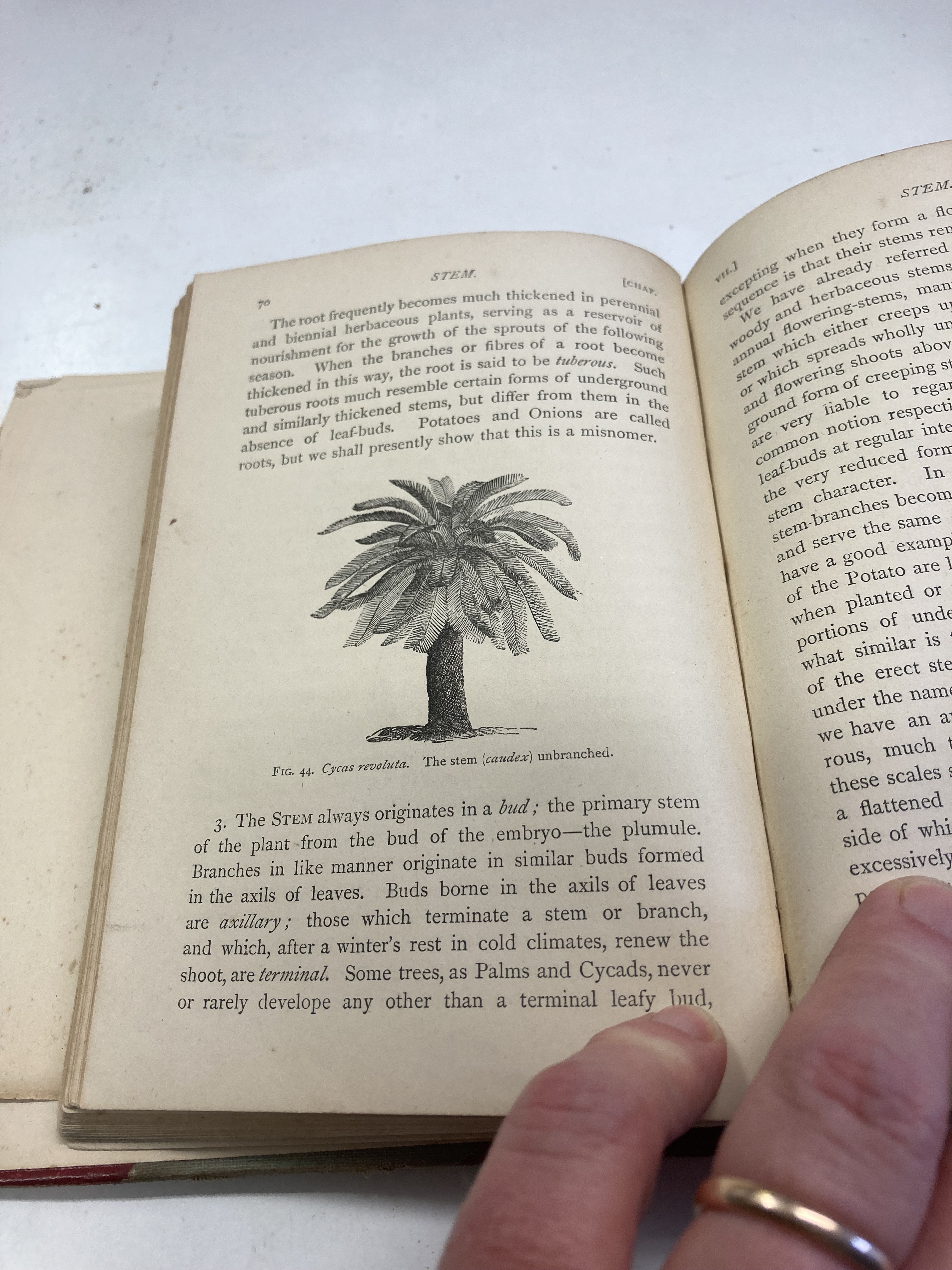
I know nothing about botany but even I can see this is a delight of a book of its era.
And it has provenance in spades.
Nice, as we say when we get a delight of a donation.
And who knows how it made its way to the Oxfam bookshop in Petersfield – from Charles Darwin’s friend working in the Botanical Gardens, Kew, to Kuala Lumper into the ownership of Alfred Venning to us.
So what is its value:
Broken, but full of history and links to famous men.
This is not a proof copy with just somme notes in the margins, but a bound copy with hand-written pages trying to sort out what the author described as ‘my chief difficulty.’
It is unique.
But if you just want to know what Oliver wrote, do you care if it is a print on demand version or the author’s bound copy?
And can I establish a link between Oliver and Venning?
And are links to famous people enough to add value?
There is life beyond Oxfam and researching Victorian botanists (and their books) and various mutinies (in their books) see also another blog (or two) (this is by way of a break from that) – and one of those thing is the Repair Cafe.
So, we have a village(s) Repair Cafe. (Too many brackets perhaps…)
That means that once a month, we get together some fixers/tinkerers/repairers/sewers/menders and in comes everything from a broken purple parasol, a toaster, a jumper with moth holes in it, a lopsided chair, something needing special glue, children’s clothes with rips, a bit of your Mum’s old china with a broken handle, gardening equipment which needs sharpening….
(Well, it is a gardening area so we get a lot of those.)
A 1940s angle poise lamp, an electric guitar, a broken spear – yes indeed – a snapped handle on a saucepan, a small toy with its stuffing lost and an ear missing…..
There is tea/coffee and cake.
There are people who come frequently to just have a chat with other people whilst something is being fixed.
And that is an essential part of what we are about.
You can be told that your broken toaster is unfixable – but at least you know that you can take it to the dump with a clear conscience.
On the other hand, you can have your broken chair glued back together and take it home to use and enjoy it.
Your broken spear can be fixed – though I am not sure of how that will be used in our peaceful village(s).
There is a delicate bedspread which comes in every month for a little bit more of repairing – just a little bit every time.
There are collars turned, and I have to say, quite a lot of electrical appliances that just need a new fuse in the plug – but hey ho that makes them work.
The fixers chat about what they have been fixing in between times, the sewers patiently make a silk purse out of a sow’s ear.
Volunteers bring homemade cakes, make tea and coffee, take donations, log in the items to be fixed, sort out who is going to fix what, make sure we have a total of what has been repaired, fixed, and saved.
It is busy and chatty and yes, it is small beer when you think of what we all throw away but it is something.
We have an allied project to bring swallows and (no, not amazons) martins backs to the villages(s).
It is organised by an amazing sewer and organiser, the human-designed nests are helped to be built by an ex-surgeon – and volunteers.
Every month, people turn up asking for news on the project.
The Repair Cafe is a project which started with fingers crossed and a few volunteers.
There are Repair Cafes all over the place, we are certainly not the first.
But there is something special every month about what our fingers crossed achieved.
If you have something you need fixed and you happen to live near Petersfield you could do worse than spend a bit of your Saturday morning with us.
There is a rule about to-do lists which my sis taught me – always put something at the top that you have already done.
It makes you feel better, and gets you off to a good start.
There is another rule which I learnt yesterday when there was biblical rain and wind and August was looking a whole lot like November and you are stuck inside.
Write your list of things you should/could/would like to do – not urgent, but would make you feel like you had accomplished something – when the weather is good and/or you feel positive.
So, I slouched and cooked – always a fall back – yesterday, and did little else so didn’t feel I had accomplished anything, yet today when the sun is shining I could write a whole long list.
I am planning to put that list on the fridge door in case it rains again – and this being this year, it could well.
Now I am fine when it is actually November because I am used to finding something to do when you really don’t want to be outside, but in August it has come as an unpleasant surprise.
But here goes – and sorry sis don’t have anything I have done (yet).
Do a Marie Kondo my clothes – that really means clearing a pile of stuff off my bedroom chair, rootling around in drawers to find those bras I never wear and getting rid of them, keeping that dress I promise myself I will get into in a month….., hanging up stuff in order which can mean anything from dresses to jackets or colour coding or actually pretty much anything which will keep me amused for an afternoon of pouring rain.
Downsize something – one of these fine days we will have to move out of our house which though is only 2 1/2 bedrooms has a cellar, two garages and a loft – stuff has to go.
Knobs and cutlery – we have brass knobs on our doors and they only get polished just before we have a lot of people for lunch sometime in December. I could do an August version…. We have old cutlery gathered from flea markets over the years and which do not do well in a dishwasher. Assuming you do have cutlery which is nightly stashed in the dishwasher, you will not be aware that old fork prongs get stained by eating eggs. Yes, there are sometimes when we eat egg and chips. If you get them immediately into hot and soapy water, that should work but hey ho, we don’t. So they get stained/need cleaning.
Find something to cook with whatever spice/mix you bought for that recipe you saw, did once and now can’t remember – just before it goes out of date.
Clear out the freezer – remind yourself how nice it was to have your niece do that for you when she was young and would create an excel spreadsheet of what was where. Now, just get the food on shelves and get rid of that stuff in small bags that you knew at the time would come in useful, but now you have no idea what it is or when it was out there.
Decide to be a better person – find something to learn to stave off dementia, for example. Make resolutions about, well anything. Actually, that happens all the time – I am always deciding to be a better person but deciding is not actually doing.
Clean the skirting boards – now this is something that a dog-walking friend of mine does when she is bored. Mind you she is a cleaner so the house will have been done from top to bottom before she gets to that. I have to say, only in lockdown did I ever think, ‘Oh, what shall I do today? The skirting boards might need a once over.’
Write something – well I did yesterday but that was about Naval mutinies based on a book which came into the shop and really, you have to be in for the long haul if you read that.
I am sure there are many other things I could add to the list but next time it is a rainy weekend, I might well just do something from the list.
Recently we had a lovely donation of old natural history books – and so we are off to the countryside, books in hand.
The donation came after someone’s father died and he was clearly someone who had a particular interest in butterflies and moths (more on that another time.)
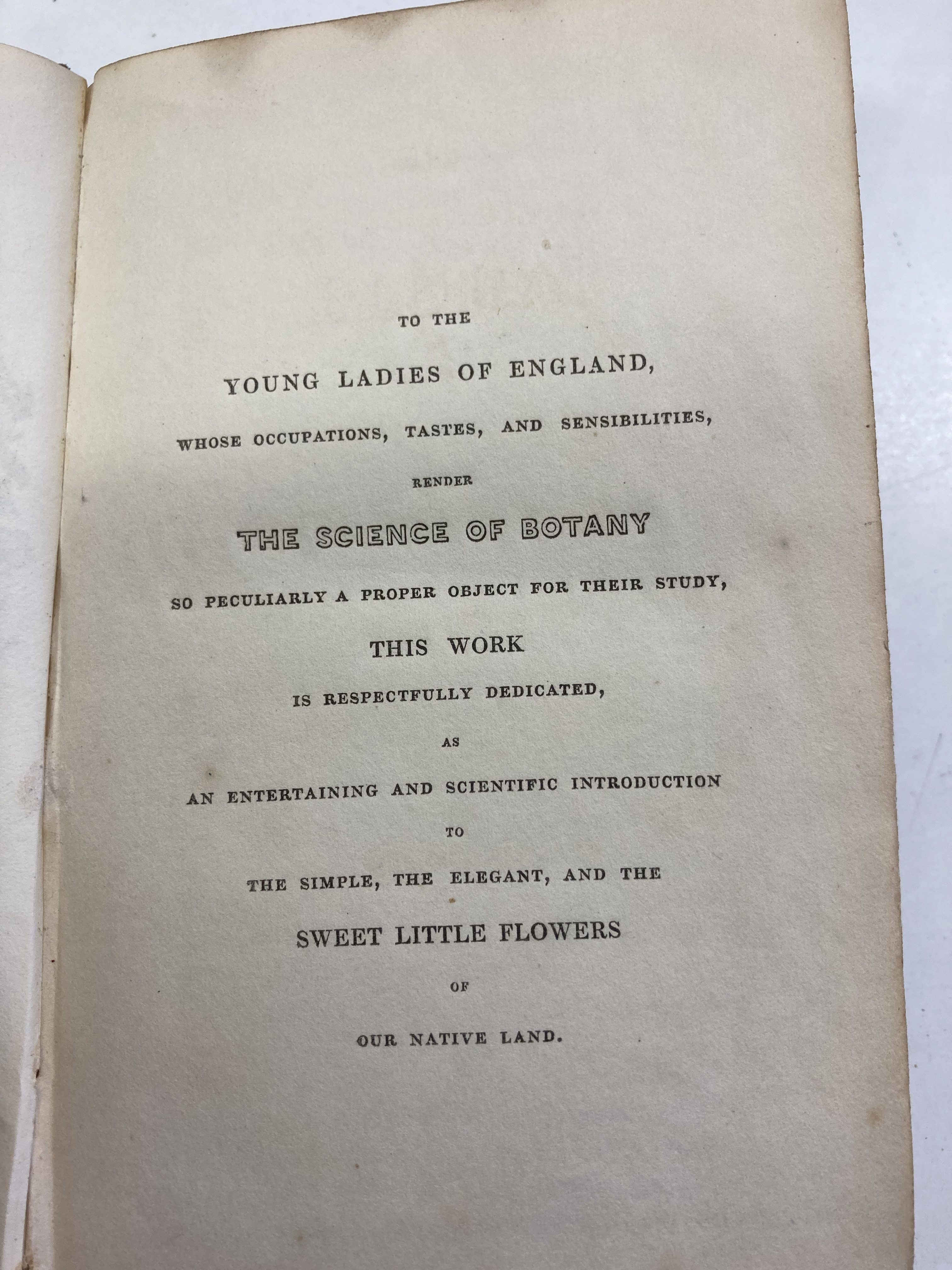
But not exclusively as this little book shows:
It is good to know that the young ladies of England have the appropriate study of botany to keep them from going wild…
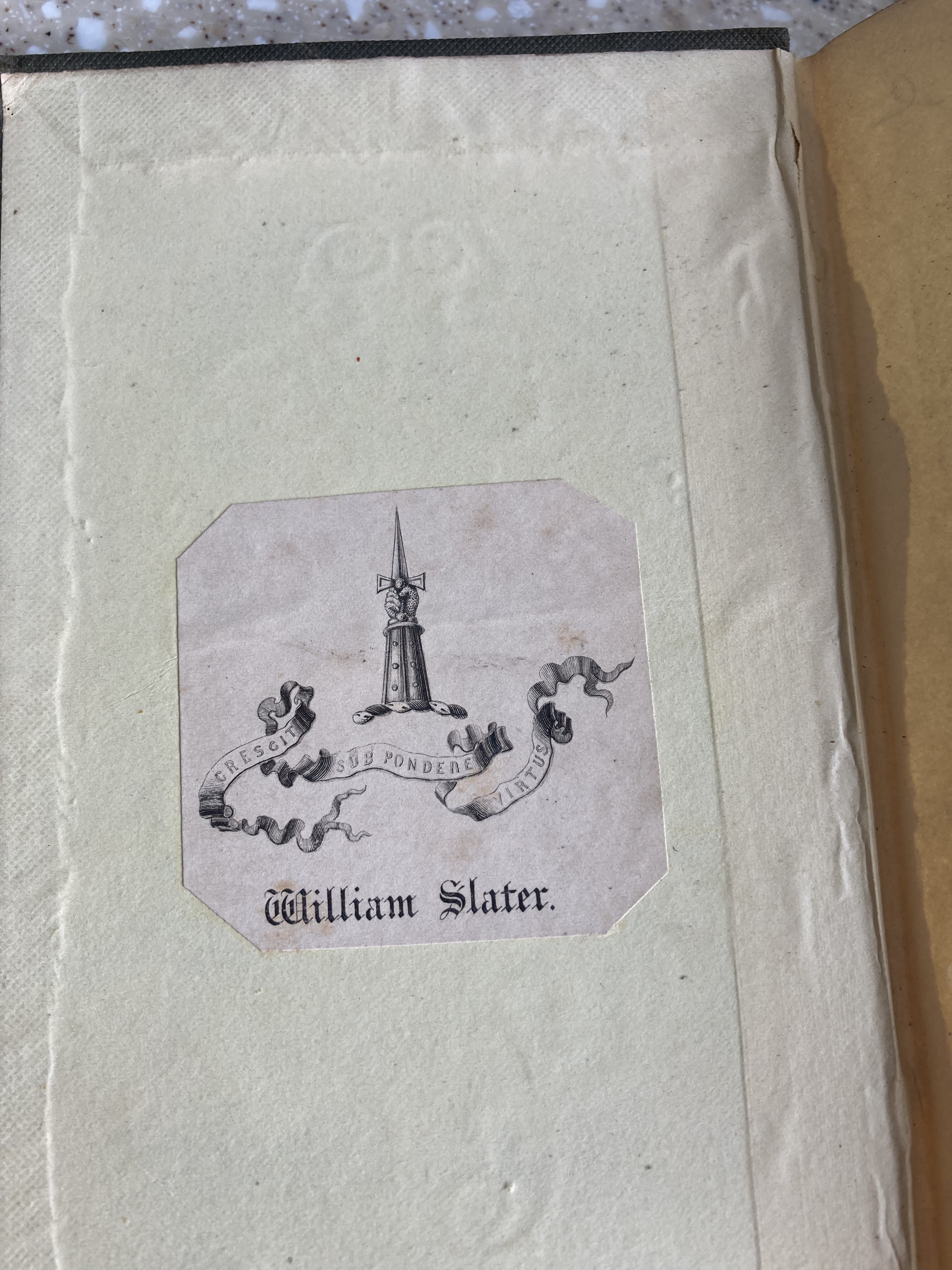
Mind you the book plate suggests that it was rather better used by a (young) man.
Now this one is also clearly intended for the amateur but I do have to question how simple the simple method is….
And then there is this little delight.
Knowing the difference between a hippo and a rhino, a crane and a heron and a frog and a toad is always handy – not that in the 1800s you were likely to see any hippos or rhinos unless you were a very intrepid traveller.
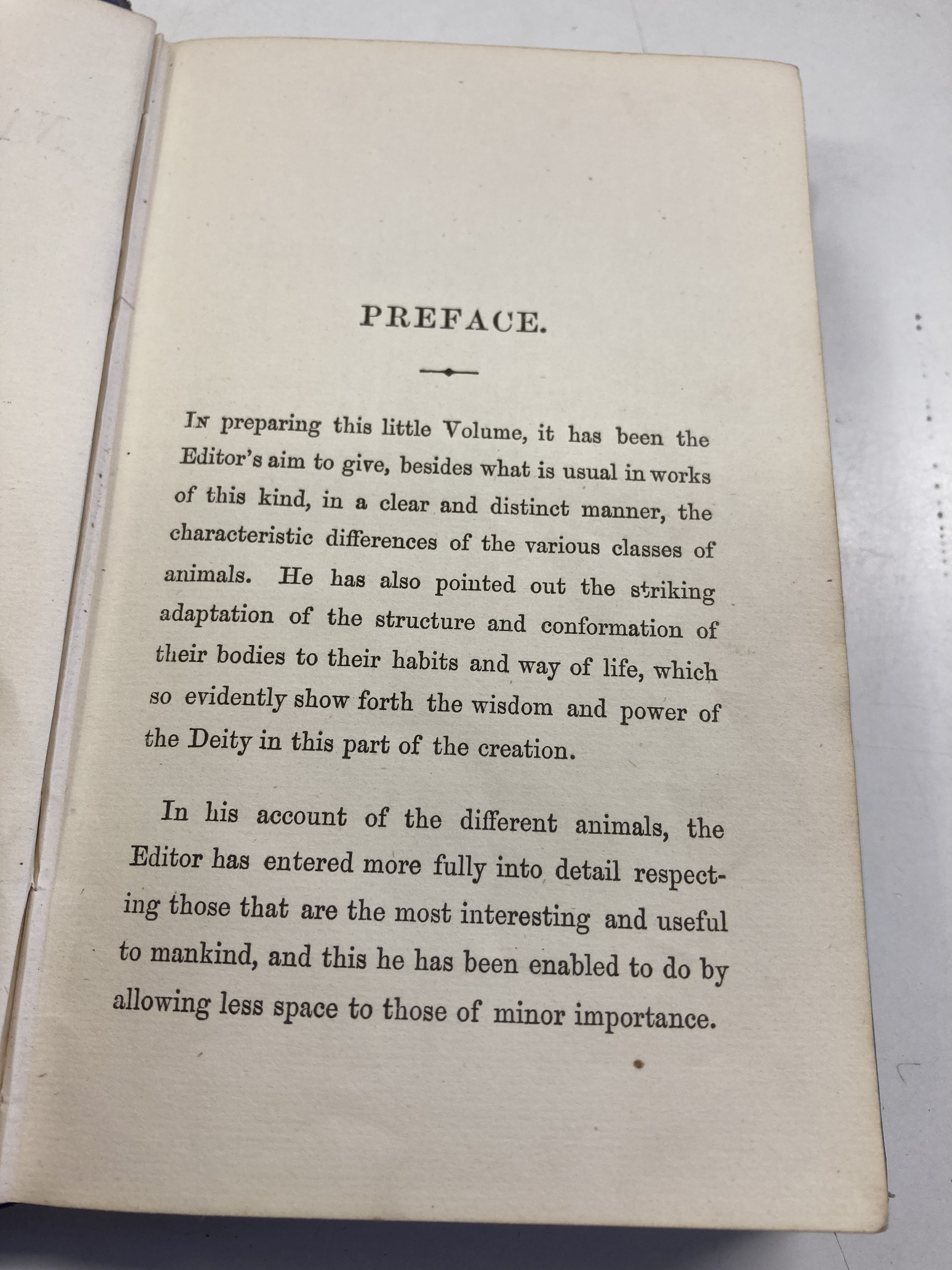
But what is interesting is the introduction and the owner’s name.
So, it was bought in 1858.
Darwin published Origin Of The Species in 1859.
I wonder if the un-named author/editor would have changed their views on nature being the proof of the wisdom of the Deity….








 thereluctanthousewife