Provenance (is everything as they say on Antiques Roadshow, and) seems to be the word of the moment in Oxfam Bookshop Petersfield.
Actually, not every other volunteer has this ‘mot juste’ on their lips – but I do.
Two books with unprepossessing covers have driven me down more research rabbit holes than I can remember.

(So, the big book involves a hunt for who was Patrick, Sir John, Maria and her grandfather but that will have to wait.)
The small book is what this is all about.
And, as you can see,

‘Front hinge is broken and front endpaper is detached’ And the rear hinge is holding on but only just, and will probably break sometime soon.
Normally that would devalue a book considerably but actually the ‘block’ of the pages are holding together well so with an expert bit of tlc, this book could be repaired easily.
And this is a rare book – with added history.

There are lots of versions of the First Book of Indian Botany right up to print-on-demand for sale, but none (as far as I can see) of the first edition – 1869.
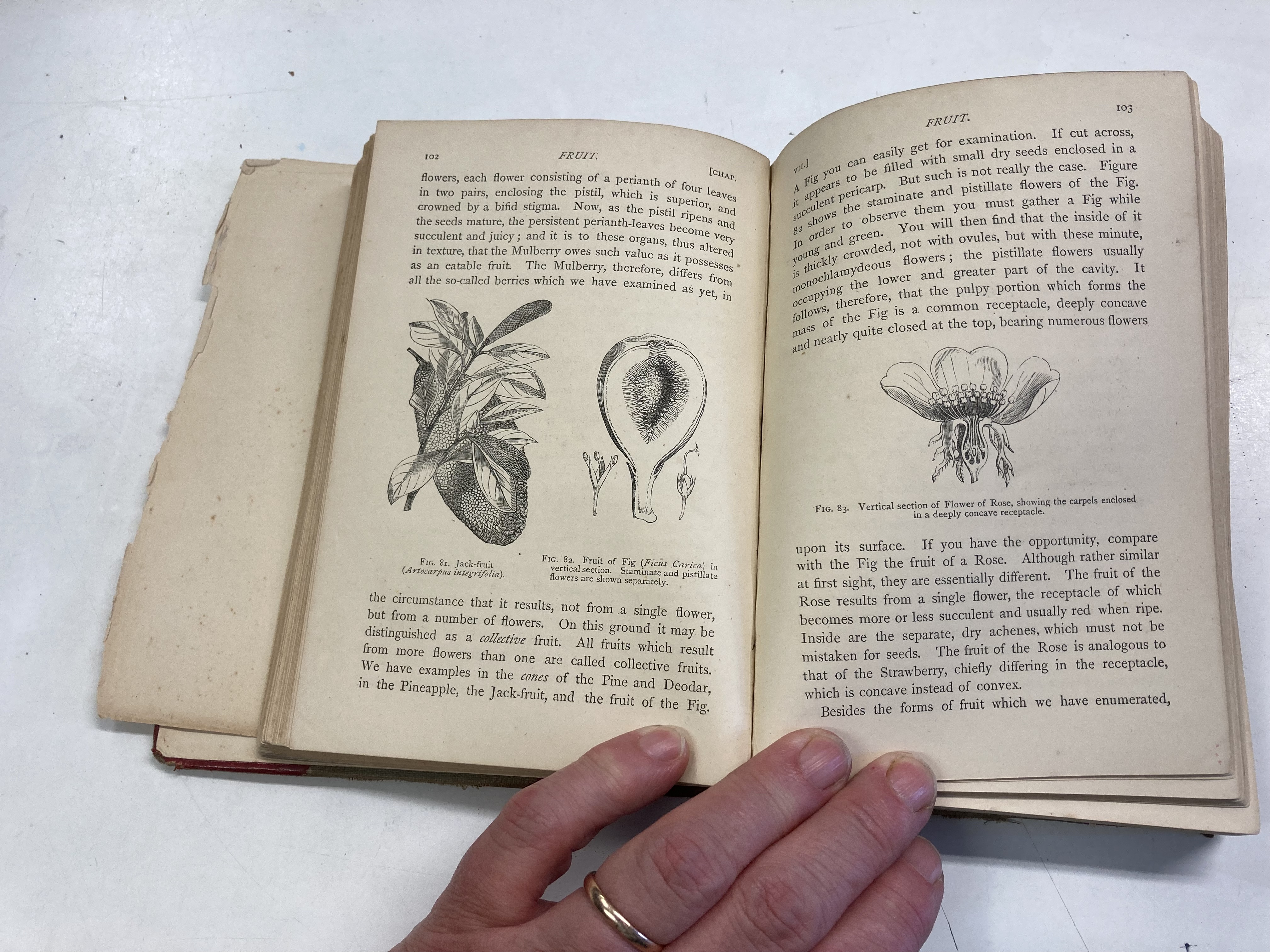
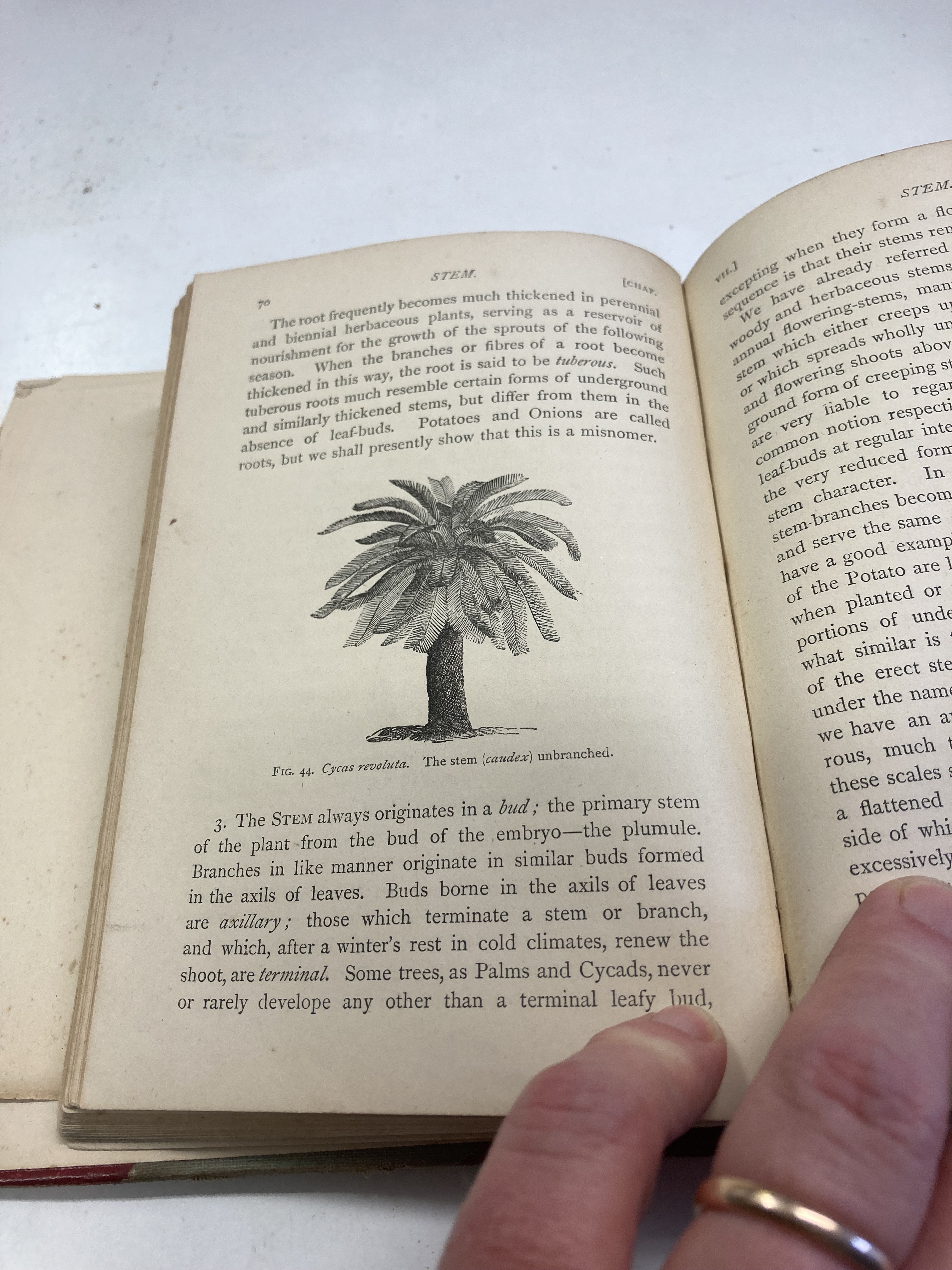
(Bear in mind this was written/published and aimed at colonial residents of India rather than the Indian population who, no doubt, knew their own botany.)
Now if you just want to know what the book said, then a re-print is fine but if you want a rare first edition – and then owned by someone who created:
‘Perdana Botanical Gardens, formerly Perdana Lake Gardens, Lake Gardens and Public Gardens, is Kuala Lumpur‘s first large-scale recreational park. Measuring 91.6 hectares (226 acres), it is located in the heart of the city and established in 1888.The park served as place of refuge from the hustle and bustle of the city during colonial times. It contains large sculpted and manicured gardens and a host of attractions.’
He was Alfred Venning.
Then you need our book.
(Emma, who is amateur researcher extraordinaire follows up my Facebook posts asking for help when I am more than stuck, and comes up trumps. I couldn’t decipher Venning’s name in our book but she could…. thank you Emma.)
And actually, it is even before the first edition, with bound-in handwritten notes from the author.
So, who was the author?
Well, Daniel Oliver knew Charles Darwin and there are letters between the two of them.
And here is what Christies said about the letter between the two:
‘You have been very kind,’ Darwin tells Oliver, the botanist from the Royal Botanical Gardens at Kew, ‘to take so much trouble for me; the information is amply sufficient, as I wished to learn how far the roots cd act on rocks, not caring about the nutrition of the plants.’
Darwin recommended Oliver for a job at Kew and so Oliver became:
‘Librarian of the Herbarium, Royal Botanic Gardens, Kew from 1860–1890 and Keeper there from 1864–1890, and Professor of Botany at University College, London from 1861–1888.
In 1864, while at UCL, he published Lessons in Elementary Biology, based upon material left in manuscript by John Stevens Henslow, and illustrated by Henslow’s daughter, Anne Henslow Barnard of Cheltenham.
He was elected a member of the Linnean Society, awarded their Gold Medal in 1893, and awarded a Royal Medal by the Royal Society in 1884.’ Wikipedia.
(Interestingly, his short Wiki entry does not mention our book.)
In case you need more provenance (connections), Henslow (1796-1861) was a ‘friend and mentor to his pupil Charles Darwin.’
And, ‘ Soon after Oliver’s arrival at Kew, Hooker, the assistant director, asked him to perform crossing experiments of Darwin’s behalf. Darwin was clearly impressed by Oliver’s abilities as an experimenter …..Soon they were both carrying out experiments ….and regularly exchanging notes and specimens.
When the chair of botany at UCL fell vacant Darwin strongly recommended Oliver for the post praising’ the range of his knowledge of facts buried in all sorts of foreign publications.’ Christies.
So, back to the book:
As you can see Oliver was concerned about Natural Orders – from his hand-written note on the endpaper and the printed preface.
And his bound-in notes are from pages 130-145.
And he has written a note in the margin of p 135 referring to Hooker.
Joseph Hooker: ‘was a founder of geographical botany and Charles Darwin‘s closest friend. For 20 years he served as director of the Royal Botanical Gardens, Kew, and was awarded the highest honours of British science.’
So, Oliver has impressive connections with Darwin and Hooker – he knew them both and, again, we are pretty sure this little book was his own.
Some later unknown owner ( Alfred Venning?), underlined words and sentences which meant something to them – a botanist no doubt.
I know nothing about botany but even I can see this is a delight of a book of its era.
And it has provenance in spades.
Nice, as we say when we get a delight of a donation.
And who knows how it made its way to the Oxfam bookshop in Petersfield – from Charles Darwin’s friend working in the Botanical Gardens, Kew, to Kuala Lumper into the ownership of Alfred Venning to us.
So what is its value:
Broken, but full of history and links to famous men.
This is not a proof copy with just somme notes in the margins, but a bound copy with hand-written pages trying to sort out what the author described as ‘my chief difficulty.’
It is unique.
But if you just want to know what Oliver wrote, do you care if it is a print on demand version or the author’s bound copy?
And can I establish a link between Oliver and Venning?
And are links to famous people enough to add value?
I am very much hoping so.
 thereluctanthousewife