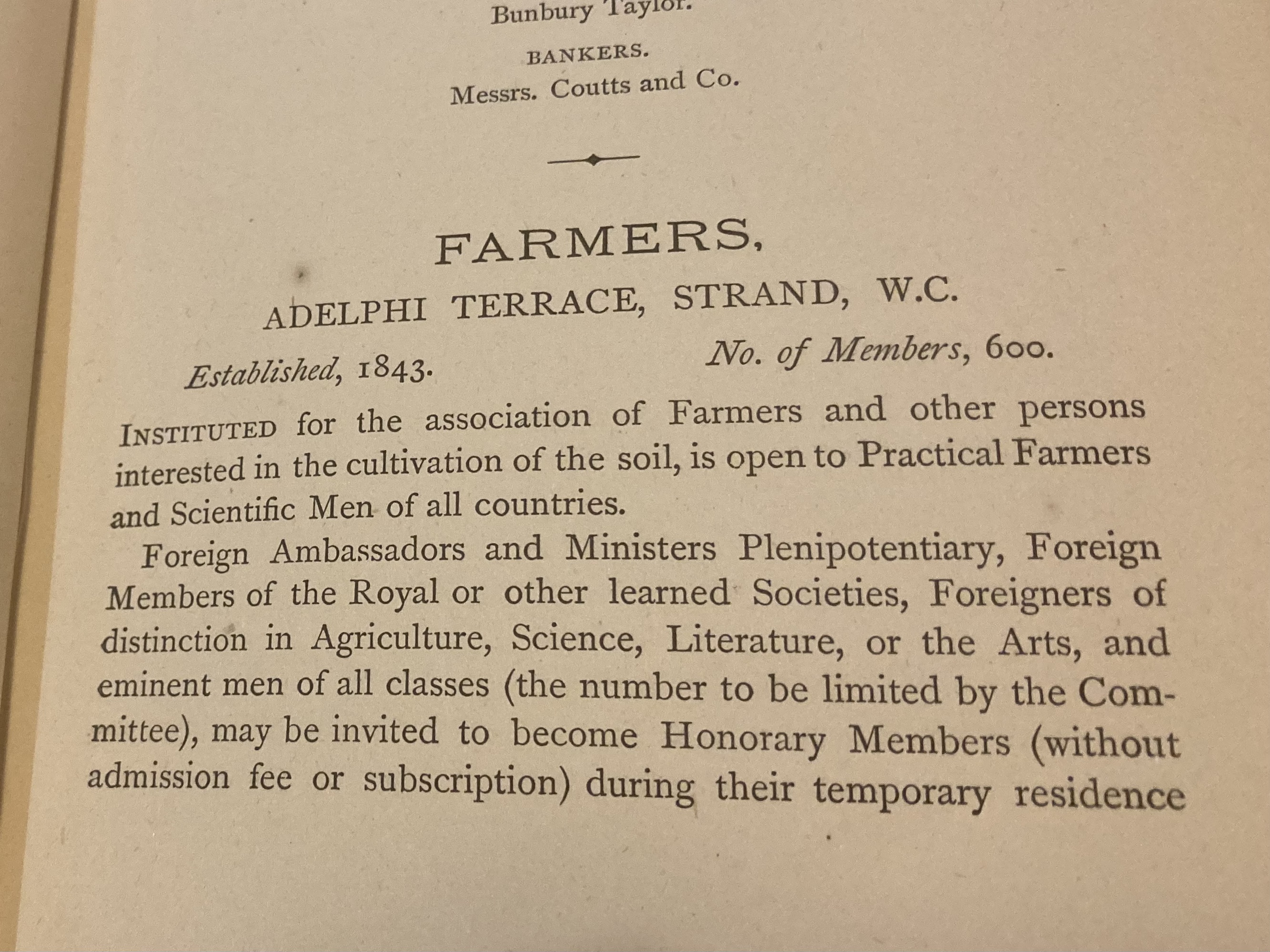
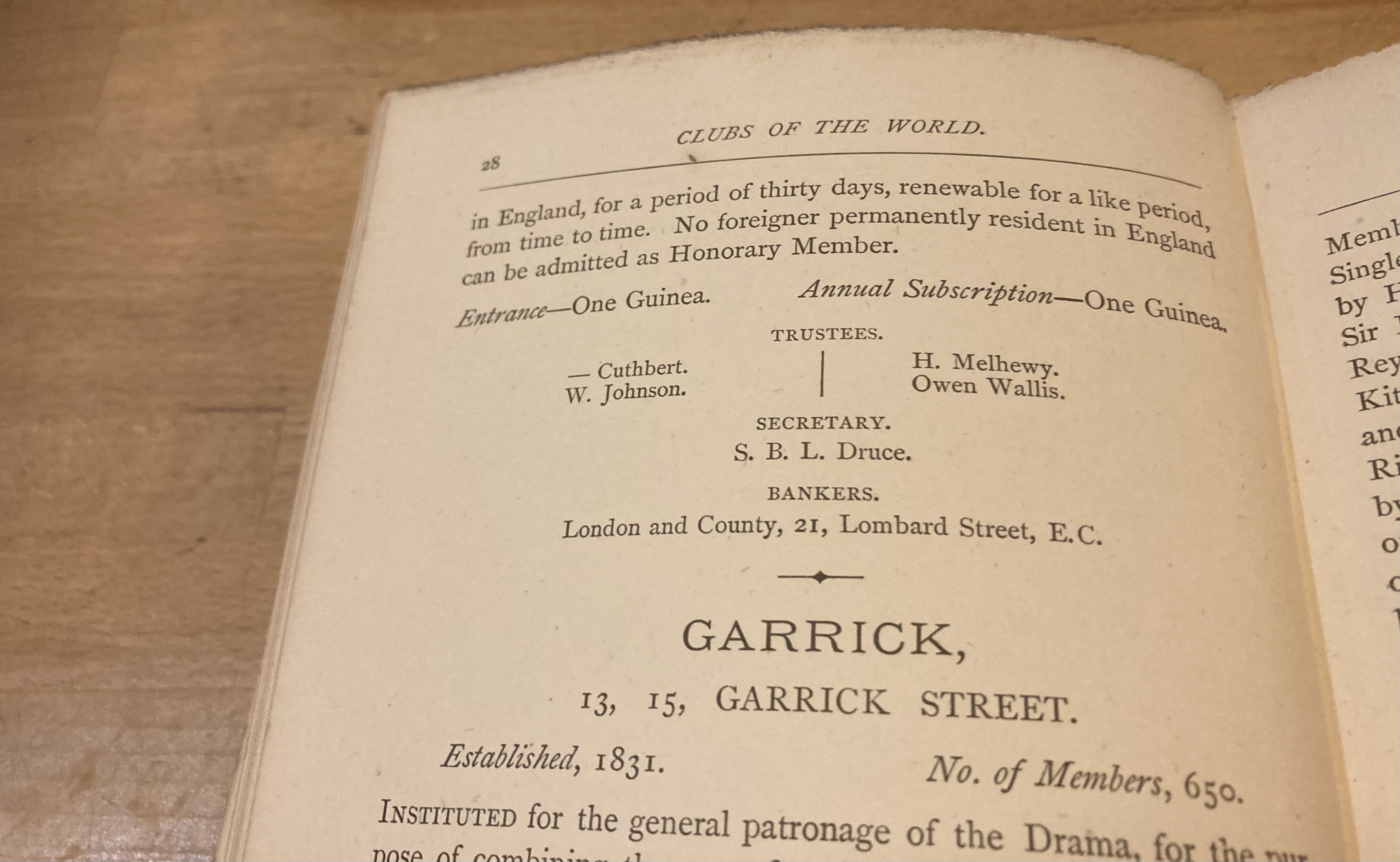
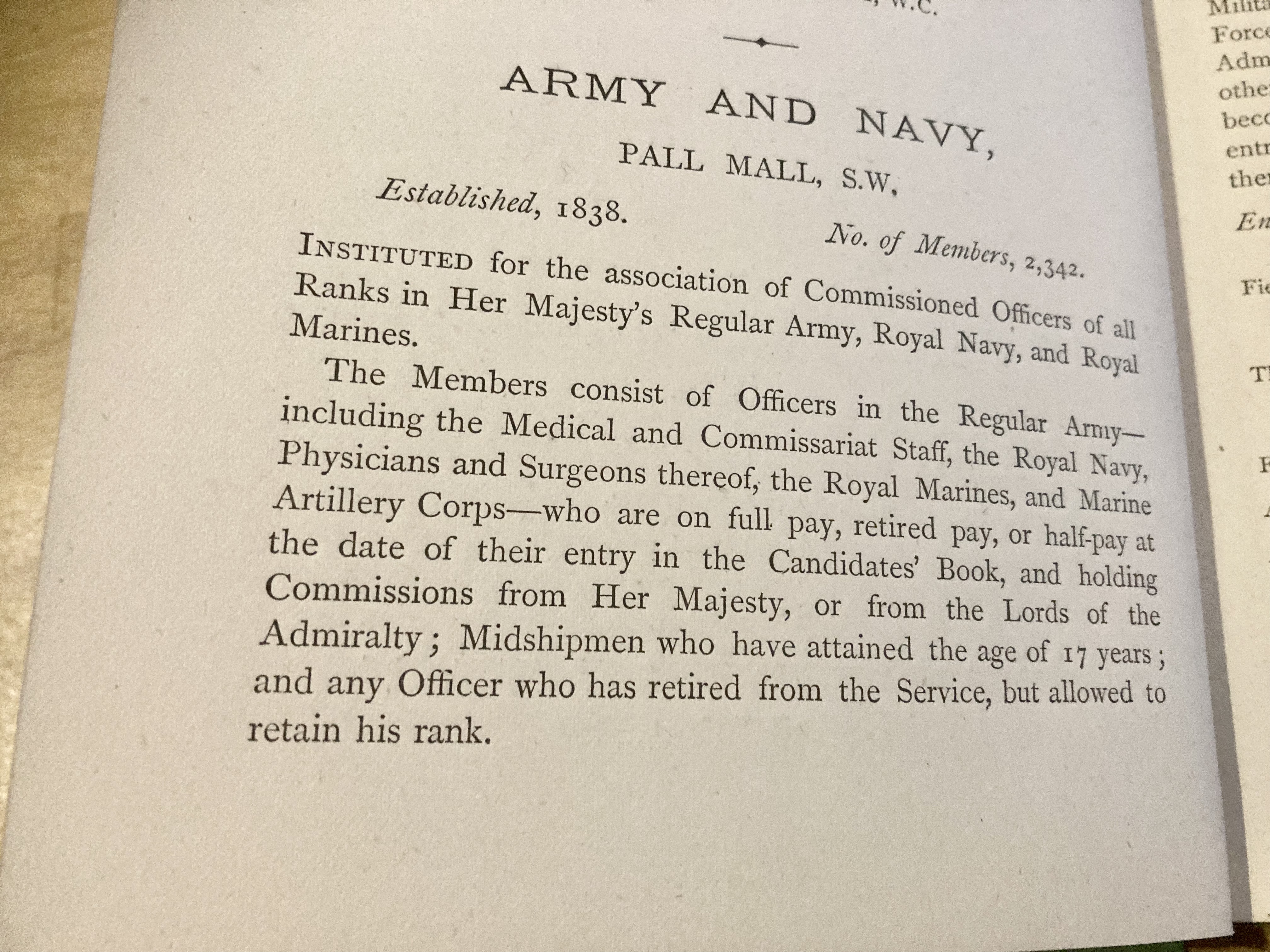
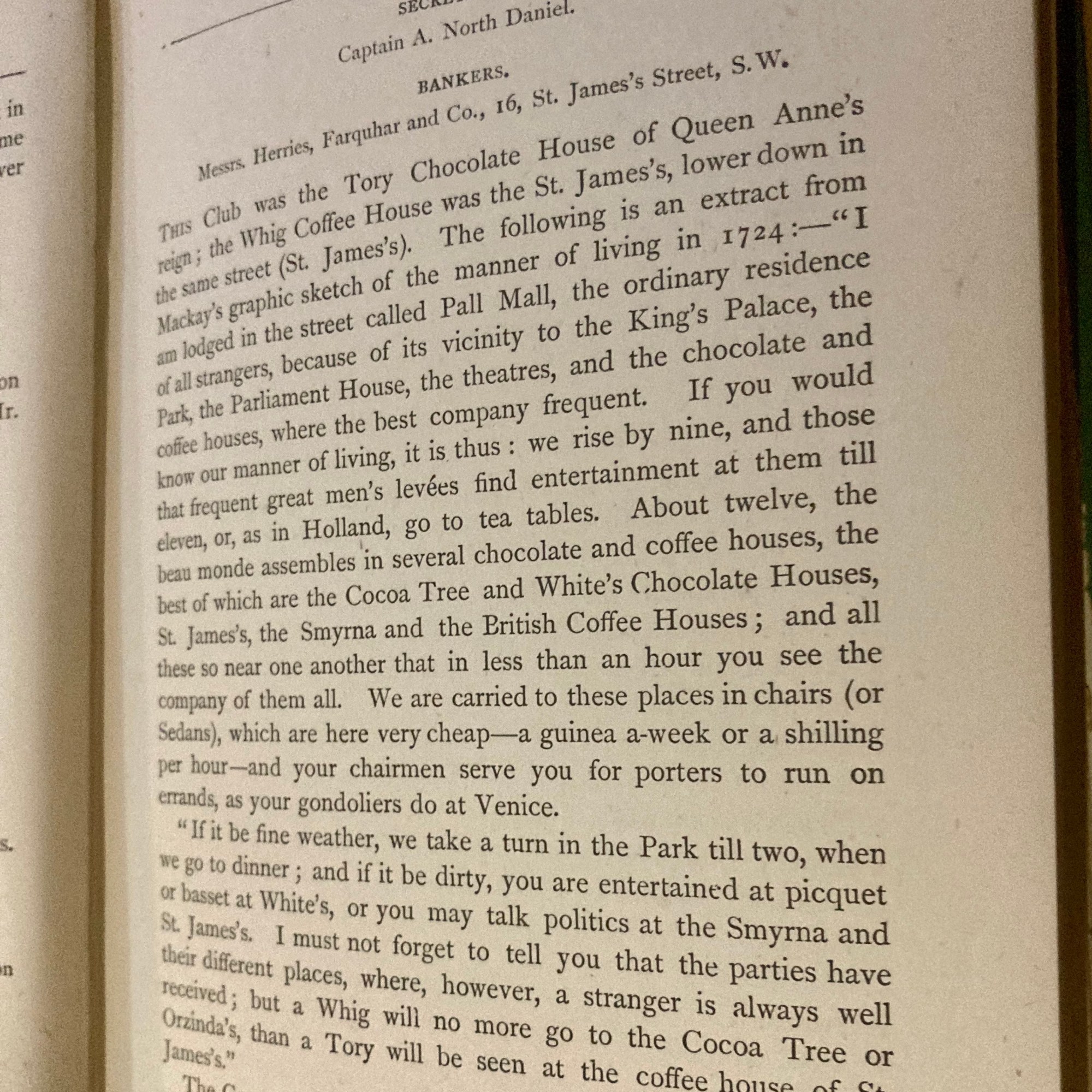
The Directory of Clubs (1887) book came into the shop recently and there is little to say about it except what it says itself on the mores, values and attitudes of the time so I will let it ‘speak’.
Except to say that when I was living in Europe but had work in London, I looked around for a club to join so that I would have an overnight base here.
The Liberal Club would have been convenient but one visit confirmed I was the only woman within sight and the youngest (then) by about 40 years.
It was a half-hearted search on the basis that I did not really want to join the kind of people who sat in leather armchairs with their friends from Eton days and discussed off-shore bank accounts and how the poor should get off their lazy asses and get a job.
I should have stuck with it and joined The University Women’s Club but too late now.
( Mind you, there is a bit of me that could embrace the idea of coming up from the country for a night or two to see a couple of exhibitions, do cocktails and dine with a few friends and visit my dressmaker…..)
According to Wikipedia:
‘Men’s clubs were also a place for gossip. The clubs were designed for communication and the sharing of information. By gossiping, bonds were created which were used to confirm social and gender boundaries. Gossiping helped confirm a man’s identity, both in his community and within society at large. It was often used as a tool to climb the social ladder. It revealed that a man had certain information others did not have. It was also a tool used to demonstrate a man’s masculinity. It established certain gender roles. Men told stories and joked. The times and places a man told stories, gossiped, and shared information were also considered to show a man’s awareness of behaviour and discretion. Clubs were places where men could gossip freely. Gossip was also a tool that led to more practical results in the outside world. There were also rules that governed gossip in the clubs. These rules governed the privacy and secrecy of members. Clubs regulated this form of communication so that it was done in a more acceptable manner.’
And,
‘Discussion of trade or business is usually not allowed in traditional gentlemen’s clubs, although it may hire out its rooms to external organisations for events.’
‘In recent years the advent of mobile working (using phone and email) has placed pressures on the traditional London clubs which frown on, and often ban, the use of mobiles and discourage laptops, indeed any discussion of business matters or ‘work related papers’.’
Mmm, I cannot quite believe that men of business and politics spend their time just discussing the cricket or how best to get the gardener to prune roses.






 thereluctanthousewife