I can feel you are getting a bit bored with Oxfam surprise donations, but I am going to chance my arm with just three more….. and there are more pictures than text, if that helps.
But even so, I do warn you,, I am cramming in, so it’s a long read.
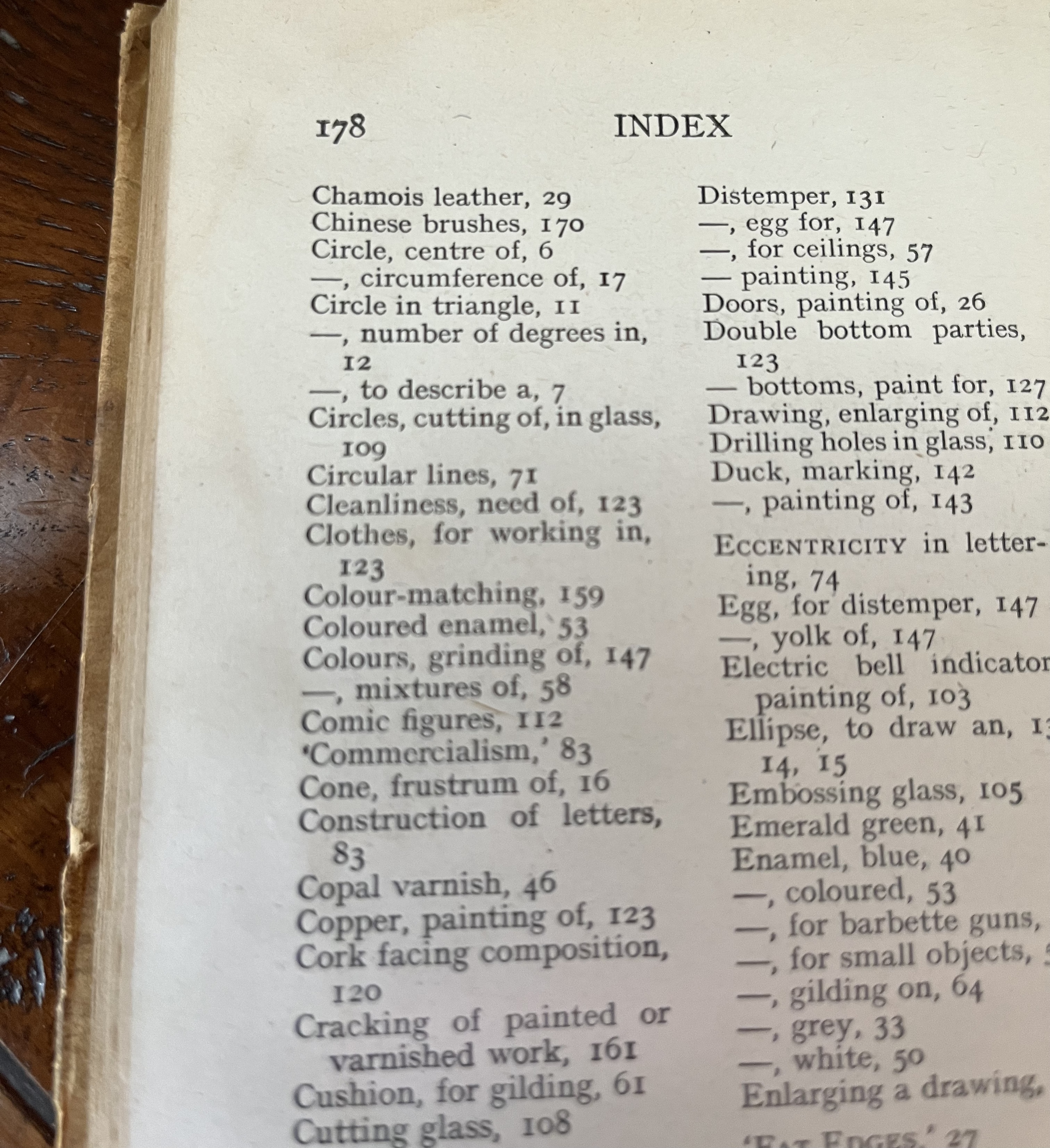
Firstly, the humour and interest in alphabetising. Not a sentence you hear every day, I do know that.
This made me laugh and I had to turn to the entry on hair pencils…
Well, apparently they were paintbrushes made of hair, called pencils because they were so fine you could ‘draw’ an line and were used to fine gold leaf work.
(If you Google hair pencils today you get a lovely Wikipedia article on butterflies:
Males use hair-pencils in courtship behaviors with females. The pheromones they excrete serve as both aphrodisiacs and tranquilizers to females as well as repellents to conspecific males.)
Then we got this strange book — actually maybe one of the stars of the window display when we do one celebrating 200 years since the invention of the railway.
who knew there were Guinea Pig exhibitions……
cattle and caustic soda – except as above…..
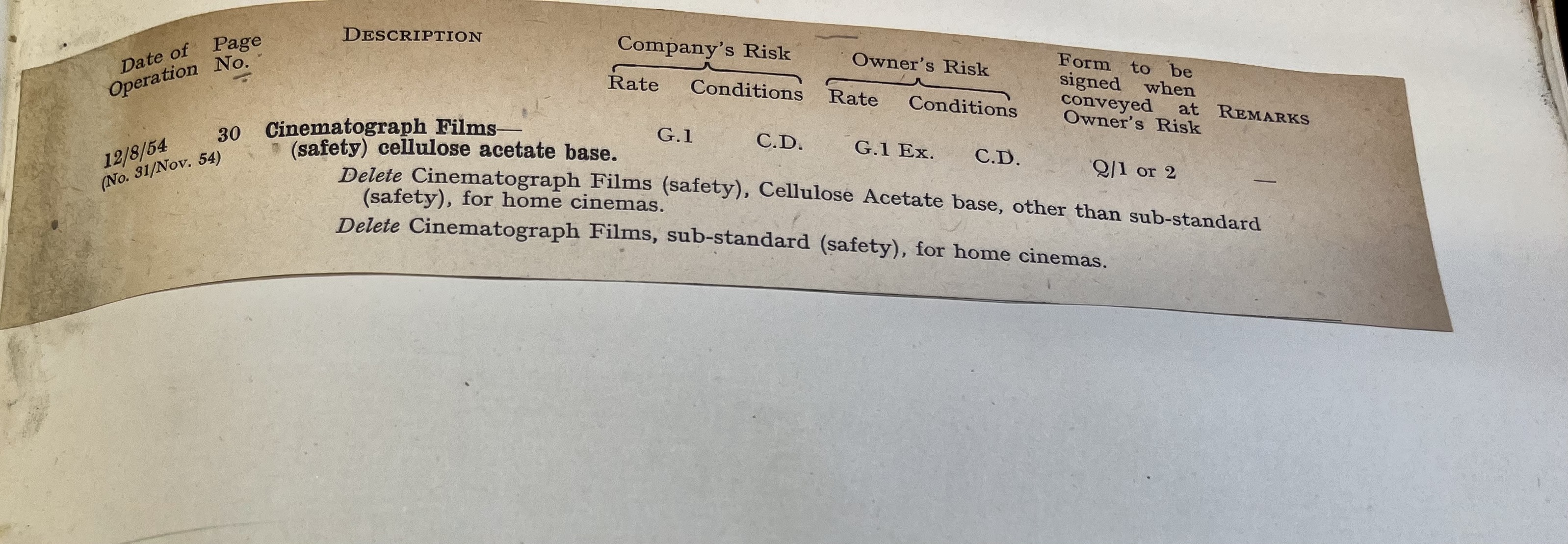
unsafe films?
were land skiffs, whatever they were, banned?
And finally, and I promise no more oddity blogs for a while.
It does again fall into the category of well, I would never have thought there would be a book about that …..
It is surprisingly detailed and specific and, for a small book, packs a punch of information.
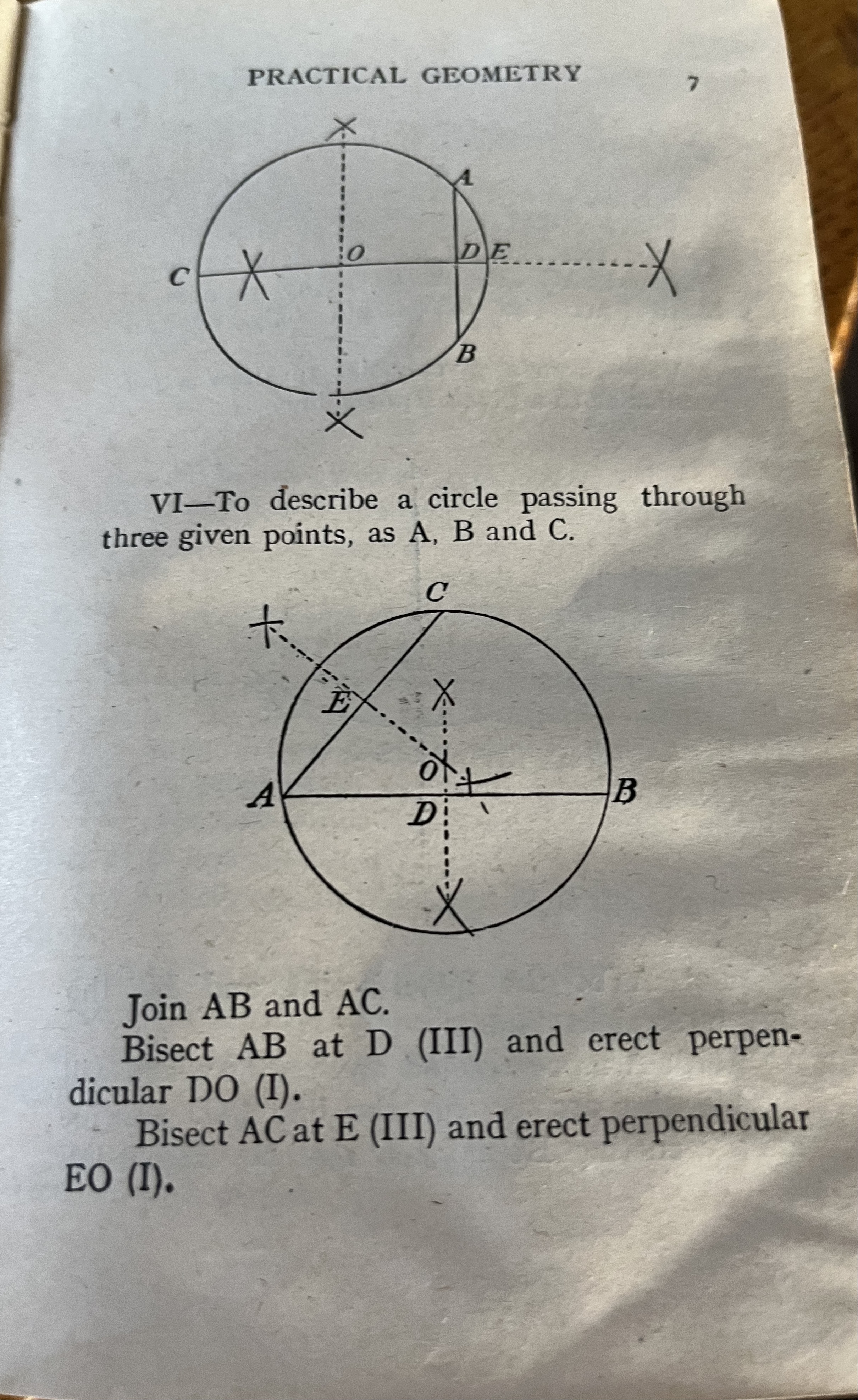
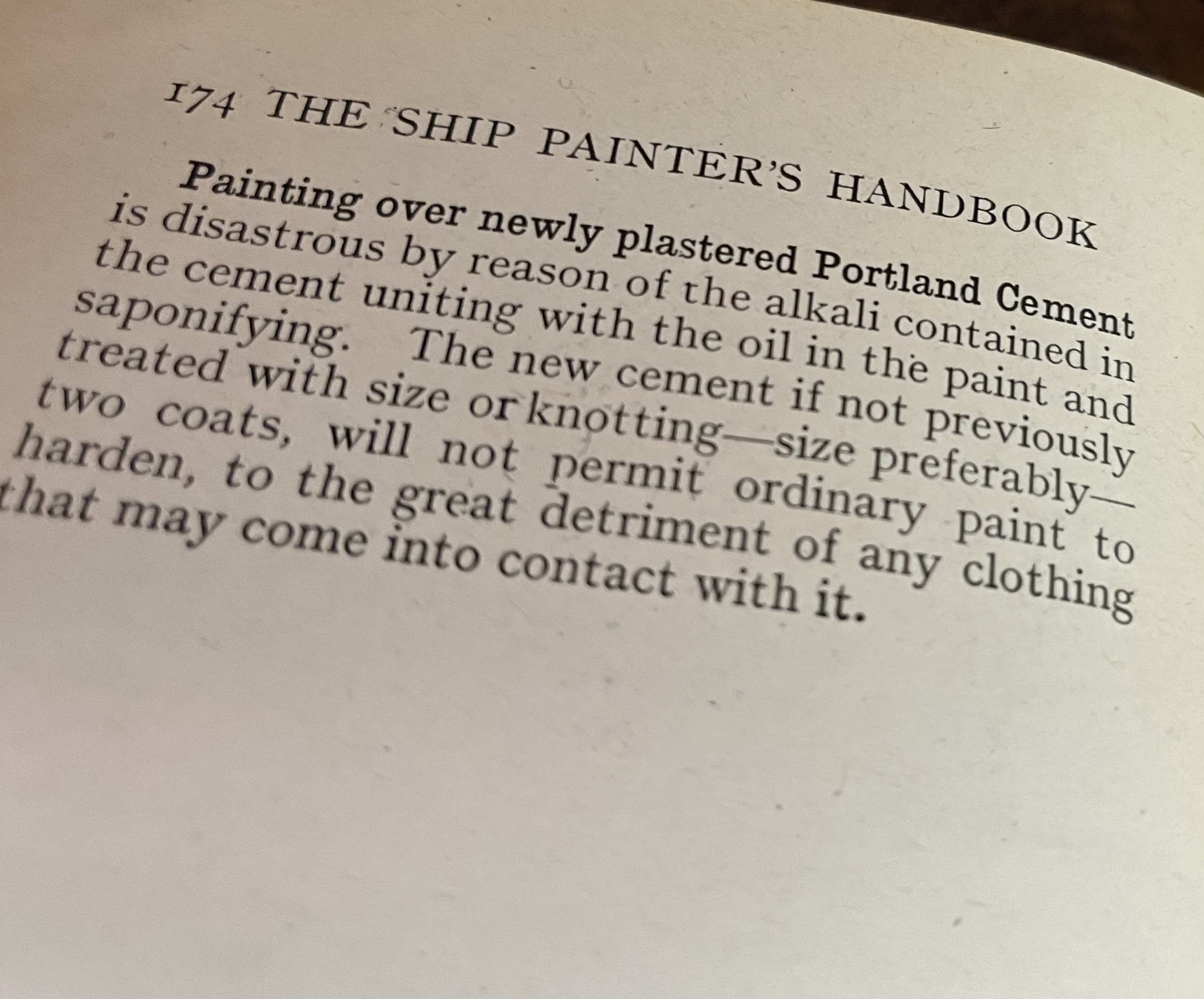
Who knew you needed seven pages on the ‘Practical Geometry’ on ship painting – and that being the first chapter indeed.
There is everything from painting Barbette guns, whatever they are, to how to hang wallpaper in cabins.
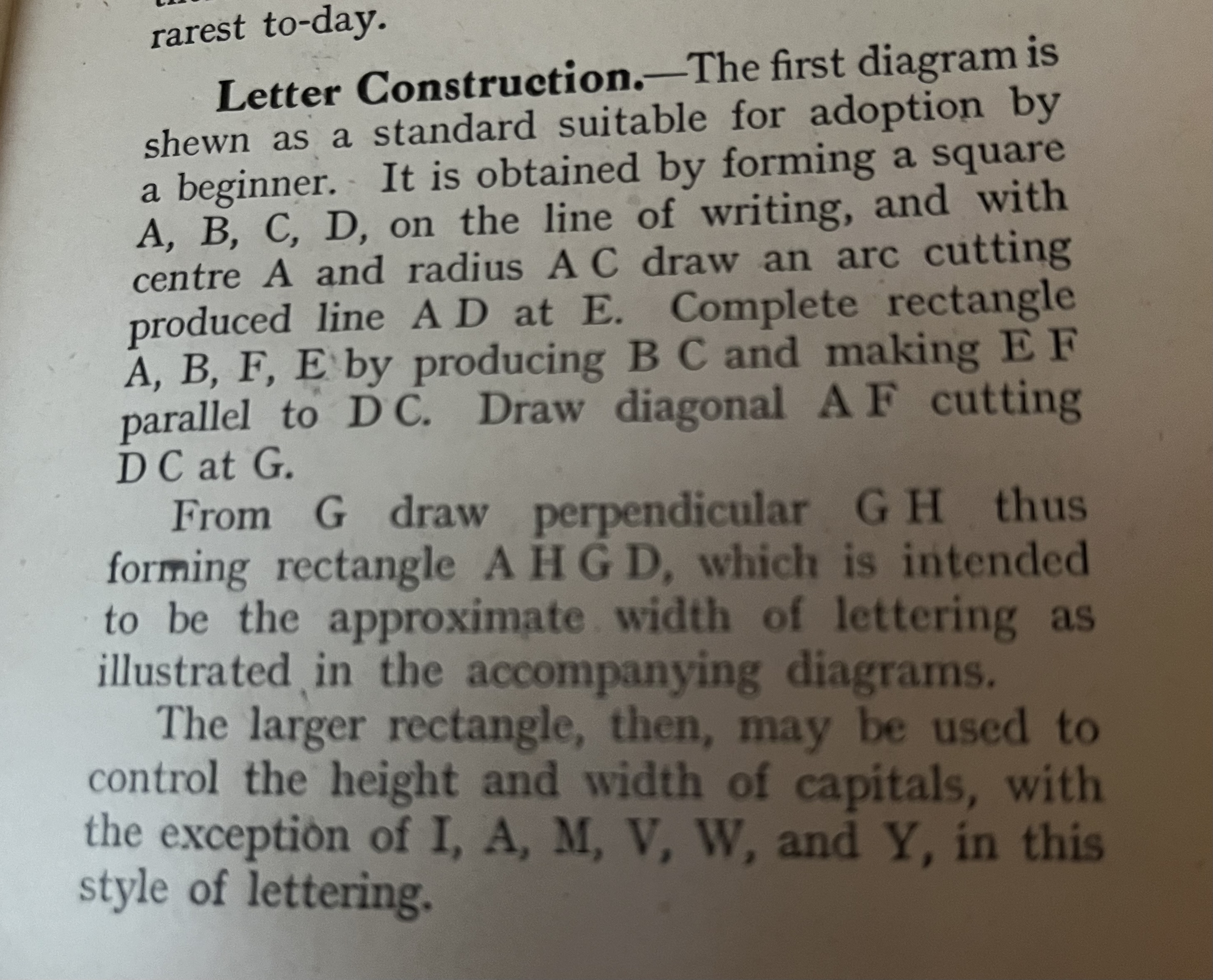
Pages 68 to 97 are entirely devoted to ‘Letter Writing’ with the instruction:
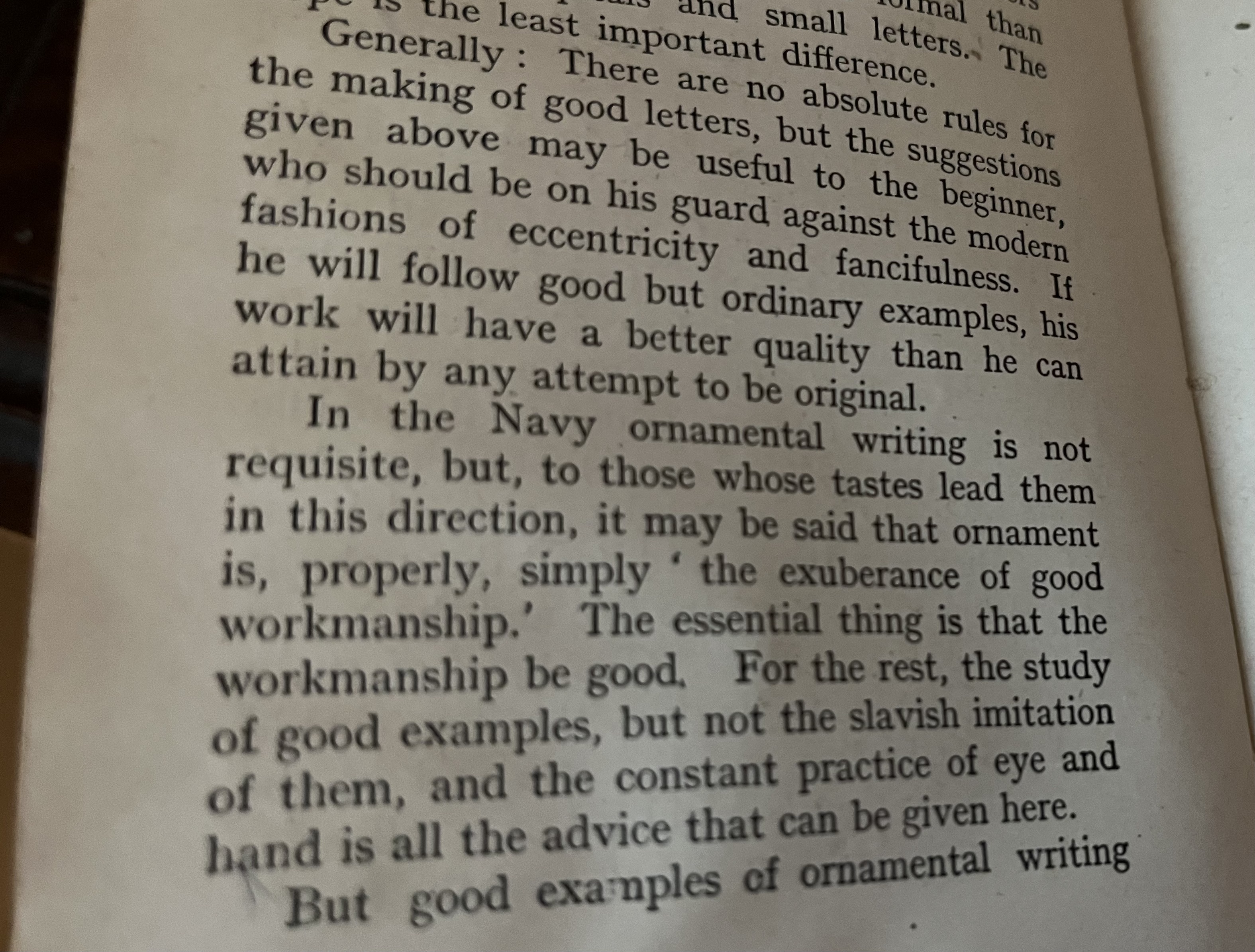
‘To be a good letter writer should be the ambition of every young painter. In the Service his skill in this respect is in constant demand, and, if facility with the pencil be acquired, very little leisure will be at his command.’
Mind you according to Chapter 13 and the 29 pages of it, very little seems to be a simple as having a pencil tucked behind your ear.
Given this detail, I was rather surprised to find 19 pages in the Miscellaneous chapter.
Including:
And, on the last page a warning:
And just to circle back, as they say, here are some alphabetical amusements:
Some (actually quite a few if I’m honest) books come into the shop in such bad condition they can’t be sold. Most end up in re-cycling but a few have such lovely plates (pictures) that the Best Beloved can make something of them.
Because we get quite a few donations of paintings – yes I don’t know why they are given to a bookshop either – we have an art sale about twice a year and we will add in these little delights.
And, we also get picture frames donated so the BB had these three to play with…
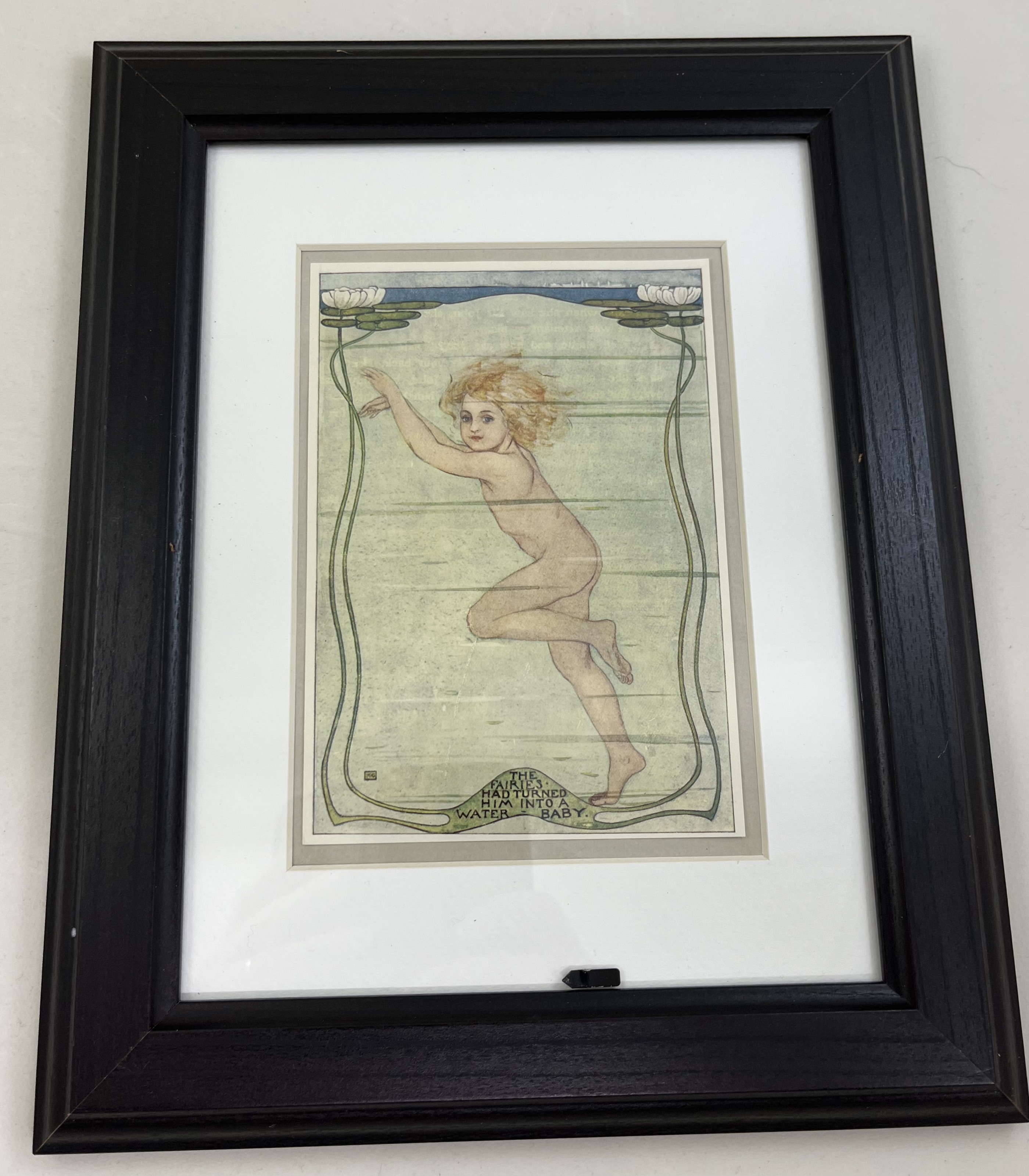
They are from the 1905 edition of The Water Babies and are the work of Katharine Cameron. And it is true that images of naked children were more innocent in those days.
Anyway, you may be interested to know that Katharine Cameron (1874-1965) ‘studied at the Glasgow School of Art where she became part of a group of artist-friends known as ‘The Immortals’, which included sisters Margaret and Frances Macdonald and Charles Rennie Mackintosh. She later attended the Académie Colarossi’s in Paris and made frequent study trips to Italy. She is best known for her sensitive flower and landscape paintings, etchings and book illustrations. Katharine was a member of the Royal Scottish Watercolour Society.’ (National Galleries of Scotland).
She is second on the right of the middle row of this photo of The Immortals.
The next oddity is from lives a lot less rarified than the Scottish artists.
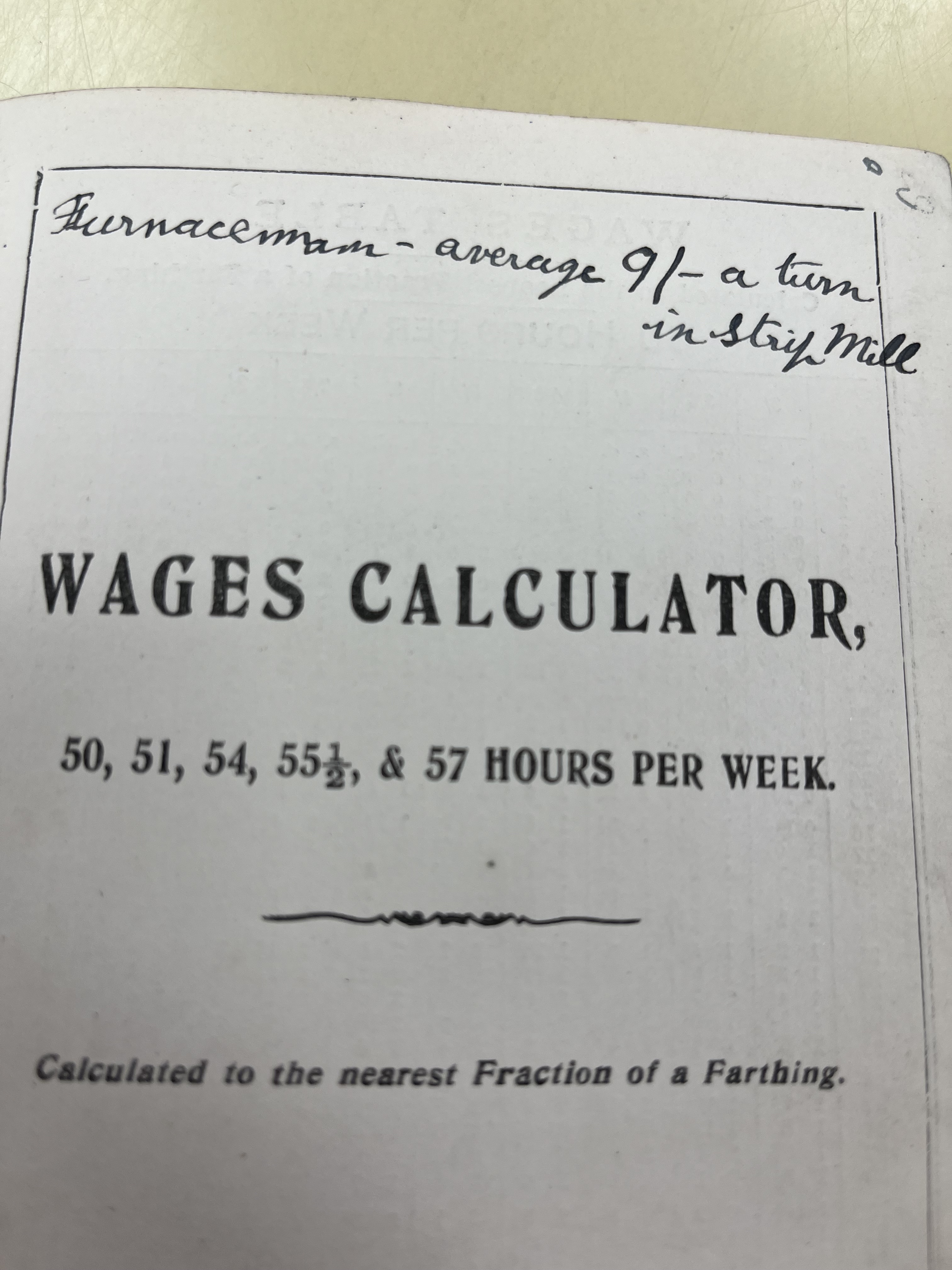
Judging by the stationer’s imprint and the name and address at the back of the book, this was a log of Sheffield workers’ hours and payments kept by a Mr Hunt who lived at 302 Staniforth Road, Attercliffe, Sheffield. This was not a difficult deduction.
It begins in July 1914, and finishes when the book is full in August 1917.
I assumed they were all men and worked in a protected industry which could well have been a related to steel in some way or another, it being Sheffield.
And then I thought, of course I could be wrong and it could be a workforce of women taking over jobs ‘left’ by men fighting in the war.
I liked that idea and conjured up all sorts of mental images of feisty women and their stories, but a more detailed look (by the Best Beloved) ‘unearthed’ this at the back of the book and more references to furnacemen at the front.
Interestingly, as I say at least to me, there is a knife-making company called Samuel Staniforth making knives who say they were established in 1864. I am temped to contact them and see if they are interested in this part of their history. https://www.s-staniforth.co.uk
There are some handy wages tables at the back ‘calculated to the nearest fraction of a farthing’ and in terms of hours, go up to 57 hours a week.
Whoever C Wise was, he is present from the beginning to the end. (But W Wise, makes only one entry right at the beginning.
I am speculating of course, but could be father and son….)
In 1914 he was earning £2 and two shillings, but by 1917 was on £3/19/6d.
Interestingly, at least to me, is that although there are smatterings of records advance in wages throughout the book, many of the men took at advance in June 1915, August 1916 and April 1917.
I was thinking that this coincided with Wakes Weeks. A particularly northern tradition which started in the Industrial Revolution and was when the factory/works was closed for a week, quite often for maintenance work.
And they were, certainly originally, unpaid weeks so you would need an advance if you were going anywhere.
As a child I remember Wakes Weeks in the cotton mills in the Lancashire town where I was born – and the tradition was to go to Blackpool.
So popular was it that in the peak of Wakes Weeks in the 1860s (and no, I don’t remember that ) 23,000 holidaymakers left the town of Oldham alone, and headed to Blackpool.
Or, if you were better off, Morecambe Bay.
Wakes Week in Blackpool with the tower in the background
There were some wage advances recorded in the book in the run up to Christmas but were for a lot less money than the holiday demand.
Except, that was my theory until I checked the dates and, no, the factory/works was not closed for the following week, and the same men were recorded as working and for much the same number of hours.
So, it remains a mystery.
Another Oxfam mystery, however, was solved by a very nice auctioneer who helps us out with some of our oddities.
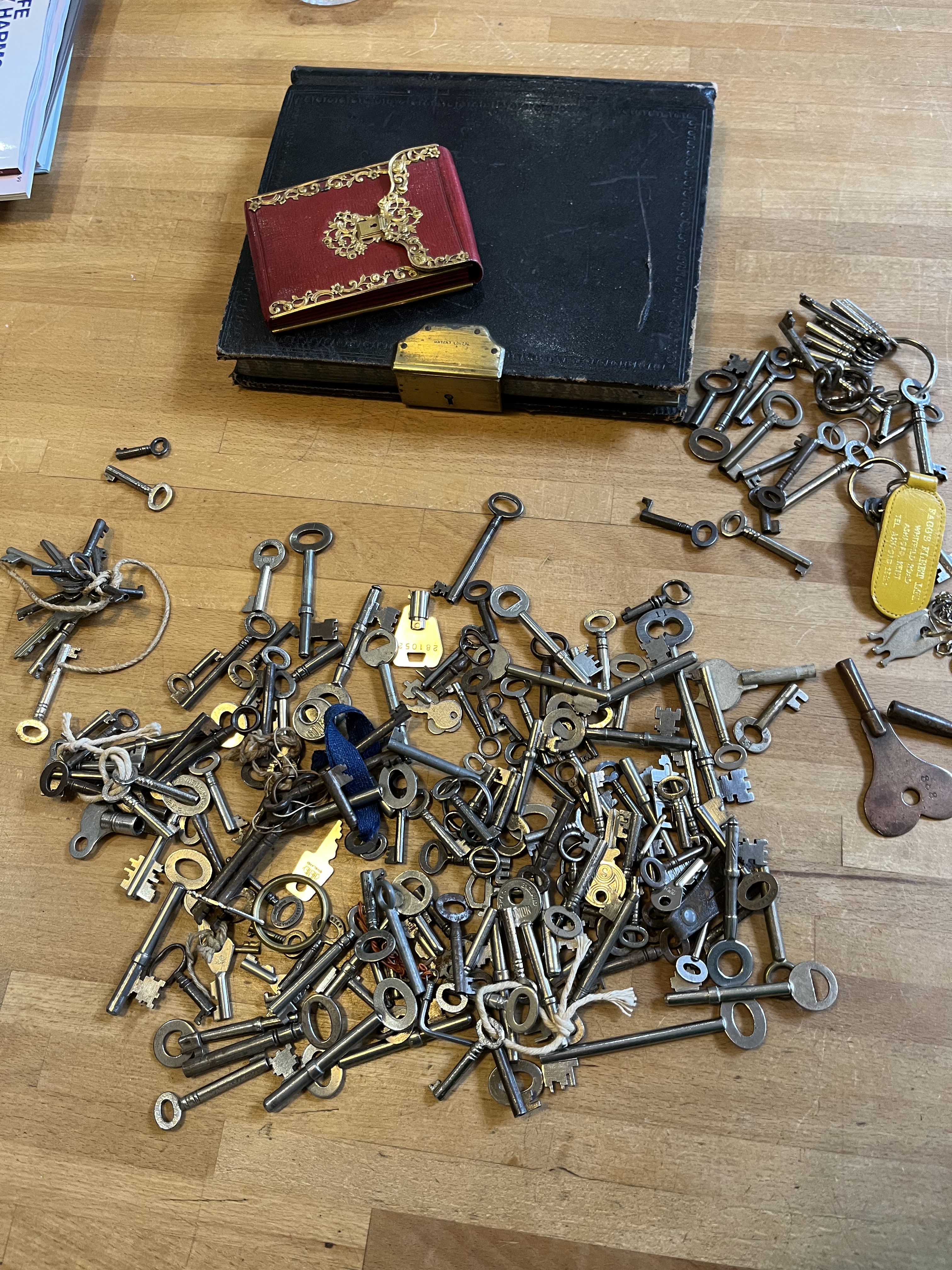
These were donated by a friend and some have ended up in an auction, but one of them was locked.
The nice man brought down his box of keys acquired over the years and I spent a pleasant but fruitless couple of hours trying to find one that worked. ( And indeed, watching the Brummie Lockpicker on YouTube.)
The nice man had said he thought it was a carte de visit holder and took it away to try and sell it for us.
He realised ( as probably I should have) that it wasn’t a lock as such and you could get it open.
And here is what he found:
Apparently,
‘It is a ladies etui case still containing a few of the original implements. Ivory writing tablet Pencil Combined ear scoop and toothpick.
When looking at it under a glass it was evident that the lock does not require a key. The centre pin is on a spring and just needs pushing down to open.’
Rootling around in the bottom of capacious shoulder bags over the years, I’ve all sorts of forgotten things – and indeed notebooks and pencils – but never a, presumably ever-useful, ear scoop and toothpick
Like most jobs the work of an Oxfam volunteer has a lot of routine stuff in it – but oddities, strange things, little gems and surprises make it all worthwhile – well most of it anyway.
So rather than bore you with an account of the routine, but necessary, stuff that needs to be done to keep the shop alive – though I could tell you about the alphabetical ordering of paperback fiction, the donations of souvenir books of people’s travels ( and indeed who in Petersfield will buy a glossy book of photos of Nebraska ) – I will instead delight you with some of the oddities.
First up, and an exception to the rule as above, a little paperback survivor of book on Lucerne and its surroundings.
I looked up Polytechnic Conducted Tours and found this:
The Polytechnic Touring Association was a travel agency which emerged from the efforts of the Regent Street Polytechnic (now University of Westminster) to arrange UK and foreign holidays for students and members of that institution.[1] The PTA became an independent company – though still with close links to the Polytechnic – in 1911. Later it changed its name to Poly Travel, before being acquired in 1962 along with the firm Sir Henry Lunn Ltd. A few years later, the two firms were merged and eventually rebranded as Lunn Poly (and later on as Thomson Holidays). The PTA was one of a number of British travel agencies formed in the latter part of the 19th century, following on from the pioneering efforts of Thomas Cook. ( Wikipedia)
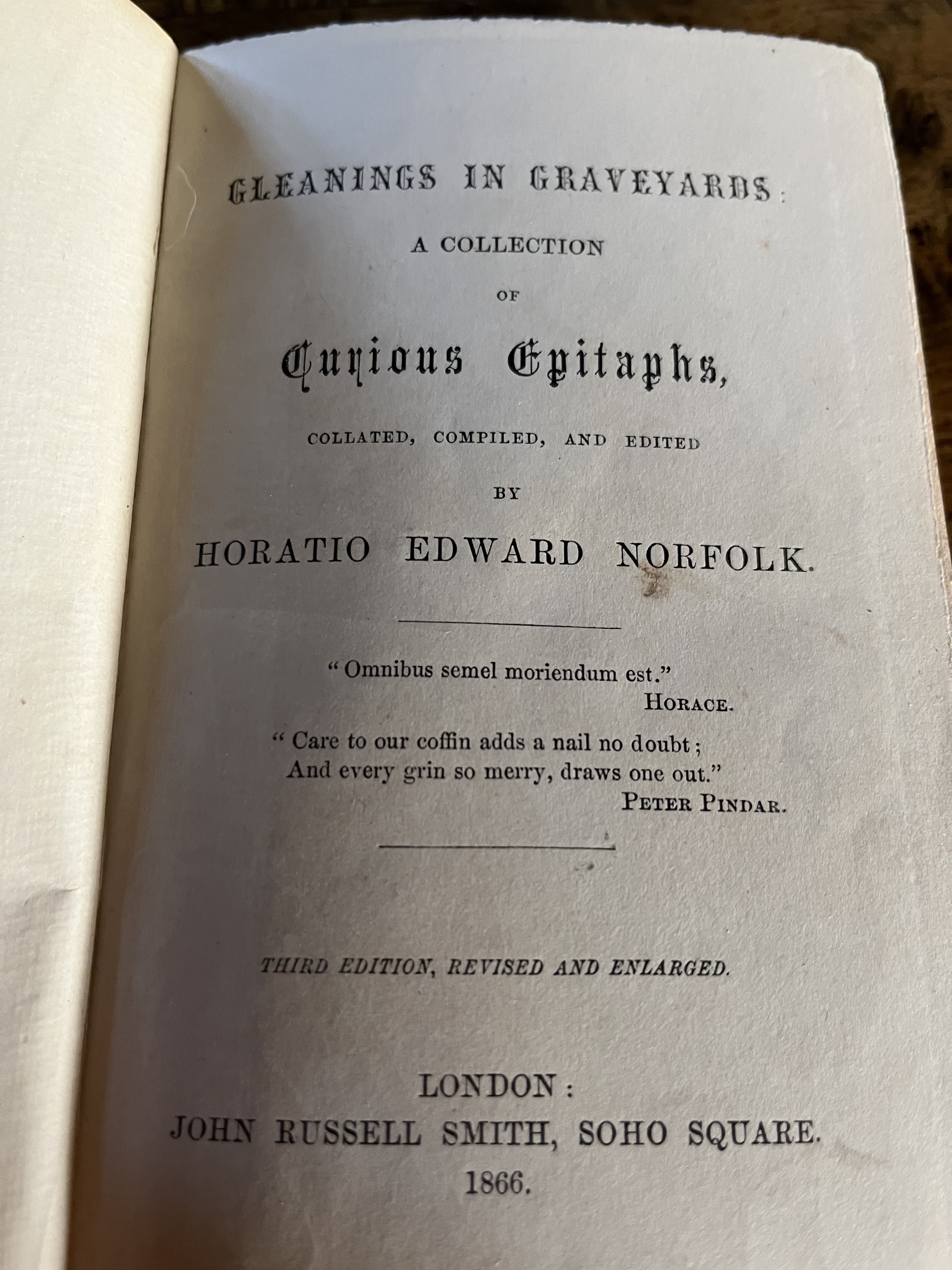
Next up is another little book which I think falls into the categories of ‘there is a book out there on any subject under the sun and if you wait long enough, it will come into the Petersfield Oxfam bookshop. Along with people have unusual passions, and find the time to write a book about it. (This latter category includes, by way of example, a book on post boxes in Devon, and a book on fishing with bamboo rods.)
And this one….
Anyway, where was I. Apparently wandering around the graveyards, or ‘God’s Acres’ of the country.
Where, according to Horatio Edward Norfolk, ‘ the mind of of even the most careless man should be directed into a train of serious and healthy reflection’.
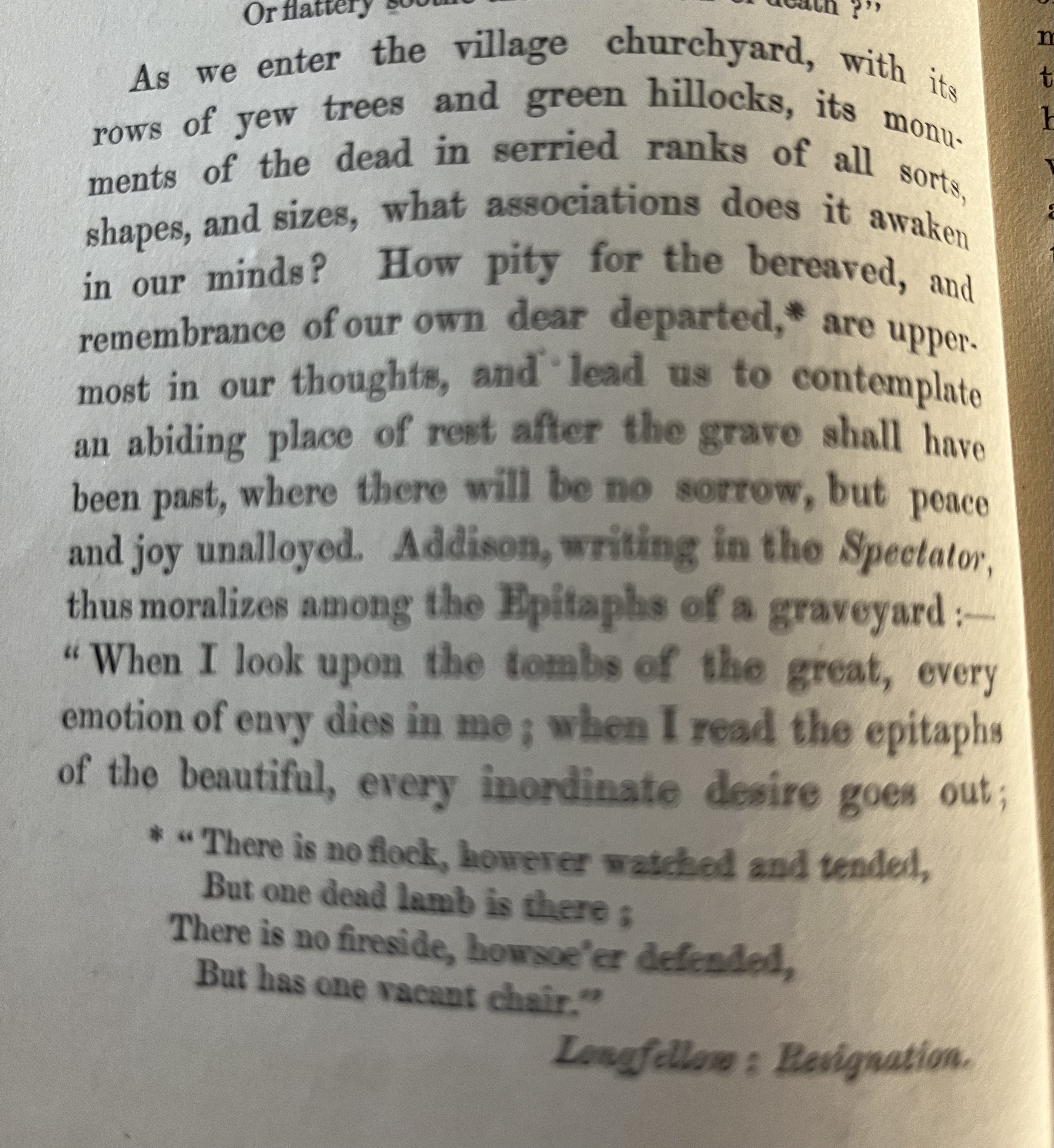
He does pontificate rather:
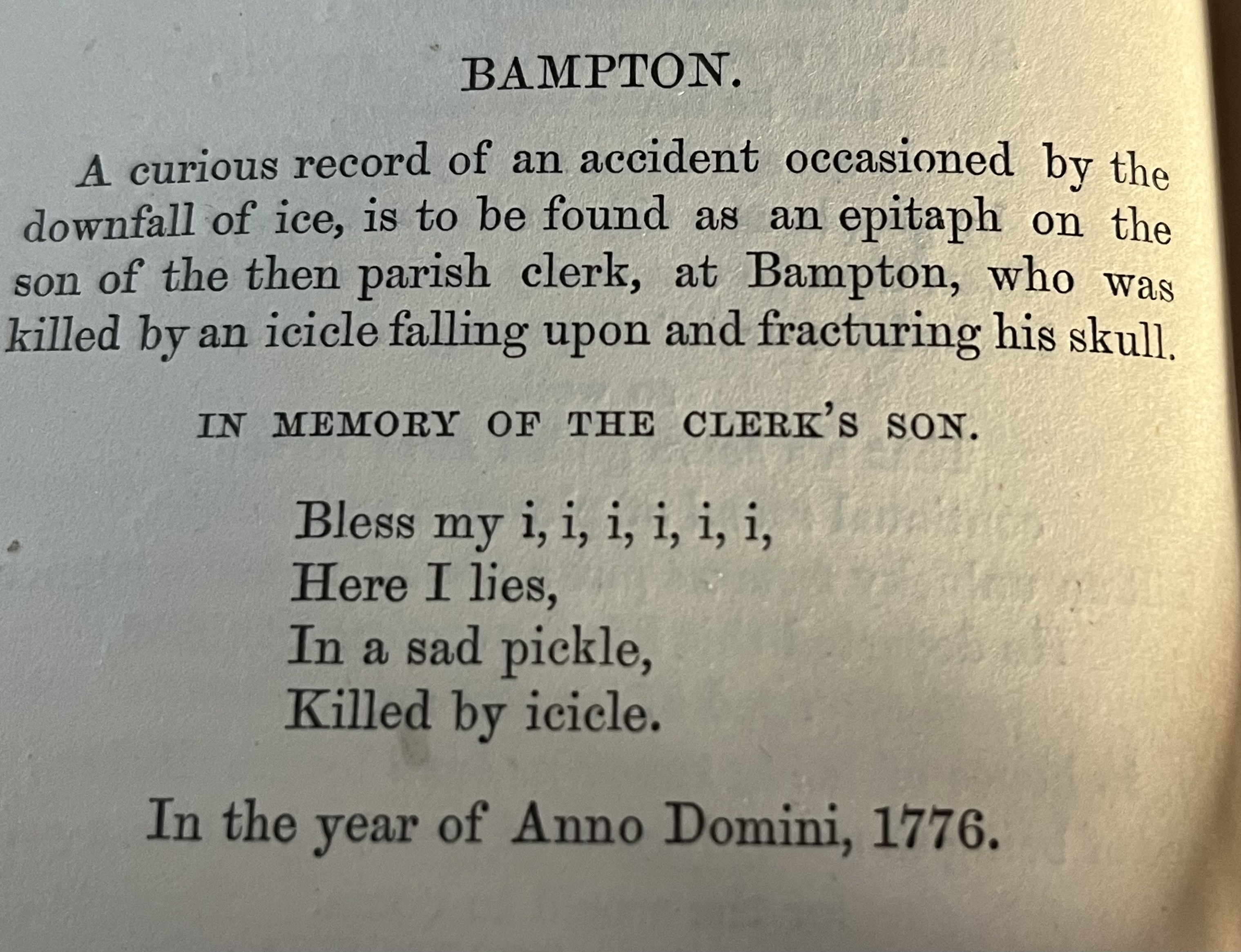
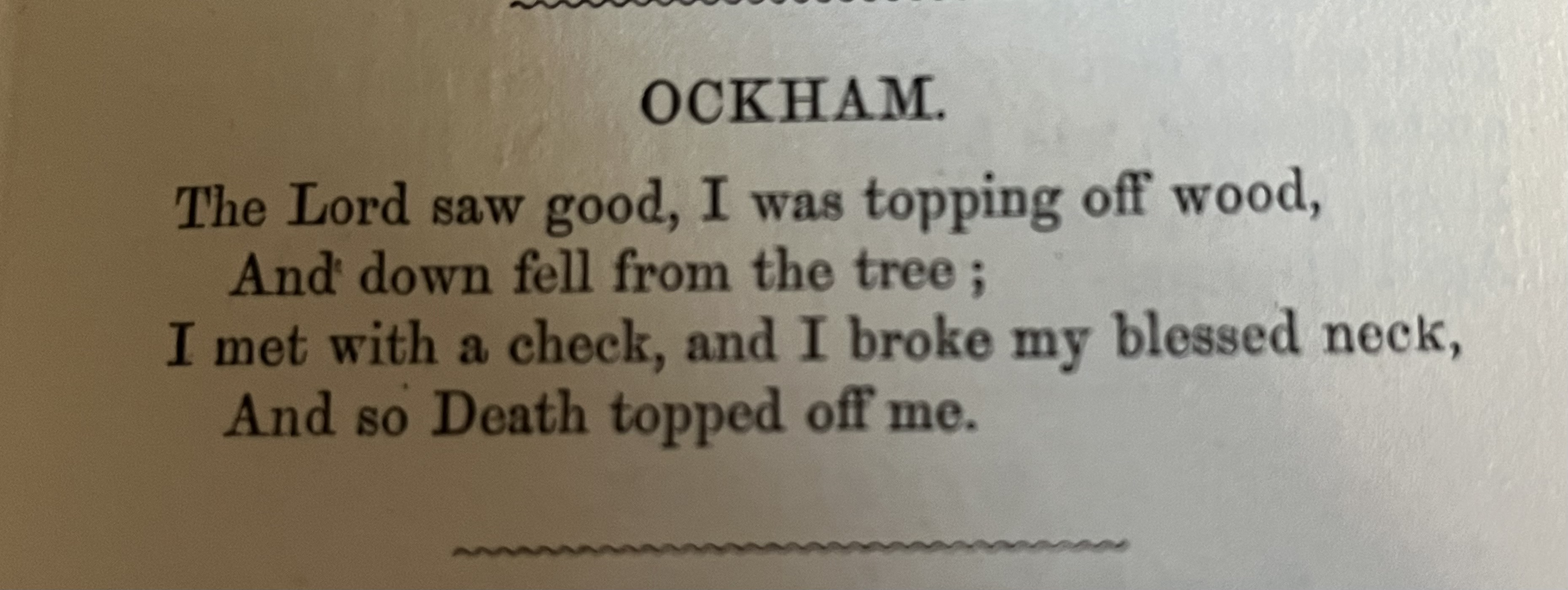
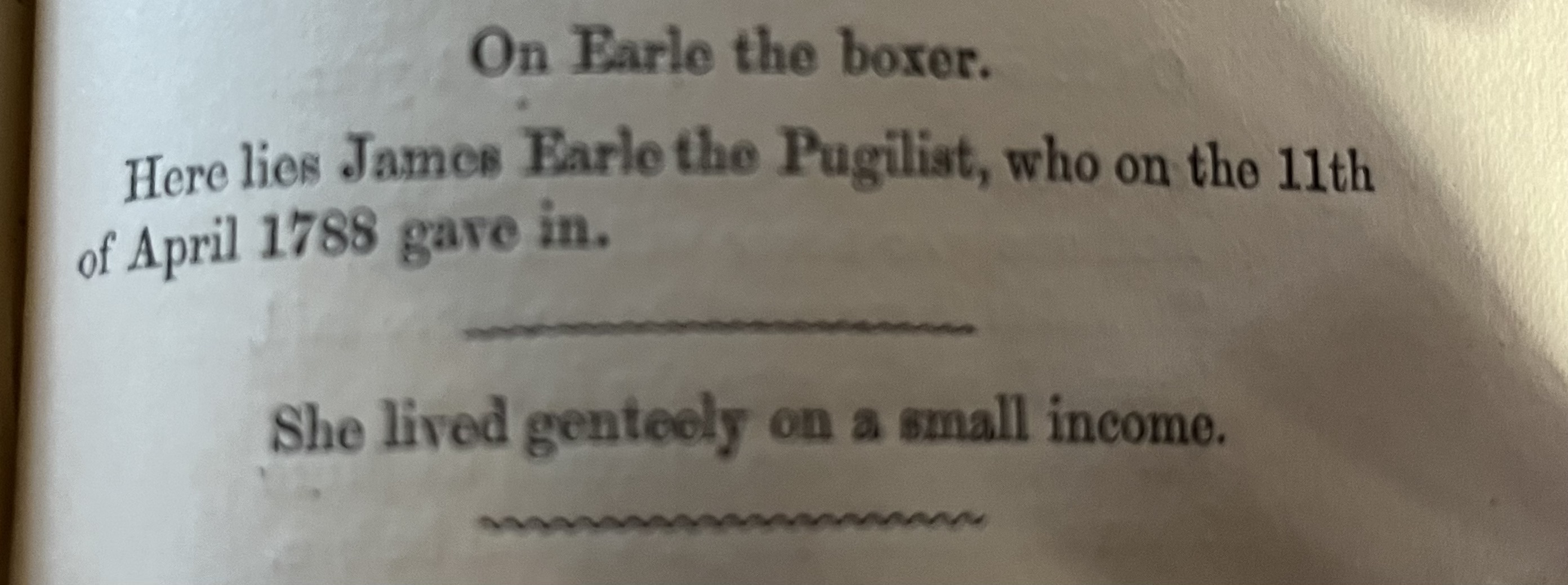
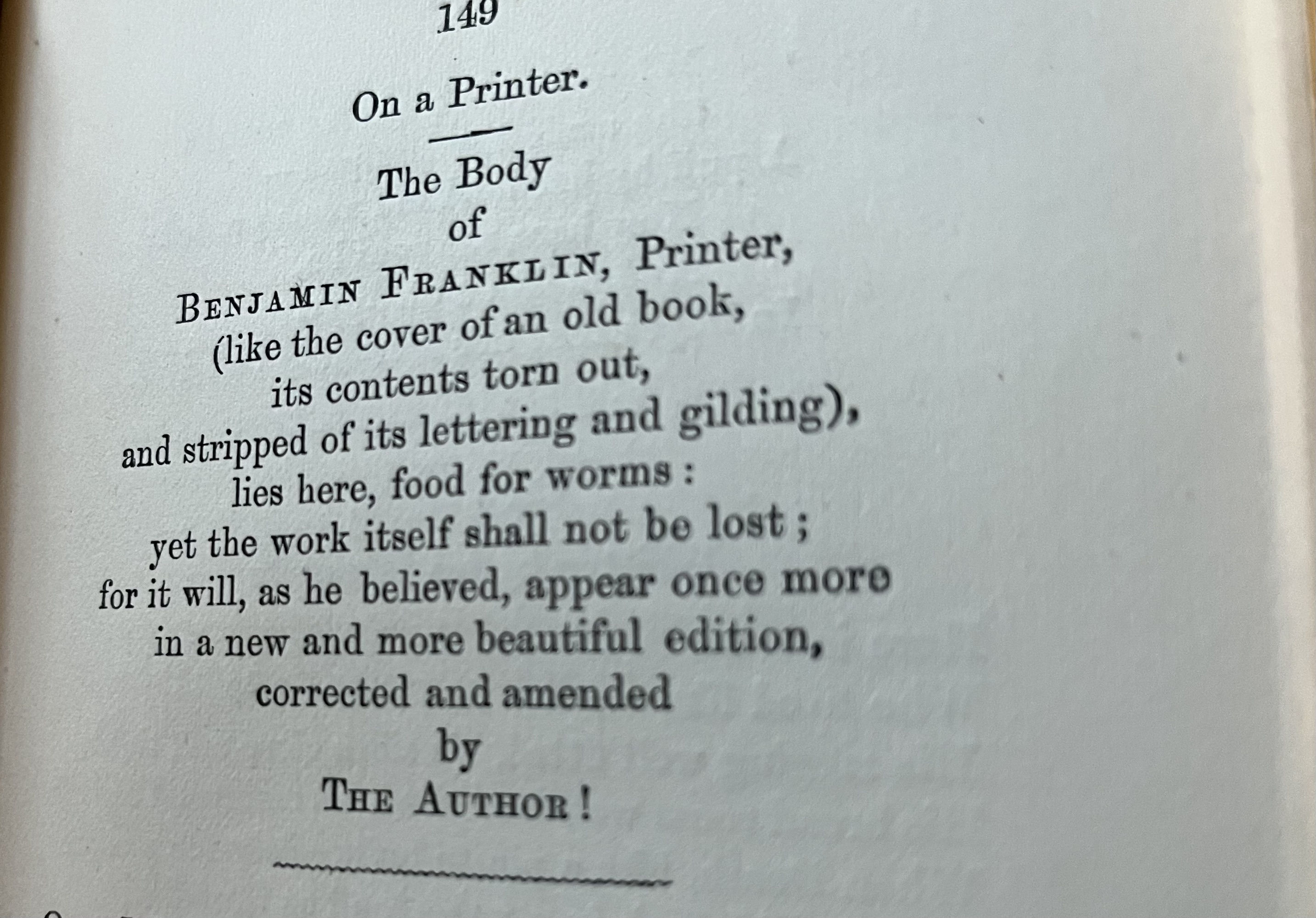
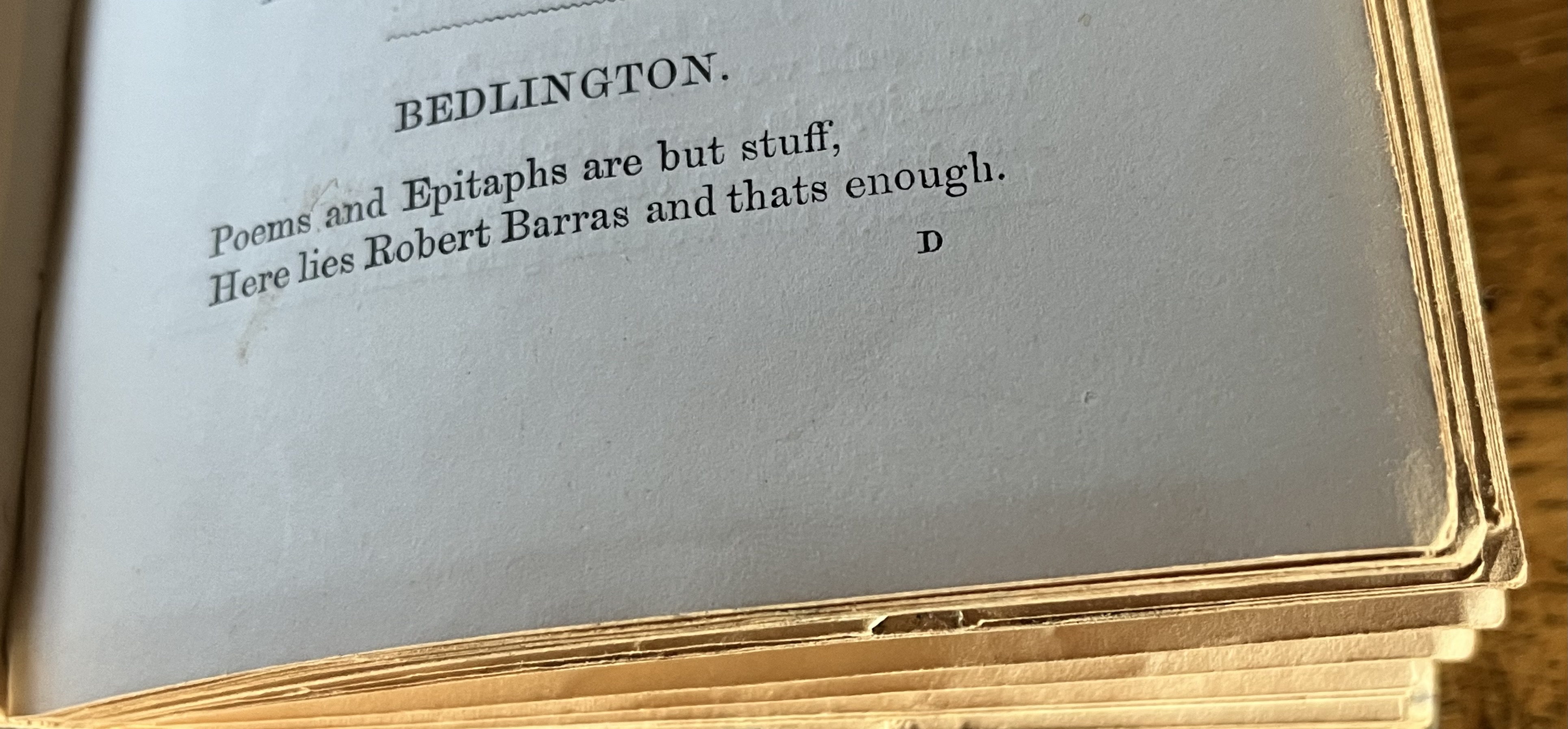
And here are some samples of what he found:
Ouch
and ouch again
May she indeed! I am assuming/hoping some of those 24 children were ‘inherited’ from a previous wife….
No name for the genteel lady on a small income – the story of her life
couldn’t miss a book person
and some of them a heartbreaking
Presumably, as this was found in an Oxfordshire churchyard and not London, it was the plague outbreak of that year which killed them all, rather than the Great Fire of London.
I have a few more oddities to tell you about but in the interest of bite-sized pieces, I will leave them until next time.
Whilst we were in Malta, it was the celebration of the extended holiday on the island of St Paul who, perhaps unsurprisingly, became their patron saint.
Apparently he got shipwrecked there in a February though it is not entirely clear which one( As I said before, we probably should have checked the weather before we booked a February trip – shipwrecking month).
He was there, so it is said, for three months before carrying on to Rome to plead his case against being arrested in Jerusalem.
He had been accused of defiling the temple by bringing gentiles within its precincts and apparently 40 jewish locals said they would eat or drink nothing until they had killed him.
Luckily for him, his nephew hears of this plot and Paul was given a protective escort and sent off to Felix governor of Caesarea who put him under house arrest but gave orders that his friends could look after him well and he wasn’t to suffer hardship. For two years.
No snap legal decisions then.
But Felix was replaced by Festus who said Paul should be hauled back to Jerusalem and face the music.
Paul exercised his right as a Roman citizen to ‘appeal unto caesar’ and, btw, being a Roman citizen had also prevented him from being flogged.
So, off he sets and gets shipwrecked on Malta with 275 companions. Rather a precise number you may think to be sure of after all this time but then there are people who believe the world was literally created in seven days.
I don’t know about you, but I‘d be hard pressed to muster 275 companions never mind saying to them that they should accompany me on a perilous journey to Rome where Christians were not, shall we say, universally liked/tolerated/allowed to live…
Anyway, they swim ashore from their shipwreck and make it to land where they are found by locals who despite them being wet and foreign, warm them by a fire and give them food – yes all 275 of them….
A snake appears roused by the warmth of the fire, and bites Paul on the arm.
The previously welcoming locals take fright and assume this is a sign of an evil person, but when Paul carries on talking ( I am guessing a bit of preaching thrown in) with no ill-effects they change back to being welcoming locals, and indeed are impressed.
Paul manages to convert the whole island ( and its small neighbour Gozo) within his three months and according to the locals, find time to bathe in St Paul’s bay – well why not.
This landing on Malta is mentioned in the Bible’s Acts of the Apostles ( my auto correct just had that as Scots of the Apostles which may indeed have been a more interesting story) so the Maltese have something to point to.
Just to finish the story, he does make it to Rome where he is again under a rather lenient house arrest for two years until he a) dies in a fire b) was martyred but its is not explained how exactly or c) was ‘slewn by Nero’. I am guessing on the orders of rather than directly but then who knows with Nero.
Meanwhile, the Maltese have annual celebration involving a lot of fireworks, some processions, busy buses with people on a day off, and eating prinulatta which is I am told some almond-based dessert always eaten on St Paul’s day. ( I am not a sweet-eating person or I would have done more investigation and found you a recipe….)
Just one last thing, another source I have just found says Paul had 274 companions. Just wanted you to know there are some aspects of this story which don’t necessarily add up.
And whilst on the subject of shipwrecks, guess what just got donated to our bookshop.
As I have said many times before, working in the Oxfam shop is a mixed bag, indeed box.
Sometimes you have boxes and indeed bags of books which are just not saleable. They have been stored in a garage for years, they are what is politely called well-read and in fact means they have been trashed – by children.
They are a collection of books about royal weddings – long divorced. They are dated cookery books with no charm, they are guide books printed in the 1990s and whilst the monuments may not have changed, all the restaurants, hotels, bus timetables will have.
But of course, and it is the thing that keeps us book sorters happy, are the treat and novelties.
We don’t have time or indeed the patience to go through every book but there is usually a general check that it is not written in, scrawled in, has the first few pages missing ( all rather depressingly regular).
But after that we are busy processing the next batch.
So, a colleague was on the till the other day when a customer approached and said he had been looking through the book he fancied buying and found a £50 not sandwich between two pages.
He handed it over to the rather surprised volunteer, bought the book and went home.
We have no idea who it was who donated the book so all I can say is that I hope they would have been pleased we got an extra £50 for their donation.
And then I spent an afternoon in the company of many, many books on hunting, shooting and indeed one or two on trapping and snaring.
This came about because someone I know locally has an auction company and is an antiques collector.
And he has been really helpful with old coins we have had for example, and lately he has agreed to sell a Victoria century carte de visit holder. (In case you were unaware, in those days, people dropped a card in with your manservant to say you had called and would be delighted to invite you for a cup of tea, game of cards, etc etc.)
Whilst we were talking he said he was having a clear out of books. Now for him, a clear out of books is not a couple of Waitrose bags but a good few very large packing boxes.
I took one for now – bearing in mind we don’t have a lot of space and certainly not that much.
It turns out this was part of a library he had bought from someone and it was his collection of all things hunting and shooting.
I have to say it was a very strange time, spending a whole afternoon on my own upstairs in the shop valuing all these books about killing wildlife.
As some of them were old, and some valuable, I had to look through them all.
To the sensibilities of most people in this day and age, the thing that is striking is the fascination with nature along side the fascination with how to kill it on a one to one basis.
Some of these books were illustrated with great engravings and images.
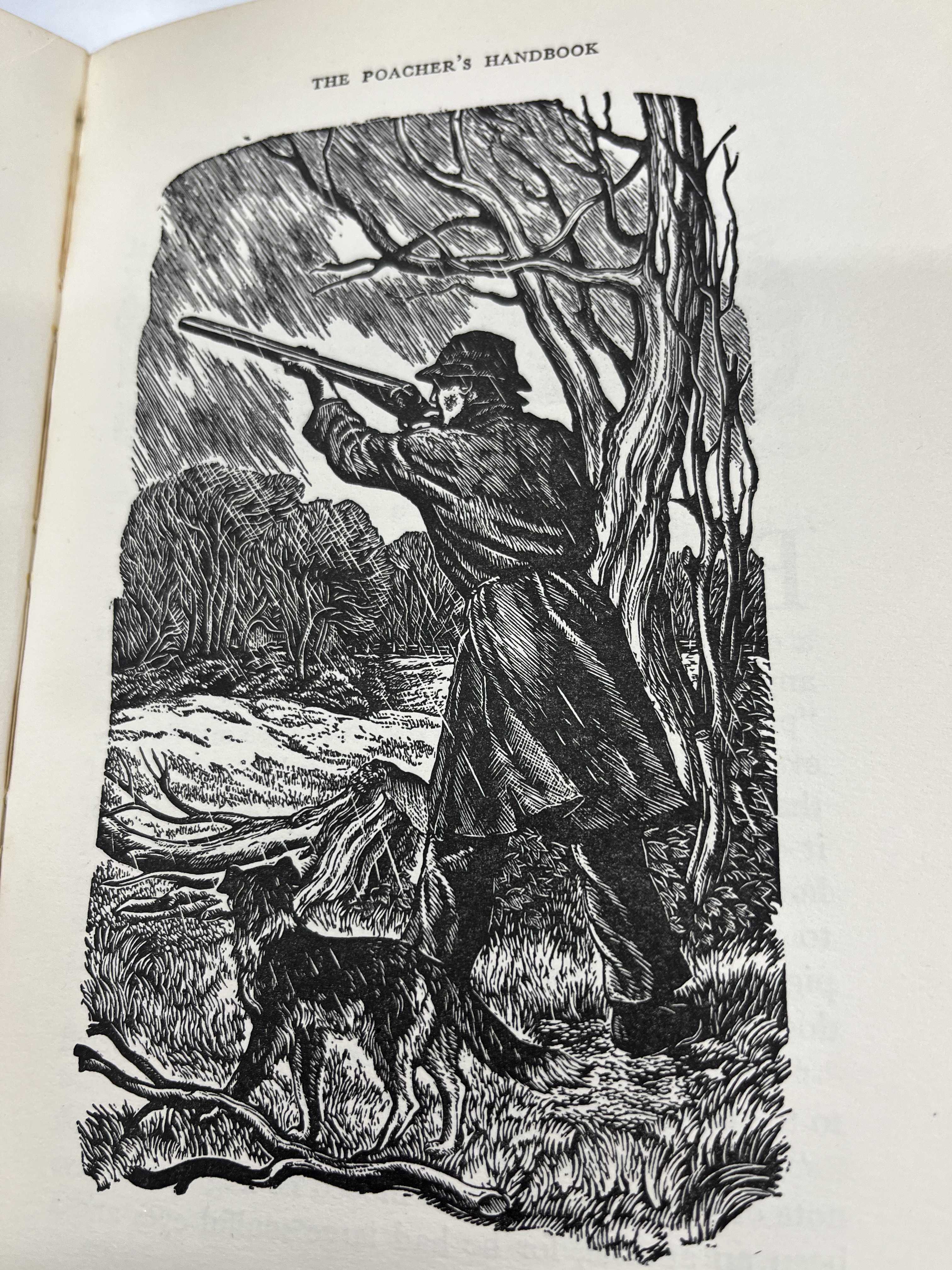
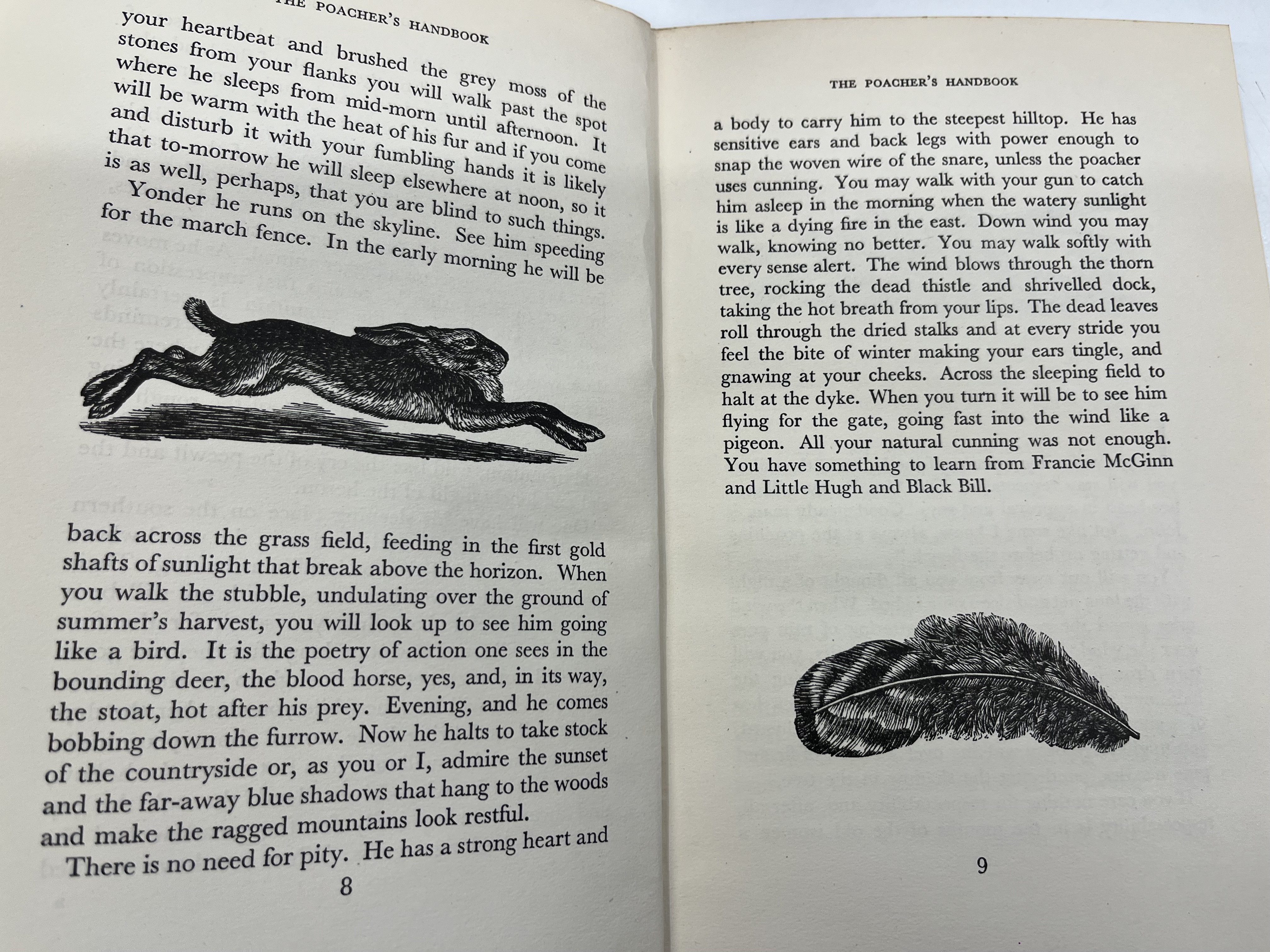
But then you read what Ian Niall has to say about the hare:
Lovely lyrical description of the countryside and then explains you need to be a really cunning poacher to make sure you trap its legs so it can’t get free. How does that fit?
And you get this:
Followed by this:
Yes it is the same delightful bird and coveted shooting trophy.
Luckily and by sheer coincidence, as I was taking a break from killing, I found this is a nearby box of donations.
Yes it is a bit twee, but have to say it made me feel a lot better.
When I nipped downstairs to take the till volunteer a cup of tea, I bumped into a regular customer who I know because he drew up our wills.
‘Have you got anything on fishing?’ he asked.
‘Ahh, I thought, hunting shooting, and now fishing.’
As it happens I found him a rare-ish book on making fishing rods out of bamboo. He is apparently delighted.
A while ago we went back to Hawes ( in a lovely part of North Yorkshire in case you didn’t know).
Years ago, we had ended up staying there in a last minute booking in a pub which took dogs.
When we came downstairs ( after that delicious moment when you take your boots off after a good day’s walking) we found the bar was fully carpeted in dogs.
Bigs ones, little ones, working ones, mutts, proper sheepdogs, waggy tails, bored resignation faces and all with waitresses adeptly stepping over them with full plates in their hands.
The Best Beloved loved it, so our recent trip was a bit of a pilgrimage – though we actually stayed in a rented cottage nearby.
The pub has moved on since we were there – something the BB always disproves of as everywhere should stay as he fondly remembers it.
There was real carpet, and fewer dogs. Ah well.
Anyway, we decided to play by ear where we should stay heading back down south, after all last minute Hawes (those many years) ago had worked out fine……
So, I booked a room for the following night in South Yorkshire hotel.
Should have read the reviews, taken just a bit more time in sussing it out and where is was, taking good note that it didn’t serve food, mention of karaoke, the website saying it had been recently re-furbished in 2015…..
But we had a rendezvous with a pilgrimage pint, so I was not as assiduous as I should have been – not by a long chalk.
We arrived and parked on the run down road in the run down town, and heard the music from quite a long way away.
I went in to find it very, very busy given that it was early evening on a Sunday. No one seem riveted to the four large sky screens in the bar which was strange as trying to have a conversation over the music was impossible.
Suffice it to say in order to hear what I was saying to her ( ‘sorry we are not staying’), the nice young woman behind the bar had to usher me down a corridor into the function room…..
But then we got lucky.
Sitting in the car madly Googling dog friendly pubs with rooms nearby with immediate availability, the BB found the Dog and Partridge in Flouch ( no, I had never heard of Flouch either which is probably not surprising as it seems to be in the middle of nowhere but with the A628 to Manchester running directly outside.)
Inside, it was wood floors, log fires, a herd of young farmers, a walking group, nice good, comfortable room (the last one they had – phew) and effective double glazing so the A628 was like a film backdrop.
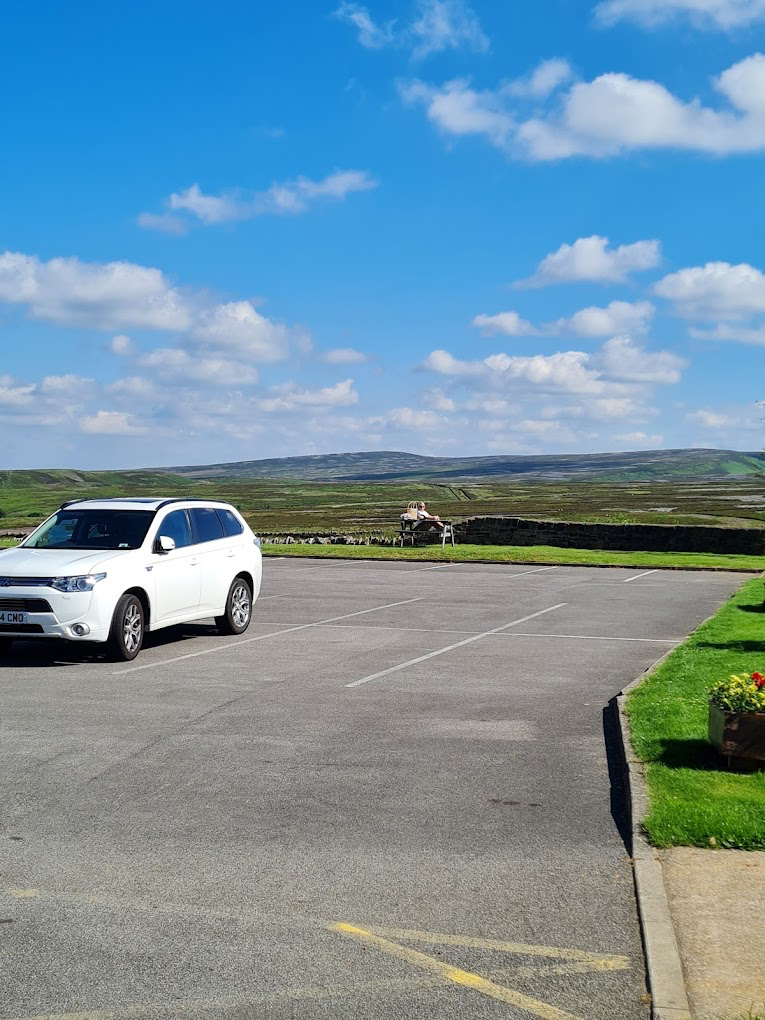
And out the back is moorland as far as the eye can see.
Imagine Daphne Du Maurier’s Jamaica Inn only in the North and run by thoughtful, kind, efficient, nice people.
We were sitting doing some of the back catalogue of Wordle, when a couple stopped and proffered a semi-drunk bottle of wine.
They were on a tour of the country as part of a significant wedding anniversary celebration and had had more champagne than meant they could finish the wine.
Oh well, it would have been a shame to waste it. And of course, we got chatting.
In one of those amazing coincidences, he had been brought up in a village three miles from us.
Anyway, the next morning the view was not evident on account of it lashing with rain, wind and cloud so low you could touch it.
I didn’t have to, but would have been willing to beg to be allowed to stay another night instead of facing hours of driving down the ever-unlovely M1 dealing with lorry spray, lane-hogging, windscreen wipers on fast.
So, there we stayed.
Walkers had about an hour’s worth of discussion about whether they should abandon that day’s leg of their walk. They did and left.
The anniversary couple set off for Scarborough with (a vain) hope that the weather would be better over there.
And the three of us had the place to ourselves only being interrupted to ask if we needed more tea.
First of all my apologies for bringing you a bit of Christmas long past the time when it should be well and over.
So, if like me, you are very happy to be in the cool zen-like calm of January, then please don’t read on, it is not a short one.
Otherwise:
The Oxfam bookshop.
You will, probably, have read the preview for this. The Tailor of Gloucester. If you haven’t, you will catch up – at length.
As you may know, we have to start planning Christmas way back in the late summer – if you live and survive on donations, you have to hope that things come into the shop which you can use to make something special.
And like all retailers, we rely on Christmas to make our money.
So, the window and table display are well thought about.
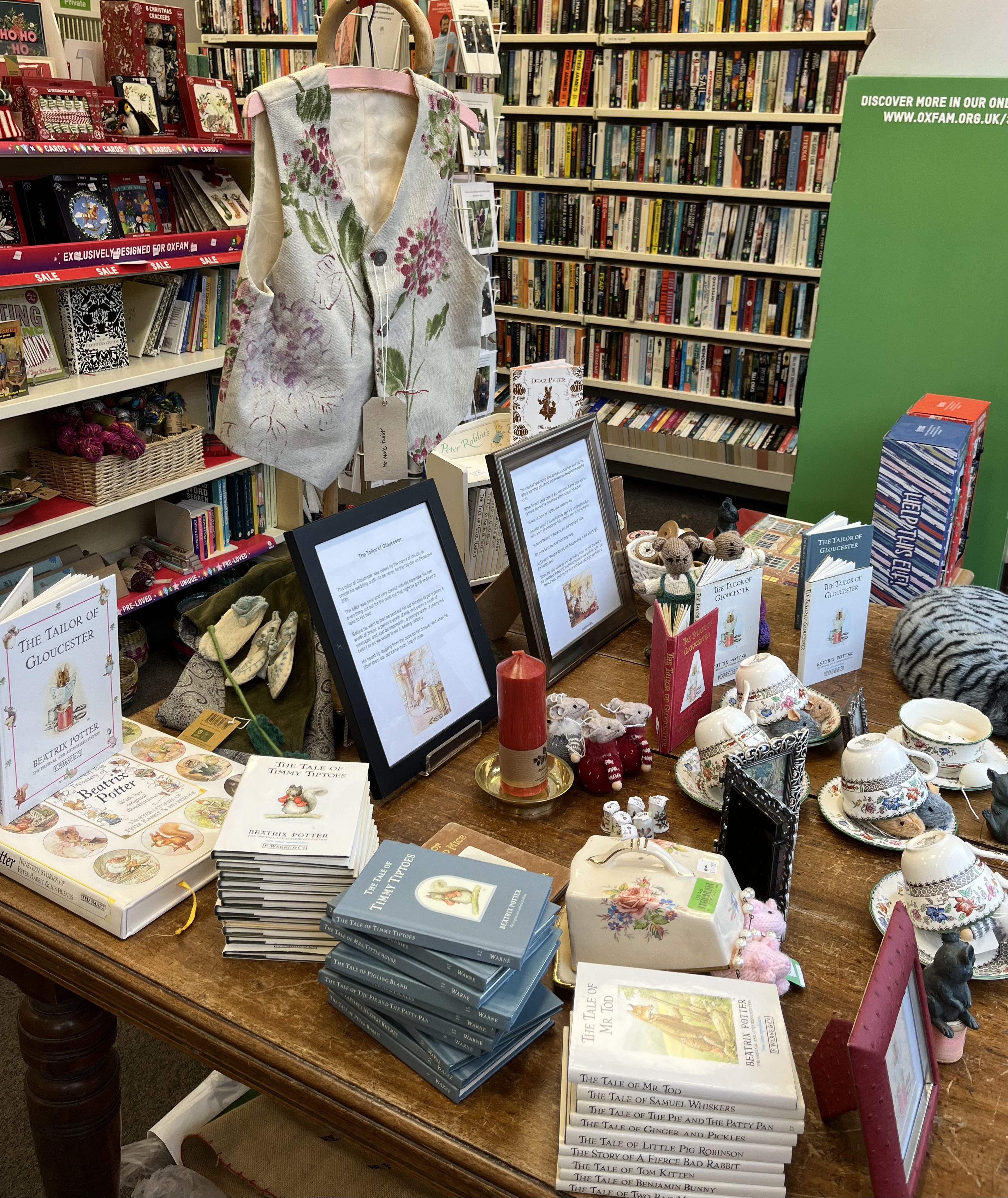
This last Christmas my colleague did The Old Curiosity Shop in the window and on the table, I did the Tailor of Gloucester.
For those of you who don’t know, it’s one of Beatrix Potter’s stories. It is about the poor tailor who is commissioned to make the mayor’s Christmas wedding outfit.
He lives with his cat Simpkins, always on the outlook for a mouse-snack in the tailor’s house.
The tailor sends the cat out for milk, bread and some thread to sew the outfit, and whilst he is out the tailor frees the mice who have been trapped by the dastardly cat under the tea cups on his dresser.
But the tailor gets ill and the grateful mice go to his workshop and make the outfit, but are short of a final bit of thread for the last buttonhole – Simpkins had hid it.
They leave a note saying ‘ no more twist’ but a guilty Simpkins gives it to the tailor, so all is well.
Nice Christmas story you may think. And indeed it is. But to bring it to our display table took some waving of my hands and asking for help. More of that later.
We have a lot of donations of Beatrix Potter books but they rarely sell except to grandmothers……
So it was easy to collect them. Though I did have every book sorter on high alert for copies of the Tailor Of Gloucester – rarer than you would think.
Oddly enough, we don’t get mice in any shape or form donated. Nor waistcoats. And, although bizarrely for a bookshop, we do get crockery, we didn’t have any between August and December – I had to buy some from another charity shop.
But when I explained what I needed it for, I got it on loan.
So, now I needed mice and a waistcoat.
And so I flapped my hands and asked for help. A skill I seem to have perfected over the years.
A very clever local sewer made me a waistcoat small enough to look the right size on the table – lined and perfect, leaving me only to cover the button holes with cherry coloured ‘twist’ and pin a note in ‘tiny mouse writing’ saying ‘no more twist’ to the last buttonhole.
Our manager’s mother knitted some mice but she ran out of time, so there were not enough.
A friend leant me some of her collection of resin mice, another friend bought me some and donated them to the shop, a local shop owner who also had a display of mice, gave me a couple, I bought a few from the local pet shop (cat toys) and finally the sweet shop gave me some sugar mice.
We had enough mice.
It worked – actually better than the image looks, but again hey ho.
In the Oxfam bookshop Petersfield, there are a few of us who take Christmas very seriously from August onwards.
Yes it is depressing to see Christmas cards for sale from then – and yes indeed they are – but as for the display planning, August is not too early at all.
After all, we have a tiny budget, actually no budget.
We have to reply on what appears in the shop and with amazing frequency that happens.
We have a window displays to plan, and planning we do.
Last year we did a Cluedo window so there was a desk with a decanter and knocked over glass, and old fashioned telephone, a bookcase ( of course, we are a bookshop).
There was a row of pegs with a scarlet cloak, a cook’s apron, some Coleman’s mustard, some peacock feathers, there was a fake dagger, gun, piece of lead piping.
You get the idea – or at least you do if you know the traditional Cluedo.
This year the theme is The Old Curiosity Shop.
So, we have been looking out for appropriate baubles, stuff, things, knickknacks etc.
We are working on how to make the plastic display shelves look like Victorian wooden ones.
How to hang a battered red velvet curtain.
And on the fairly firm basis we are not expecting a Victorian till to be donated, my window colleague said she thought an old ledger would work.
Now, I wasn’t expecting that we would get one of those either – in amongst battered Jilly Coopers and John Grishams, ledgers don’t appear.
But hey ho, look what was donated.
Whilst of course leaving room to display books after all bookselling is what we are there for.
This is the domain of my colleague/friend and I am around to help and tootle through our cupboards for stuff.
More my domain is the display table which is a rather nicely battered square one dating back 100 years I would say.
This year, I want to have a display on it based on the Beatrix Potter’s Tailor of Gloucester.
So, if you don’t know the story, the gist of it is that the tailor is commissioned by the Mayor of Gloucester to make his outfit, including a waistcoat, for his Christmas Day wedding.
The tailor has a cat who is mean to the house mice, but they hide under cups, and bowls and Simpkin can’t find them.
Simpkin is sent out to buy some twist ( thread) so the tailor can sew all the button holes but he hides it in a teapot.
The tailor gets sick and whilst he is in bed, the mice got to his workroom and sew, and sew, and they finish everything.
Except one buttonhole and they pin a note to it saying ‘no more twist.’
Actually, it is a short book, you should go read it because it is a rather charming Christmas story.
So, our manager’s mother is knitting small mice to hide in cups, I have collected some old thimbles and cotton reels from other charity shops.
We have a shop cat ( fake obviously) who will take on the role of Simpkin.
The story will be printed out and run around the four sides of the table.
And a kind and excellent needlewoman I know has offered to make a child’s size waistcoat because we don’t have the room for a big one.
All a bit twee? Maybe, but don’t tell me that because I have been invested in this since August.
It is rare to spend a sunny Saturday afternoon looking at a potential murder scene – well in my life it is.
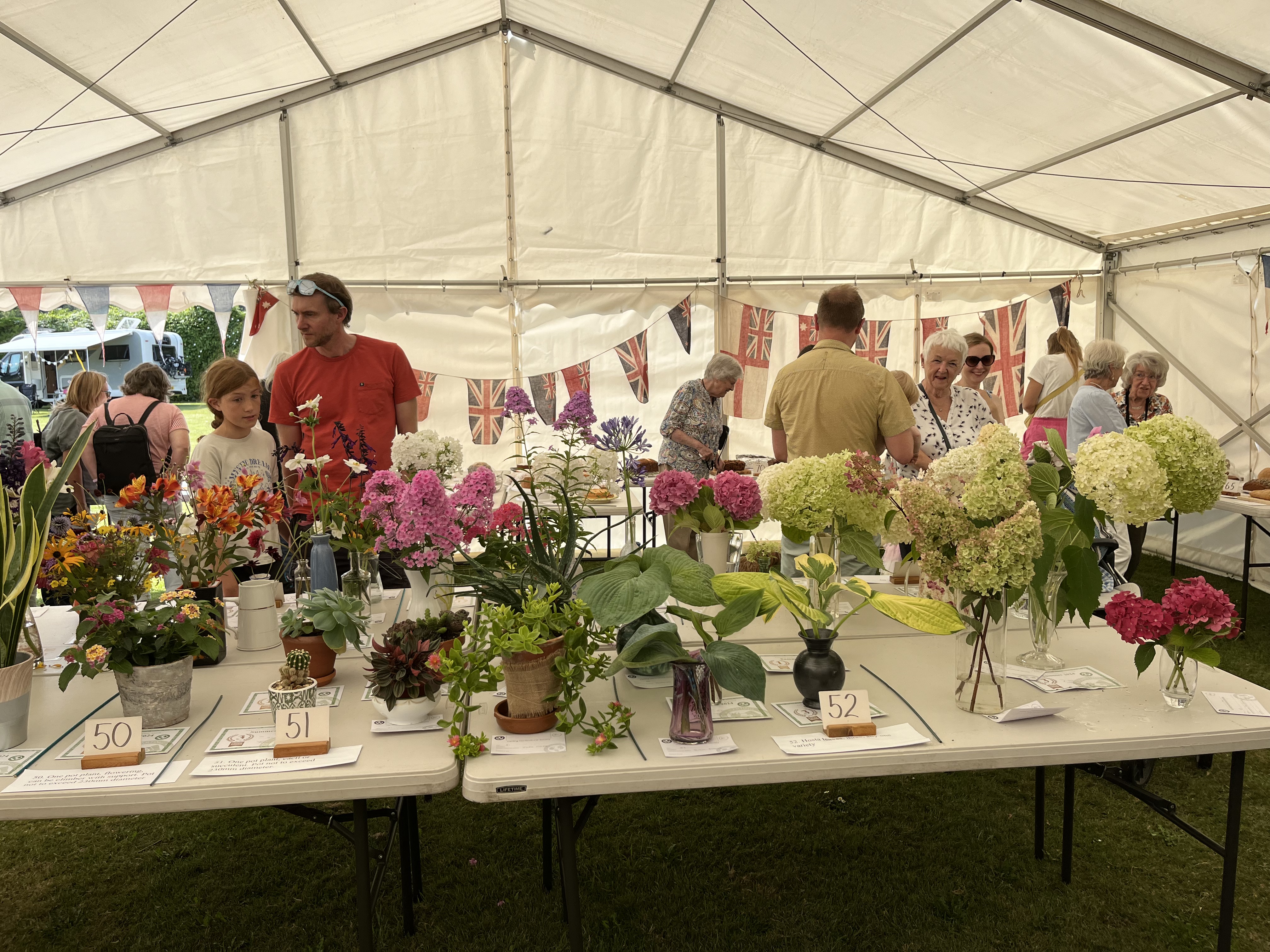
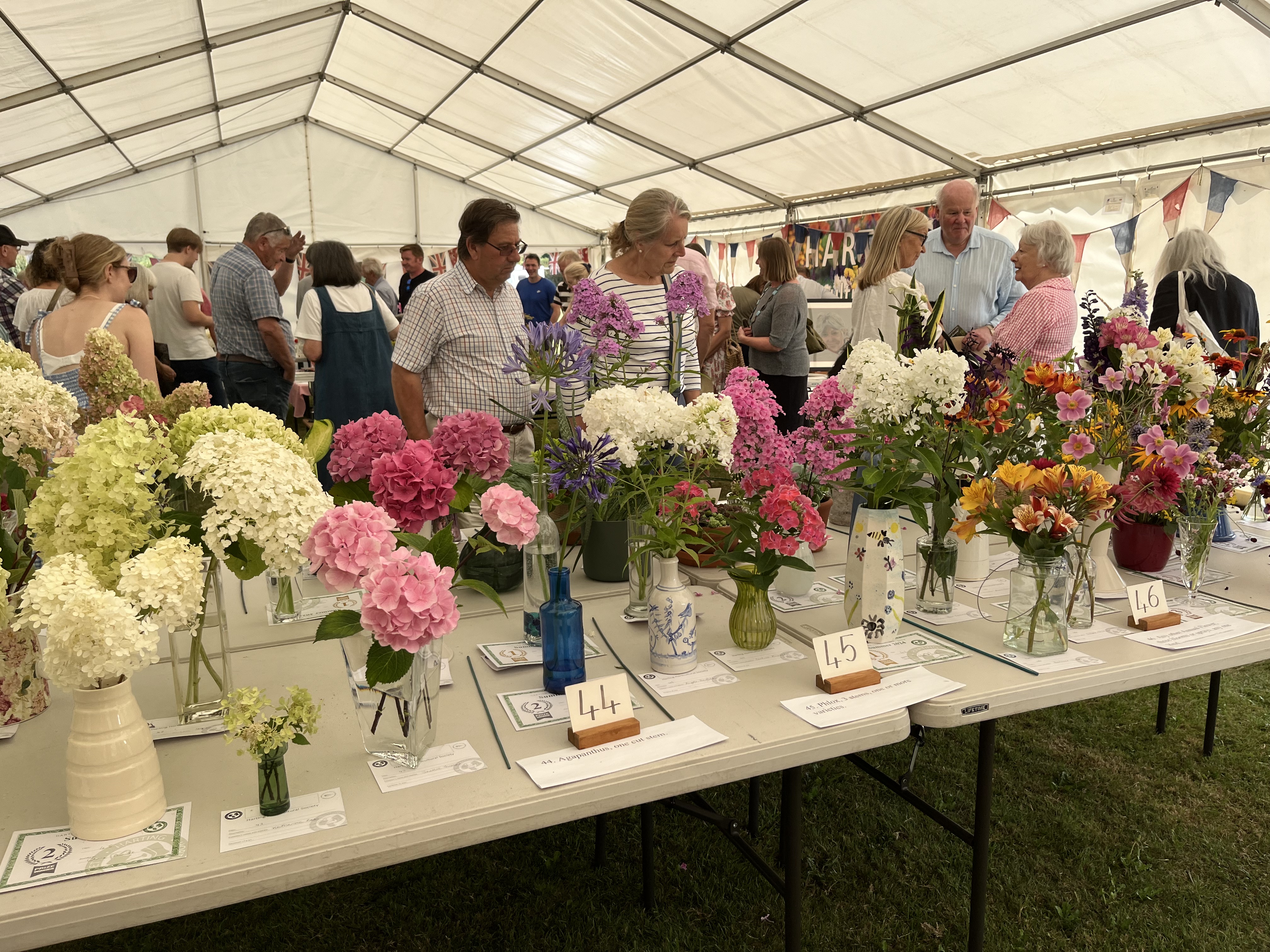
I went to the local horticultural society’s summer show. The first time I had been as it happens.
Yes it is a village event but runs to rather strict Royal Horticultural Society rules which can cause some upset.
(When I entered a quiche in spring show, I was marked down for my edges not being neatly enough crimped. Just saying.)
Anyway there it was.
An Agatha Christie novel in the making.
The village were all there. New vicar complete with dog collar and firm handshake, and the vicar’s wife. Ladies in their florals talking coyly about their winning dahlias or roses, or floral decorations, or jams.
There was apparently severe annoyance at the disqualification of a bunch of onions because they were tied together with an elastic band, not raffia, allowing someone’s arch rival to steal the gold.
Children eating ice creams, dogs, men in blazers and panama hats, women running the tea stall and tombola.
It was straight out of the 1930s only with serried ranks of four x fours parked round the cricket pitch – yes of course there was a cricket pitch.
A few friends, having a drink a few days later, started plotting the story. That will keep us going every other Tuesday through the winter.
Just before the first lockdown, I took some old and interesting books from the Oxfam shop so that I would have something to research in the idle weeks ahead.
( I did leave a note of what they were, and that I had them in case anyone thinks I was half inching them.)
Well, they got put in the Best Beloved’s study and I have to say I forgot about them until recently when I was clearing out my bits and pieces of boxes and files in there.
One was a very plain board covered book called The Place Names of Warwickshire. I am not sure why I even looked inside it as it was battered, and we have limited space to stock battered books about somewhere Petersfield book shoppers are probably not that interested in.
Anyway, I did look inside and there was nothing about the place names of Warwickshire.
The pages had no printing on them at all.
But they did have the handwritten life story of Edith Chadwick Horner who was, a bit of reading on found, part of the Fagg family of Kent.
This was a pretty worthless book unless you were researching that family.
So, I went look for who might be. You have to subscribe to many of these ancestry sites and needless to say I didn’t want to do that but after trying the free Mormon site and coming up blank, I found RootsChat.
Not the easiest of sites to navigate and clearly there not for dilettante types like me.
But I did manage to post what I knew and lo and behold, a couple of days later I get a message from her grandson.
He had and old typewritten version of her story but not the real thing. He wanted to buy it and I offered to post it to him.
Turns out his brother lived in a village a few miles down the road.
Well, well, I thought.
So I could imagine the brother had the book all along, had a clear out and had never looked inside and decided he too did not need a book on the place names of Warwickshire – and it ended up as a donation in Oxfam.
That indeed turned out to be the case when he came to collect it.
The mystery still remained of how and why she had written it in a bound book with blank text pages.
Turns out the brothers’ father worked at Cambridge University Press ( he was also a poet and artist of some renown) and the press made up a blank book of every publication presumably to check they had enough pages, all was in order etc.
These were two a penny in the press and so he would take them home and use as notebooks, maybe sketchbooks, and clearly to give to his mother so she could write her life story.
I do a like a union/reunion of a book with the people who are meant to have it.






























 thereluctanthousewife