Out with nature

Recently we had a lovely donation of old natural history books – and so we are off to the countryside, books in hand.

The donation came after someone’s father died and he was clearly someone who had a particular interest in butterflies and moths (more on that another time.)

But not exclusively as this little book shows:

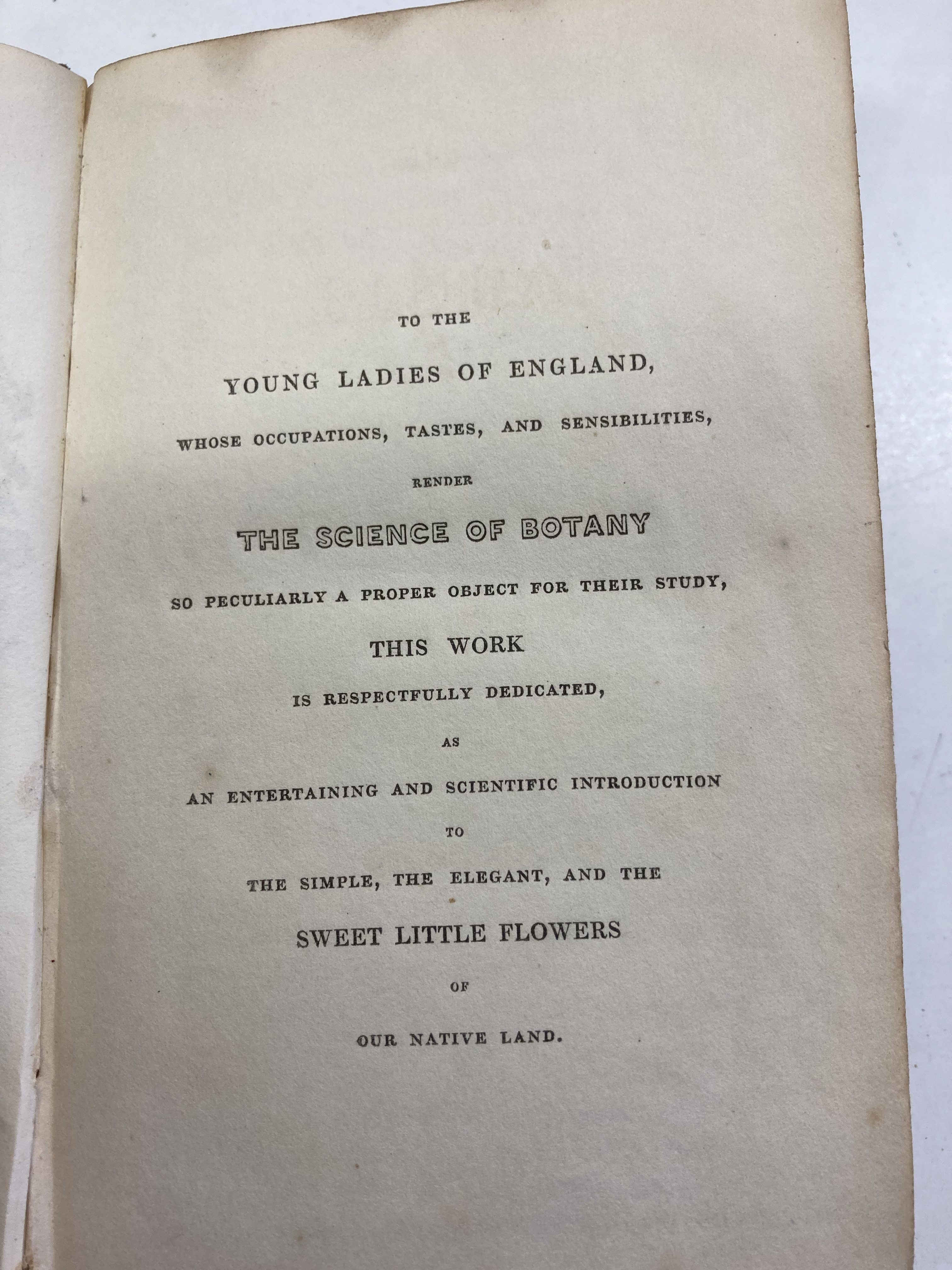
It is good to know that the young ladies of England have the appropriate study of botany to keep them from going wild…

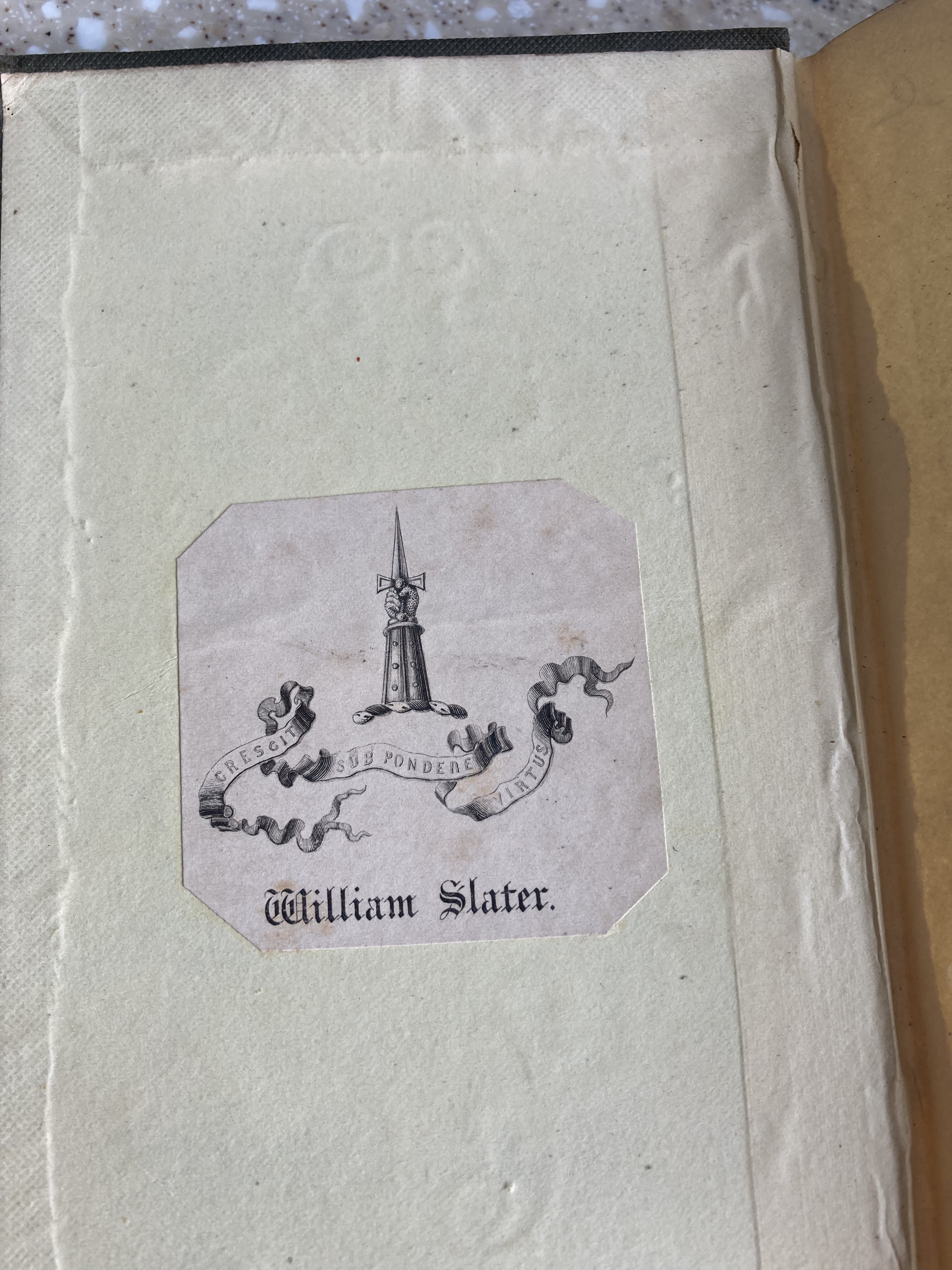
Mind you the book plate suggests that it was rather better used by a (young) man.

Now this one is also clearly intended for the amateur but I do have to question how simple the simple method is….

And then there is this little delight.

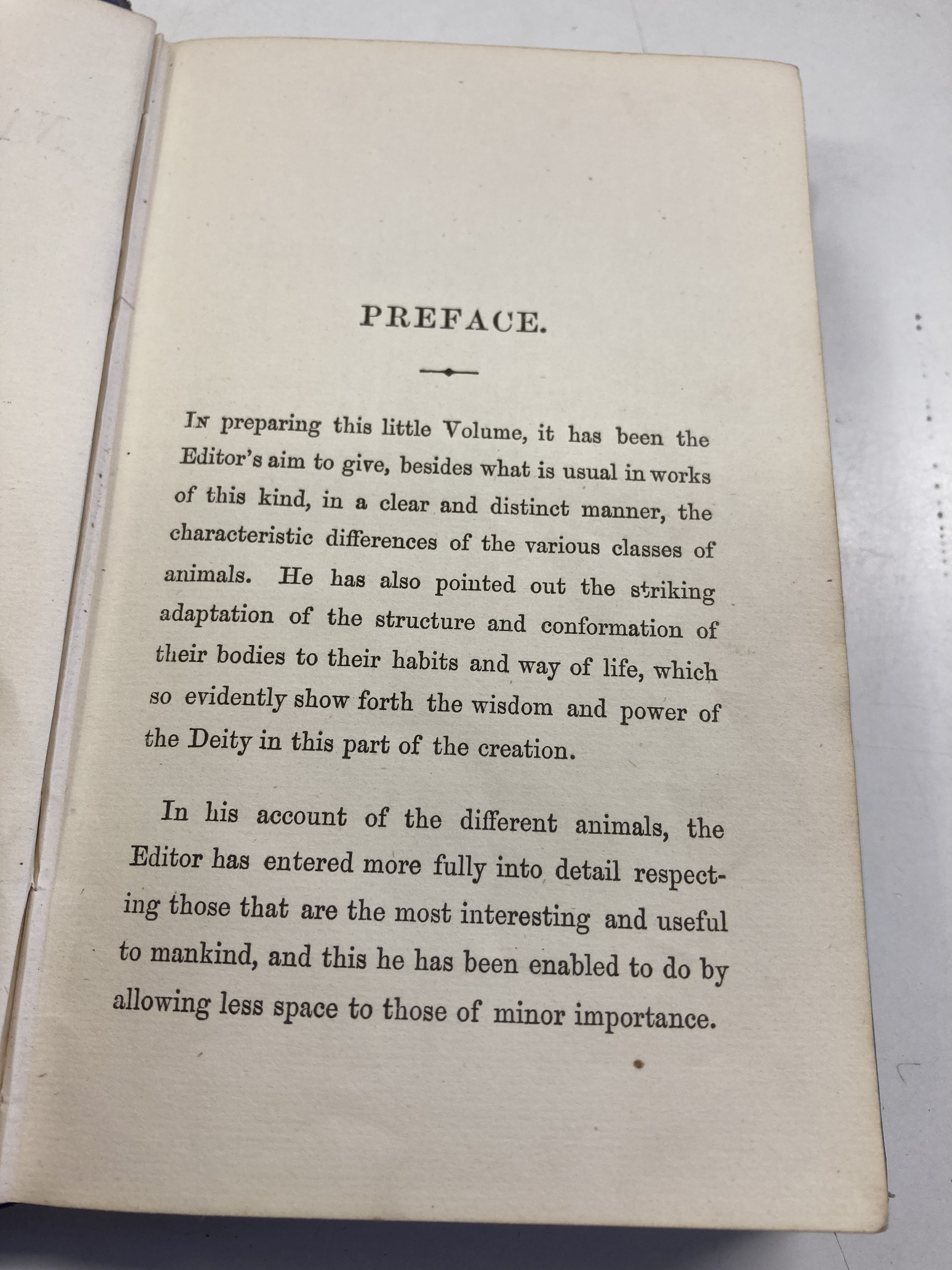
Knowing the difference between a hippo and a rhino, a crane and a heron and a frog and a toad is always handy – not that in the 1800s you were likely to see any hippos or rhinos unless you were a very intrepid traveller.

But what is interesting is the introduction and the owner’s name.

So, it was bought in 1858.

Darwin published Origin Of The Species in 1859.

I wonder if the un-named author/editor would have changed their views on nature being the proof of the wisdom of the Deity….

Nice Coincidences

It has been a time of small coincidences in the Petersfield Oxfam bookshop.

(I’m no believer in fate, or things that were meant to be, but I like a nice coincidence as much as the next woman.)

One day recently, I was sorting through a small avalanche of donations and my mind began to wander to the catering for our annual winter lunch.

Feeding 30 plus people is not in itself hard as long as you chose your menu wisely.

Individual soufflés anyone?

Last year I made pies and I am, though I say it myself, a reasonable shortcrust pastry maker but pastry does require a bit of faff and multiply that by 30 people’s worth of faff and I shan’t do that again this year.

One year I made a chicken something or another which I got from inside my head rather than any recipe book and that was all very well until I learned a well-know chef had decided to come. 

My lodestar for deciding what to cook is a farmer friend who likes his food, is always very appreciative and – because he can’t do with eating standing up – he leads the way to our outdoor table and others follow, thus easing the elbow-to-elbow crush in the house.

So, there I am thinking about what he would like, his exacting palate – and praying it doesn’t rain.

And I am still book-sorting away when I came across this little foodie delight.

IMG_2273

Usually, we have out winter lunch two weeks before Christmas which means it would be on December 16th but because of pressure on that end of the month, we decided to have it on the 9th.

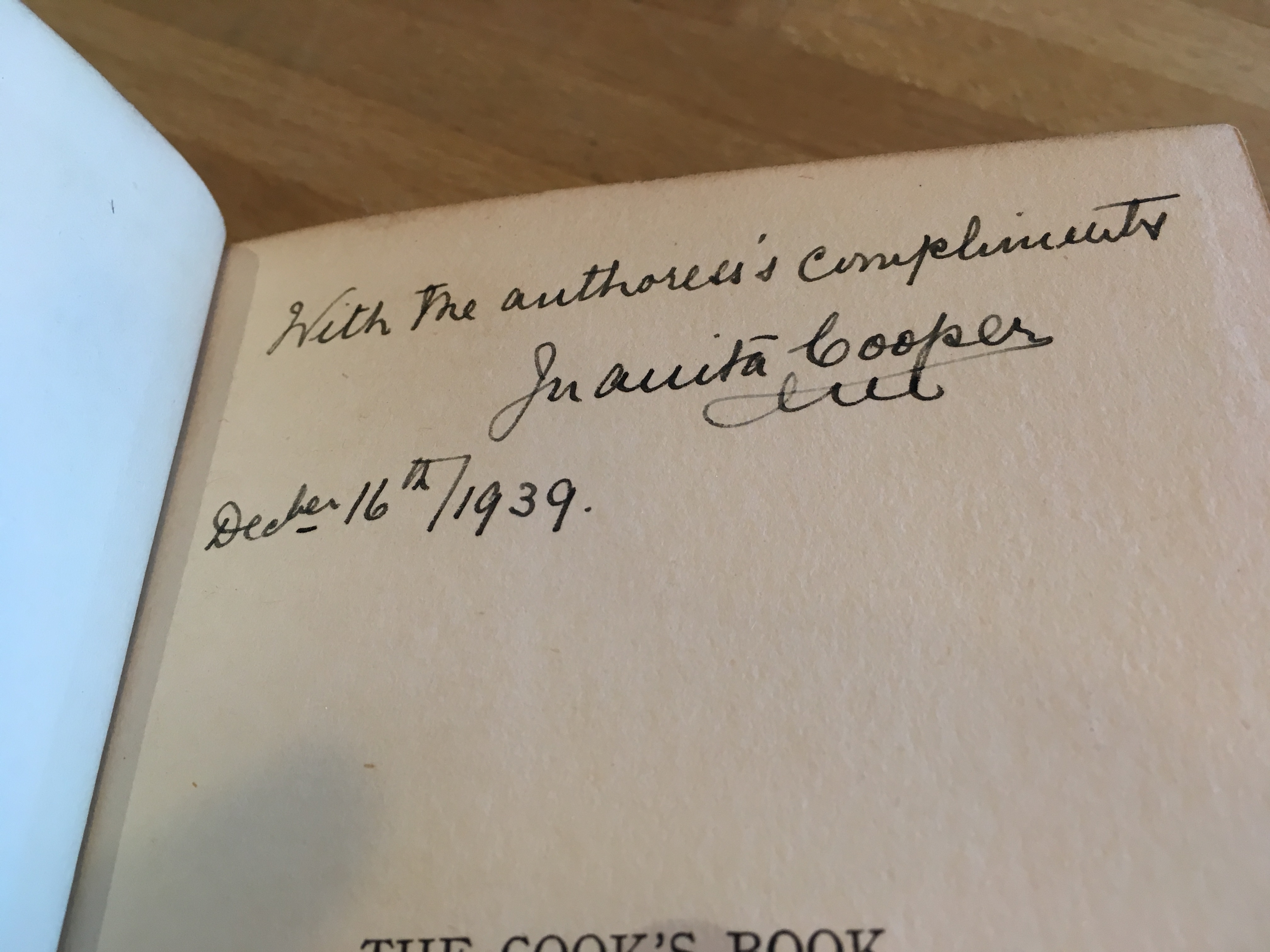
So imagine my pleasure at finding that inside the book was this:

fullsizeoutput_dd8


Of course that doesn’t quite fit into the perfect coincidence, but it was nice non the less.

So, I thought I would have a read and see if there was any recipe I could use……..

IMG_2267


I am still not entirely clear what gets passed through a sieve…. and who would have thought Bovril was an essential ingredient in 1930s Chile?

IMG_2268


There is no doubt, none at all, that that asparagus would be well and truly cooked through….

fullsizeoutput_dda


Chicken meringue – I am not sure my farmer friend would go for that.

And finally,

IMG_2271


It was interesting to gather that not everyone who bought this book would have had access to ice – no fridges.

Call me a lax cook if you will, but I decided against trying to source Nelson’s gelatine and boiling tins of pineapple, straining them through rinsed napkins and then adding green food colour.

Leaving recipes behind, I turned my attention to natural history. It is hard to be sure any patterns when it comes to what is donated to the shop.

Just as you lament the lack of paperback fiction, the shelves are nearly bare and you think, this at last must be the Kindle effect, a tonne of novels arrive.

So, I am hesitant to share my theory on natural history books but here goes anyway.

We used to get lots and lots of books about natural history – from birdwatching to fossils to geology to, and given where we are this is not surprising, a lot of copies of Gilbert White’s Natural History of Selbourne.

( I always saved a particularly good version of this to see at Christmas – it makes a good present.)

Recently though, we have had very little and when I say recently, I mean perhaps the last year or so.

My theory is that people no longer look at the small and local and want to see Blue Planet or programmes about lions of the Kalahari.

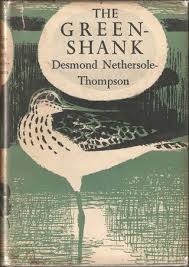
But we do occasionally get copies of books from the New Naturalist Series – they have marvellous covers and sell very well.

images-1.jpegUnknown.jpegimages.jpegUnknown-1.jpeg

(I could bore you with the background information on why some are worth much more than others but I am guessing you don’t really, in your heart of hearts, want to know.)

Anyway, we have had some in recently so I put together a table display of them and some other stragglers of natural history. 

It sold so well that instead of lasting a week, I had to re-think the table three days later.

We also get some books in the Wayside and Woodland series published by Frederick Warne. 

And, just after I had re-done the table, I’m sorting some books, and this came in.

IMG_2274

How interesting I thought, it is by a woman. I wonder who she was.

And inside I found this:

IMG_2272

It says that her book, this book I am holding in my hand, was the first book on dragonflies to ‘achieve wide popular readership.’ ( Now apparently worth about £25.)

It also says that Cynthia Longfield used some of her ‘ample private means’ to part sponsor the chartering of a ship containing ‘a band of natural historians’ who went on a exploratory trip to the Pacific.

She travelled widely in Africa:’ I find machetes so useful in the jungle.’

And guess what else it says about the Cynthia – she was asked to contribute a volume to the New Naturalist Series which ‘ quickly sold out, changing hands at a high premium until it was re-printed.’

Indeed the 1960 first edition is now worth about £90.

We have a copy. It came in with the other New Naturalists and my colleague who collects them valued them for me, so I didn’t notice her name. It is in our cabinet of valuable books.

md22768958351.jpg

Satisfying coincidences all round.

Odysseus – the not so modern man

Going on holiday with someone steeped in Greek history and mythology has its advantages.

There are of course times when chit chat of the day, especially when the day has been weather dull and not much going on, can flag.

But at that point you can steer the conversation around to, say, Odysseus.

Apparently, he landed on an island, since claimed to be Corfu (where we were.)

Not for the first time, he was shipwrecked and had to sleep on the beach.

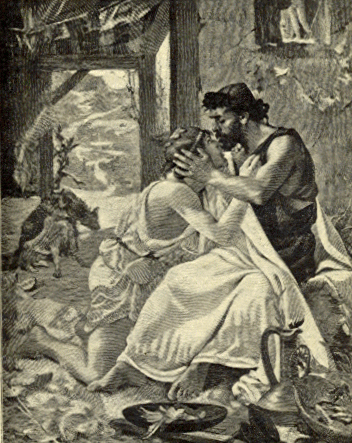
Imagine his surprise in the morning then, when a delightful princess arrived with her handmaidens, who recognised him for the gent he was and took him home to be lauded by her father’s court.

(Even more surprising was the fact she and her handmaidens had travelled across the island to do the washing and that is how they bumped into him…..)

Image result for images odysseus

Actually, there is a quite a lot of cut and paste about Odysseus’ adventures – shipwrecked, on the beach with a few survivors, going inland to kill a sheep, roasting it and then waiting for a pretty girl to turn up.

Anyway, we were at the taverna and the best beloved looked up Tennyson’s poem about what happened when Odysseus finally got home after all his travels.

You might remember that his wife Penelope had been keeping her 108 suitors -who were pretty sure that Odysseus was not coming back in a hurry – waiting by weaving a shroud.

She said she would choose one of them when she had finished – but each night she would unpick a bit to fend off decision time.

This ruse lasted three years until she was unmasked by a faithless servant.

Given that Odysseus was away for 20 years, she must have had some more inventive tricks up her Grecian sleeve.

So Odysseus gets home and decides to come in dressed as a beggar to see what is what, no doubt.

The goddess Athena gets involved, and Penelope sets up a contest for the still lingering suitors – none of which apparently recognise our hero – so that whoever can string Odysseus’s rigid bow and shoot an arrow through twelve axe heads may have her hand. 

Well, yes of course, Odysseus wins and the suitors are all slaughtered.

Meanwhile, back at the taverna, my BB had looked up Tennyson’s poem on what happened next.

( You need to know at this point, just in case you didn’t, that Odysseus and Ulysses are the same man – the same, away for 20 years, shipwrecked,  los of adventures, fond of a pretty girl, man.)

Now, I am always throwing away copies of Tennyson’s work at the Oxfam shop – he is not read much in these times and parts – but this poem is a great rail against getting old and not doing what you can in the time you have. 

(By the way Tennyson was not a lord – he was christened Alfred Lord Tennyson.)

Which is fine and dandy, but if I was Penelope and he came in of an evening and read this to me as a justification for what he was about to do, I might be less than pleased. 

(In fairness there is nothing in the Odessy to say whether he actually set off again or stayed home and told his wife and son how grateful he was that they had kept all things in order, the home fires burning, and were there to look after him in his old age, listen to his endless, bloody endless, stories of his adventures…..)

The commentary is mine…

Ulysses

It little profits that an idle king, 

By this still hearth, among these barren crags, 

Match’d with an aged wife, I mete and dole 

Unequal laws unto a savage race, 

That hoard, and sleep, and feed, and know not me. 

The aged wife, mate, is so because you have been away for 20 years and she has been fending off suitors, bringing up your son – born just before you set off on your adventures and who has been running your kingdom….

I cannot rest from travel: I will drink 

Life to the lees: 

(so, you got home, hung around in disguise and now instead of being nice to your very long-suffering wife and son who have kept everything together, you think, ‘ I really need a bit of a trip, something exciting to break the monotony.’ )

All times I have enjoy’d 

Greatly, have suffer’d greatly, both with those 

That loved me, and alone, on shore, 

(not that alone, with a pretty girl on each shipwrecked bay….) 

and when 

Thro’ scudding drifts the rainy Hyades 

Vext the dim sea: I am become a name; 

For always roaming with a hungry heart 

Much have I seen and known; cities of men 

And manners, climates, councils, governments, 

Myself not least, but honour’d of them all; 

( and modesty not being one of my many, many great qualities…)

And drunk delight of battle with my peers, 

Far on the ringing plains of windy Troy. 

I am a part of all that I have met; 

Yet all experience is an arch wherethro’ 

Gleams that untravell’d world whose margin fades 

For ever and forever when I move. 

How dull it is to pause, to make an end,

( I am guessing Penelope won’t be that pleased to hear that.) 

To rust unburnish’d, not to shine in use! 

As tho’ to breathe were life! Life piled on life 

Were all too little, and of one to me 

Little remains: but every hour is saved 

From that eternal silence, something more, 

A bringer of new things; and vile it were 

For some three suns to store and hoard myself, 

And this gray spirit yearning in desire 

To follow knowledge like a sinking star, 

Beyond the utmost bound of human thought. 

There lies the port; the vessel puffs her sail: 

There gloom the dark, broad seas. My mariners, 

Souls that have toil’d, and wrought, and thought with me— 

That ever with a frolic welcome took 

( Mmm. a shipwreck a week and not that much of a frolic, I am thinking…a man with an overly romantic hindsight.)

The thunder and the sunshine, and opposed 

Free hearts, free foreheads—you and I are old; 

Old age hath yet his honour and his toil; 

Death closes all: but something ere the end, 

Some work of noble note, may yet be done, 

( Rest on your laurels, mate, and bear in mind that we all look backwards and wish that we might have done something more impressive with our lives, but hey ho, you had more adventures than most – and certainly more than Penelope got.)

Not unbecoming men that strove with Gods. 

( see above re self-depreciation)

The lights begin to twinkle from the rocks: 

The long day wanes: the slow moon climbs: the deep 

Moans round with many voices. Come, my friends, 

‘T is not too late to seek a newer world. 

Push off, and sitting well in order smite 

The sounding furrows; for my purpose holds 

To sail beyond the sunset, and the baths 

Of all the western stars, until I die. 

It may be that the gulfs will wash us down: 

It may be we shall touch the Happy Isles, 

And see the great Achilles, whom we knew. 

Tho’ much is taken, much abides; and tho’ 

We are not now that strength which in old days 

Moved earth and heaven, that which we are, we are; 

One equal temper of heroic hearts, 

Made weak by time and fate, but strong in will 

To strive, to seek, to find, and not to yield.

One Thursday in Oxfam

I arrive at the shop carrying two very heavy, and large history books. Not just any history books but two of three volumes ( we don’t have the missing one,) of a history of the Kings and Queens of England compiled in 1706.

The entry on each ruler was done by a different author – one of them being John Milton.

The front covers were there but not attached, but the sound of the paper as you turn the pages is that lovely sound of really old, good paper and you can see the ’s’s were printed  as ‘f’s’ – and, of course, all of it was set and printed by hand.

IMG_2024

Because of the condition, and the missing volume, they couldn’t be sold for much and although £5.99 for the two is ridiculously cheap, given the 312 years they have survived, it is a realistic price for us – I have checked (exhaustively).

There is more about these books, but before I go any further, I must warn you that this was a long and very busy day and so, if you were planning a quick read, now is the time to give up, and go and do what you were planning to do.

It is 9am.

The first thing we always do on a Thursday is to to get the kettle on.

Then we had a meeting.

Now in our shop, we don’t have manager-called staff/volunteer meetings – I think the last one was a year ago – but we do need to sort out the run up to Christmas, so we had a one amongst ourselves. 

The five of us who were there, set about thinking through what could be on the table and what could be in the window, how we could make the shop look extra good in the run up to our best selling time of year.

And now we have a list – it might change, not least because we have to have the books to fit the ideas – and that is always a gamble when you are relying on donations.

(We have some things in hand. For the past six months, we have been collecting books on the World War I ready for November’s anniversary, we have a good collection of photography books, ancient civilisations and some others…)

I will talk/have meetings with other books-sorters over the coming weeks and tell them what we have come up with, and we will no doubt change, develop, amend ideas depending on what they say.

Still, we have a plan, and that feels good.

I am not a great fan of Christmas, but in the shop, I love it. 

This is the time when we can really make money, and more than that, we can really make it look extra  good.

It is now about 10am.

I go out to get the prescription medicine from Boots, the copy of The Times and the bird food that I collect every week for a volunteer who fell over, nearly three years ago, and broke her wrist.

She thought it would mean be a few weeks off and she would be back, but ill-health and a badly-set wrist, has meant she hasn’t been.

So every week, I collect the stuff she needs and my, excellent in so many ways, fellow volunteer D, takes them to her on his way home and he, or I, sometimes slip in a treat of chocolate as it is not much fun being old and not well, and having no family around.

We tell her they are Oxfam gifts.

Anyway, I get back to find that the aftermath of the parish church’s fete means that literally trolley loads of unsold books are heading our way.

D, realising that we would be inundated, has persuaded the church donor to let him go through the books at the church and just take the ones he thought we could sell. 

He has gone off to do so.

Phew.

I took over sorting the books that had come in.

It is now about 11 am.

I am still sorting. D comes back, and we carry on sorting and pricing and shelving. Him upstairs and me downstairs.

A young woman comes in asking for a volunteer form. I tell her that the process will take some weeks, but we are looking forward to her joining us.

She is volunteering at Christmas, she tells us, to cook and serve food to people who are one their own over the festivities, and she really likes books and wants to work here too.

I wonder whether the very long silence between her putting her form in and hearing from us will put her off – I hope not.

Meanwhile, J, the person who is on the till, unflappable, calm, organised and ever-helpful, has cleared and re-shelved the previous books on the the table, so that we can surround the books mentioned at the start, with other – not as interesting, but hey ho – history books.

(Every week, she polishes the table in between displays, with proper wood-feeding polish and elbow grease. ‘It needs to look good,’ she said when she sent me out to buy some decent polish a few months ago.)

Our window is dressed/designed by another volunteer called J.

She does a different, and very good, window every other week. Customers come in and comment on it.

We are on week-two of the art window so she has re-jigged, up-dated, got ‘new’ stock in it to make it look good.

(It has sold very well – including the prints from books that my husband has framed – not bad at £45 each, and a boost to the weekly income.)
fullsizeoutput_cf5

Given that she wasn’t re-doing the whole window, and she was thinking ‘art’, and as she was looking to do something else useful, she gets most of the art books from upstairs and brings them down onto the art shelves – those shelves were looking a bit thin but now they look fat and healthy.

She also re-does the podiums and other stylish stuff – her forte.

D and I are still sorting books.

J, the one on the till, needs change – customers buying a £2.49 book with a £20 note…. and, as she checks the state of the blue change bag upstairs every Thursday morning and almost invariably finds a £10 note in it, she tells me to get change so the next shift will have their change ready as well the change she needs. 

So, I go next door to the HSBC bank where they know me – and supply pound coins by the basket full.

(One of the women who works there, had told me her son was really interested in natural history. So one day recently, when getting pound coins, I gave her a book on Darwin’s Beagle voyage. 

I was going to throw it away – it was not in a good enough state to sell and it was a small thank you for all the change they give us – but I thought it might be a bit too advanced for her young son.

Some weeks later she told me that he had loved it, and read it throughout the long flight to South Africa – and is now re-reading it. 

One of the other bank-tellers is Polish but/and is fascinated by the English language and semiotics (she did her masters in English language.) So, every now and then I give her a book on language – one that we would throw away  – and she reads it, and then tells me about it when I am in there getting change.)

Meanwhile, donations are coming in.

The re-cycle bin is full.

We now have a written briefing by our manager to say that we are not allowed to put the books into the general bin – there would be an additional cost to the shop.

And the donations are coming in.

D and I fill carrier bags, Ikea bags, any bags we can find, with books destined for the book-afterlife – as well as boxes of books that might find a buyer somewhere and somewhen via Oxfam’s central warehouse.

The bags will have to wait until the re-cycle bin is emptied – but that happens when?

We don’t know what the emptying regime is.

And we fill crates of books that we think we can sell, and which need pricing and shelving, presenting – and hopefully – selling.

D has to go – his father is ill in hospital and his mother has a broken wrist – but he has come in, and we would not have coped without him.

And, he will still make time to deliver the medicine, bird food, The Times, and have a chat with the now almost-housebound volunteer I mentioned earlier –  these days I see her more rarely than he does, but we speak on the phone. 

Meanwhile, one of our volunteers who works a shift on Wednesday afternoons and comes in as well, yes for another shift, on a Thursday when there is a need, has called in.

He comes in every Thursday morning to see if he is needed in the afternoon.

This Thursday he had come in, early in the morning, and asked if he needed to come in later and, if not, he had something else to do. 

I had said, blithely, that we could manage.

But that was a mistake.

Because, as he was leaving, D mentions that the afternoon till volunteer is not coming in.

It is now about 12 noon.

I haven’t yet been upstairs – I had been a bit busy – to see on the calendar that the afternoon volunteer was away.

And you need two people in the shop to be Oxfam-legal. And that left only me for the afternoon.

So, I call the shop manager and left a message asking if he could give me the Thursday extra-volunteer’s number so then I could ask him if he could, in fact, come in.

The manager calls back to say he had called the volunteer’s home and heard he was out for the afternoon and he says, ‘ You will just have to  close the shop.’

I am annoyed for not looking at the calendar – and there are still books to be sorted, in fact lots of them, so I should be doing something more useful than just berating myself.

Closing the shop, of course, means we lose sales, and things are never good enough that we want to want to do that.

The calm, unflappable volunteer J, who is more than active but not used to doing a full day’s work these days, says, ‘ Give me half an hour to go home and get some lunch, and I will come back and do the afternoon with you.’

I hugged her, but thought that there must be someone else.

I call a volunteer who turned out to be in Sheffield minding her grandchildren, another who said she was picking up her grandchildren, another who was out, another had a doctor’s appointment and so on and so on, and then finally another volunteer calls back and said he is driving back from Southampton, so will be a bit late but yes, he will come in.

I don’t hug him – but I would have. 

He is also called J.

It is now about 1.30pm.

J comes in and between us, during the afternoon, we get almost every donated book sorted, him upstairs and me downstairs – in a bag ready to go in a bin when one is available, in a box to go to the warehouse, or priced and on a shelf.

We talk about the crates we need to set up ready to receive books we were going to collect for the window and table in the run up to Christmas.

We talk about clearing the box of overflow travel books which has been sitting upstairs  – and ignored – for weeks and weeks –  and which, I have to say, is full of books many of which shouldn’t ever hit our shop shelves.

We talk about Monday morning when he would be in, and Monday afternoon when I would be in, and how we could overlap so that we can do some ‘real sorting out.’ 

(All getting ready for the Christmas run – we are nothing if not getting ready.)

Meanwhile, I am on the till.

I count during the afternoon, and 11 people who come into the shop look at those special history books – remember those from the beginning?

None of them buy those books, but so many of them talk to me about them. ( And, they do sell the next day and the volunteer who sold them was so pleased, she contacted me to tell me.)

And some of those customers go on on to buy other books.

That is what a good table does – it draws people into the shop and, hopefully, they go on to buy other books.

We like the table to be noticed – and customers notice the table, and more than the table, they notice the window, volunteers notice and comment on them – and that makes worthwhile all the weeks of effort, collecting, organising, thinking about them, planning.

Meanwhile, J and I sort more donations.

Every shift says that they get more donations than any other time of the week, but the truth is, thankfully or we would be in deep trouble, they come in all the time.

The last one comes in at 4.50 and we close at 5 ….. but J and I clear it.

It is a very good feeling to look around the back room and the upstairs room and know that you have sorted it all, well, more or less.

Meanwhile, J has also re-stocked the academic shelves, and I have re-stocked cookery, putting all the cooks/chefs in alphabetical order – probably a bit OCD but commentated on favourably by a customer. 

I have changed the front-facing books – and that matters because they sell more quickly, and also customers notice if they are same week after week – I have sold three newly front-faced books in the afternoon.

And three ‘art works’ from the window, by the way.

I have put out a collection of ‘old and interesting’ travel books on the top shelf of that module and made a mental note that the travel shelves really need a good sort out – perhaps on Monday if I have time…..

Meanwhile, a customer come in (and says in passing, as people do when you engage with them, he used to be a violin player but was now a singer), and he had been in the week before, and bought £30 worth of classical CDs.

I had heard about this from another volunteer and had texted the classical music volunteer to tell him so – usually in on a Thursday, but away at the moment.

He was, not surprisingly, pleased.

This visit the customer bought only a few CDs, but he wanted to say that our ‘classical volunteer’ knows what he is about.

And, yes, I text the volunteer again even though I know he is on a ramblers’ scout for a long walk in the Cotswolds.

Meanwhile, there is a ham and coleslaw sandwich in the fridge that I never had time to eat.

It is 5 pm.

And time to shut up shop and see how much we have made.

Before I cash up, I look around the shop and I see a clear back room – of course it  it won’t stay like that, but it is a good moment.

I straighten the paperback fiction and the children’s fiction, put one or two books straight on the table, check that the window has no gaps, make a list of things that need doing on Monday, talk to J who is just putting a few new books on the academic shelves and who will be in on Monday to start all over again….

I am just locking up the shop when I see a man approaching.

On Monday when I was shutting up, my fellow volunteer said ‘No, you can’t shut yet.’ 

She told me that there was a regular who came and got to the shop depending on when the bus arrived – and it was always just before or after 5pm.

So, today I held the door open for him.

He bought nothing today, but on Monday he might, and he really appreciated that he could get in to our shop even if the bus was a bit late.

We made about £268 –  not bad for a Thursday.

Phones and Faff

I do realise that you, dear reader, may wince at the mention of Christmas but for those of us beavering away at the retail of second-hand books, things need to be started on that front.

For some years, I have been telling you about how we start stockpiling books in exceptionally good condition to boost our Christmas trade and that means lots of crates around the upstairs room with notes on them saying they need to be left well alone until I decide we need to start putting them out.

Well, last week, another volunteer and I decided we needed to clear some space to slot empty, waiting crates into.

The shop manager is nothing if not a man to throw anything away or deal with anything today when several months hence might do just as well.

(I have this feeling that if you dig hard enough under bottom shelves, behind boxes, at the back of etc etc you could easily find a mummified body of an apparently unmissed volunteer.)

However, what we found most of during this clear out, was lots and lots of mobile phones. 

People can, and apparently do often, donate old mobile phones and Oxfam has some system of getting them re-used or their innards taken out, or whatever.

But to do that they need to be sent somewhere. Only the manager knows where, and he had clearly decided that there was no rush. 

There were about three carrier bags and a sizeable box of them.

So, we pulled them out of their dark corner – where there was also a hoover which to the best of my knowledge has not be employed for the past say two or three years, a 1960s box for carrying records which had been stashed with out of date cameras and lenses…..

Anyway, we put the phones into crates and put them in the other room, not too far from the kettle, so they couldn’t be ignored.

Next time I went in, the manager had put them all into cardboard boxes, neatly labelled as mobile phones for re-cycling and put them back where they were before!

And they will probably be there next Christmas.

In that clear out/up, I also found a box of Coalport houses – I had checked them and priced them and put them back in the box and promptly forgotten about them – though I do remember thinking they would work on a Christmas table, so all is not lost.

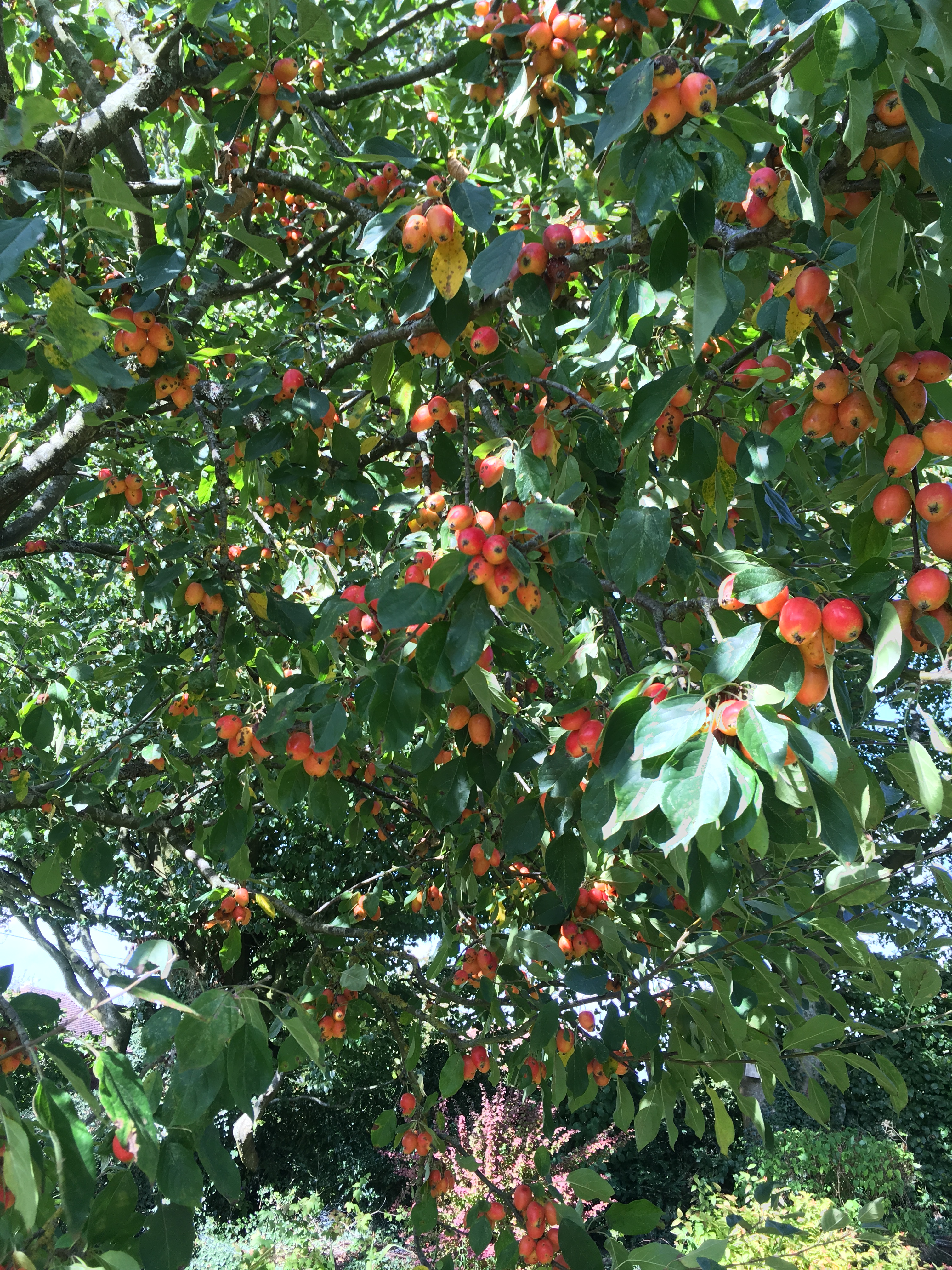
This time of year also means the annual ritual of crab apple jelly.

IMG_2002

I am sure I have said before that what was once a nod towards earth mother meets Sussex housewife, lost much of its charm on the basis it is a faff to make and we don’t eat it/remember to give it away over the year, and so is now in a stash in the cellar.

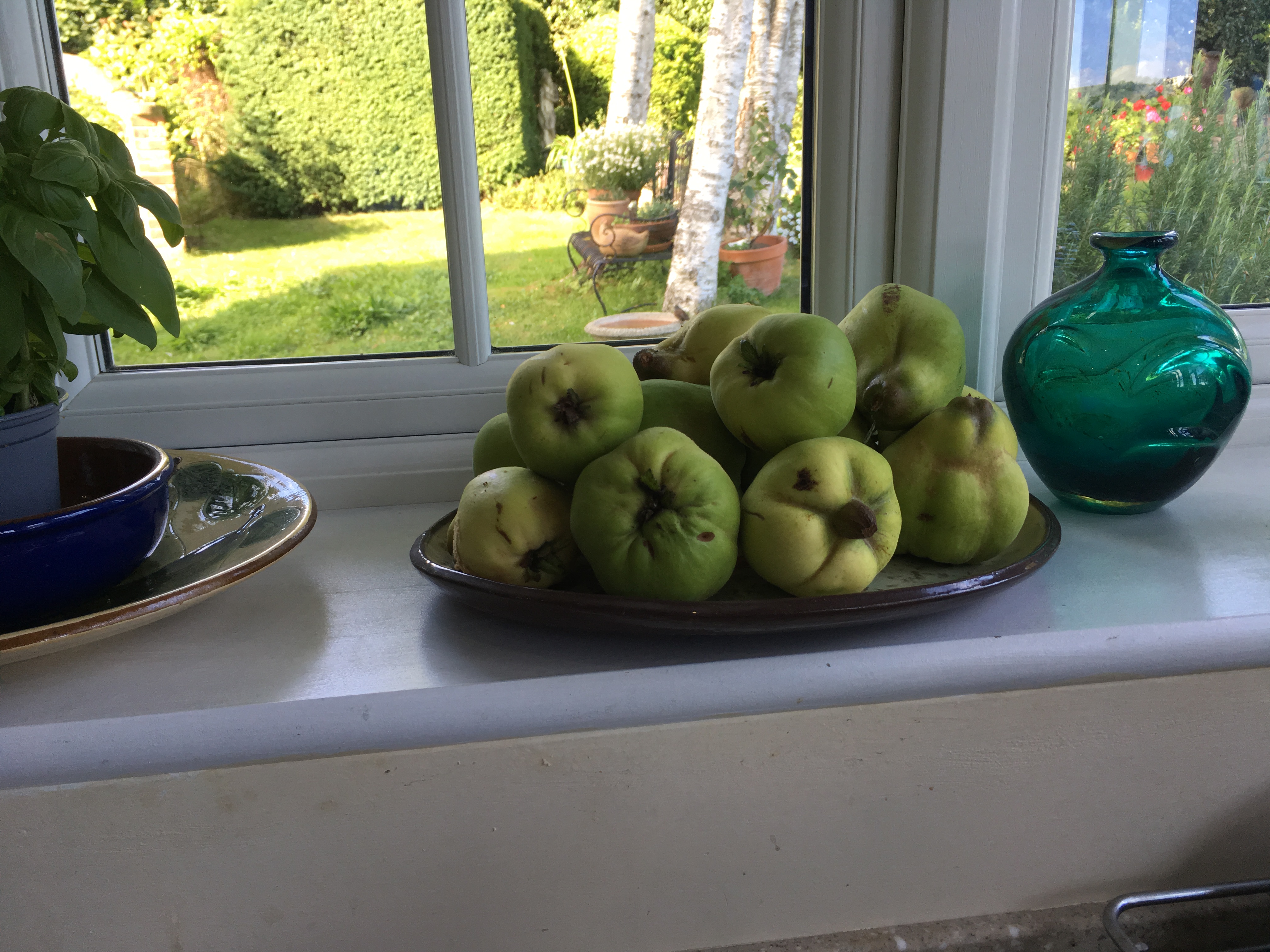
Anyway, this year we have, for the first time, a quince harvest and if anything quince jelly is even more of a faff, but it has the advantages novelty and you can make membrillo from the left over pulp.

IMG_2009


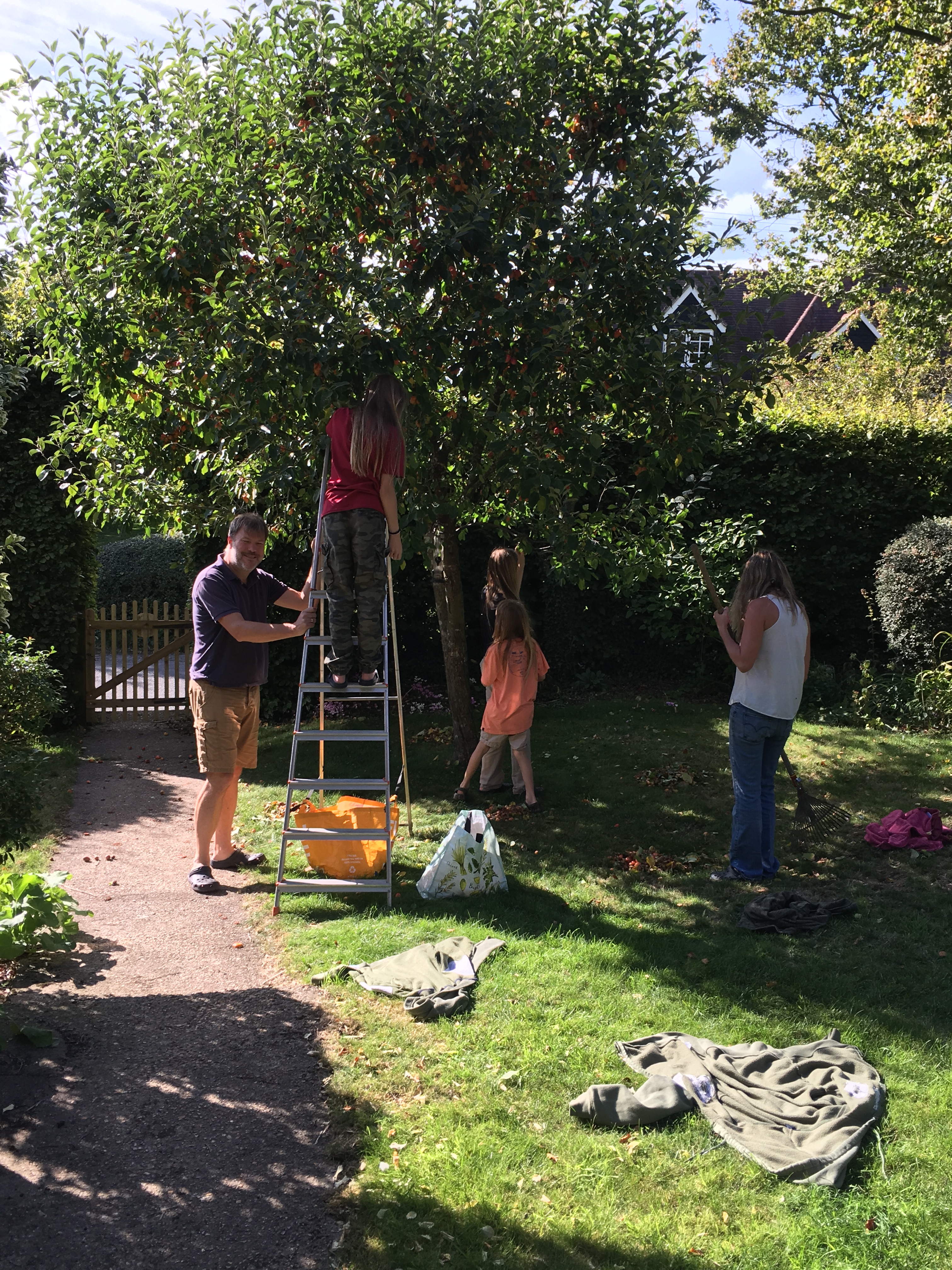
So, I put a notice in the village shop window offering our crab apples to any takers and this afternoon, as I sit writing this, a family are doing their best to clear the tree and are raking up the windfalls in the process.

Excellent.

IMG_2008

Audrey Hepburn and Mao

So, here’s the Oxfam deal: I have been away for the better part of a month ( more on why in some other blog) and my first full day back is the day before the new area manager arrives.

We want to impress.

When I say we, some of the usual compliment of Thursday people are away – the one who broke their wrist on the May bank holiday and have been very sorely missed since, and the one who I have come to rely on for very impressive creativity and more, needed the afternoon off for all sorts of good reasons.

So, with what resources we had, we worked our socks off.

The volunteer who ‘does’ classical music but also likes books – though not bothered about film – re-did the Old and Interesting section and the DVDs – and I have to say, made them look a whole lot better than I usually do.

And, one of the big issues when you have people further up the food chain visiting, you may well not know, is culling.

You can skip this bit of you need to get to the part that relates to the blog’s title – please feel free, and it is right at the bottom.

Anyway, if you are interested in how Oxfam bookshops work, here is the stuff about culling:

Each and every book has a price, and a category so that we can tell that we are selling more history than self help (and yes, we do), and a number which tells us what what week it was put out for sale.

The theory ( and you will note that it is a theory,) is that there are volunteers akimbo who diligently work their way round the shop checking the dates a book was put out and culling those which have been out for too long.

(You need to refresh your stock or the regulars will get fed up of seeing the same books and not come back.)

But there aren’t volunteers who do that.

Instead, we have volunteers who take responsibility for a category of books.

One does academic – but he is in Italy with his four grandchildren under five.

One does paperback fiction, but is in France on her boat…

You get the picture.

So, on Thursday, after a month away and people away, things were pretty dire and I, with my colleagues went around the shop and checked every single book. 

Culled and re-stocked, and when there were not books to re-stock with, I have to say, dear reader, we just rubbed out the week numbers replaced them with the most recent week.

Paperback fiction was put in exactly the right alphabetical order. 

Crafts were put in categories – homes, sewing, calligraphy and painting etc.

The amazing woman who does the window, did the window with prints my Best Beloved had framed, of cycling sketches from a Sussex artist, and books on The Great Outdoors.

Here is a lovely book that went in the window – we had been keeping these books for months to make a good display.

( By the way we sold four of the six of prints on that day.)

I did the table with books that all had red covers – eye catching as you come in and, hopefully, impressive to the new area manager.

And, I did the front-facers.

All those books around the shop which are not just spine-facing but actually show you their cover.

But, I didn’t do biography because I reckoned (and I was shattered at the end of Thursday) that the area manager wasn’t coming in until 11 am, so we could squeeze in biography on Friday morning.

We, not just me, did biography and we found – to my delight – there were biographies on Marx, Lenin’s embalmers and Mao – this is not a political delight, but how nice a theme was that?

So, we had them front-facing.

When I went in on Saturday to talk to my manager, I had a look round the front facers to see what had sold.

Mao (surprisingly) had sold and some volunteer had put an autobiography of Audrey Hepburn in its place……

Marx, Lenin and Audrey Hepburn – who would have thought?

The area manger, apparently, thought the shop looked good – phew.

Oxfam Could You Just Re-Think?

There are times when it seems that the people in the high echelons of Oxfam have just not quite thought through the introduction of a new system.

So what probably seemed like a good idea in a senior managers’ meeting sometime, has turned our shop into a bit of a walking disaster area.

So, as I am quite het up about this, I will explain.

(If you want to go away and fume about your own organisation’s inability to make sure the people – in our case not even paid – at the coalface have an input into decisions which directly affect their day-to-day working lives, feel free.

But if you are lucky enough to not face these issues, you can feel smug and gently superior as you read through mine.)

Regular readers will know that however hard it may be to hear, we do have to throw away a lot of books.

IMG_1484

Either they are in such bad condition no one would pay good money for them, or they are in fine condition but no one wants to buy them anyway – please read last blog for more details.

And if you read the last blog, you will know we were facing a re-cycling sack shortage.

So, I was very pleased on Monday when the man turned up to take away the full sacks, and leave us some empty ones.

But he didn’t leave sacks, he left a pile of flat-pack boxes.

So, I called the re-cycling contractor who said, and I paraphrase, –
‘sacks are so yesterday, we are now using boxes.’

That was news to me.

Now if you think about it, which I am sure you don’t unless you are a fellow Oxfam book sorter, sacks have big advantages for volunteers but are not good for the ‘health’ of books.

You can hold a sack in one hand and put in all sorts of shapes and sized books with you other hand, tie it up, put it in the pile of sacks and get on with the next one.

And if you have just had a hip replacement, for example, you can drag a sack but can’t drag a box.

But every book in a sack is likely to be bashed about and come out at the other end in a pretty sorry state of repair, whereas books in boxes are protected.

Then again, if you have a flat-packed boxes you have to make up each one with the requisite tape to make sure it is strong enough, and then pack it with books in all the right size and shape to fit in – then you have to lift and move it.

That is fine if you get one or two bags of incoming donations during your shift that you can gently sort through and enjoy the symmetry of making a range of book sizes fit together.

This, in Oxfam terms, is the equivalent of gently dead-heading the roses around your beautifully manicured lawn.

In fact, most of the time book sorting is more like desperately digging your way out of a big hole while people are throwing more and more earth in it – and on your head.

Or more accurately, a deep but very narrow hole.

Our sorting space is not much bigger than a phone box – if you are old enough to remember those – through which you have to preserve access to a fire exit, the toilet and the lift which, in case you are thinking otherwise, is just big enough to move books, not people.

And I know there are shops with even less space.

I am not sure how many of the high echelons who decided this plan was such a good idea, have spent a shift recently in a busy bookshop, with confined space and a lot of incoming donations, sorting the wheat from the chaff…….

Now, to be fair I understand one of the motivations – as explained to me by the man I spoke to at the re-cycling company – a necessary explanation as we had no other advance warning or explanation.

There are books we sack which would have some value – say paperback fiction which is not in a good enough state for us to sell at £2.49 but if you have a shop where they could go for £1.00 or 50p, I am sure they would sell.

And so I can understand a system which says, ‘please put into these brand new boxes, some books we might stand a chance of selling in other circumstances than your shop.’

We could do that – and it would gladden the heart to give those books another chance to raise money for Oxfam.

But the rubbish – the damp, the bedraggled, the scrawled over, the out date of legal text books, the Readers’ Digest condensed novels, the Which Best UK Hotels Guide 1985, the guide to Chatsworth House 1991 – give me a break.

Am I supposed to spend time making up these brand new flat-packed boxes to fill them with those books, so someone else somewhere can throw them into a sack?

How mad is that?

And what is more the re-cycling company has printed firm instructions on their lovely flat-packed boxes, they only want nice books, in good condition, that they can sell.

So, I asked the re-cycling man, what were we supposed to do with the rubbish books.

‘Oh,’ he said and this is not a word of a lie, ‘ I don’t know. I guess you need to put them in separate boxes and label them as rubbish.’

Really?

Now, boxes of books are heavy. I am not sure what the average age of an Oxfam volunteer is, but I can say that I am not surrounded by the gilded youth of Petersfield.
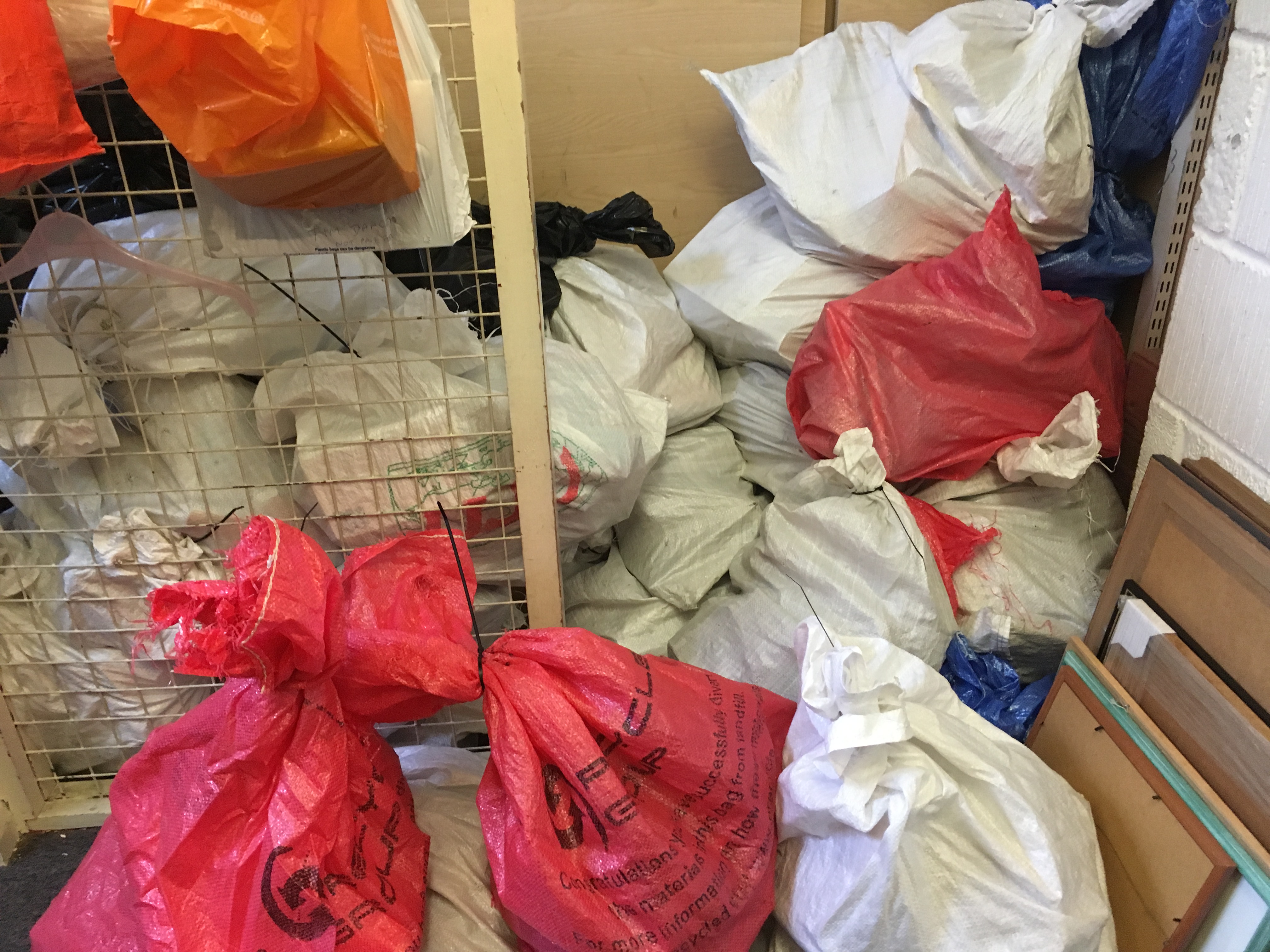
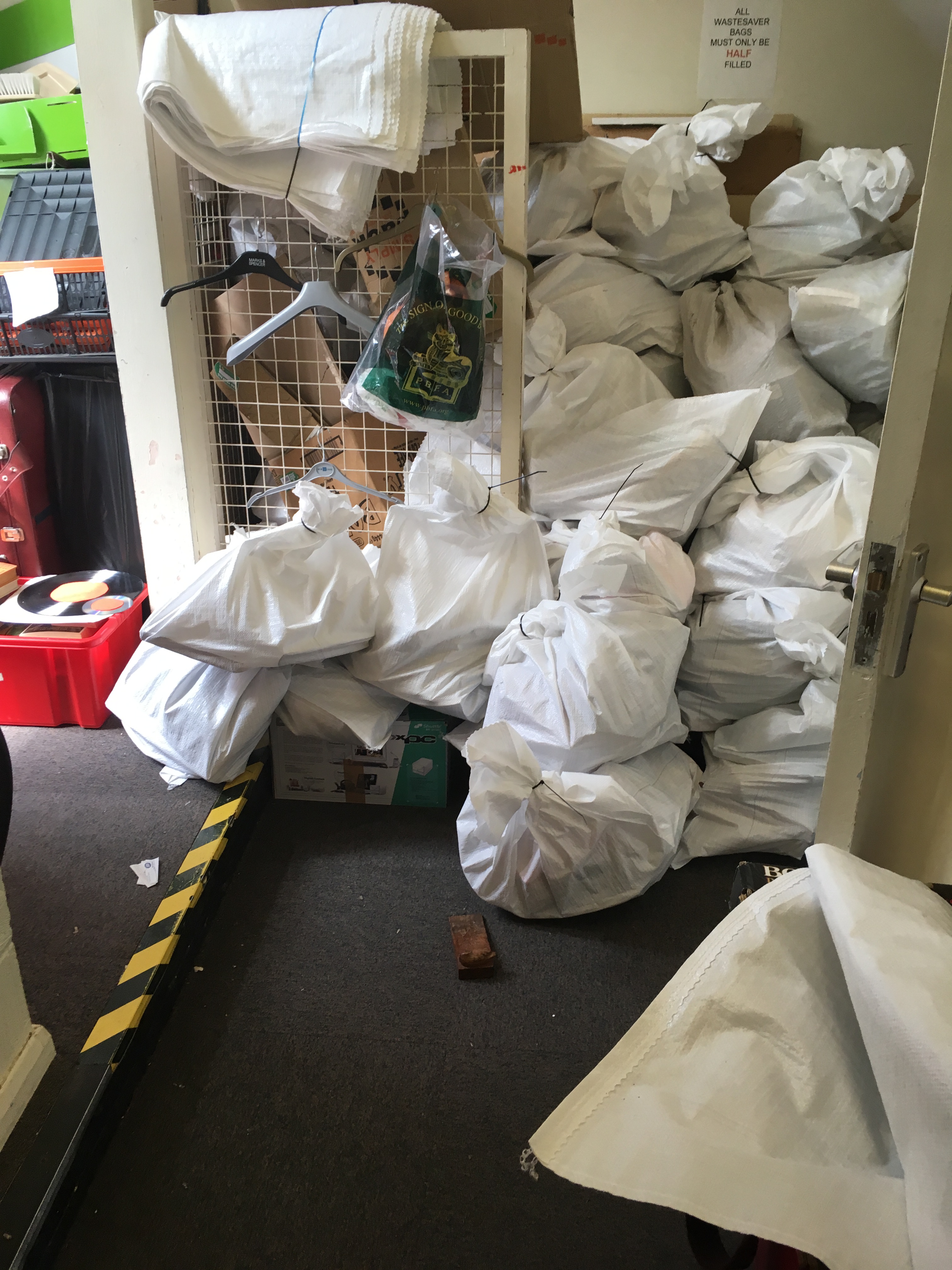
So, these boxes will hardly often be full because volunteers can’t lift that weight.

So, more lovely flat-packed boxes will have to be ‘built’ and most of them will only be half full.

Apparently after complaining, we were told we may get a large bin from the council which we will be able to use for rubbish books – when and if though, is a question.

These big bins need someone to hold open the lid whilst someone else puts the books in.

Obviously you can’t leave the till unattended and so you will need one person on the till, one person holding the lid of the bin open and another putting in the books……..

And the council charges for bins.

Anyone else thinking – for goodness sake just give them some sacks?

IMG_0745

In the vain hope that someone in those high echelons, maybe the very nice Trading Director gets to hear the plaintive, exasperated, desperate cries from the shop floor – or more to the point, not the shop floor but those many of us who are behind the scenes trying to cope with this system – I say this:

I quite understand the need to get as much money from our donations as possible – and we know that money raised in Petersfield is to help people with a whole lot more to worry about than boxing books.

And there is a system which could work:

Please supply us with some boxes and some sacks.

We will fill the boxes with books that have potential for sale and we will fill the sacks with the books that no one will want to buy.

And next time, could someone just ask us for our ideas of how to make the system work better?


Oxfam Trials, Tribulations and Surprises

There have been a few trials and tribulations in the Oxfam bookshop of late – and then one really nice surprise with a rather spooky twist.

Oxfam’s trials and tribulations nationally and internationally don’t seem to have filtered down to Petersfield – there seems to be pretty much the same number of people donating to us as ever there was.

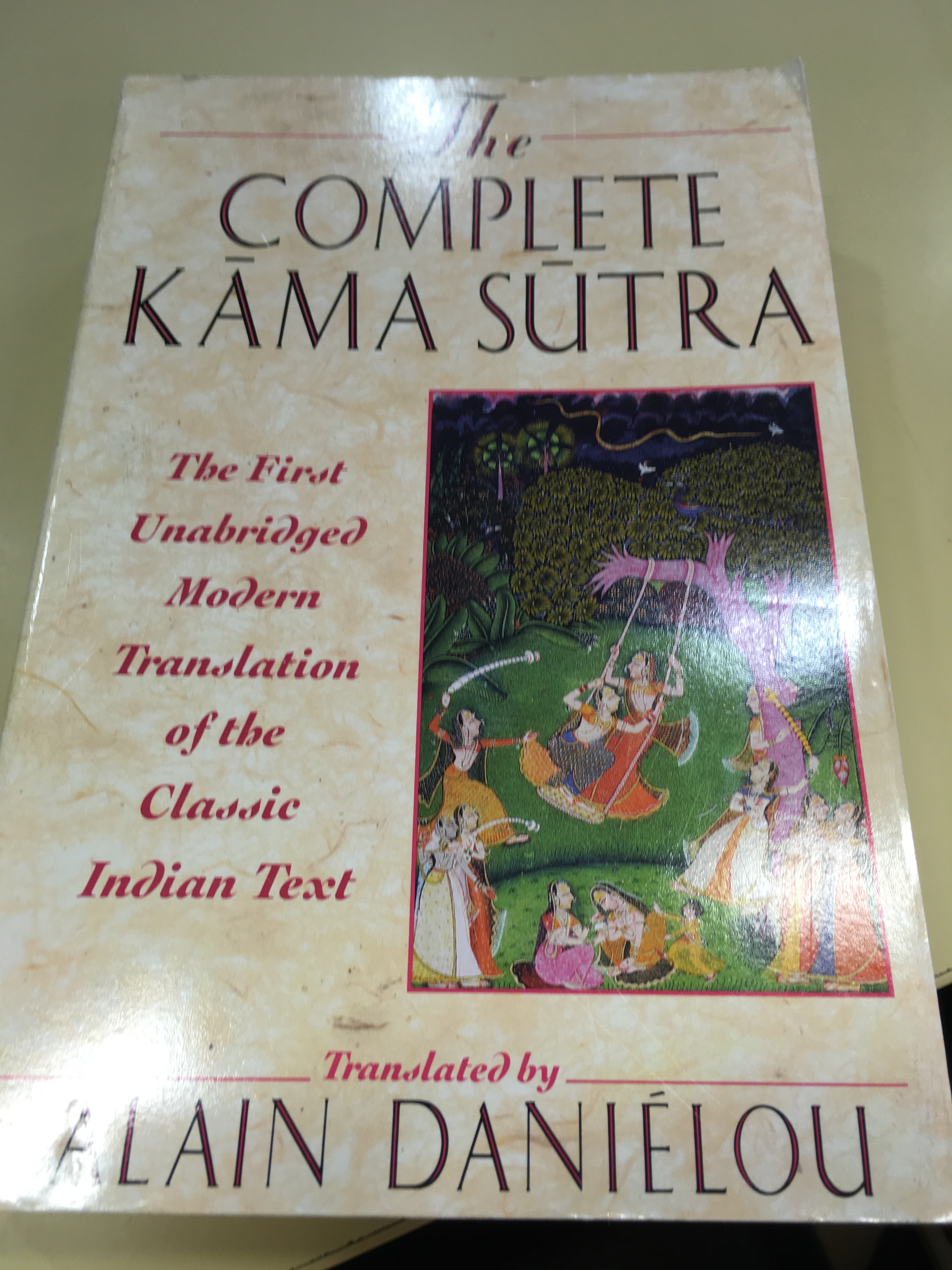
Turning out aged parents’ home, downsizing house and therefore books, bibliophiles with a one-in-one-out policy and the collections of religious books with the surprisingly frequent copy of the Kama Sutra tucked in……

(Yesterday was the 5th time in my Oxfam career, I found a copy and usually they are small and rather pretty but this one was the full works including – I had only a quick glance – advice on scratching……)

IMG_1477

No, that wasn’t the surprise with the spooky twist.

Neither was the very nice man, Terry, from the Chichester shop.

For this ‘episode’ of the story to work you have to know that we are ruthless about the books we put out for sale. And that means a lot of donations go into recycling sacks.

The book may be in perfectly good order, clean and bright, as we say, but to the best of my book-selling knowledge no one in Petersfield wants a copy of the book about the fairytale marriage of Charles and Diana.

Nether do they want the 2011 Top Gear annual, nor indeed, and it pains me to say this, any of Michael Palin’s books of his travels – although once I sold a copy of Himalaya.

So, the recycling sacks are an essential part of the shop’s DNA but low and behold when the nice East European man came to collect them on Tuesday he didn’t have any empty ones to give us so, by Wednesday ,we had run out.

That means that we had boxes and boxes and bags and piles of books with no long term future sitting around and taking up space.

And it turns out we weren’t the only shop with the problem. I took a call from someone from the Chichester shop asking if we had any spare. But we had none.

We, luckily, get two re-cycling collections a week so I left rather stern instructions that when the man came on Friday we needed two sacks of empty sacks.

He only had one.

There is apparently, a national shortage of the right recycling sacks.

Anyway, we got all our ‘waste’ books into sacks and still had a few leftover and on Saturday I was on the till when a man walked in with a picture.

He told me he was Terry and he had brought us a picture ( a print, not the real thing) by Flora Twort – Petersfield’s only famous (and dead) artist.

He said that he expected we could get more for it in our shop than in Chichester. I was very impressed he had taken he time and bother and so I raided our precious bag of recycling sacks and sent him away with our last armful – he seemed to think it was a fair deal.

Right, to the surprise with a twist.

A colleague had put aside a book for me with a note on it saying someone had priced it at £3.99 but she thought it might be worth ‘a bit.’

Indeed, it is.

So far, our book expert ( with me as his assistant, of course,) think that it is worth in the region of £750 to £850.

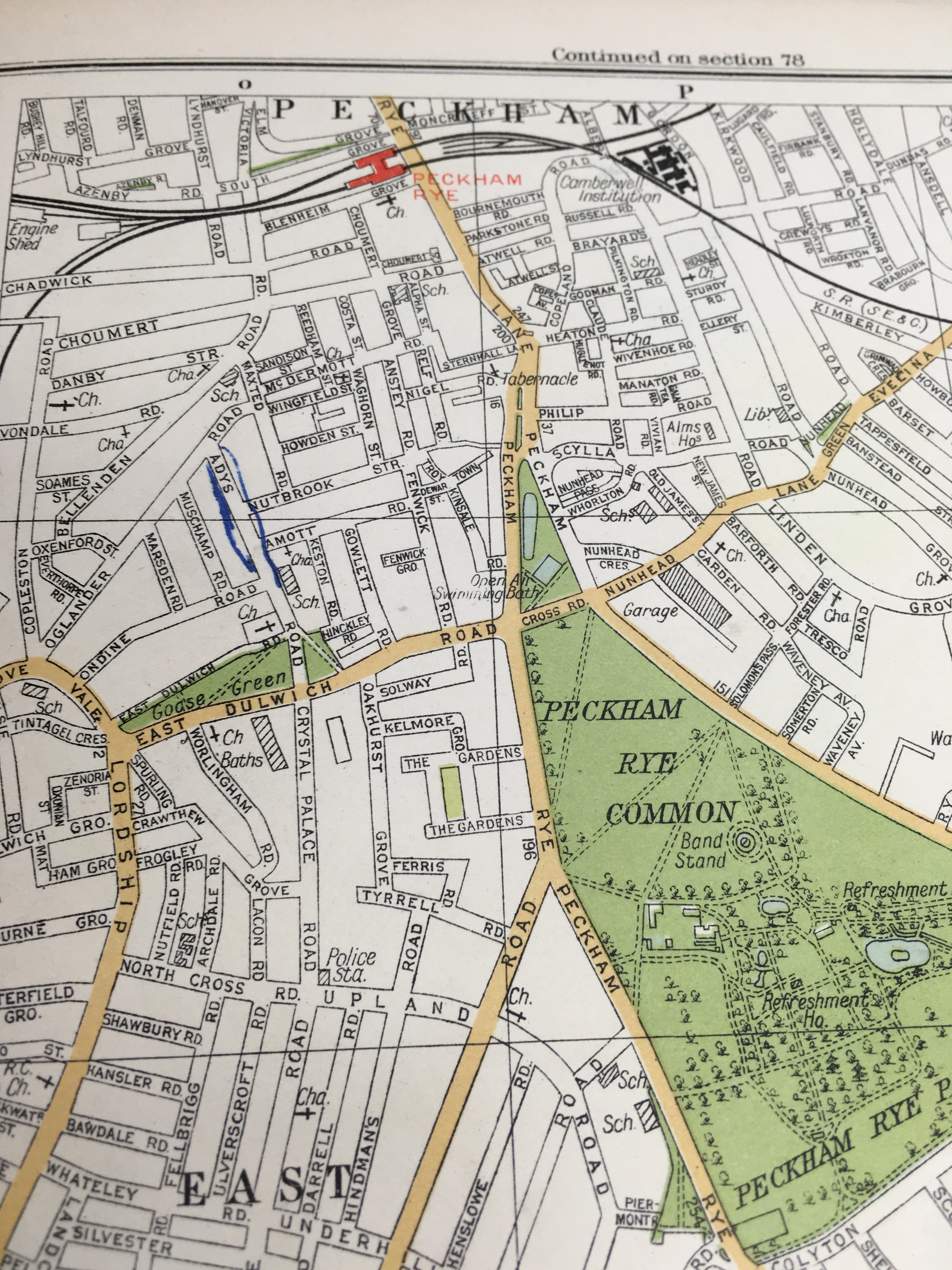
It is a large and 1933 version of a A-Z of London with added stuff such as the parliamentary constituencies, legal boundaries, London administrative districts and so on.

IMG_1478

And and this is a delight, a tube map pre Harry Beck which is particularly interesting as Beck designed it in 1933 – this book would have gone to print as Harry was busy thinking up his brilliant design.

img_1480.jpg

I suspect, given what I can find by Googling about, that the book will be taken apart, the maps framed and those sold off at a considerable mark up.

But the real spooky surprise was found when I was showing it to a fellow volunteer and we were looking at the maps of where she was born and grew up – then we turned to map of Peckham where I lived for a while.

This book is pristine and someone had a slipcover made to keep it that way. There are no internal markings except one – a biro mark along the road where I used to live in Peckham.

IMG_1479


A view from the shop floor

Haiti is a long way from Petersfield.

Indeed the connection between the day-to-day running of our Oxfam bookshop and the people working on the frontline of famine, war and disaster has always been a very long, and sometimes invisible, thread.

Many of our volunteers – including me – volunteer in the bookshop for our own reasons and they often don’t much include daily thoughts about crisis in Yemen, the Syrian nightmare, the disaster of an earthquake or Tsunami.

But every book we sell is a small piece in a gigantic jigsaw that helps Oxfam to help people – and Oxfam is a good thing.

Oxfam is a big bureaucracy and it gets things organisationally wrong – we see domestic bits of that in the shop.

Every big organisation does too. The lines of communication, feedback mechanisms, the transparency of decisions, the view from the top and the differing views from the sharp end – it doesn’t matter if you are IBM or Oxfam, these are always issues.

Someone perceptively said on the radio this week that when you set up a charity on day one your focus is the ‘client’ – by day two it is protecting the reputation of the charity to keep the money coming in.

And I am sure that protecting Oxfam’s reputation played a part in how the organisation handled what happened in Haiti – and no doubt, other bad stuff elsewhere.

I was in the pub last night and was talking to someone who said his wife had worked for another charity and had seen frontline workers coming back from some war torn nightmare or another and their behaviour showed their strings were very taught –  and sometimes snapped.

They had people repatriated for wrong doing – there won’t be an international charity out there of any significant size that has a not faced very wrong behaviour by some of its staff.

Someone also said to me that if the Ministry of Defence was asked to account for the behaviour of every British serviceman who was serving abroad or on peace keeping duties, there would be a very long list of sexual misdemeanours.

This is not to excuse what happened in Haiti but it is to say that charities, like Oxfam, have people who go places the rest of us won’t, to help in ways that we hope make life better for people who have little.

And, yes, yes of course no one in the position should exploit those people or their colleagues – in any shape of form and of course too, the vast majority of charity workers on the frontline, don’t.

And, yes of course, Oxfam should have acted better at the time – Oxfam has apologised, profusely, and if any charity will get its safeguarding act together now you can bet it will be Oxfam.

And, I expect every other charity in the sector is racing around trying to make sure that they stay out of media sight and get their house in order too.

Meanwhile, using Oxfam as a stick to beat the aid budget, is just plain wrong.

Penny Mordaunt, the relevant minister who, as a colleague said last week, ‘ sees a bandwagon a mile off and races to get on it,’ should of course demand more action and transparency – but what good does it do to reduce Oxfam’s funding?

Back in Petersfield, I was in town the other day doing errands and was stopped three times by regular customers saying they felt that Oxfam, though not coming up smelling of roses, was being unfairly hit.

I had not been in the shop for a few days so called in briefly this morning, and was gratified to see that donations had kept coming in, there were customers in the shop and that Oxfam’s trading director was due to come in to talk to people about what was happening.

I am very much hoping that our customers – many of whom probably see us as a good second hand bookshop first and foremost – stay with us and think, as they usually do, that buying from or donating books to Oxfam, is a good deed as well as a pleasure.


Framing the Birds

For while, there has been a dearth of donations of old and interesting books to our Oxfam shop – but recently there have been some treats.

I should (re) mention that old and interesting is the category on the till – quite a lot of the time, old does not equal very interesting at all.

Anyway, with Christmas gone and the leftover crackers, candles, cards and so on, consolidated into a few SALE shelves, we had space which needed to be filled with old and interesting so all donations have been welcomed.

Please bear with me, this does get a bit more interesting later on, and to prove the point, here is a lovely picture:

fullsizeoutput_cf0

Meanwhile, a fellow volunteer had mentioned that in the Winchester shop (always to be envied given that it has tourists and university students, which we don’t) had taken plates ( pictures) out of decrepit books and put them in mounts and had them for sale.

We could do that, I thought.

And, by coincidence or the inscrutable movement of the universe, whichever you prefer, a donation came in which would be an ideal candidate.

It was Grimm’s fairy tales illustrated by W Heath Robinson – falling apart and some child had scrawled with crayon over some of the pages, making it unsaleable except to someone who wanted to take out the plates and frame them….

My best beloved is something of a star amateur picture framer so you can see where this is going.

He said, though, the plates were not in great condition and anyway were a bit ‘wishy-washy.’

I was deflated but not despondent on the basis that wishy-washy was better than nothing.

But then we had a treat, actually two treats.

As you know I am an amateur upholsterer – oh what crafts people we both are – anyway, I found this in the back of a book amongst several boxes of books – all old and about Paris.

( I have put a shelf of them out but I think you can only do one such shelf in a Petersfield bookshop – obviously if we were in Winchester…)

fullsizeoutput_cf6

So, French upholsterer to her majesty – presumably Victoria – and doing work for Mr Franck Boggs – great name.

Someone will like that framed, I thought.

And then another book came in, and it had already fallen apart, but what fantastic plates.

It turns out these were produced by two brothers who approached Dent with what they had done, and the publisher said, ‘oh yes please.’

We have the first edition of their first book – but all the pages are loose and couldn’t be sold as a book.

(If you want to know more about Maurice and Edward, here is a link
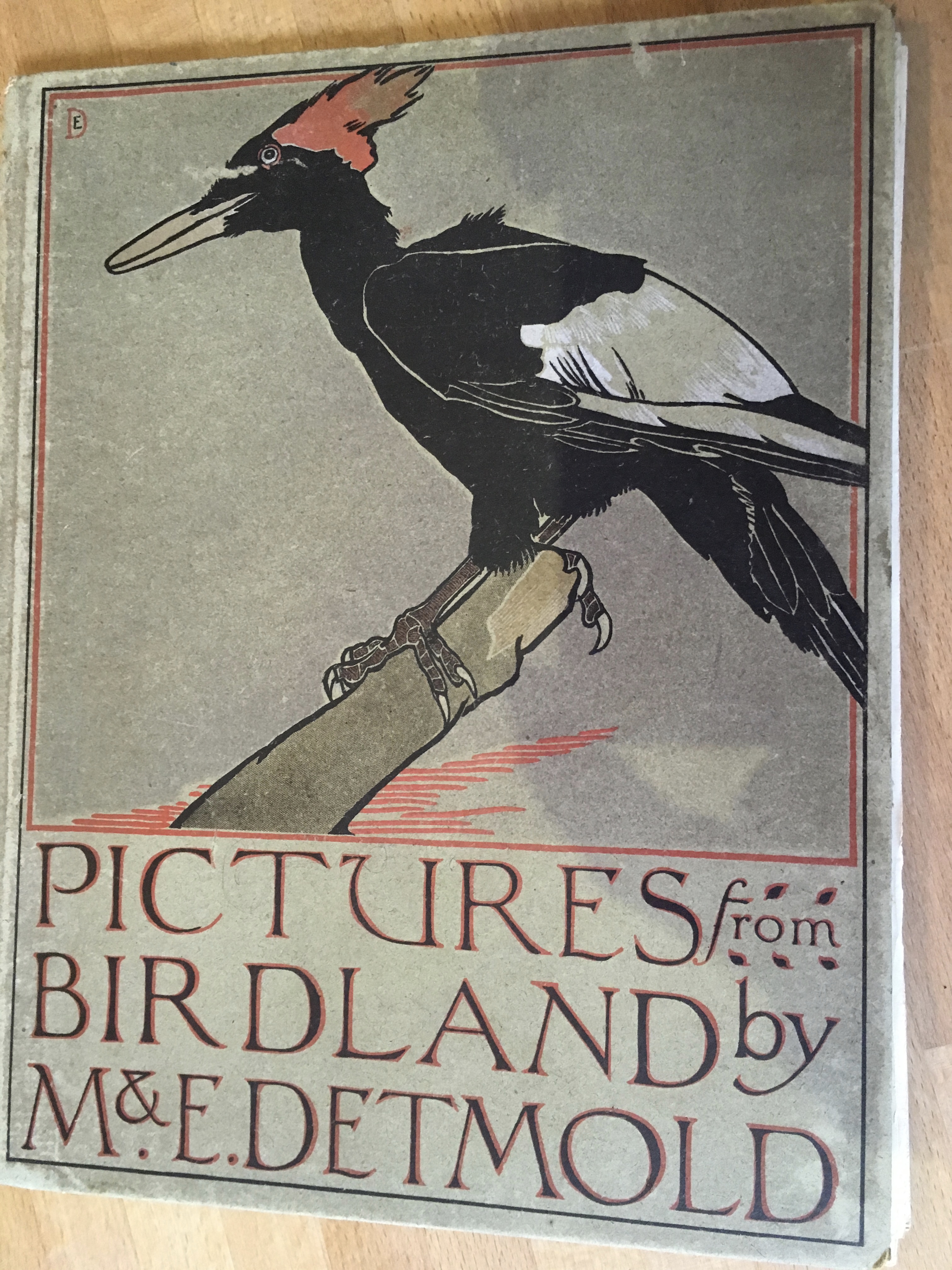
http://www.avictorian.com/Detmold_Charles_Maurice.html)

They were influenced by Japanese art – very popular at the time – and you can see it in the style.

So, these delights will be framed by the BB and will be the stars of my new bookshop venture. ( I may well keep the book cover for us.)