Village Life Part Two

So, if you read the previous blog you will have seen me raise a quizzical eyebrow at the woman who said she was so looking forward to village life where everyone was equal and everyone joined in everything….

More vignettes from the village festivities:

One:

A stallholder arriving and asking where was her chair, her table ( neither of which she had asked for/ordered/paid for) her help to get stuff from her car, and someone to help erect her gazebo ( none of which we have people on hand just waiting to do) and, by the way, where was Tim. 

‘Tim’ I asked, ‘Do you mean Tim running the bookstall? because I think he is sorting books.’ 

‘No,Tim my son’

‘I’m sorry I don’t know your son.’

‘Really? you don’t know Tim. Have you lived here long?’

‘Nine years.’

‘Well, when you see him, please send him to me immediately.’

Two:

Most of the village street has pavements either side but there is a stretch with houses and no pavements, and that makes it difficult to walk into the village without flattening yourself against a wall as posh cars on their way to Goodwood, or indeed many other vehicles on their way somewhere or another, come through.

At 8 am as the street was closed, a man stepped down into the road and stated painting his wall.

‘Nice day for it’ we said as we walked past.

‘The only bloody day for it’ he said.

Three:

A phone call at 9pm a day or two before the festivities.

‘Just checking you can organise me a lift.’

It turned out the caller was a man who sells homemade stuff and lives in the outskirts of the village and is no longer allowed to drive.

I was not sure that organising a pick up was in my remit but the Best Beloved said he’d do it.

Delivered, and set up, and sold out by early afternoon, I decided it was best to get the man home safely.

Called my Best Beloved who was on the Downs with the dog and asked him to come and get the chutney man.

A few minutes later BB called to say he had fallen and badly sprained his ankle so no, he couldn’t do pick ups and deliveries.

So, now I had a man waiting for a lift home, and an injured husband.

I grabbed the son of friends, handily having a nice time at the event and not looking like he was about to do anything important, and asked that he would walk man down the street, wait with him whilst I got my car, and I would collect him, deliver him home and then drive to find my injured BB.

He did that with a lovely good grace and all was done.

Man was delivered hime safely. BB delivered home, bag of peas on his ankle and me back to the festivities.

Now, if I tell you that the badly sprained ankle turned out to be a pretty serious and unusual injury and needed two hours of surgery to fix, there was various and somewhat eccentric other stuff around the homemade stuff man which involved a mysterious bottle of martini, you might begin to think, ‘there is more to running a village festivities than I would have imagined’ and you’d be right.

Inside A Book

One of the things about working in the Oxfam bookshop is that you don’t often get chance to really look at the books.

For a start, there is always a mountain of incoming donations to sort, and sift, assign, and price, and display.

Then there are the collections we need to build up to make a good table or window display – if the title fits put it in the box and keep on going.

And then there is making the shop look good, and then, and then, and then.

So, looking in detail at books is a rare pleasure and often outside the shift hours.

This is the story of one book and the people involved in it – at least as far as I can find out.

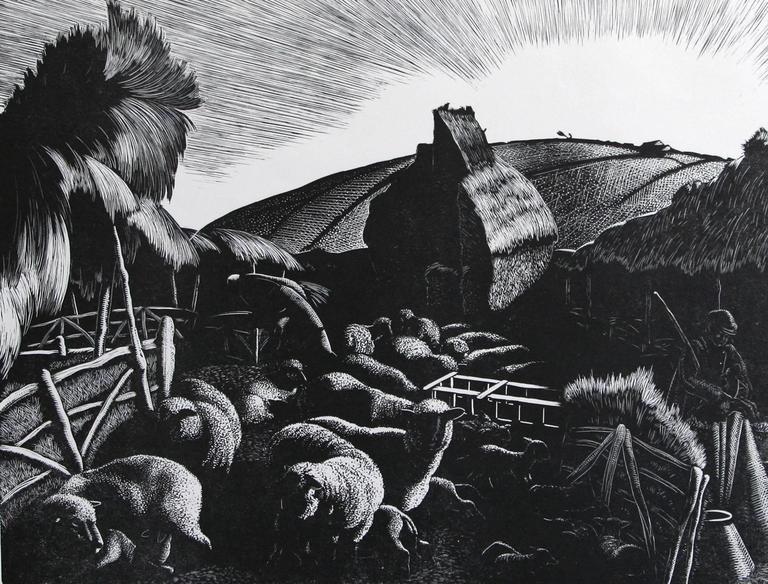
The Bridge of San Luis Rey by Thornton Wilder. Not a first edition – that was 1927 – but the 1931 edition illustrated by Clare Leighton (and owned by someone called Leopold Horwood.)

Clare Leighton

I would like to tell you a bit more. Though not about Leopold as I can’t find anything about him…..

This is the American writer’s second novel and he won the Pulitzer Prize for it. (The commercial success he got from the book meant he could give up being a French teacher and concentrate on writing.)

It tells the story of several interrelated people who die in the collapse of an Inca rope bridge in Peru, and the events that lead up to their being on the bridge. A friar, who witnesses the accident , then goes about inquiring into the lives of the victims, seeking some sort of cosmic answer to the question of why each had to die. ( Wikipedia)

Meanwhile, as they say, Clare Leighton was born in 1898 (died in 1989) and lived her early life in the shadow of her older brother – her family’s nickname for her was the bystander. (That must have helped her self confidence.)

(He was Roland Leighton and despite being described as rather cold and conceited by his friends, he fell in love and got engaged to Vera Britten and was immortalised in her Testament of Youth.

He died aged 20 in the World War One and his grave has one of his poems to Vera inscribed on it.

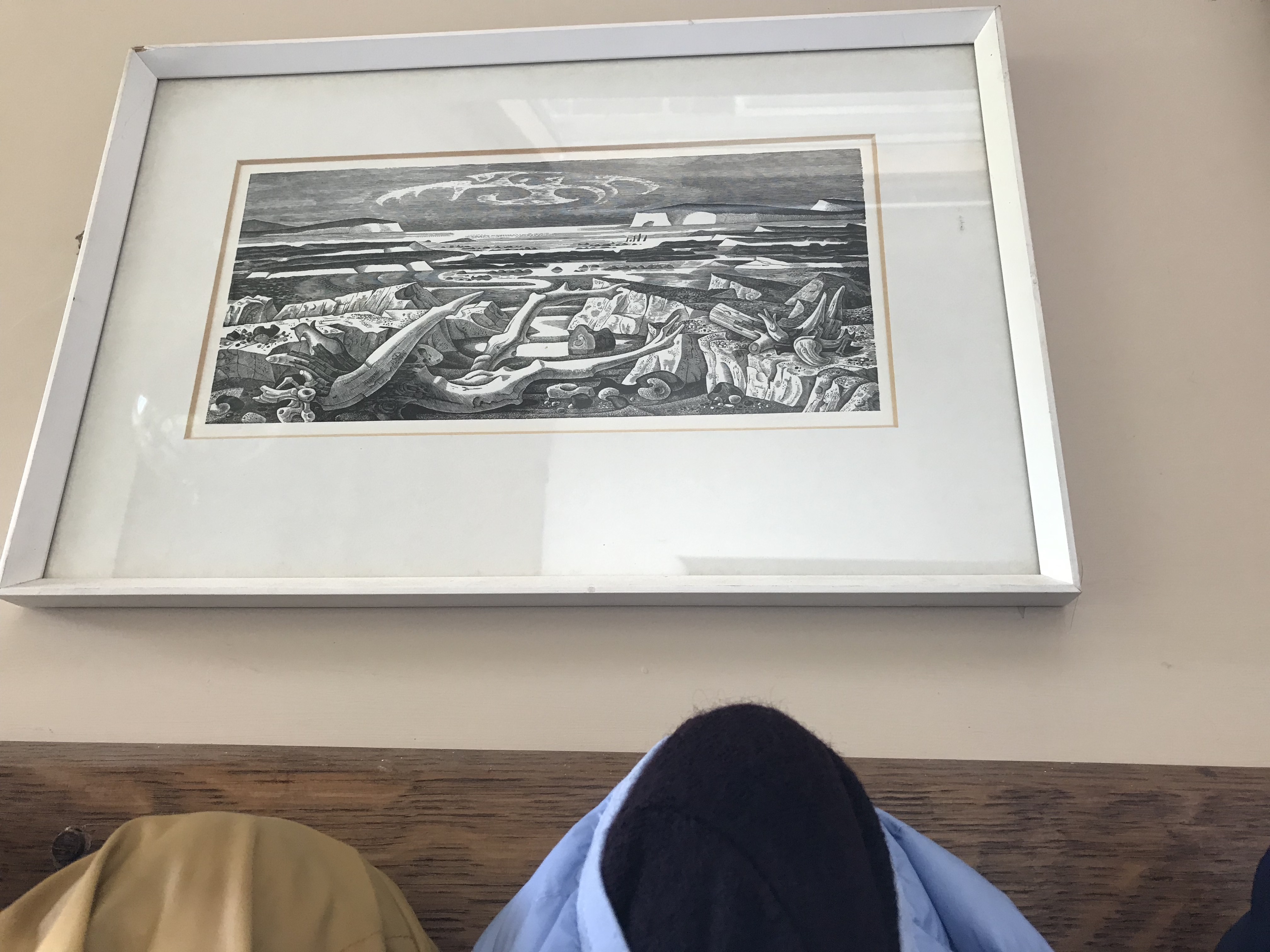
But this is not about him, but his sister. We have one of her woodcuts hanging about our coat rack.

She did her first training at Brighton College of Art – which is the only link I can find to Deepest Sussex but it will get a mention when the book goes on sale as we like a local link.

(Clare Leighton met the radical journalist H. N. Brailsford in 1928,and they lived together for several years because his wife refused him a divorce.

But when the wife died in 1937, leaving the way clear for the couple to marry, he suffered an emotional breakdown, destroying his relationship with Clare Leighton who left for a new life in the US in 1939 and eventually became a naturalised American citizen.She never married. )

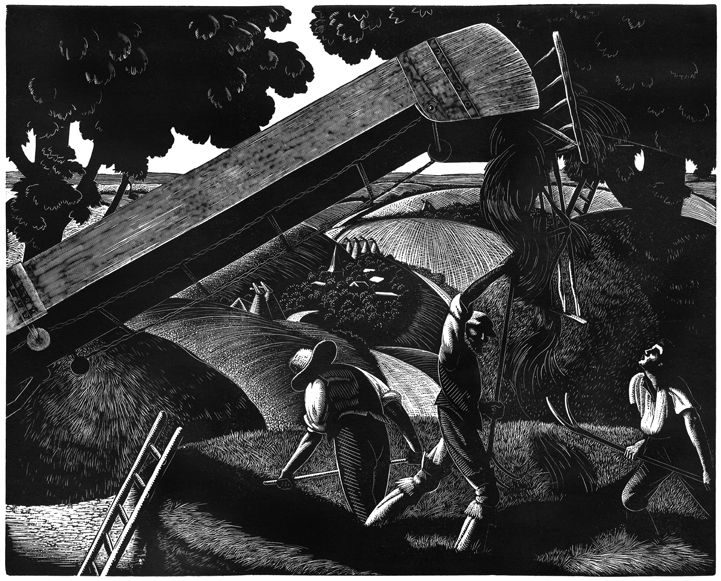
She had a fascination with the countryside and her woodcuts are often of rural people and scenes.

One of her most famous books – The Farmer’s Year – was published by Longmans Green which also published The Bridge of San Luis Rey.

And that is the only connection I can find between Leighton and this book. Perhaps she owed them a favour, or was asked by a very nice member of staff or perhaps she did a deal with them.

It is just that if you look at these images they jar slightly and though dark, like most of her woodcuts and clearly by her, they don’t seem to work – at least not for me.


Everyone Joins In

I was at a supper recently when one of the guests said she couldn’t wait to leave the ‘hustle of town life for a village where the community is so much more cohesive, and everyone joins in.’

Two thoughts went through my mind: she was talking about leaving Petersfield (Hampshire market town, population 13,000, one Waitrose, four bookshops, a real market twice a week, a thriving am dram scene….) not exactly London, New York, Tokyo….

Places to visit near Petersfield

And secondly, village life has more social strata than a sedimentary cliff face – and no, not everyone joins in.

We know this on both counts, us who do join in and organise the village festivities.

So, for those of you not familiar with our festivities, let me set the scene:

The village main street is closed on the late May Bank Holiday and along it there are stalls, entertainments, the pub is packed, there is human fruit machine, a barbecue and other food and a carousel and trampoline, a very lucrative bottle stall … .

This is a couple of members of the music trio and stallholders patronising the tea stall before we opened.

Then, behind the street there is a dog show, sheep shearing, people dressed up in the costumes of the 17the century, archery, a splendid and extensive pop-up bookshop which is called the bookstall but you need to think 1,000 books not just a few…

Just before the festivities open, there is a march by members of The Old Club, with a local brass band along the street and back and that opens the event.

( That morning they have walked the bounds of the village and brought hazels and willows to decorate the street ends.)

Image result for images harting festivities

This is all organised by a small group, and to claim a modicum of respectability, we call ourselves a committee. 

Let me give you  two vignettes which might prove my points about village life:

One :

Last year, I took over the management of the stalls on the street.

My predecessor had been doing this for several years before he left the village and, in handing over to me, he said ‘you spend a lot of time and a lot of emails making sure it works on the day.’ He was right.

I was very nervous and, being me not him who did it more or less by himself, I roped in two great, efficient and organised women ( first rule: make sure your deficiencies are covered) to make sure we had a plan of what went where and how it worked. 

And one day, whilst nipping to the shop to get a few things, I bumped into a neighbour from over the road. 

I asked her if she might be willing to give up a couple of hours first thing on the morning to help get the stallholders in the right place, with their cars off the street in good time etc etc.

(Detail not my strong point but throwing up my hands and asking for all sorts of help – now that’s my forte.)

She said yes – and I was very pleased. 

Anyway, on the day my carefully drawn plan was just a bit lacking in detail (a few stalls forgotten) but generally it worked. ( see above.)

The neighbour turned up, with her husband, at 8am, to do a couple of hours – and they were still there to do the clearing up at 8pm that night.

So, now she is one of those who joined in and is in charge of traffic marshalling and do you know what, it was very well organised this year.

(PS I heard that my predecessor drew up his plan of the stalls’ whereabouts the night before after having a few pre-Festivities drinks and again, do you know what, apparently, it worked fine…)

Two:

In order to be able to shut the main street for a day, we have to ensure that emergency vehicles have another route through.

Which in turn means we have to have marshalls at either end of the street to re-direct people – despite the signs people want to ask someone which way to go.

So, my in-charge neighbour was at one end of the street making sure cars were diverted when a woman approached with a car full of plants for the plant stall – she was at least a hour later than was specified by my email for getting vehicles unloaded and away from the street.

Now, the plant stall is a great seller and are usually cleared out by lunchtime – all locally grown and organised by the village horticultural society, so generally a good thing but some of the people who run it do seem to think they are exempt from the rules which work, apparently, perfectly well for the rest of us.

The driver was told she couldn’t go through because she had arrived after the street was shut, and every stallholder had been told to get their goods and cars off early before the march – and so she would have to park elsewhere.

The driver said (rudely) she was having none of that and drove at my marshalling friend, just by-passing her, and parked where she fancied.

There is a strata, or should it be stratum, of villagers who clearly view the hardworking volunteers running the festivities as the lower orders.

Welcome to village life.

The Timing of Books (and Brexit)

There are times in ( I assume) any Oxfam bookshop when things are less than entrancing. 

The teetering pile of unsorted books topped with a Jeremy Clarkson or two, just for example.

Or souvenir books of royal weddings past, or scrawled-in children’s books, or sudoko books with some of them half done, or the complete works of Georgette Heyer damp and very brown

I could go on but don’t want to sound ungrateful  – though there are days when gratitude is a little thinly spread.

And there are days when the work, the slog, the efforts, the imagination and planning, when the whole making-the shop look good is not met with much, or indeed any appreciation, but don’t get me started on that.

But on other days we get such little delights that it makes it all worthwhile and I will entice you to read on with the promise that I will include a little delight or two at the end.

Meanwhile there is an issue of timing

Some books are time-specific.

The huge old bible we were given is a bit ramshackle but it has whatever the bookshop equivalent of kerb-appeal may be. But finding it in a pile of unsorted books on Easter Monday doesn’t quite work. ( We only do religion once a year…and I had just cleared the religion table display.)

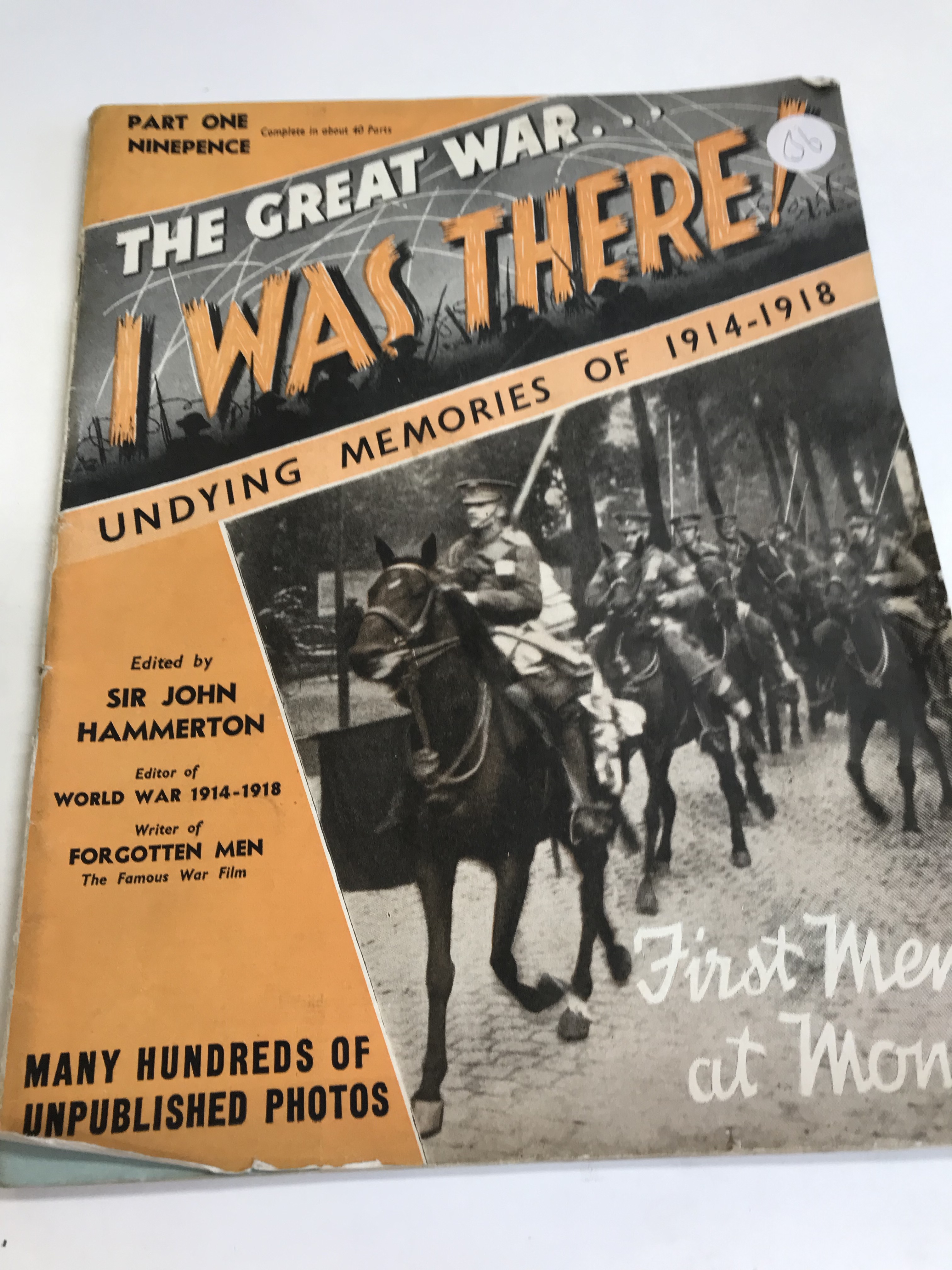
The 51 copies of the magazine The Great War, I Was There! have arrived just too late. The four year leading up to 2018 was their moment and now it is gone. The World War II anniversaries are just gearing up. 

Anyway, the jolly exclamation mark made me wince a bit…

There is already a shelf or indeed two of Christmas books waiting for their turn.

And oddly for a bookshop, we have had a donation of a good number of sunglasses. 

So, I have to monitor the weather forecast and work out what books would work with sunglasses.

Do we go for light summer reads, books with sun in their title ( fewer than you might think), celeb autobiographies so we can put a pair on Johnny Depp’s or Bridgit Bardot’s but that might take several year’s to get together – you can’t order donated books.

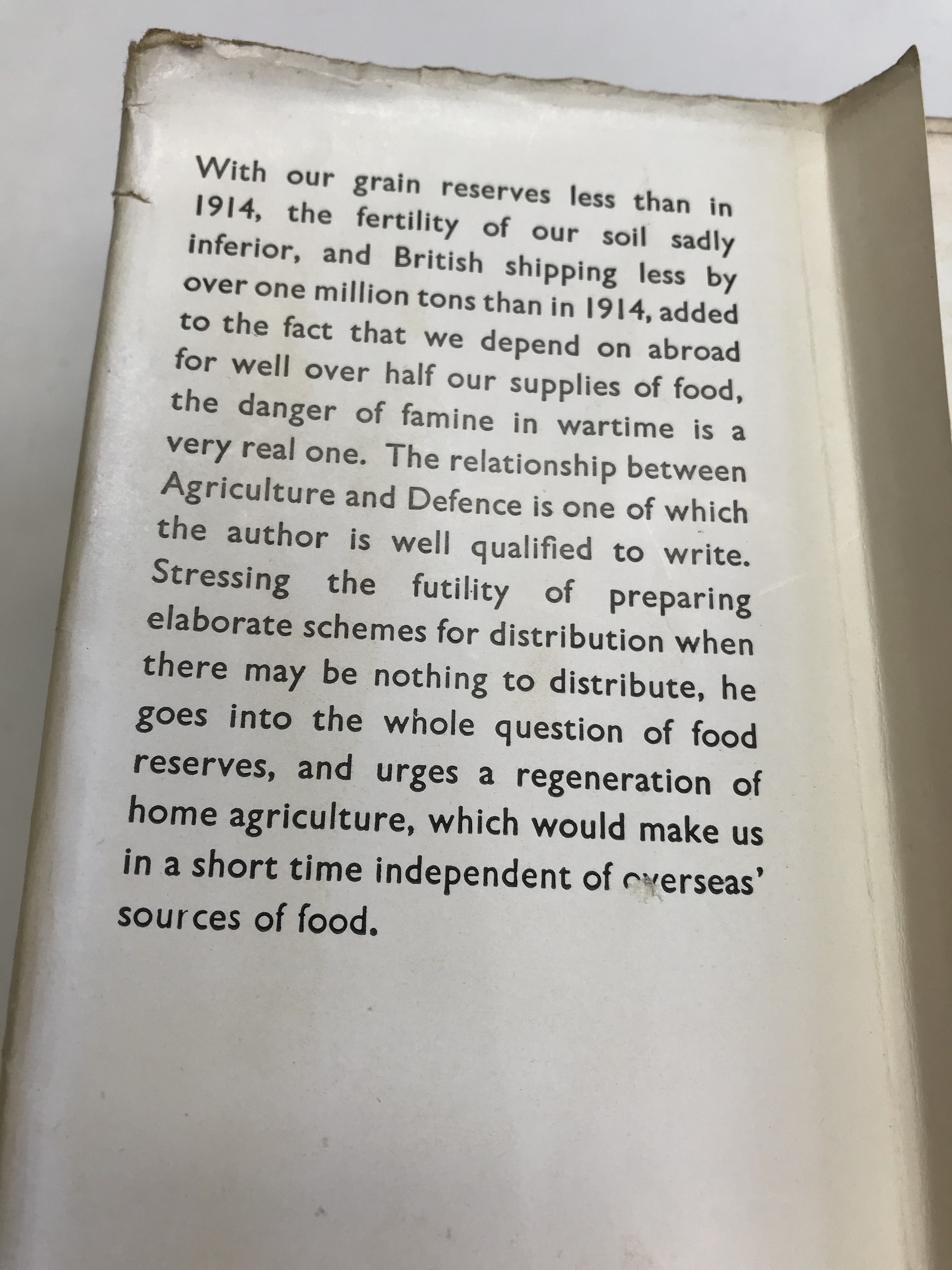
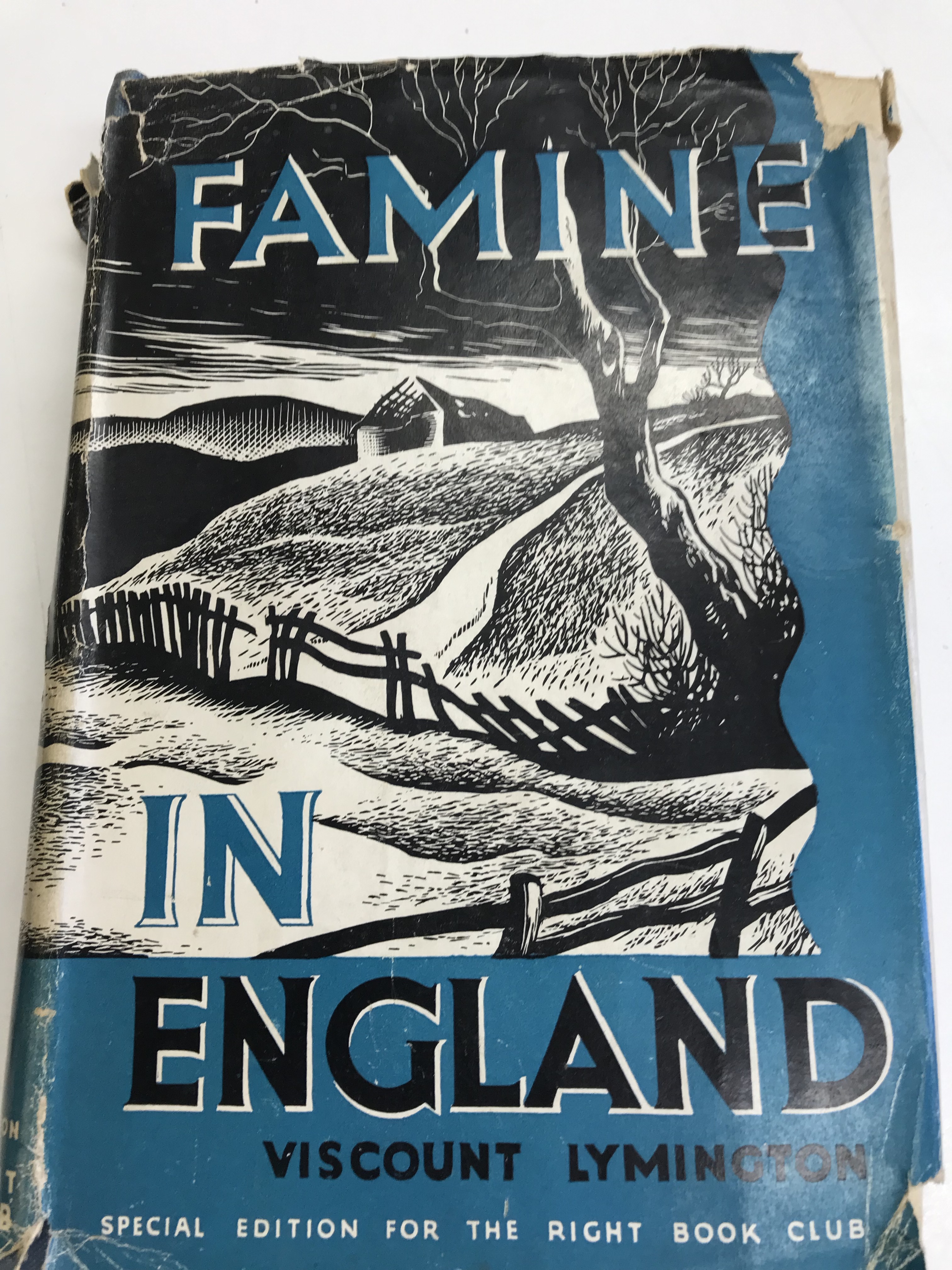
But today I found a book that had its day in 1938 and now, reading its preface, seems so prescient.


Now if that isn’t a Brexit warning, I don’t know what is. 

Jacob Rees-Mogg tells us that Brexit will deliver cheaper footwear – did anyone, however fervent, vote for Brexit so they could nip down to Clarks and get a good deal?

He also tells us that the full benefits of Brexit may take 50 years. I am thinking that the food issue might need sorting before that.

We have six trade deals in the bag including one with the Faroe Islands.

Here is the Wikipedia explanation of Faroese food – some of which we could no doubt import.

Traditional Faroese food is mainly based on meat, seafood and potatoes and uses few fresh vegetables. Mutton of the Faroe sheep is the basis of many meals, and one of the most popular treats is skerpikjøt, well aged, wind-dried mutton, which is quite chewy. The drying shed, known as a hjallur, is a standard feature in many Faroese homes, particularly in the small towns and villages. Other traditional foods are ræst kjøt (semi-dried mutton) and ræstur fiskur, matured fish. Another Faroese specialty is tvøst og spik, made from pilot whale meat and blubber. (A parallel meat/fat dish made with offal is garnatálg.) The tradition of consuming meat and blubber from pilot whales arises from the fact that a single kill can provide many meals. Fresh fish also features strongly in the traditional local diet, as do seabirds, such as Faroese puffins, and their eggs. Dried fish is also commonly eaten.

Now, I am an increasing fan of fewer food airmiles, locally-grown, seasonally-eaten food but I am not at all sure that our farmers can adapt to suddenly growing more cabbages, potatoes, enough wheat for our bread.

And though I know a surprisingly tasty recipe for turnips, I am not sure that will take the place of peppers, camembert, olives, grapes, and though I love Isle of Wight tomatoes, I am not sure there will be enough to go round.

Anyway, that is all not about books or what you find in an Oxfam bookshop so I’ll end with some slivers of delight of stuff that make sorting through a tonne of books on a Bank Holiday, and when you get to the end and stand back, someone else comes in with ten boxes….

Six Poems

There is nothing like being laid low to make a month disappear leaving little sign of any activity whatsoever if you exclude the (rather enjoyable) gorging on afternoon antiques programmes.

So, that took care of part of January and February and then March has just galloped past trying to catch up with all that stuff left to take care of itself – and of course, it didn’t.

Anyway, the bookshop is back under control ( more or less) and I have started to look at my lists of six things.

As the big birthday is now past, time to complete some of these things is galloping away too.

And, always a woman who has bright ideas but no commitment to follow-through, I do feel that this is the year when I really ought to complete something.

( Just in case you need an explanation: to mark by 60th birthday, instead of a big party, I decided to do some things in sixes: visit six islands, see six good films, walk to six venues/places – though my friend who is suggesting we walk from the St Bernard Pass to Rome maybe shooting a little high….)

I also have decided to learn six new things and have already done throwing a pot and am having gardening lessons, have swum a little bit underwater, managed a couple of not too bad poached eggs.

There is a very nice man who fixes wonky our chairs ready for us to re-upholster in my upholstery class and (hopefully) he is going to come and talk to us about how to identify woods.

Yes, of course, I know pine and walnut and probably mahogany but would you be able to spot an ash or elm chair at fifty paces in an auction house? Really?

Anyway, having listened to a radio programme about how good for your brain ( at whatever age you are) to learn poetry by heart, I have decided to learn six poems.

A good idea, but now faffing about wondering which ones…….

I gather the easiest to learn have strong rhythms and rhymes which makes sense.

I am not a great poetry reader – though I wish I was, but then I wish I was a piano player and did pilates for half an hour every morning before having a glass of freshly squeezed orange juice and slipping into my size ten dress…..

So, I only have four poetry references in my life.

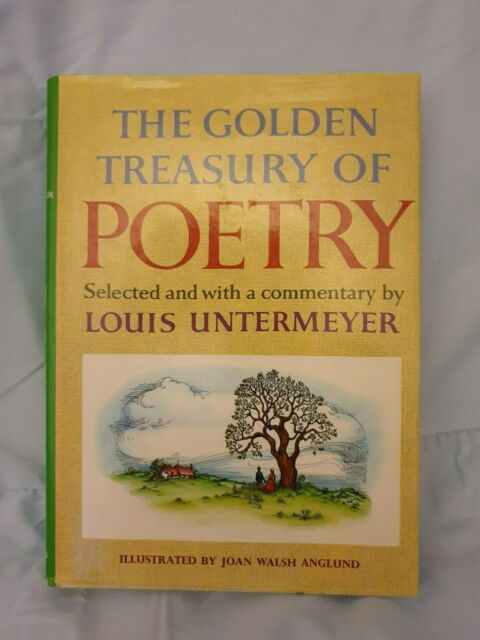
A Child’s Garden of Verses, my childhood copy still with me or so I thought. But when I went to look for it, I found I had somewhere along the line, thrown it away.

If I had remembered that, I might have rescued a copy or two that has come my way in the Oxfam shop. Now I have to buy it again.

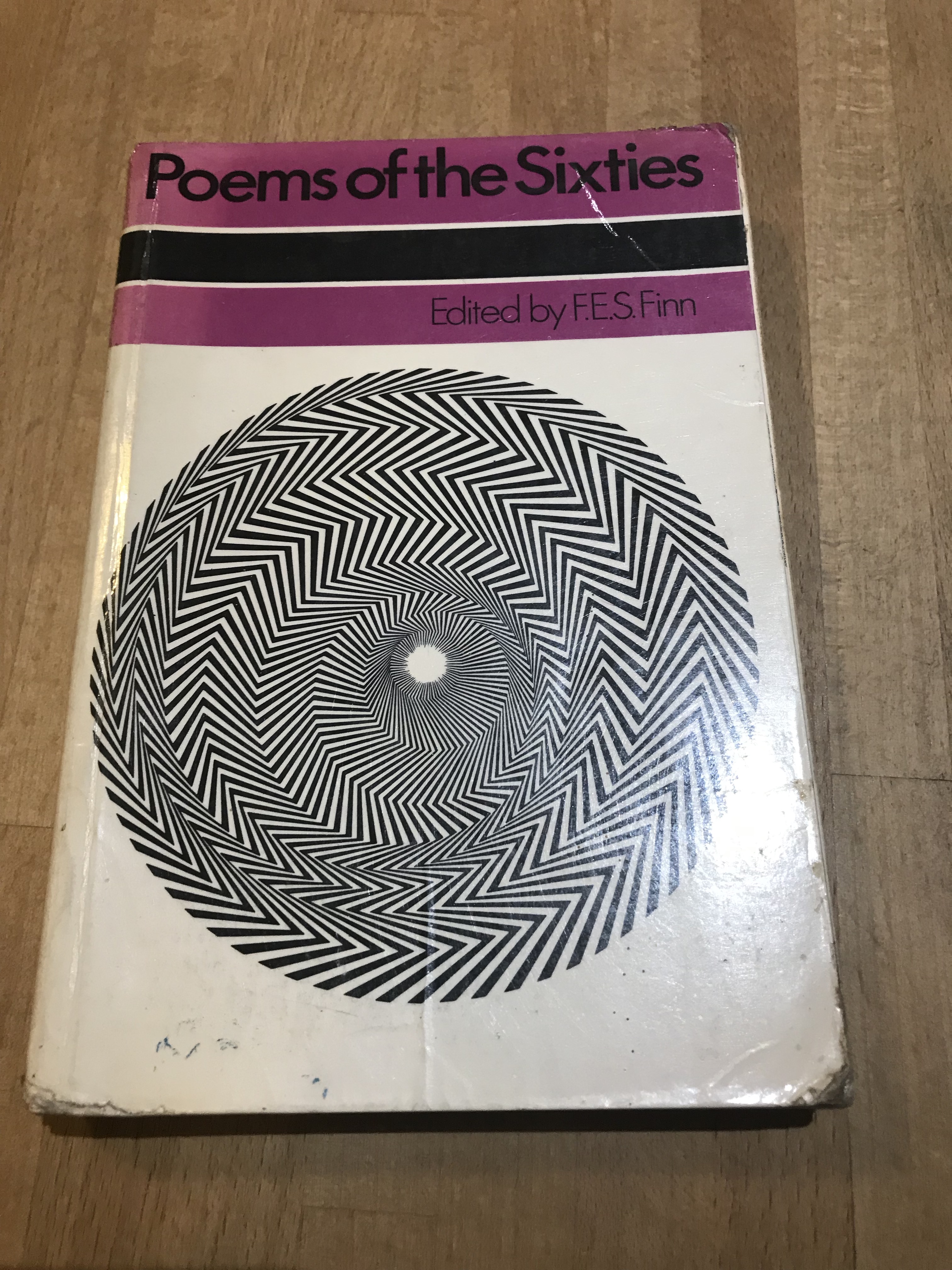
Poems of the Sixties which I have kept since school – even then I wanted to be a poetry reader..

And, for the first time in years, I looked inside to find my younger self.

Trying to understand the way language worked and, yes playing with my handwriting style which I have to say, looks rather like my sister’s is now – now there is a Freudian something.

John Donne – I saw an programme about him when I was an impressionable teenager and have kept a soft spot. Should you want to know more https://www.theguardian.com/books/booksblog/2009/oct/05/john-donne-the-sun-rising


Catullus – I was delighted by how naughty he was when I arrived at university and discovered him, but then I was a sheltered girl.

Catullus’s poems have been preserved in three manuscripts that were copied from one of two copies made from a lost manuscript discovered around 1300 – he lived about 60 BC.

He wrote good stuff:

Lesbia, come, let us live and love, and be
deaf to the vile jabber of the ugly old fools,
the sun may come up each day but when our
star is out…our night, it shall last forever and
give me a thousand kisses and a hundred more
a thousand more again, and another hundred,
another thousand, and again a hundred more,
as we kiss these passionate thousands let
us lose track; in our oblivion, we will avoid
the watchful eyes of stupid, evil peasants
hungry to figure out
how many kisses we have kissed.

So, one from each of those poets gives me four poems and I am up for suggestions on the other two. 

The Aftermath

It is the calm, if not torpor, of January in the Oxfam shop when the heady days of taking £3,000 in a week are a dim memory.

Like retailers everywhere, we in the Oxfam shop have to make the most of Christmas trading.

And, that takes quite a lot of planning and execution – and it is not like I am new to all this, I have been doing it for a number of years.

But there is one aspect which catches me out every January – what went where before?

If you are so post-Christmas you cannot bear the thought of reading about anything to do with the that ridiculously extended period of over-spending, over-eating and you are certainly over all of it, please do feel free to skip some of the following paragraphs.

From September onwards we collect donated books which are in such good a state, they could be given as a Christmas gift without anyone knowing they were from a charity shop.

(Now, that is not to say that all our customers want to shield their recipients from the source of their gift

Indeed, this year we had more customers than ever who told us their family rule was to buy everything from charity shops, and one family who arrived en masse on Christmas Eve to copy the Icelandic custom of buying each other books so they could sit and read them during the night before Christmas.)

So, we had more than 20 crates of books that were either Christmas gift books, Christmassy fiction, non fiction, children’s books, music or DVDs.

Those, along with the Oxfam new goods – baskets, rugs, chocolate, cards, decorations and so on –  take up a lot of room.

And they go – the shop ‘eats’ up all those goods in the big spend weeks – and afterwards, when they have sold (mostly) there are all sorts of gaps and empty shelves.

You would think, and you would be right to think, it should not take a genius to work out what was there before and re-instate.

But hey ho, it is never that simple.

On the Thursday after Christmas, I was in all day but unfortunately I was the only person in all day who was a crate-of-books mover.

So, I moved and moved, re-stocked, juggled, moved, re-juggled and generally did my back in.

And I have been doing that ever since, but still the shop is not quite back to normal.

It was easy to put the art section back where it had been displaced from by the need to have front-facing books.

(Front-facers are what they sound like – books on a stand showing their face not their spine, and front facers sells much more quickly than spine-facing books.

Needless to say they take up more room but they are the ones which make the shop look good.)

I know that Old and Interesting need to go back where the leftover unsold socks are, but we still have socks in place so that might have to be juggled about a bit.

Of course, being an Oxfam shop we are reliant on donations, and those can fluctuate

Before Christmas lots of people have a clear out – you might think that should be a January job and I would agree with you.

And it is not just quantity – subject matter fluctuates all the time. (Though the day we are short of biographies of famous people is the day I will eat my hat.)

So, when I decided to re-instate the shelf on how to paint or draw – usually we have lots of those books – imagine my dismay when we didn’t have any

Nor indeed could I replace them with how to knit or sew, or collect Victorian porcelain or take up calligraphy….. there weren’t any.

And of course, the table has to be kept looking good. After all the glam and razzmatazz of Christmas tables, January’s need to be calm, thoughtful and quirky without being in your face. 

And I have to say they are a bit scrabbled together because we have used up so much energy and time on the Christmas books that little brain or shop space has been given over to the aftermath

And it is pretty annoying when you have created a table display from a box or two found under a shelf and told the volunteer on the till to make sure they don’t sell anything because we have no back up, to find half of it gone 20 minutes later.

Mind you, we did a nice table of stuff I had lying about. Instead of resolutions, we went with ‘learn something new.’

I thought it was rather inspired to put out a book on cardboard modelling, another on telepathy and one on how to train your dog…..

Still, in this peace and quiet time I can look through those books which might be worth something – a 1747 small book of Sophocles in Greek, to research the tiny bookbinder’s mark to see if the otherwise boring volume is worth more than I think…..

It is the time to start planning table and window displays for the next few months, to think about finally getting rid of the socks and bringing out the old travel books and trying to value the old maps – notoriously hard.

And generally get back to the gentle running of a bookshop – until the urge or necessity to clear out bookshelves, garages, attics and parents’ homes kicks in again and dealing with a boxes and boxes of donations means all those nice pleasures get put to one side.

A Birthday Celebration

In the few days running up to Christmas, my best beloved and I both had our birthdays, a family wedding, an early family Christmas and, of course, there was the Oxfam shop at the busiest time of the year.

So, we decided to abandon all thoughts of quiet meals out – inevitably we would have been joined by a Christmas office party or two – and treat ourselves to a night in a nice hotel in the relative peace of January.

Helpfully, The Guardian did a feature on the best places to stay with a dog, and one was not that far way in the New Forest.

So, I booked it, and at the time the owner told me they were doing a bit of a re-furb and though it would all be done by that date, the kitchen wouldn’t be fully open.

I asked if we could get a meal, if not the fine dinning they usually went in for, and he said yes, of course.

To be fair, I had forgotten that conversation, what with Christmas, weddings, the Oxfam shop etc etc.

So, after our walk along the beach, we went to a pub and had a sandwich one the basis that you don’t want two ‘proper’ meals in a day – certainly not with chips.

When we got to the hotel, it was apparent that the re-furb wasn’t quite finished, what with carpet layers and a lot of hoovering and mopping going on  – but our room was done.

The hotel is in the middle of a commuter village so it nestles in suburbia – not quite what we had in mind, though the views at the back, as per The Guardian photo, are very nice.

So, what was on offer for supper.

‘Ah yes madam,’ I was told, ‘there is a complimentary bottle of wine and a sandwich.’

Really only a sandwich option? ‘Yes.’

OK so we could have gone off and found somewhere a drive away to eat, but we decided we would opt for the wine, a conversation about work which we never usually manage at home, and a dog happy to be entertained by domestic comings and goings.

Most of the staff and carpet layers left, leaving a nice young man in sole charge and some banging and crashing in the kitchen.

After a while we asked what the sandwich options were.

I was thinking nice crusty local bread, with local ham say, or today’s crab catch or even a BLT. 

The nice young man said, ‘I’ll go and have a look what is left in the fridge’

Really? ‘Yes.’

He came back and said he had found some cheese and smoked salmon and I probed for a few more details but he looked panicked

In the end I said, ‘Would you like me to make up the sandwiches?’

He looked relieved so I told him to get out what he had in the way of bread and potential sandwich fillers, and lead me to them.

Well, I refused the Bernard Matthews slices of chicken breast….

The bread was sliced and frozen so had to be de-frosted and it certainly wasn’t anybody’s finest.

The cheese was a half packet of Cathedral cheddar and the pickle came in a lidded bucket, so not all that local or homemade.

The butter was also pretty cold so spreading it was a challenge and the smoked salmon looked like it was a new year’s leftover.

I did what I could and asked if he had any greenery and he came back with a bag of spinach leaves and another bucketful of (actually rather nice) green olives.

I tried to make it look like a nice platter and he was very impressed. ‘So much better than I would have been able to do,’ he said – and I think he was probably right.

(We thought nostalgically of the very, very good BLT a hotel in a mid-priced chain had managed to rustle up when we unexpectedly arrived at a Reading hotel late one evening. But that is another story and one I think I might have already told you.)

To be fair, we did get a cooked breakfast the next day but at least one of us, hoping for a bacon sandwich, was just a bit disappointed.

I have to say that my TripAdvisor review for the Manor at Sway won’t be that great.

My Day in Georgian

Friends of ours invited us to a celebration of the publication of Tristram Shandy – yes indeed not the usual party invitation.

At the time of the invitation, the diary looked blank as far as the eye could see but as seems to always happen, the it filled up and time to think about this event was at a premium.

(Mind you that was nothing  compared to what the the lovely people who were organising it had to do and with just a few other commitments…)

Anyway, my best beloved was asked if he would read a little bit of am-dram stuff that that been written and would he be Tristram Shandy’s father.

Of course he would, darling, he would put it all out there…

Late in the day, I, who am no-am dram type, was asked to play his wife at the start of the event with an off stage ad lib sex scene – channeling my inner When Harry Met Sally – really? 

I said yes, but refused to rehearse.

Meanwhile I had heard from A who was busy organising Georgian food for more than 50 whilst S was revising his plans for the script.

I said I would cook something and found a recipe for a Georgian pie on the ever-useful Google. 

It came from The Art of Cookery Made Plain And Easy by Hannah Glasse  published in 1747 when they didn’t bother with quantities, or much in the way of timings, or temperatures – certainly not for 50 people.

Here it is:

To make an Onion Pye.

Wash, and pare some Potatoes, and cut them in Slices, peel some Onions, cut them in Slices, pare some Apples and slice them, make a good Crust, cover your Dish, lay a Quarter of a Pound of Butter all over, take a Quarter of an Ounce of Mace beat fine, a Nutmeg grated, a Tea Spoonful of beaten Pepper, three Tea spoonfuls of Salt, mix all together, strew some over the Butter, lay a Layer of Potatoes, a Layer of Onion, a Layer of Apple, and a Layer of Eggs, and so on, till you have filled your Pye, strewing a little of the Seasoning between each Layer, and a Quarter of a Pound of Butter in Bits, and six Spoonfuls of Water. Close your Pye, and bake it an Hour and a Half: A Pound of Potatoes, a Pound of Onion, and a Pound of Apples, and twelve Eggs will do.

That was what I started with and at the end of this, should you get that far, there is my version..

Suffice it to say, I made a pie.

And we were going to Frome which is a lovely town full of people for whom a vegetarian option would be a necessity so the pie was a good option.

Meanwhile, we realised that as we were to play parts, we needed costumes.

The BB went onto his local am-dram costume mistress to hunt out something and I asked him to get me a dress.

I would have gone with him to try things on but I was busy with getting the Oxfam shop ready for Christmas, going up to London, upholstery and other stuff that takes up the time of a Sussex housewife.

So, though I am touched by his mental image of me, the dress didn’t quite fit.

Given that it was an am-dram costume it had poppers rather than any more substantial fastenings – and they were in the front, from the cleavage down.

I ask you to use your imagination to realise what happened if I stretched my arms out…

Now the Georgian were no prudes, but if not to shock the good people of Frome I would have had to spend an afternoon holding my breath and keeping my arms firmly by my sides to get away with it.

Instead, I raced to Chichester to buy an old lady’s nightie from M&S and a haberdashers to get some ribbon to make an outfit which made me look like a slightly bawdy version of Jane Austen’s mother.

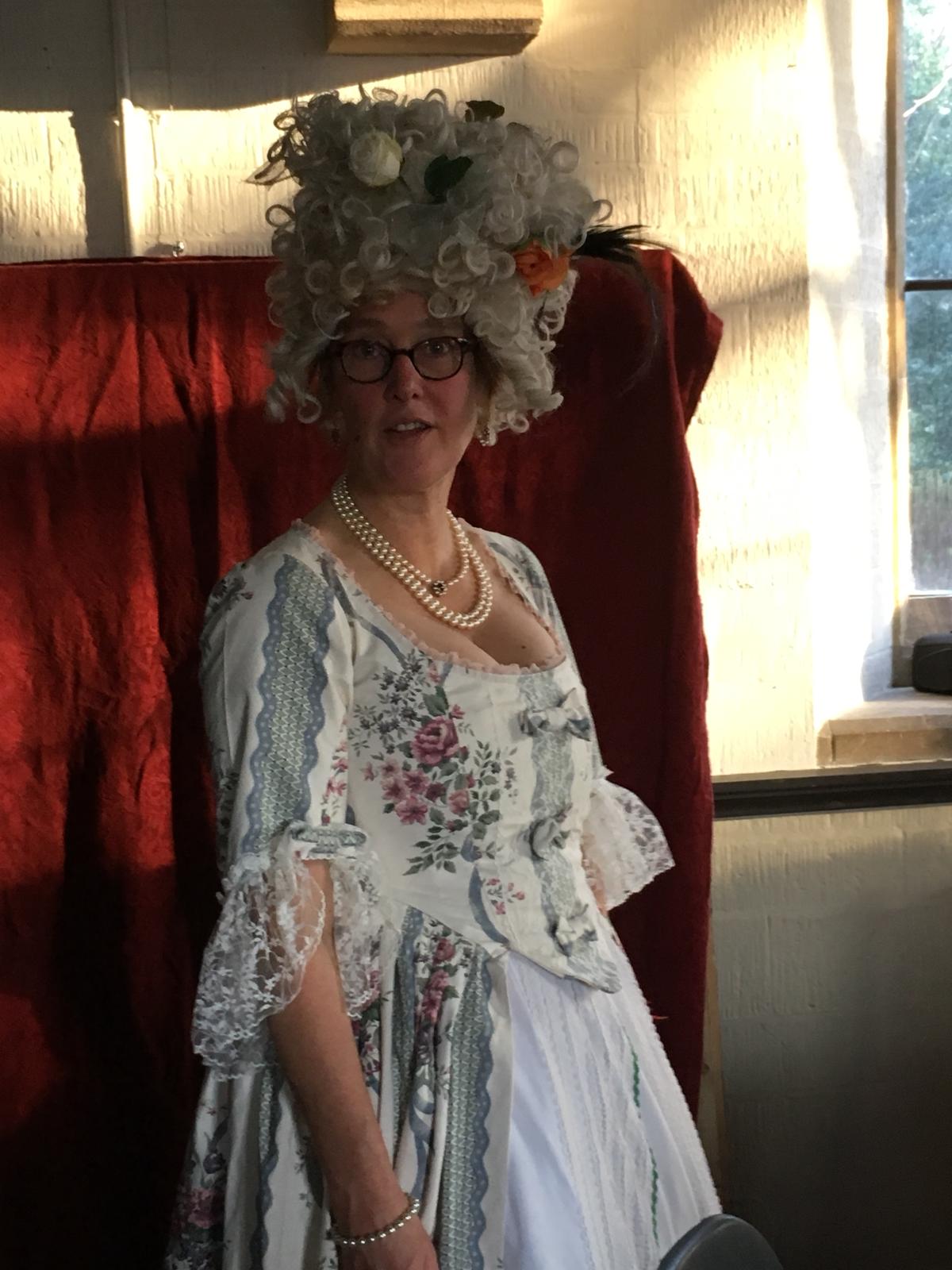
I would have gone for the full wig and flounced skirts etc but have you any idea how hard it is to find suitable costume hire in Deepest Sussex with 24 hours notice?

(I was put to shame by the marvellous costumes on who at the event but at least I made a good pie.)

So, to the event itself.

It was marvellous.

Apparently it was a Georgian convention for the women to eat at one end of the table and men at the other – how nice was that!

Three courses and each interspersed with a series of vignettes from the book acted out by ‘members of the party’ and at the end of each one, there was an expert (found among their friends) to tell us some background stuff which ranged from the use of forceps in the time, to the only portrait of Lawrence Stern to psychological aspects of what the book says about people, and a very quirky tracing of a copy of the book through a very quirky family story…..

Yes indeed, when did you ever go to such a lunch?

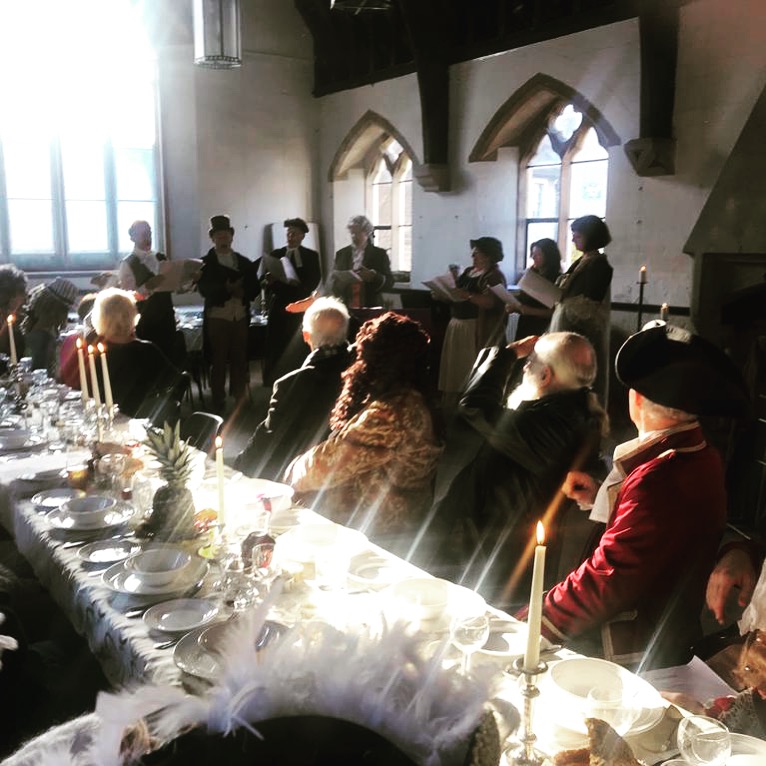
The room was old, had a log fire burning, candles all over the place, pineapples as decorations, wonderful food and good company.

The hostess was (amazingly) fielding calls about a plumbing disaster, the dog went walkabout and was brought back by people down the street, the host called in all his actors and a seriously impressive singer and choir, wine flowed, young people brought us sweetmeats and syllabub – yes of course, all made or done by their friends.

I curtsey in a very Georgian way to A and S for one of the most memorable ways I have spent a day.

( On the way back to our hotel, my BB was analysing the successes and failures of his performance but hey ho….)

So, to the pie.

Now this is a recipe I intend to replicate for the lunch I am doing for 35 in the next couple of weeks and I realise that I am channelling my inner Hannah Glasse.

This is the 21st century version of a vague recipe….

Before you start, be prepared for a lot of butter and eggs. You have been suitably warned.

Get two of those large foil turkey roasting ‘tins’ you can get at this time of year.

You need two because the pie will be too heavy for one.

Check they fit your oven.

Peel lots of potatoes and slice them with the help of a food processor and put them in the doubled turkey roasters with quite a lot of butter, into a medium oven so they cook gently.

Meanwhile, slice a lot of onions in a food processor or buy ready diced onions and again, with butter sweat them for some time.

Once the onions and potatoes are pretty much cooked, add the onions in a layer above the potatoes, having put some salt, pepper and allspice ( and if you feeling particularly Georgian, a bit extra of grated nutmeg between the layers.)

Meanwhile slice the apples – please don’t bother to peel them and use all the leftover glut of apples your friends and neighbours give you – so a mix of cooking and eating.

Just cut out the bad bits and leave the cores for the compost.

Layer above the onions and again a sprinkling of allspice and quite a bit of butter.

Beat gently a lot of eggs – I used 18 – and put over the layers so that they cover (more or less) the other ingedients.

Cover with shortcrust pastry. Of course you can buy it but I am home-made afficiando.

Decorate the pie with left over scraps.

Bake at about 170 until golden.

Cool overnight.

Then cover with tinfoil, put in the boot of the car and make sure your BB does not throw his boots or bag on top of it.


Nice Coincidences

It has been a time of small coincidences in the Petersfield Oxfam bookshop.

(I’m no believer in fate, or things that were meant to be, but I like a nice coincidence as much as the next woman.)

One day recently, I was sorting through a small avalanche of donations and my mind began to wander to the catering for our annual winter lunch.

Feeding 30 plus people is not in itself hard as long as you chose your menu wisely.

Individual soufflés anyone?

Last year I made pies and I am, though I say it myself, a reasonable shortcrust pastry maker but pastry does require a bit of faff and multiply that by 30 people’s worth of faff and I shan’t do that again this year.

One year I made a chicken something or another which I got from inside my head rather than any recipe book and that was all very well until I learned a well-know chef had decided to come. 

My lodestar for deciding what to cook is a farmer friend who likes his food, is always very appreciative and – because he can’t do with eating standing up – he leads the way to our outdoor table and others follow, thus easing the elbow-to-elbow crush in the house.

So, there I am thinking about what he would like, his exacting palate – and praying it doesn’t rain.

And I am still book-sorting away when I came across this little foodie delight.

IMG_2273

Usually, we have out winter lunch two weeks before Christmas which means it would be on December 16th but because of pressure on that end of the month, we decided to have it on the 9th.

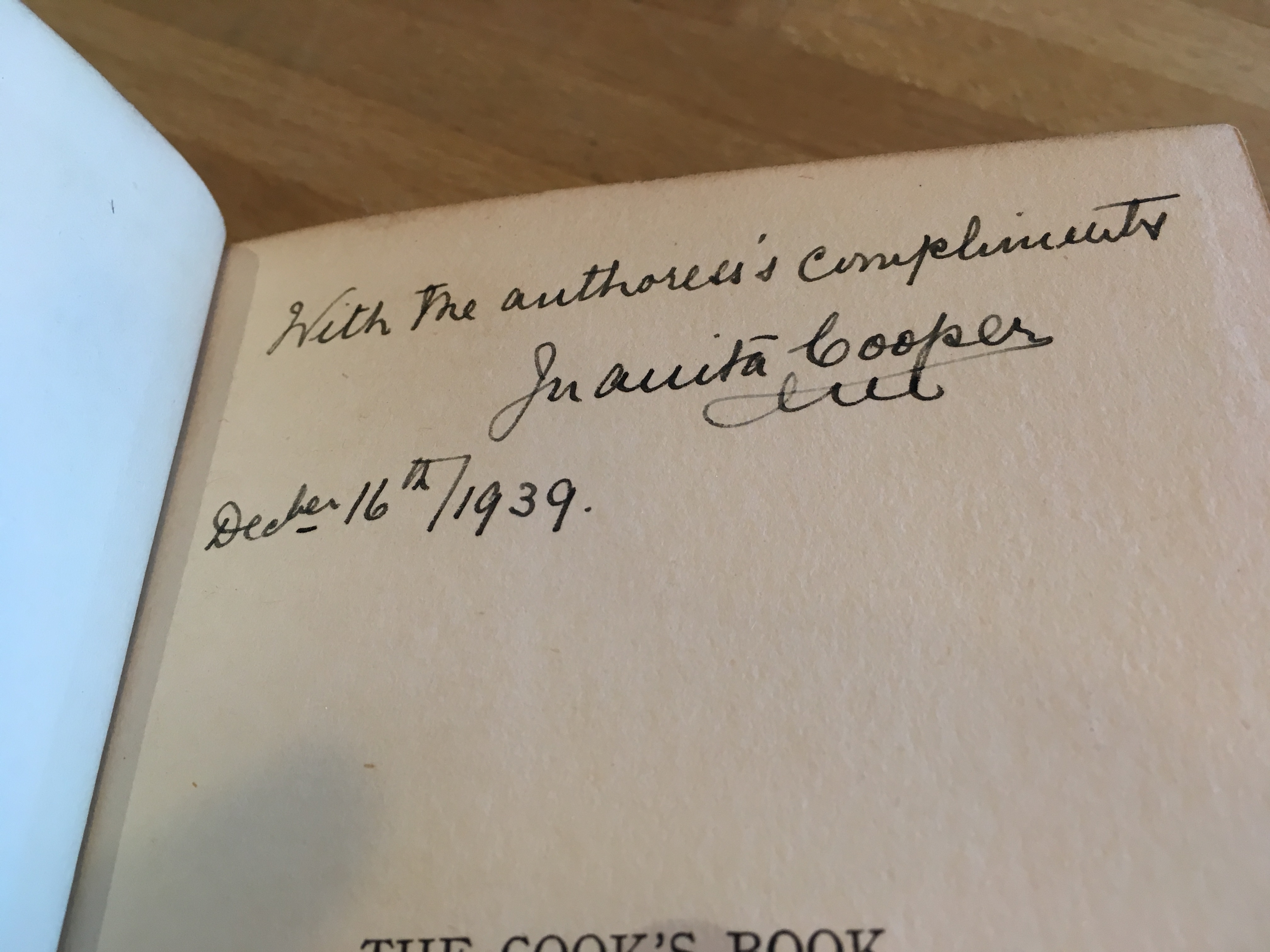
So imagine my pleasure at finding that inside the book was this:

fullsizeoutput_dd8


Of course that doesn’t quite fit into the perfect coincidence, but it was nice non the less.

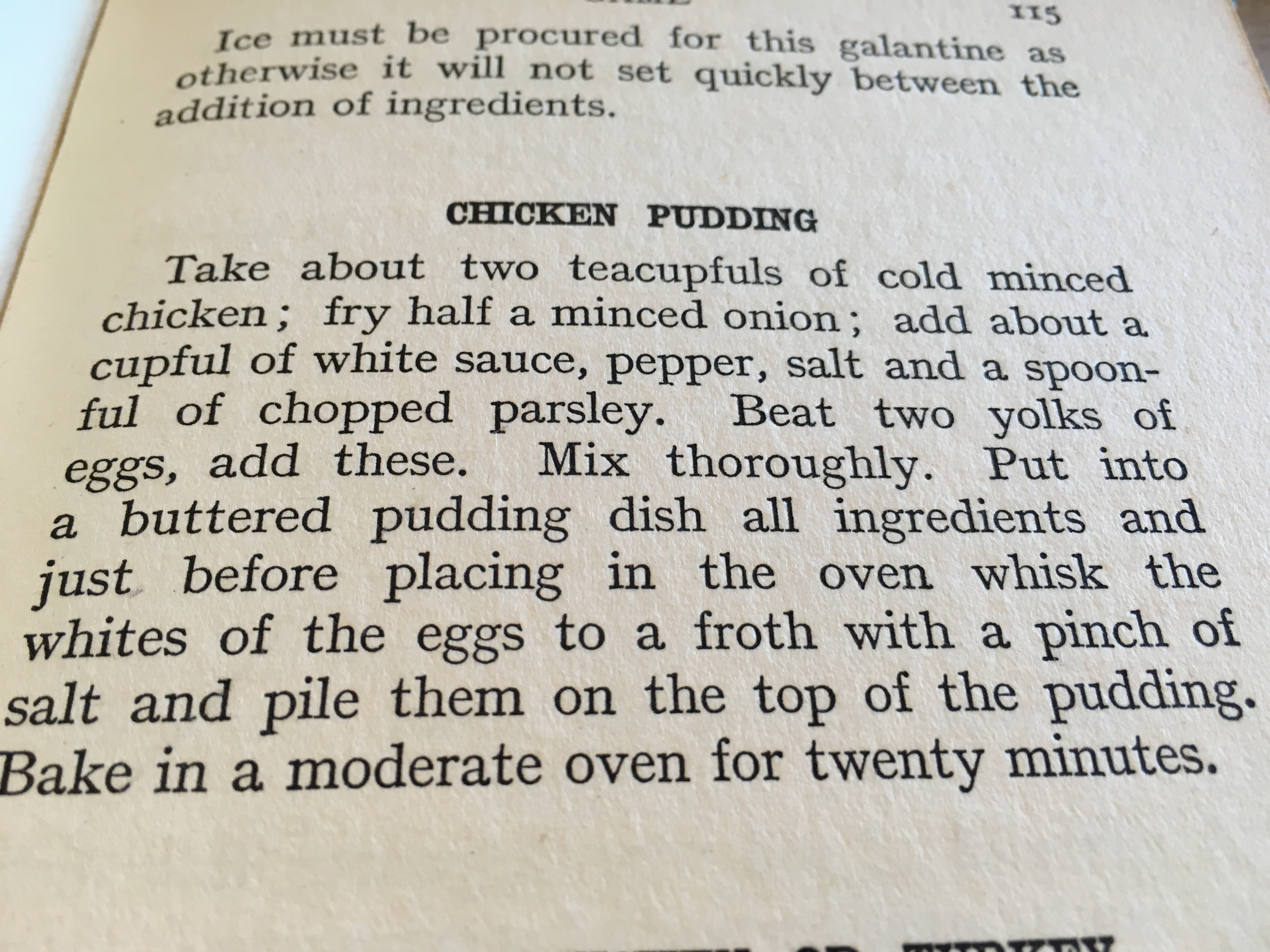
So, I thought I would have a read and see if there was any recipe I could use……..

IMG_2267


I am still not entirely clear what gets passed through a sieve…. and who would have thought Bovril was an essential ingredient in 1930s Chile?

IMG_2268


There is no doubt, none at all, that that asparagus would be well and truly cooked through….

fullsizeoutput_dda


Chicken meringue – I am not sure my farmer friend would go for that.

And finally,

IMG_2271


It was interesting to gather that not everyone who bought this book would have had access to ice – no fridges.

Call me a lax cook if you will, but I decided against trying to source Nelson’s gelatine and boiling tins of pineapple, straining them through rinsed napkins and then adding green food colour.

Leaving recipes behind, I turned my attention to natural history. It is hard to be sure any patterns when it comes to what is donated to the shop.

Just as you lament the lack of paperback fiction, the shelves are nearly bare and you think, this at last must be the Kindle effect, a tonne of novels arrive.

So, I am hesitant to share my theory on natural history books but here goes anyway.

We used to get lots and lots of books about natural history – from birdwatching to fossils to geology to, and given where we are this is not surprising, a lot of copies of Gilbert White’s Natural History of Selbourne.

( I always saved a particularly good version of this to see at Christmas – it makes a good present.)

Recently though, we have had very little and when I say recently, I mean perhaps the last year or so.

My theory is that people no longer look at the small and local and want to see Blue Planet or programmes about lions of the Kalahari.

But we do occasionally get copies of books from the New Naturalist Series – they have marvellous covers and sell very well.

images-1.jpegUnknown.jpegimages.jpegUnknown-1.jpeg

(I could bore you with the background information on why some are worth much more than others but I am guessing you don’t really, in your heart of hearts, want to know.)

Anyway, we have had some in recently so I put together a table display of them and some other stragglers of natural history. 

It sold so well that instead of lasting a week, I had to re-think the table three days later.

We also get some books in the Wayside and Woodland series published by Frederick Warne. 

And, just after I had re-done the table, I’m sorting some books, and this came in.

IMG_2274

How interesting I thought, it is by a woman. I wonder who she was.

And inside I found this:

IMG_2272

It says that her book, this book I am holding in my hand, was the first book on dragonflies to ‘achieve wide popular readership.’ ( Now apparently worth about £25.)

It also says that Cynthia Longfield used some of her ‘ample private means’ to part sponsor the chartering of a ship containing ‘a band of natural historians’ who went on a exploratory trip to the Pacific.

She travelled widely in Africa:’ I find machetes so useful in the jungle.’

And guess what else it says about the Cynthia – she was asked to contribute a volume to the New Naturalist Series which ‘ quickly sold out, changing hands at a high premium until it was re-printed.’

Indeed the 1960 first edition is now worth about £90.

We have a copy. It came in with the other New Naturalists and my colleague who collects them valued them for me, so I didn’t notice her name. It is in our cabinet of valuable books.

md22768958351.jpg

Satisfying coincidences all round.

Odysseus – the not so modern man

Going on holiday with someone steeped in Greek history and mythology has its advantages.

There are of course times when chit chat of the day, especially when the day has been weather dull and not much going on, can flag.

But at that point you can steer the conversation around to, say, Odysseus.

Apparently, he landed on an island, since claimed to be Corfu (where we were.)

Not for the first time, he was shipwrecked and had to sleep on the beach.

Imagine his surprise in the morning then, when a delightful princess arrived with her handmaidens, who recognised him for the gent he was and took him home to be lauded by her father’s court.

(Even more surprising was the fact she and her handmaidens had travelled across the island to do the washing and that is how they bumped into him…..)
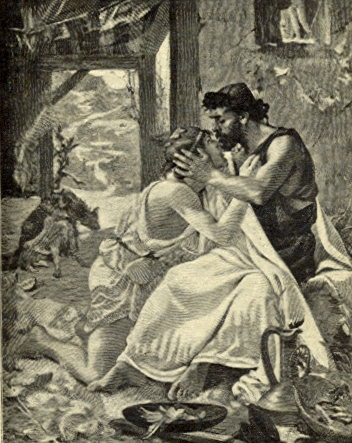
Image result for images odysseus

Actually, there is a quite a lot of cut and paste about Odysseus’ adventures – shipwrecked, on the beach with a few survivors, going inland to kill a sheep, roasting it and then waiting for a pretty girl to turn up.

Anyway, we were at the taverna and the best beloved looked up Tennyson’s poem about what happened when Odysseus finally got home after all his travels.

You might remember that his wife Penelope had been keeping her 108 suitors -who were pretty sure that Odysseus was not coming back in a hurry – waiting by weaving a shroud.

She said she would choose one of them when she had finished – but each night she would unpick a bit to fend off decision time.

This ruse lasted three years until she was unmasked by a faithless servant.

Given that Odysseus was away for 20 years, she must have had some more inventive tricks up her Grecian sleeve.

So Odysseus gets home and decides to come in dressed as a beggar to see what is what, no doubt.

The goddess Athena gets involved, and Penelope sets up a contest for the still lingering suitors – none of which apparently recognise our hero – so that whoever can string Odysseus’s rigid bow and shoot an arrow through twelve axe heads may have her hand. 

Well, yes of course, Odysseus wins and the suitors are all slaughtered.

Meanwhile, back at the taverna, my BB had looked up Tennyson’s poem on what happened next.

( You need to know at this point, just in case you didn’t, that Odysseus and Ulysses are the same man – the same, away for 20 years, shipwrecked,  los of adventures, fond of a pretty girl, man.)

Now, I am always throwing away copies of Tennyson’s work at the Oxfam shop – he is not read much in these times and parts – but this poem is a great rail against getting old and not doing what you can in the time you have. 

(By the way Tennyson was not a lord – he was christened Alfred Lord Tennyson.)

Which is fine and dandy, but if I was Penelope and he came in of an evening and read this to me as a justification for what he was about to do, I might be less than pleased. 

(In fairness there is nothing in the Odessy to say whether he actually set off again or stayed home and told his wife and son how grateful he was that they had kept all things in order, the home fires burning, and were there to look after him in his old age, listen to his endless, bloody endless, stories of his adventures…..)

The commentary is mine…

Ulysses

It little profits that an idle king, 

By this still hearth, among these barren crags, 

Match’d with an aged wife, I mete and dole 

Unequal laws unto a savage race, 

That hoard, and sleep, and feed, and know not me. 

The aged wife, mate, is so because you have been away for 20 years and she has been fending off suitors, bringing up your son – born just before you set off on your adventures and who has been running your kingdom….

I cannot rest from travel: I will drink 

Life to the lees: 

(so, you got home, hung around in disguise and now instead of being nice to your very long-suffering wife and son who have kept everything together, you think, ‘ I really need a bit of a trip, something exciting to break the monotony.’ )

All times I have enjoy’d 

Greatly, have suffer’d greatly, both with those 

That loved me, and alone, on shore, 

(not that alone, with a pretty girl on each shipwrecked bay….) 

and when 

Thro’ scudding drifts the rainy Hyades 

Vext the dim sea: I am become a name; 

For always roaming with a hungry heart 

Much have I seen and known; cities of men 

And manners, climates, councils, governments, 

Myself not least, but honour’d of them all; 

( and modesty not being one of my many, many great qualities…)

And drunk delight of battle with my peers, 

Far on the ringing plains of windy Troy. 

I am a part of all that I have met; 

Yet all experience is an arch wherethro’ 

Gleams that untravell’d world whose margin fades 

For ever and forever when I move. 

How dull it is to pause, to make an end,

( I am guessing Penelope won’t be that pleased to hear that.) 

To rust unburnish’d, not to shine in use! 

As tho’ to breathe were life! Life piled on life 

Were all too little, and of one to me 

Little remains: but every hour is saved 

From that eternal silence, something more, 

A bringer of new things; and vile it were 

For some three suns to store and hoard myself, 

And this gray spirit yearning in desire 

To follow knowledge like a sinking star, 

Beyond the utmost bound of human thought. 

There lies the port; the vessel puffs her sail: 

There gloom the dark, broad seas. My mariners, 

Souls that have toil’d, and wrought, and thought with me— 

That ever with a frolic welcome took 

( Mmm. a shipwreck a week and not that much of a frolic, I am thinking…a man with an overly romantic hindsight.)

The thunder and the sunshine, and opposed 

Free hearts, free foreheads—you and I are old; 

Old age hath yet his honour and his toil; 

Death closes all: but something ere the end, 

Some work of noble note, may yet be done, 

( Rest on your laurels, mate, and bear in mind that we all look backwards and wish that we might have done something more impressive with our lives, but hey ho, you had more adventures than most – and certainly more than Penelope got.)

Not unbecoming men that strove with Gods. 

( see above re self-depreciation)

The lights begin to twinkle from the rocks: 

The long day wanes: the slow moon climbs: the deep 

Moans round with many voices. Come, my friends, 

‘T is not too late to seek a newer world. 

Push off, and sitting well in order smite 

The sounding furrows; for my purpose holds 

To sail beyond the sunset, and the baths 

Of all the western stars, until I die. 

It may be that the gulfs will wash us down: 

It may be we shall touch the Happy Isles, 

And see the great Achilles, whom we knew. 

Tho’ much is taken, much abides; and tho’ 

We are not now that strength which in old days 

Moved earth and heaven, that which we are, we are; 

One equal temper of heroic hearts, 

Made weak by time and fate, but strong in will 

To strive, to seek, to find, and not to yield.