Queer Proverbs

There are books with titles which would probably not be used today.

But in 1886, things were a bit different.

Anyway, Edwin Hodder writing as ‘Old Merry’ had indeed some rather odd proverbs as well as some still very familiar – and his discourses are nothing if not a little idiosyncratic.

You know how some sayings get embedded in your family?

Well, the one I remember from my mother was, “ What the eye doesn’t see gathers no moss.’

I am not sure exactly what she meant by eliding those two proverbs but generally, I think she used it when she wanted to sidestep something awkward, and get away with it.

Anyway back to Old Merry.

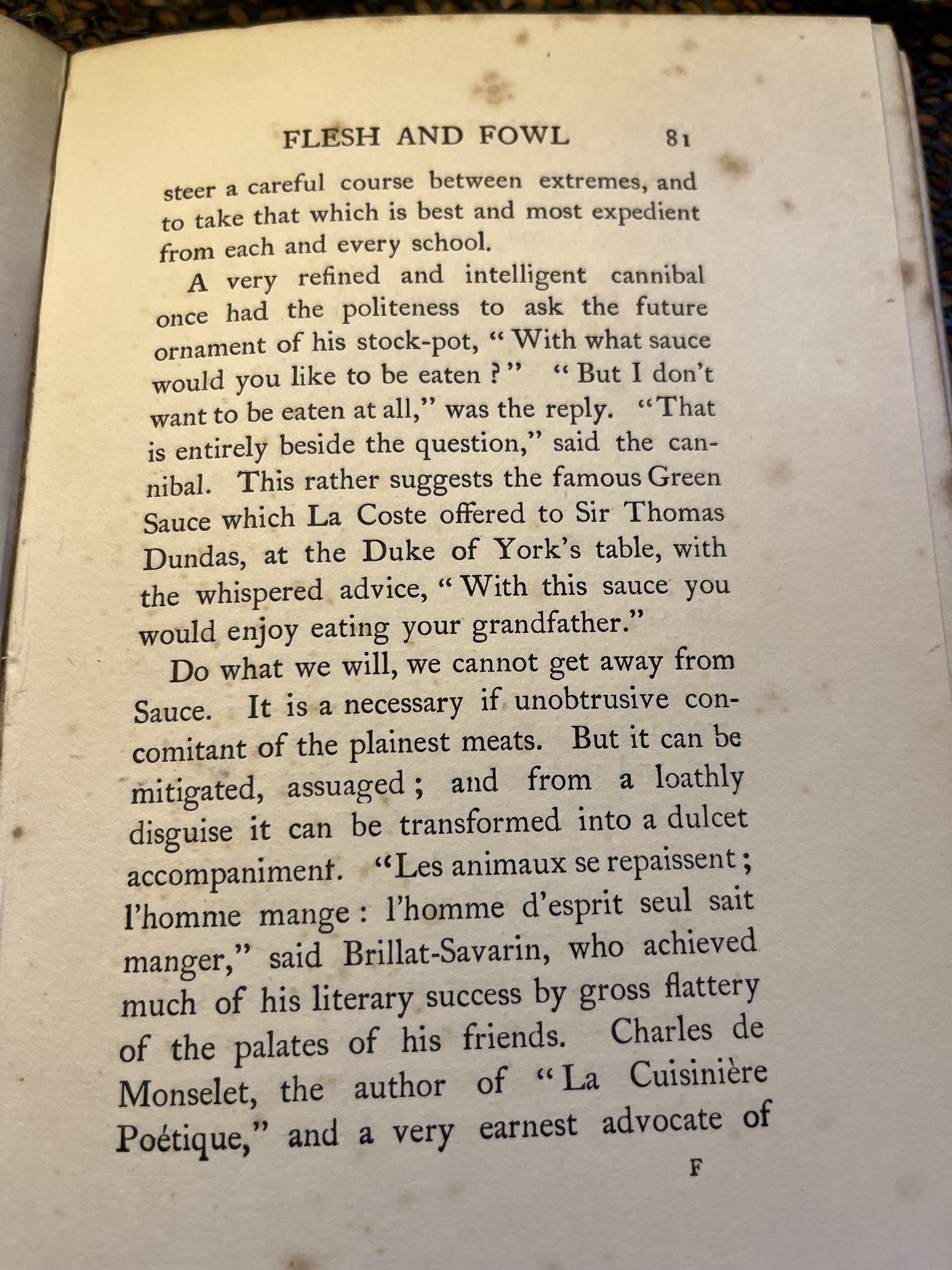
‘The cat in gloves catches no mice’ 

And there is a picture.

As well as a moral ‘sermon’ to children from the ‘pulpit.’

I won’t bore you with the several pages of Victorian ‘humour’ and moralising on all the proverbs. 

‘Phew,’ I hear you cry – and in the hope I can detain you just a little longer, here are just a few more snippets.

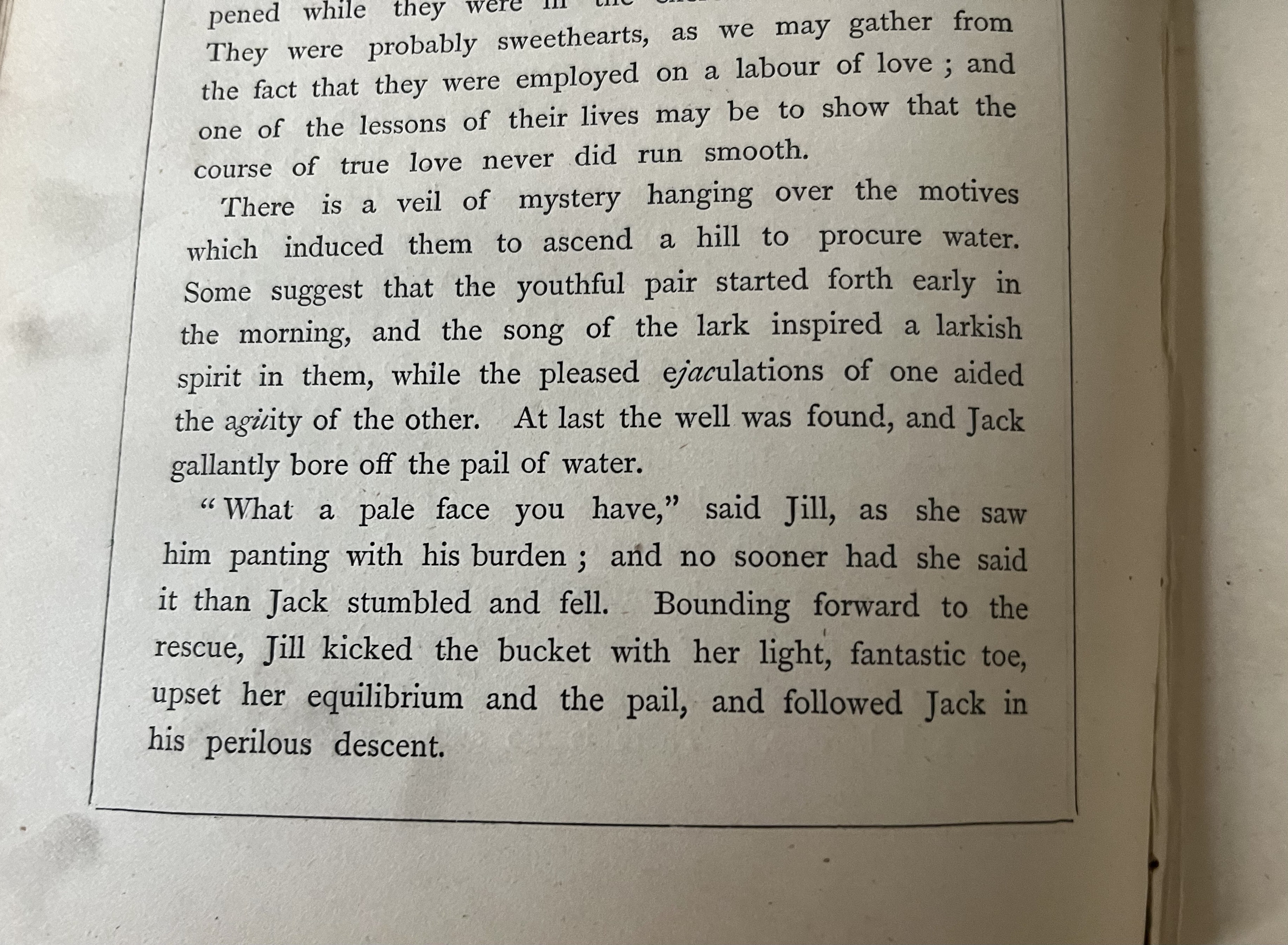
Jack and Jill

Interestingly, though he says later, addressing the rapt Victorian children I assume, there are two lessons, only No 1 seems to be identified. 

Perhaps he needs the same proverb as I do – something about attention to detail.

The Best Beloved says I need to be followed around by a tame pedant.

And, he says, my life is like an impressionist painting, all looking good from a distance but up close, it is a mess of random dots.

As for attention to detail ‘proverb’, I am going with “ Look after the (non-financial) pennies and the pounds will look after themselves.’ 

Doesn’t trip off the tongue I know, but will work on it.

I also like the quote:

‘Success in any endeavour requires single-minded attention to detail and total concentration.’

Willie Sutton (aka, “Slick Willie, the famous bank robber)

Well, back to Old Merry and 

‘Every ass likes to hear himself bray.’

Is it too cheap a shot to want to have that projected onto the walls of parliament?

Old Merry however, makes no such comments, instead he writes five pages in defence of the donkey and says,

‘I confess I have respect for donkeys and should like to join a crusade for the vindication of their rights.’

‘ Costermongers are now the greatest donkey holders in the land, and we have not to walk far to see how brutally the poor things are used, what cruel work they have to do, and what horrid society they have to mix with.’

So, here are a few more Old Merry’s to leave you with:

‘It is not the cowl that makes the monk.’

‘He that is afraid of wagging feathers must keep from among the wildfowl.’ No, I have not much idea either though I gather it is a Scottish proverb, so all Scottish ideas welcome. 

‘ Fools make feasts, and wise men eat them.’ As a happy cook, I rather resent this one. And I am not sure Old Merry clears up the meaning of this proverb as he witters on about the difference between a simple person and ‘ a simpleton’. Just saying

‘Keeping from falling down is better than helping up.’ 

And finally from Old Merry

‘Merry Christmas.’ 

Now that to me is not a proverb, and reading through Old Merry’s take on this I feel that he might just have read Pickwick Papers published in 1837.

No Scrooge as a repenting ‘sinner’ but a contrast between idyllic Victorian Christmas full of joy and candles and good food, and Nelly trying to read to her parents by the light of a meagre fire, the dead son Tom…..

But to make things a bit lighter I give you some modern proverbs:

If at first you don’t succeed, try turning it off and on again. Neil Whyte. ( One I put into action all the time – remember me to tell you about the BB’s heart monitor sometime.)

You Brexit, you fixit.” Alistair May

You only find out who is swimming naked when the tide goes out. Warren Buffet

The problem is between the keyboard and the chair. ( no attribuation)

One ought to try everything once except incest and folk dancing. Arnold Bax

Never wrestle a pig; you will both get dirty, and the pig likes it. Richard Calhoun

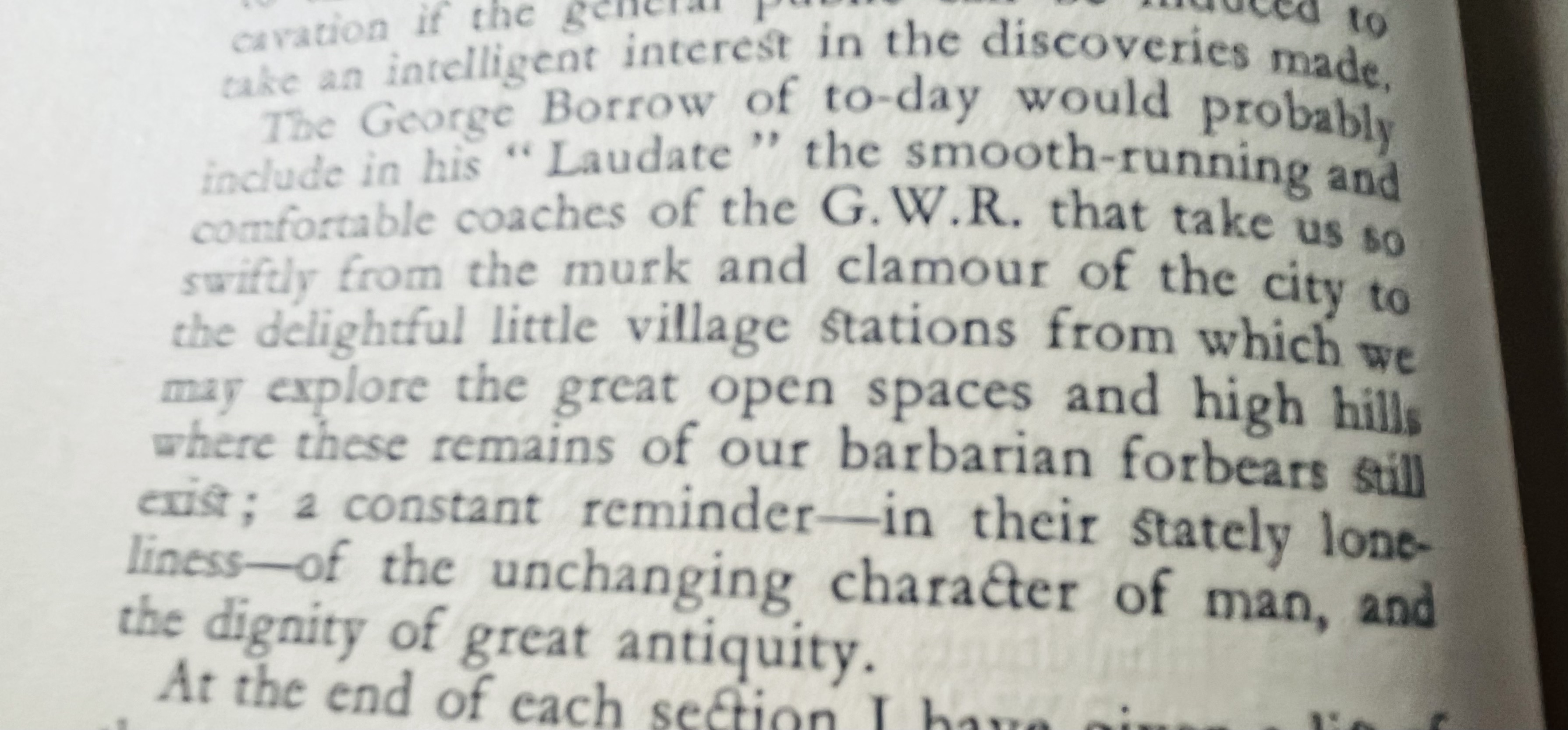
From Cave Man to Serif

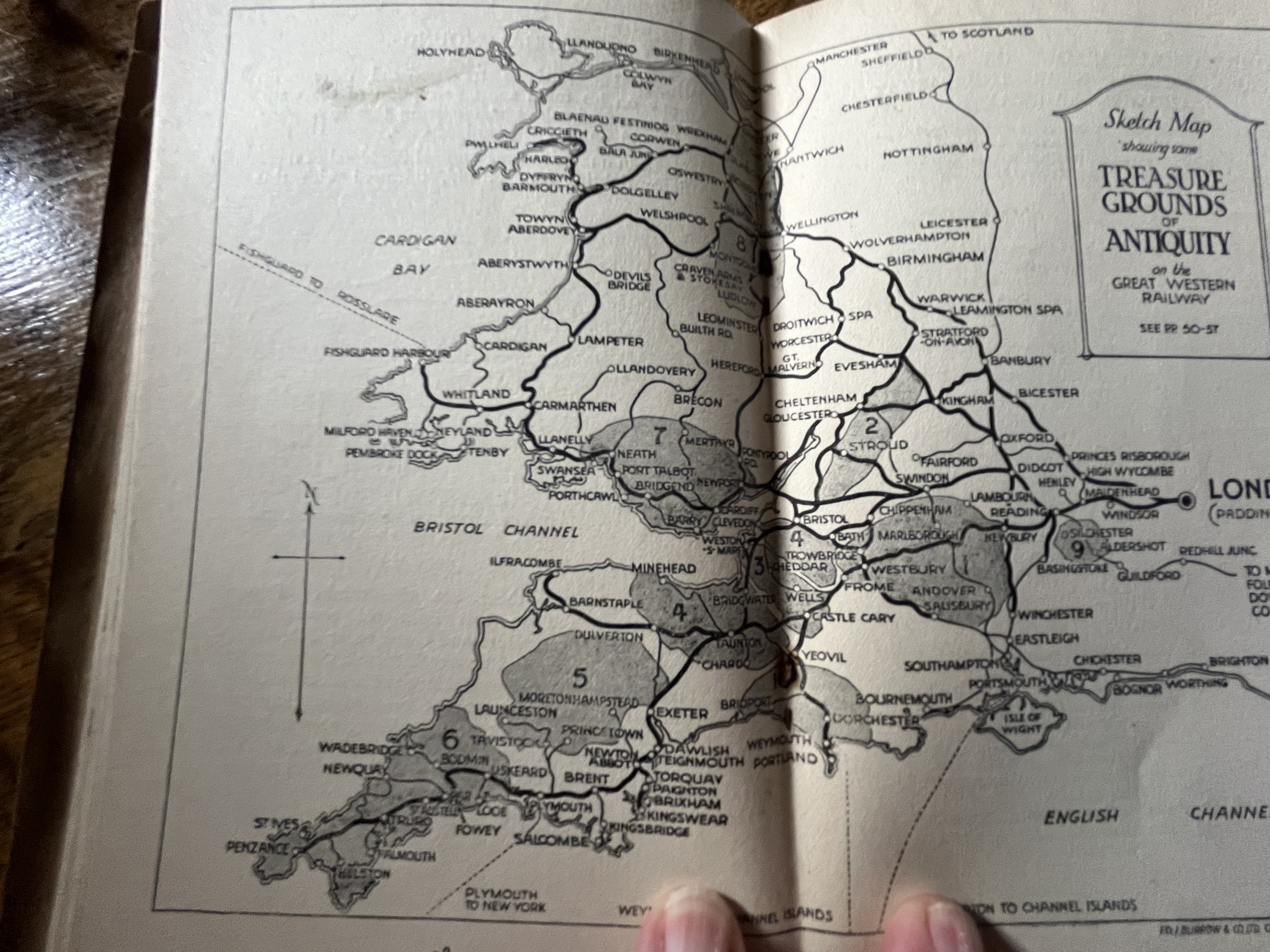
‘It is a far cry from the Age of Flint and Neolithic Man to the Age of Steel when the Great Western Expresses thunder from the East to the extreme West in less than 6 hours.’

Well it takes even less time now (sometimes), but no doubt costs a lot more.

This is about a delightful little paperback guide from, I think, 1926 to where you can get off from the Great Western Railways expresses and get to, by whatever other means, see ancient sites.

George Burrow, the author and illustrator was clearly a man for who ancient sites held particular thrall.

According to Wikipedia:

Edward J. Burrow (8 June 1869, Wellington, Somerset – 19 September 1934, Cheltenham) was a prodigious engraver and founder of Edward J. Burrow and Co., a printing and publishing firm.[1]

Beginning in the years before the First World War Burrow published more than 500 travel guides in a series titled The “Borough” Pocket Guides (also known as The “Borough” Guides) to various localities of the British Isles and some parts of the Continent.[2] In the 1920s he published a book series titled Burrow’s “RAC” Guides,[3] which were issued under the auspices of the Royal Automobile Club Touring Department. In the 1930s he issued another series named Burrow’s Grey Guides.[4]

Until the 1960s Burrow was the most prolific publishers of local authority official guidebooks in the UK, from booklets covering small rural districts to large civic handbooks for London metropolitan boroughs.

So, our little book is hardly a rarity but it is nevertheless rather charming in lots of ways including the rather nice typeface.

There was a lot of GWR inn those days

I have not the time to do the research but would love to know what typeface it is. 

I tried a gentle tootle around to see if I could get a link to the Cheltenham Press who printed the booklet but nothing – it was not a rigorous and thorough search.

The serif links st, ts,  and ct. 

It looks a but Arts and Crafts to me but what do I know. Would like to though, so when it is raining and when isn’t it these days, I might spend an afternoon searching old typefaces unless anyone can get their quicker…….

Life in the USSR

So, this book came into the shop and luckily I knew someone who was a Russian linguist – at least I knew his mother and two degrees of separation is just fine with me.

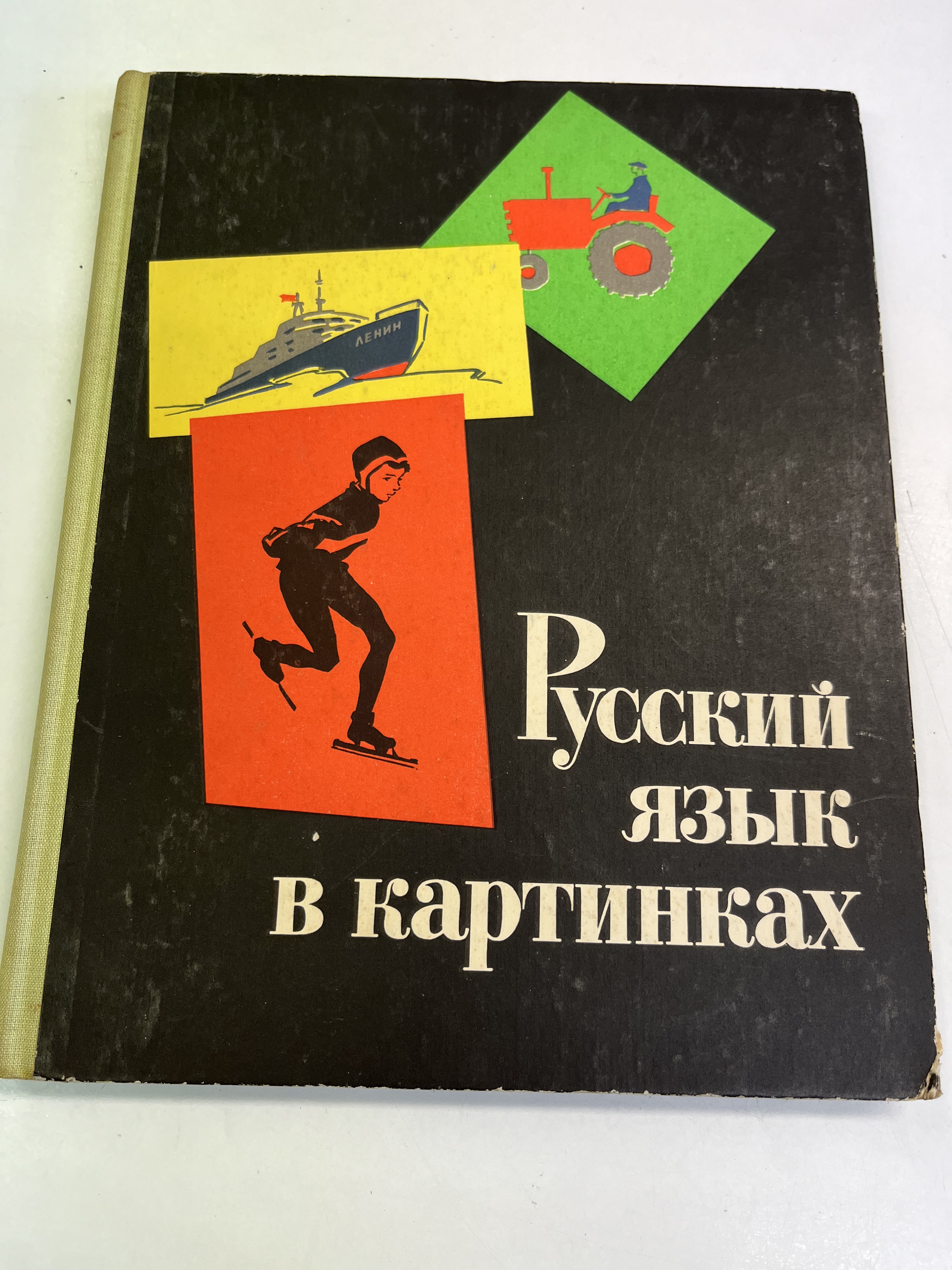
He told me the title is ‘Russian Language in Pictures’.

Published in Moscow in 1960, it is the images which are so redolent of the Soviet art of the era and a portrayl of life as it not count wasn’t, but the authorities wanted to say it was.

I leave you with the pictures.

A boat hunt

Something rather nasty happened in our Oxfam bookshop the other day.

And that is not a sentence I would have imagined having to write.

I had been charged with decorating the window and had amassed a lot of books on water, the shipping forecast, books on the sea, how to make model sailing boats, you get the idea.

Well, I decided to boost the attractiveness of the window by using a Dufy print which I remember as a child and therefore dates back to the 60s.

And I decided to include the lovely little model metal boat we bought in Corfu town a few years ago.

‘I wouldn’t,’ said the Best Beloved, ‘ It will get nicked.’

But I didn’t listen. I carefully made sure it had a not for sale sign on it as over enthusiastic volunteers have been known to sell unpriced things for less than they are worth or indeed, are on loan to the shop and not for sale.

It was stolen and I was gutted.

The BB, I have to say was gracious about it given that it was really his boat and he had of course warned me.

But in my defence, we have never had anything like that happen before. I am sure a few paperbacks have been slipped into bags, but nothing stolen from the window.

We bought it from a jewellery shop in old Corfu town during a dark thunderstorm with torrential rain.

I had seen a pair of earrings I really liked whilst out on a wander earlier in the day and the lovely BB said he would buy them for me and I said he should come and see the amazing model boats.
We sheltered from the storm, quite literally and bought both earrings and out boat.

So last Saturday I Googled about looking for jewellery shops that would fit the bill of my memory.

( I did by way of a sidetrack, think how i would have gone about this search in the days of my youth when Google was not so much as a software glimmer in Larry Page’s eye.

( Well I would have found the expat and therefore English language newspaper/magazine and asked them for help. It is not a big town so I would be willing to bet it would be an easy hunt for them and they could get a story out of it.

Or called the tourist office, or called one of the hotels in the town. I towels have been more of a treasure hunt but possible.)

Anyway, I found one with a phone number and called it. I asked the man on the other end about the boats and he said though it wasn’t his shop we had visited, he did know the boat maker who had retired but he thought he might have a few left.

I sent Kostas a picture of my boat and explained it had been stolen and I wanted to replace it.

But that was Saturday and this is now Wednesday, and I haven’t heard anything back.

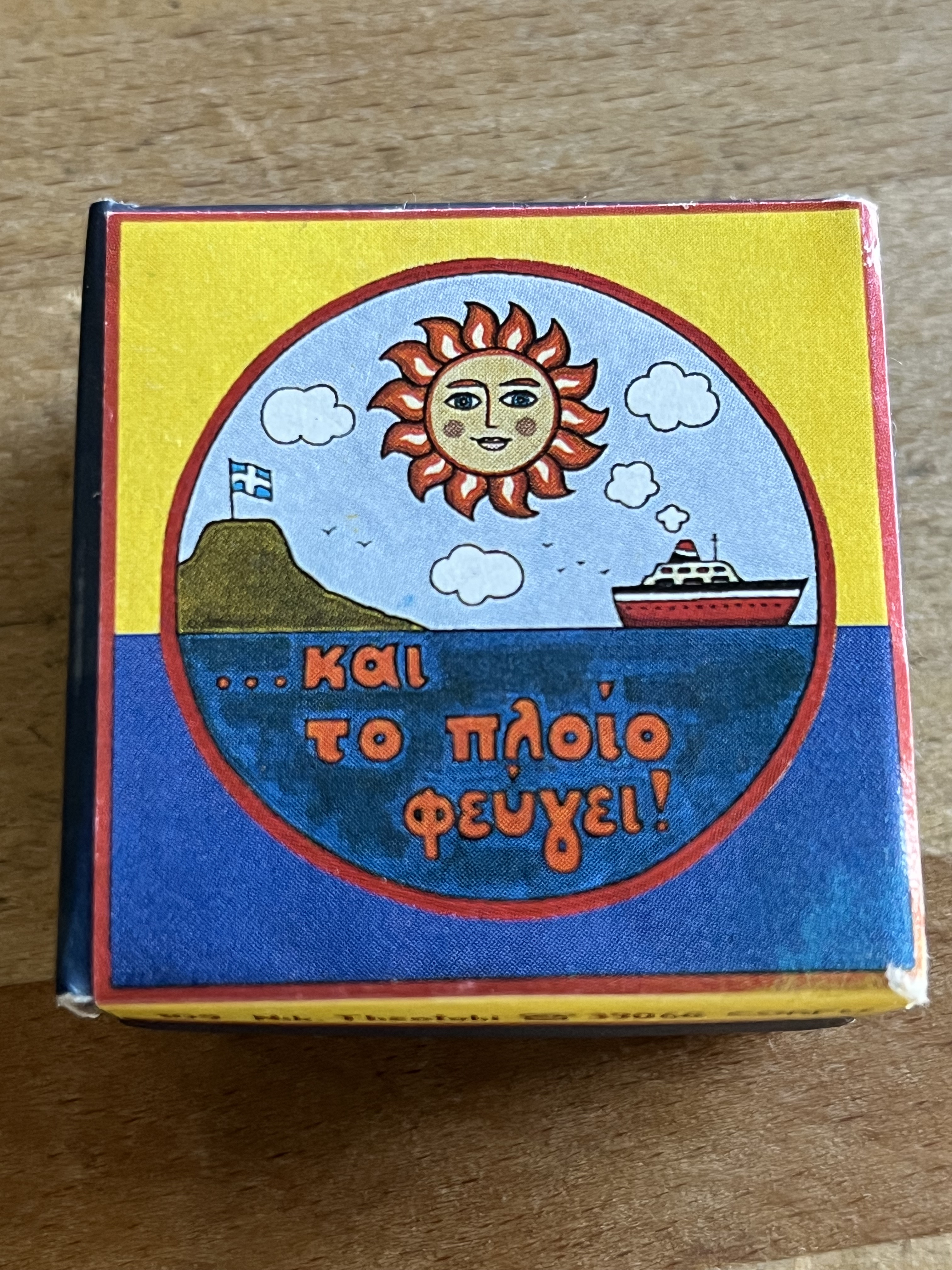
Meanwhile though I thought I would take a picture of the earrings to illustrate the blog and surprisingly for me, I had kept them in their little box. 

Lo and behold, there was the phone number of the shop on the side of the box.

As I sit here, I am plucking the courage to ring them and I am keeping everything crossed that the shop is still there, the boat maker is to be found, that he does indeed have a few boats left, and if so, I can afford to buy one and get it shipped over to me.

It seems to me that is a lot of ifs, and I know I am prevaricating on the basis that I don’t want to be disappointed.

I will be living in hope for a few hours yet – and I will let you know.

Frank and Chaffinda

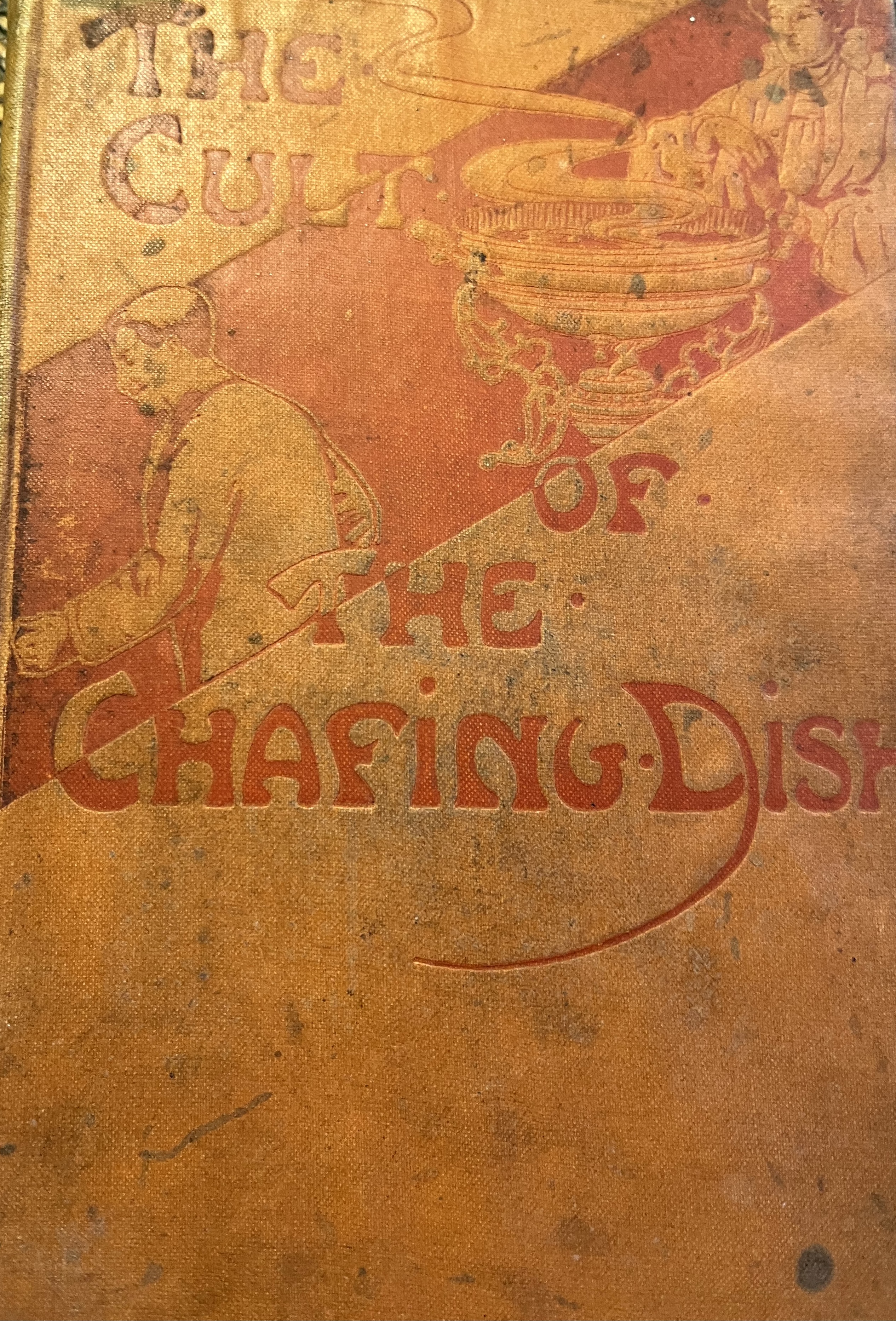
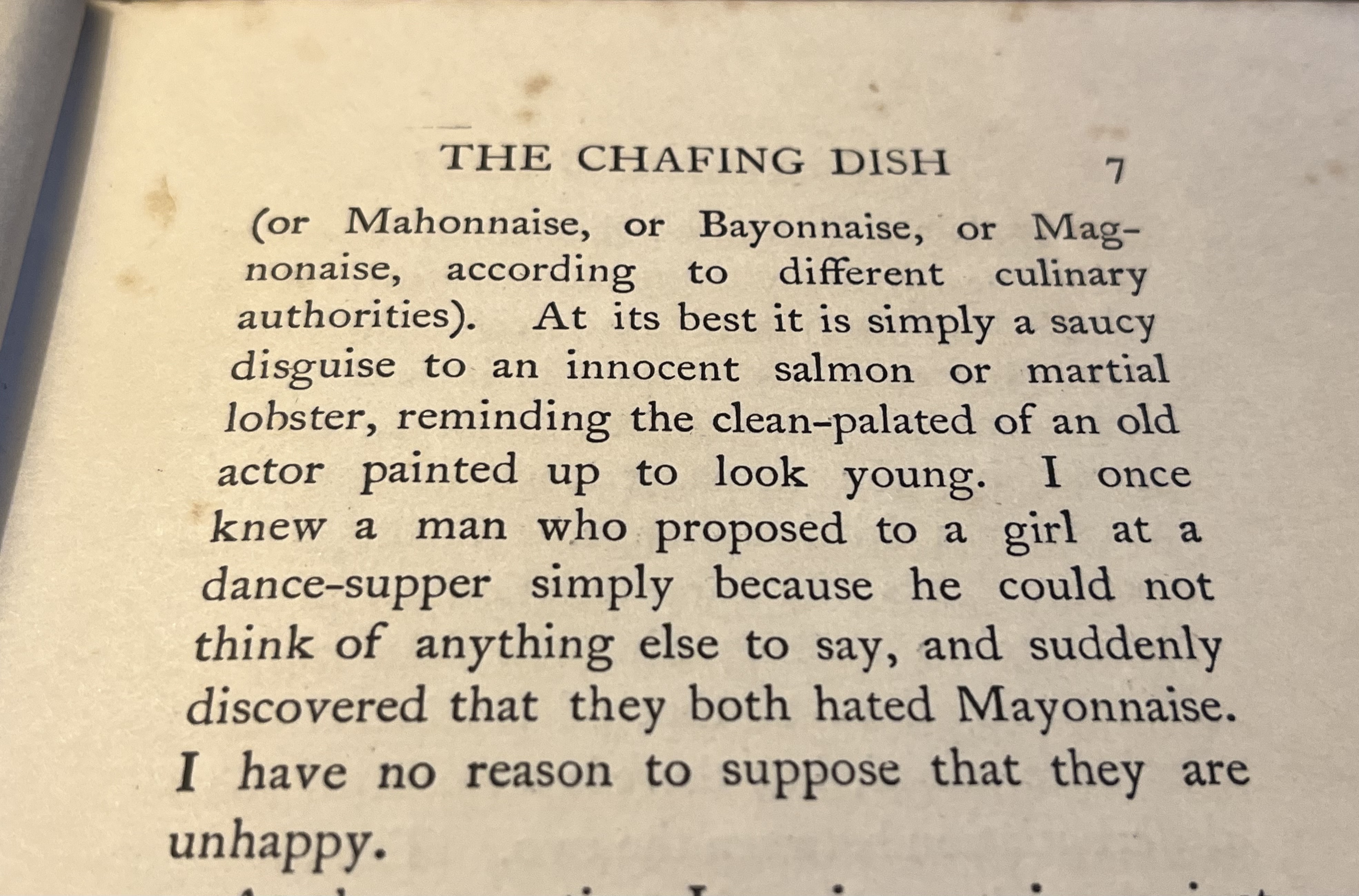
So, dear reader, this is another old and interesting, and surprisingly funny, cookery book – and it is long read of what the author wrote, so dip in and out – think stealing a leftover out of the fridge now and then, a snack to return to.

Well it was interesting to me anyway. But if you are about to heat up a Waitrose’s curry for Friday night’s supper, or make yourself a fish finger sandwich (nothing wrong with either of those), you might want to get on with that.

If you are still with me, and in case you need reminding/informing, a chafing dish is basically a metal dish which has a mechanism to keep food warm.

If you are old enough, think predecessor to the hostess trolly – and who isn’t ( if you are old enough) now thinking Alison Steadman in Abigail’s Party – start hearing Demis Roussos everyone.

Anyway, this is well before any of that.

But back to basics.

Modern chafing dishes are for keeping cooked food warm. They are not going to reach a temperature to cook, nor should food be kept at lukewarm temperatures for too long lest bugs start breeding and poison you and your guests.

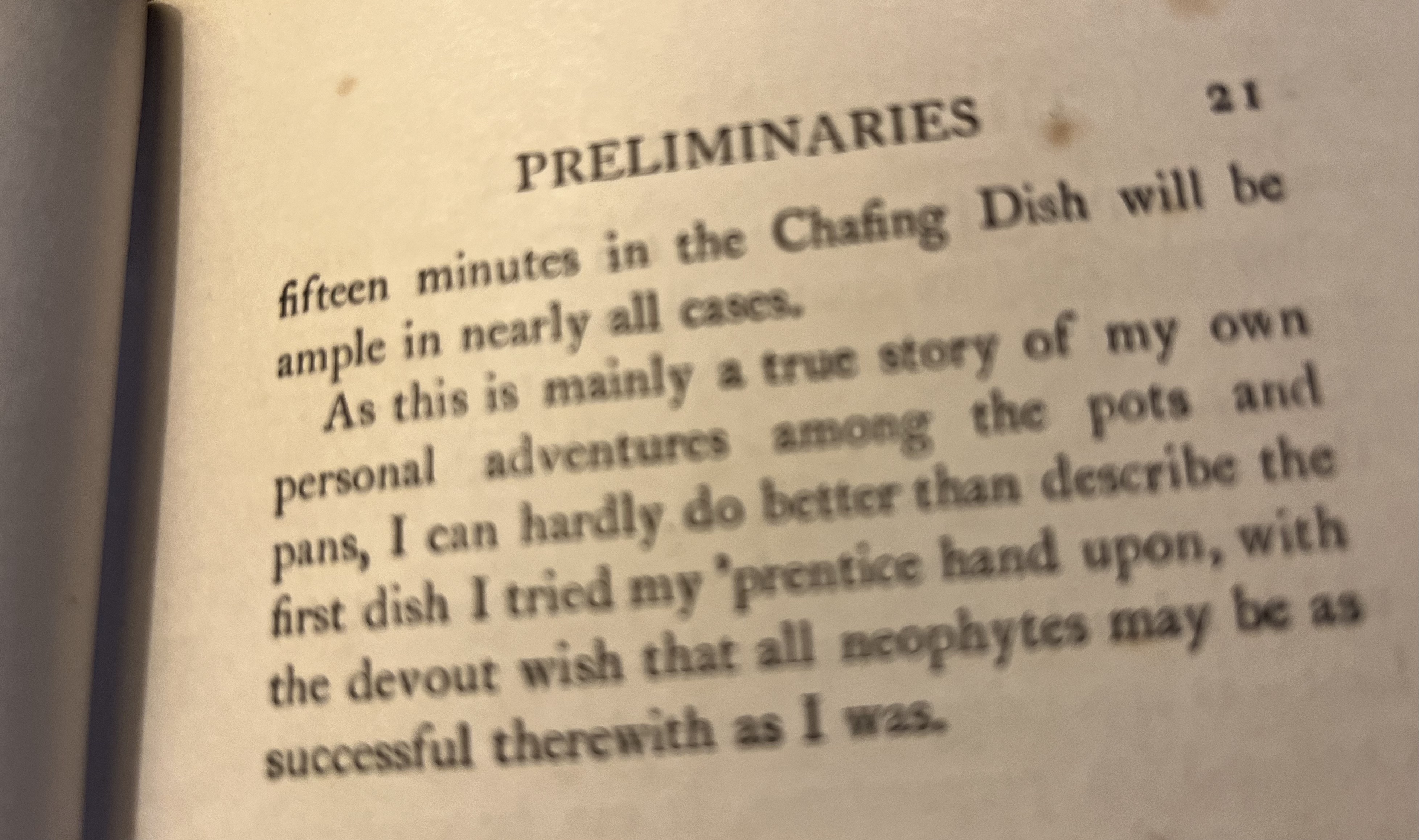
But the very jolly cookery writer of 1905, Frank Schloesser had other ideas and to be fair, what he describes might be a chafing dish with knobs on.

Just to make things clear, he has a name for his, Chaffinda:

Though, again in the spirit of making sure that any reader doesn’t get the wrong idea, using an asbestos tray over a chafing dish flame to make toast is really not a good idea.

It turns out on close inspection, that even for enthusiast Frank, the chafing dish is not always an alternative to cooking. Quite a lot of the recipes require you to have pre-cooked meat, vegetables and other stuff.

So, think of it this way – as he does. When you are returning from the theatre with your friends, here is a way to have something ‘cooked’, on the table, for a late supper, relying on what you (or someone in your pay) has cooked before and you can heat up into a tasty, light morsel.

It is rare that a cookery book makes me laugh but this one did.

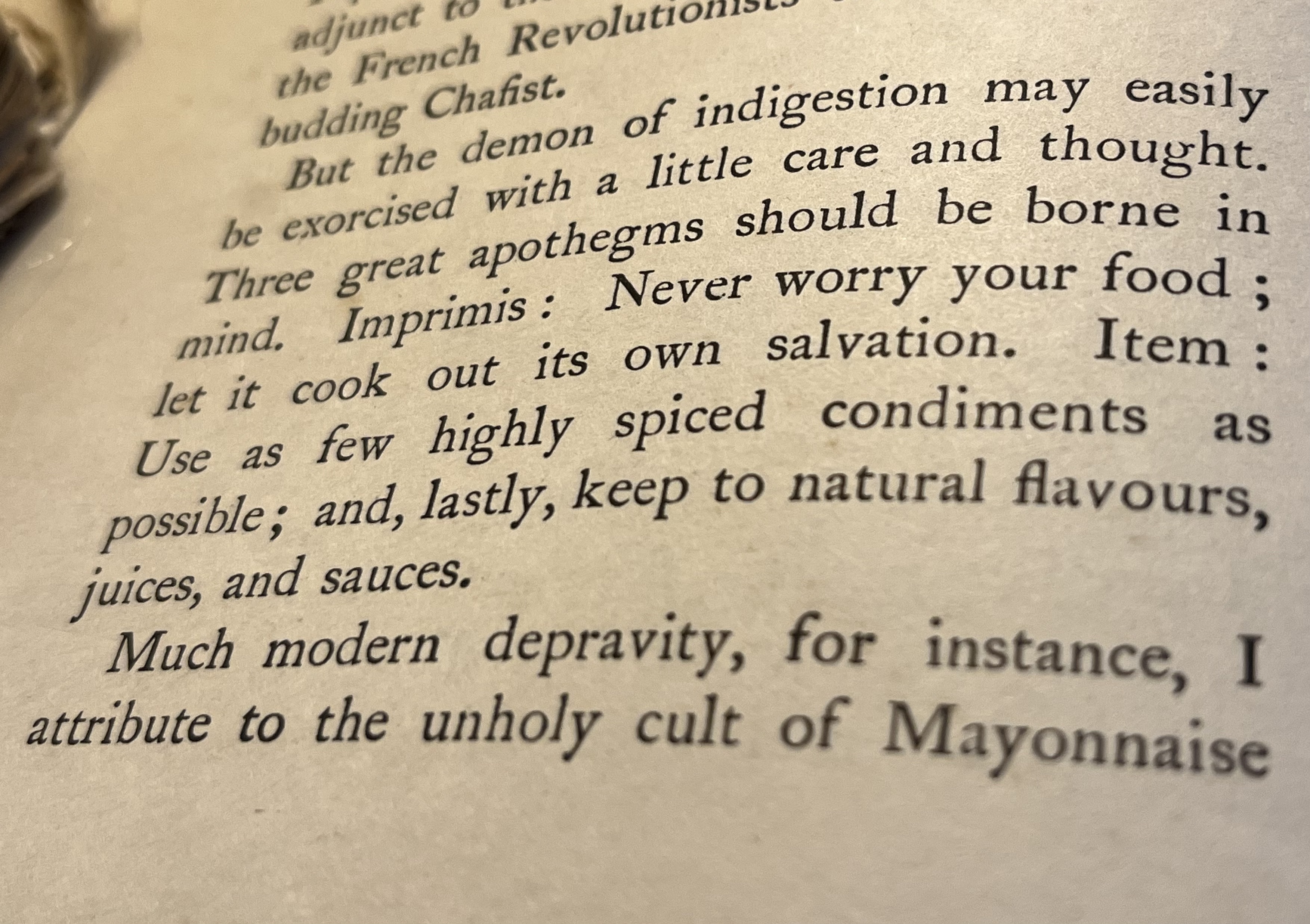
He is a man who thinks eating less is good, some condiments (mayonnaise) are an abomination in the sight of some god or another, and things should be done in precise and small quantities – a walnut of butter, three chives, three drops of tabasco……

He is not a man to think that a recipe unlike the food, plain and simple, needs nothing more – Frank is a man with history and anecdote as garnishes.

I will just leave you with some more tasty morsels…….

A History Lesson

I educated myself ( a bit ) on holiday but there is no need for you to do the same and, of course, indeed you may not need educating as much as I did.

There is not much I can promise in terms of levity, it turns out this part of the world doesn’t have much of that.

So, we went on an excursion from our luxury bubble of a hotel resort, to see ‘the mosques, churches and old town of Sharm.’

Well….

Sharm el Sheik dates from the 1980s and its history and politics explain why.

Suffice it to say that the excursion meant we saw a large but I have to say ugly, church finished in 2010, and a mosque finished in 2017 with an ‘outdoor’ market which was a series of tacky tourist shops overlooked by a fake waterfall.

Enough said on that.

We also saw kilometres of low level apartment blocks which are there to house the some 70,000 workers from all over Egypt who make life so easy for the tourist.

Now, according to Wikipedia the population of the city is about 73,000 and we were told this immigrant workforce numbered 70,000 – yes, that leaves 3,000 locals.

And the tourist numbers?

‘In 1976, tourism was a focal point of the Five Year Plan of the Egyptian government, and 12% of the national budget was allocated to upgrading state-owned hotels, establishing a loan fund for private hotels, and upgrading infrastructure (including road, rail, and air connectivity) for major tourist centres along with the coastal areas.’ Wikipedia

Things moved on apace and the number of hotel/resorts increased from three in 1982 to ninety-one in 2000 and, we were told, just over 300 in 2023.

Between 1982 and 2000 ‘guest nights’ went from 16,000 to 5.1m.

In 2010, the then peak tourist number, there were 14.7 million tourists in Egypt as a whole.

But revolution, a few terrorist attacks and of course Covid did huge damage to the tourist industry with numbers in 2020 down to just 3.5 million.

In 2023, 14.9m tourists visited the country.

Enough statistics.

So, I was wondering how Sharm El Sheik came into existence as such and overwhelmingly tourist place.

Nothing here dates back before the 1980s and precious little is even that old. It is all geared around us visitors.

The six lane highways, the airport, the immaculate compounds/resorts with desert rubble everywhere else.

Sitting in the minibus I wondered how this unprepossessing bit of land ( the sea mind you, is blue and turquoise and very lovely) came to be such a massive tourist town.

See sentence above, I can hear you say.

But this wasn’t a lovely little fishing village around which tourism grew, this was boom development.

And boom development on traditional Bedouin land. Now, I may not see it as very attractive but I am pretty sure the Bedouin may beg to differ.

So, Sharm ( as we get to call it) is at the bottom of Sinai – which is turn is the non-African bit of Egypt, bordered, not least, by Israel, also Syria and Saudi Arabia.

Its strategic importance meant a small fishing outpost was transformed into an Egyptian naval base.

In 1956 during the Suez Crisis, it was conquered by Israel and then returned to the Egyptians in 1957 with an added UN peacekeeping force in place.

Ten years later President Nasser ordered them to leave and that triggered the Six Day War with Israel who again occupied the peninsular.

In 1982 there was a peace treaty and Israel withdrew, dismantling all their settlements except the one in Sharm El Sheik.

So, the Egyptian government who already had its eye on tourist dollars, pounds, roubles, and more ,started making life easy for developers.

In 2017, the first group of Israelis visited the more popular tourist attractions with the aid of strong security. It had been 18 months since any group of Israeli tourists had visited Egypt. Wikipedia ( I am not sure when that was written but you can bet your bottom shekel, there aren’t Israeli tourists here now.

You can and many millions do, spend a very pleasant time on holiday in Sharm El Sheik without knowing any of this, without thinking about any of it. 

And I wouldn’t blame you but there is a bit of me thinking there should be just a smattering of knowledge about the historical and human hinterland which makes it all possible.

Lesson over.

Cooking In The Alps

It is no secret among my friends and family that I do like to do a bit of cooking and so although I am ruthless about throwing away donated and dated cookery books, old and interesting ones do catch my attention.

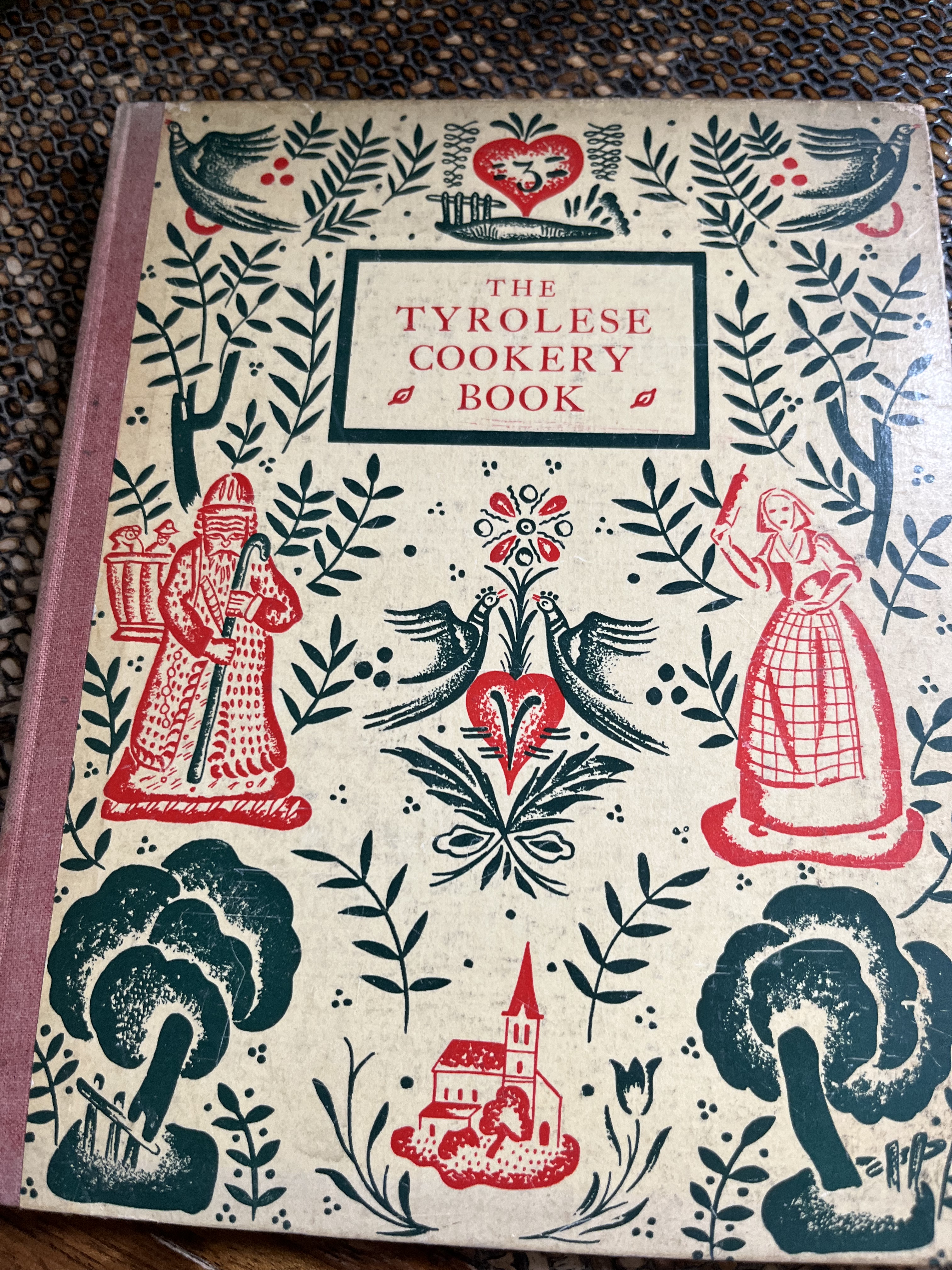
So, fellow ordinary cooks – no special stuff here – you might want to read on and be entertained by David de Bethel (the cook book writer and illustrator) as he spends time in the Tyrol oscillating apparently between pestering Anna the cook at a rather posh schloss called ‘the Castle with the Little Red Tower’ and the Knapp’s ‘peasant house.’

Before we start, this was published in 1937 ( there are no mentions of what would have been the political ‘issues’ of the time but plenty of references to the mores of the time.) 

I have no idea who he was except to have a quick search and find he wrote other cookery books from his travels in France and perhaps he ended up involved in the New Zealand Players Theatre Trust with his wife Joan who was a potter.

But I haven’t confirmed he is the same man, so let’s just go with the cookery writer.

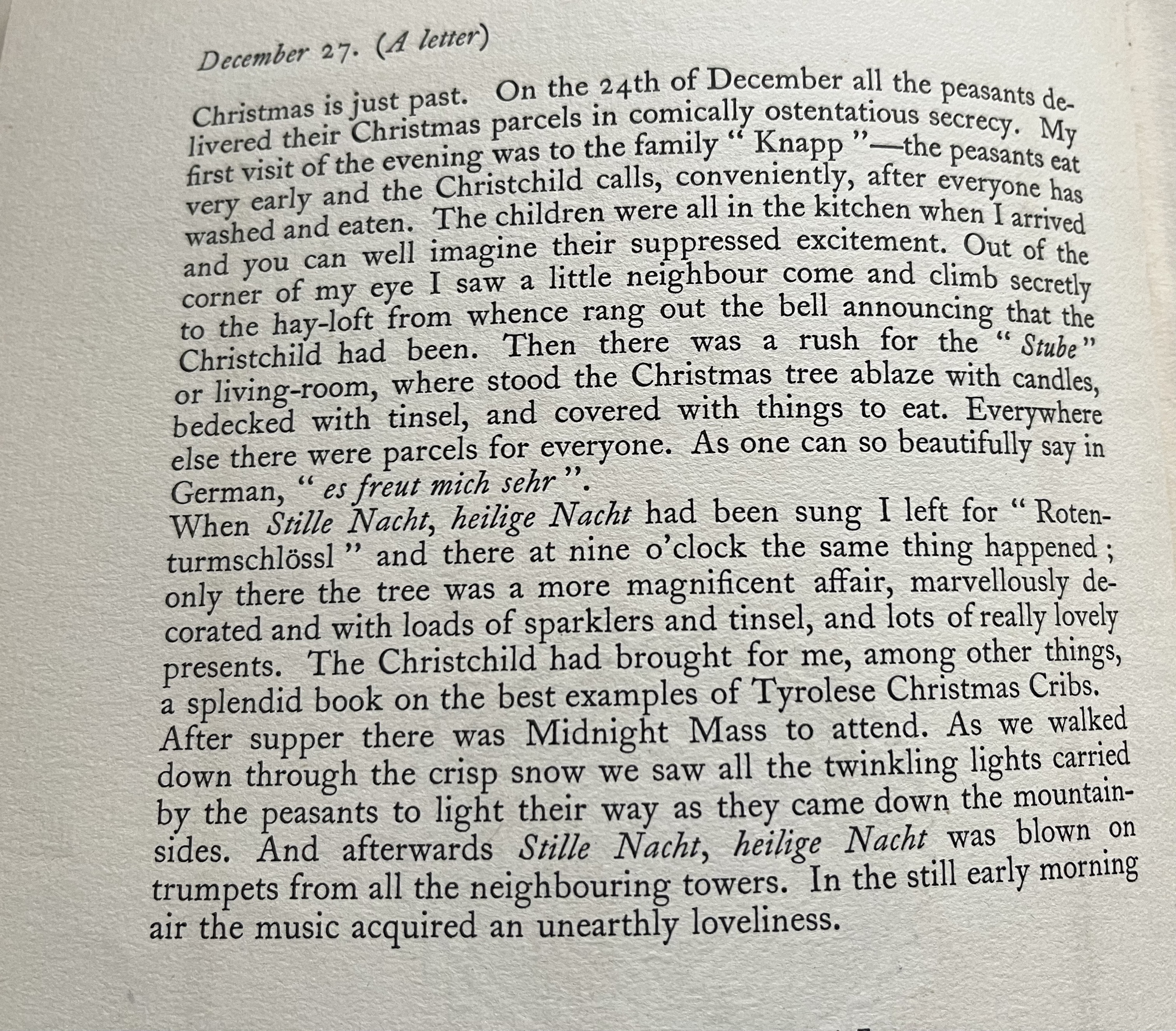
So here is why he went:

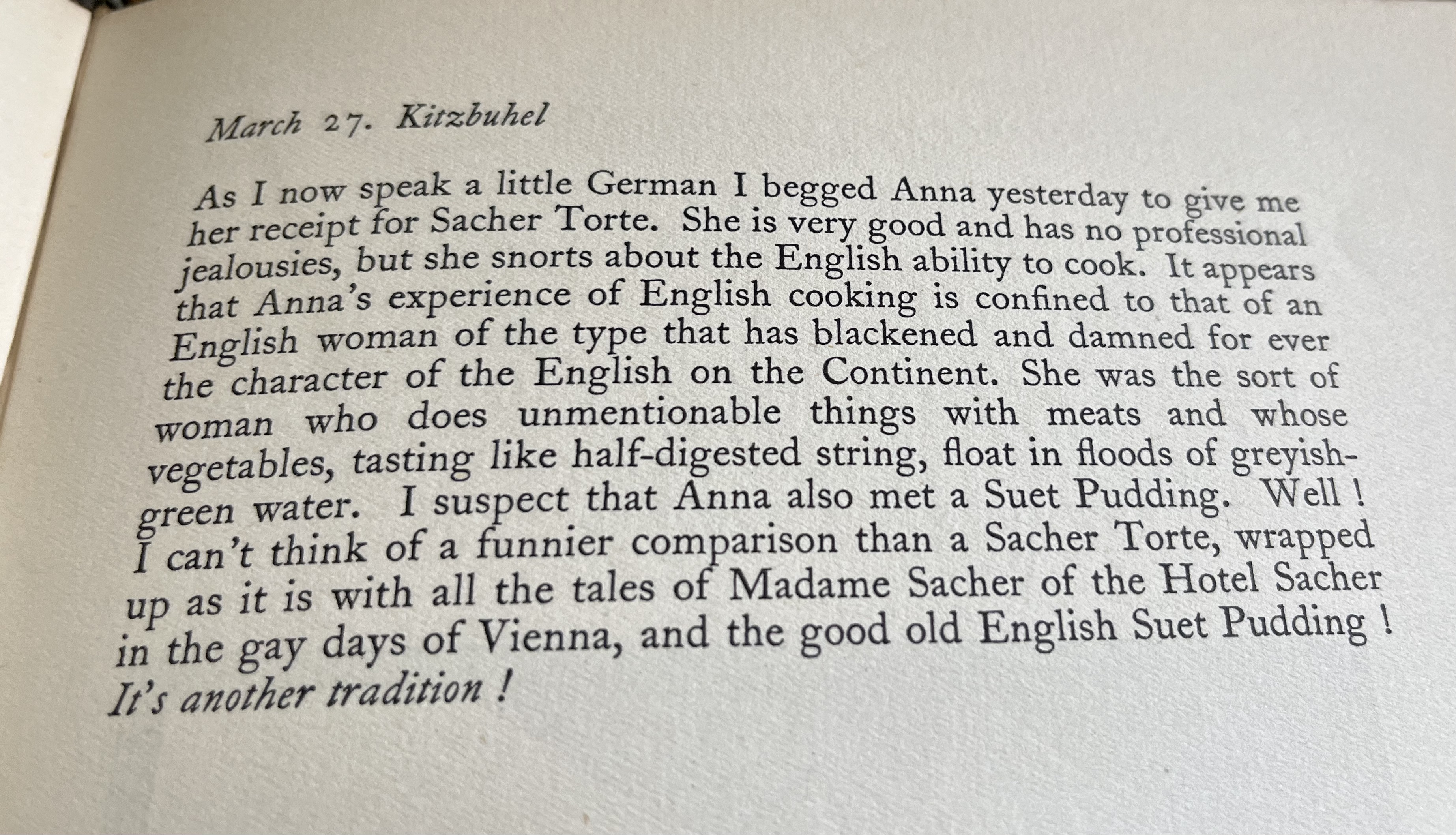
And it must be said, though he is not complimentary about all Austrian cooking, he is later equally willing to report the disdain of Anna for, as he described, the type of English cook who has ‘damned forever the character of the English on the Continent’ by their appalling cooking.

It is a characteristic of old cookery books that they just don’t have the detail you would expect from a Jamie, Nigella, Nigel….

If you bear with me, there will be another piece on a similar vein of ‘Ok if you regularly cook and potter in the kitchen over the years/tears and work out what works with what and how, then you can work this out but if you are not that person, you need a lot more advice on how that recipe is going to work.’

I think it must be that in those days, cooking was much more ‘if you had a cook, they knew how to do it, and if you didn’t, you knew how to do it.’

Prepared meals? What??

Now David, I have to say that stuffed cabbage leaves was one of my specialities in lockdown and my Austrian-born neighbour liked them.

But essentially the cabbage ( and I used Savoy as a much better alternative to white cabbage) was the easy bit – it was the filling and sauce which made the food interesting. 

So to have a recipe which is largely about cooking cabbage and only a brief mention of the stuffing, I have to say, sorry, is pretty rubbish.

Mince, rice and parsley could be good but only with a lot more thought and action.

(Happy to supply a better recipe, though I say it myself, if called on to do so.)

David, yes we are on first name terms now, interspersed his recipes with a (slightly florid and Disney-like, but rather charming and interesting diary about the seasons and weather and customs.)

If you are wondering about the recipe for bilberry fritters, essentially it is: make some fritters and add bilberries.

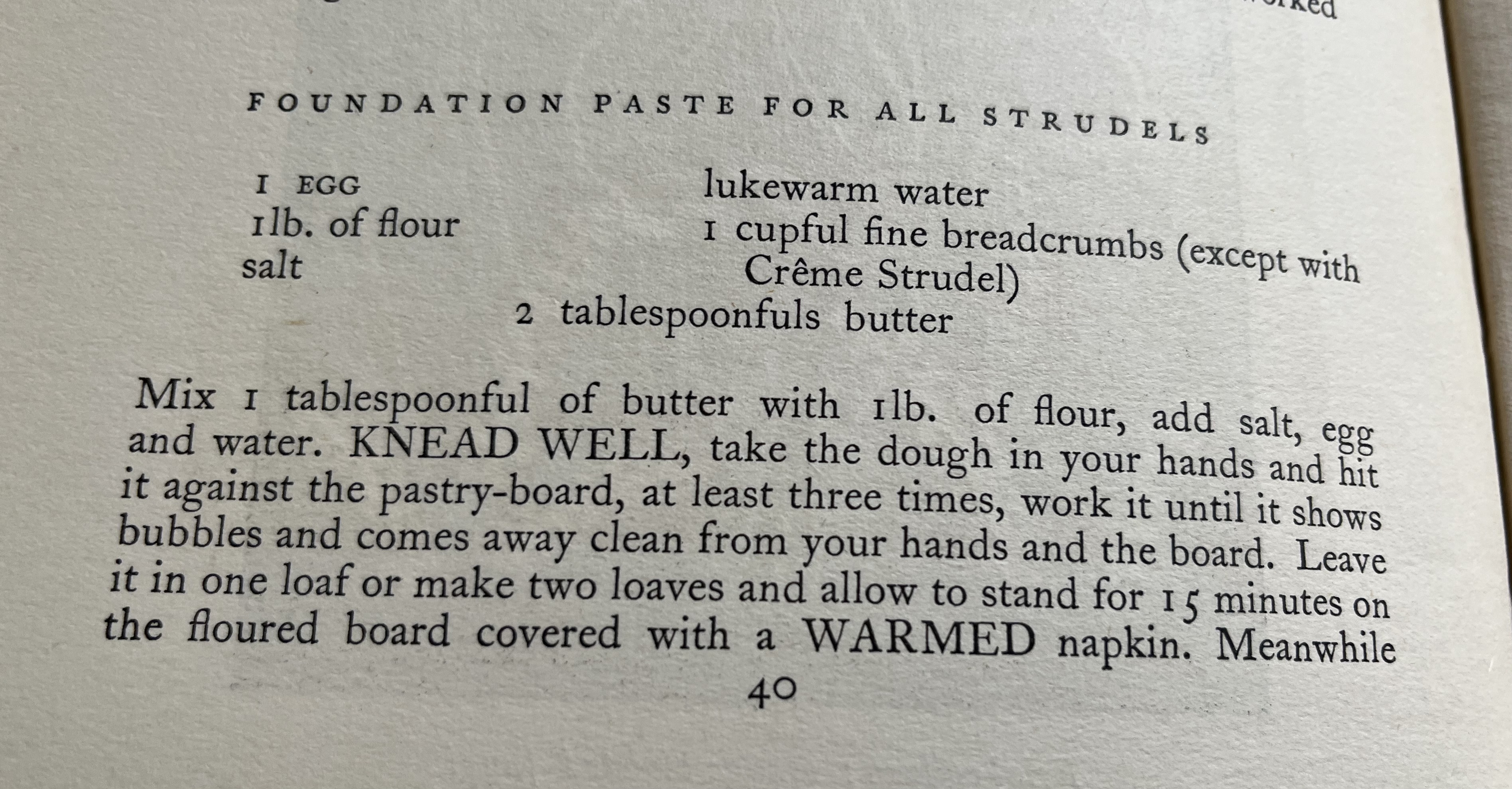
There are times when his recipes have more detail but I have to say a) I would never use the time I have left in life to make a strudel and b) if I should somehow change my mind on that one, I would not be relying on David to tell me how to do it – great read though and love the love letter thing AND CAPITAL LETTERS.

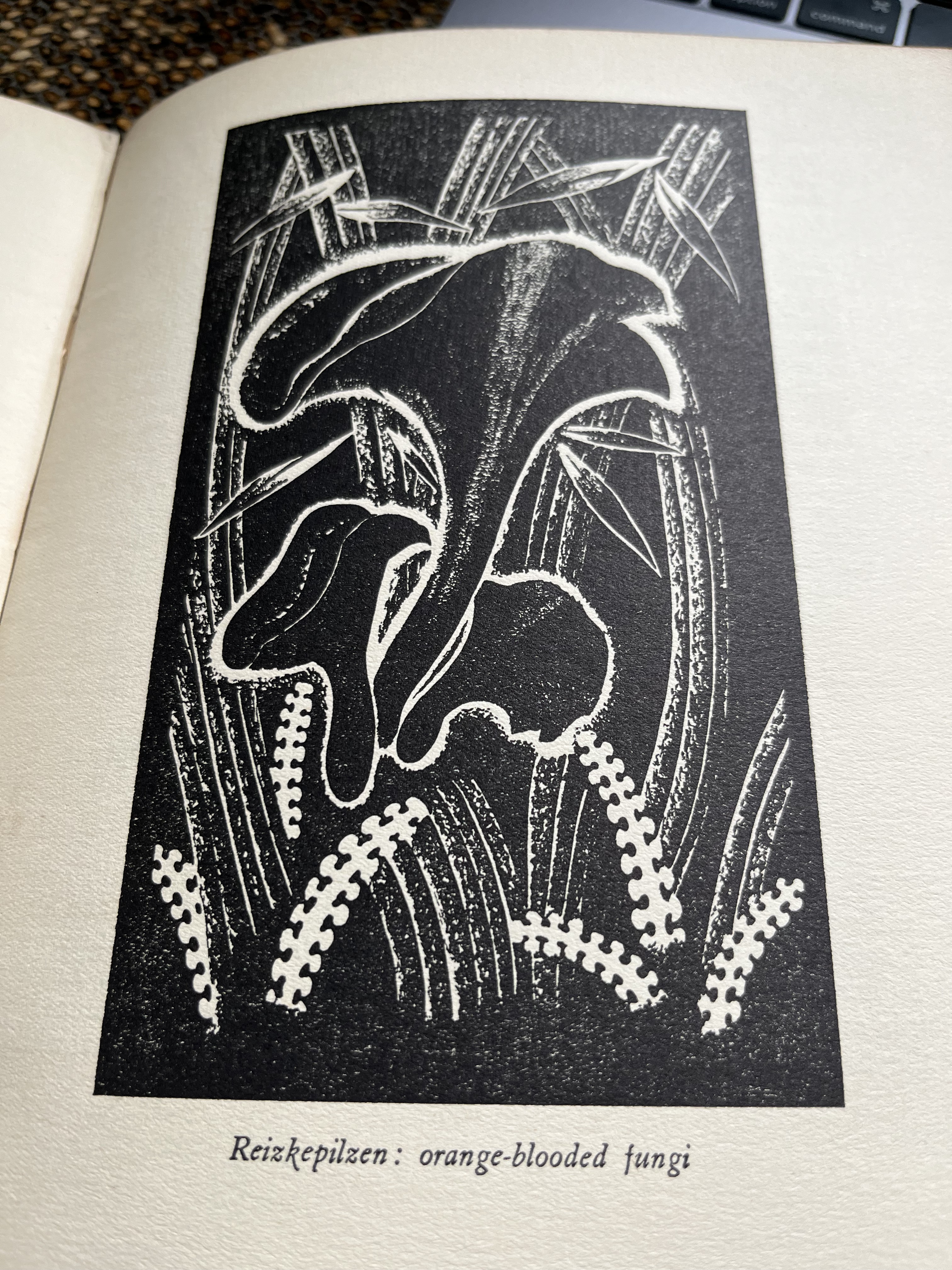
Fungi foraging is much more of a thing now but I remember my grandmother soaking button mushrooms to make sure they were safe to eat and anything other than those white things were never to be countenanced, so I understand David’s comments on this.

By the way, Sarah Gamp was a ‘dissolute, sloppy and generally drunk’ character in Dickens’ Martin Chuzzlewit who always carried an umbrella, so an umbrella became called a Gamp. I am assuming that is what David is referring to.)

I am not sure that ‘most people’ hunt foxes but could tell you a tale of being at a pre-Vienna ball dinner (in my posh days) where talk was of the days they went hunting around the cemeteries of the city….. just saying.

So, thank you David.

I am not sure that I will be doing that many of your recipes (though being a potato fan, Sauerkraut with potato pancakes might feature one day) but it was a great read.

Holiday People

We had assumed that on our holiday we would meet people like us – semi-retired and taking a lucky break to the sun away from the miserable British weather.

Well, there were lots of people taking the break but they were not all like us – young couples, couples with small children, couples of friends, family groups …….. and not many of them were British.

Not that that would have mattered but getting to meet people – if you don’t have kids to pull adults together – turns out to be hard on this holiday.

For example, the hotel’s restaurant was not conducive to mixing. It was a rather vast, airy room but as it was made of marble and stone echoey and noisy.

Think posh marble canteen with a seriously extensive buffet. 

We have so far spent a lot of time talking to each other.

On our boat trip, we met a lovely family. He was an award-winning Indian restaurant owner, and he and I talked about what spices he used to make just the right sauce for scallops or venison.

His wife was a primary school teacher and we talked about their Bangladeshi parents’ roots, how she was bringing up the children with their traditional family values, and also how she was making sure their children knew they had to grow up and get their life’s path sorted, so they could do work which helped other people.

I asked if customs and ways of thinking were changing with the generations and she said, ’not much’.

(It reminded me of someone ( an Indian) I heard speak once who said that the 1960s and 1970s immigrants to Britain brought with them the values of the time when they left India or Bangladesh or wherever.

Some of those customs changed over time back in the home country but tended to ossify in the immigrant community.)

We also talked to our excursion guide and the hotel barman, both of course, very nice young men with very good English.

So, as I said in a previous piece, no one in Sharm is from here.

Of course not just the thousands of tourists, but also everyone who works here from cleaners to cooks, to gardeners, to coach drivers, to waiters, to shop keepers to pool lifeguards, from spa staff to reception staff.

They are all young Egyptian men away from home.

(Inside the resorts/compounds, all is immaculate and very pretty but outside the perimeter walls, things are mainly just rock and no one seems to mind/bother.

This is just next to our hotel and you can nip out through a gate to it or along the beach. I think it might be a place where off duty staff can hang out together and have some time away from the guests out of uniform, not having to smile at every passing guest, and just relax. I might of course be wrong.

I know there is another town of worker accommodation – of course there is because there is a large town’s worth of staff to accommodate.

Mahmoud was our lovely excursion guide.

( I am not identifying anyone without their permission here because many Egyptians seems remarkably unimaginative when naming their sons – our hotel’s staff name badges suggest that most are called Mahmoud, Muhammed , Yousef or Hussein.)

He told me that people here work on average three months seven days a week, get about two weeks off and then back to work.

There is no overtime so in the summer he gets about 4 hour’s sleep a night at really busy times.

His rota includes being in charge of transfers from the airport, camel ride trips, boat trips, trips around the old town to see churches and mosques etc etc.

He speaks English, French, some Italian and a little German and his nickname is Mahmoud French to distinguish hime from all his fellow Mahmouds in excursion company.

He earns £100 per month.

He like everyone else in this place relies on tips to make a halfway decent wage.

‘Its our culture,’ he said.

We have been asking about the tipping protocol – and it is a complex business.

We were advised to bring lots of £5 notes by a Sharm el Sheik old hand. 

We didn’t bring enough it seems, as they are much more popular than the equivalent in Egyptian pounds.

I was told clearly that for our room cleaner you gave him ( of course it was a him) some money at the start of the holiday and at the end.

You had to hand it in person because he would never pick up any money from your room even if you had packed and left.

You tip the barman at the end of your holiday, likewise the waiter who has looked after you and your table for the majority of your holiday and it is tactful to sit in the same seating area for meals so that there is one waiter who knows he is likely to get a tip rather than sitting in a different place every night and not getting to know and therefore, tipping anyone.

I didn’t know what happens about the many gardeners or other ‘invisible’ staff like the kitchen staff so I asked at reception if there was a tip box which could then be divvied up.

And no there isn’t.

You get to learn a lot when you don’t have ‘people like us’ to talk to, and very instructive it is.

Waiting For Books

One of the things I like about working in an Oxfam bookshop is the fact that you never know what is going to be donated.

(Mind you it was rather a surprise when a woman came up to the till and asked if we take books – mmm, yes otherwise we would not be a bookshop at all….’Well, lots of charity shops don’t take books these days, you know,’ she said.)

I am convinced if you wait long enough a book on every subject under the sun will pass through our hands – we have recently had a small book on the history of barbed wire and another on Estonian lace knitting patterns just by way of example.

But there are books of which I will have handled hundreds over the years – thankfully the stream of Jeremy Clarkson’s has dried up, but there are many, many regulars which come in with such regularity they are old friends.

We get bouts of best sellers – about two years after they have become popular – Eleanor Ferrante for example, and the once very popular Fifty Shades of Grey – there was one Oxfam bookshop which made a child’s fort out of spare copies of that.

Don’t get those hardly at all now. 

Many of our books come from people downsizing, or moving, or from adult children clearing their parents’ house and that means we get collections – the cricket mad father-in-law’s, or aged travel guides to far flung places once visited, or the complete oeuvre of John Grisham.

And every week or so we have to change the window displays to keep our shop looking good.

So, with no ability to order any books, or even know what is going to come through the door, we are mothers of invention, making do, lateral thinking, etc.

I had what I thought was rather a good idea. 

In the coming months we will be doing a window display on travel – we keep donated Rough Guides because although dated a) the covers are attractive and b) whilst hotels and restaurants will change over time, monuments and natural wonders do not.

We also have an old oak table in the window and I thought, to compliment the travel guides and travel writing in the window, I would do a table on fictional journeys:

Hitchhikers’ Guide to the Galaxy, Murder on the Orient Express, Lord of the Rings and The Hobbit, Space Odyssey and indeed, The Odyssey, Huckleberry Finn, Around the World in 80 Days, Alice in Wonderland ( though that might have to be kept back because I am planning a table based on the Mad Hatter’s tea party.)

We could have Robinson Crusoe, Life of Pie, On The Road, The Time Machine, Journey to the Centre of the World, Canterbury Tales, Treasure Island, Swallows and Amazons, The Phantom Tollbooth, Gulliver’s Travels, The Wizard of Oz, His Dark Materials trilogy.

Well, you get the idea and indeed I was rather chuffed by my idea. Not least because these are not rare books on the whole.

We always have at least some of these books but when I went to look I found one copy of Gulliver’s Travels and a colleague suggested Passage to India. 

Now that is not a book we have very often but in the space of two days had three (albeit a bit dog eared) copies.

No Life of Pie though. We have had hundreds of them and always seem have one on the shelves.

No Canterbury Tales, no Treasure Island, only one of the Philip Pullman’s, no Orient Express, indeed not much at all.

That, dear reader, is what comes of having a good idea and having to learn patience.

Likewise, a friend contacted me looking for an old book on botany with lots of colour plates but in bad condition because her mother-in-law wanted to get such a book and have it professionally re-bound for her botany-mad grand-daughter.

Now we often get these. The illustrations a lovely but the plain board covers are not enticing.

They are often half falling apart. I must have handled hundreds of them.

Did we have one, no of course not.

Likewise again, I have dispensed with more Dickens than I have had hot dinners.

The success of the (great read) Demon Copperhead by Barbara Kingsolver and a re-writing of David Copperfield means that we have had a good dozen requests for the Dickens original.

Bleak House, Pickwick Papers, Great Expectations of course we have those but we are a Copperfield-free bookshop at the moment.

Botanical Mystery

You may recall that we had a book donated to the shop called The First Book of Indian Botany.

Well, it was interesting because it was a first edition but mind you, the spine had come away from the block of pages. 

They were all holding together very well but just not attached to the spine.

Now, before you think ho hum, there is a mystery.

So, the pages are, of course, printed but bound in with them are some handwritten notes.

Now, who but the author would get the printers to bind in some notes – perhaps for the second edition? 

No one, right? 

So, we have the author’s notes.

And who was he?

Well a friend and collaborator of Charles Darwin.

( You might have read something about this in a previous blog, but either way, you have to admit the first edition of a book with handwritten notes by a collaborator, protege and friend of Darwin is looking very promising.)

Daniel Oliver.

He was ‘Librarian of the Herbarium, Royal Botanic Gardens, Kew from 1860–1890 and Keeper there from 1864–1890, and Professor of Botany at University College, London from 1861–1888. Wikipedia

In fact, he was recommended for the UCL job by Darwin.

There are in the Darwin Correspondence Project (darwinproject.ac.uk) pages of letters to and from Oliver and Darwin, also between Hooker and Darwin mentioning Oliver. 

He knew what he was on about in botany.

( And as a small diversion, I dipped into some of these letters, understood nothing of the botany but found Darwin’s humour:

‘Here is a good joke; I saw an extract from Lecoq. Geograph. Bot. & ordered it & hoped that it was a good sized pamphlet & my God nine thick volumes have arrived!’

‘I have written you a frightfully long letter not worth the trouble of decyphering…. Forgive me scribbling at such length, & believe me Yours very sincerely

C. Darwin’)

Anyway, there was also a previous owner’s name on the flyleaf which was deciphered by the sleuth-niece to be Alfred Venning.

She did an amazing amount of research I would never have found on Alfred and I could fill several blogs with what she found and wander about in among those leads and snippets and find more.

But I need to stick, more or less, to the point.

And, more or less, everything below is what the BB’s N discovered and all credit goes to her.

So, Venning was a tea or coffee planter in Ceylon in 1870 but had abandoned that by 1884.

(There is a whole lot of interesting stuff about a parasitic fungus which killed off the coffee plantations in the then Ceylon, and the impact that had of tea and coffee growing in the region but we are not going there now.)

Venning held all sorts of colonial administrative roles but is most remembered ( perhaps apart from the riots about scales and weight units, but no we are not going there) for creating a huge park in Kuala Lumpur, started in 1888.

It is still there now, all 173 acres of it.

Whilst at the time it was a pleasure park – including a golf course – now it is more of a botanical gardens which would have pleased him.

He was, significantly for our story, a botanist.

For the next ten years Venning continued to maintain and improve the park and in 1900 Venning was transferred to Perak where he stayed in the town of Taiping. Whilst there he is recorded as collecting some plants in 1901 or 1902 which ended up in the collection of the Singapore Botanical Herbarium.

‘The Singapore Herbarium was essentially set up by Kew and a system of plant exchanges with other herbariums was set up. This was at a time that Daniel Oliver was keeper of the herbarium at Kew so would have been in regular correspondence with Singapore.

There are no records of the samples Venning collected in the Singapore Herbarium though there are multiple samples under his son’s name dating from 1907 (when the son would have been 24).

He did however donate samples from Ceylon to the Kew herbarium in 1916. 

Oliver died in late 1916 but it is possible he would have seen these donations as he was clearly still involved that year as there is a photo dated to 1916 of him and all other subsequent keepers of the herbarium.

This is the best link I have managed to find between them but Kew’s herbarium database is currently down so I am unable to see if these samples are still there.’

So, this was all well and good.

We had Oliver linked to Darwin, we had his notes in bound into the first edition of his book and we had lots of information on the second ( presumably) owner who was also a botanist.

I consulted with our antiquarian book expert and we decided it was probably, even in its dodgy condition, with its provenance worth about £1200 – or at least that was what we were going to ask for it.

As a last thing to do, I contacted Kew to ask them whether they had a second edition of the book so that we could see whether the notes he had made were incorporated and changed the text.

I sent photos and expected, which I got, an automatic reply telling me I could consult with their online archives.

And then I got an email from a nice woman at Kew, I will call Alice, saying she had had a look at my email and checked a few things out – and the handwriting was not Daniel Oliver’s.

What? 

Who else would have had that book unbound, inserted their notes and re-bound?

Well I don’t know.

Sleuth-Niece did better than I could and found a sample of Alfred Venning’s handwriting and here it is:

Does it match the notes? I am not sure.

If I had the time and knowledge of botany, I would search out a later edition and compare the notes we have with that text and that would presumably tell me whether Daniel Oliver got an underling/his wife/a colleague to write the notes and then incorporate them.

So the book will be listed in Oxfam online along these lines:

First Book Of Indian Botany – with bound in handwritten notes

First edition. 1869. Macmillan. 

Front hinge is broken and front endpaper is detached and the rear hinge is holding on but only just, and will probably break sometime soon.

Block, however, is solid.

There are handwritten notes on ( here I will insert some notes about the notes) bound into the block between pages ( and here I will insert the details.)

The notes do not match Daniel Oliver’s handwriting (as confirmed by Kew) and we have not yet been able to compare with the any second edition of the book to ascertain whether they were incorporated. 

Author Daniel Oliver was a friend, correspondent, botanical advisor and protege of Charles Darwin.

He was Professor of Botany for University College London and head of the Herbarium at Kew.

Previous owner’s name on the flyleaf is Alfred Venning, a colonial administrator and botanist who is most famous for creating the Perdana Gardens in Kuala Lumpur, then called the lake Gardens.

We cannot be sure that the notes were made by Venning.

Whilst we cannot make any direct connection between Venning and Oliver, we do know that Venning did donate botanic samples from Ceylon to the Kew herbarium in 1916 – which was the year Oliver died.

We have more search on possible connections between Venning, Kew and Oliver and for more information, please get in touch.

There is probably a lot more research to be done on this little book, but it is unique.

First editions of it are rare and these bound-in handwritten notes make it a one off.

This small, damaged book is a mystery waiting to be solved and a link to botany research with a direct connection to Charles Darwin.

Whoever buys it will you please let us know what you find out.

This is what Cambridge University says about the book:

Well known among his contemporaries for his unrivalled knowledge of aberrant plants, Daniel Oliver (1830–1916) ran the herbarium at Kew Gardens and held the chair of botany at University College London, for which he was recommended by Charles Darwin. Although Oliver never visited India, his expertise in Indian botany grew considerably after he worked with an enormous number of dried specimens rescued from the cellars of the East India Company. In this book, first published in 1869, he sets out the basics of botanical study in India for the absolute beginner. It includes instruction on the anatomy of simple plants, lessons in collection and dissection, and explanations of botany’s often dense terminology. Annotated diagrams appear throughout, in both microscopic and macroscopic views. Rigorous and carefully structured, Oliver’s book remains an excellent resource for novice botanists and students in the history of science.