‘Our’ Greek Island is blessedly peaceful compared to many others, and that peaceful life means the holidaymaker’s mind turns to the small things in life.
In these days of contactless, is there still the ‘old woman’ who keeps the collections from the districts’ church services to offer the local bar owners small denomination notes for the 50 euro notes tourists proffer for two beers?
Does the casually but elegantly dressed French woman bring the remains of her croissant to feed the fish every morning?
Why are so many churches and monasteries but on the tops of very steep hills?
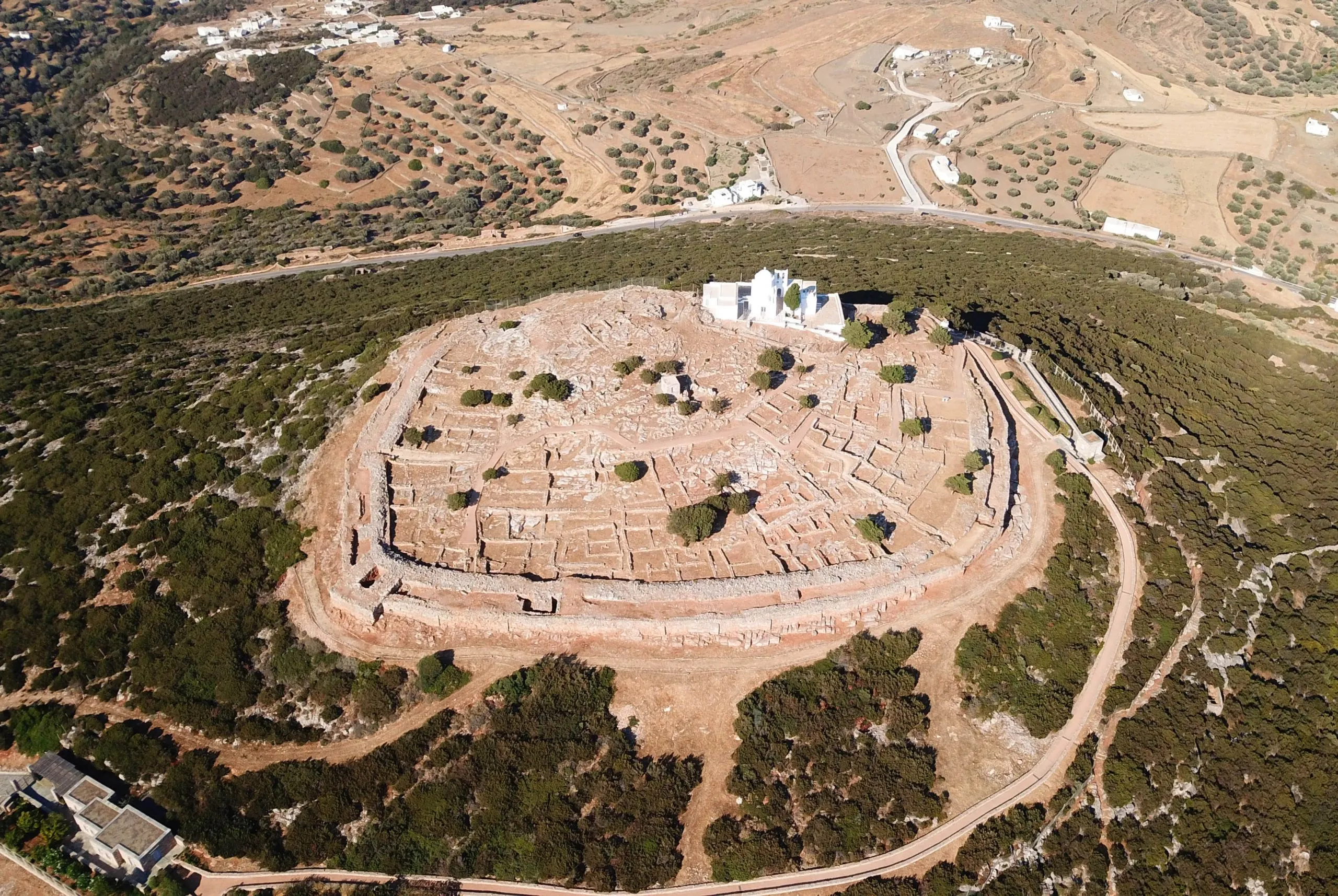
Agios Andreas is a famous ex-monastery set among the remains of a primarily Mycenaean settlement.
It is 425m above sea level and though you can walk up ( and up, and up) to it, that is not for us these days. We drove to the bottom of the site.
It is always impressive to think of people building a sizeable settlement in such a place. How much effort that would take, how hard it must have been to survive, eat, drink, live in such a place.
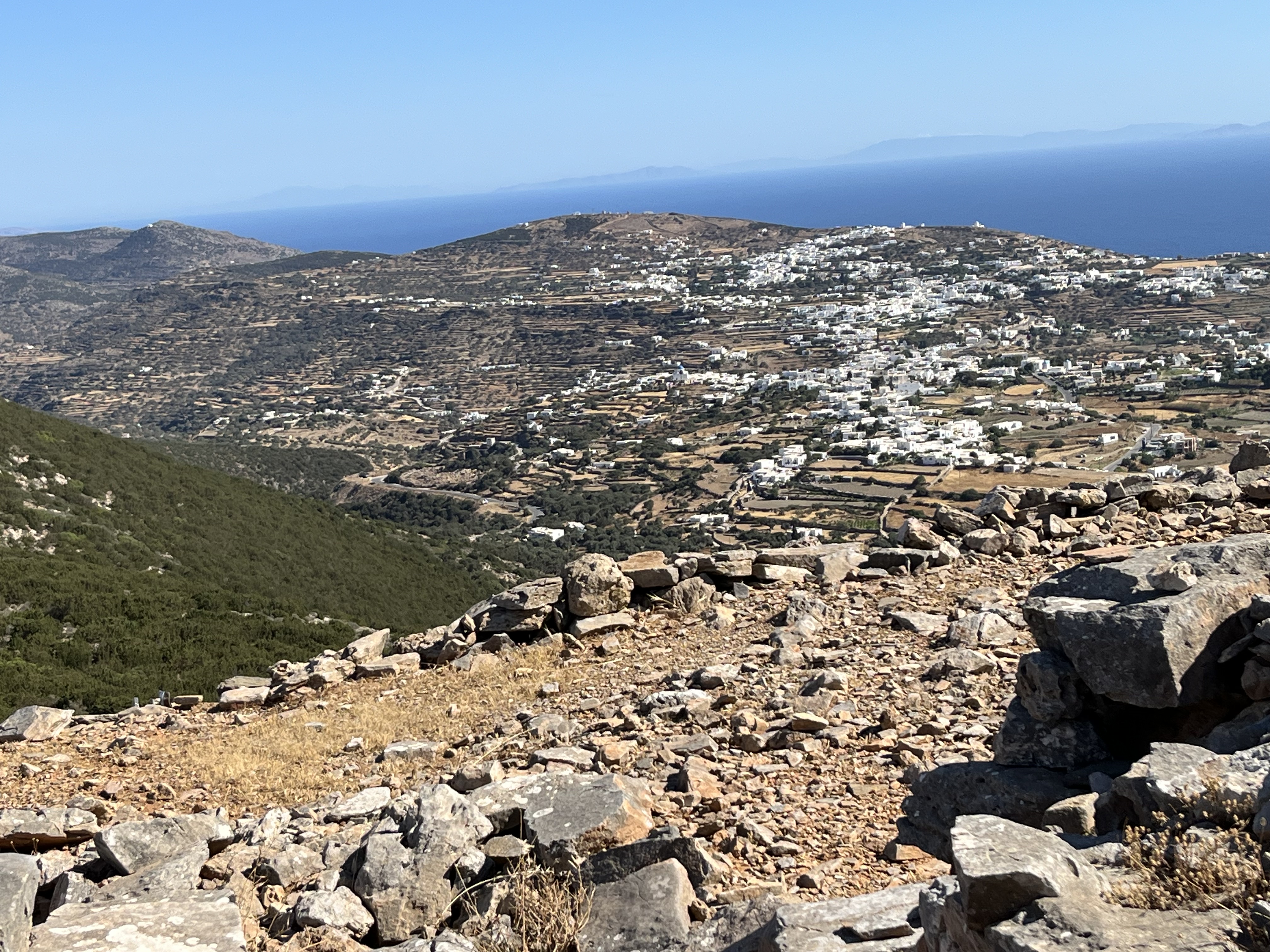
The Mycenaeans did it apparently, in the 13th century BCE because these islands were at risk of pirates and were hardly the idyllic peaceful holiday islands they are now.
But to choose to put a monastery there?
I, with time to muse on this, and with time to see churches all over this hilly/mountainous island got to wondering.
There are inaccessible religious places everywhere you look – especially if you look up to summits.
Perhaps there was some long standing boys’ oneupmanship about who could build in the most remote, difficult, hard to reach site.
I am pretty sure if women had been in charge there would have been much more practical sitings.
‘Why on earth do you want to build up there? Closer to God? Oh give over. Try growing something to eat on a pointy bit of rock – really?
‘So, we will be down here where it is not blowing a gale, has soil, we can keep an eye on the sheep and goats, and tend them without having to abseil. I am sure if God is all forgiving, he will see the sense in that.’
When we visited Agios Andreas and its tiny museum of found artefacts, we were the only people there apart from the two custodians.
( It was 9am on a Sunday morning.)
The nice young woman was heading up the site to take her station in the church and with a rucksack which I assumed was full of books on the grounds there would be bugger all else to do for hours and hours.
Her ‘partner’ was back at a small house tending his/their vegetable patch, next to the ticket office.

Well the Mycenaeans must have grown food and so it was good to see tradition continuing with some very nice looking courgettes, runner beans, inevitably geraniums, basil in recycled containers – oh a very affectionate cat who took to the Best Beloved and he to her.
 thereluctanthousewife