Phrase, Fable and Proverbs

One of my favourite books for dipping into is Brewer’s Dictionary of Phrase and Fable.

My best Beloved introduced me to it and if you too have not come across it, nip into your local Oxfam bookshop and they will have a copy (or several), trust me.

So, it was originally published in 1870 and compiled by the delightfully named and bearded Ebenezer Cobham Brewer.

It is described as a reference book containing definitions and explanations of many famous phrases, allusions, and figures, whether historical or mythical.

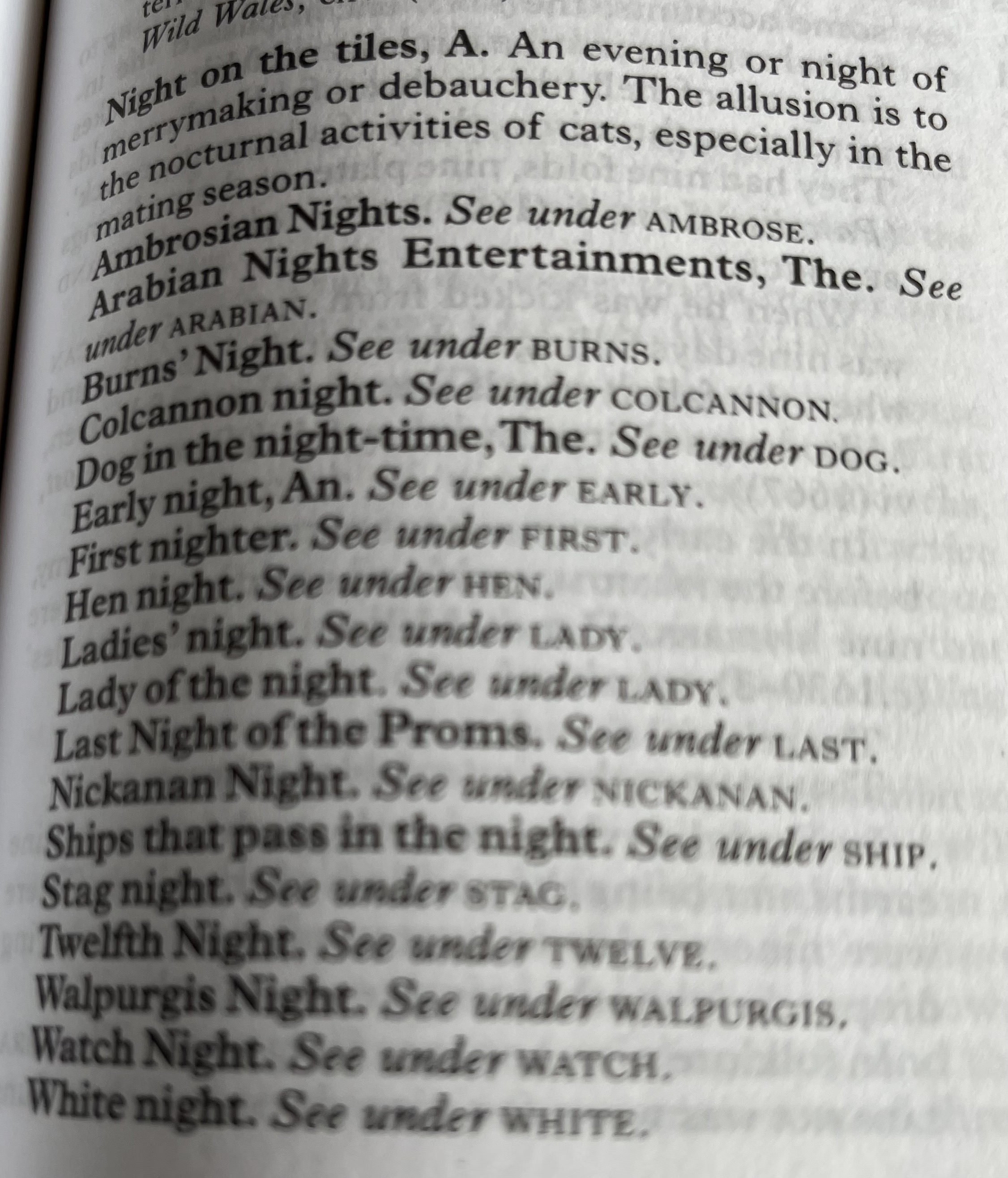
The delight is not just the juxtaposition of unrelated phrases, people, sayings etc only brought together by the alphabetical order, but how often you are referred somewhere else when you look up something….

I am not sure why ‘night on the tiles’ gets its explanation and we are not sent off to ‘see  tiles’.

Mind you, a page that is Nightingale, followed by Nightmare, followed by Nihilism, followed by Nike ( who, by the way, is the Greek winged goddess of victory – not a trainer.)

I have the edition published in 2001 so it contains some entries I am sure Ebenezer would not have included:

Nicknames of drugs for example. Not being an expert, I am not sure which are still valid but I am pretty sure Brewer would not have recognised Charlie, coke, crack, dust, flake, freebase, leaf, nose, rock, snow.

However, he might have felt more at home with the entry for Niminy-Piminy.
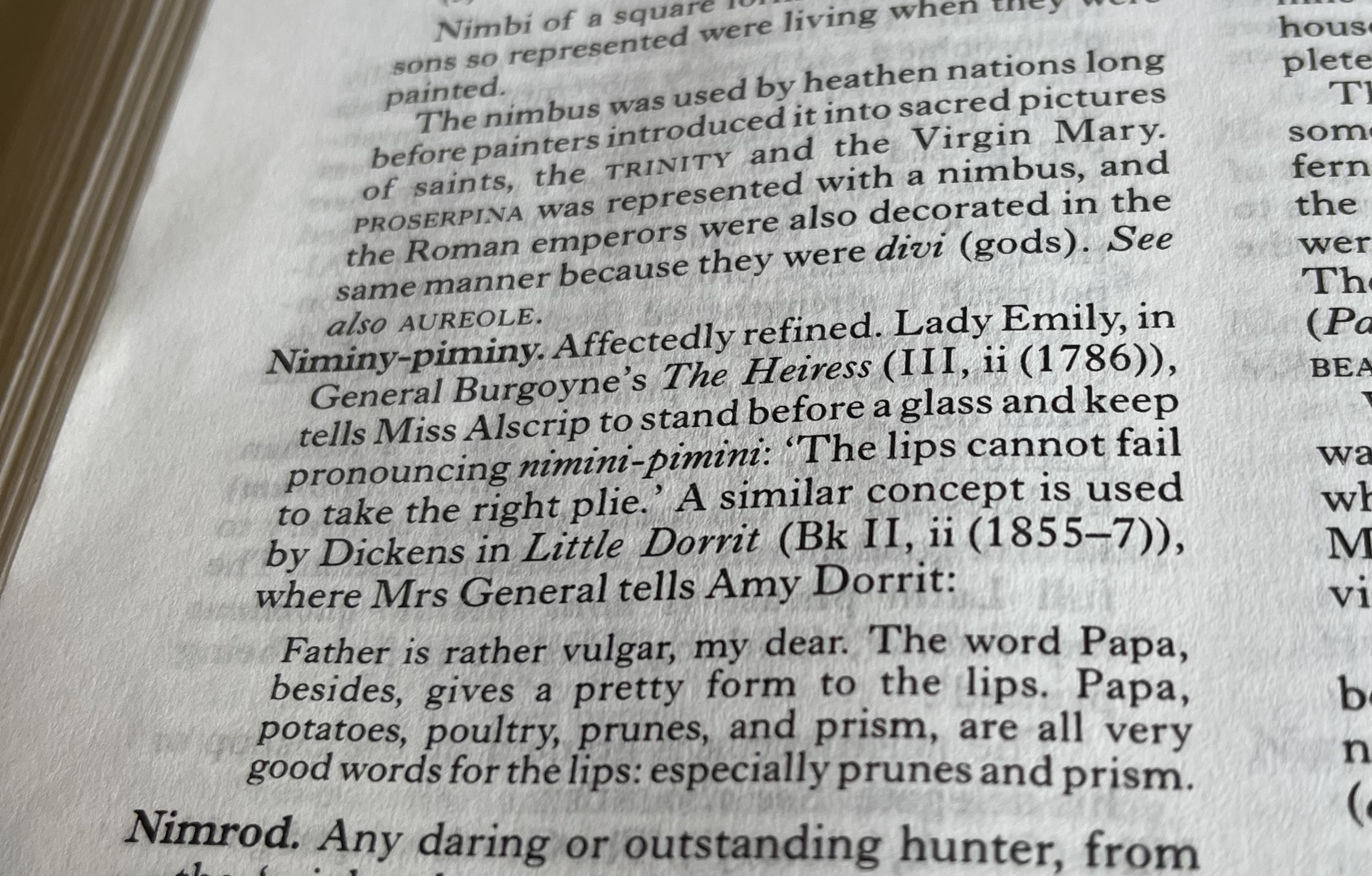
(An explanation to which you are referred should you look up prunes and prism – which of course you might well have been tempted to do.)

There is Pantisocracy, followed by Pantomime, followed by Pants. Ants in one’s pants see under Ants, Hot Pants see under Hot.

Salts of lemon see under misnomers.

And when you get to misnomers, you find that salts of lemon are ‘in reality potassium acid oxalate.’

And that comes before ‘Slow-worm: neither slow nor a worm.’

As you can see, some of the entries are rather sharp and short whilst others are rather more obscure, detailed and lengthier than they might be – for example, four paragraphs on Mise:

“ A word to denote a payment or disbursement, and in particular the payment made by County Palantine of Chester to a new Earl….’ and so on and so on.

When you look up Poison – a word you would think could fairly well use up a few paragraphs of its own – you are referred to Mithridate.

And the entry tells you:

Meanwhile, back to poison, you get definitions of Poison-pen letter, Poisoned Chalice, Poison Pill but then you get to One man’s meat is another man’s poison and you get told to go and look under ‘one.’

For ‘what’s your poison’ you have to thumb through until you get to the entry ‘What.’

Of course you do. 

Anyway, I could happily spend hours going backwards and forwards to entries. 

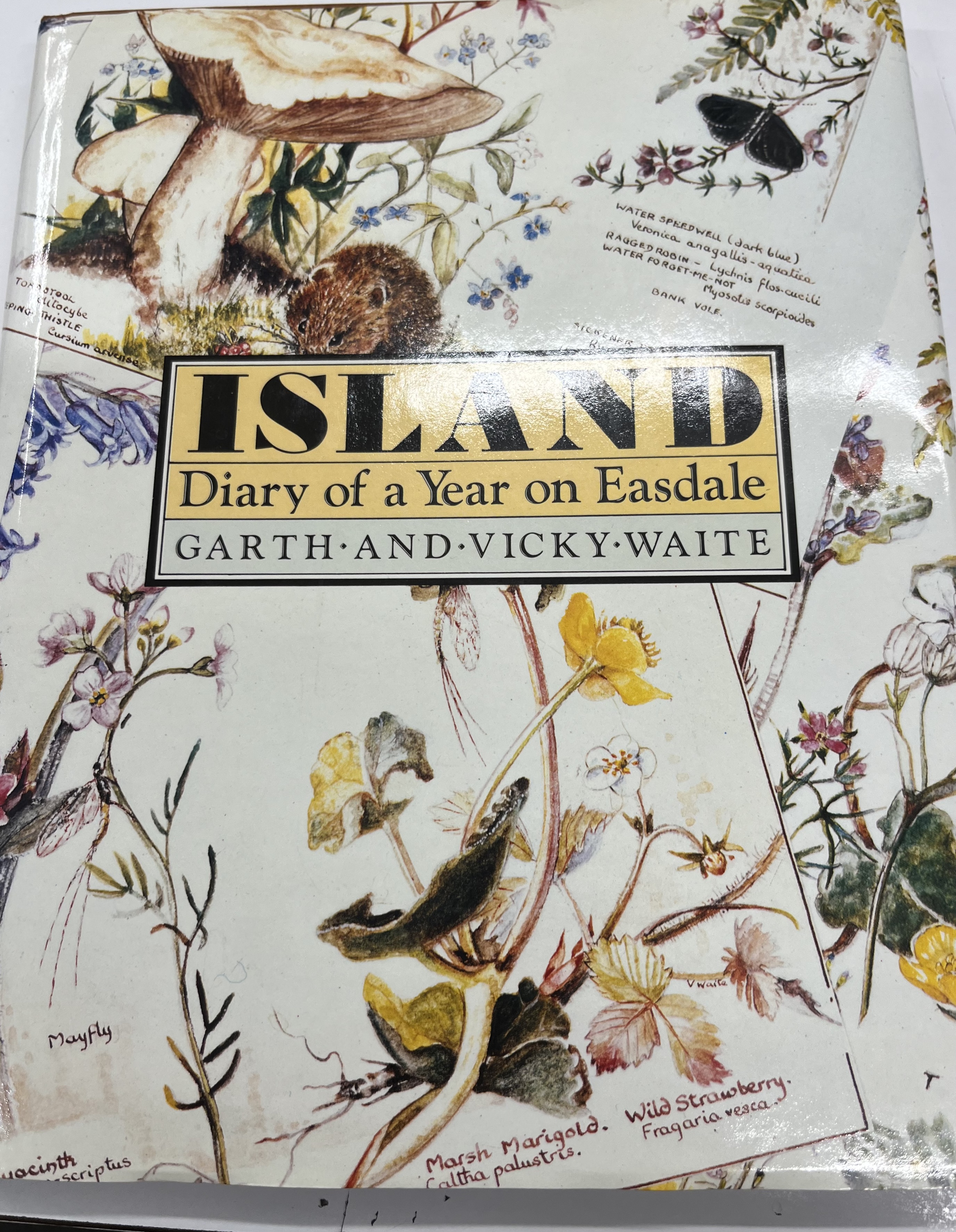
But what sparked all this was the appearance in our Oxfam bookshop of a niche little book.

( Yet again proving, if you wait long enough, you will see a book on every subject under the sun.)

Compared to the weighty tome which is my Brewers, John M Senaveratna has produced a very slim volume indeed.

Perhaps he had less to work with, though you might think that a list of subject matter which includes everything from adages to folk tales might have provided more. 

Anyway, to make things even more interesting he has included a rather odd bookmark – at least I suppose it is a bookmark. 
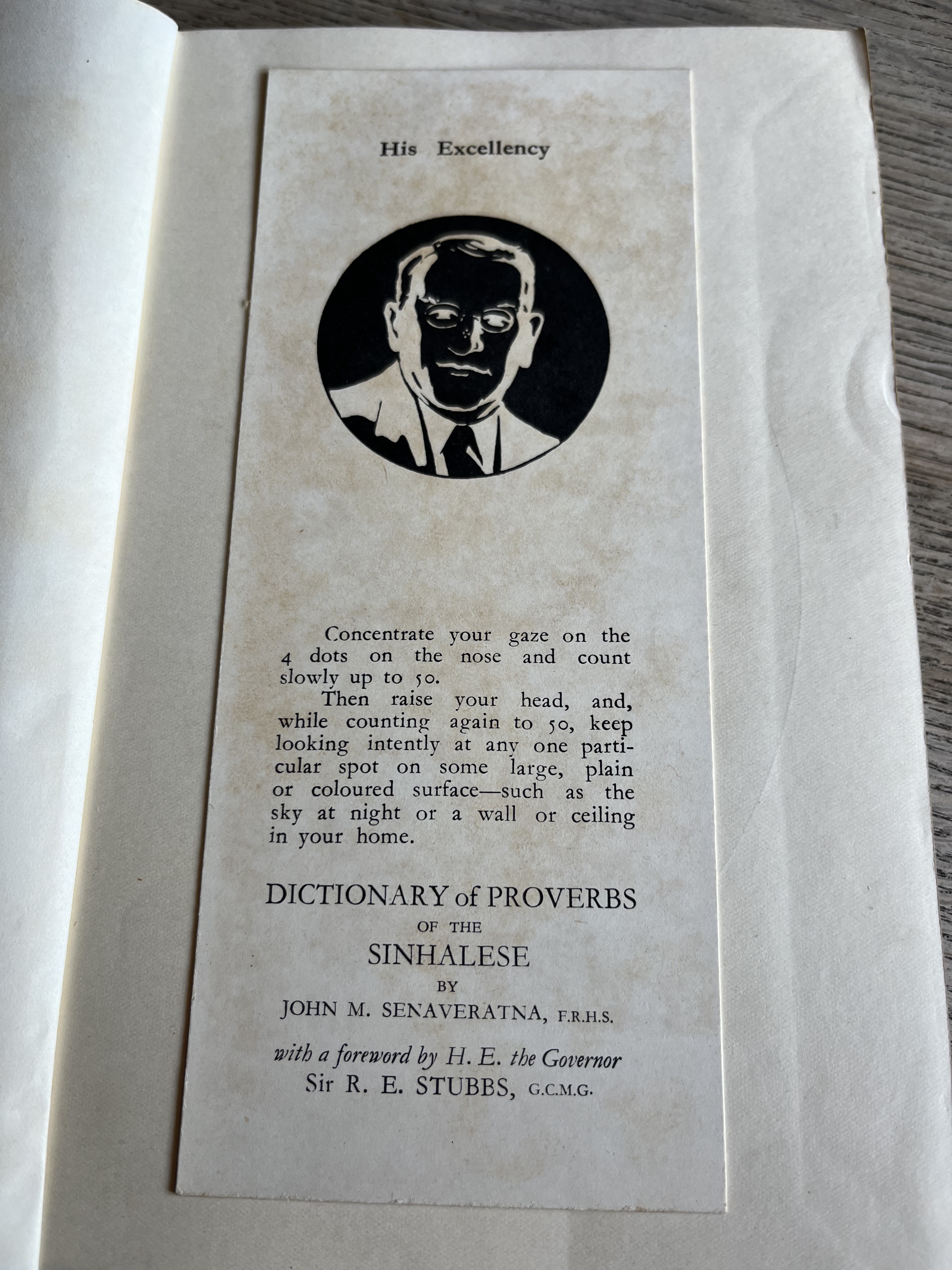
The forward is by the Governor Sir R E Stubbs, who my researches tell me was the British Governor of what was then Ceylon and is now Sri Lanka, from 1933 to 1937.

And he had had a similar role in Jamaica, no doubt explaining his knowledge of cats and prickly pears.

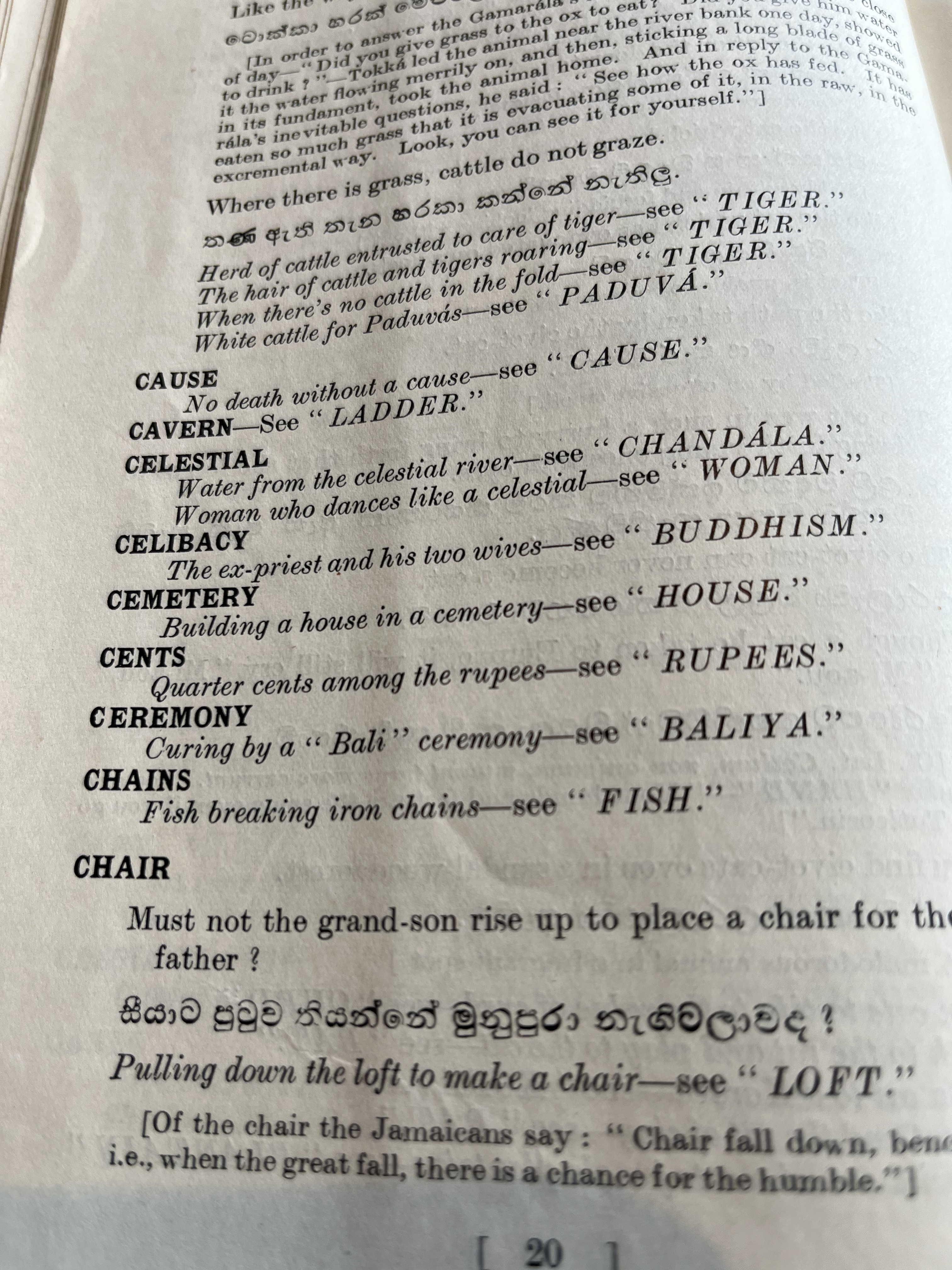
John, ( I am going to call him that as typing out his surname all the time might well become tedious) starts on a very Brewers note with his first entry:

‘Abode.The bat visiting another bat’s abode – see Bat.’

There are plenty of other such referrals: 

There are four pages of referrals on Like.

Quite a lot is rather obscure, unclear or downright baffling, even with the explanation:
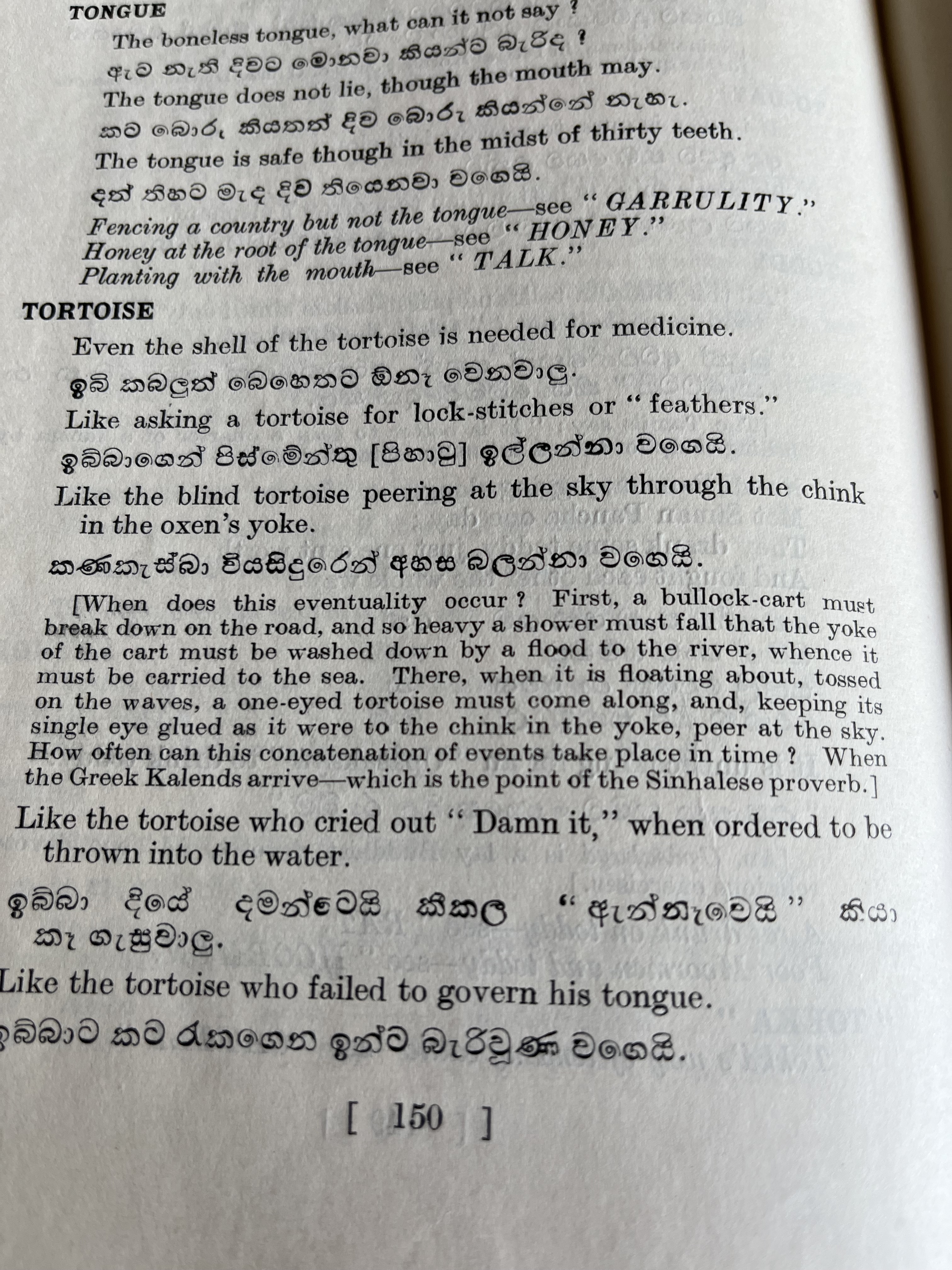
‘The swelling of a finger must be proportioned to its size’ which apparently means ‘cultivate a sense of proportion.’

‘For those who cried standing we should cry standing; for those who cried sitting, we should cry sitting.’ 

Quite a few of them under Sinner:

‘The sinner will not take up a book, but will carry a load.’

‘What sago congee for sinners?’

‘Wherever the sinner goes there is a hailstorm.’ A variant is apparently, ‘ There is a certain to be a hailstorm when the unlucky man gets his head shaved.’

Some of them are what we might describe as culturally specific:

Slave ‘Better to be born a slave than the youngest in the family.’

‘Mother: Like placing blocks of wood before mothers ( who have borne children.) 

( I have no idea, and there is no explanation from John.)

‘Mad: Like the mad woman’s bag of herbs’.

‘Death: When a man with projecting teeth dies, you feel doubtful of his demise.’

Country: In one country you cannot yawn, in another you cannot clear your throat.’

Clearly, some needing a more detailed explanation:

And some just seem to be stating the obvious:

‘Hip Bone. Boxing cannot cure a dislocated hip. see Boxing’

( Mind you if you do go back to Boxing, you find ‘ Can boxing cure a dislocated hip?’ mmm)

Or

‘Horoscope:What is the use of consulting the horoscope when the man is dead.’

Well on that note, and if you have got this far, I hope you be able to impress your friends with a nonchalant dropping in of a Sinhalese proverb or two.

See under ‘dropping’.
Books and their private lives

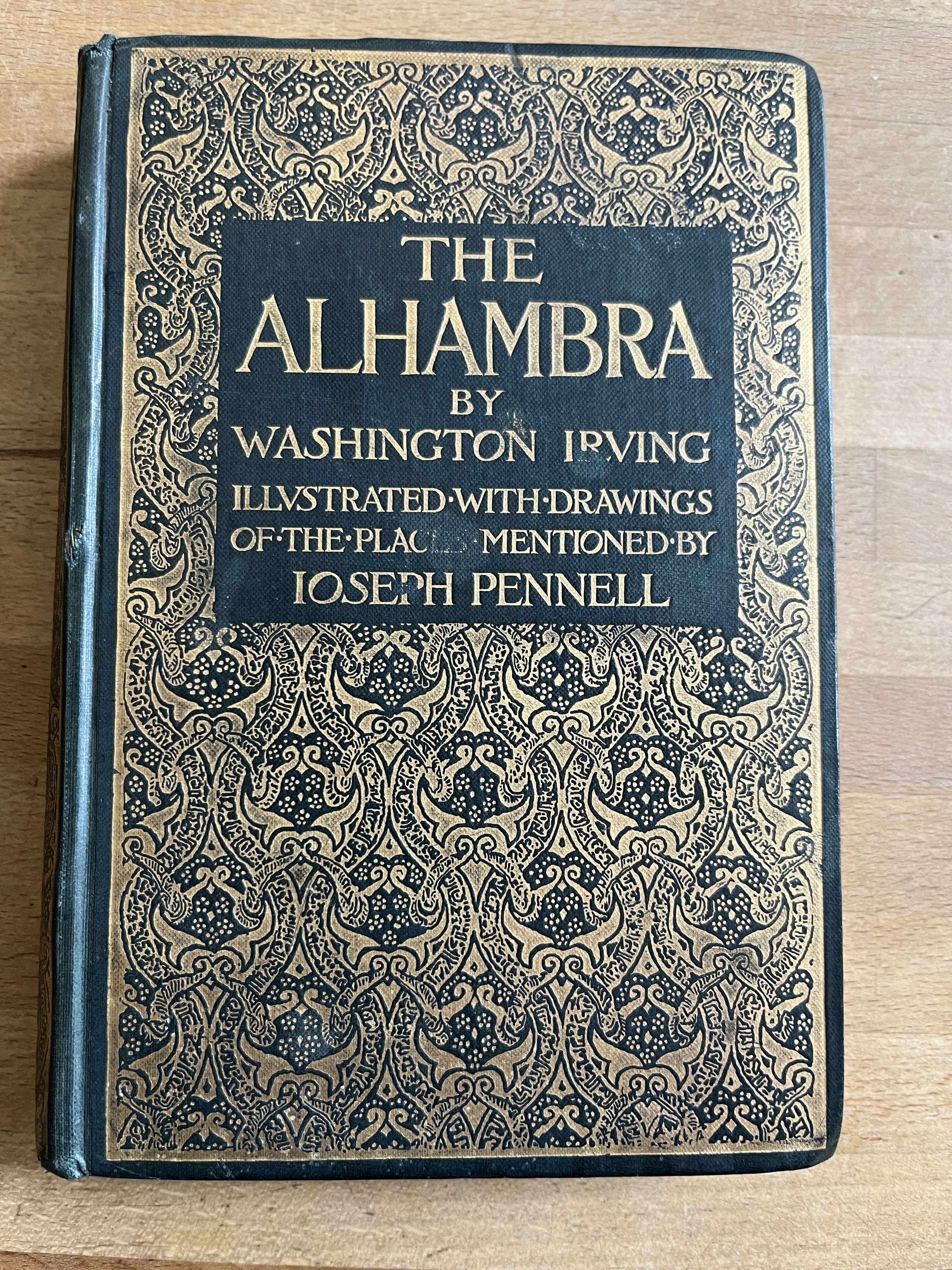
As everyone knows you can’t judge a book by its cover, but sometimes covers are really rather more interesting than the contents.

Having skimmed through the contents – Washington Irving was put up in the Governor’s apartments of the Alhambra, lucky him – and spent some of his time writing a rather flowery account of his time in the palace and surroundings.

Flowery prose is not my fave.

“The inn to which he conducted us was called the Corona, or Crown, and we found it quite in keeping with the character of the place, the inhabitants of which seem still to retain the bold, fiery spirit of olden time, The hostess was a young and handsome Andalusian widow, whose trim basquina of black silk, fringed with bugles, set off the play of graceful form and round plaint limbs. Her step was firm and elastic; her dark eye was full of fire and the coquetry of her air and varied ornaments of her person, showed she was accustomed to being admired.”

I rest my case, and there are another 435 pages in the same vein.

But, luckily, I am not here to read it, I am here to see if it is worth something and we can sell it.

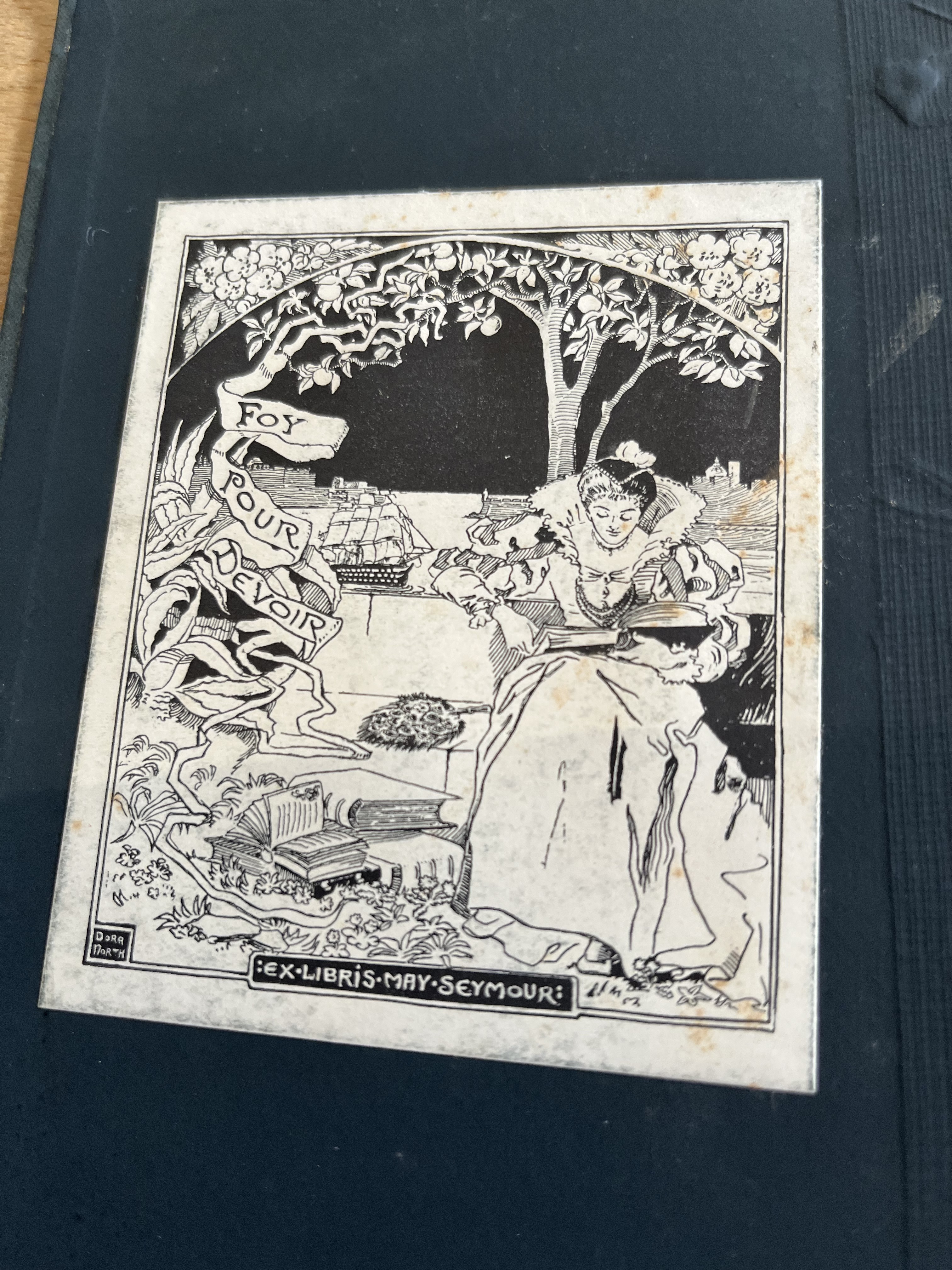
Inside though was a bookplate which was rather interesting and more decorative than usual.

It turns out that ‘Foy Pour Devoir’ is the motto used by the Seymour family dating back to 1547 and 

‘The present dukedom is unique, in that the first holder of the title created it for himself in his capacity of Lord Protector of the England, using a power granted in the will of his brother-in-law, Henry VIII

I don’t have the time, inclination or access to try and track down where May’s branch of the family started life in America. That’s not on my to do list.

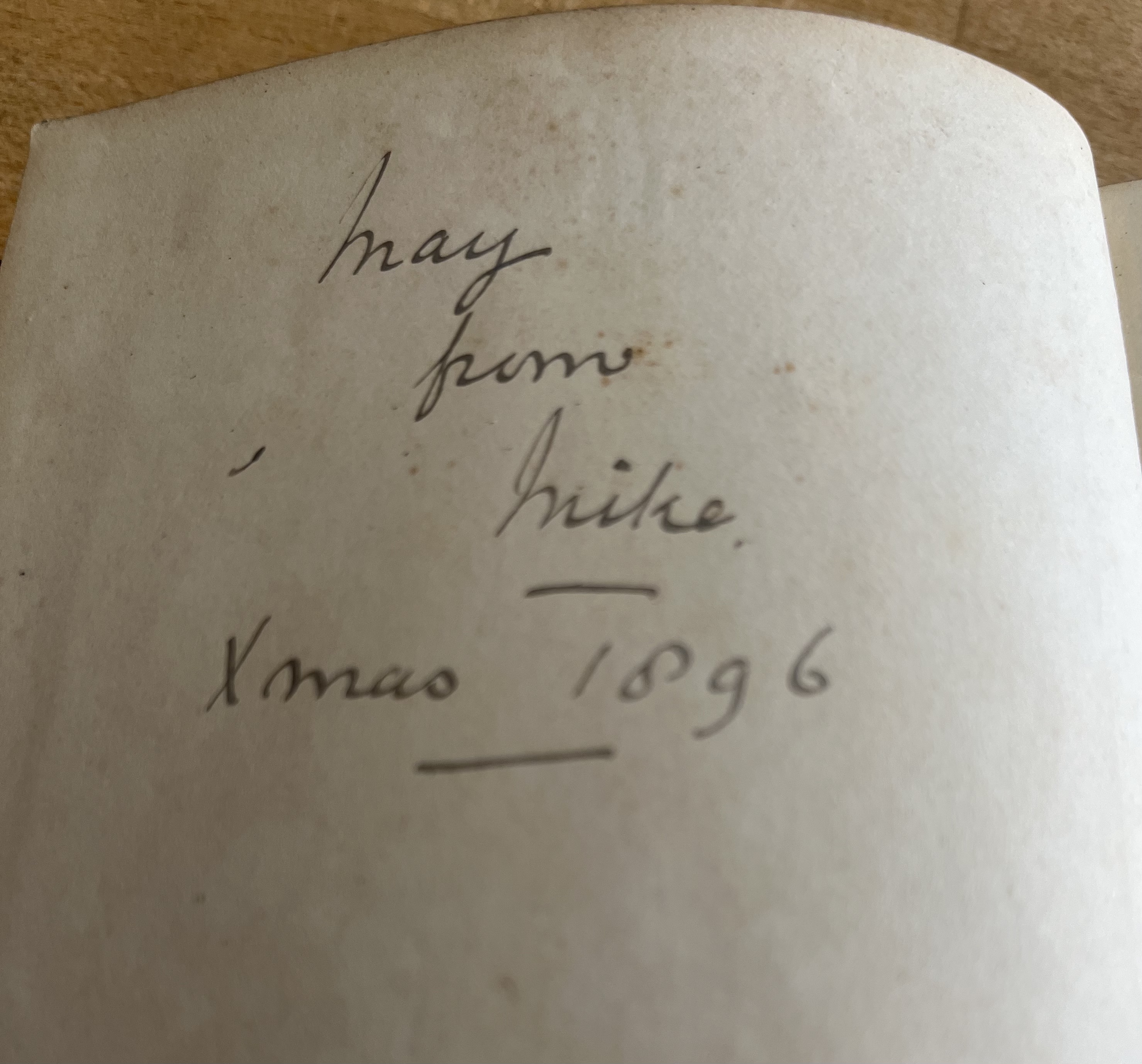
And I have no idea who Mike was:

But I did find out that May Seymour studied library science and she was one of 20 students in Melvil Dewey’s first librarian class at Columbia College.

(I am not sure if my May Seymour is the same May Seymour, but if so, I am sure her bookplate will add to the value…… just saying.)

Dewey was appointed New York State librarian and he took his library school with him from Columbia to. May Seymour was one of the five instructors who moved with it. She also worked at the New York State Library, where she was in charge of classification.

Seymour collaborated closely with Dewey on the development of the Dewey Decimal Classification (DDC) and the preparation of the 1904 American Library Association (ALA) catalog, which listed over 8,000 books essential for libraries.[4] In the 1890s, Seymour and Florence Woodworth boarded with the Deweys. (wikipedia)

However, in 1906 the ALA censured Dewey for his behaviour towards women which included ‘unwanted kissing and hugging’. 
And also in 1906, Seymour was fired from the New York State Library. Seymour moved to Dewey’s Lake Placid Club, where she worked on editing the fourth through eleventh editions of the DDC.

I don’t know why she was fired (and, an admittedly cursory, search on Google didn’t help).

This club was set up by Dewey and his wife:

They chose this site as a place where they could establish contact with nature, find relief from their allergies, and to foster a model community that would provide for recreation and rest for professional people, specifically, educators and librarians. Dewey and his wife felt that occupations involving “brain work put people at higher risk of nervous prostration that, if not checked, would lead to fatigue and even death”

You can read more about this in an article https://www.adirondackalmanack.com/2020/12/dewey-lake-placid.html.

I found it interesting but I can quite understand if you don’t have time.

Dewey as well as his behaviour towards women, may well not have endeared himself by banning any black people or Jews.

A club pamphlet read: “No one shall be received as a member or guest, against whom there is physical, moral, social or race objection. … It is found impracticable to make exceptions to Jews or others excluded, even when of unusual personal qualifications.”

Dewey was sacked, also in 1906, when the pamphlet became public. 

In 1927 he hired a stenographer but Aafter he hugged and kissed her in public, she threatened to file charges and ended up settling with Dewey for $2,147.66. 

Dewey was apparently upset with the settlement not because he had been reprimanded for anything improper, but because he worried the stenographer might spread rumors that “she got $2,000 for no work.”

In 2019 The ALA removed Dewey’s name from their leadership award.

Anyway, it would appear that May clearly didn’t object to public unwanted caresses or racism….. oh May, I would have hoped for better of you.

She died in Lake Placid on June 14, 1921. (wikipedia)

Meanwhile, as they say, Joseph Pennell is the illustrator of our copy of the Alhambra.

In 1880, Pennell was involved in the violent expulsion of African American artist Henry Ossawa Tanner, a fellow student, from the academy. Tanner had suffered bullying at the academy since his entry earlier that year, which culminated when a group of students, including Pennell, seized Tanner and his easel and dragged them out onto Broad Street. The students tied Tanner to his easel in a mock-crucifixion, and left him struggling to free himself. Pennell apparently did not regret this action; many years later, when Tanner was already renowned in Europe and beginning to gain repute in the United States, Pennell recounted the attack as “The Advent of the Nigger,” writing that there had never been “a great Negro or a great Jew artist.” (wikipedia)

It does rather seem as if this little book has some tenuous but unpleasant connections.

( Just say Washington Irving seems not to have been, at least publicly racist or sexist, so perhaps I should have stuck to reading the text.)

An Afternoon Shooting Books

As I have said many times before, working in the Oxfam shop is a mixed bag, indeed box.

Sometimes you have boxes and indeed bags of books which are just not saleable. They have been stored in a garage for years, they are what is politely called well-read and in fact means they have been trashed – by children.

They are a collection of books about royal weddings – long divorced. They are dated cookery books with no charm, they are guide books printed in the 1990s and whilst the monuments may not have changed, all the restaurants, hotels, bus timetables will have.

But of course, and it is the thing that keeps us book sorters happy, are the treat and novelties.

We don’t have time or indeed the patience to go through every book but there is usually a general check that it is not written in, scrawled in, has the first few pages missing ( all rather depressingly regular).

But after that we are busy processing the next batch.

So, a colleague was on the till the other day when a customer approached and said he had been looking through the book he fancied buying and found a £50 not sandwich between two pages. 

He handed it over to the rather surprised volunteer, bought the book and went home.

We have no idea who it was who donated the book so all I can say is that I hope they would have been pleased we got an extra £50 for their donation.

And then I spent an afternoon in the company of many, many books on hunting, shooting and indeed one or two on trapping and snaring.

This came about because someone I know locally has an auction company and is an antiques collector.

And he has been really helpful with old coins we have had for example, and lately he has agreed to sell a Victoria century carte de visit holder. (In case you were unaware, in those days, people dropped a card in with your manservant to say you had called and would be delighted to invite you for a cup of tea, game of cards, etc etc.)

Whilst we were talking he said he was having a clear out of books. Now for him, a clear out of books is not a couple of Waitrose bags but a good few very large packing boxes.

I took one  for now – bearing in mind we don’t have a lot of space and certainly not that much.

It turns out this was part of a library he had bought from someone and it was his collection of all things hunting and shooting.

I have to say it was a very strange time, spending a whole afternoon on my own upstairs in the shop valuing all these books about killing wildlife.

As some of them were old, and some valuable, I had to look through them all.

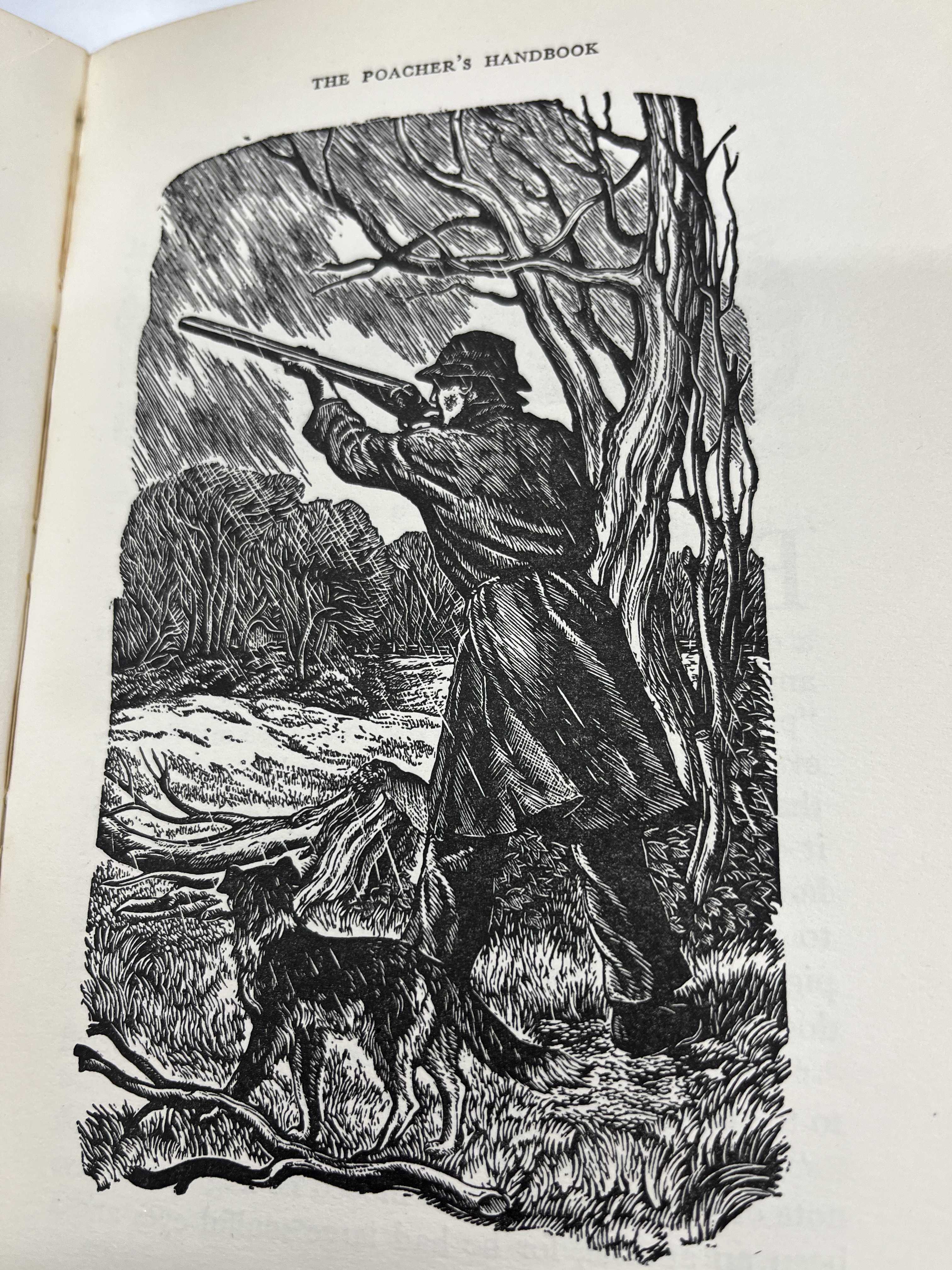
To the sensibilities of most people in this day and age, the thing that is striking is the fascination with nature along side the fascination with how to kill it on a one to one basis.

Some of these books were illustrated with great engravings and images.

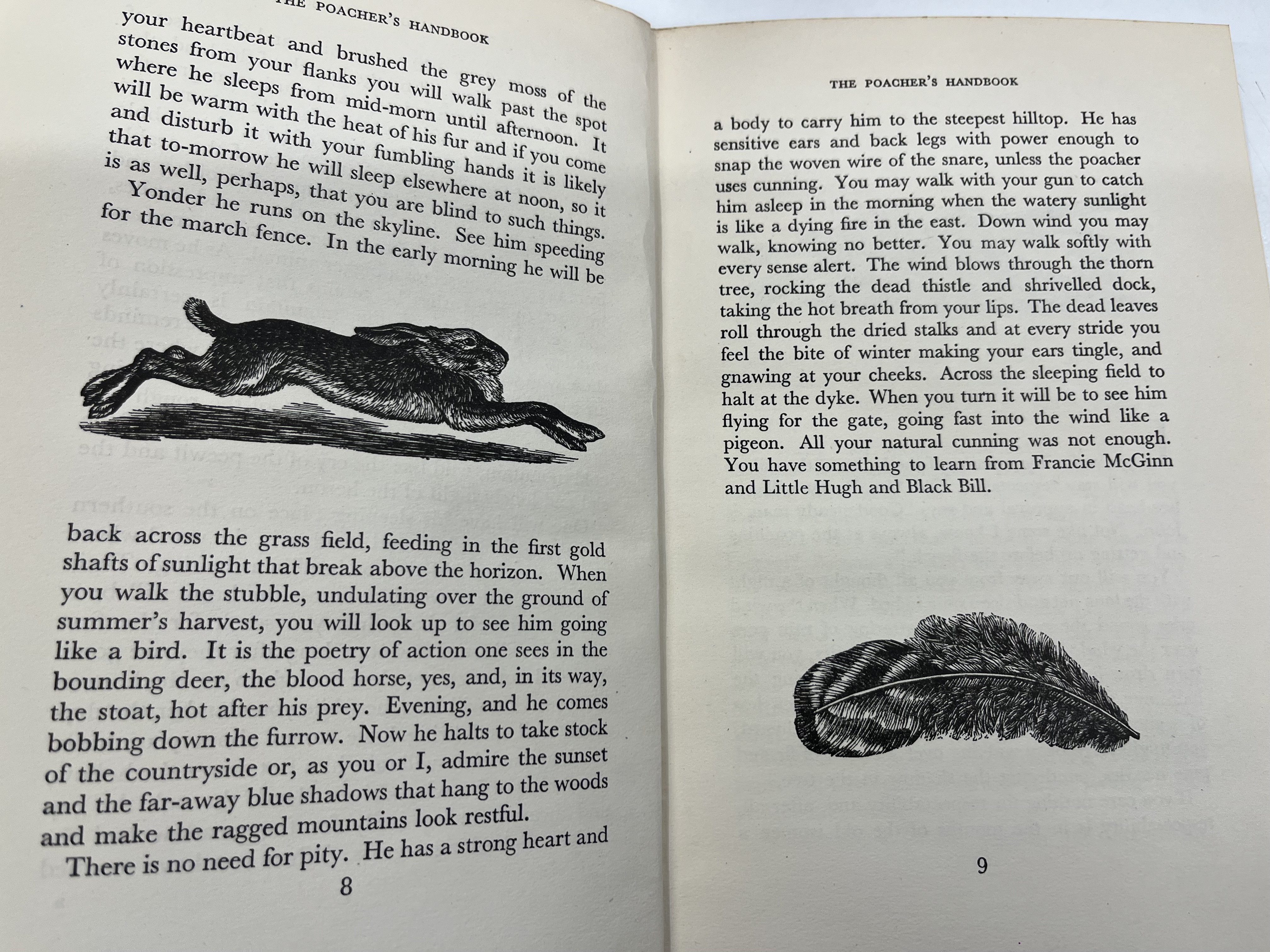
But then you read what Ian Niall has to say about the hare:

Lovely lyrical description of the countryside and then explains you need to be a really cunning poacher to make sure you trap its legs so it can’t get free. How does that fit?

And you get this:

Followed by this:

Yes it is the same delightful bird and coveted shooting trophy.

Luckily and by sheer coincidence, as I was taking a break from killing, I found this is a nearby box of donations.

Yes it is a bit twee, but have to say it made me feel a lot better.

When I nipped downstairs to take the till volunteer a cup of tea, I bumped into a regular customer who I know because he drew up our wills.

‘Have you got anything on fishing?’ he asked.

‘Ahh, I thought, hunting shooting, and now fishing.’

As it happens I found him a rare-ish book on making fishing rods out of bamboo. He is apparently delighted.

Tailor of Gloucester – again

First of all my apologies for bringing you a bit of Christmas long past the time when it should be well and over.

So, if like me, you are very happy to be in the cool zen-like calm of January, then please don’t read on, it is not a short one.

Otherwise:

The Oxfam bookshop.

You will, probably, have read the preview for this. The Tailor of Gloucester. If you haven’t, you will catch up – at length.

As you may know, we have to start planning Christmas way back in the late summer – if you live and survive on donations, you have to hope that things come into the shop which you can use to make something special.

And like all retailers, we rely on Christmas to make our money.

So, the window and table display are well thought about.

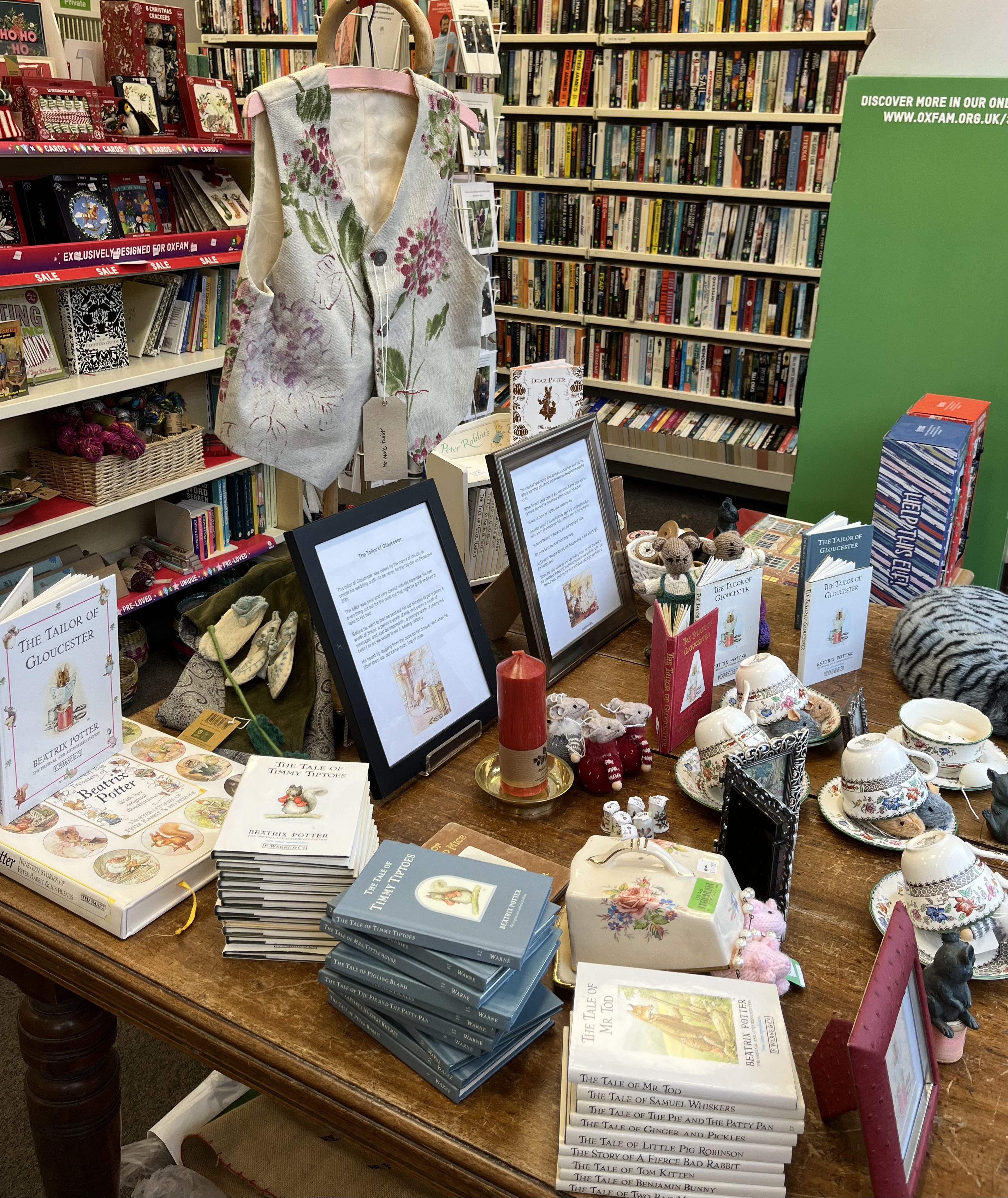
This last Christmas my colleague did The Old Curiosity Shop in the window and on the table, I did the Tailor of Gloucester.

For those of you who don’t know, it’s one of Beatrix Potter’s stories. It is about the poor tailor who is commissioned to make the mayor’s Christmas wedding outfit. 

He lives with his cat Simpkins, always on the outlook for a mouse-snack in the tailor’s house.

The tailor sends the cat out for milk, bread and some thread to sew the outfit, and whilst he is out the tailor frees the mice who have been trapped by the dastardly cat under the tea cups on his dresser.

But the tailor gets ill and the grateful mice go to his workshop and make the outfit, but are short of a final bit of thread for the last buttonhole – Simpkins had hid it.

They leave a note saying ‘ no more twist’ but a guilty Simpkins gives it to the tailor, so all is well.

https://en.wikipedia.org/wiki/The_Tailor_of_Gloucester

Nice Christmas story you may think. And indeed it is. But to bring it to our display table took some waving of my hands and asking for help. More of that later.

We have a lot of donations of Beatrix Potter books but they rarely sell except to grandmothers……

So it was easy to collect them. Though I did have every book sorter on high alert for copies of the Tailor Of Gloucester – rarer than you would think.

Oddly enough, we don’t get mice in any shape or form donated. Nor waistcoats. And, although bizarrely for a bookshop, we do get crockery, we didn’t have any between August and December – I had to buy some from another charity shop. 

But when I explained what I needed it for, I got it on loan.

So, now I needed mice and a waistcoat. 

And so I flapped my hands and asked for help. A skill I seem to have perfected over the years.

A very clever local sewer made me a waistcoat small enough to look the right size on the table – lined and perfect, leaving me only to cover the button holes with cherry coloured ‘twist’ and pin a note in ‘tiny mouse writing’ saying ‘no more twist’ to the last buttonhole.

Our manager’s mother knitted some mice but she ran out of time, so there were not enough.

A friend leant me some of her collection of resin mice, another friend bought me some and donated them to the shop, a local shop owner who also had a display of mice, gave me a couple, I bought a few from the local pet shop (cat toys) and finally the sweet shop gave me some sugar mice.

We had enough mice.

It worked – actually better than the image looks, but again hey ho.

A Winter’s Tailor

In the Oxfam bookshop Petersfield, there are a few of us who take Christmas very seriously from August onwards.

Yes it is depressing to see Christmas cards for sale from then – and yes indeed they are – but as for the display planning, August is not too early at all.

After all, we have a tiny budget, actually no budget.

We have to reply on what appears in the shop and with amazing frequency that happens.

We have a window displays to plan, and planning we do.

Last year we did a Cluedo window so there was a desk with a decanter and knocked over glass, and old fashioned telephone, a bookcase ( of course, we are a bookshop).

There was a row of pegs with a scarlet cloak, a cook’s apron, some Coleman’s mustard, some peacock feathers, there was a fake dagger, gun, piece of lead piping.

You get the idea – or at least you do if you know the traditional Cluedo. 

This year the theme is The Old Curiosity Shop.

So, we have been looking out for appropriate baubles, stuff, things, knickknacks etc. 

We are working on how to make the plastic display shelves look like Victorian wooden ones.

How to hang a battered red velvet curtain.

And on the fairly firm basis we are not expecting a Victorian till to be donated, my window colleague said she thought an old ledger would work.

Now, I wasn’t expecting that we would get one of those either – in amongst battered Jilly Coopers and John Grishams, ledgers don’t appear.

But hey ho, look what was donated.

Whilst of course leaving room to display books after all bookselling is what we are there for.

This is the domain of my colleague/friend and I am around to help and tootle through our cupboards for stuff.

More my domain is the display table which is a rather nicely battered square one dating back 100 years I would say.

This year, I want to have a display on it based on the Beatrix Potter’s Tailor of Gloucester.

So, if you don’t know the story, the gist of it is that the tailor is commissioned by the Mayor of Gloucester to make his outfit, including a waistcoat, for his Christmas Day wedding.

The tailor has a cat who is mean to the house mice, but they hide under cups, and bowls and Simpkin can’t find them.

Simpkin is sent out to buy some twist ( thread) so the tailor can sew all the button holes but he hides it in a teapot.

The tailor gets sick and whilst he is in bed, the mice got to his workroom and sew, and sew, and they finish everything.

Except one buttonhole and they pin a note to it saying ‘no more twist.’

Actually, it is a short book, you should go read it because it is a rather charming Christmas story.

So, our manager’s mother is knitting small mice to hide in cups, I have collected some old thimbles and cotton reels from other charity shops.

We have a shop cat ( fake obviously) who will take on the role of Simpkin.

The story will be printed out and run around the four sides of the table.

And a kind and excellent needlewoman I know has offered to make a child’s size waistcoat because we don’t have the room for a big one.

All a bit twee? Maybe, but don’t tell me that because I have been invested in this since August.

The Life of Warwickshire Place Names

Just before the first lockdown, I took some old and interesting books from the Oxfam shop so that I would have something to research in the idle weeks ahead.

( I did leave a note of what they were, and that I had them in case anyone thinks I was half inching them.)

Well, they got put in the Best Beloved’s study and I have to say I forgot about them until recently when I was clearing out my bits and pieces of boxes and files in there.

One was a very plain board covered book called The Place Names of Warwickshire. I am not sure why I even looked inside it as it was battered, and we have limited space to stock battered books about somewhere Petersfield book shoppers  are probably not that interested in.

Anyway, I did look inside and there was nothing about the place names of Warwickshire.

The pages had no printing on them at all.

But they did have the handwritten life story of Edith Chadwick Horner who was, a bit of reading on found, part of the Fagg family of Kent.

This was a pretty worthless book unless you were researching that family.

So, I went look for who might be. You have to subscribe to many of these ancestry sites and needless to say I didn’t want to do that but after trying the free Mormon site and coming up blank, I found RootsChat.

Not the easiest of sites to navigate and clearly there not for dilettante types like me.

But I did manage to post what I knew and lo and behold, a couple of days later I get a message from her grandson.

He had and old typewritten version of her story but not the real thing. He wanted to buy it and I offered to post it to him.

Turns out his brother lived in a village a few miles down the road.

Well, well, I thought.

So I could imagine the brother had the book all along, had a clear out and had never looked inside and decided he too did not need a book on the place names of Warwickshire – and it ended up as a donation in Oxfam.

That indeed turned out to be the case when he came to collect it.

The mystery still remained of how and why she had written it in a bound book with blank text pages.

Turns out the brothers’ father worked at Cambridge University Press ( he was also a poet and artist of some renown) and the press made up a blank book of every publication presumably to check they had enough pages, all was in order etc.

These were two a penny in the press and so he would take them home and use as notebooks, maybe sketchbooks, and clearly to give to his mother so she could write her life story.

I do a like a union/reunion of a book with the people who are meant to have it.

Strange Ships

I don’t regularly work a Saturday afternoon in our Oxfam bookshop, and it is a rare ( but a very nice time) when a book is united with someone who really wanted/needed/appreciated it.

Mostly instead it is nice customers who have been recommended a good paperback fiction book by a friend or a sister, or who has read one of the author’s books and wants to read more – or indeed never tells me why they are buying the book.

But this afternoon was a bit different.

We have a glass cabinet ( I have to say rather thrust upon us by a previous area manager) into which we put ‘specially attractive books.’

I put books in there that I really hope will sell because they are delightful/interesting/unusual – but often the book-buying public of Petersfield finds them less so…..

Anyway, the one I put in a few days before my Saturday shift was not really a book.

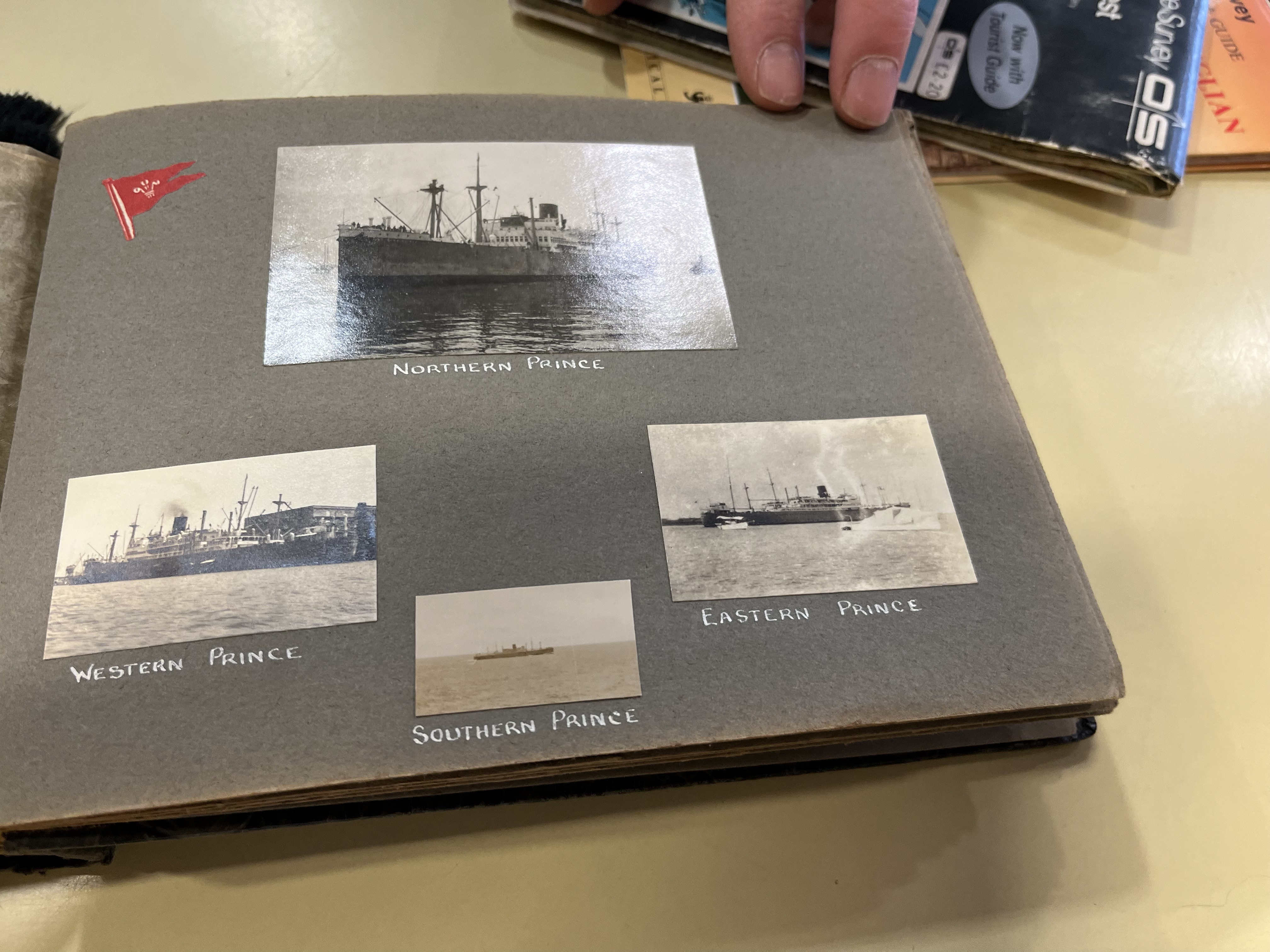
It was a photograph album of ships.

It was donated by who knows who. 

It had no name of the ‘author.’

Every page was completed and every page had a tissue guard – that, just in case you didn’t know, means a bit of photographic tissue paper to protect the photographs.

Except, I am not sure they were photos – some were the size of old-fashioned cigarette cards, some the size of postcards, some bigger.

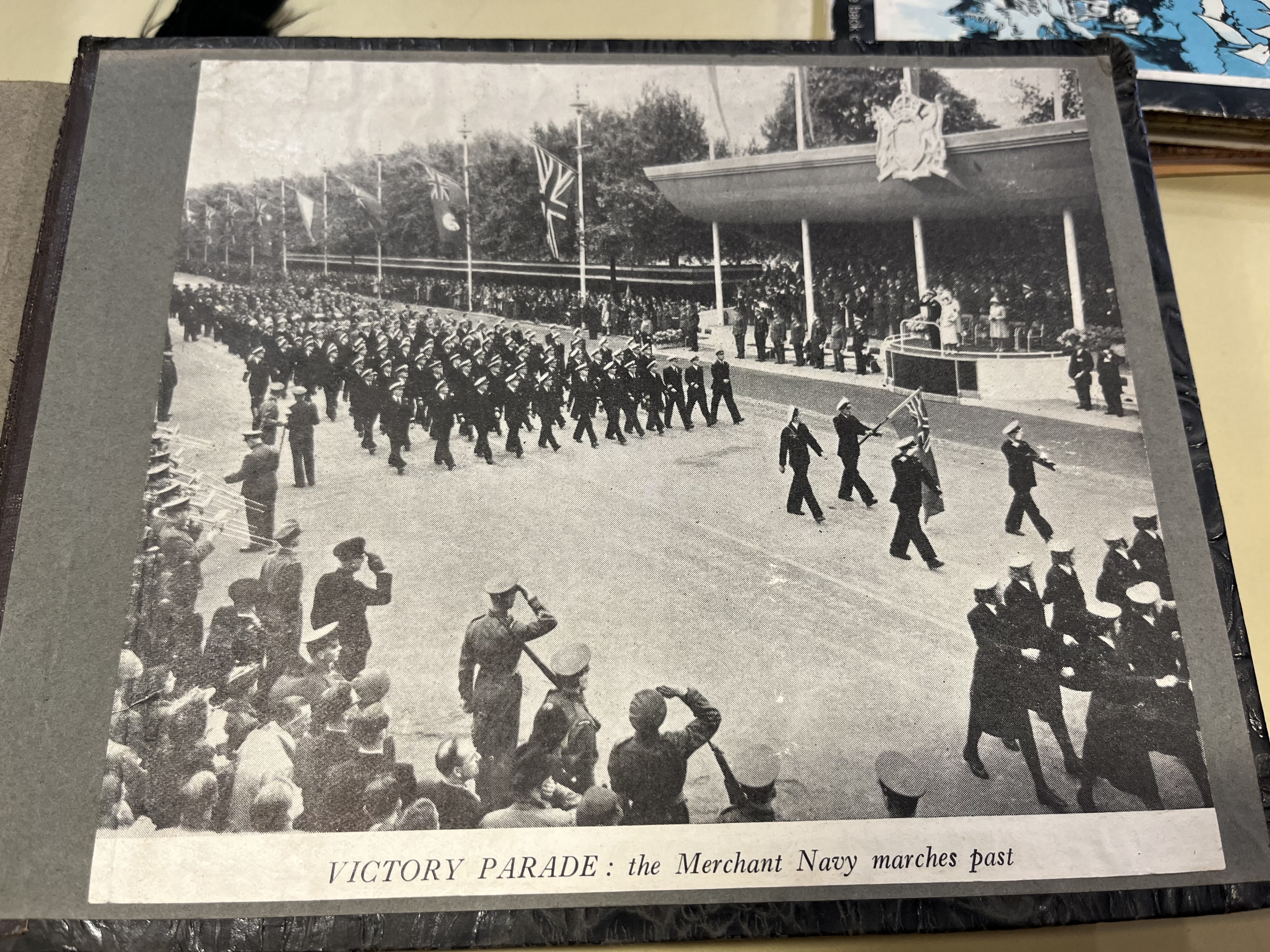
Most of the images, it seemed to me, with a relatively cursory look, were merchant shipping vessels and at the end of the book was an image of the merchant navy victory parade at the end of World War II.

I had looked at this and wondered who as the person who put it together?

But assiduous readers of this blog ( and that must be just me ) will remember I disappeared down a rabbit hole of naval mutinies a while ago and so I decided not to take on any research into this album.

I steeled my heart, as the best beloved would say, picked a figure out of the air and put it in the cabinet for £20.

So, there I am on a busy Saturday afternoon and someone asks if he might take it out and have a look at it.

Of course. And just then the shop was not too busy so we started talking about it.

Then customers started wanting to pay for books, asking for books we might have not on display, wanting to know whether the book they had seen ‘about two weeks ago and it was about, well I am not really sure but something to do with… have you still got it?’

So I left the man and his wife leafing through the album until the shop went a bit quieter again, and he said something along the lines of:

‘I am going to buy this and try and find out who he was. There must be ways of finding out the crew on all these ships and if there is a name which appears on all of them or at least some of them.’

A man after my own heart.

I asked him if he would let me know what he found out, if he ever does. 

I have given him my name and phone number and one of these fine days I might find out what he has found out.

‘It is amazing and rather sad,’ he said, ‘that a family have let this history go.’

But he doesn’t work in an Oxfam shop where you get all sorts of donations and think why did you let that go?

But, as someone donating the other day said, ‘ I hope you can find someone who likes old stuff because we don’t.’

Queer Proverbs

There are books with titles which would probably not be used today.

But in 1886, things were a bit different.

Anyway, Edwin Hodder writing as ‘Old Merry’ had indeed some rather odd proverbs as well as some still very familiar – and his discourses are nothing if not a little idiosyncratic.

You know how some sayings get embedded in your family?

Well, the one I remember from my mother was, “ What the eye doesn’t see gathers no moss.’

I am not sure exactly what she meant by eliding those two proverbs but generally, I think she used it when she wanted to sidestep something awkward, and get away with it.

Anyway back to Old Merry.

‘The cat in gloves catches no mice’ 

And there is a picture.

As well as a moral ‘sermon’ to children from the ‘pulpit.’

I won’t bore you with the several pages of Victorian ‘humour’ and moralising on all the proverbs. 

‘Phew,’ I hear you cry – and in the hope I can detain you just a little longer, here are just a few more snippets.

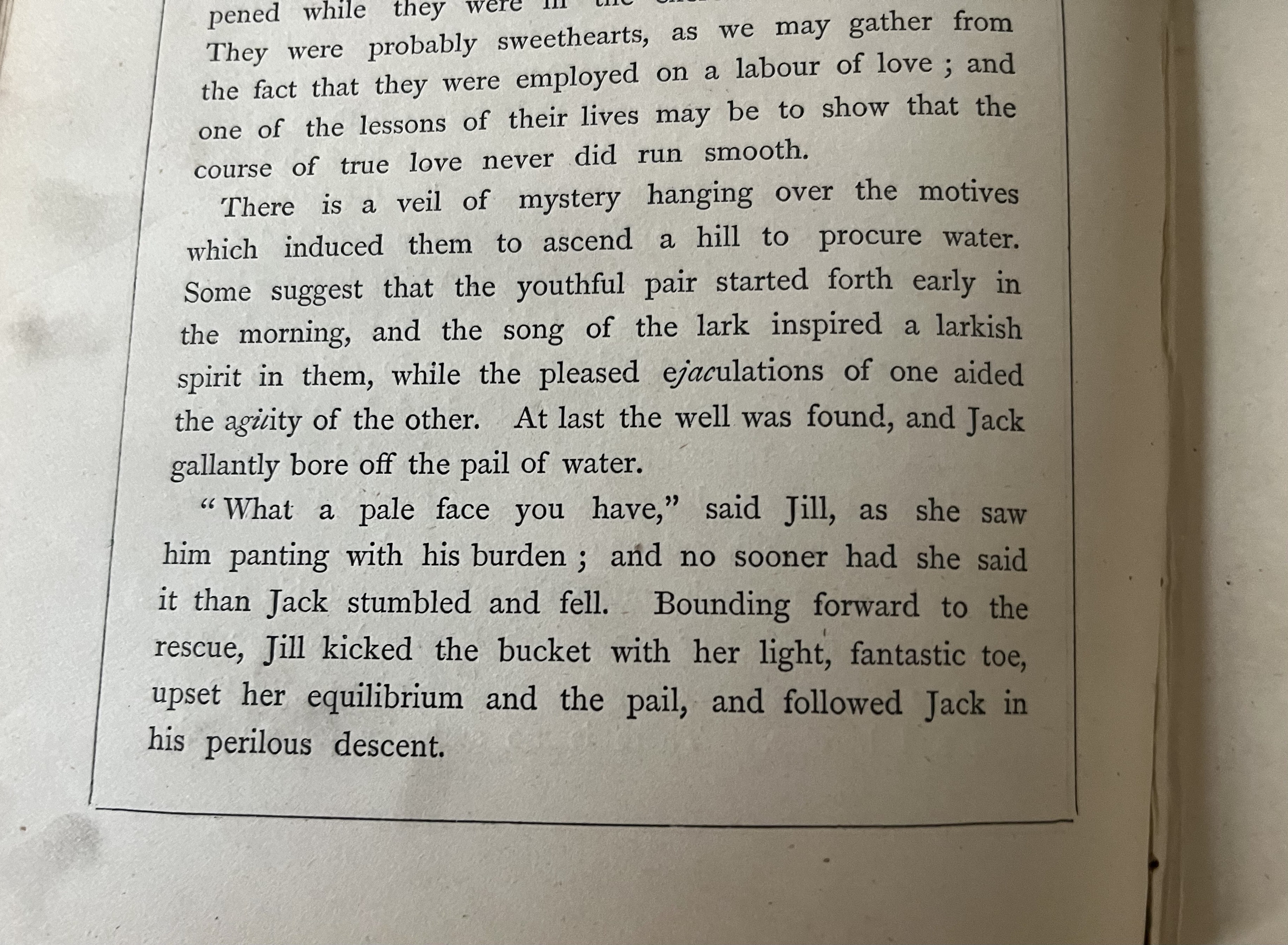
Jack and Jill

Interestingly, though he says later, addressing the rapt Victorian children I assume, there are two lessons, only No 1 seems to be identified. 

Perhaps he needs the same proverb as I do – something about attention to detail.

The Best Beloved says I need to be followed around by a tame pedant.

And, he says, my life is like an impressionist painting, all looking good from a distance but up close, it is a mess of random dots.

As for attention to detail ‘proverb’, I am going with “ Look after the (non-financial) pennies and the pounds will look after themselves.’ 

Doesn’t trip off the tongue I know, but will work on it.

I also like the quote:

‘Success in any endeavour requires single-minded attention to detail and total concentration.’

Willie Sutton (aka, “Slick Willie, the famous bank robber)

Well, back to Old Merry and 

‘Every ass likes to hear himself bray.’

Is it too cheap a shot to want to have that projected onto the walls of parliament?

Old Merry however, makes no such comments, instead he writes five pages in defence of the donkey and says,

‘I confess I have respect for donkeys and should like to join a crusade for the vindication of their rights.’

‘ Costermongers are now the greatest donkey holders in the land, and we have not to walk far to see how brutally the poor things are used, what cruel work they have to do, and what horrid society they have to mix with.’

So, here are a few more Old Merry’s to leave you with:

‘It is not the cowl that makes the monk.’

‘He that is afraid of wagging feathers must keep from among the wildfowl.’ No, I have not much idea either though I gather it is a Scottish proverb, so all Scottish ideas welcome. 

‘ Fools make feasts, and wise men eat them.’ As a happy cook, I rather resent this one. And I am not sure Old Merry clears up the meaning of this proverb as he witters on about the difference between a simple person and ‘ a simpleton’. Just saying

‘Keeping from falling down is better than helping up.’ 

And finally from Old Merry

‘Merry Christmas.’ 

Now that to me is not a proverb, and reading through Old Merry’s take on this I feel that he might just have read Pickwick Papers published in 1837.

No Scrooge as a repenting ‘sinner’ but a contrast between idyllic Victorian Christmas full of joy and candles and good food, and Nelly trying to read to her parents by the light of a meagre fire, the dead son Tom…..

But to make things a bit lighter I give you some modern proverbs:

If at first you don’t succeed, try turning it off and on again. Neil Whyte. ( One I put into action all the time – remember me to tell you about the BB’s heart monitor sometime.)

You Brexit, you fixit.” Alistair May

You only find out who is swimming naked when the tide goes out. Warren Buffet

The problem is between the keyboard and the chair. ( no attribuation)

One ought to try everything once except incest and folk dancing. Arnold Bax

Never wrestle a pig; you will both get dirty, and the pig likes it. Richard Calhoun

Cooking In The Alps

It is no secret among my friends and family that I do like to do a bit of cooking and so although I am ruthless about throwing away donated and dated cookery books, old and interesting ones do catch my attention.

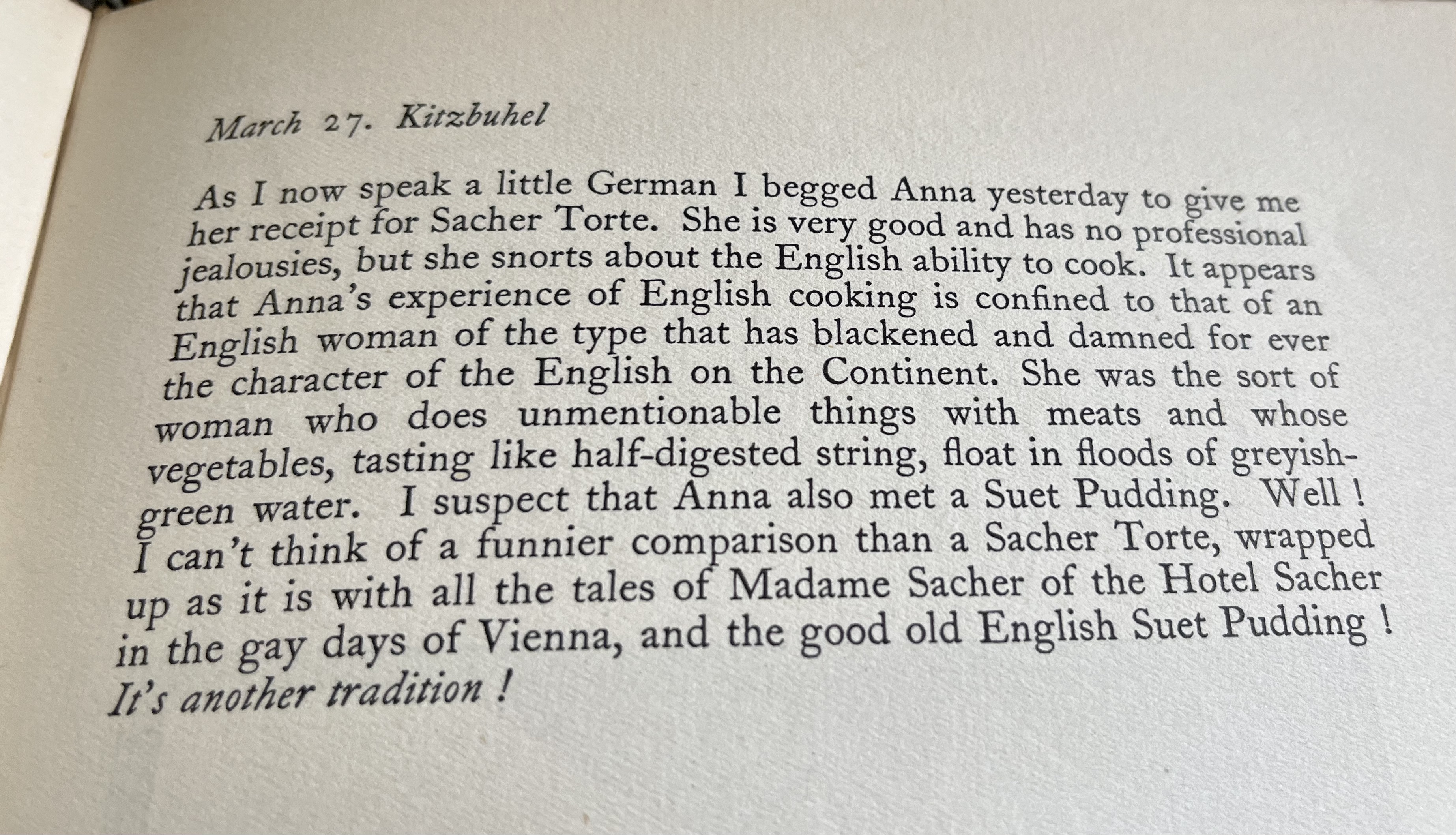
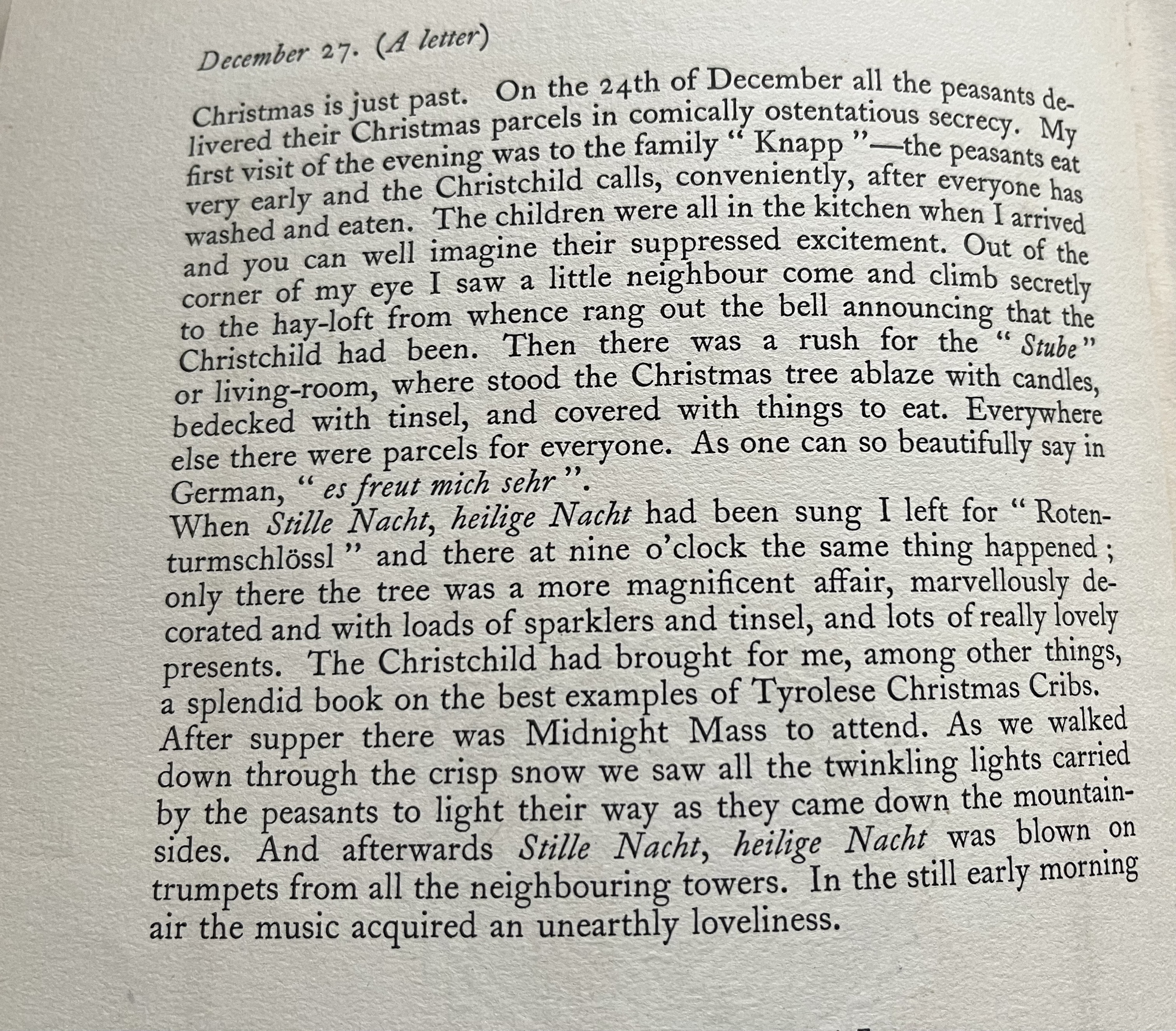
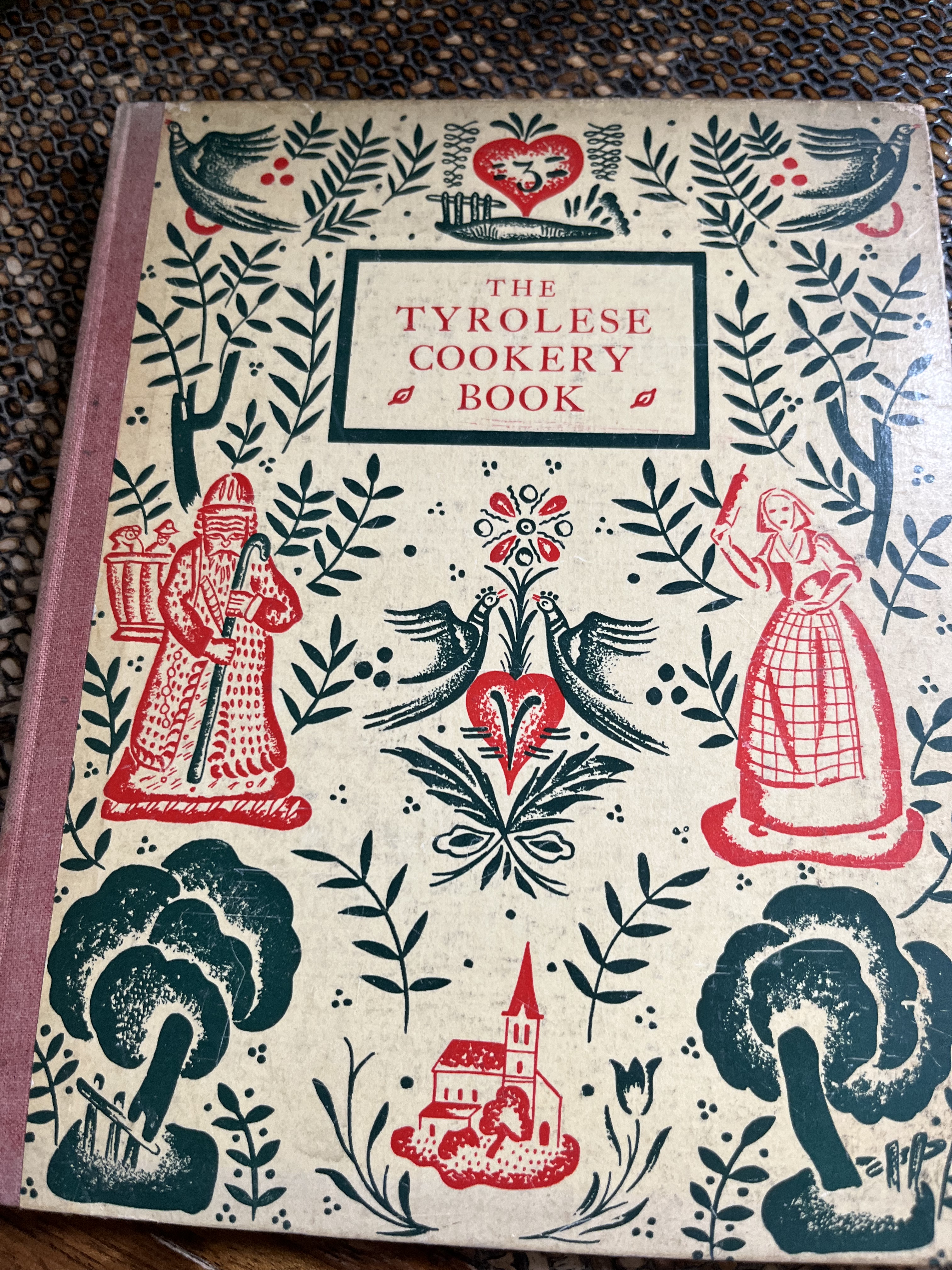
So, fellow ordinary cooks – no special stuff here – you might want to read on and be entertained by David de Bethel (the cook book writer and illustrator) as he spends time in the Tyrol oscillating apparently between pestering Anna the cook at a rather posh schloss called ‘the Castle with the Little Red Tower’ and the Knapp’s ‘peasant house.’

Before we start, this was published in 1937 ( there are no mentions of what would have been the political ‘issues’ of the time but plenty of references to the mores of the time.) 

I have no idea who he was except to have a quick search and find he wrote other cookery books from his travels in France and perhaps he ended up involved in the New Zealand Players Theatre Trust with his wife Joan who was a potter.

But I haven’t confirmed he is the same man, so let’s just go with the cookery writer.

So here is why he went:

And it must be said, though he is not complimentary about all Austrian cooking, he is later equally willing to report the disdain of Anna for, as he described, the type of English cook who has ‘damned forever the character of the English on the Continent’ by their appalling cooking.

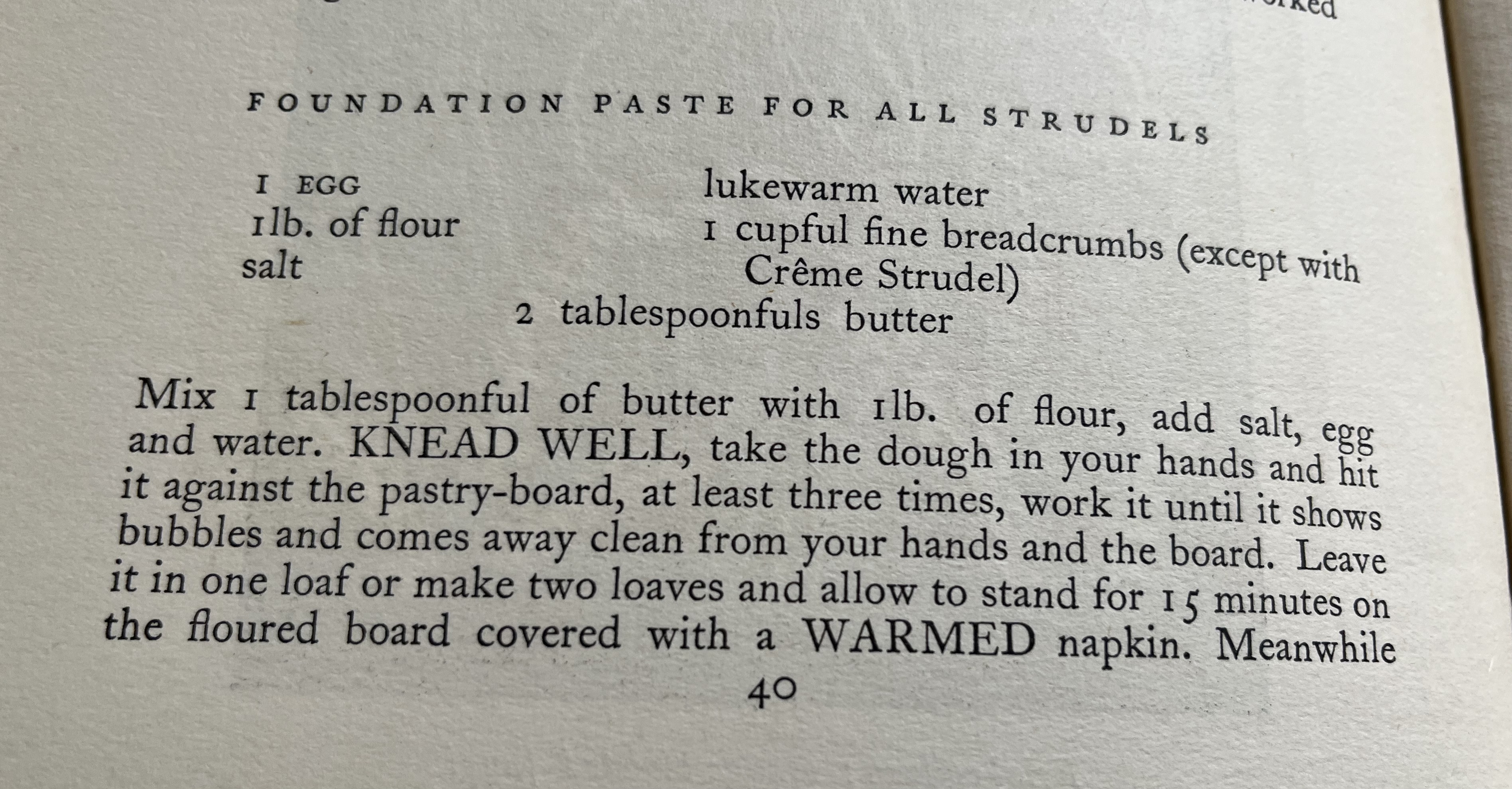
It is a characteristic of old cookery books that they just don’t have the detail you would expect from a Jamie, Nigella, Nigel….

If you bear with me, there will be another piece on a similar vein of ‘Ok if you regularly cook and potter in the kitchen over the years/tears and work out what works with what and how, then you can work this out but if you are not that person, you need a lot more advice on how that recipe is going to work.’

I think it must be that in those days, cooking was much more ‘if you had a cook, they knew how to do it, and if you didn’t, you knew how to do it.’

Prepared meals? What??

Now David, I have to say that stuffed cabbage leaves was one of my specialities in lockdown and my Austrian-born neighbour liked them.

But essentially the cabbage ( and I used Savoy as a much better alternative to white cabbage) was the easy bit – it was the filling and sauce which made the food interesting. 

So to have a recipe which is largely about cooking cabbage and only a brief mention of the stuffing, I have to say, sorry, is pretty rubbish.

Mince, rice and parsley could be good but only with a lot more thought and action.

(Happy to supply a better recipe, though I say it myself, if called on to do so.)

David, yes we are on first name terms now, interspersed his recipes with a (slightly florid and Disney-like, but rather charming and interesting diary about the seasons and weather and customs.)

If you are wondering about the recipe for bilberry fritters, essentially it is: make some fritters and add bilberries.

There are times when his recipes have more detail but I have to say a) I would never use the time I have left in life to make a strudel and b) if I should somehow change my mind on that one, I would not be relying on David to tell me how to do it – great read though and love the love letter thing AND CAPITAL LETTERS.

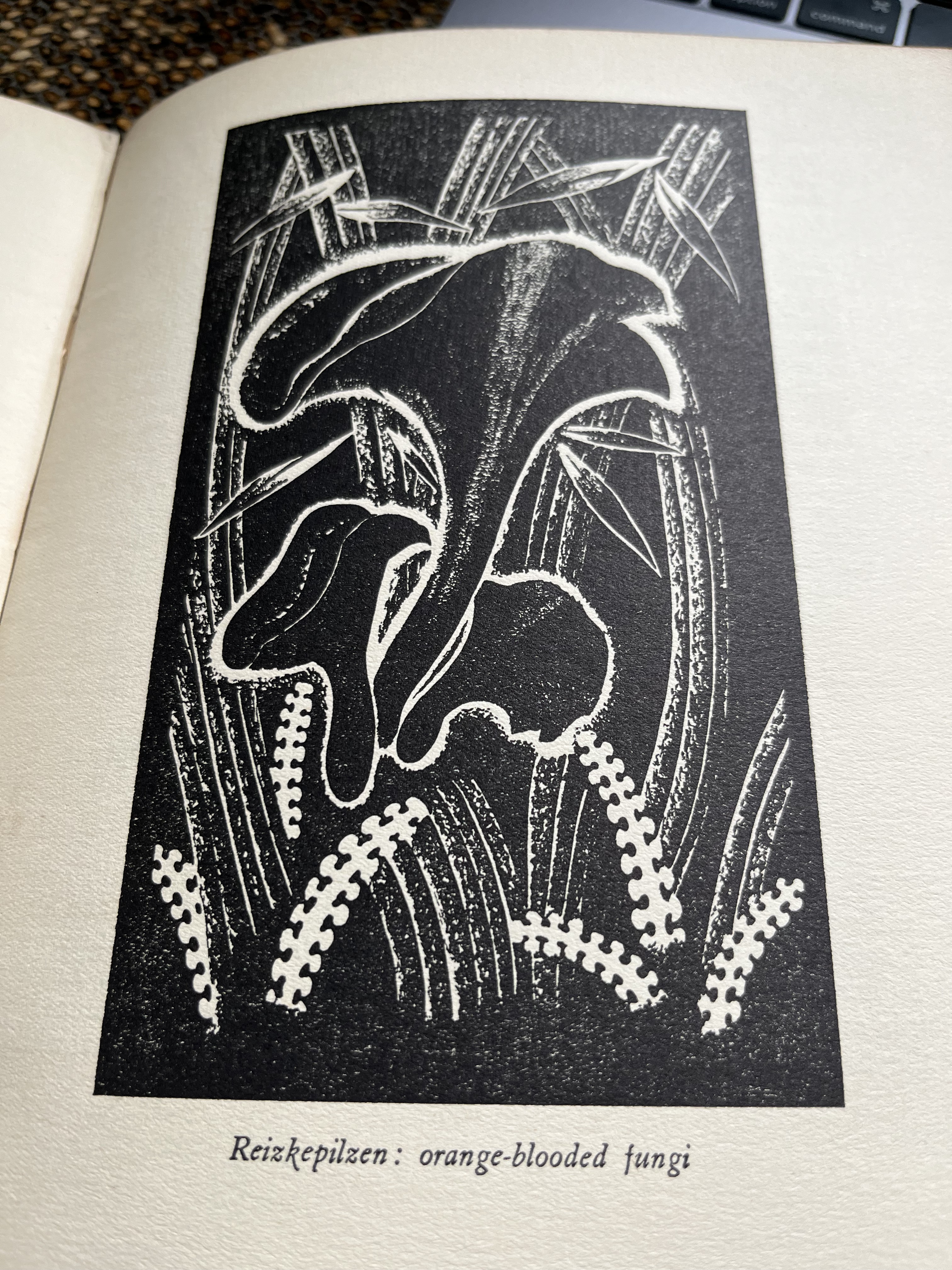
Fungi foraging is much more of a thing now but I remember my grandmother soaking button mushrooms to make sure they were safe to eat and anything other than those white things were never to be countenanced, so I understand David’s comments on this.

By the way, Sarah Gamp was a ‘dissolute, sloppy and generally drunk’ character in Dickens’ Martin Chuzzlewit who always carried an umbrella, so an umbrella became called a Gamp. I am assuming that is what David is referring to.)

I am not sure that ‘most people’ hunt foxes but could tell you a tale of being at a pre-Vienna ball dinner (in my posh days) where talk was of the days they went hunting around the cemeteries of the city….. just saying.

So, thank you David.

I am not sure that I will be doing that many of your recipes (though being a potato fan, Sauerkraut with potato pancakes might feature one day) but it was a great read.

Clubbable Types

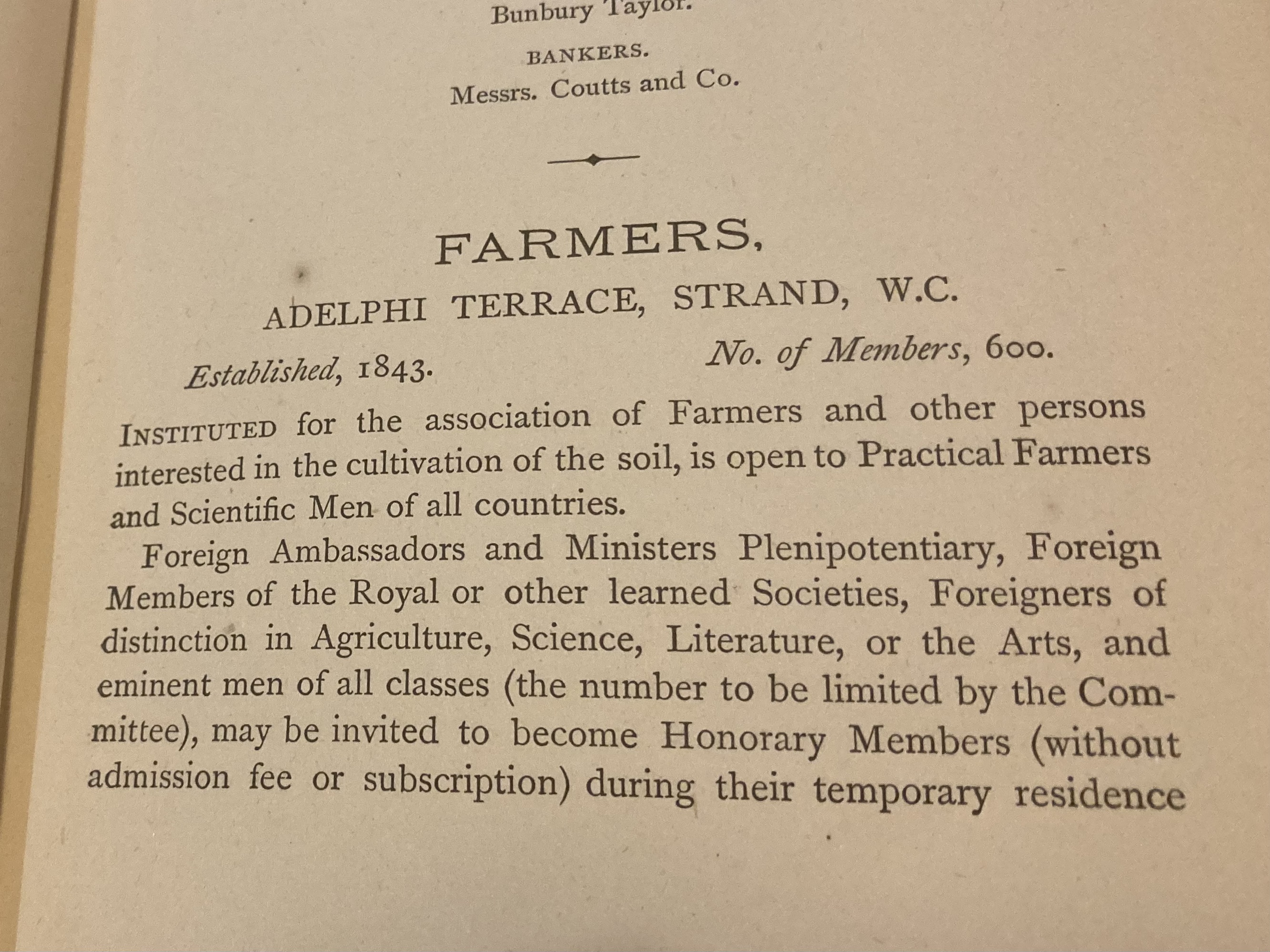
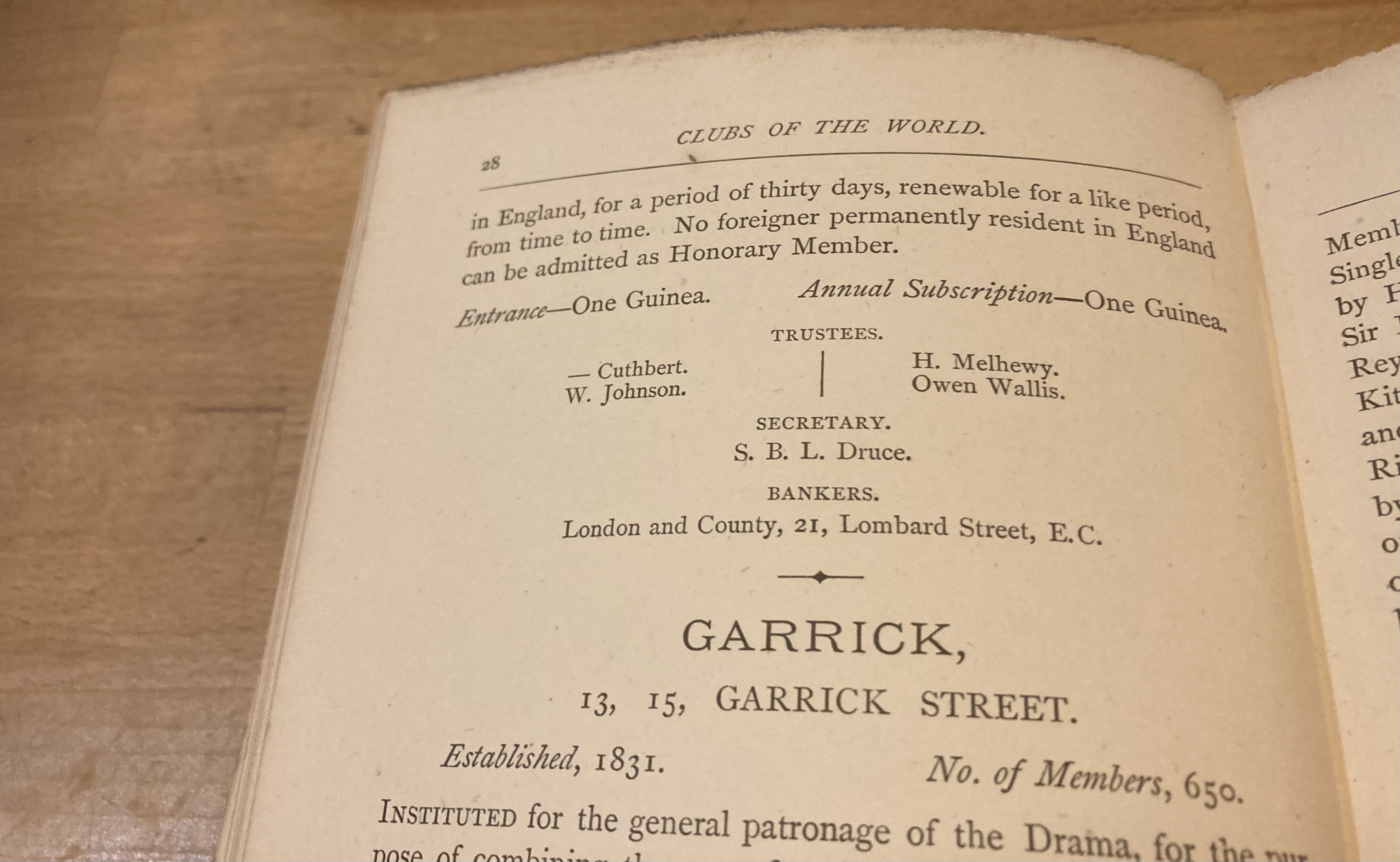
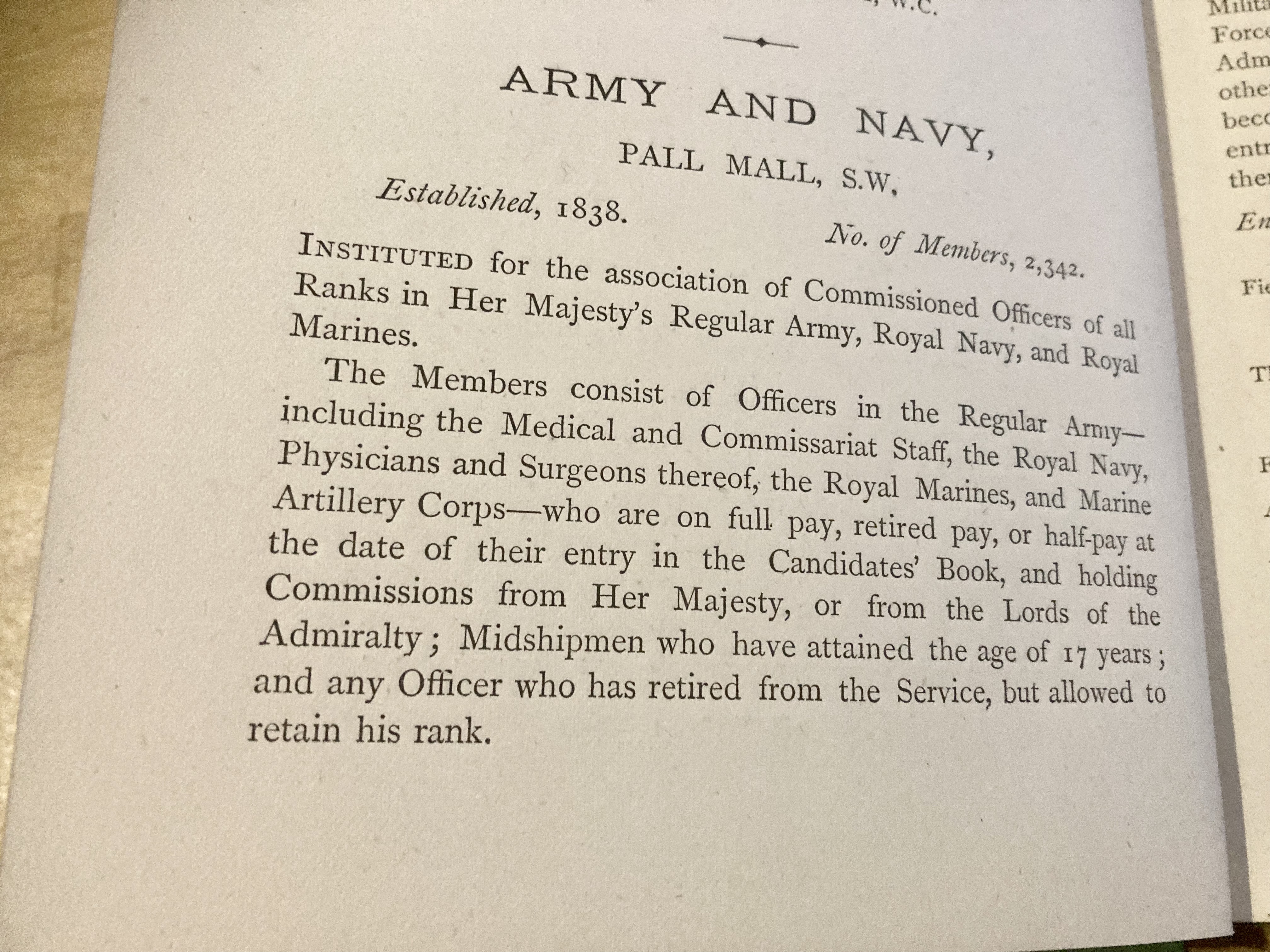
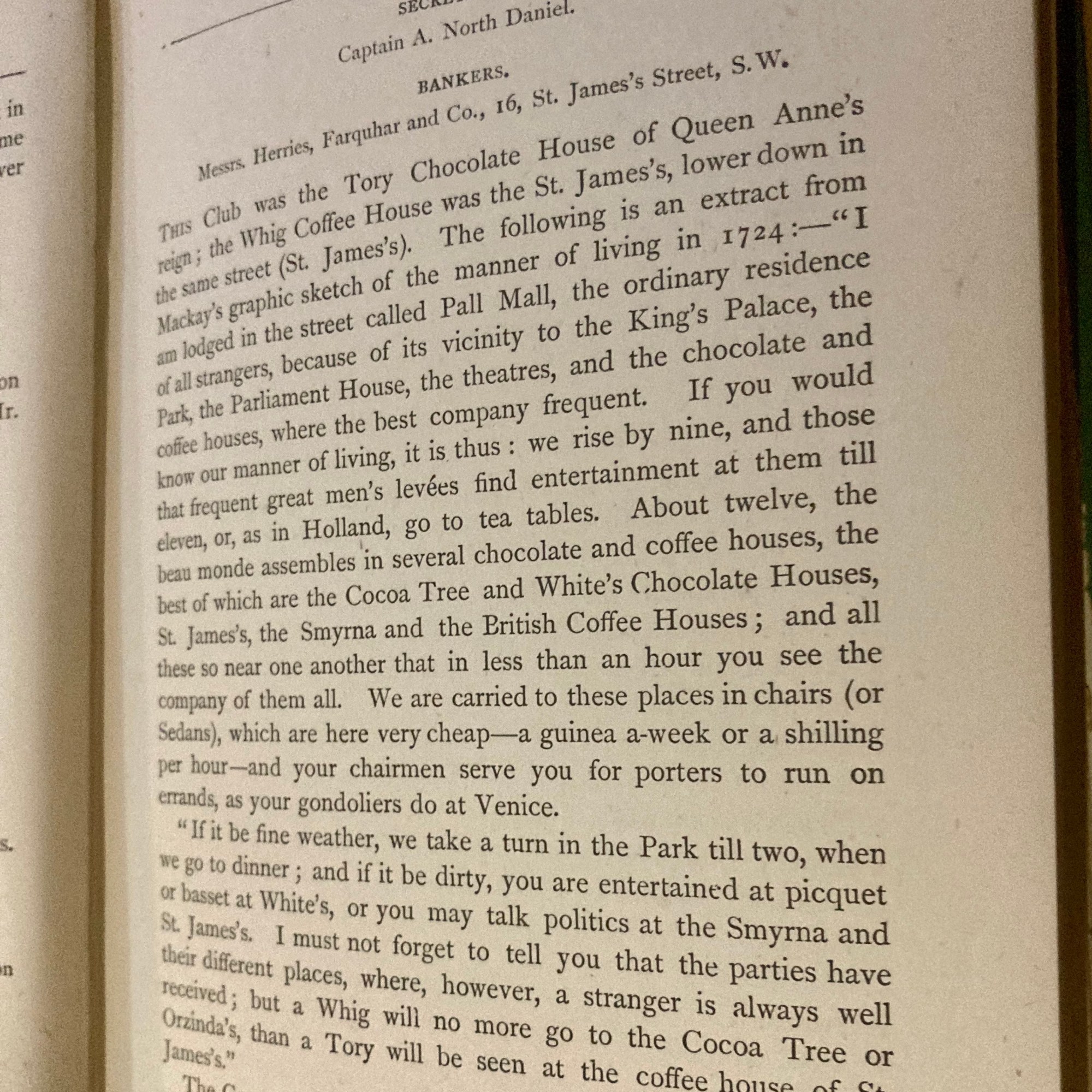
The Directory of Clubs (1887) book came into the shop recently and there is little to say about it except what it says itself on the mores, values and attitudes of the time so I will let it ‘speak’.

Except to say that when I was living in Europe but had work in London, I looked around for a club to join so that I would have an overnight base here.

The Liberal Club would have been convenient but one visit confirmed I was the only woman within sight and the youngest (then) by about 40 years.

It was a half-hearted search on the basis that I did not really want to join the kind of people who sat in leather armchairs with their friends from Eton days and discussed off-shore bank accounts and how the poor should get off their lazy asses and get a job.

I should have stuck with it and joined The University Women’s Club but too late now.

( Mind you, there is a bit of me that could embrace the idea of coming up from the country for a night or two to see a couple of exhibitions, do cocktails and dine with a few friends and visit my dressmaker…..)

According to Wikipedia:

‘Men’s clubs were also a place for gossip. The clubs were designed for communication and the sharing of information. By gossiping, bonds were created which were used to confirm social and gender boundaries. Gossiping helped confirm a man’s identity, both in his community and within society at large. It was often used as a tool to climb the social ladder. It revealed that a man had certain information others did not have. It was also a tool used to demonstrate a man’s masculinity. It established certain gender roles. Men told stories and joked. The times and places a man told stories, gossiped, and shared information were also considered to show a man’s awareness of behaviour and discretion. Clubs were places where men could gossip freely. Gossip was also a tool that led to more practical results in the outside world. There were also rules that governed gossip in the clubs. These rules governed the privacy and secrecy of members. Clubs regulated this form of communication so that it was done in a more acceptable manner.’

And,

‘Discussion of trade or business is usually not allowed in traditional gentlemen’s clubs, although it may hire out its rooms to external organisations for events.’

‘In recent years the advent of mobile working (using phone and email) has placed pressures on the traditional London clubs which frown on, and often ban, the use of mobiles and discourage laptops, indeed any discussion of business matters or ‘work related papers’.’

Mmm, I cannot quite believe that men of business and politics spend their time just discussing the cricket or how best to get the gardener to prune roses.