A Witter About Birds And Books

It has been a while so I think I will gently witter about birds and Oxfam, to get back into the swing of things. 

So, lots of photos coming up and a few tales attached. ( It turns out to be quite hard to pun in text..)

(Mind you once I get back into the flow, for those of you interested in old books, I have a corker.)

So, good illustrations, plates, wood engravings, photos, diagrams, unfolding maps still attached, can add a lot to the value of a book.

Sometimes though the book is in such bad condition, or worth so little, you (well, I ) start to think about taking out the pictures and framing them because they will be worth more.

Now, as I have said before I would not desecrate a book in good condition and worth more than a few quid by ripping out the illustrations – no, I wouldn’t – but sometimes it is tempting.

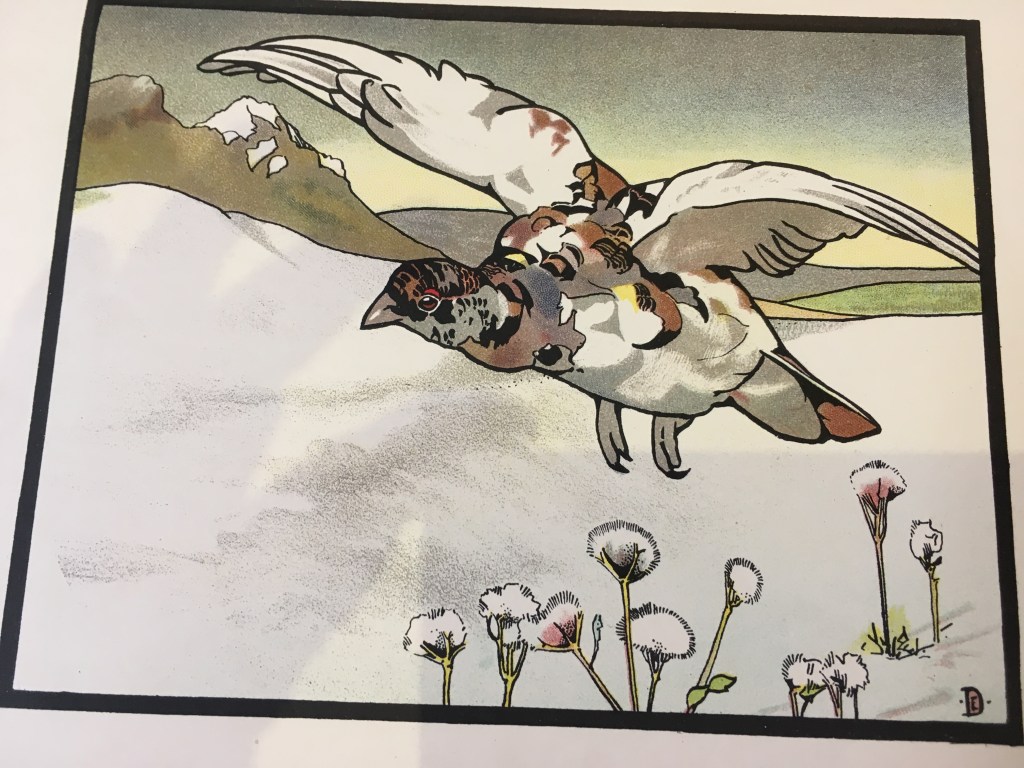
So, a long time ago we got a lovely book, falling apart and the illustrations were by the Detmold twins who went on to be famous artists but at this point were teenagers – yes indeed – and living near London Zoo and they painted after their frequent visits.

The Best Beloved took the plates/paintings/illustrations and framed them – and we sold them for a handsomely bigger profit than we would have made from the badly injured book. 

And this week, I have something which I am handing over to the BB to take apart and frame the images.

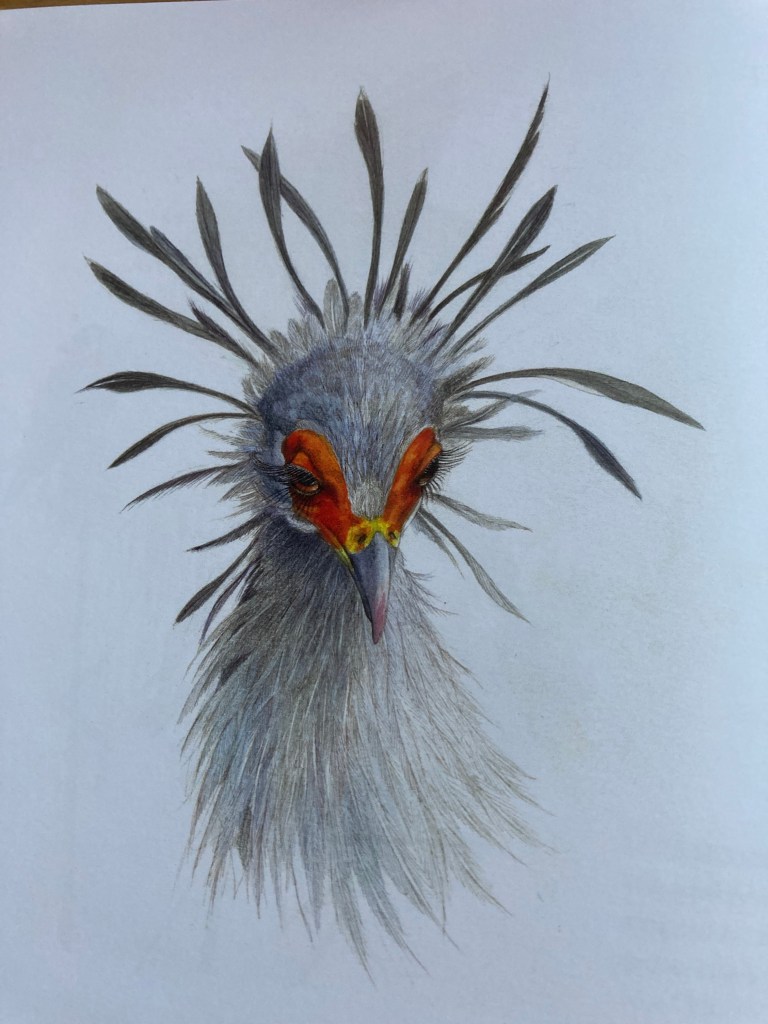
We have had an exhibition catalogue donated and sometimes they are worth quite a bit. Not this one – say £3.99.

But, I think we will be able to sell framed images.

Now tell me that these are not saleable when they are framed – and I am thinking we have at least say six or seven and we can sell them for say £5.99 each.

(And by the way, that is why it is called a Secretary Bird – quills coming out of its head. You have to be of a certain age even to know what a quill is…)

There are a lot of ‘say’s’ in this plan but I am willing to give it a go and see where we get to.

If you are interested, I will let you know.

This next book is a big book with lovely illustrations so I expected it to be worth, say, £5.99 and for someone to buy it. Neither was true. It is worth, according to Abe Books, £0.77p plus postage….

And despite me putting it in the shop at various times, in various displays, it hasn’t sold.

But this is one, I am not willing to break up – yet.

So, next time you are in a second-hand book shop, have a flip through the books that might look all too boring on the outside and find yourself lost in the details of a great engraving or the colour burst and design of an image or a pull out map which will tell you how to get from A to B in Berlin just after the war, or find a pre-Beck underground map – appreciate the delight of art and design in a book.

Hinterland

There is a hinterland to the bookshop not visible to the customers’ naked eye and if you have never volunteered in a charity shop, I am sure you also remain blissfully unaware of what it takes to make the wheels run smoothly.

I am here to enlighten you, just a little bit.

Next door-but-one to our shop is the HSBC and although Oxfam doesn’t bank with them, the counter staff are always happy to give us change – we go in there most days with a £20 notes asking for pound coins, or looking for 50 pennies.

Life on this front got a lot easier when almost everyone used a card to pay, but now cash is creeping back and you would be surprised just how many people want to pay for a £2.49 book with a ten pound note. ( Mostly they want change for car parking.)

We buy them posh biscuits at Christmas as a thank you. ( That’s the bank, not change-hungry customers.)

Next door on the other side is an estate agents and – they hold the shop key for us.

For all the obvious reasons we do not have a key for every volunteer, so we need somewhere for the afternoon volunteer to leave it at the end of the day, and another volunteer to collect it the next morning.

They get thank you biscuits too.

Bet that little bit of administration had not crossed your mind…..

Sometimes we get books donated which fall into the loose ( sometimes very loose) category of erotica.

I know enough about this genre to know that old erotica can be very valuable but most of the time it is not, ( though sometimes rather ‘interesting’) and we can’t/don’t sell it in the shop.

So I collect it, suitably on a top shelf, and when I have a decent pile, I call John who runs the second hand bookshop in town and has fewer qualms than Oxfam, and he gives me a tenner for the lot.

Every little helps…….

We have a jeweller in town who will take our broken gold bracelets and odd silver earrings and give us the scrap value and look at stuff we don’t know how to price and tell us what to do.

Then there is the model railway enthusiast recommended by my hairdresser – see a previous blog – and now needed to work out the latest unearthed bit of models railwaying.

And then there are the volunteers.

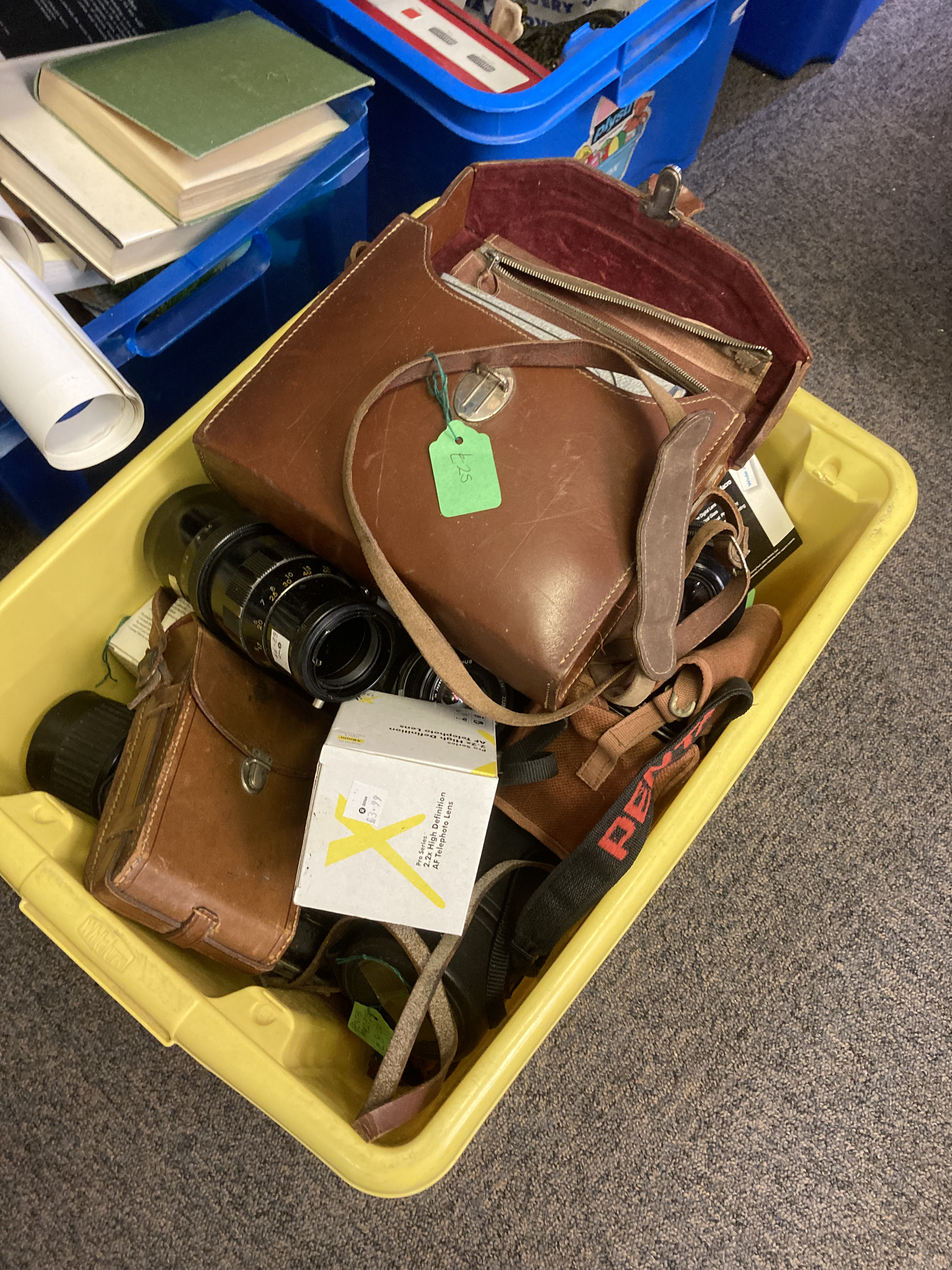
One priced all the cameras and camera equipment we unearthed from under a pricing bench.

We sold nearly everything.

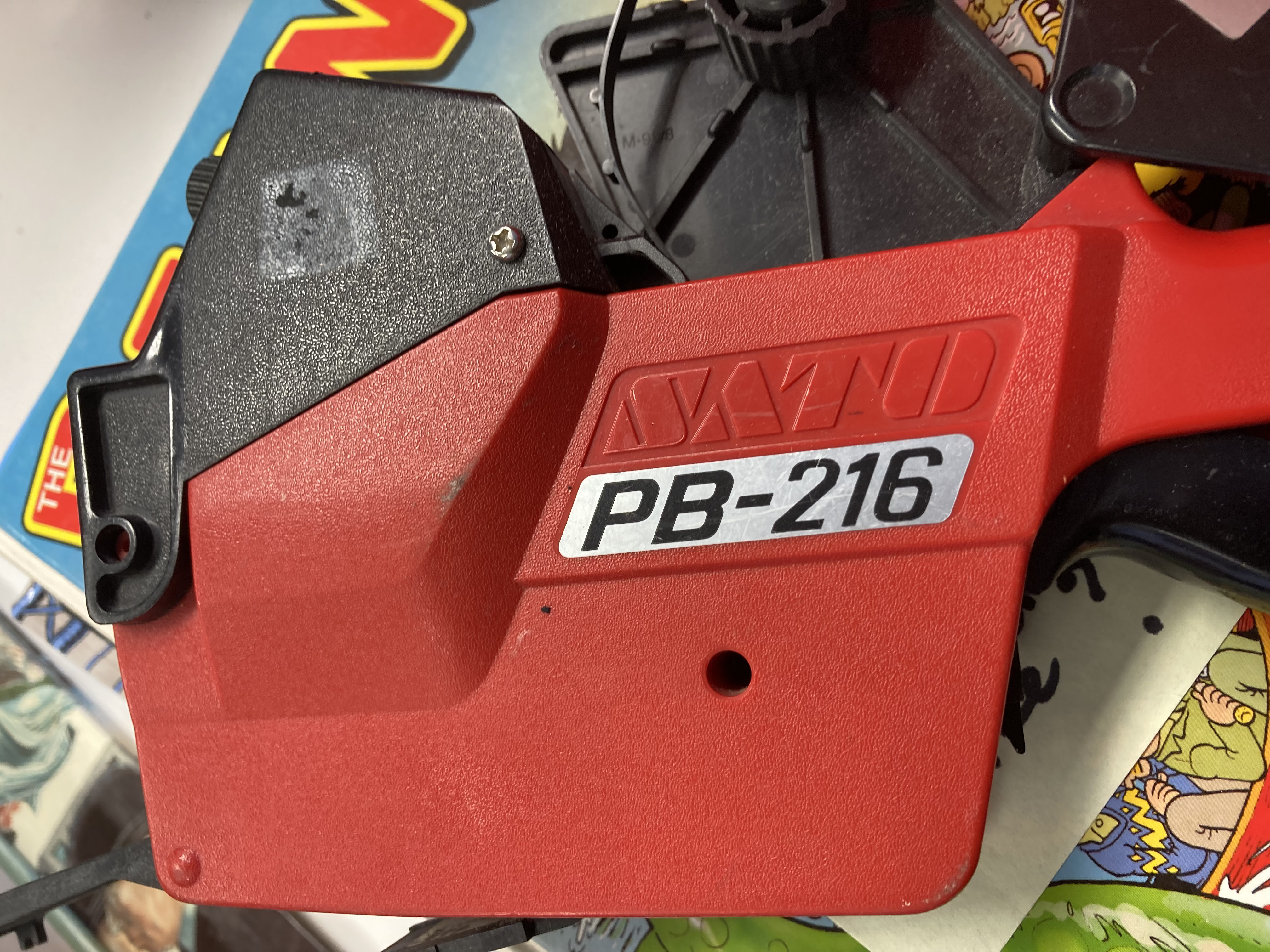
He is the man who also refills the pricing guns.

Now this may not sound like much but these bits of dated technology are the way we get a price on the back of every book.

I am sure there must be a a more up-to-date equivalent, but if so they haven’t reached Oxfam yet.

Everyone I know at the shop has had a go a refilling these things with the rolls of blank labels and, with one or two exceptions, have failed.

David gets them sorted in about five minutes. Part of his hinterland was working for a labelling company once in his past – so that was lucky.

We have a couple of volunteers who are/were engineers and that helps with mantling and dismantling things, and making this bit of kit work with that bit of kit.

The Best Beloved has been know to frame the contents of books falling apart and therefore not saleable but with lovely plates/illustrations.

(And we have a pile of old prints so I need to check whether we can get mounts and cellophane and posh them up a bit so we can sell them.

We could do with someone donating a v-shaped print holder – so if you are having a clear out…)

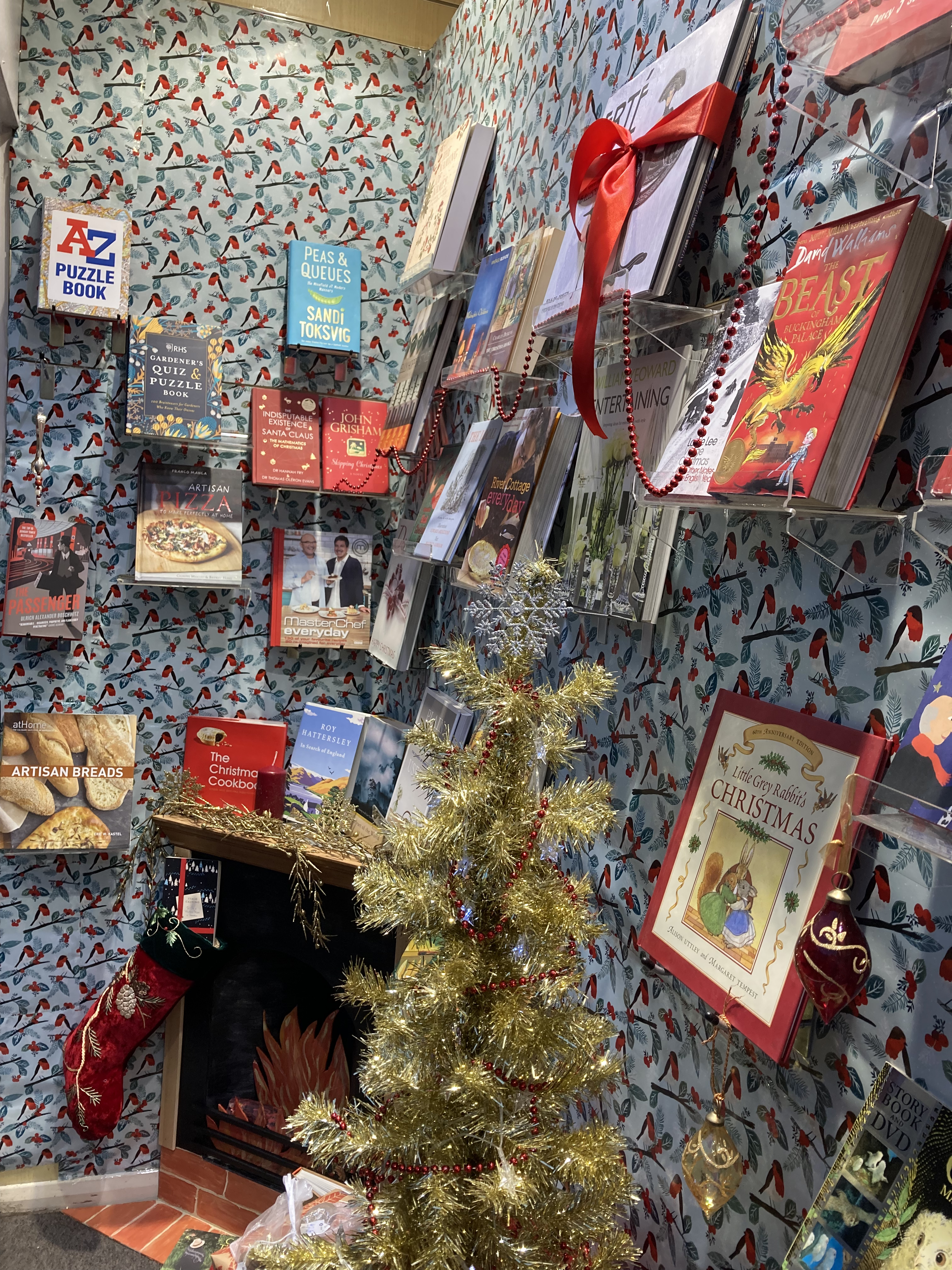
We have a volunteer ( and her husband) who have made a diorama, a fireplace, wallpapered our whole window with wrapping paper…..

We have a few other creative people and one of them has designed some bookmarks.

We had unearthed a load of bookmarks but have used them all up.

And it seems to me that a bookshop should have bookmarks – and some designed by our volunteer and printed at cost by the local printer ( who is very kind) will be a bonus.

We hope to sell them otherwise we will be £100 down ( even at cost). That same nice printer will give me not one invoice for £100, but 10 of £10 so that the takings don’t take one big hit.

Then there was the key man who came to and fro to our shop refining the key cutting so that we didn’t have to change the whole lock. I nod to him and his bulldogs every time I walk past.

And most recent addition to our helpful hinterland is someone who has a hinterland of his own inhabited by coins, banknotes and old maps experts.

But more of that another time.

Catch Up

So, it has been a while so here is a quick dash through the last few weeks before we get back to maps, coins and support networks.

Yes, thank you, we did well in the bookshop over Christmas. Not astounding but certainly enough to keep our heads above water with a certain air of pride.

The manager has permanently gone and we are waiting (with bated breath) for a new one.

And now we are in the dull days of trying to make silk purses out of quite a lot of sows’ ears.

All our best stock was thrown at Christmas and so we are left with the rather tired and weary – though we still get a few delights.

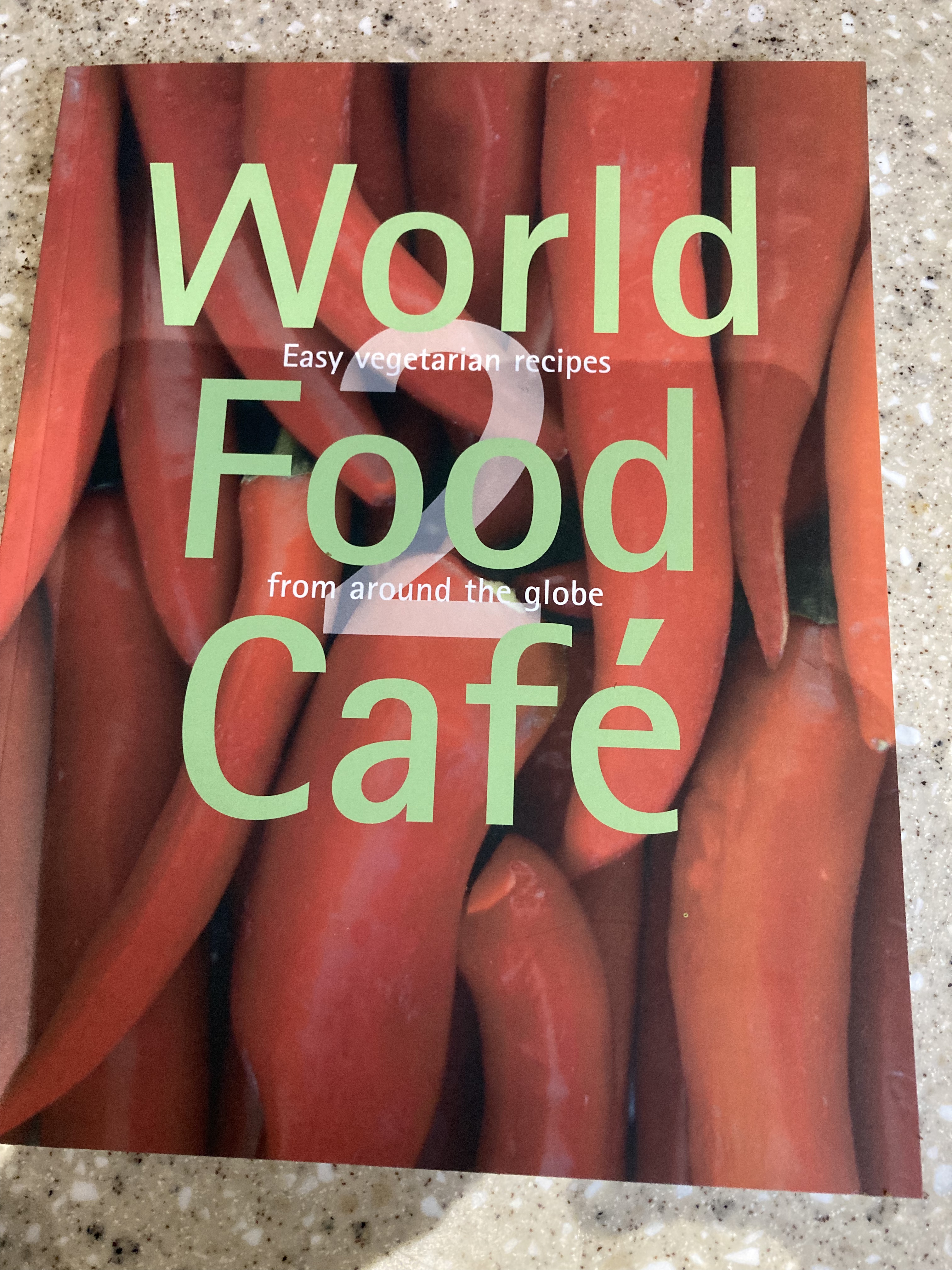
It is not that we don’t get donations, it is just that popular though vegetarianism is, no one wants to buy a dog-eared cookery book from the 1990s – where is an Ottolenghi when you need several?

Courtesy of central Oxfam, we were allocated several boxes of unsold Spur’s merchandise. Yes, the football club Tottenham Hotspur.

Why anyone thought the Spurs baby grows and woolly hats and picture frames would sell in a bookshop in Petersfield is beyond me ( they didn’t).

But such is their faith that we have just taken delivery of another two large boxes….

And there was one cupboard left to clear  – accessible once we got the manager’s keys back.

In it we found a full father Christmas outfit and decorations – not much use locked away until after the festive season.

And why the key to this was kept on the manager’s personal bunch of keys, well your guess is as good as mine.

There was a Hornby train set, a copy of the Petersfield post from 2009, lots of old Oxfam publicity material, a fine wood plane, another old map – yes indeed – two whisks and a mixing bowl, a used artist’s palette, a flat cap, marching compass, a stash of pendants, two silver napkin rings, a pair of new kitchen taps and a night vision monocular.

There was a time when I railed against the manager’s hoarding but now I am disappointed that we might be getting to the end of treasure hunting ( and selling.)

Mind you we do have a lot of cupboard space.

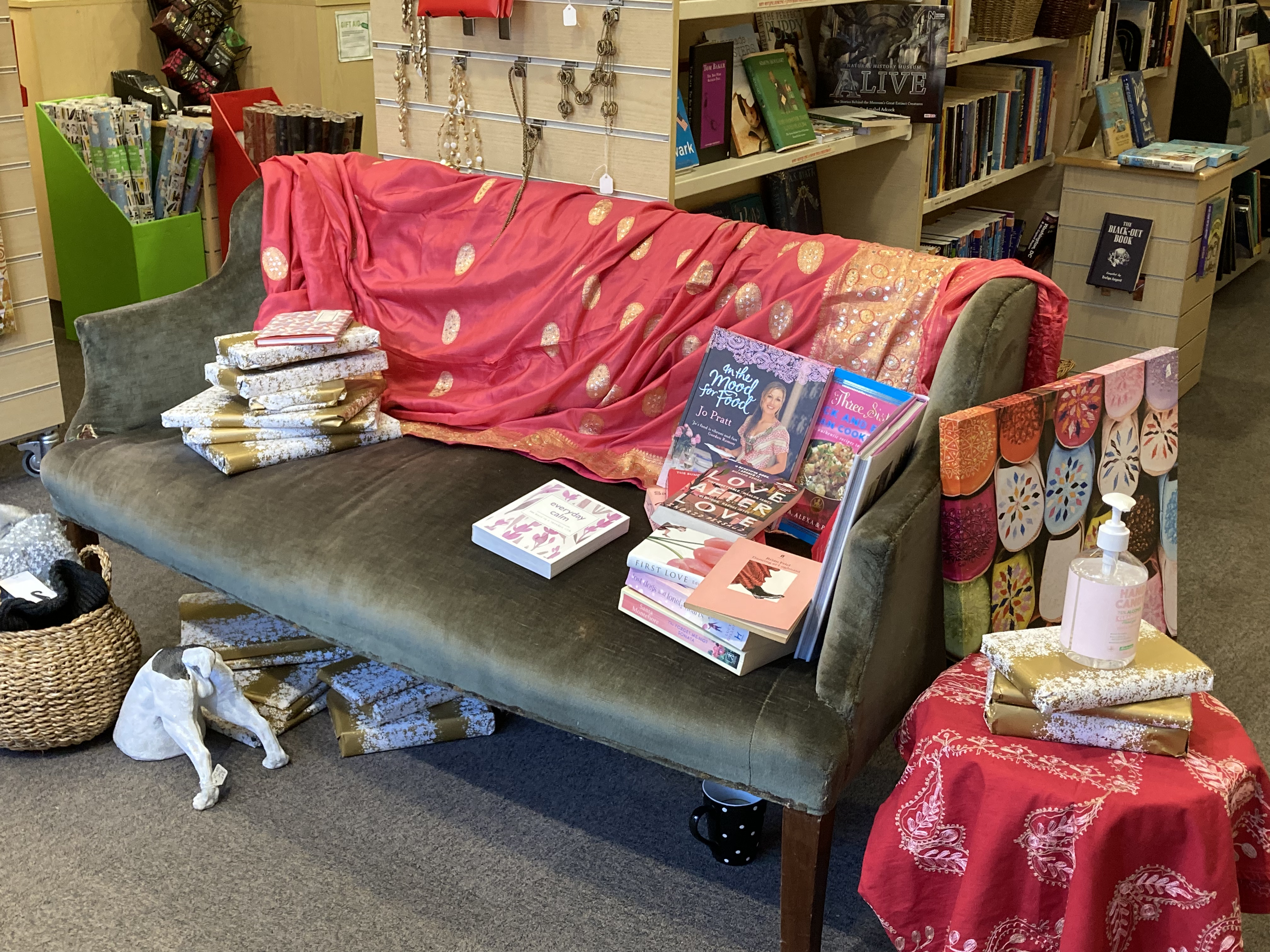
Oxfam Needs a Green Sofa

I have an Oxfam plan  – but it may well not work out in practice so I am putting it out to you to imagine – because there will be only one photo. 

(Of course if it works, there will be lots more photos in another blog, or several….)

Assiduous reader, if you are still with me, you may well know that we have a window and table display to sort out.

The window lasts for two weeks but the table needs changing every week – you need books and extra supplies to keep them both filled when pesky customers start buying your display.

But this idea needs only one, or two, or a few books.

So, you walk into the shop and see a slightly battered old green Edwardian sofa.

It would be cleaner than it is now – but still not a pristine sofa.

Now, every week you would see a tableau.

Someone has just got up to make a cup of tea, go to the loo, answer the door, or whatever.

Their ‘life’ is left behind on the the sofa with room for a customer(s) to sit down if they need to.

( Our still-away cat has always refused to have sitting opportunities in the shop – one of the reasons why this might not work  –  but we have a demographic which appreciates the chance to rest while looking at books.)

You need to know that all the books mentioned are open and laid down – the sofa sitter has just put them down when called away.

So, back to your view of the sofa. These area few of the tableaus you might see.

You see some knitting, a cardigan and a pile of 1950s magazines.

There is a dog lead, a winter jacket, a bag of dog treats and a book on dog training.

Some wrapped Christmas presents, some sellotape, some Christmas cards and ’Twas The Night Before Christmas book or Its A Wonderful Life DVD.

And while I am on the festive theme, a dinner jacket and women’s sparkly bolero thrown over the back of the sofa, with her shoes discarded too. You could have a book on hangover cures…

A basket of clothes needing ironing, an iron (we still have four for those of you who have been reading for a while) and a copy of 50 Shades of Grey or The Handmaid’s Tale or The Female Eunuch.

A pair of binoculars, muddy boots on a newspaper sheet, a camera, a notebook and a book on bird-watching.

An Oxfam throw, a mug, packet of lemsip, a hot water bottle and a copy of Cold Comfort Farm.

Another Oxfam throw and some chocolate. DVDs such as when Harry Met Sally, Brief Encounter, or other ‘love’ films, and a copy of Graeme Green’s The End of the Affair.

A pile of old leather-bound books, a pair of slippers and a pipe.

A waistcoat and posh walking stick, maybe a hat, and a copy of a P G Wodehouse.

Laptop, notebook and phone and a novel – should have been working from home but got a bit distracted….

Cookery book, pinafore, shopping list, table plan, some napkins, and a note saying, ‘ You can’t get Yotam Ottolenghi ingredients in Petersfield.’

I think that is enough for now, but I have a longer list. Of course, I do.

We shall see if this ever works but I really hope it does.

Unearthed Treasures

All gold mines must run out in the end, but we have still got some nuggets found in the dusty nooks and corners of the Oxfam shop’s upstairs rooms.

I could go on about how much this massive clear out is affecting us volunteers – who would have previously heard the sound of hoovering on a Wednesday afternoon? Who would have thought people would been keen to clean down the benches on a Friday afternoon or taken some mugs home to go through the dishwasher – and indeed who would have expected someone to say they were going to source a cafetière to make coffee a more palatable option……?

We mice are on a roll.

Now, to the uninitiated the back rooms of the shop would still look a chaotic mess, but to those of us who have been initiated it looks organised, tidy, under control, managed, purposeful  – and hoovered.

But enough of that, this is about more unearthed treasures.

We have amongst our number, a philatelist and when I unearthed a box of stamps and stamp albums, he was on my speed dial.

He took them home and I heard nothing more about it – though I did find a returned bag of worthless stamps which are now with out decoupage artist. I mentioned her before in case you need to back-track a couple of blogs.

Anyway, today he came in for a shift on the till. I was a bit (just a bit) cock-a-hoop because we have taken £600 on Tuesday and Wednesday (combined, let’s not get carried away) so it means we are again well on (my) target to get more than £1,000 for the week. 

But the takings for this morning were only £86, and I was a bit downbeat. 

‘I have got the money I have raised from selling those other stamps and it will go in the till this afternoon,’ he said.

I decided to wait until tomorrow to see the final total for today, so told him not to tell me how much.

I am pretty sure he thinks I am an idiot, or at the very least and most polite, suffering from a  bout of bizarre behaviour but I am going to wake up tomorrow with a small buzz of anticipation.

So the unearthed stamps have done their job.

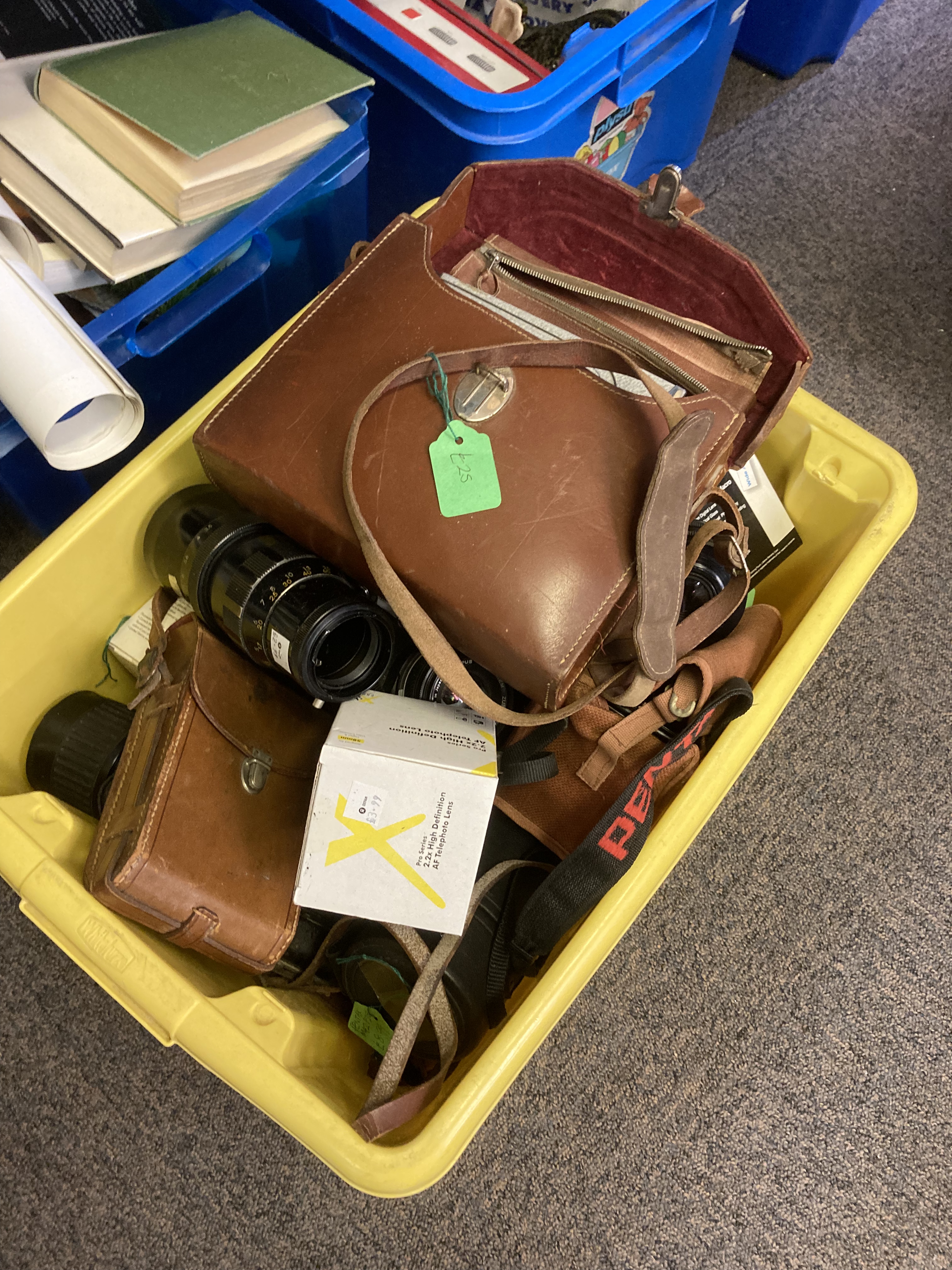
Meanwhile as they say, I also unearthed four boxes of old and dated cameras. This is one of them (now dusted.)

And by unearthed, I mean some were under a bench behind yet another box of padded envelopes ( we could create a whole extensive ward of padded cells if needed), more under another bench behind three boxes of clarinet music….

Anyway, another volunteer does corporate filming and so knows his way around cameras.

He also knows about lighting so has fixed the lamps used for photographing the clothes we put online and has sourced some new special bulbs which had previously been declared as ‘too expensive’ to buy – they are £12 each. 

I have ordered two. Yes, me on no authority except that when we are taking £1400 a week, it makes sense to pay £24 to get the photos looking good. And yes, I am an unrepentant mouse.

So, back to the cameras.

He looked them over and knew what he was talking about.

Most were just those small cameras we all had for holiday snaps and are worthless, but some are lovely delights and some are worth putting on the internet.

The ones going in the shop are more attractive artefacts than anything a photographer would want to use, but when they are this lovely who cares?

I think this is a Kodak Junior?

So, we are doing a window on photography with books and the worthless camera stuff, and a table with the pretty delights we can sell. It is not done yet so if you want photos you will have to settle for these for now.

The cine camera works and has its own leather case and is yours for about £25…..

Meanwhile, under a previously mentioned stack of chairs, I found a sealed cardboard box – either never opened or opened and re-taped up.

Either way, inside was a whole collection of the postcards of first day stamp covers.

They are all pristine and absolutely lovely.

We have them out for sale at 5 for £1 and I think that maybe too cheap but hey ho, they will make money for Oxfam which they certainly were not going to do in a sealed cardboard box, under some chairs, upstairs.

When I was trying to corral all the padded envelopes – and do you know I found some in the electricity meter cupboard the other day – I wanted to put them on the top of some shelving.

We use padded envelopes to send out stuff bought online – but not by the box load, so they needed to be labelled, easily found and stored out of the way. Simples you’d have thought….

On the aforementioned top of the shelving, it turned out there were about 20 Oxfam produced cookery books.

They were published in 2010 so part of our new stock for that year, and maybe 2011. And probably not since.

So they could have been up there for a decade…..

But they were fine – if a little dusty – and though their barcode didn’t register on the till, we did not let that deter us.

I put them out on a bench and left a note to offer them to volunteers – a small thank you for all they have been doing – include hoovering.

When everyone who wanted one had taken one, we priced the rest and put them out for sale. They have sold.

Putting The Pieces Together

This is a blog I wrote in November 2019 and apparently forgot to post.If you are interested in books, it will keep you going until more news of what is happening at the moment. It is not a bad read – though I say it myself and might well be wrong….

I have before complained about someone buying the very artefact I have built an Oxfam display around.

I know I have to sell it, but sometimes I wish that art gallery practice of just putting a red dot on it until we are ready to dismantle the display could operate – perhaps it could but I have never quite had the nerve.

This week artefact ‘stealing’ happened twice on one day.

Yes, really.

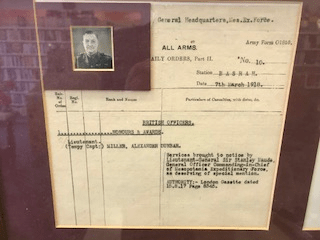
The table was, of course, a display of war and poppies. And recently someone donated a picture frame with a photo of a soldier, a notice of his bravery at Basra in 1917 and a very faded ( you would need a magnifying glass and patience to read it) letter presumably relating to what he had done.

I had piled up books and this picture on the table ready to arrange them into a display and gone out to go to get some milk.

Now, it is a rule that for Oxfam bookshop customers, there is nothing on the carefully arranged shelves as interesting as a haphazard, not yet displayed pile of books and stuff.

So, I was not entirely surprised when I came back to find my brilliant and unflappable colleague reporting that someone wanted to buy the ‘picture.’

Upstairs another good colleague was rootling around on Google to try and find mention of this soldier and therefore any idea if he was a little bit famous.

But nothing – no wikipedia, nothing except a mention in the London Gazette.

We did realise that to anyone from his family doing ancestor research, this would be a valuable item but tracking him down and then members of his extended family doing research would take a lot of time – time we don’t have lying around.

And, there is a bird in the hand argument.

So I went downstairs to talk to my colleague who had the customer’s number and my Best Beloved had called in, and was looking at the image.

Between us, we decided it was not a lot of monetary value but we would try say £9.99 and settle for £5.99 if haggled into it.

But my unflappable and brilliant colleague called him up and ignoring the collective ‘wisdom’, told the customer he could have it as the special price of £15. 

Ten minutes later he had called and collected it.

That afternoon, I was discussing the next window display with a good colleague.

Since our special window display person is currently indisposed, the role has fallen to me – this, it turns out was not a role I had to fight off all comers to take on.

Anyway, trying to maintain her high standards is proving a challenge and the current window was a good idea but not a success.

My colleague suggested using a small table with a half done jigsaw on it and lots of more puzzles on the wall along with puzzle books.

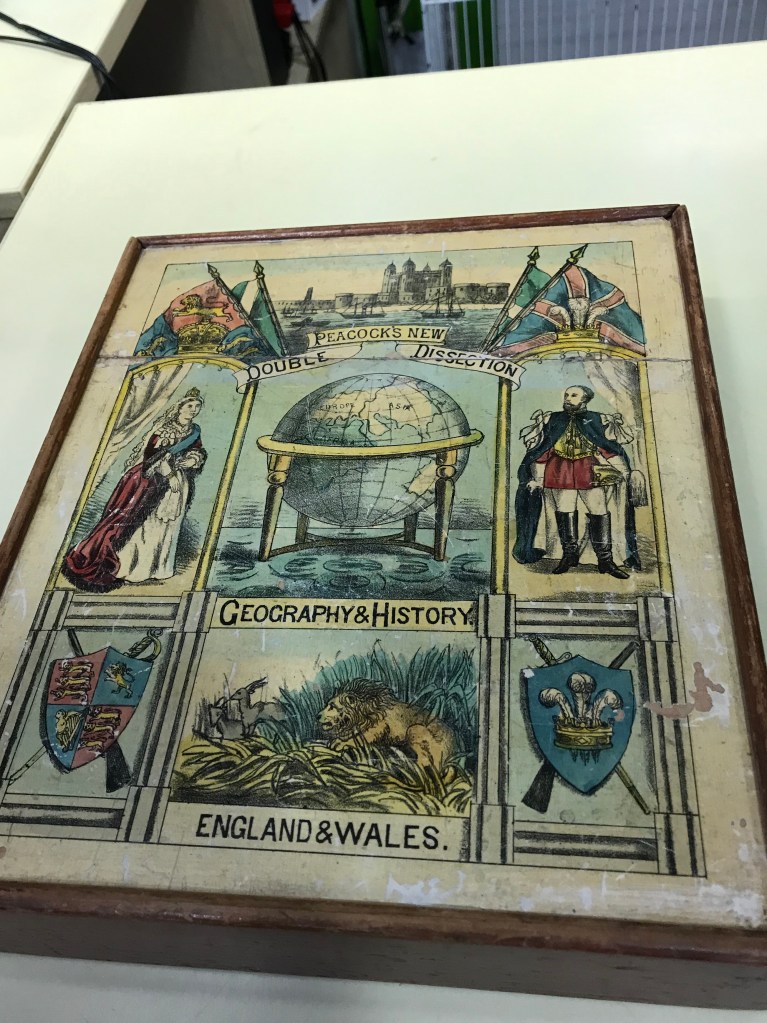
That reminded me that I had an old jigsaw on a shelf somewhere, waiting to be looked at, and how nice would that be half done with its wooden box propped up.

This was a puzzle with the counties of England and Wales on one side and the kings and queens of England on the other ( up to Edward VII if you are interested.)

I took to it my afternoon colleague on the till and asked if he would put it together to see if we had all the pieces.

The pieces were all in the shape of the counties so apart from the straight edges, none of the pieces were traditional jigsaw shapes.

I left him to it and then, needing some rubber gloves to clean silver, more on that some other time, I nipped out.

As I was leaving the shop, a couple of customers were talking to my colleague about the jigsaw.

When I got back, he had finished and all the pieces were there.

The customers had gone, but one of them had asked that when we found out how much it was worth, could he have first refusal.

So, again, I was upstairs Googling about to try and find out the price.

There was one which was the Scotland equivalent and someone was asking £600 for it but I did not think that was going to be realistic.

There was another on ebay for £40 but it had pieces missing – bound to severely affect the price.

Then I found an auction site which was willing to reveal the hammer price. Now, it was a lot with other things involved so I did some calculations and discussed it with my jigsaw-doing colleague and we thought £100.

But, inspired by my morning colleague’s efforts, I called the customer and said, ‘£150.’

He said, ‘£100.’

I said, ‘Cut the difference and £130’

He said, ‘I’ll be round in three minutes.’

And he was.

Of course, the displays will go on but sometimes its a shame not to have the A list stars on show.

A therapeutic clear out

I am back in Oxfam (temporarily) and it is lovely – filling an Oxfam-shaped hole in my life – and below are some of the reasons why.

Now, I am a probably a bit over-excited so the list will be a long read, actually several long reads, so might put off all but the most hardened readers. 

(And there are no interesting photos but there will be in the next post, promise.)

Please don’t worry if you are not that hardened, I will never know that you went off to take up knitting.

So, the shop was looking rather thin, tired and sad.

Upstairs, there were crates of unlooked-at old books because no one had checked their value and put them out or online, the shelves were stuffed but chaotic, there was stuff /rubbish everywhere – stashed down the side of lockers, on the high shelves, under  stacks of chairs, under sorting benches, on the high tops of shelves, down the sides of cupboards, and and …..

We had alway known that, but with the agreement of the amazing new area manager, more of her in later instalments, we could clear out – and I mean really clear out.

Meanwhile donations had been turned away because those that were there, were not being sorted and shelved – and you can’t do that because who knows what value that turned away donation would have had.

And the takings were down to about £700 to £850 with weeks when only £600-something was the order of the day.

Now, of course, there were the pandemic and lockdowns to consider – and with the new ‘freedoms’ (don’t get me started on the handling of all this) bookshop life is easier – but even so….

This is only the pre-amble so again, you might want to heave a sigh and turn away. But if you stick with me there is a the (temporary) happy ending.

The shop is now looking fat, sleek and refreshed and last week we took more than £1200.

I will come back to that fattening later, but for now, upstairs – the behind-the-scenes work.

The shop manager is a hoarder and while the cat is away us mice have been having a therapeutic clear out.

We found whilst clearing/cleaning out for example ( not an exhaustive list by any means) :

Four irons and two ironing boards – we are a bookshop. 

We do indeed sell clothes online but our amazing online-clothes person takes them home to wash and iron, and even if she didn’t, we wouldn’t need four irons and two ironing boards. Even clothes shops have steamers, not irons, so goodness knows how long they have been stuffed down the side of those lockers.

Size cubes dating from 2004 – we know that because 2004 was the year of the Boxing Day Tsunami and that was the year we turned into a bookshop. 

Size cubes in case you are wondering, are those little bits of plastic that are on coat hangers to tell you that something is size 10 (I wish I was looking at those), 12, 14, 16 or XL or whatever. They are now on their way to an Oxfam clothes shop.

Three till drawers for tills that no longer exist in Oxfam, they are in the re-cycling bin.

Left-over red nose stuff from 2017 – apparently you need to take those back to Sainsbury’s and are in my car boot ready to do just that.

A broken hoover – we have two working others.

It has gone to the local tip thanks to a volunteer 

And another volunteer is taking one of the ironing boards – the one with no cover and just, just in case we need an ironing board in a bookshop, we kept one.

She has also taken a box of old postcards to be valued by a local auction house.

That box was on a shelf she decided to have a look at. 

They had been there as long as she could remember. They had been ignored for say, oh I don’t know, several years. Certainly all the eight years I had been working there and thought it was a box of official Oxfam paperwork – after all it was on that shelf.

Two large and heavy boxes of foreign coins – we can send them to be re-used in some way but have yet to find out where and how – but I should point out, we are volunteers holding the fort and this is not top of our list. Anyone who has any ideas, please let me know.

Five boxes of mobile phones – now we know there was an Oxfam contract to re-cycle these and I learned that all the gold medals at this year’s Olympics we made from gold from old mobile phones.

And they had been sitting there for say, let’s say accumulating, for several years. 

At the moment, there is a hiatus I understand, between contracts, so they are sorted, boxed up, properly stored and ready to go when we know where they need to go.

There is a stack of chairs for shop meetings that never happen –  we don’t have shop meetings because they ‘are a waste of time’ so when on a whim, I decided to pull them out and hoover – we still have two – I discovered another box full of old postcards in amongst the deep, deep dust and rather surprisingly, another box of light bulbs – we have about 40 of them found in nooks and corners and now in one place.

They, the postcards not the light bulbs, will be part of a lovely display on the newly installed display table.

So, that is enough for now but stayed tuned for how we mice have in the words of our new area manager – and there will be more about her – have started ‘breathing and making the shop sing.’

Chafing with Frank

It has been a while since I sat down to write something which wasn’t an application for money.

Before you think that Deepest Sussex and its reluctant housewife have been plunged into penury, roasting badgers and growing lentils, I would like to say that this is money for a work project.

And that is something I have not been able to say for some years.

So along with all the usual stuff of life I, maybe, just maybe, be about to embark on a lovely, sparkly new work project- but there is many a slip between cup and research funding so will be biding my time and just hoping.

Meanwhile, the Oxfam bookshop carries on and I cook, and the two sometimes come together.

The aga is back on – though the weather has hardly justified it up until the last few days, I don’t care.

And when stuck on how to construct just the right paragraph for the money proposal, I will always go and rustle up a soup, or a supper, and sometimes will rustle among the dead geraniums and prop up a dahlia or two.

I have a lot of cook books and they fall into categories:

Ones I use a lot

Ones I use one recipe from 

Ones I used to use a lot

Ones I would like to cook from but am intimidated by ( see also Yotam Ottalenghi’s Guardian recipes for which buying the ingredients in Petersfield is a hopeless task. Think Odysseus or The Lord of the Rings in terms of difficulty and length of mission.)

Impulse buys from Oxfam – which tend to sit there for a bit then get taken back to the shop and re-sold.

And a grey folder with all those recipes I have ripped out of magazines, sent to be by my mother, scrawled on a envelope by a friend, wrestled from a chef in a restaurant…..

But I am a sucker for a cookery book and a great book title.

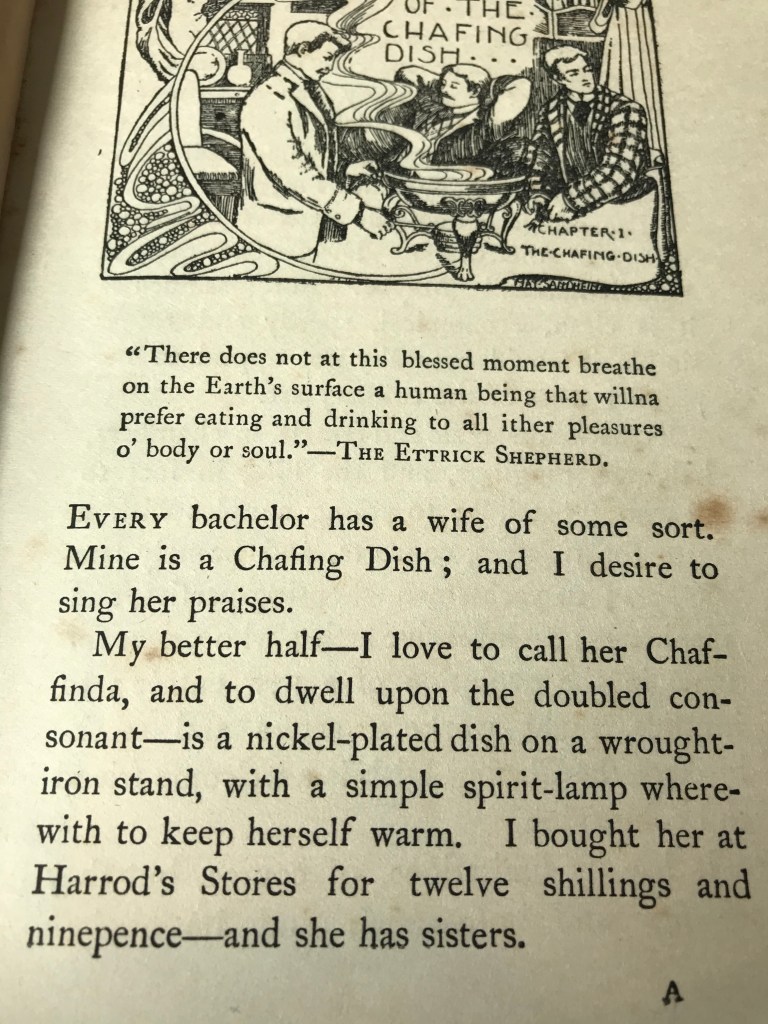
This is written by a man, Frank Schloesser, and brought to the public by the delightfully named publishers Gay and Bird in 1905.

( Apparently they published 113 books which included Frank’s other book, The Greedy Book, but also such interesting titles as Japanese Girls and Women, The Arab, The Horse Of The Future, Penelope’s Irish Experience and then her Experiences in Scotland – the mind boggles.

My favourite title is a book by one John Cutler: On Passing Off. The Illegal Substitution Of The Goods Of One Trader For The Goods Of Another Trader. Splendid! )

Back to Frank and his plans to convert the world to cooking with chafing dishes.

( From Wikipedia:

A chafing dish (from the French chauffer, “to make warm”) is a kind of portable grate raised on a tripod, originally heated with charcoal in a brazier, and used for foods that require gentle cooking, away from the “fierce” heat of direct flames. The chafing dish could be used at table or provided with a cover for keeping food warm on a buffet. Double dishes that provide a protective water jacket are known as bains-marie and help keep delicate foods, such as fish, warm while preventing overcooking.)

He explains that a chafing dish means that you have more in the way of tasty morsels than huge helpings of food, and quotes a Chinese proverb which says that ‘most men dig their graves with their teeth, meaning thereby that we all eat too much. This is awfully true and sad and undeniable, and avoidable.’

I have to say it is both undeniable in our house and we haven’t got round to the avoidable bit yet.

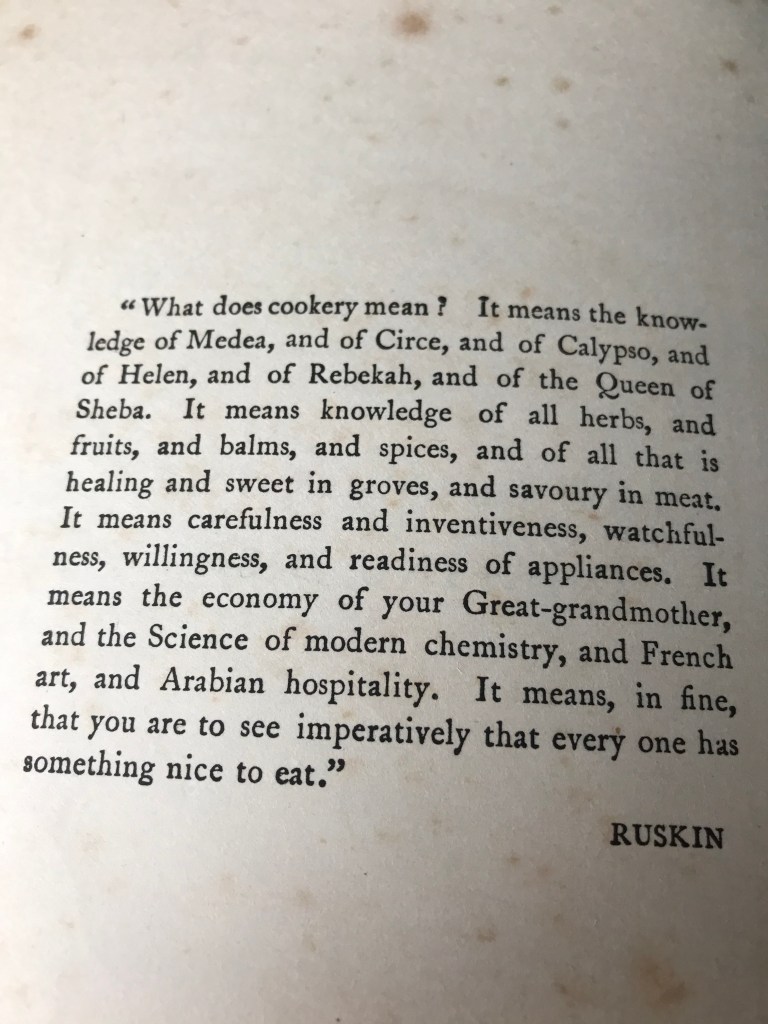
He doesn’t take his light suppers lightly and quotes Ruskin ( who knew Ruskin knew anything about domestic cookery.)

There is a chapter on Preliminaries which includes not only the recipe for Jellied Ham but an idea of what you should eat before and after different kinds of theatre experiences:

I am at a loss to know whether and East Room menu might be Indian food? And as for an A.B.C shop, I need a friendly food historian to tell me.

And Frank is a friendly food historian. His recipes are peppered with interesting historical references.

But he is also stern:

‘ By the way, in cooking soups, as indeed in all Chafing-Dish cookery, I cannot too earnestly insist upon the use of wooden spoons for all stirring manipulations. Metal spoons, even silver, are abhorrent to the good cook.’ 

And insists on ‘ the most scrupulous cleanliness…..

‘The Chafist who neglects his apparatuses unworthy of the high mission with which he is charged, and deserves the appellation of the younger son of Archidamus III, King of Sparta.Cleanliness is next to all manner of things in this dusty world of ours, and absolutely nothing conduces more to the enjoyment of a meal that one has cooked oneself than the knowledge that everything is spick and span, and that one has contributed oneself thereto by a little extra care and forethought.’

( And, no I have no idea what Achidamus’s son’s appellation was.)

I have looked through Frank’s recipes and although I am tempted by some including The Alderman’s Walk ‘a very old English delicacy, the most exquisite portions of the most exquisite joint in Cookerydom, and so called because, at City dinners of our grandfather’s times, it is alleged to have been reserved for the Aldermen. ( It is a saddle of Southdown mutton done in a sauce with bread.)

I am less entranced by the idea of eels with nettles though Frank assures me that ‘they give a peculiar zest to the dish which is quite pleasant.’

As for Frank himself, I can find nothing about him. 

I know he went on to the write The Greedy Book and they are both still around in second hand book sites, but of Frank there is nothing in Wikipedia or easily found.

I am sure there are food historians who know all about his Gallimaufrey and Ham in Hades, and love his short essay on the merits and otherwise of sauces, and could tell me everything from his boyhood onwards and if so, could they let me know.

Frank and I are cookery friends though I am not about to invest in a chafing dish however a useful present it would be.


Inside A Book

One of the things about working in the Oxfam bookshop is that you don’t often get chance to really look at the books.

For a start, there is always a mountain of incoming donations to sort, and sift, assign, and price, and display.

Then there are the collections we need to build up to make a good table or window display – if the title fits put it in the box and keep on going.

And then there is making the shop look good, and then, and then, and then.

So, looking in detail at books is a rare pleasure and often outside the shift hours.

This is the story of one book and the people involved in it – at least as far as I can find out.

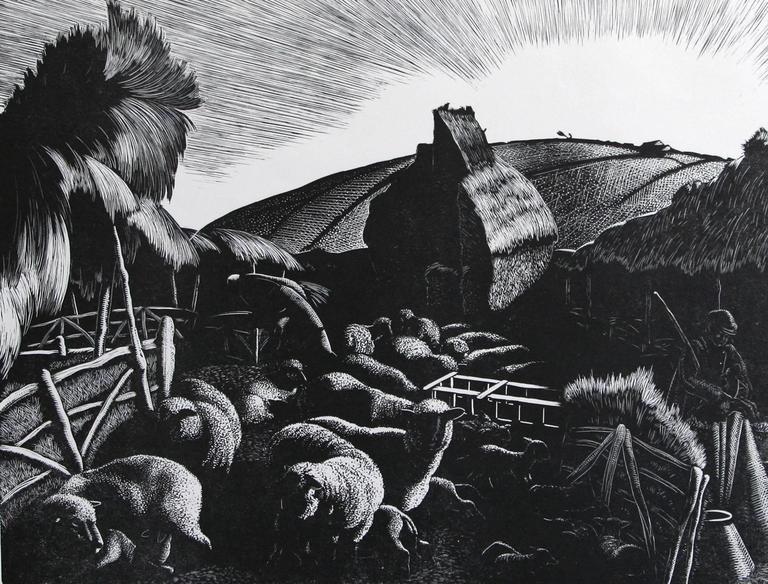
The Bridge of San Luis Rey by Thornton Wilder. Not a first edition – that was 1927 – but the 1931 edition illustrated by Clare Leighton (and owned by someone called Leopold Horwood.)

Clare Leighton

I would like to tell you a bit more. Though not about Leopold as I can’t find anything about him…..

This is the American writer’s second novel and he won the Pulitzer Prize for it. (The commercial success he got from the book meant he could give up being a French teacher and concentrate on writing.)

It tells the story of several interrelated people who die in the collapse of an Inca rope bridge in Peru, and the events that lead up to their being on the bridge. A friar, who witnesses the accident , then goes about inquiring into the lives of the victims, seeking some sort of cosmic answer to the question of why each had to die. ( Wikipedia)

Meanwhile, as they say, Clare Leighton was born in 1898 (died in 1989) and lived her early life in the shadow of her older brother – her family’s nickname for her was the bystander. (That must have helped her self confidence.)

(He was Roland Leighton and despite being described as rather cold and conceited by his friends, he fell in love and got engaged to Vera Britten and was immortalised in her Testament of Youth.

He died aged 20 in the World War One and his grave has one of his poems to Vera inscribed on it.

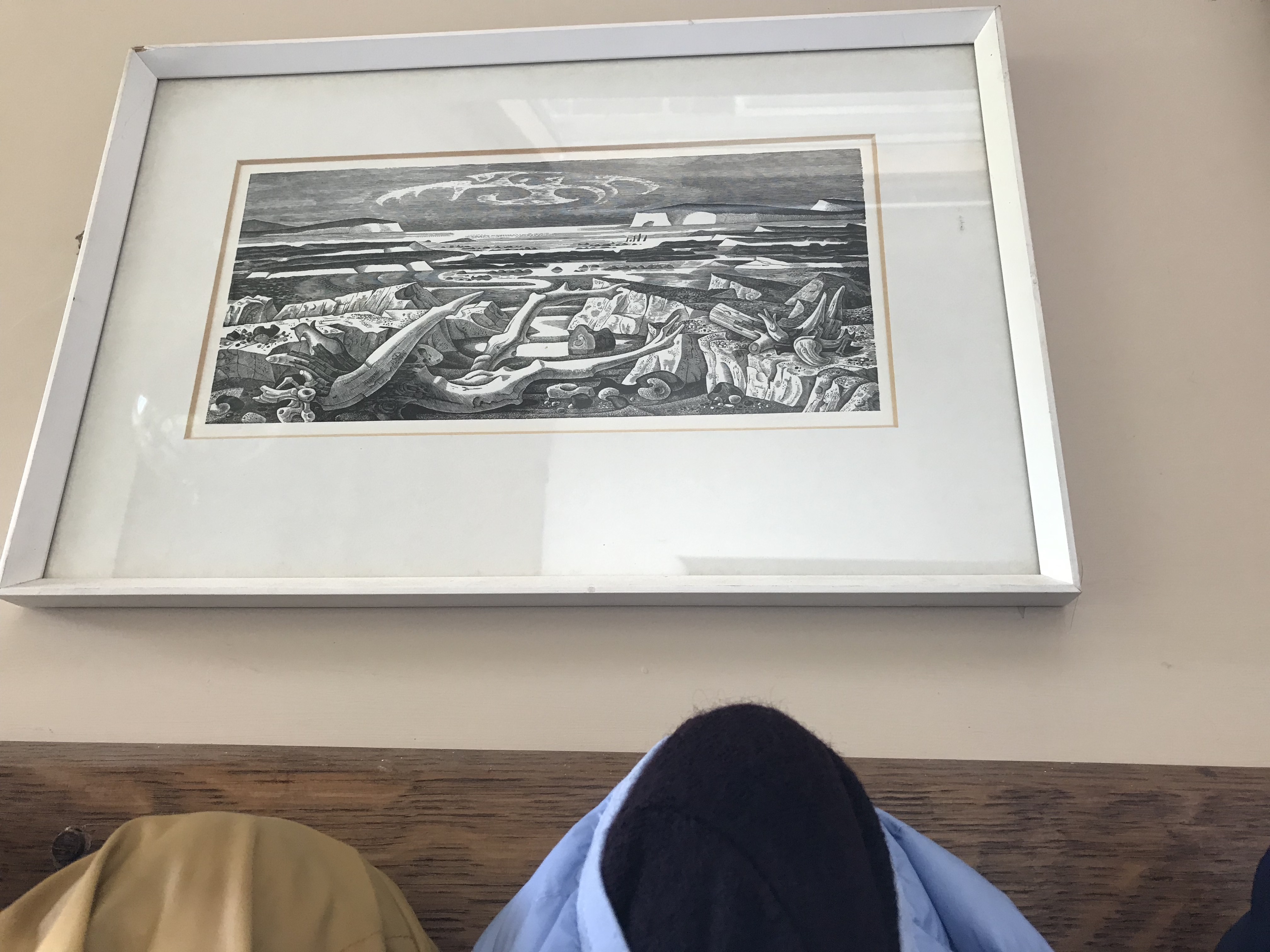
But this is not about him, but his sister. We have one of her woodcuts hanging about our coat rack.

She did her first training at Brighton College of Art – which is the only link I can find to Deepest Sussex but it will get a mention when the book goes on sale as we like a local link.

(Clare Leighton met the radical journalist H. N. Brailsford in 1928,and they lived together for several years because his wife refused him a divorce.

But when the wife died in 1937, leaving the way clear for the couple to marry, he suffered an emotional breakdown, destroying his relationship with Clare Leighton who left for a new life in the US in 1939 and eventually became a naturalised American citizen.She never married. )

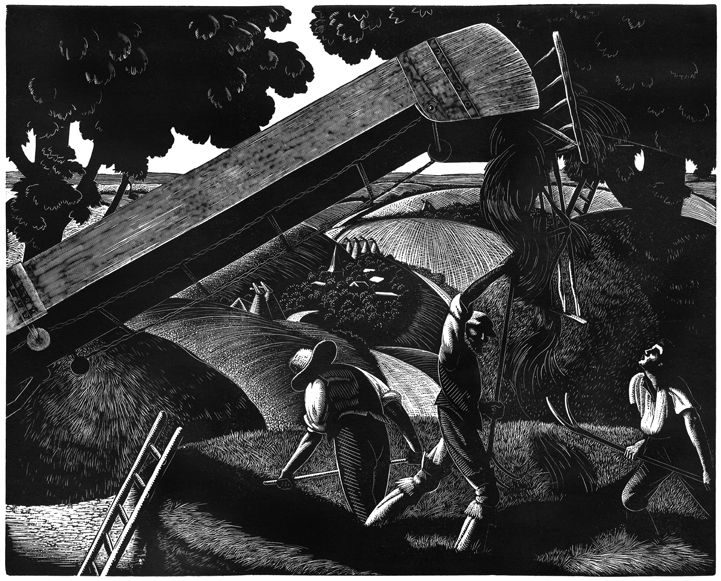
She had a fascination with the countryside and her woodcuts are often of rural people and scenes.

One of her most famous books – The Farmer’s Year – was published by Longmans Green which also published The Bridge of San Luis Rey.

And that is the only connection I can find between Leighton and this book. Perhaps she owed them a favour, or was asked by a very nice member of staff or perhaps she did a deal with them.

It is just that if you look at these images they jar slightly and though dark, like most of her woodcuts and clearly by her, they don’t seem to work – at least not for me.


The Timing of Books (and Brexit)

There are times in ( I assume) any Oxfam bookshop when things are less than entrancing. 

The teetering pile of unsorted books topped with a Jeremy Clarkson or two, just for example.

Or souvenir books of royal weddings past, or scrawled-in children’s books, or sudoko books with some of them half done, or the complete works of Georgette Heyer damp and very brown

I could go on but don’t want to sound ungrateful  – though there are days when gratitude is a little thinly spread.

And there are days when the work, the slog, the efforts, the imagination and planning, when the whole making-the shop look good is not met with much, or indeed any appreciation, but don’t get me started on that.

But on other days we get such little delights that it makes it all worthwhile and I will entice you to read on with the promise that I will include a little delight or two at the end.

Meanwhile there is an issue of timing

Some books are time-specific.

The huge old bible we were given is a bit ramshackle but it has whatever the bookshop equivalent of kerb-appeal may be. But finding it in a pile of unsorted books on Easter Monday doesn’t quite work. ( We only do religion once a year…and I had just cleared the religion table display.)

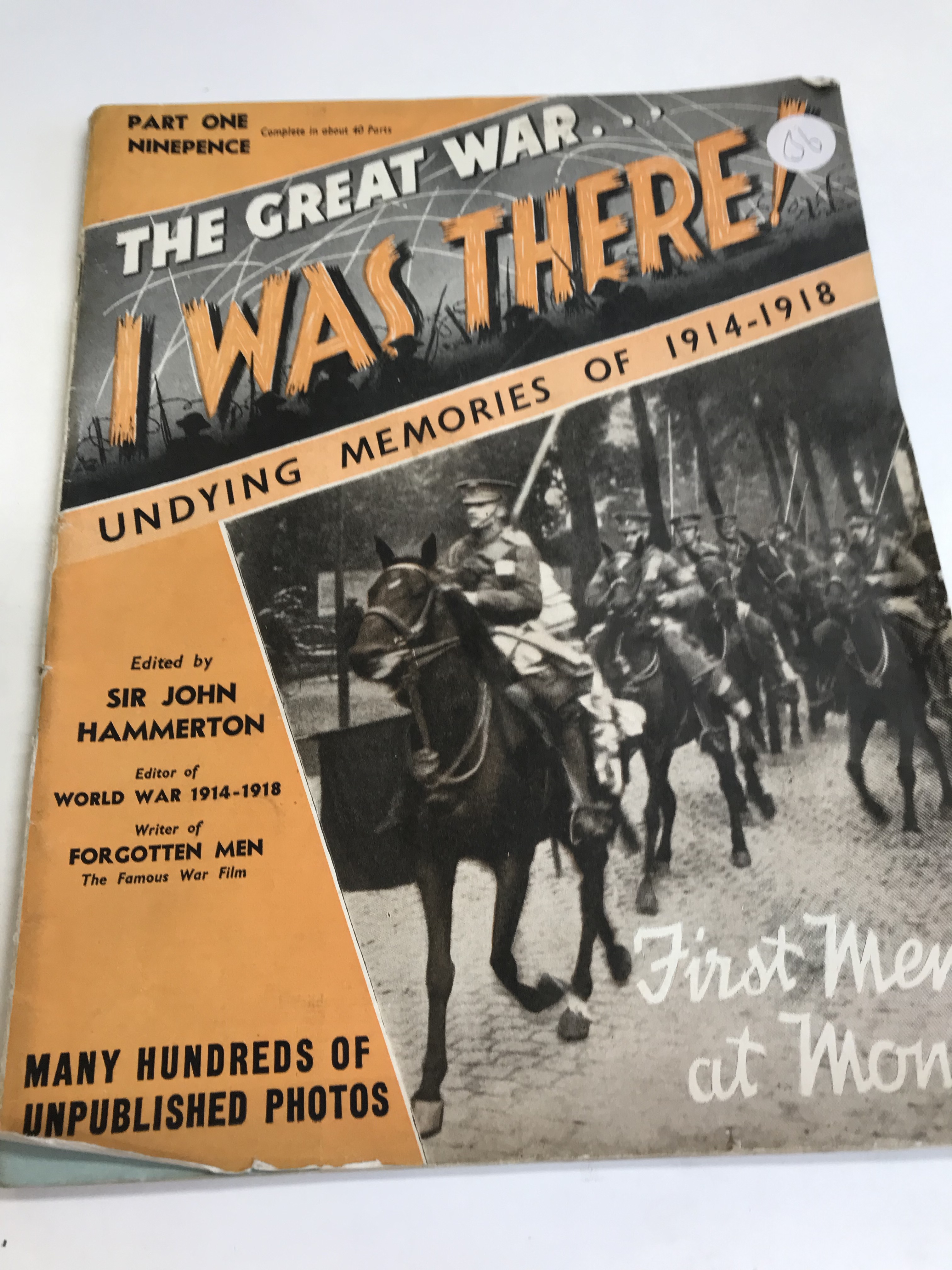
The 51 copies of the magazine The Great War, I Was There! have arrived just too late. The four year leading up to 2018 was their moment and now it is gone. The World War II anniversaries are just gearing up. 

Anyway, the jolly exclamation mark made me wince a bit…

There is already a shelf or indeed two of Christmas books waiting for their turn.

And oddly for a bookshop, we have had a donation of a good number of sunglasses. 

So, I have to monitor the weather forecast and work out what books would work with sunglasses.

Do we go for light summer reads, books with sun in their title ( fewer than you might think), celeb autobiographies so we can put a pair on Johnny Depp’s or Bridgit Bardot’s but that might take several year’s to get together – you can’t order donated books.

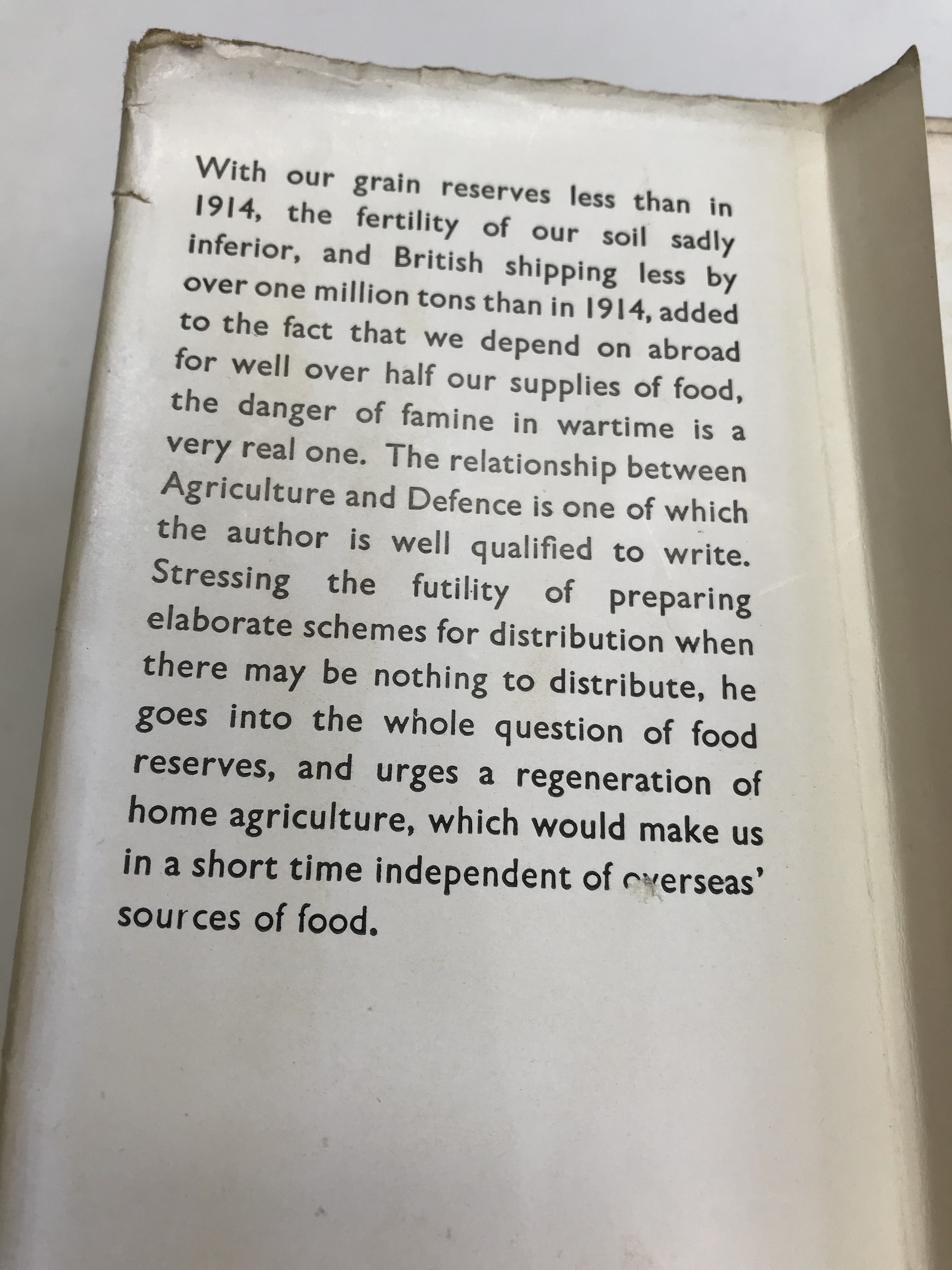
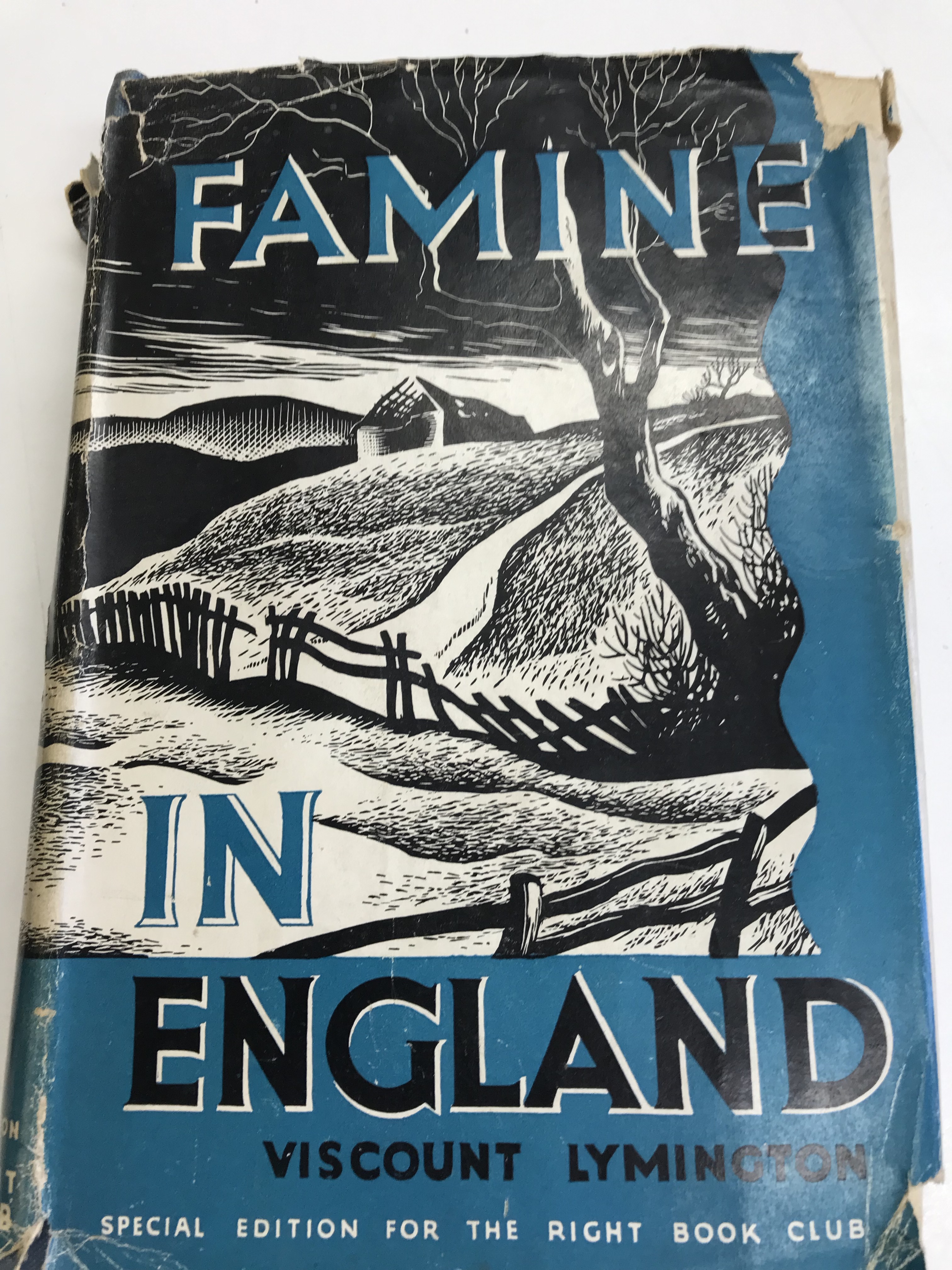
But today I found a book that had its day in 1938 and now, reading its preface, seems so prescient.


Now if that isn’t a Brexit warning, I don’t know what is. 

Jacob Rees-Mogg tells us that Brexit will deliver cheaper footwear – did anyone, however fervent, vote for Brexit so they could nip down to Clarks and get a good deal?

He also tells us that the full benefits of Brexit may take 50 years. I am thinking that the food issue might need sorting before that.

We have six trade deals in the bag including one with the Faroe Islands.

Here is the Wikipedia explanation of Faroese food – some of which we could no doubt import.

Traditional Faroese food is mainly based on meat, seafood and potatoes and uses few fresh vegetables. Mutton of the Faroe sheep is the basis of many meals, and one of the most popular treats is skerpikjøt, well aged, wind-dried mutton, which is quite chewy. The drying shed, known as a hjallur, is a standard feature in many Faroese homes, particularly in the small towns and villages. Other traditional foods are ræst kjøt (semi-dried mutton) and ræstur fiskur, matured fish. Another Faroese specialty is tvøst og spik, made from pilot whale meat and blubber. (A parallel meat/fat dish made with offal is garnatálg.) The tradition of consuming meat and blubber from pilot whales arises from the fact that a single kill can provide many meals. Fresh fish also features strongly in the traditional local diet, as do seabirds, such as Faroese puffins, and their eggs. Dried fish is also commonly eaten.

Now, I am an increasing fan of fewer food airmiles, locally-grown, seasonally-eaten food but I am not at all sure that our farmers can adapt to suddenly growing more cabbages, potatoes, enough wheat for our bread.

And though I know a surprisingly tasty recipe for turnips, I am not sure that will take the place of peppers, camembert, olives, grapes, and though I love Isle of Wight tomatoes, I am not sure there will be enough to go round.

Anyway, that is all not about books or what you find in an Oxfam bookshop so I’ll end with some slivers of delight of stuff that make sorting through a tonne of books on a Bank Holiday, and when you get to the end and stand back, someone else comes in with ten boxes….