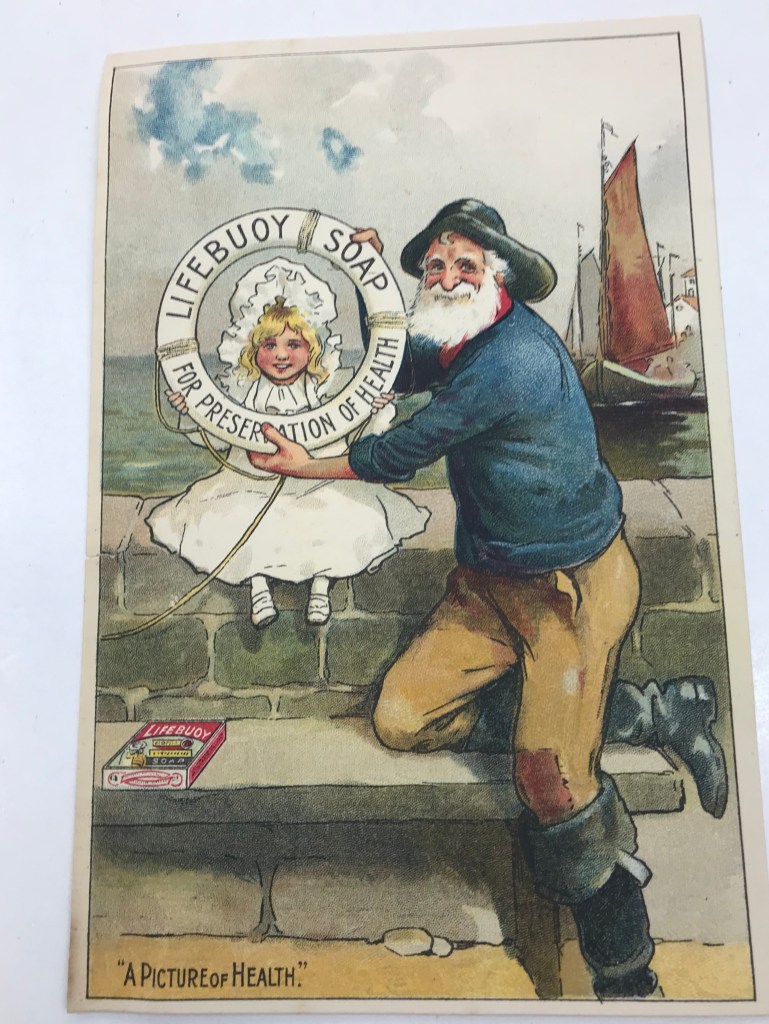
A Few More Oddities

A few more bookshop delights and surprises….

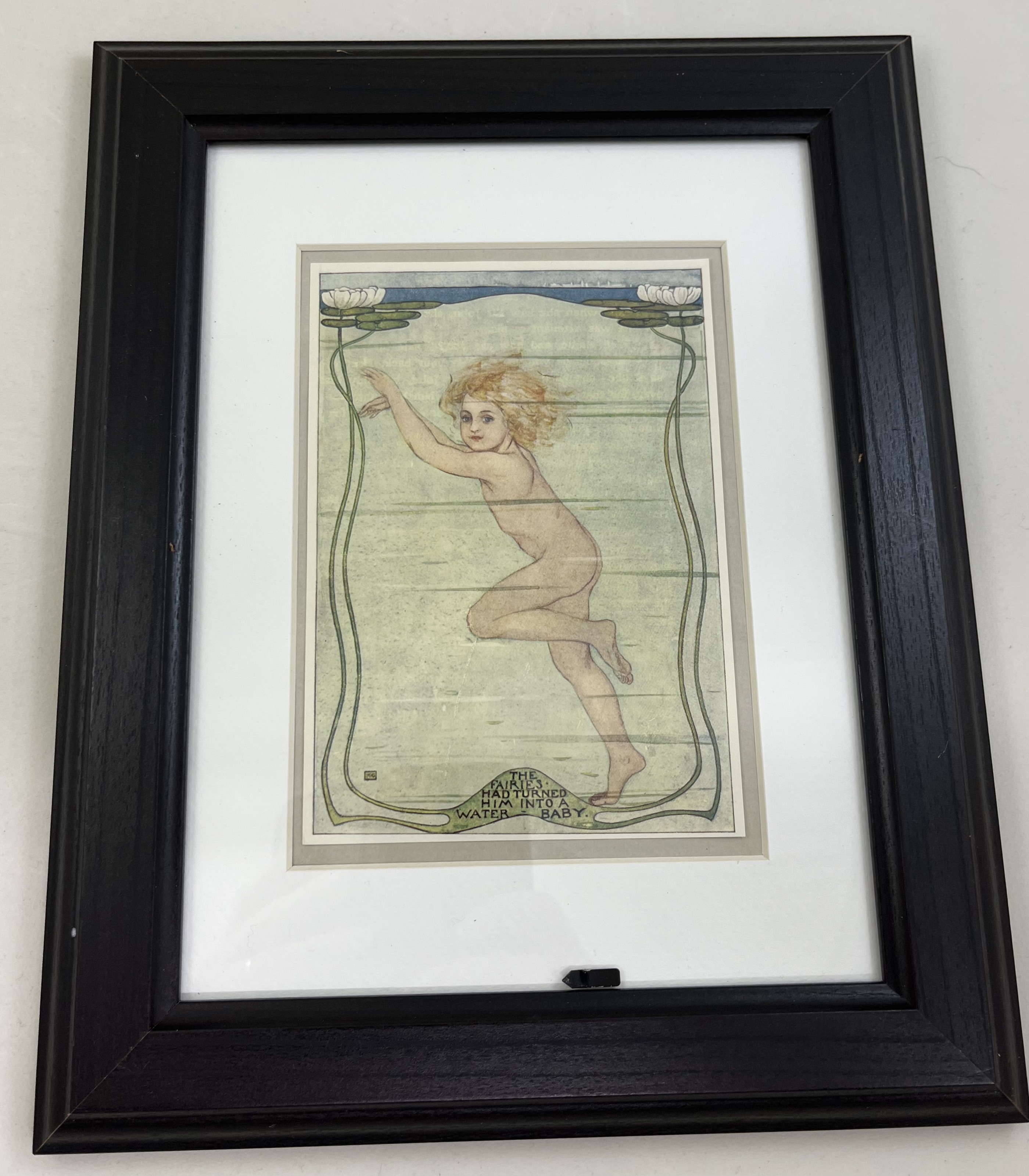
Some (actually quite a few if I’m honest) books come into the shop in such bad condition they can’t be sold. Most end up in re-cycling but a few have such lovely plates (pictures) that the Best Beloved can make something of them.

Because we get quite a few donations of paintings – yes I don’t know why they are given to a bookshop either – we have an art sale about twice a year and we will add in these little delights.

And, we also get picture frames donated so the BB had these three to play with…

They are from the 1905 edition of The Water Babies and are the work of Katharine Cameron. And it is true that images of naked children were more innocent in those days.

Anyway, you may be interested to know that Katharine Cameron (1874-1965) ‘studied at the Glasgow School of Art where she became part of a group of artist-friends known as ‘The Immortals’, which included sisters Margaret and Frances Macdonald and Charles Rennie Mackintosh. She later attended the Académie Colarossi’s in Paris and made frequent study trips to Italy. She is best known for her sensitive flower and landscape paintings, etchings and book illustrations. Katharine was a member of the Royal Scottish Watercolour Society.’ (National Galleries of Scotland).

She is second on the right of the middle row of this photo of The Immortals.

The next oddity is from lives a lot less rarified than the Scottish artists.

Judging by the stationer’s imprint and the name and address at the back of the book, this was a log of Sheffield workers’ hours and payments kept by a Mr Hunt who lived at 302 Staniforth Road, Attercliffe, Sheffield. This was not a difficult deduction.

It begins in July 1914, and finishes when the book is full in August 1917.

I assumed they were all men and worked in a protected industry which could well have been a related to steel in some way or another, it being Sheffield.

And then I thought, of course I could be wrong and it could be a workforce of women taking over jobs ‘left’ by men fighting in the war.

I liked that idea and conjured up all sorts of mental images of feisty women and their stories, but a more detailed look (by the Best Beloved) ‘unearthed’ this at the back of the book and more references to furnacemen at the front.

Interestingly, as I say at least to me, there is a knife-making company called Samuel Staniforth making knives who say they were established in 1864. I am temped to contact them and see if they are interested in this part of their history. https://www.s-staniforth.co.uk
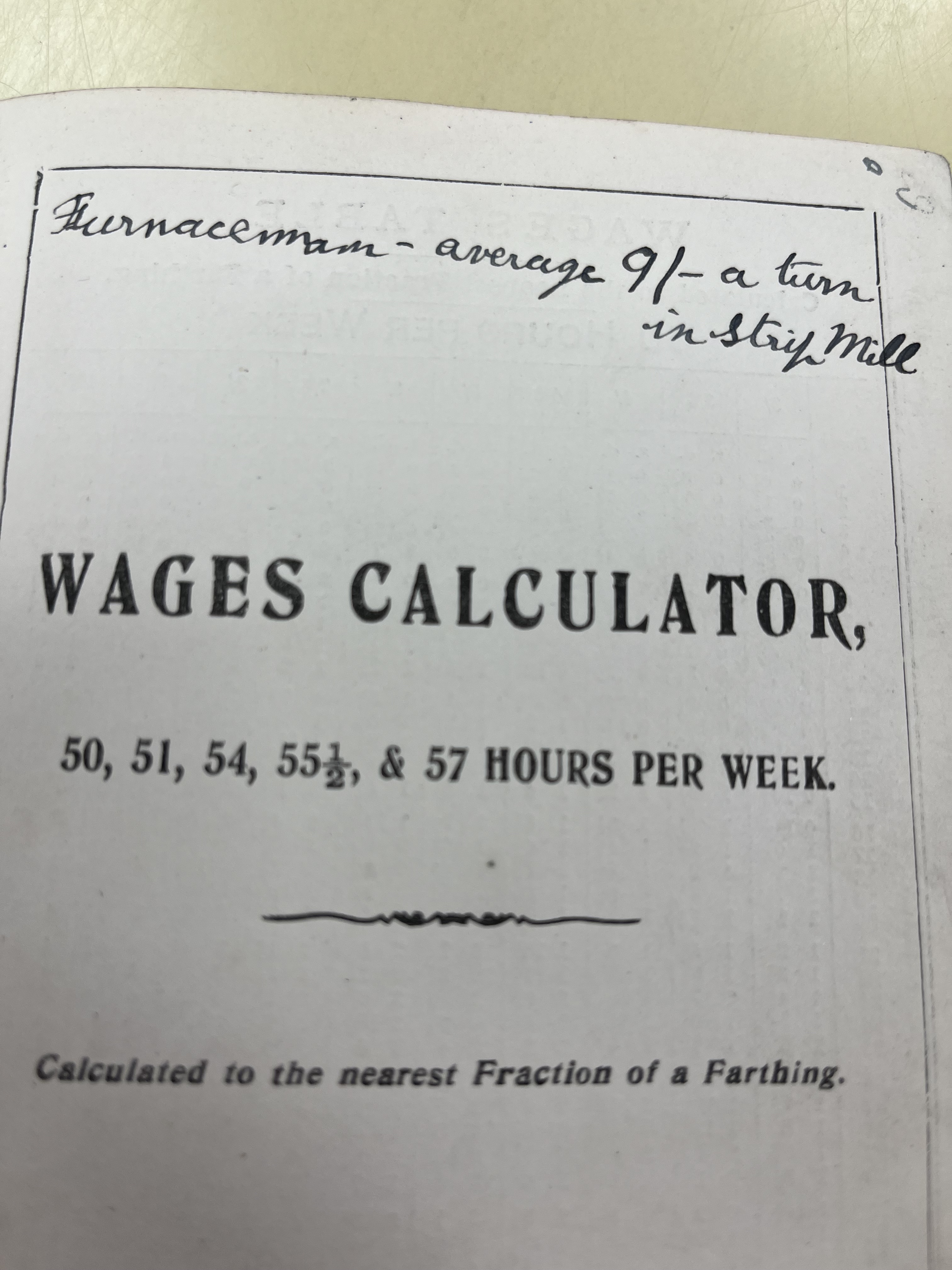
There are some handy wages tables at the back ‘calculated to the nearest fraction of a farthing’ and in terms of hours, go up to 57 hours a week.

Whoever C Wise was, he is present from the beginning to the end. (But W Wise, makes only one entry right at the beginning. 

I am speculating of course, but could be father and son….)

In 1914 he was earning £2 and two shillings, but by 1917 was on £3/19/6d.

Interestingly, at least to me, is that although there are smatterings of records advance in wages throughout the book, many of the men took at advance in June 1915, August 1916 and April 1917.

I was thinking that this coincided with Wakes Weeks. A particularly northern tradition which started in the Industrial Revolution and was when the factory/works was closed for a week, quite often for maintenance work.

And they were, certainly originally, unpaid weeks so you would need an advance if you were going anywhere.

As a child I remember Wakes Weeks in the cotton mills in the Lancashire town where I was born – and the tradition was to go to Blackpool.

So popular was it that in the peak of Wakes Weeks in the 1860s (and no, I don’t remember that ) 23,000 holidaymakers left the town of Oldham alone, and headed to Blackpool.

Or, if you were better off, Morecambe Bay.

Wakes Week in Blackpool with the tower in the background

Should you want to know more https://northernlifemagazine.co.uk/wonderful-wakes-week/

There were some wage advances recorded in the book in the run up to Christmas but were for a lot less money than the holiday demand.

Except, that was my theory until I checked the dates and, no, the factory/works was not closed for the following week, and the same men were recorded as working and for much the same number of hours.

So, it remains a mystery.

Another Oxfam mystery, however, was solved by a very nice auctioneer who helps us out with some of our oddities.

These were donated by a friend and some have ended up in an auction, but one of them was locked.

The nice man brought down his box of keys acquired over the years and I spent a pleasant but fruitless couple of hours trying to find one that worked. ( And indeed, watching the Brummie Lockpicker on YouTube.)
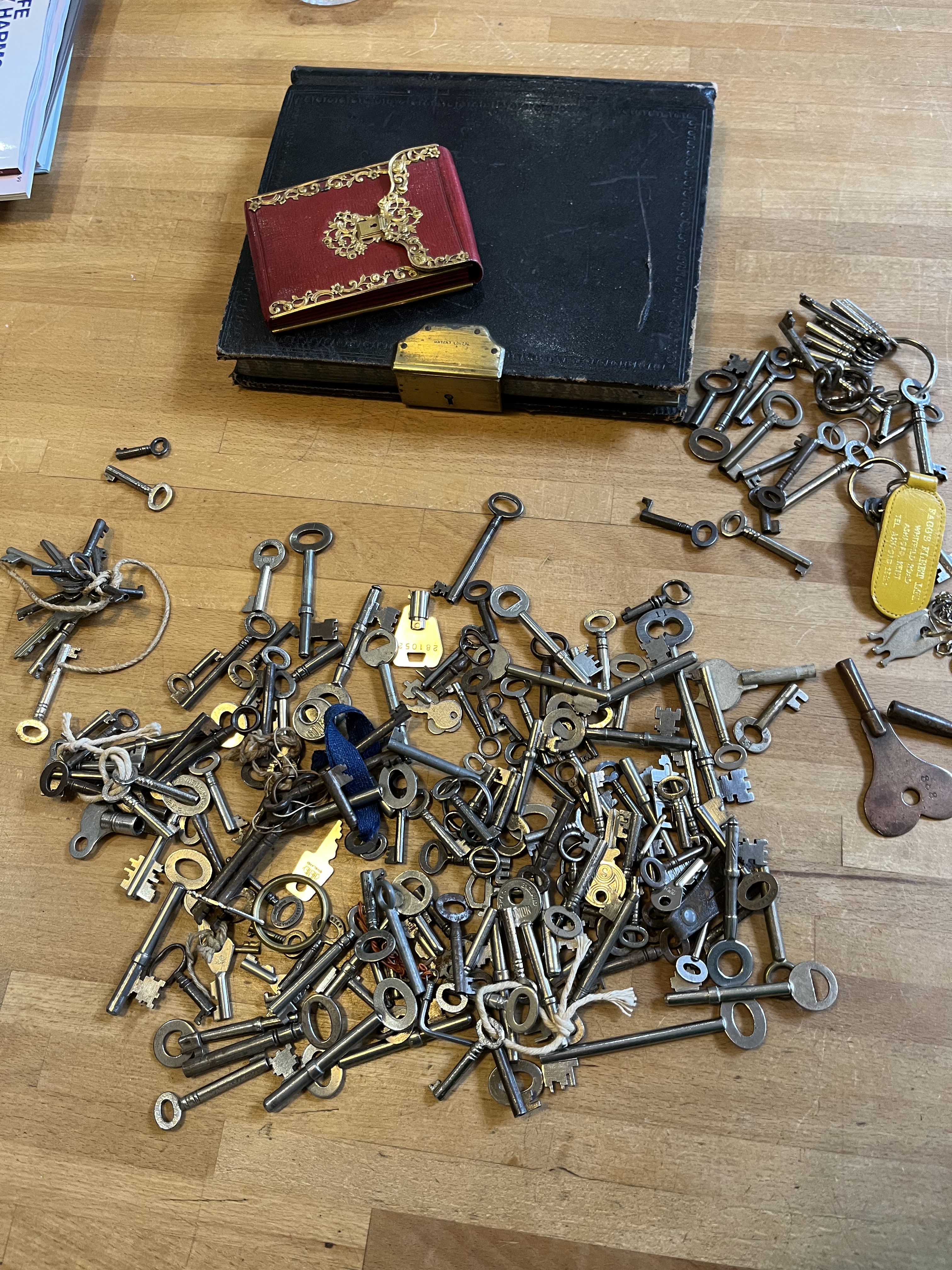
The nice man had said he thought it was a carte de visit holder and took it away to try and sell it for us.

He realised ( as probably I should have) that it wasn’t a lock as such and you could get it open.

And here is what he found:

Apparently,

‘It is a ladies etui case still containing a few of the original implements. 
Ivory writing tablet
Pencil
Combined ear scoop and toothpick.

When looking at it under a glass it was evident that the lock does not require a key. The centre pin is on a spring and just needs pushing down to open.’

Rootling around in the bottom of capacious shoulder bags over the years, I’ve all sorts of forgotten things – and indeed notebooks and pencils – but never a, presumably ever-useful, ear scoop and toothpick

The Timing of Books (and Brexit)

There are times in ( I assume) any Oxfam bookshop when things are less than entrancing. 

The teetering pile of unsorted books topped with a Jeremy Clarkson or two, just for example.

Or souvenir books of royal weddings past, or scrawled-in children’s books, or sudoko books with some of them half done, or the complete works of Georgette Heyer damp and very brown

I could go on but don’t want to sound ungrateful  – though there are days when gratitude is a little thinly spread.

And there are days when the work, the slog, the efforts, the imagination and planning, when the whole making-the shop look good is not met with much, or indeed any appreciation, but don’t get me started on that.

But on other days we get such little delights that it makes it all worthwhile and I will entice you to read on with the promise that I will include a little delight or two at the end.

Meanwhile there is an issue of timing

Some books are time-specific.

The huge old bible we were given is a bit ramshackle but it has whatever the bookshop equivalent of kerb-appeal may be. But finding it in a pile of unsorted books on Easter Monday doesn’t quite work. ( We only do religion once a year…and I had just cleared the religion table display.)

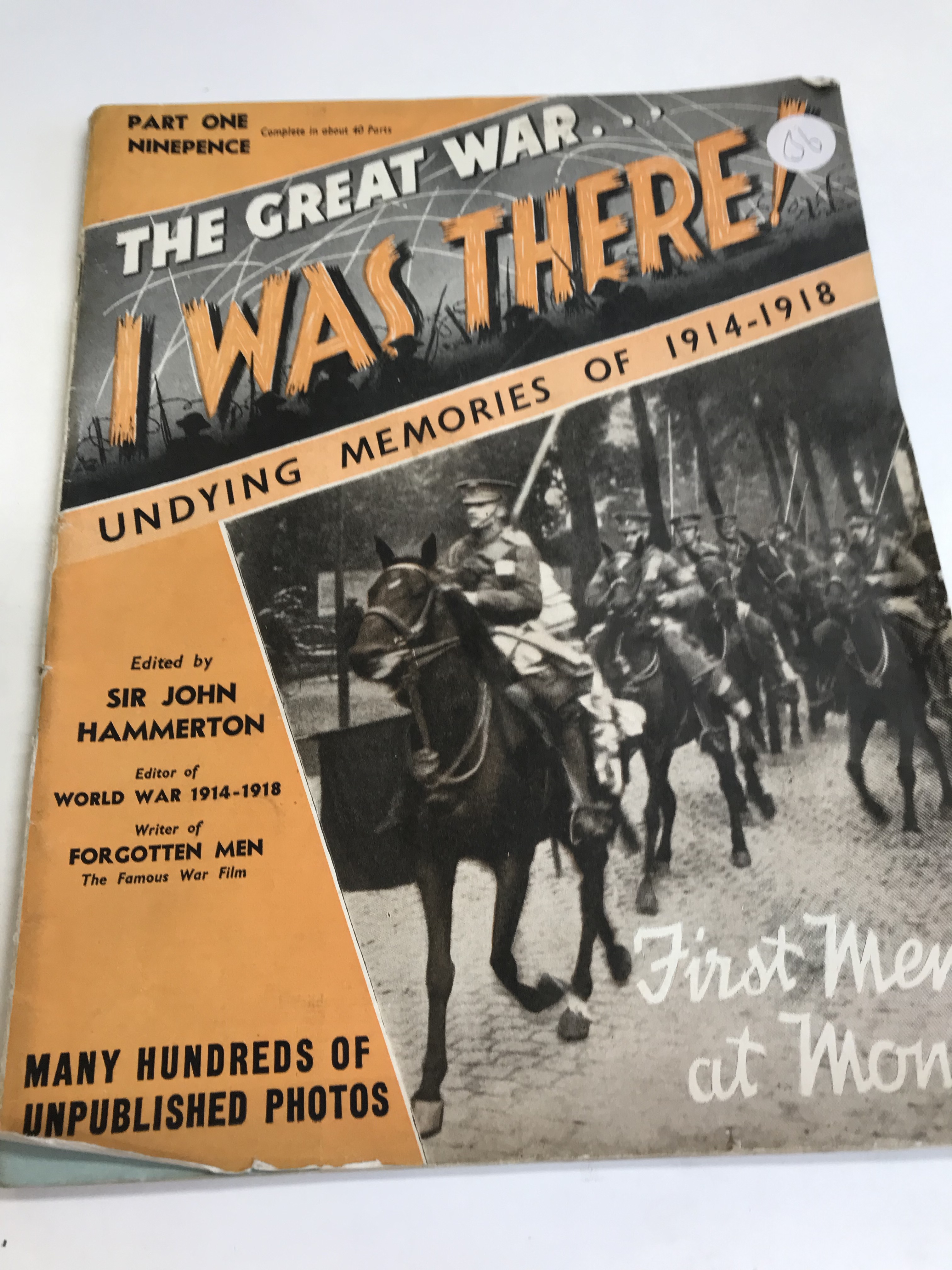
The 51 copies of the magazine The Great War, I Was There! have arrived just too late. The four year leading up to 2018 was their moment and now it is gone. The World War II anniversaries are just gearing up. 

Anyway, the jolly exclamation mark made me wince a bit…

There is already a shelf or indeed two of Christmas books waiting for their turn.

And oddly for a bookshop, we have had a donation of a good number of sunglasses. 

So, I have to monitor the weather forecast and work out what books would work with sunglasses.

Do we go for light summer reads, books with sun in their title ( fewer than you might think), celeb autobiographies so we can put a pair on Johnny Depp’s or Bridgit Bardot’s but that might take several year’s to get together – you can’t order donated books.

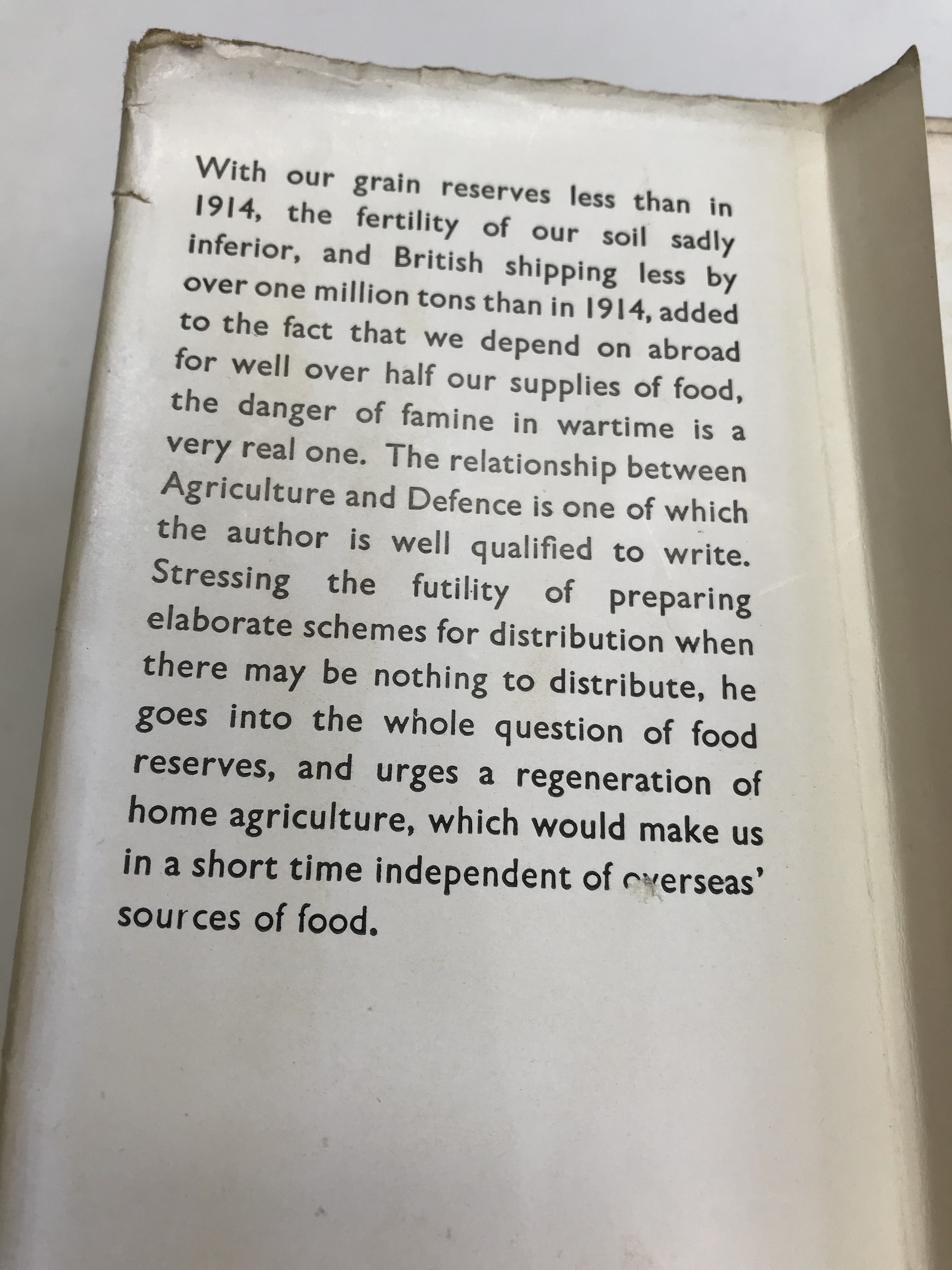
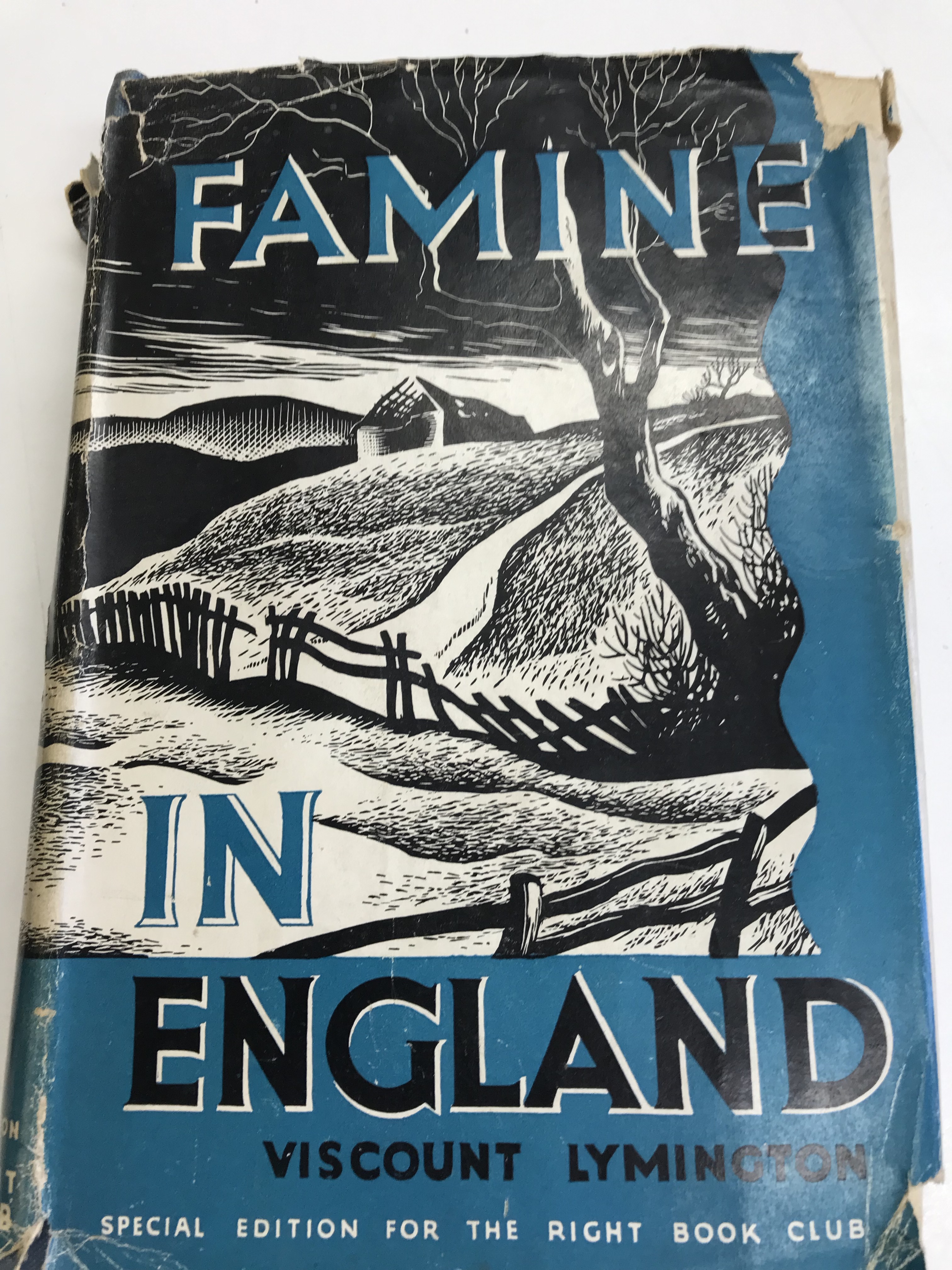
But today I found a book that had its day in 1938 and now, reading its preface, seems so prescient.


Now if that isn’t a Brexit warning, I don’t know what is. 

Jacob Rees-Mogg tells us that Brexit will deliver cheaper footwear – did anyone, however fervent, vote for Brexit so they could nip down to Clarks and get a good deal?

He also tells us that the full benefits of Brexit may take 50 years. I am thinking that the food issue might need sorting before that.

We have six trade deals in the bag including one with the Faroe Islands.

Here is the Wikipedia explanation of Faroese food – some of which we could no doubt import.

Traditional Faroese food is mainly based on meat, seafood and potatoes and uses few fresh vegetables. Mutton of the Faroe sheep is the basis of many meals, and one of the most popular treats is skerpikjøt, well aged, wind-dried mutton, which is quite chewy. The drying shed, known as a hjallur, is a standard feature in many Faroese homes, particularly in the small towns and villages. Other traditional foods are ræst kjøt (semi-dried mutton) and ræstur fiskur, matured fish. Another Faroese specialty is tvøst og spik, made from pilot whale meat and blubber. (A parallel meat/fat dish made with offal is garnatálg.) The tradition of consuming meat and blubber from pilot whales arises from the fact that a single kill can provide many meals. Fresh fish also features strongly in the traditional local diet, as do seabirds, such as Faroese puffins, and their eggs. Dried fish is also commonly eaten.

Now, I am an increasing fan of fewer food airmiles, locally-grown, seasonally-eaten food but I am not at all sure that our farmers can adapt to suddenly growing more cabbages, potatoes, enough wheat for our bread.

And though I know a surprisingly tasty recipe for turnips, I am not sure that will take the place of peppers, camembert, olives, grapes, and though I love Isle of Wight tomatoes, I am not sure there will be enough to go round.

Anyway, that is all not about books or what you find in an Oxfam bookshop so I’ll end with some slivers of delight of stuff that make sorting through a tonne of books on a Bank Holiday, and when you get to the end and stand back, someone else comes in with ten boxes….

Framing the Birds

For while, there has been a dearth of donations of old and interesting books to our Oxfam shop – but recently there have been some treats.

I should (re) mention that old and interesting is the category on the till – quite a lot of the time, old does not equal very interesting at all.

Anyway, with Christmas gone and the leftover crackers, candles, cards and so on, consolidated into a few SALE shelves, we had space which needed to be filled with old and interesting so all donations have been welcomed.

Please bear with me, this does get a bit more interesting later on, and to prove the point, here is a lovely picture:

fullsizeoutput_cf0

Meanwhile, a fellow volunteer had mentioned that in the Winchester shop (always to be envied given that it has tourists and university students, which we don’t) had taken plates ( pictures) out of decrepit books and put them in mounts and had them for sale.

We could do that, I thought.

And, by coincidence or the inscrutable movement of the universe, whichever you prefer, a donation came in which would be an ideal candidate.

It was Grimm’s fairy tales illustrated by W Heath Robinson – falling apart and some child had scrawled with crayon over some of the pages, making it unsaleable except to someone who wanted to take out the plates and frame them….

My best beloved is something of a star amateur picture framer so you can see where this is going.

He said, though, the plates were not in great condition and anyway were a bit ‘wishy-washy.’

I was deflated but not despondent on the basis that wishy-washy was better than nothing.

But then we had a treat, actually two treats.

As you know I am an amateur upholsterer – oh what crafts people we both are – anyway, I found this in the back of a book amongst several boxes of books – all old and about Paris.

( I have put a shelf of them out but I think you can only do one such shelf in a Petersfield bookshop – obviously if we were in Winchester…)

fullsizeoutput_cf6

So, French upholsterer to her majesty – presumably Victoria – and doing work for Mr Franck Boggs – great name.

Someone will like that framed, I thought.

And then another book came in, and it had already fallen apart, but what fantastic plates.

It turns out these were produced by two brothers who approached Dent with what they had done, and the publisher said, ‘oh yes please.’

We have the first edition of their first book – but all the pages are loose and couldn’t be sold as a book.

(If you want to know more about Maurice and Edward, here is a link
http://www.avictorian.com/Detmold_Charles_Maurice.html)

They were influenced by Japanese art – very popular at the time – and you can see it in the style.

So, these delights will be framed by the BB and will be the stars of my new bookshop venture. ( I may well keep the book cover for us.)