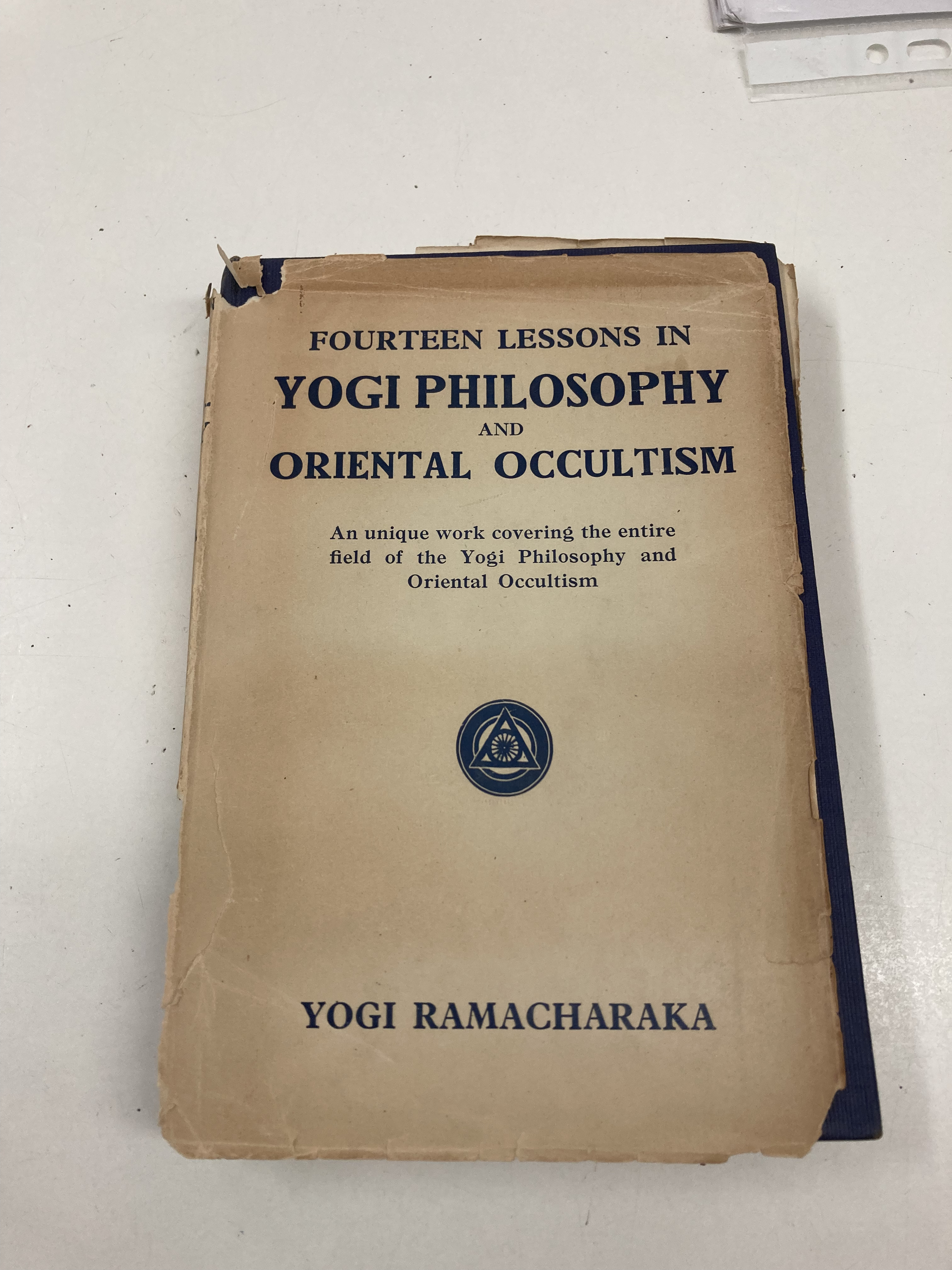
An Afternoon Shooting Books

As I have said many times before, working in the Oxfam shop is a mixed bag, indeed box.

Sometimes you have boxes and indeed bags of books which are just not saleable. They have been stored in a garage for years, they are what is politely called well-read and in fact means they have been trashed – by children.

They are a collection of books about royal weddings – long divorced. They are dated cookery books with no charm, they are guide books printed in the 1990s and whilst the monuments may not have changed, all the restaurants, hotels, bus timetables will have.

But of course, and it is the thing that keeps us book sorters happy, are the treat and novelties.

We don’t have time or indeed the patience to go through every book but there is usually a general check that it is not written in, scrawled in, has the first few pages missing ( all rather depressingly regular).

But after that we are busy processing the next batch.

So, a colleague was on the till the other day when a customer approached and said he had been looking through the book he fancied buying and found a £50 not sandwich between two pages. 

He handed it over to the rather surprised volunteer, bought the book and went home.

We have no idea who it was who donated the book so all I can say is that I hope they would have been pleased we got an extra £50 for their donation.

And then I spent an afternoon in the company of many, many books on hunting, shooting and indeed one or two on trapping and snaring.

This came about because someone I know locally has an auction company and is an antiques collector.

And he has been really helpful with old coins we have had for example, and lately he has agreed to sell a Victoria century carte de visit holder. (In case you were unaware, in those days, people dropped a card in with your manservant to say you had called and would be delighted to invite you for a cup of tea, game of cards, etc etc.)

Whilst we were talking he said he was having a clear out of books. Now for him, a clear out of books is not a couple of Waitrose bags but a good few very large packing boxes.

I took one  for now – bearing in mind we don’t have a lot of space and certainly not that much.

It turns out this was part of a library he had bought from someone and it was his collection of all things hunting and shooting.

I have to say it was a very strange time, spending a whole afternoon on my own upstairs in the shop valuing all these books about killing wildlife.

As some of them were old, and some valuable, I had to look through them all.

To the sensibilities of most people in this day and age, the thing that is striking is the fascination with nature along side the fascination with how to kill it on a one to one basis.

Some of these books were illustrated with great engravings and images.

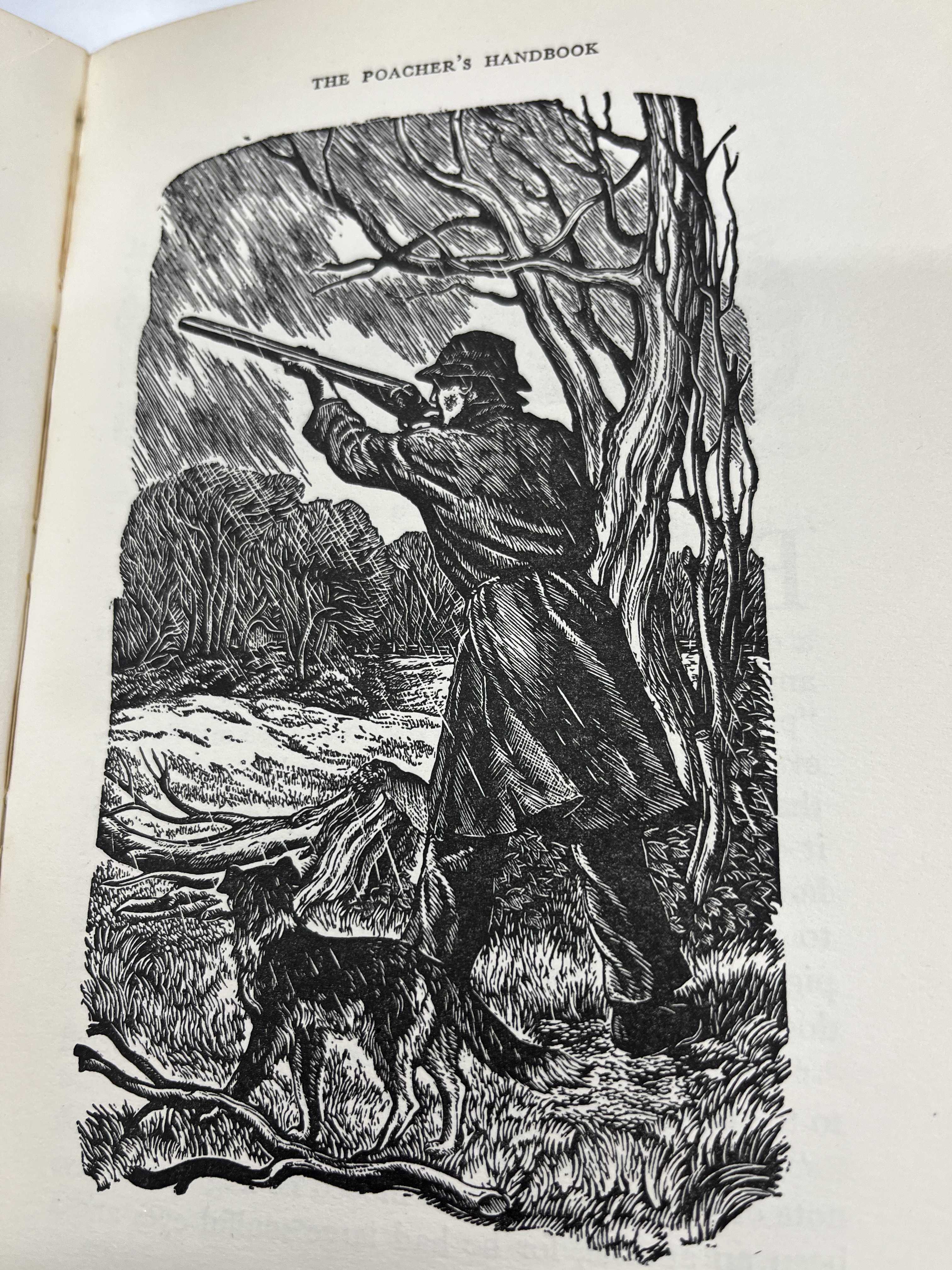
But then you read what Ian Niall has to say about the hare:
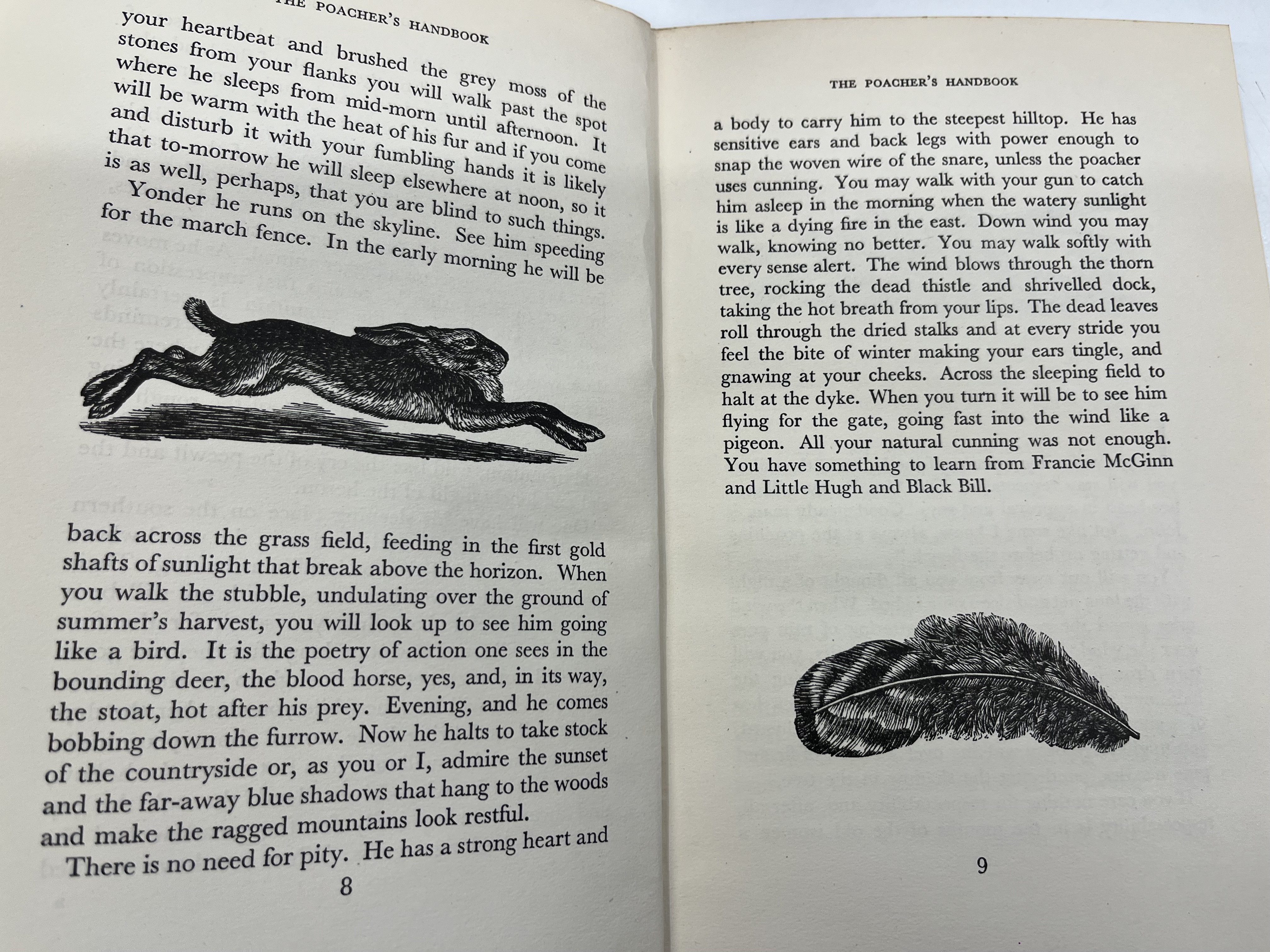
Lovely lyrical description of the countryside and then explains you need to be a really cunning poacher to make sure you trap its legs so it can’t get free. How does that fit?

And you get this:

Followed by this:

Yes it is the same delightful bird and coveted shooting trophy.

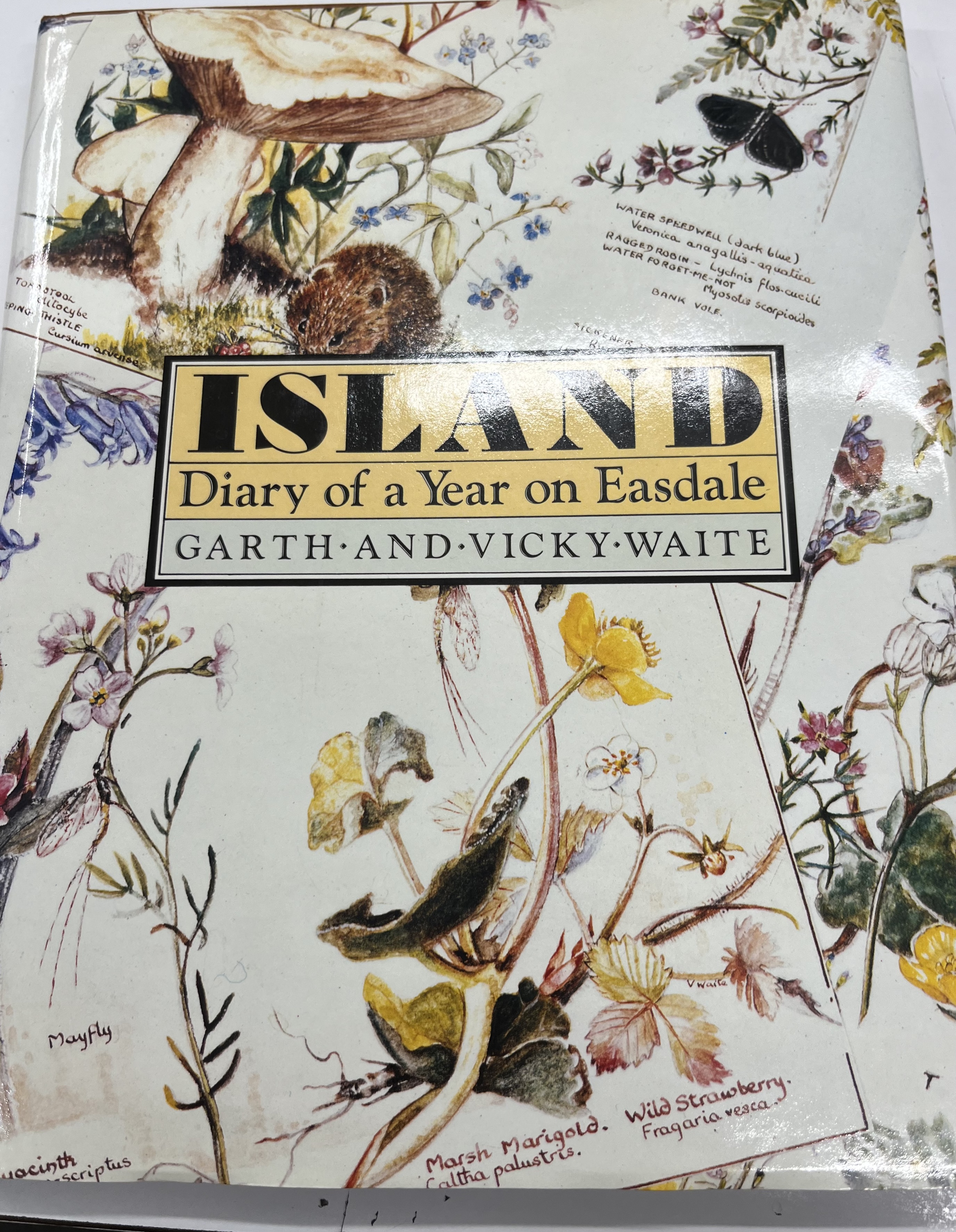
Luckily and by sheer coincidence, as I was taking a break from killing, I found this is a nearby box of donations.

Yes it is a bit twee, but have to say it made me feel a lot better.
When I nipped downstairs to take the till volunteer a cup of tea, I bumped into a regular customer who I know because he drew up our wills.

‘Have you got anything on fishing?’ he asked.

‘Ahh, I thought, hunting shooting, and now fishing.’

As it happens I found him a rare-ish book on making fishing rods out of bamboo. He is apparently delighted.

Tailor of Gloucester – again

First of all my apologies for bringing you a bit of Christmas long past the time when it should be well and over.

So, if like me, you are very happy to be in the cool zen-like calm of January, then please don’t read on, it is not a short one.

Otherwise:

The Oxfam bookshop.

You will, probably, have read the preview for this. The Tailor of Gloucester. If you haven’t, you will catch up – at length.

As you may know, we have to start planning Christmas way back in the late summer – if you live and survive on donations, you have to hope that things come into the shop which you can use to make something special.

And like all retailers, we rely on Christmas to make our money.

So, the window and table display are well thought about.

This last Christmas my colleague did The Old Curiosity Shop in the window and on the table, I did the Tailor of Gloucester.

For those of you who don’t know, it’s one of Beatrix Potter’s stories. It is about the poor tailor who is commissioned to make the mayor’s Christmas wedding outfit. 

He lives with his cat Simpkins, always on the outlook for a mouse-snack in the tailor’s house.

The tailor sends the cat out for milk, bread and some thread to sew the outfit, and whilst he is out the tailor frees the mice who have been trapped by the dastardly cat under the tea cups on his dresser.

But the tailor gets ill and the grateful mice go to his workshop and make the outfit, but are short of a final bit of thread for the last buttonhole – Simpkins had hid it.

They leave a note saying ‘ no more twist’ but a guilty Simpkins gives it to the tailor, so all is well.

https://en.wikipedia.org/wiki/The_Tailor_of_Gloucester

Nice Christmas story you may think. And indeed it is. But to bring it to our display table took some waving of my hands and asking for help. More of that later.

We have a lot of donations of Beatrix Potter books but they rarely sell except to grandmothers……

So it was easy to collect them. Though I did have every book sorter on high alert for copies of the Tailor Of Gloucester – rarer than you would think.

Oddly enough, we don’t get mice in any shape or form donated. Nor waistcoats. And, although bizarrely for a bookshop, we do get crockery, we didn’t have any between August and December – I had to buy some from another charity shop. 

But when I explained what I needed it for, I got it on loan.

So, now I needed mice and a waistcoat. 

And so I flapped my hands and asked for help. A skill I seem to have perfected over the years.

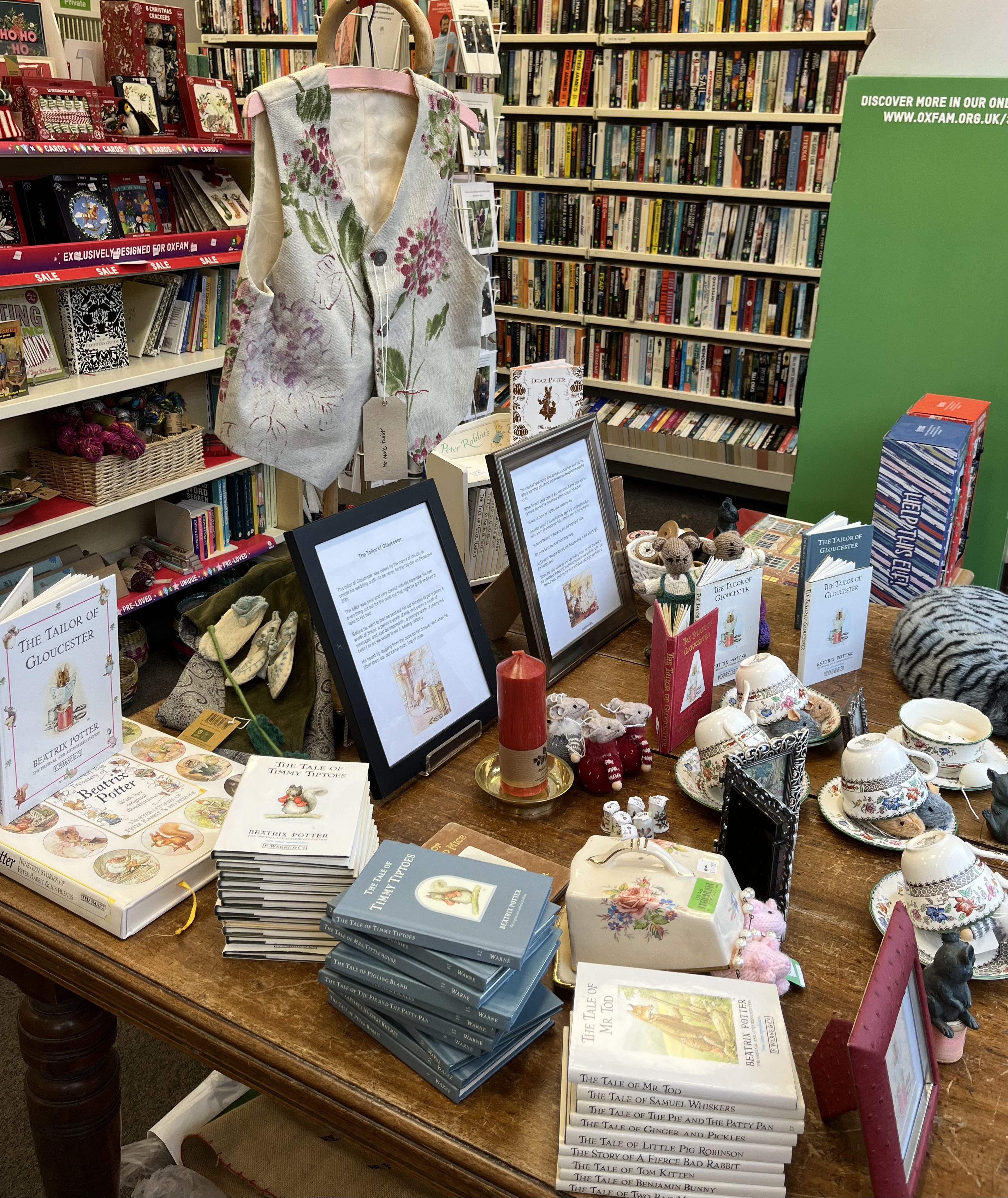
A very clever local sewer made me a waistcoat small enough to look the right size on the table – lined and perfect, leaving me only to cover the button holes with cherry coloured ‘twist’ and pin a note in ‘tiny mouse writing’ saying ‘no more twist’ to the last buttonhole.

Our manager’s mother knitted some mice but she ran out of time, so there were not enough.

A friend leant me some of her collection of resin mice, another friend bought me some and donated them to the shop, a local shop owner who also had a display of mice, gave me a couple, I bought a few from the local pet shop (cat toys) and finally the sweet shop gave me some sugar mice.

We had enough mice.

It worked – actually better than the image looks, but again hey ho.

A Winter’s Tailor

In the Oxfam bookshop Petersfield, there are a few of us who take Christmas very seriously from August onwards.

Yes it is depressing to see Christmas cards for sale from then – and yes indeed they are – but as for the display planning, August is not too early at all.

After all, we have a tiny budget, actually no budget.

We have to reply on what appears in the shop and with amazing frequency that happens.

We have a window displays to plan, and planning we do.

Last year we did a Cluedo window so there was a desk with a decanter and knocked over glass, and old fashioned telephone, a bookcase ( of course, we are a bookshop).

There was a row of pegs with a scarlet cloak, a cook’s apron, some Coleman’s mustard, some peacock feathers, there was a fake dagger, gun, piece of lead piping.

You get the idea – or at least you do if you know the traditional Cluedo. 

This year the theme is The Old Curiosity Shop.

So, we have been looking out for appropriate baubles, stuff, things, knickknacks etc. 

We are working on how to make the plastic display shelves look like Victorian wooden ones.

How to hang a battered red velvet curtain.

And on the fairly firm basis we are not expecting a Victorian till to be donated, my window colleague said she thought an old ledger would work.

Now, I wasn’t expecting that we would get one of those either – in amongst battered Jilly Coopers and John Grishams, ledgers don’t appear.

But hey ho, look what was donated.
Whilst of course leaving room to display books after all bookselling is what we are there for.

This is the domain of my colleague/friend and I am around to help and tootle through our cupboards for stuff.

More my domain is the display table which is a rather nicely battered square one dating back 100 years I would say.

This year, I want to have a display on it based on the Beatrix Potter’s Tailor of Gloucester.

So, if you don’t know the story, the gist of it is that the tailor is commissioned by the Mayor of Gloucester to make his outfit, including a waistcoat, for his Christmas Day wedding.

The tailor has a cat who is mean to the house mice, but they hide under cups, and bowls and Simpkin can’t find them.

Simpkin is sent out to buy some twist ( thread) so the tailor can sew all the button holes but he hides it in a teapot.

The tailor gets sick and whilst he is in bed, the mice got to his workroom and sew, and sew, and they finish everything.

Except one buttonhole and they pin a note to it saying ‘no more twist.’

Actually, it is a short book, you should go read it because it is a rather charming Christmas story.

So, our manager’s mother is knitting small mice to hide in cups, I have collected some old thimbles and cotton reels from other charity shops.

We have a shop cat ( fake obviously) who will take on the role of Simpkin.

The story will be printed out and run around the four sides of the table.

And a kind and excellent needlewoman I know has offered to make a child’s size waistcoat because we don’t have the room for a big one.

All a bit twee? Maybe, but don’t tell me that because I have been invested in this since August.

Strange Ships

I don’t regularly work a Saturday afternoon in our Oxfam bookshop, and it is a rare ( but a very nice time) when a book is united with someone who really wanted/needed/appreciated it.

Mostly instead it is nice customers who have been recommended a good paperback fiction book by a friend or a sister, or who has read one of the author’s books and wants to read more – or indeed never tells me why they are buying the book.

But this afternoon was a bit different.

We have a glass cabinet ( I have to say rather thrust upon us by a previous area manager) into which we put ‘specially attractive books.’

I put books in there that I really hope will sell because they are delightful/interesting/unusual – but often the book-buying public of Petersfield finds them less so…..

Anyway, the one I put in a few days before my Saturday shift was not really a book.

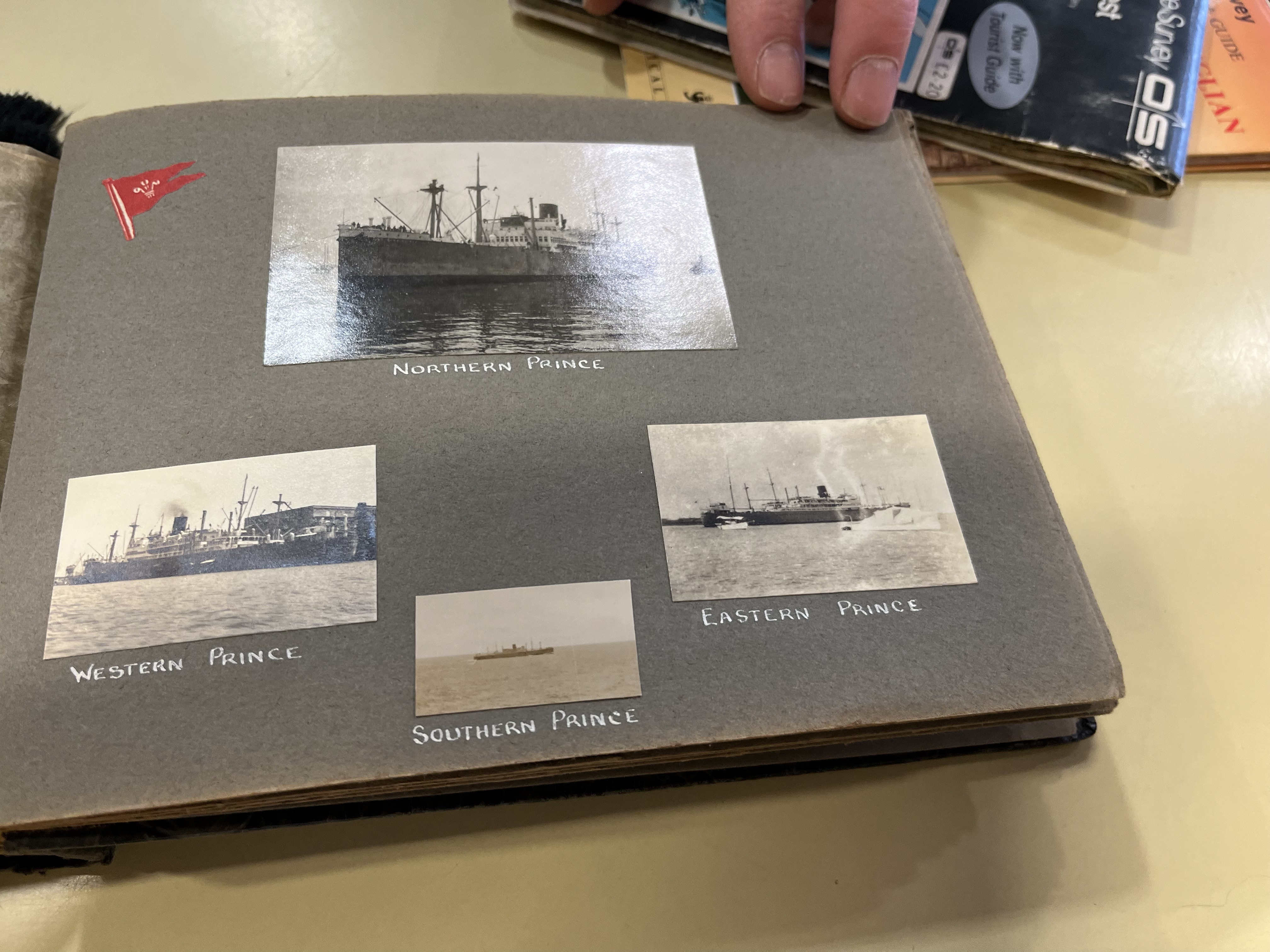
It was a photograph album of ships.

It was donated by who knows who. 

It had no name of the ‘author.’

Every page was completed and every page had a tissue guard – that, just in case you didn’t know, means a bit of photographic tissue paper to protect the photographs.

Except, I am not sure they were photos – some were the size of old-fashioned cigarette cards, some the size of postcards, some bigger.

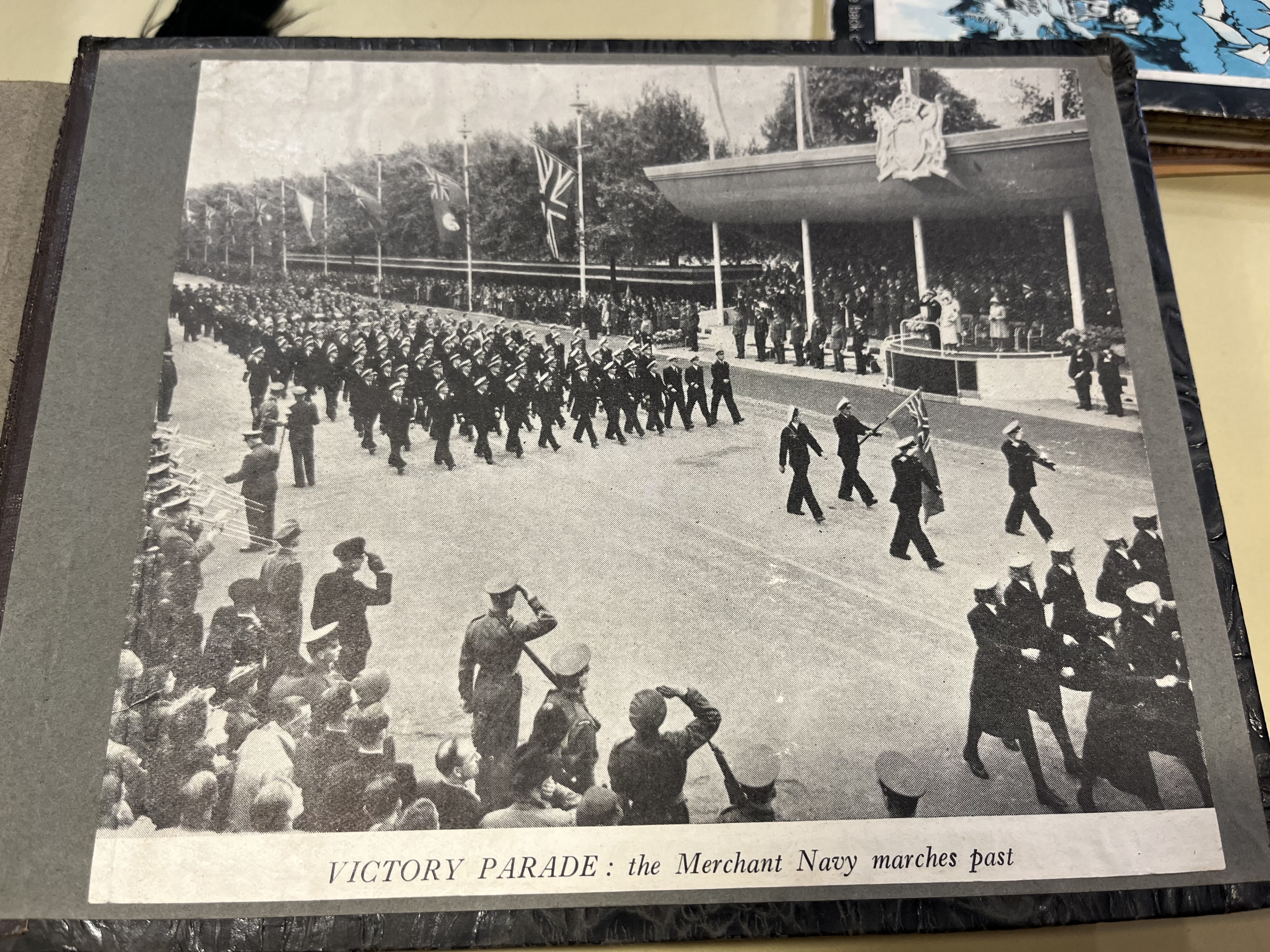
Most of the images, it seemed to me, with a relatively cursory look, were merchant shipping vessels and at the end of the book was an image of the merchant navy victory parade at the end of World War II.

I had looked at this and wondered who as the person who put it together?

But assiduous readers of this blog ( and that must be just me ) will remember I disappeared down a rabbit hole of naval mutinies a while ago and so I decided not to take on any research into this album.

I steeled my heart, as the best beloved would say, picked a figure out of the air and put it in the cabinet for £20.

So, there I am on a busy Saturday afternoon and someone asks if he might take it out and have a look at it.

Of course. And just then the shop was not too busy so we started talking about it.

Then customers started wanting to pay for books, asking for books we might have not on display, wanting to know whether the book they had seen ‘about two weeks ago and it was about, well I am not really sure but something to do with… have you still got it?’

So I left the man and his wife leafing through the album until the shop went a bit quieter again, and he said something along the lines of:

‘I am going to buy this and try and find out who he was. There must be ways of finding out the crew on all these ships and if there is a name which appears on all of them or at least some of them.’

A man after my own heart.

I asked him if he would let me know what he found out, if he ever does. 

I have given him my name and phone number and one of these fine days I might find out what he has found out.

‘It is amazing and rather sad,’ he said, ‘that a family have let this history go.’

But he doesn’t work in an Oxfam shop where you get all sorts of donations and think why did you let that go?

But, as someone donating the other day said, ‘ I hope you can find someone who likes old stuff because we don’t.’

Out with nature

Recently we had a lovely donation of old natural history books – and so we are off to the countryside, books in hand.
The donation came after someone’s father died and he was clearly someone who had a particular interest in butterflies and moths (more on that another time.)

But not exclusively as this little book shows:

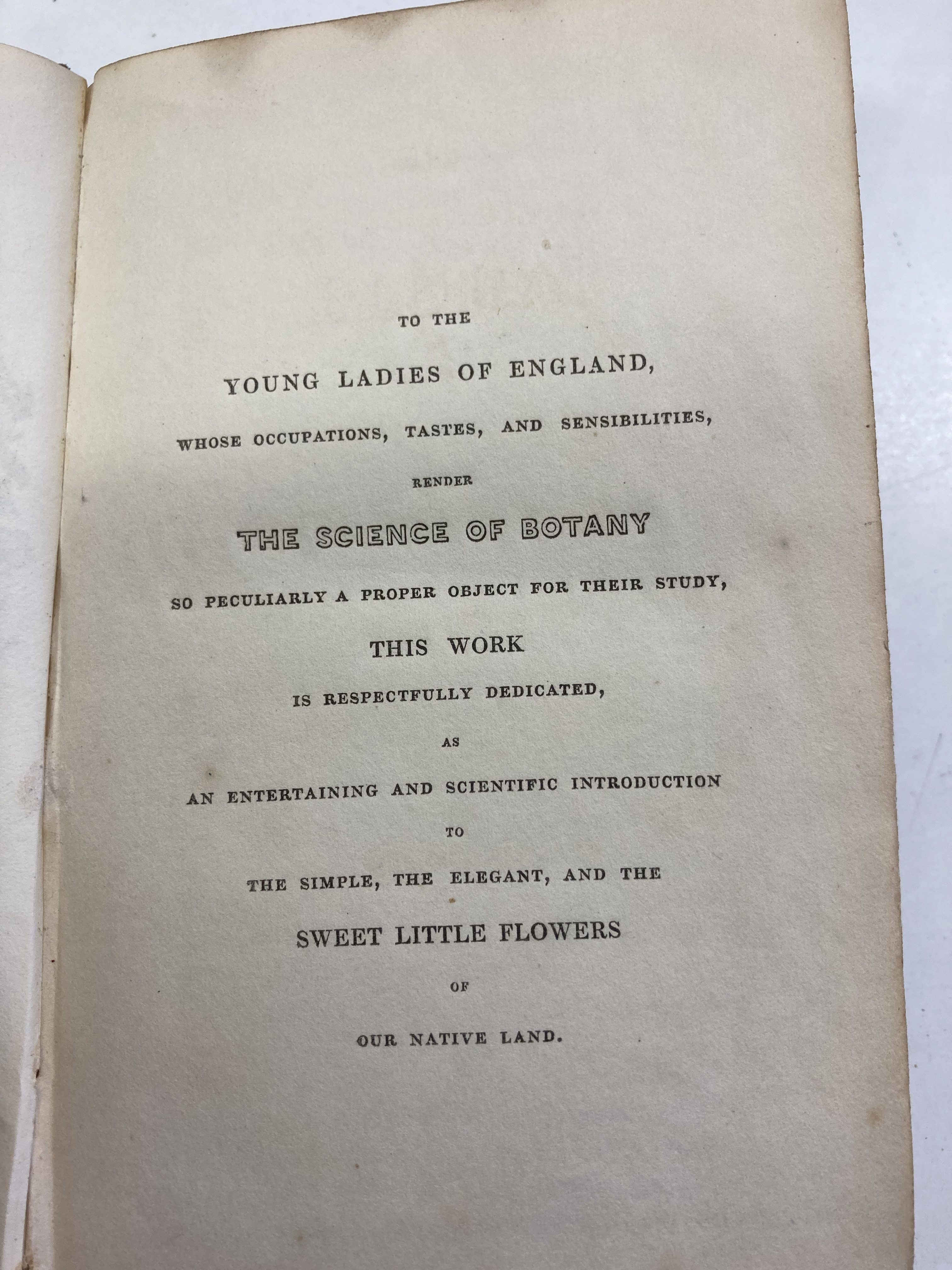
It is good to know that the young ladies of England have the appropriate study of botany to keep them from going wild…

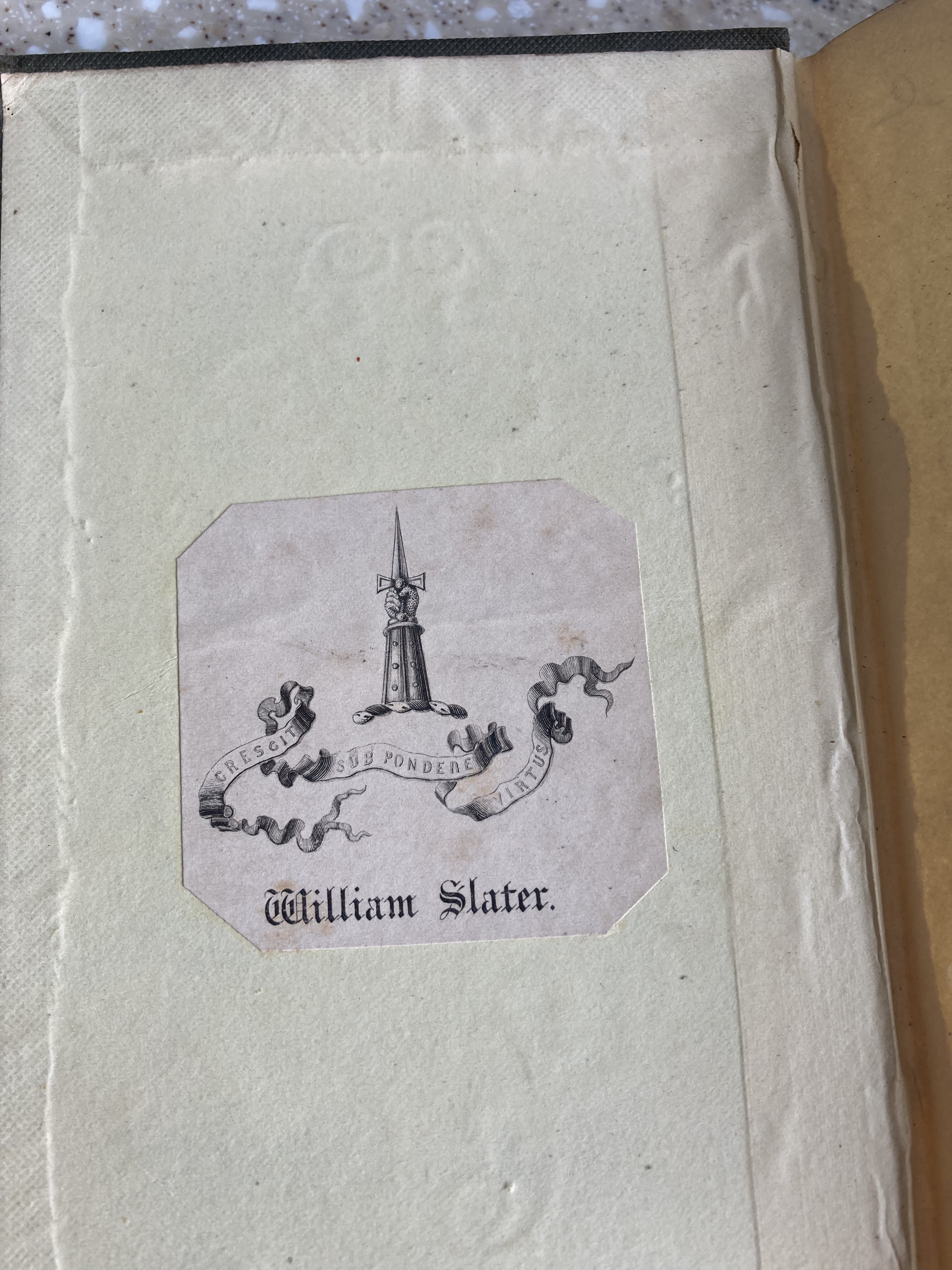
Mind you the book plate suggests that it was rather better used by a (young) man.
Now this one is also clearly intended for the amateur but I do have to question how simple the simple method is….

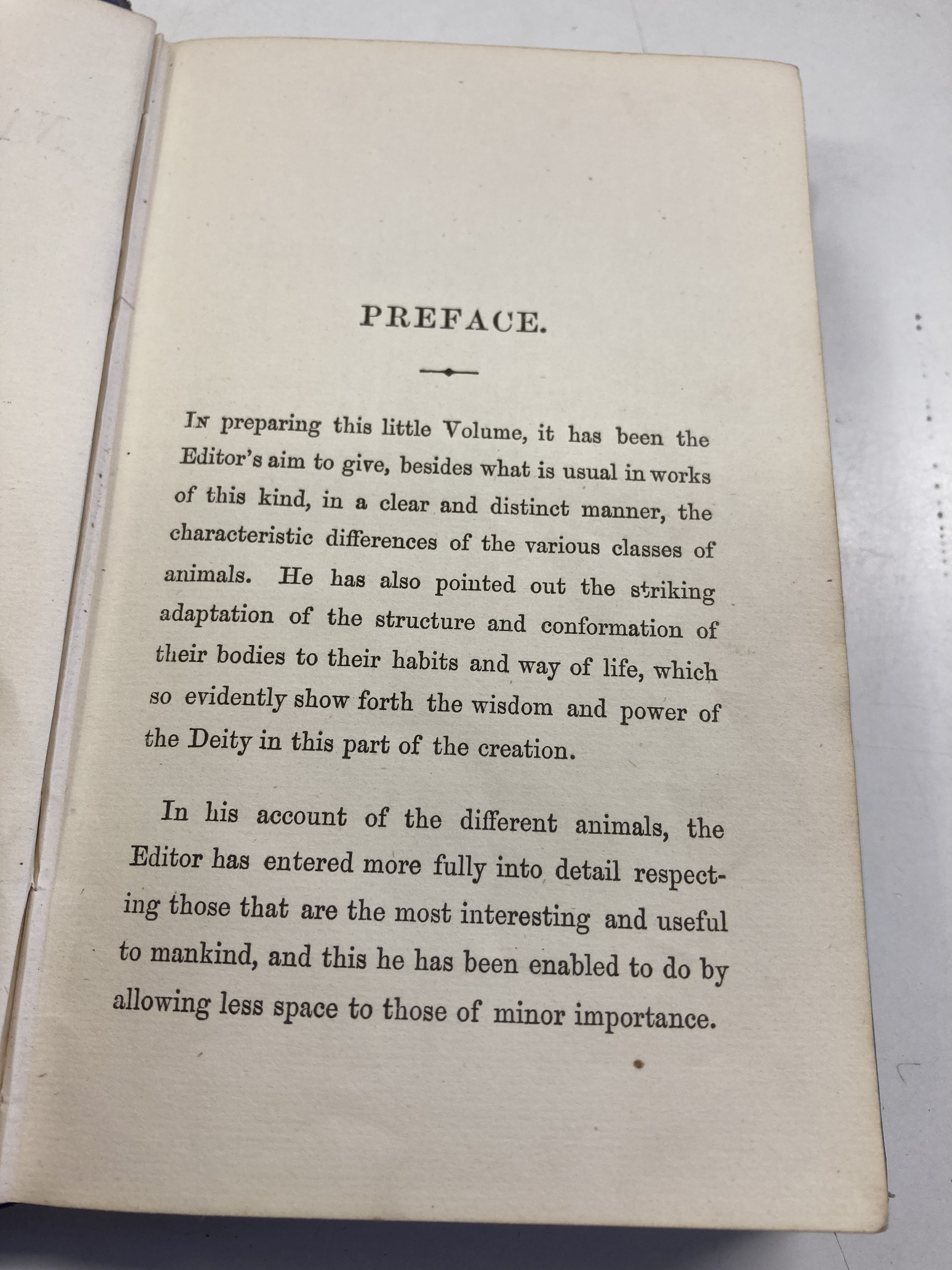
And then there is this little delight.

Knowing the difference between a hippo and a rhino, a crane and a heron and a frog and a toad is always handy – not that in the 1800s you were likely to see any hippos or rhinos unless you were a very intrepid traveller.

But what is interesting is the introduction and the owner’s name.

So, it was bought in 1858.

Darwin published Origin Of The Species in 1859.

I wonder if the un-named author/editor would have changed their views on nature being the proof of the wisdom of the Deity….

Peter Pan and Wendy

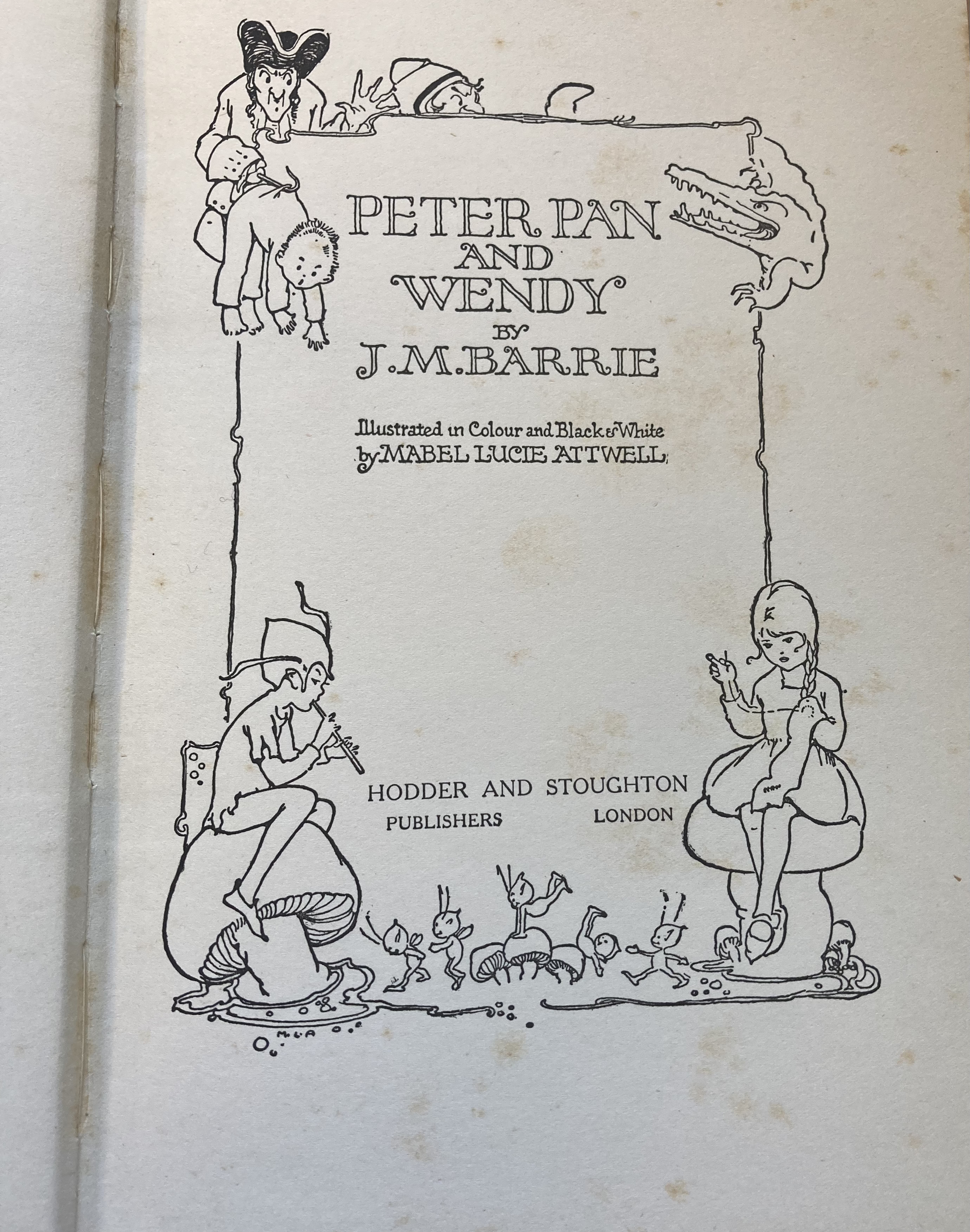
So even back in the day there were lots of Peter Pan books published and he still keeps going, and lots of a print run means less value, so what is this one worth?

This lovely book came in and I set about working out what it might be worth.

Well there were lots of versions but none of them were exactly like ours – I called in our expert and here are the things we needed to think about.

There is no publication date in the book.

So is it a first edition of this version of the book? Well, we are going with that and that means I need to describe it in the listing as ‘first edition thus.’

It certainly isn’t the first edition ever published ( I wish) but it is ( we think) the first edition of this version of this book.

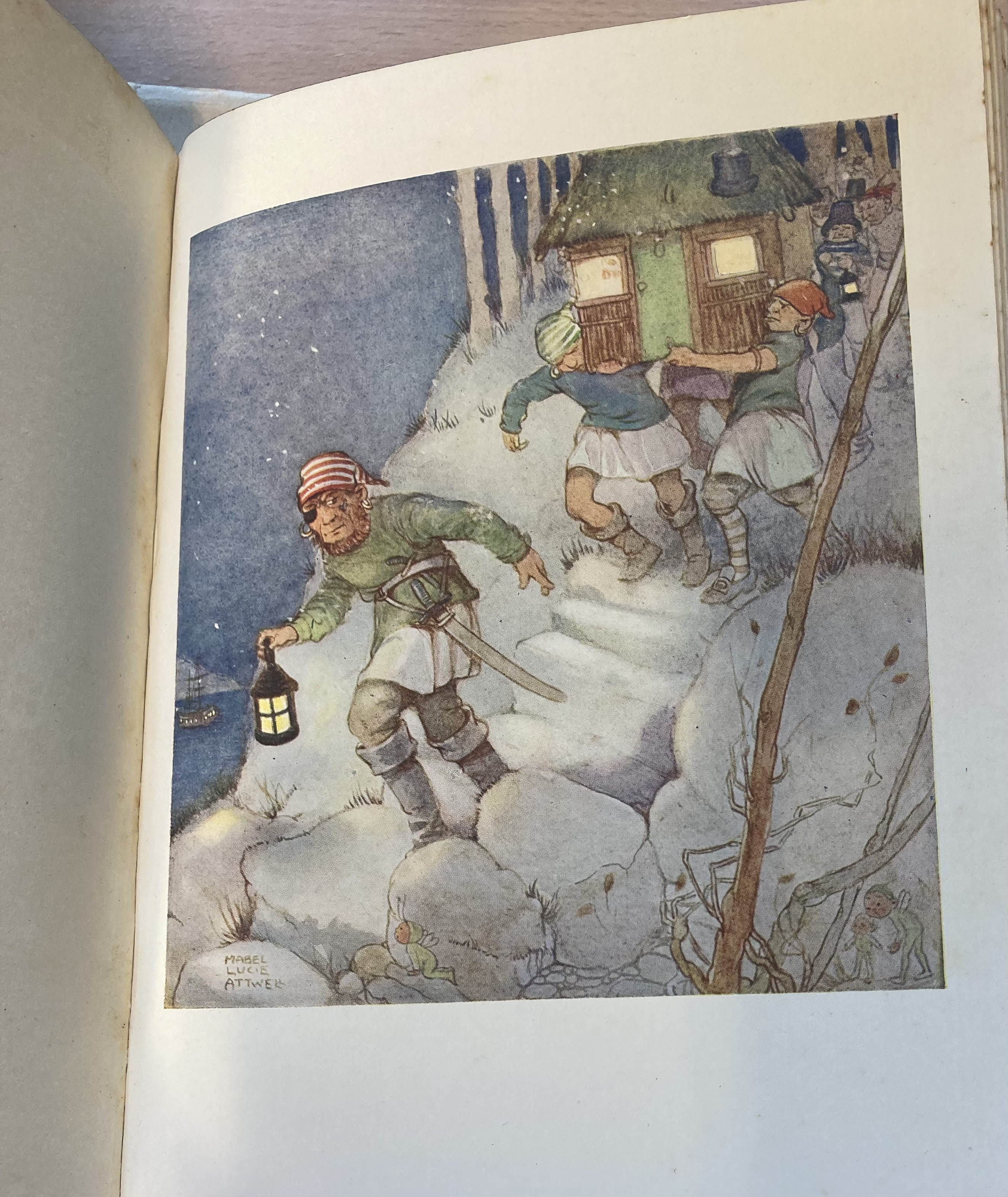
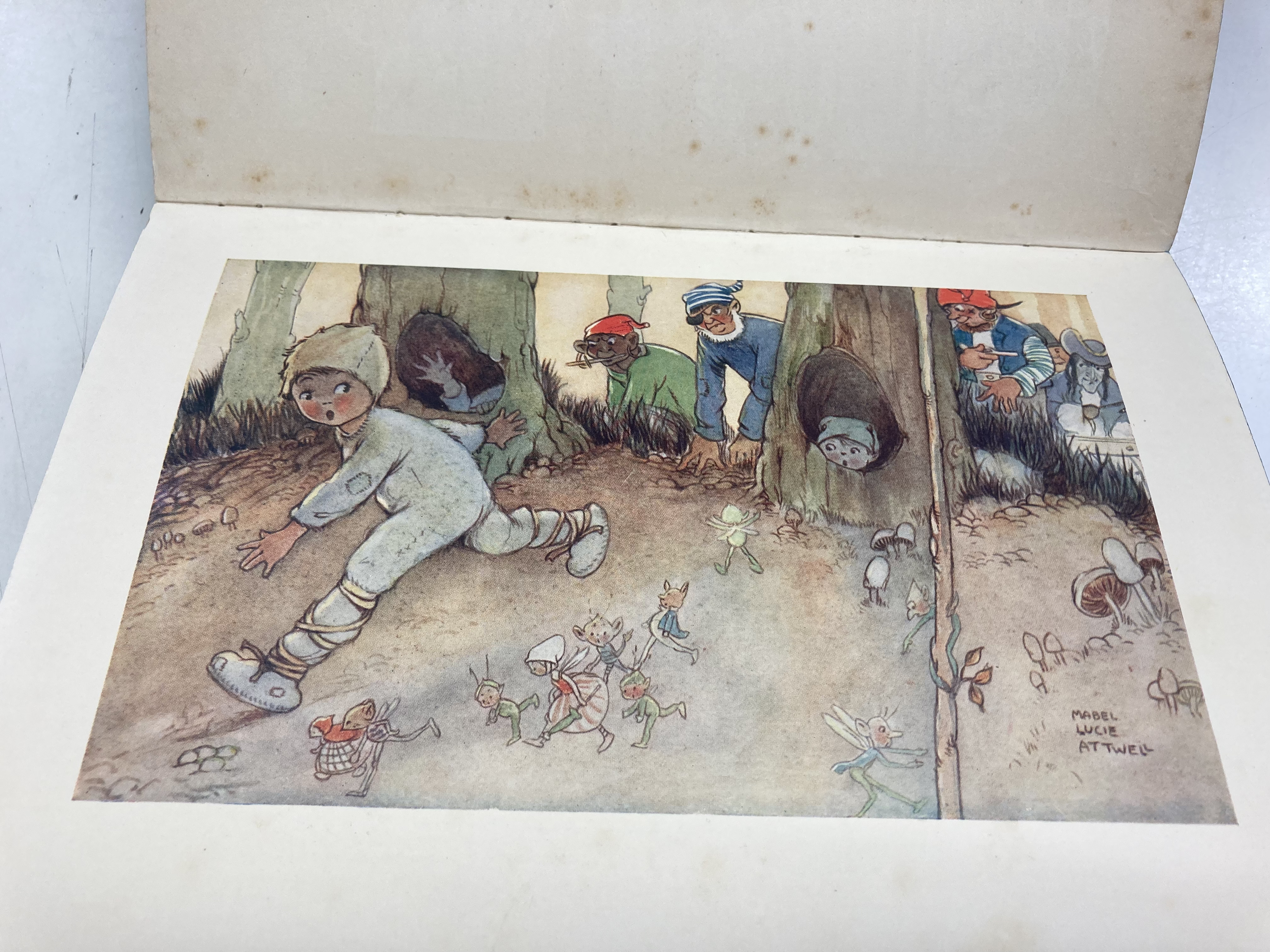
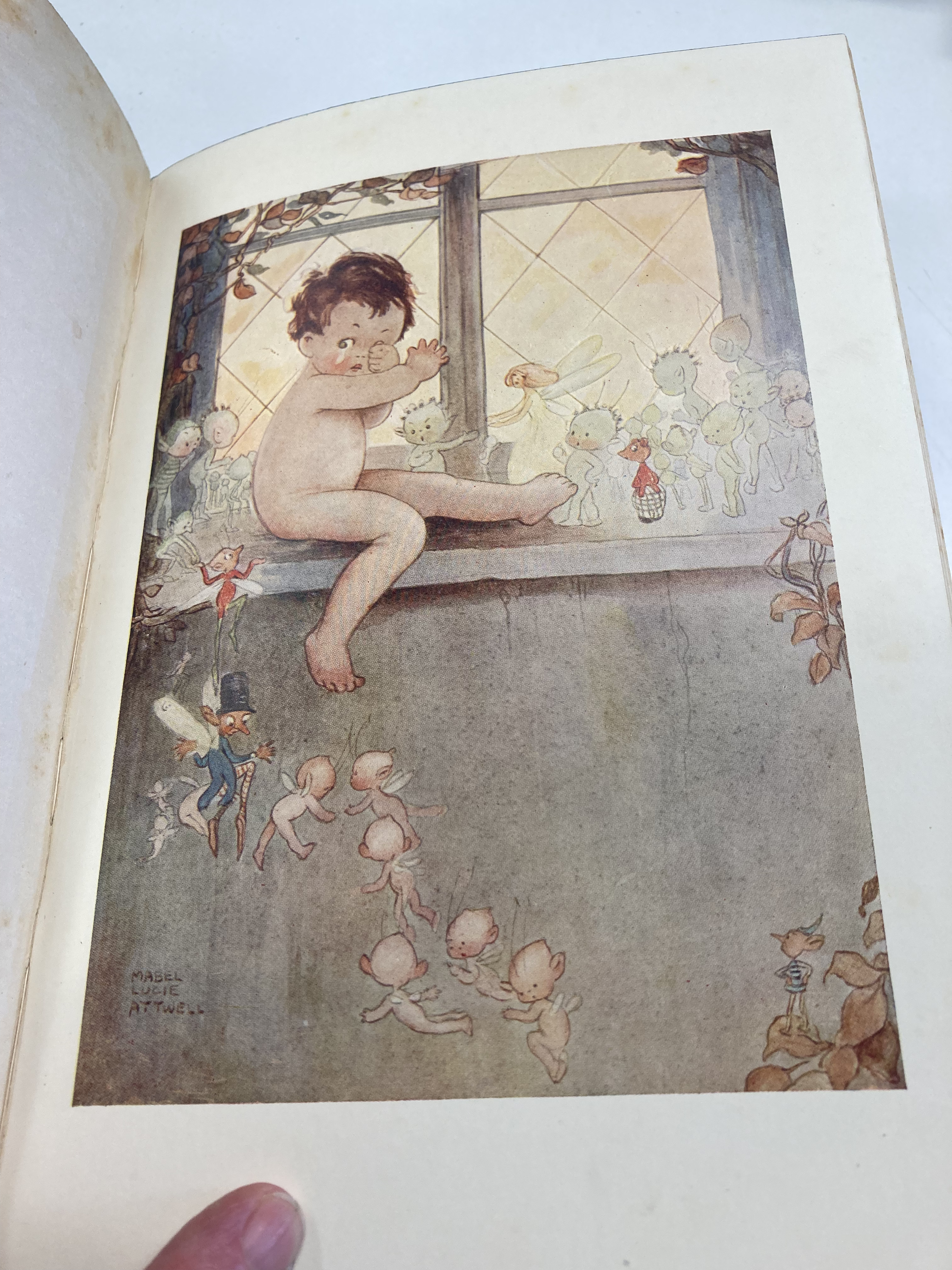
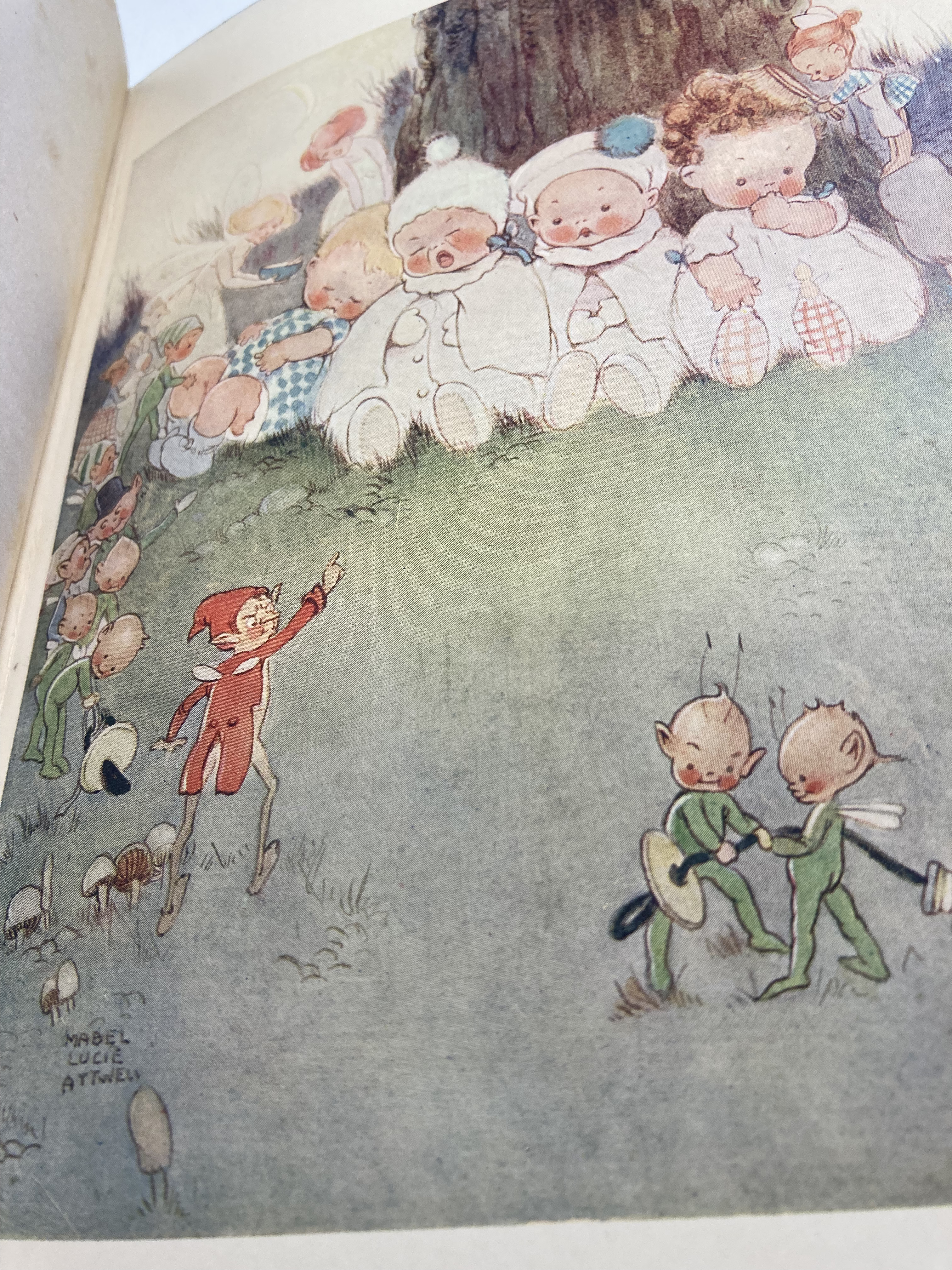
Mabel Lucie Attwell is the illustrator and she is still very popular in a rather charming/kitsch/of her era way.

So, she adds value and though the book is somewhat ‘foxed’ (I’ll explain) that doesn’t affect the plates (the pictures.)

We think, given a bit of research that she did this book in the 1920s but not enough research to find out the exact year……

More of MB Attwell later.

Foxing is the reddish-brown spots or splodges on pages and are apparently caused by age and contaminants.

Infact, did you know and I am pretty sure you didn’t, that there is no foxing in incunabula which (just in case you were not entirely sure) are books printed/created before 1500.

Anyway, back to the book.

It has a cover/dust jacket and that makes a huge difference.

A dust jacket makes the value of the book much more interesting.

Now I don’t want to assume you are not a dust jacket expert, but just in case:

It is the paper cover which has the nice pictures on it and ‘covers’ the ‘boards’ which are the main covers.

They get damaged and some people – including an Oxfam volunteer who was promptly and firmly put right on the matter – think that a scrappy dust jacket should be thrown away and you are left with the rather cleaner board covers of the book. 

Never – just saying.

Another thing that matters is whether it is priced clipped. In case you are not 100 per cent sure what that means, it is whether or not the price always printed on the bottom left hand corner of the dust jacket’s fold into the front inside cover – got that image in your mind?

Who would have thought that mattered, but indeed it does.

So, not where are we up to deciding what this book is worth?

Well, the dust jacket is really important as I said, and it is in pretty good condition.

That means: it has small tears where it has been handled and put in and out of shelves. 

It does not have major tears, rips, scribbled on it, bits missing….

The other thing which is an issue, especially with children’s books is ‘internal markings’ which is anything from polite underlining of words or passages to energetic scribbles across pages.

We have none – except a lovely inscription ‘To Elizabeth with all Mummie’s and Daddy’s love’

Now, back to Mable Lucie Attwell.

She was ‘known for her cute, nostalgic drawings of children.’ 

So, no surprise when she was called on to illustrate a famous children’s story.

‘From1914 onwards, she developed her trademark style of sentimental rotund cuddly infants, which became ubiquitous across a wide range of markets: cards, calendars, nursery equipment and pictures, crockery and dolls.’

‘Attwell’s illustrations caught the attention of Queen Marie of Romania, who wrote children’s books and short stories in English. Attwell was invited to spend several weeks at the royal palace in Bucharest in 1922. She also illustrated two long stories of the queen’s, which were published by Hodder & Stoughton.

So with all that, what have we got to sell – after all, we are raising money for a good cause.

Here is how I will list the book on Oxfam online:

Date unknown but thought to be first edition thus. Circa 1920s. Rare and very good condition dust jacket. Not price clipped. Significant, but relatively light, foxing throughout not affecting 12 colour plates. Many black/white other illustrations. 

Clean with no internal markings except a small ink previous owner’s name on front endpaper/

All in all, a very nice edition of this children’s classic.

£95.00

One Morning

As you may have gathered by now, I spend most of my time these days (though in my Oxfam ‘youth’ things were different) looking at what we call the Old and Interesting books donated to the shop.

And, as you may have gathered over the years, many of the books I look at might be old but not necessarily very interesting, but there are enough to make my Oxfam life fascinating (sometimes.)

And I’d really like to tell you about some of the more interesting. But some other time.

I could tell you of the work of many another volunteer – from those who sort, wash, iron and put online the clothes we have had donated ( yes, in despite of being a bookshop), those who then pack them up and send them off, the classical music expert already sorting out special stuff to keep back for Christmas ( yes that word is already being mentioned), the sorting out of Oxfam cards into their allotted slots in the spinner, and so much/many more.

But I don’t know what they do as well as I know what I do, so here is my Monday just as an example of what happens behind the scenes :

I arrived at 8am, wrote and distributed the weekly volunteer update – what we took last week in the shop, counting up the online sales of books, jewellery, music and the odd stuff – a pair of gold, fur-lined gloves ( in July?), the treen boot-jack with integrated boot tools which has been on sale for six months and has finally sold etc etc.

I left to do my pilates class – yes I am a Sussex housewife – and got back at about 10.15 by which time everyone had worked up their questions about what felt like a million things, queries about what to do, : 

What was happening with the table and the window, plans for the front-facer books (in case you have forgotten, these are books displayed so you can see their front covers and therefore and really, are more attractive and sell better), where to put the latest donations, and was this book especially interesting, could we have tea and coffee, and by the way did you buy some milk? etc etc.

And could I find a few very small jewellery donations which weren’t yet listed online to fill the miniature pirate cask in the window?

By the way, the window looked great thanks to someone who does a great job at making it so – with the help of the manager’s mother who has knitted rats for the pirates display….

But I needed to put not for sale stickers on the inflatable seagulls (yes seagulls and pirates of course) belonging to another volunteer and clear up some of the window display ‘leftovers’.

I found some jewellery.

Could I find some theme of books for the corner display and clear off the previous display –  in case you want to know – books about Japan and a few Japanese artefacts.

So, no I couldn’t think of anything on a theme so just brought down (from the semi-organised chaos upstairs) some lovely-looking, interesting books. 

(They sold really well and that means there were gaps, and our smart, great manager said she stood and looked at the gaps in the display the next day and tried to work out what the theme was……  today, we re-filled it with great books we had been wondering where to show them off.)

In the meantime, back in Monday, I had asked someone I knew to come in an PAT test ( proving the items are electrically safe) some model railway stuff which we have had buried behind the boxes of vinyl ( yes they have been there for, well, some months.)

(He needed coffee, space, a conversation, thanks and time to be acknowledged.)

So, I have no idea what these things are but apparently they are worth some £20 each. I also have no idea how to describe them but I will wait until next Monday when a volunteer who knows a bit about this stuff, tells me how to write them up for an Oxfam online listing.

Then two other volunteers came in and they had questions, something just to mention, tea requirements, change for the till because there were two ten pound notes – no good if someone buys a £2.49 book with (yet) another.

So, that was a trip to the bank.

And in between all that, there were donations.

Now, we have an amazing volunteer who cuts through donations like a knife through butter – everything sorted into those that need to go to ‘another’ place ( yes that is a euphemism) and those which will sell, are first editions, signed, unusual.

But there is a rule that says five minutes after he leaves, there is another arrival of donations – and they needed to be dealt with.

Suffice it to say, I was a bit tired at the end of my (extended) shift on Monday.

But in all that I found a book which has been a dandy of a research project and might be worth a good deal. 

More of that another time.

Escape

There is something about an interesting map donation to the Oxfam bookshop which seems to get all sorts of volunteers interested.

And recently we have had some more than usually volunteer-captivating ones.

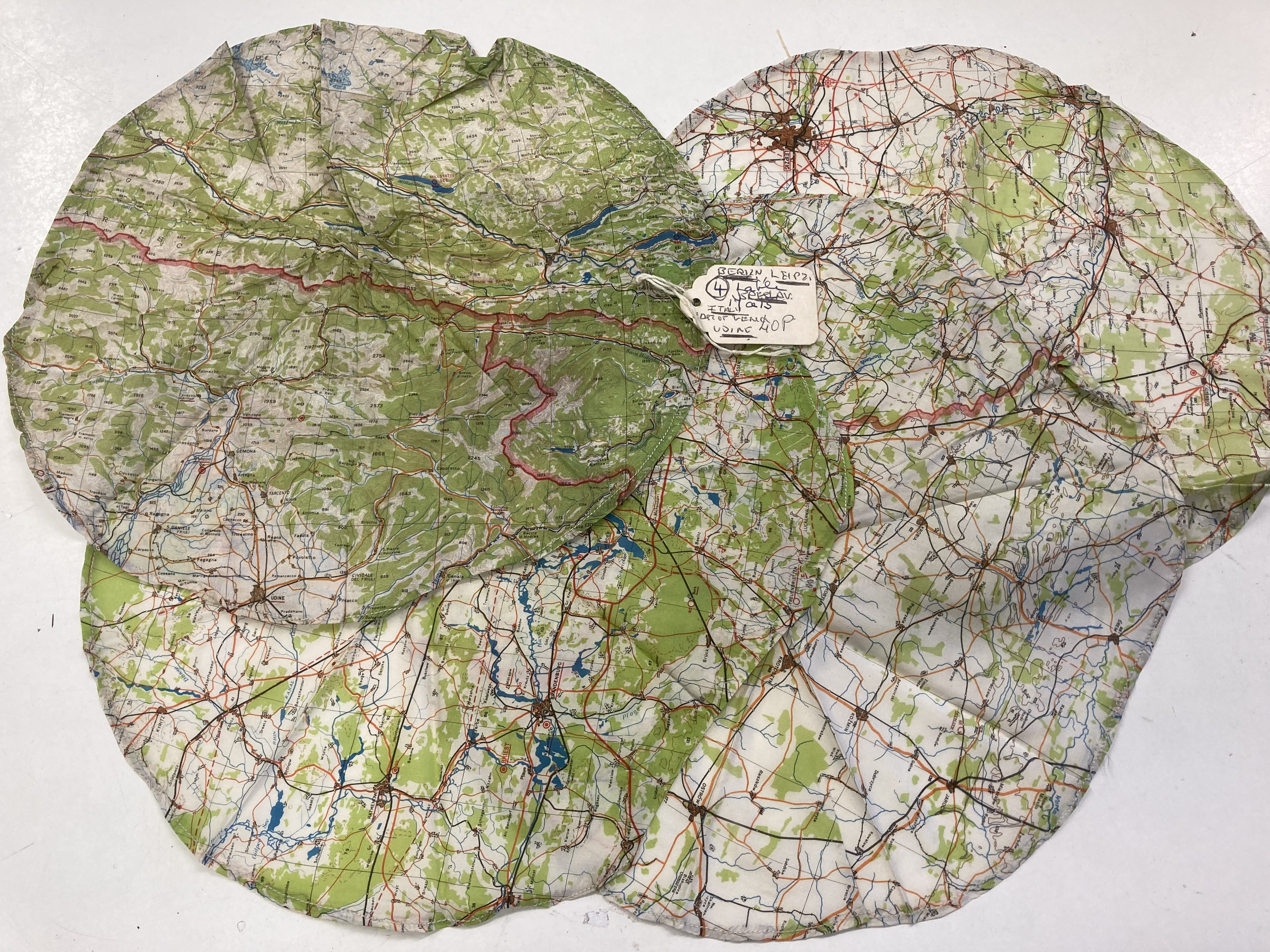
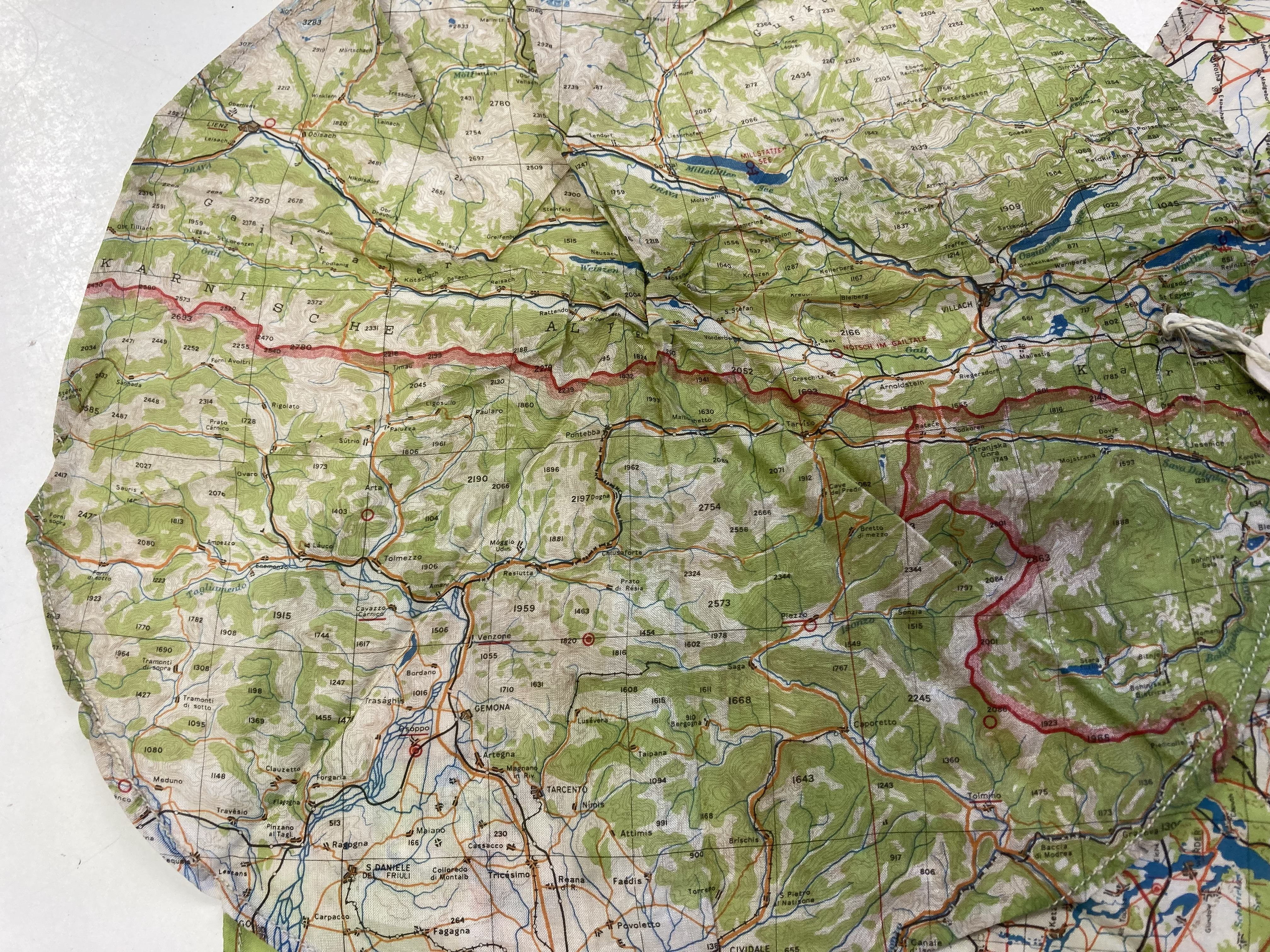
In an envelope in the back of the book, a colleague found these.

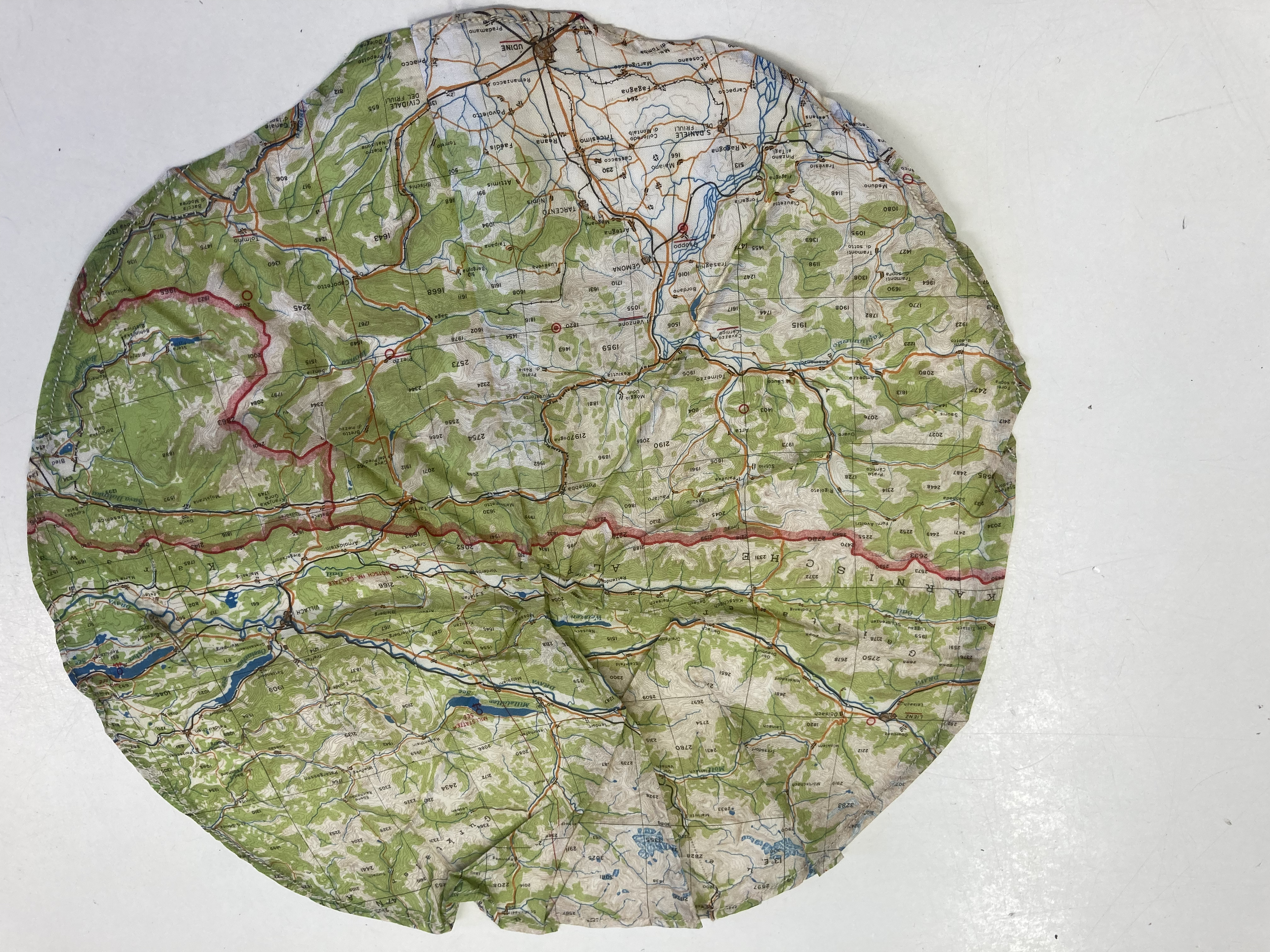
They are the remnants of escape maps.

One of them includes Berlin – so a brave person who went in there.

In case you don’t know, and we didn’t, maps were printed on parachute silk and/or rayon fabric and given to people making their way into ( and hopefully out of ) enemy territory in WW II.

(And if you will excuse me being rather clumsy, they are a nice escape from someone’s house clearance of less than riveting books. Of course, we love all the books donated but you know, now and then……)

Originally, they would have been larger and square and the fact that someone has cut them down to make, what? A small place mat? has rendered them a lot less valuable than they would have been.

The printing is amazingly clear and of course the fabric meant you could scrunch it up to nothing, hide it in your pocket, make into a hatband when in disguise, put into a slit in the lining of a jacket…. ( both true apparently.)

And there was none of that difficult, time-consuming folding and unfolding of a linen or paper map with which anyone whose been on a long walk in familiar territory, leave alone enemy territory, is all too familiar.

Courtesy, as ever, from Wikipedia:

During World War I Australians produced an escape map for use in July 1918 by prisoners in the German Holzminden POW Camp, sections of map were sewn into the clothing of prisoners who escaped via a tunnel to Allied territory.”

Some American intelligence offices visited the UK in 1942 to be briefed on the British efforts in escape and evasion techniques and equipment. 

The British MI9 gave the Americans a book or manual called “Per Ardua Libertas” to take back to the US. Published in this manual were examples of each cloth escape and tissue escape map that the British had produced. 

After this meeting with the British, the United States began to produce its own escape maps. Most of the American maps supplied by the Army Map Service from World War II were actually printed on rayonacetate materials, and not silk.

However, because of the silky texture of the materials, they were referred to by the more familiar textile name.

During WWII hundreds of thousands of maps were produced by the British on thin cloth and tissue paper. The idea was that a serviceman captured or shot down behind enemy lines should have a map to help him find his way to safety if he escaped or, better still, evade capture in the first place.

Many of these maps were also used in clandestine wartime activities.

Apparently,  35,000 servicemen and men and women on secret missions escaped safely during WW II and it is estimated half of them used some form of escape or evasion map to do it.

But it wasn’t just servicemen ( and maybe women on secret missions) who had these maps.

And they weren’t all made of silk or rayon:

The cloth maps were sometimes hidden in special editions of the Monopoly board game sets sent to the prisoners of war camps. The marked game sets also included foreign currency (French and German, for example), compasses and other items needed for escaping Allied prisoners of war.Escape maps were also printed on playing cards distributed to Prisoners of War which could be soaked and peeled apart revealing the escape map. Other maps were hidden inside spools of cotton thread in sewing kits. “Due to the inherent strength and extremely compact nature of the MI9mulberry leaf tissue maps, they could be wound into twine and then rolled into the core of cotton reels.

I have disappeared down a bit of an WW II escape rabbit hole so do feel free to leave if you don’t need to know anymore. 

But before you go, we will put our unfortunately-mangled maps for sale online and I will wonder whose were they? What was the story of if and how they were used, why were they cut down….

For anyone still with me, I was wondering what MI9 was.

It was:

MI9, the BritishDirectorate of Military Intelligence Section 9, was a highly secret department of the War Office between 1939 and 1945. 

During World War II it had two principal tasks: (1) assisting in the escape of Alliedprisoners of war (POWs) held by the Axis countries, especially Nazi Germany; and (2) helping Allied military personnel, especially downed airmen, evade capture after they were shot down or trapped behind enemy lines in Axis-occupied countries.

During World War II, about 35,000 Allied military personnel, many helped by MI9, escaped POW camps or evaded capture and made their way to Allied or neutral countries after being trapped behind enemy lines.

The best-known activity of MI9 was creating and supporting escape and evasion lines, especially in France and Belgium, which helped 5,000 downed British, American and other Allied airmen evade capture and return to duty. 

The usual routes of escape from occupied Europe were either south to Switzerland or to southern France and then over the Pyrenees to neutral Spain and Portugal.

MI9 trained Allied soldiers and airmen in tactics for evading and escaping and helped prisoners of war to escape by establishing clandestine communications and providing escape devices to them.

The person credited with creating the various ways to make, give and send escape and evasion maps was Christopher Hutton:

a British soldier, airman, journalist and inventor, best known for his work with MI9

And, just so you know, MI9 no longer exists but whilst it did, it had a section:

“Q,” staffed by Christopher Hutton and Charles Fraser-Smith, was charged with inventing devices to aid soldiers to evade or escape capture. “Q” was made famous in fiction by the James Bond movies.

Niche Ships

Another bit on niche books – attractive to my only Vice Admiral (and Sir) reader, I would guess.

So, if you are not into ships/boats/history/niche books, now is the time to walk away.

And after this, I maybe off to a blog on pickles – I bet you can hardly wait.

Right, now we are off to the Falklands.(Or Malvinas if you prefer.)

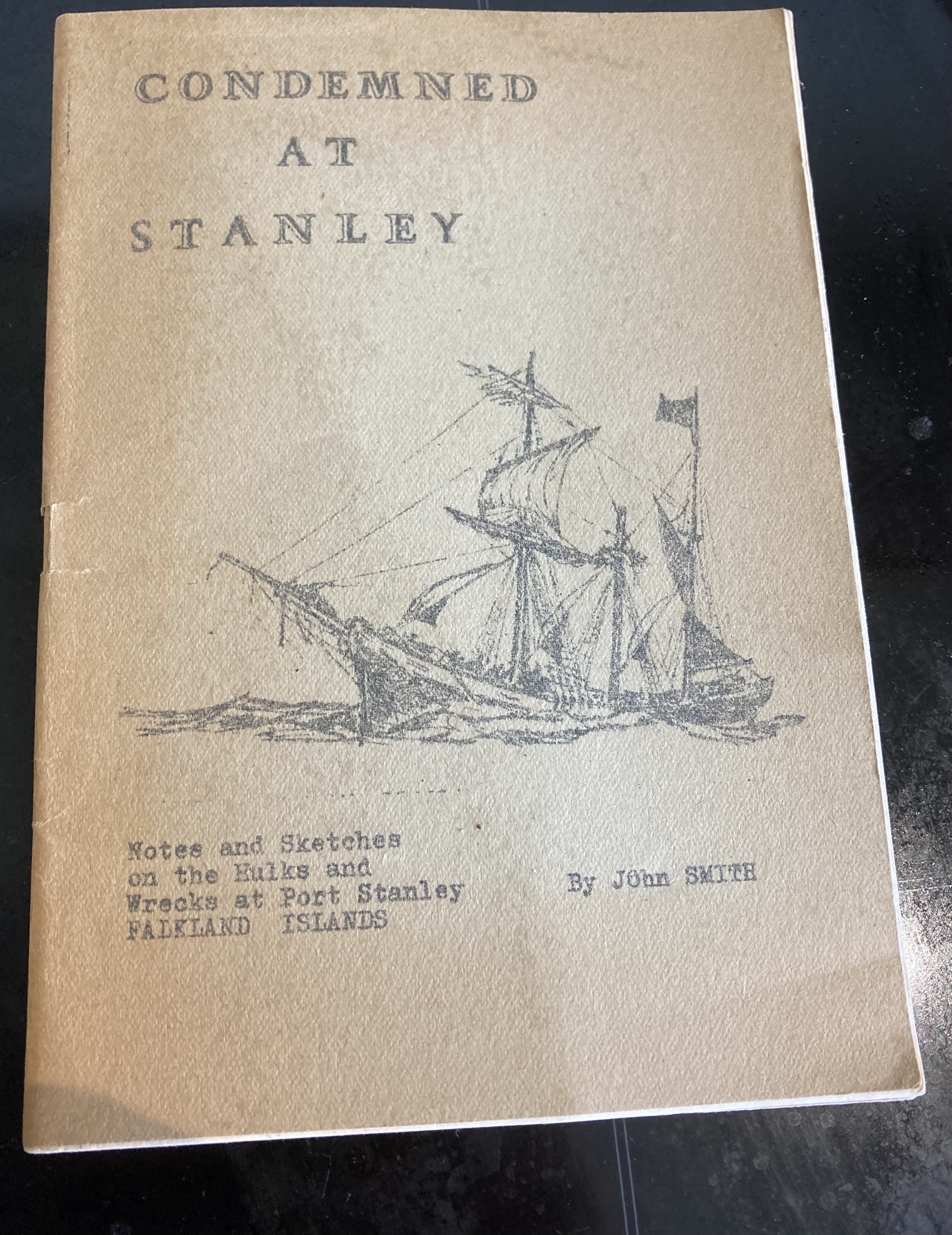
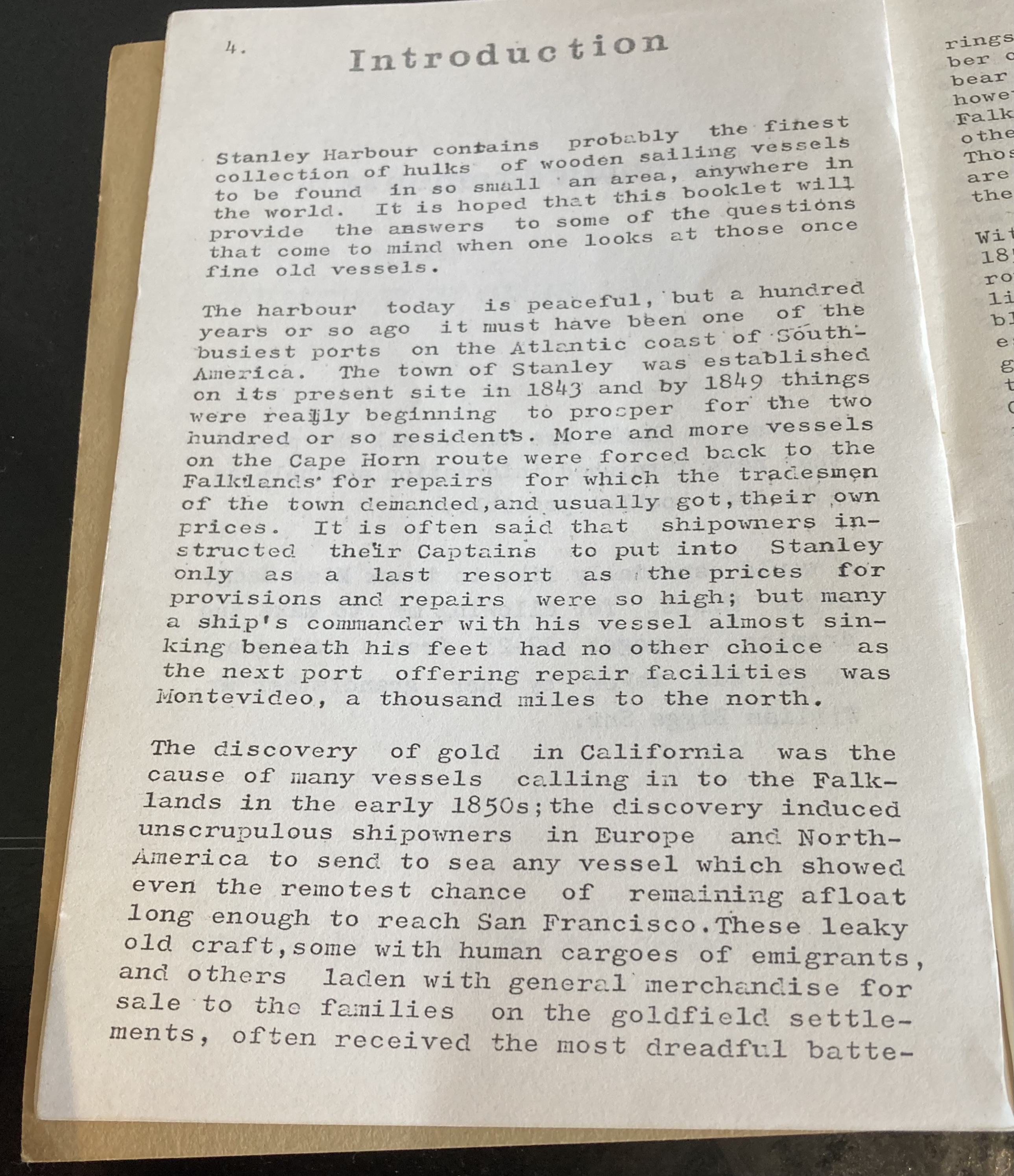
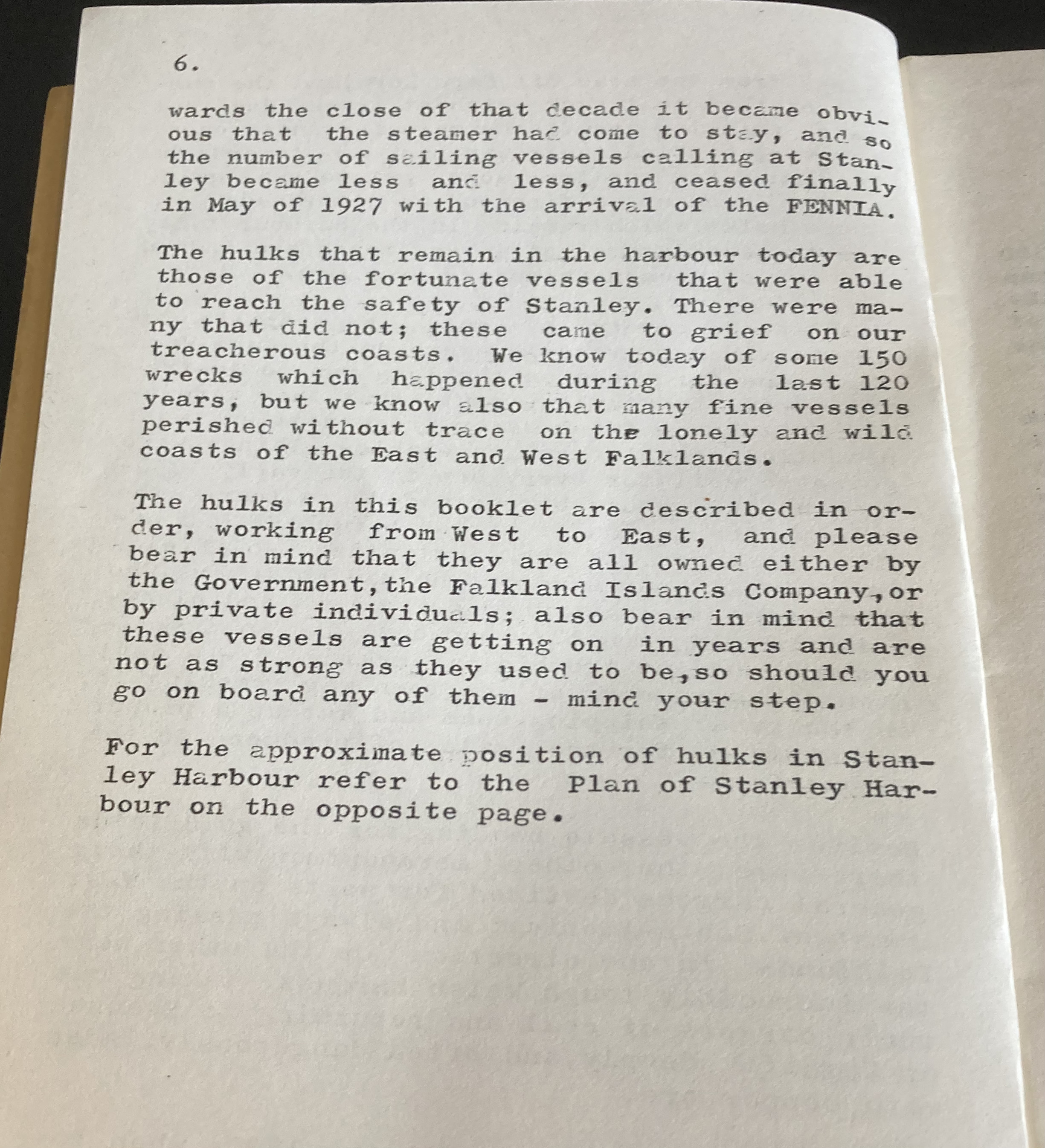
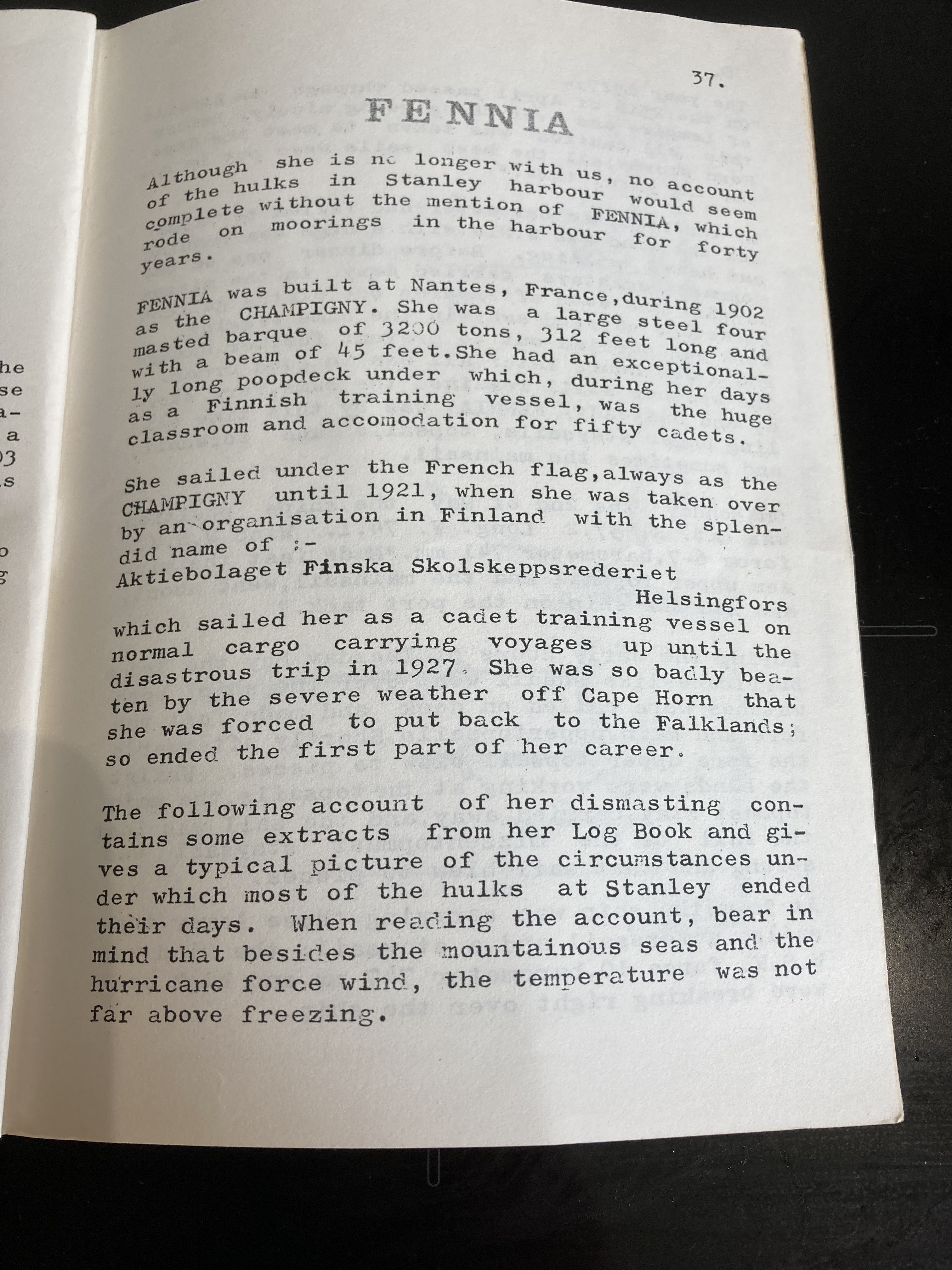
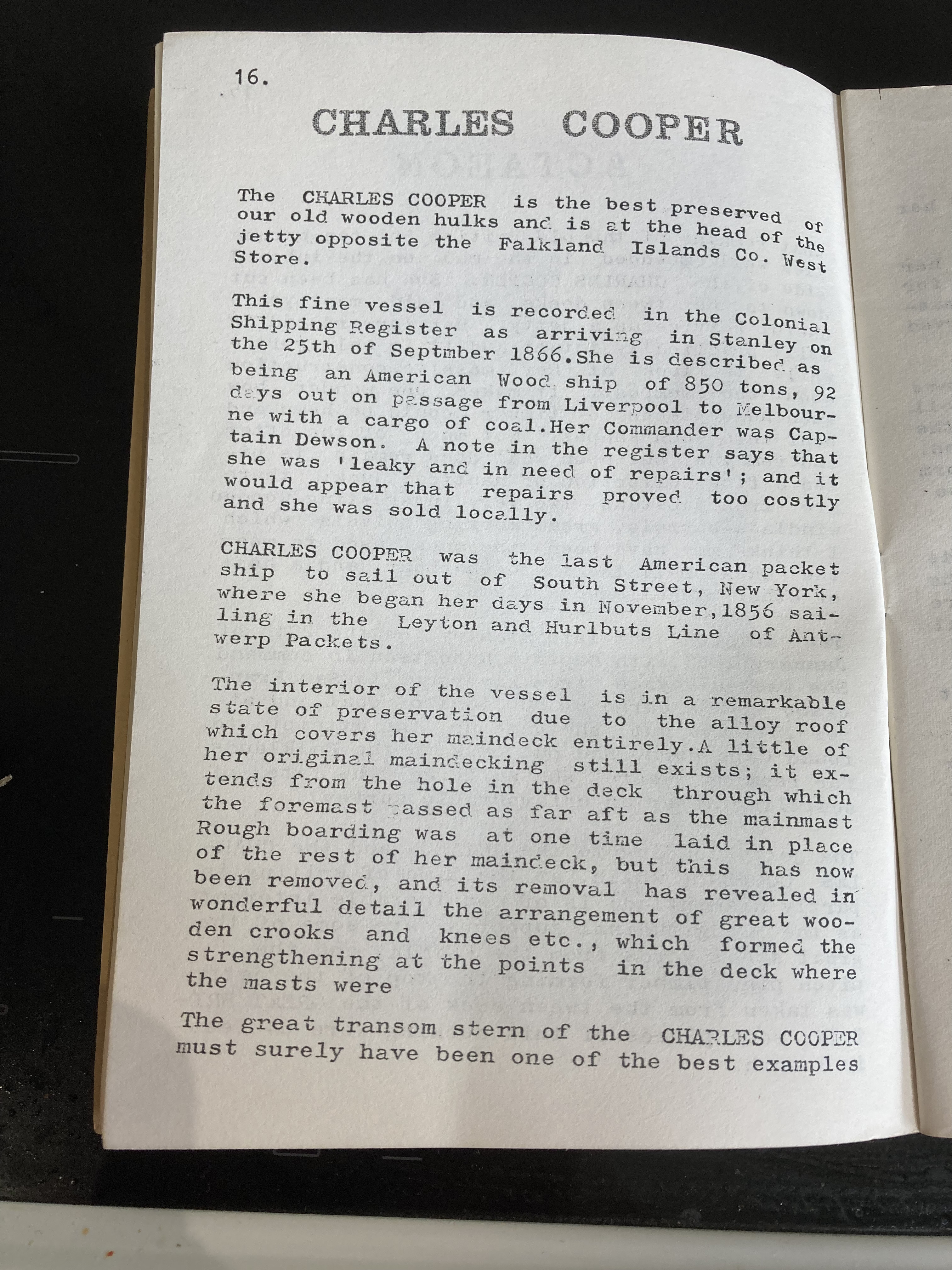
(Before we get onto the content, for those of us who remember bashing away on a typewriter, this little pamphlet was a trip down memory lane – obviously typeset from a typewritten ‘manuscript’ with added sketches – done by the author.

I do like a real, original typewriter typeface.

And presumably he did not print so many that he couldn’t bear the thought of changing the odd mistake by hand – see subsequent photos.)

I am guessing the author was the same John Smith who wrote a memoir called : 74 Days: An Islander’s Diary of the Falklands Occupation. ( No, that has not been donated.)

We have had got two of these pamphlets and one is signed and other has an interesting dedication but more on that later.

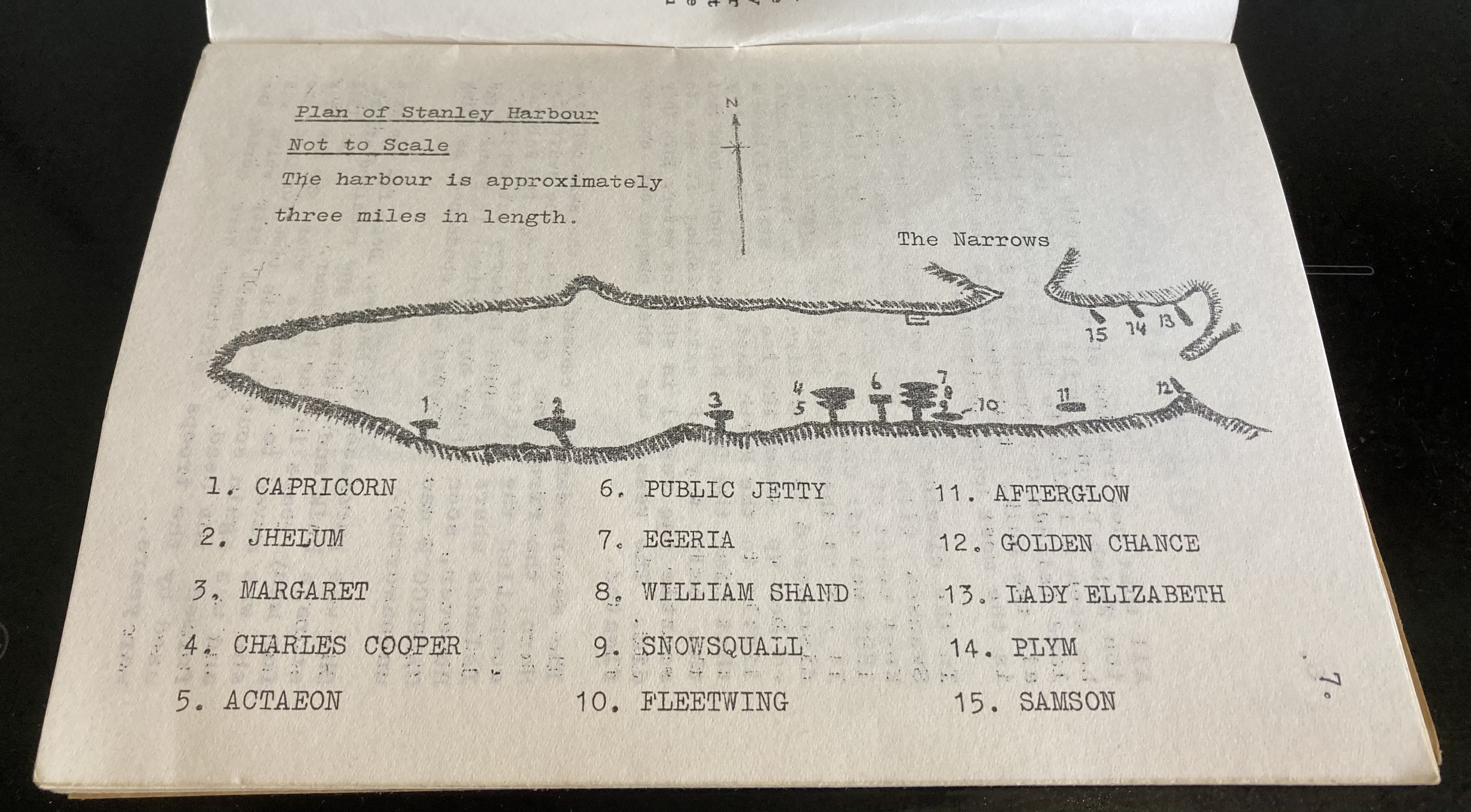
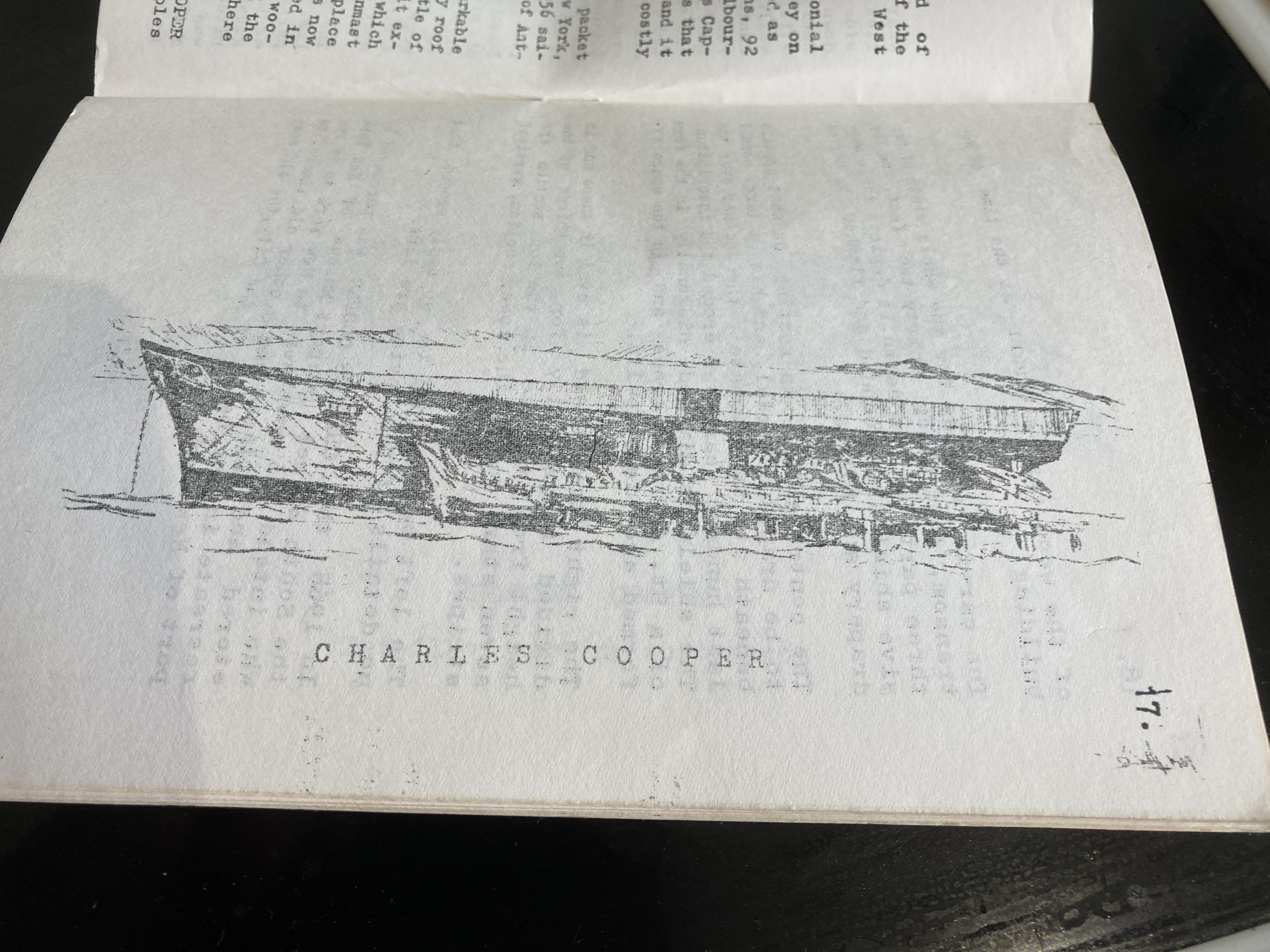
So, there are notes and sketches on 14 wrecks in the Falklands harbour – from Capricorn to Fennia.

And indeed the 3-mile long harbour does seem to have an abundance of wrecks.

There is a bit of history – and I have to say, well-written interesting stuff which is not inevitably the case with self-published/locally-published books…..

Back to the ships:

Here they are:

Apparently, it is indeed in the museum and …….

The Charles Cooper was built in Black Rock, Connecticut in 1856 and is the only surviving American ship of its kind in the world. It is the best surviving wooden square-rigged American merchant ship.  Built for New York’s South Street packet trade, the vessel voyaged around the world during the golden age of sail, and when it could sail no longer, became a floating warehouse for nearly a hundred years on an island off South America. The ship sailed for a decade from 1856 to 1866. It carried cotton to England, salt to India, gunpowder ingredients to the North during the Civil War, and brought European immigrants seeking economic opportunity and freedom in America. The Charles Cooper began with regular fixed schedules between New York and Antwerp. Then, with the outbreak of the Civil War, it no longer had set published departure times and instead voyaged based on spot demands from America to Europe and Asia.

So, finally to the inscription:

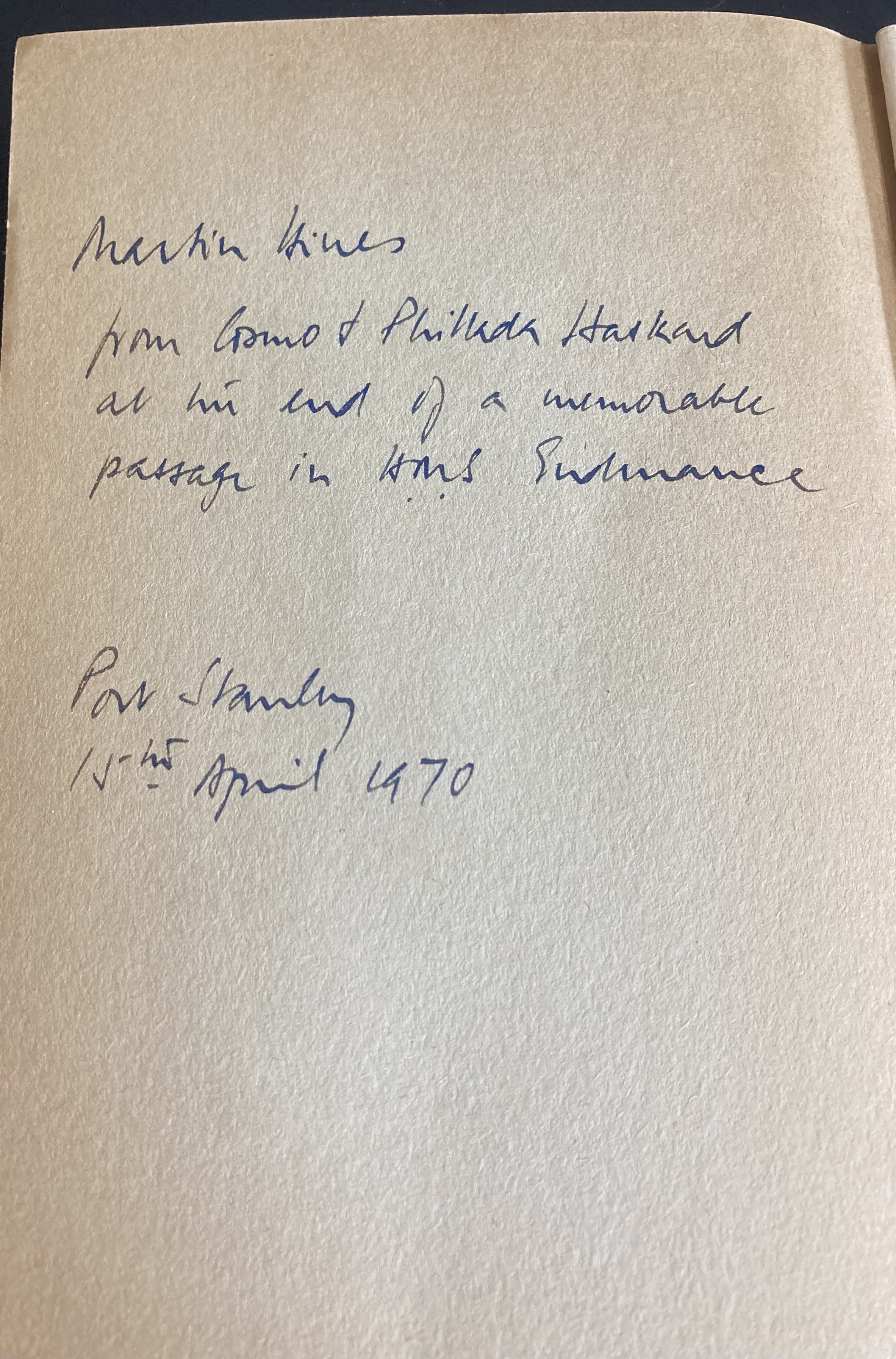
So, it turns out that this pamphlet was given to Martin Kine by Cosmo and Phillida Haskand. Haskard was the Governor General of the Falklands (1964-1970) and who ‘played a key role in defeating plans by Harold Wilson‘s Labour government to cede the sovereignty of the islands to Argentina. ‘

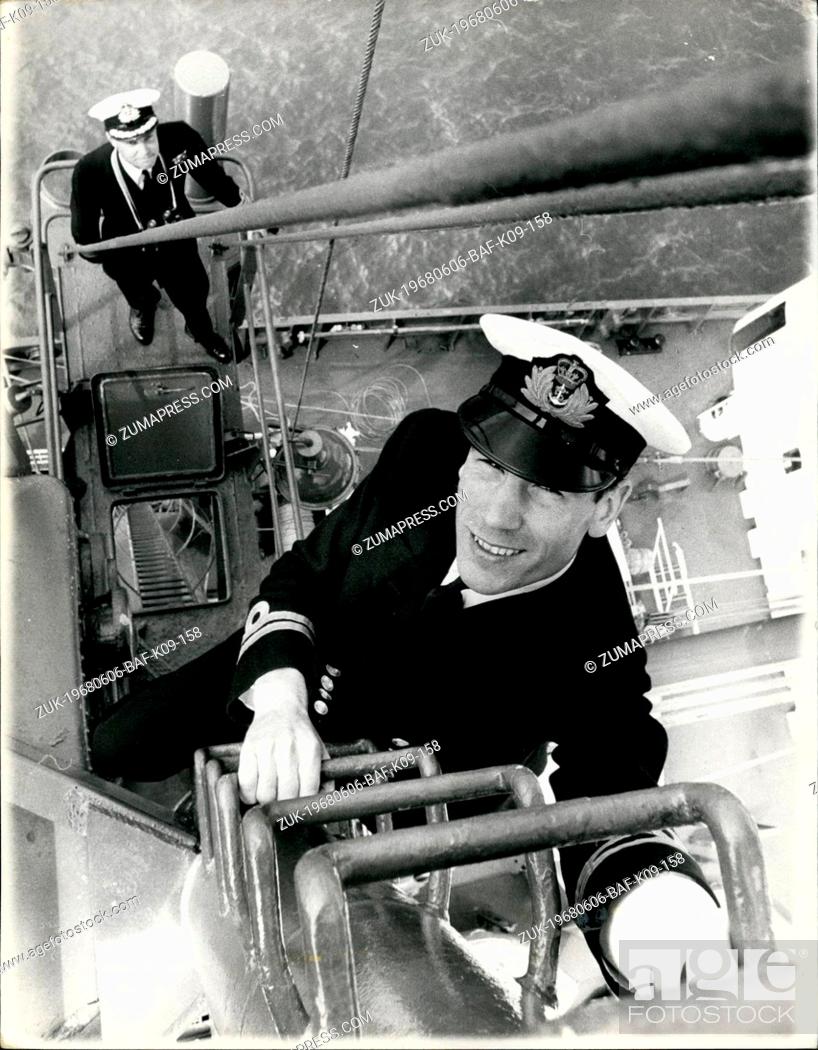
Martin was the HMS Endurance navigator, and dashing he looks too.

Jun. 06, 1968 – Press visit to H.M.S. Endurance: There was a Press visit to HMS Endurance, the Royal Navy’s new ice patrol ship, at Portsmouth Dockyard today. H.M.S. Endurance is expected to sail for the Antarctic later in the year. She will normally be deployed in the Antarctic, returning each year to the United Kingdom for maintenance and leave. In addition to providing a British naval presence in the area, she will assist the British Antarctic Survey in carrying out its scientific research programmes, and help support the permanent British stations there. HMS Endurance was recently converted for her new role at Harland and Wolff’s yard. Previously known as the Anita Dan. Her conversion has included the installation of special scientific and hydrographic equipment for her work in the Antarctic. One of the features of the ship is that it can be controlled from the crow’s next so as to give her officers view of channels through the ice.Photo shows the Navigating Officer, Lt. Martin Hines (nearest camera) and the Commanding officer, Captain Peter Buchanan seen making their way up to the crow’s nest from where the ship can be controlled. (Credit Image: © Keystone Press Agency/Keystone USA via ZUMAPRESS.com)   

Of course, of course, this was not the original HMS Endurance but a later version – originally a German ship bought by the British navy and used as an ice-breaker among other things.

But she had her place in history – she was the ship on which ‘the final surrender of the war, in the South Sandwich Islands, took place.’

Apparently she was known by her sailors as HMS Encumbrance towards the end of her life ‘due to unreliability problems.’

I have no idea why the Haskards had ‘such a memorable passage ‘ on her but it has been a memorable little find in Oxfam.

Very Niche Books

I think I may have said before the if you wait long enough there a book on every subject under the sun will come into our Oxfam bookshop – and today we had a bit of a niche-book bonanza.

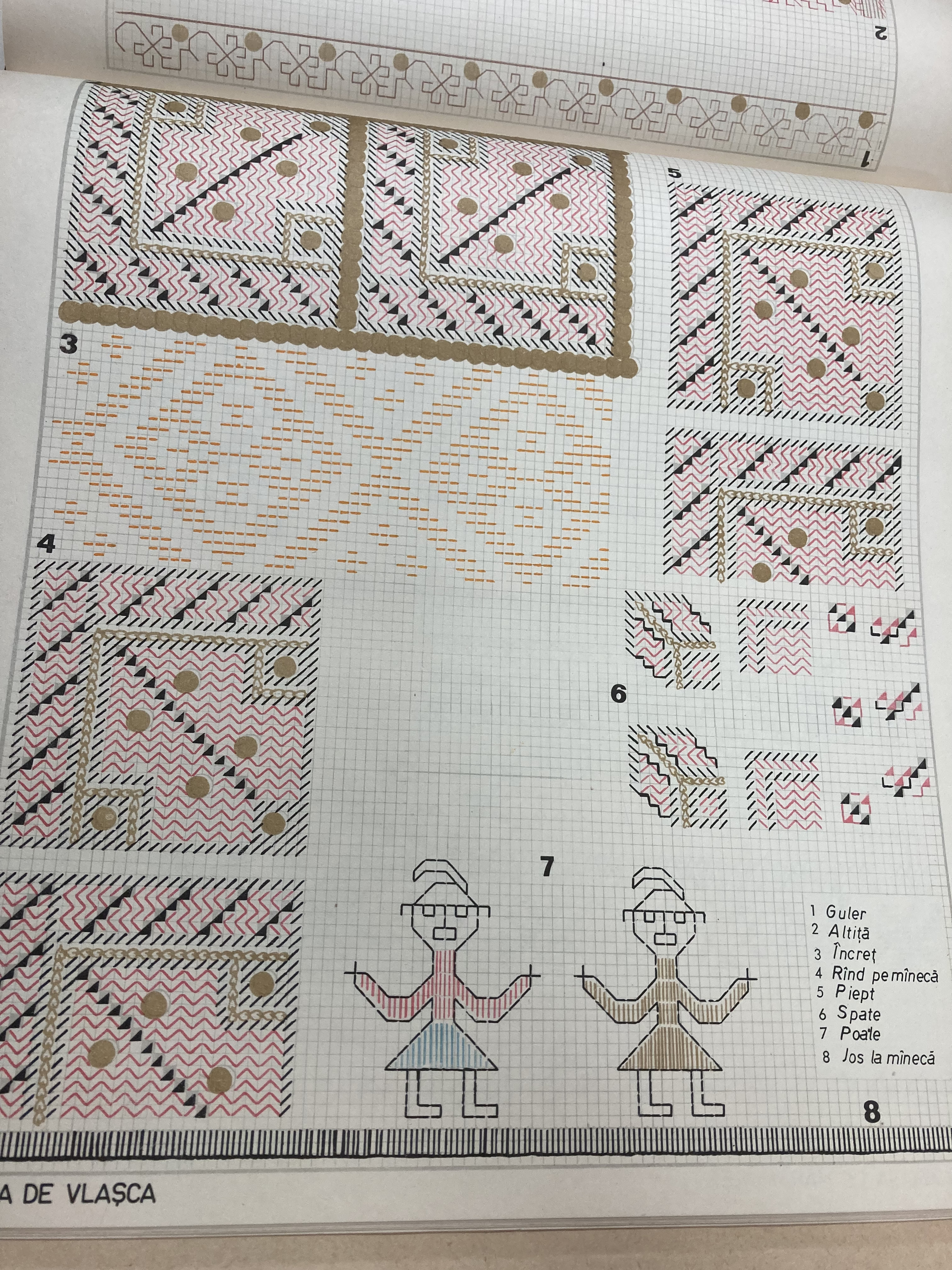
So, in case you are not clear, this is a book on the embroidery of traditional Romanian costumes, with patterns and with a Romanian text – not something we get every day in our Petersfield bookshop. (Apparently worth £50 and should you be interested, it is for sale on Oxfam online.)

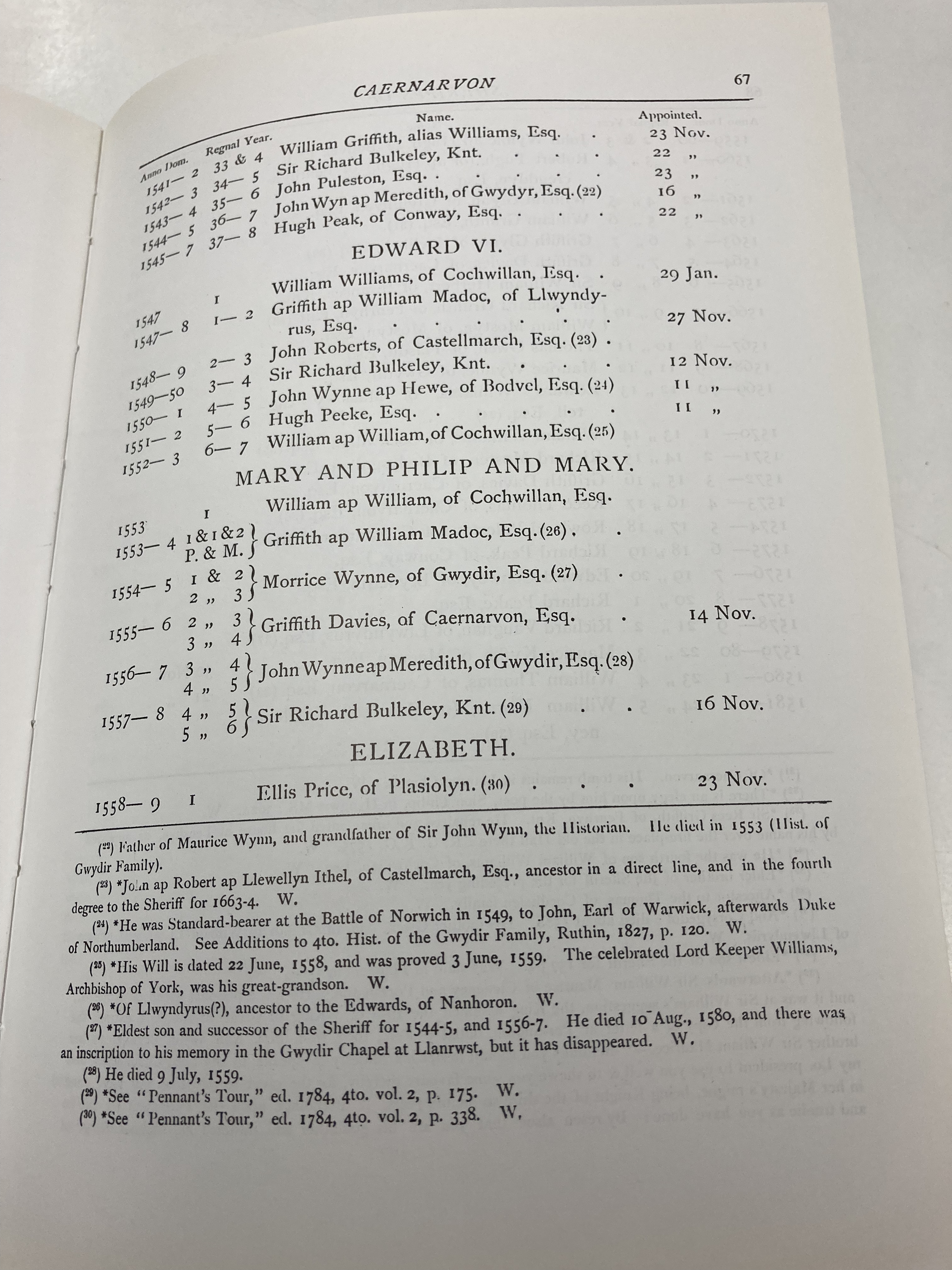
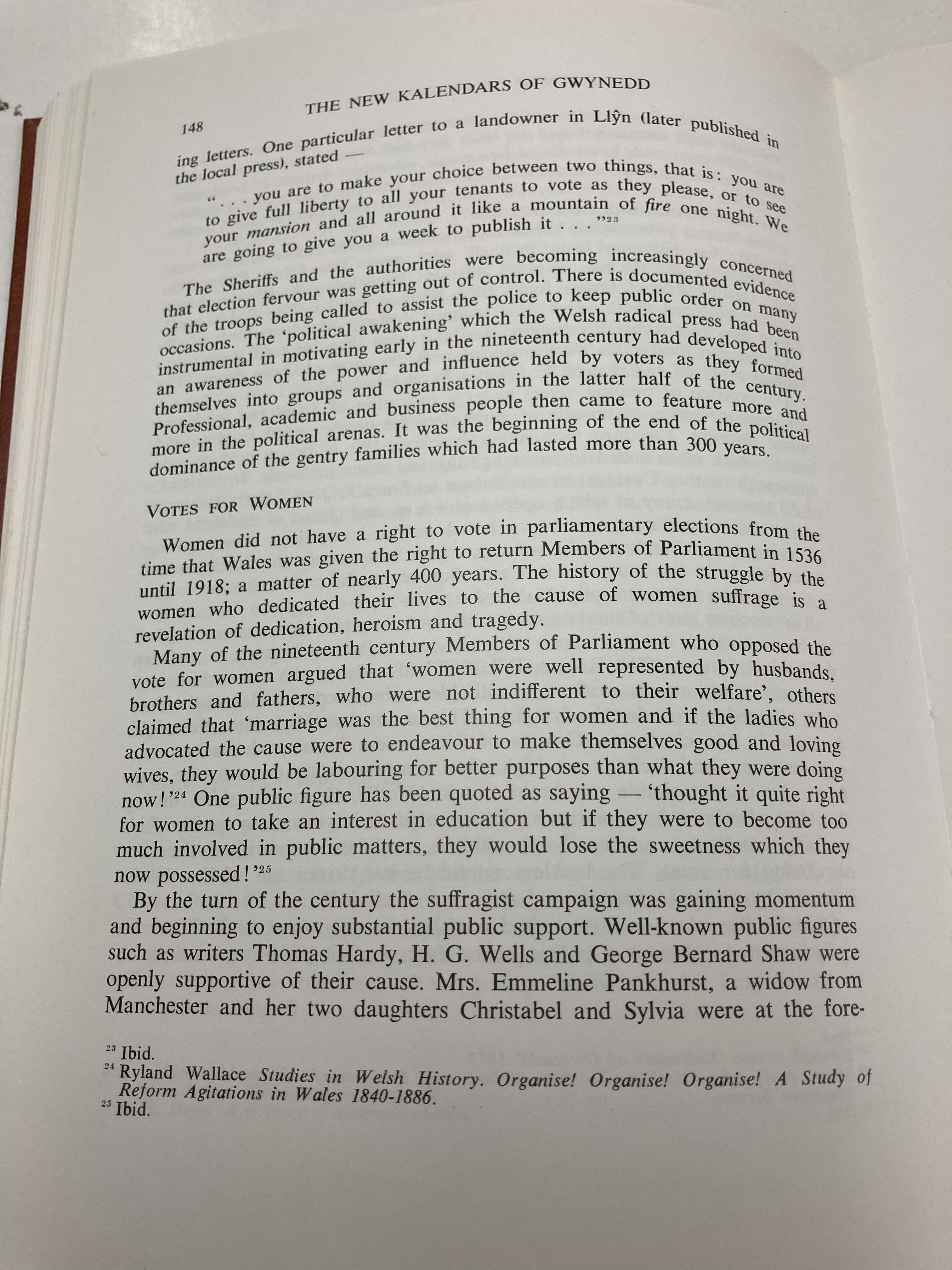
This, is a record of the High Sheriffs of Gwynedd from, as it promises, from 1284 to 1993.

Not what I expected from the title – Kalendars? No I don’t know why a Kalendar is a list of High Sheriffs.

But as far as I can work out, it means a list – and in Danish it is a calendar.

Ok I should do more research but I won’t – any research welcome on a (virtual) postcard.

According to a letter inside the book the author said it was out of print pretty quickly.

But he kept ‘ a few copies’ and he gave this one to a Major Corbett, a High Sheriff in the 1990s and donator was indeed another High Sheriff 1989-1990.

No idea how, or why, it ended up with us.

There is quite a lot ( not that I have read it all) of political history as well as the list of the HS.

And finally ……

I rest my case.