We get a lot of history books into the Oxfam shop, but not many written by hand.
And though perhaps not actually strictly a history book, it is a book which is a part of history.
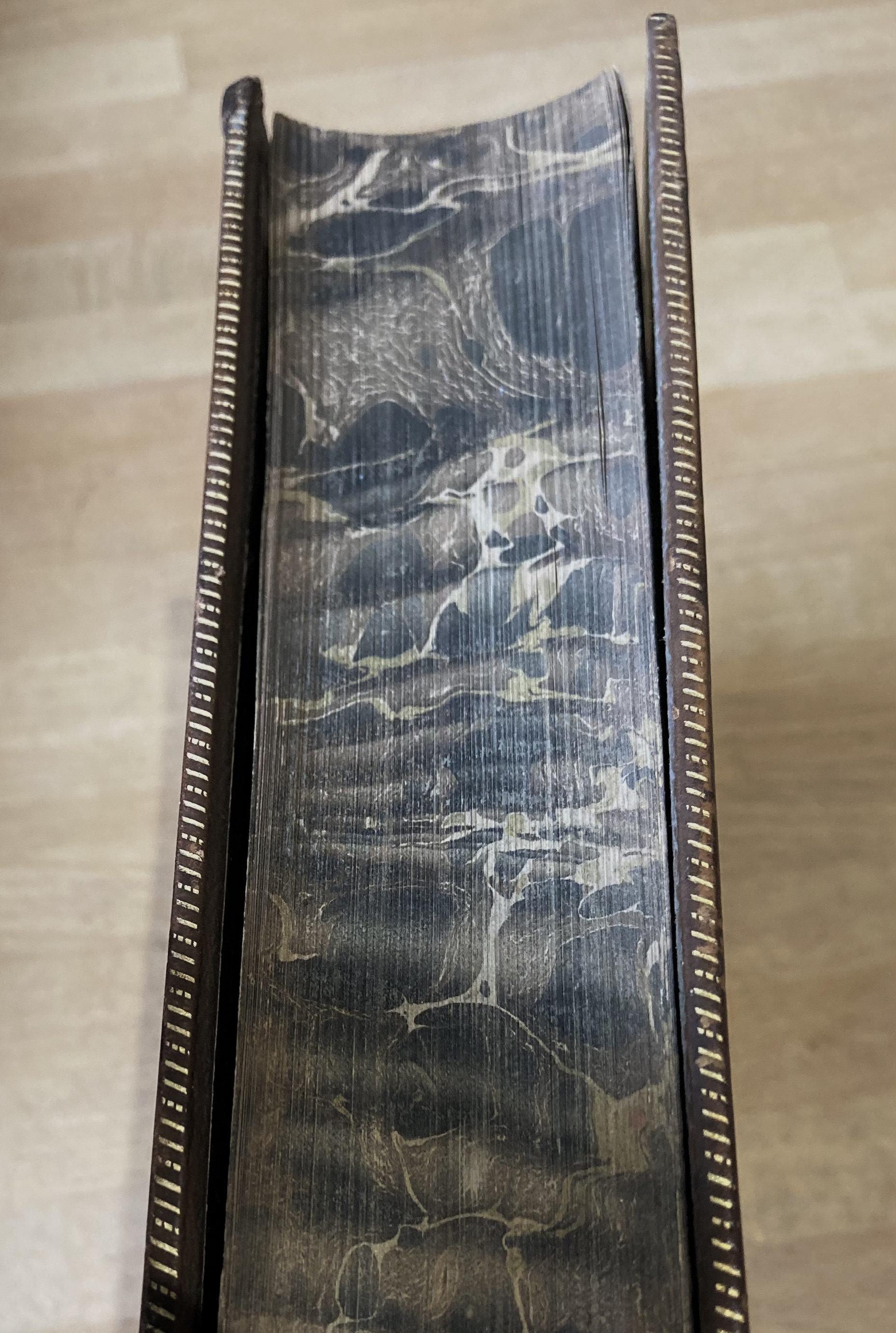
This nicely (but now rubbed and faded on the outside,) marbled book holds a record of wartime salvage off the Sussex coast.

Before your mind wanders to a romantic story of villagers pillaging loot under the cover of darkness as the waves of the channel swish along a hidden slice of coastline, stop it.
This is a series of terse listings of what, where and who from 1943 to 1947.
Written, I am thinking, by men who were charged with creating a log to keep officialdom happy or at least undemanding, or just to have a record of what appeared on ‘their’ shores.
The title page is blank so they ignored the boxes asking who they were – and if you read it carefully, you will see that perhaps officialdom was looking for a few more details.

They knew what was found, where and who carried out the salvage but as to what it was worth, who was paid what as a result or who the owners were – it is all a mystery to us and perhaps them.

There is different handwriting as we move through the book and the years – some more legible and some a fraction less terse, but nowhere are we getting the backstory.
What ship shed its load of rubber? There were various amounts of rubber found at various dates, in places from ‘ bottom of sea lane, Angmering-on-Sea’ to five yards below the High Water Mark outside the Pheonix Club, Alma Hotel, Middleton-on-Sea, and one bale of unmarked rubber on the foreshore of the Craigwell Estate.
I have no idea who was filling in these entries and what official capacity they held, but we do get an idea if who was doing the salvaging.
Quite a number were Canadian soldiers – not entirely surprisingly as there were a lot in Sussex and presumably were allowed onto the fortified beach when ordinary locals weren’t.

But there were salvaging civilians including E W Morris, Lorry Driver, 50 Highfield Road, Bognor Regis.
And, Richard Davie, Police Constable, Police Cottage, East Preston, Sussex.
J O’Connell of Admiralty Road, Felpham salvaged ‘Paraffin Wax approx 150 lbs no marks.’
The names don’t repeat – with the exception of Constable Davie which might point to locals handing stuff over to him whether completely to not – so presumably these were not professional salvagers unless there was a significant number of them vying for stuff all along the Sussex coast.
I am assuming that most of what was found was flotsam (being the stuff that was not deliberately thrown overboard) as opposed to jetsam which was, you won’t be surprised to hear, was jettisoned.
And there are other more interesting finds than rubber or paraffin so, if you have the time and energy to read on.
It seems as if the entries all refer to things which ended up on the shore and indeed quite a lot is listed as being pulled above the high water mark.
But more portable stuff was ‘taken to a place of safety’ and interestingly, that place is rarely identified.
I could run away with the idea that places of safety might include shed, kitchen cupboards, or under counters but there is the official record – however thin and terse – of what arrived on land so presumably the salvagers were an honest lot.
For instance:
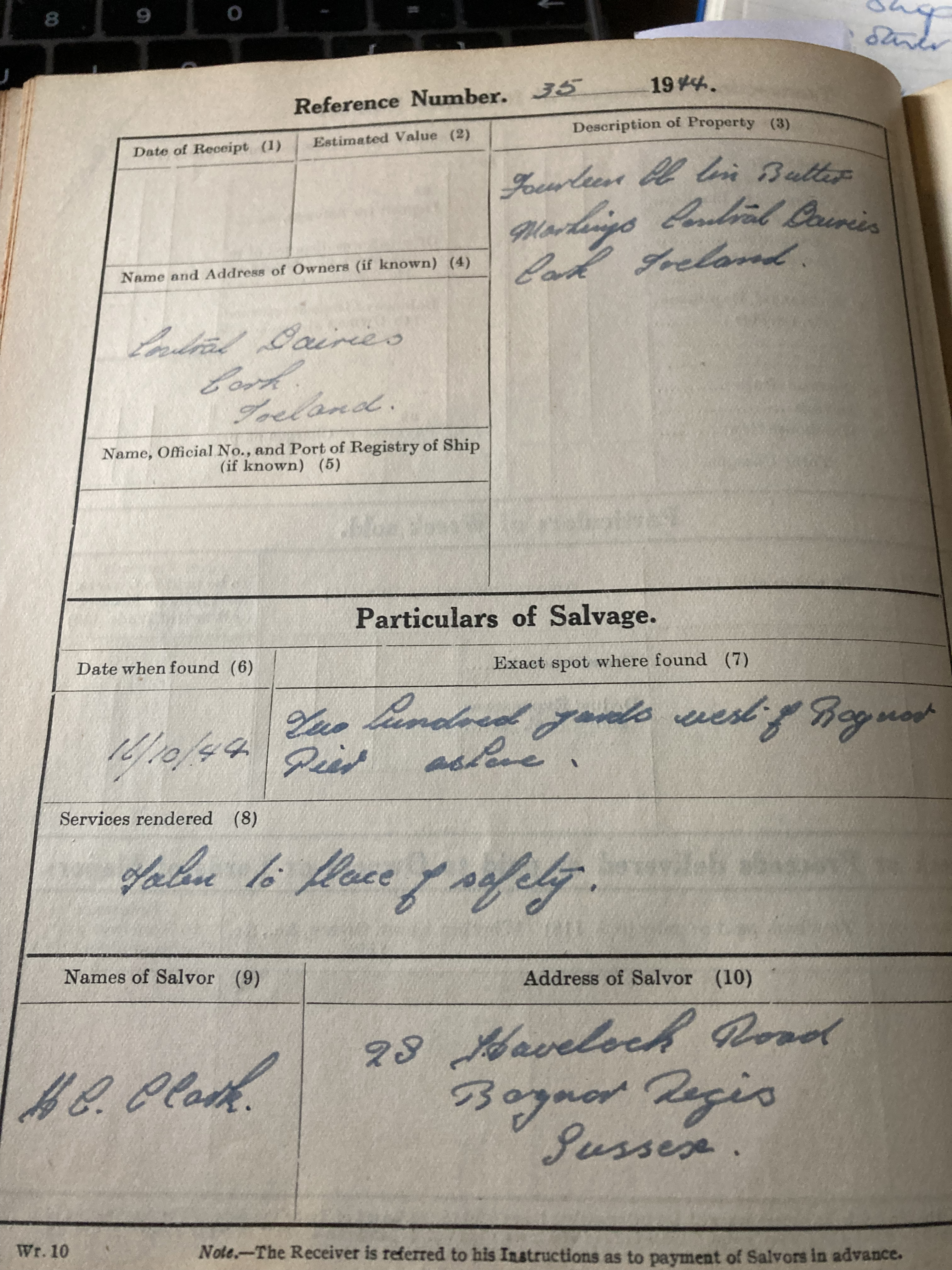

There are a number of dinghies, and a canoe complete with oars.
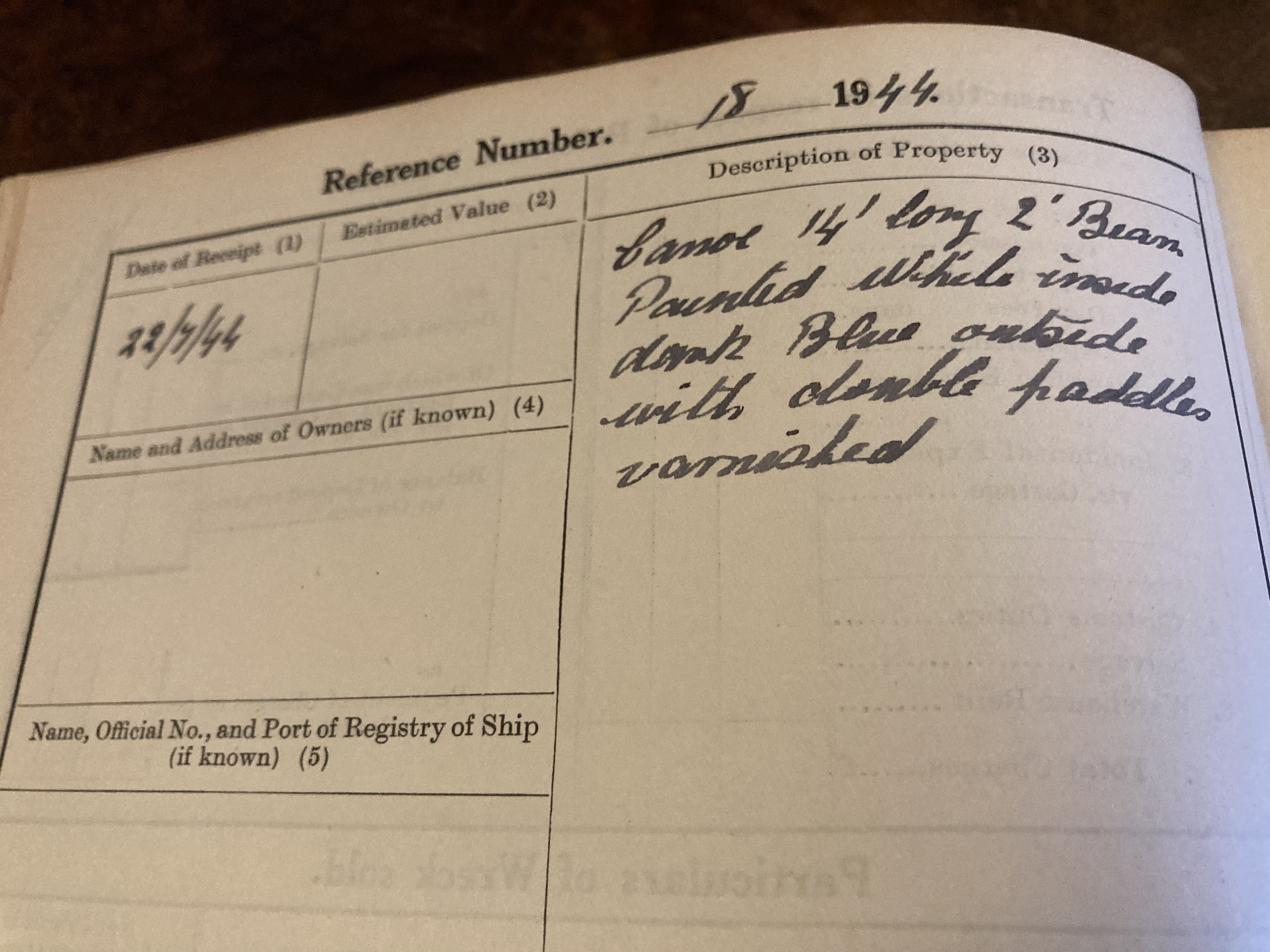
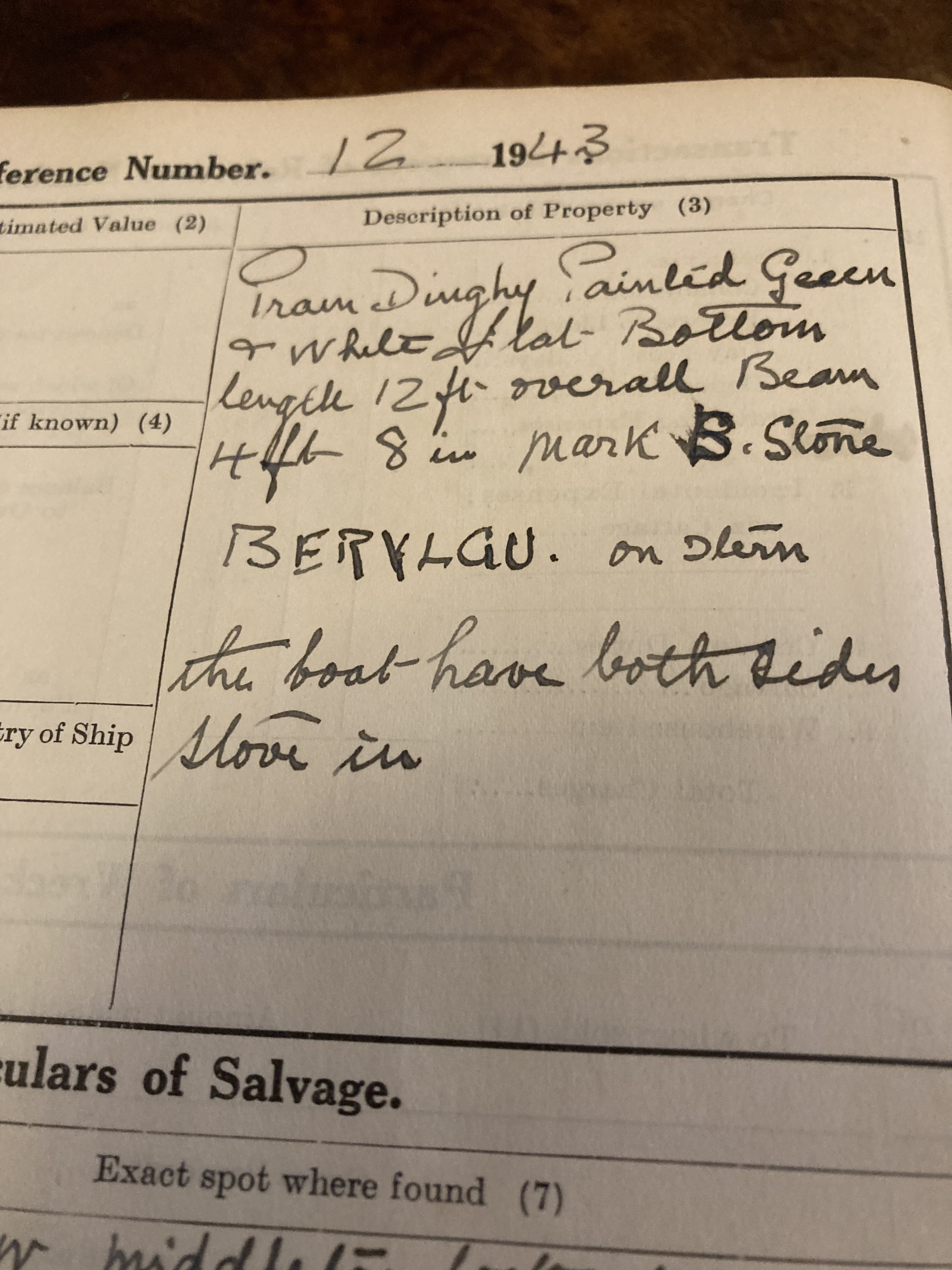
With a couple of exceptions, none of the boats had names. Perhaps that was common in the war, but where did they come from? What happened to the people in them? Why were people out in dinghies, or indeed canoes in the channel during a war?
Finally, perhaps the saddest entries are those of ships’ life rafts

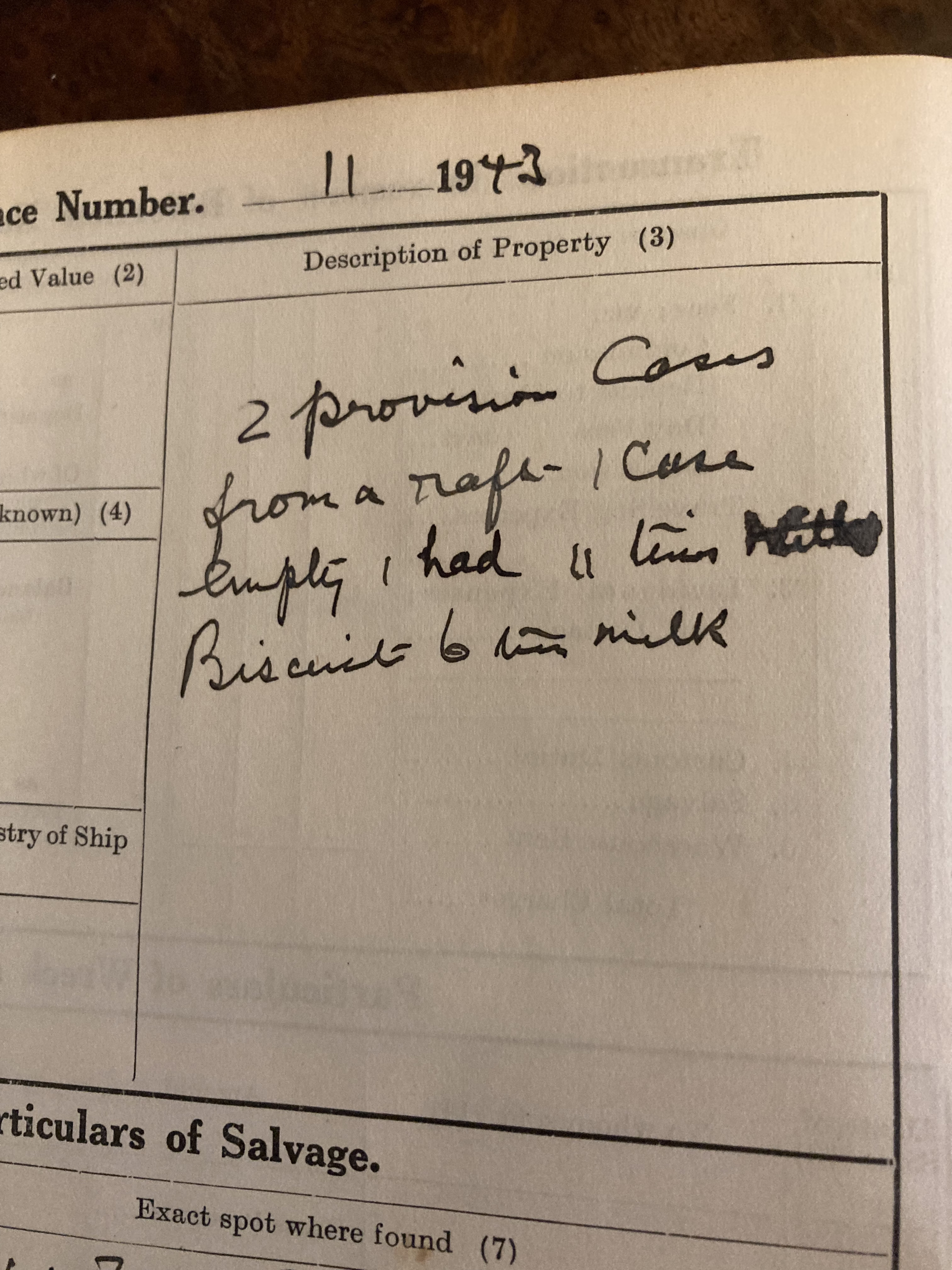
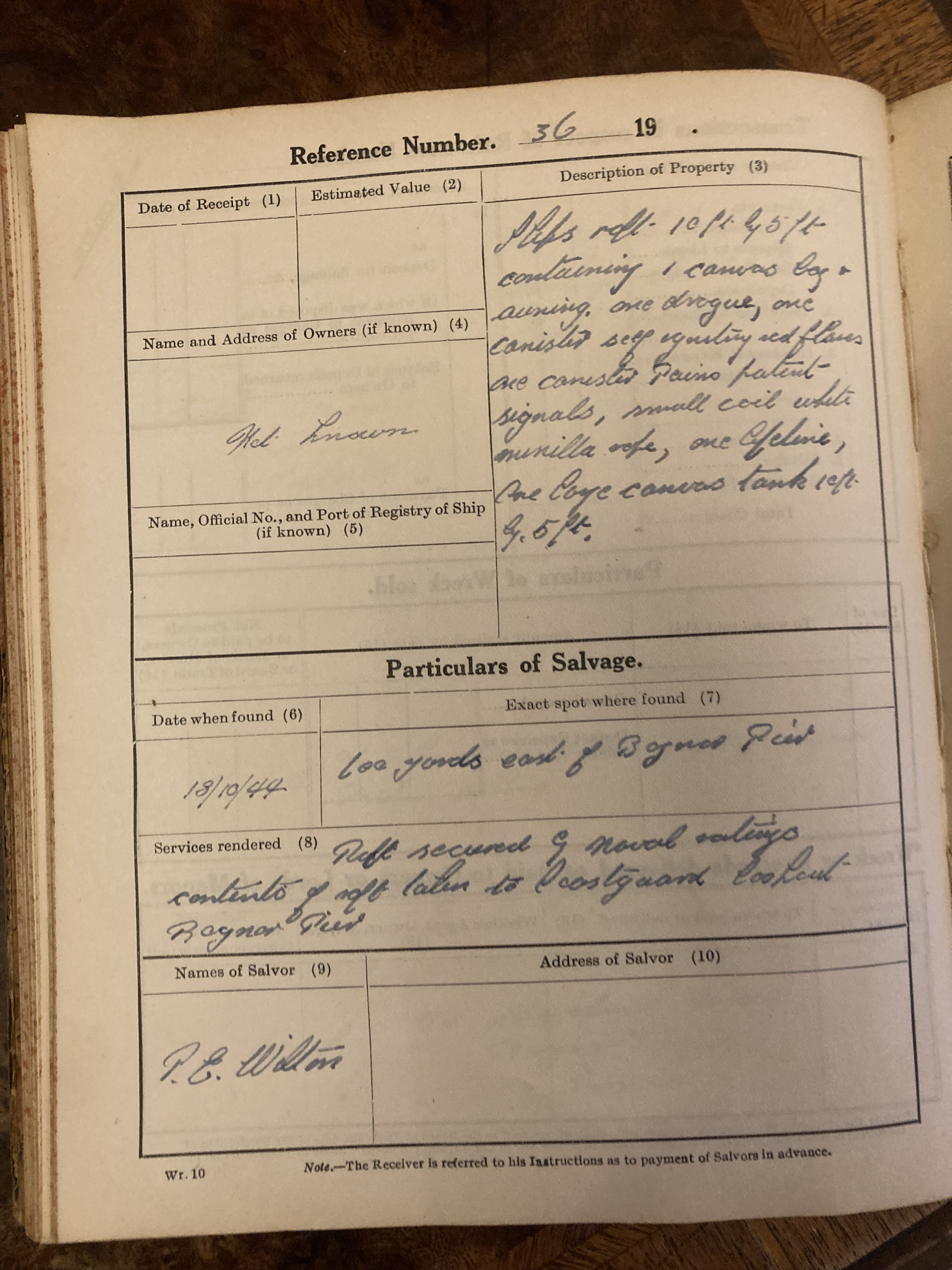
Hopefully, we will find someone who wants to research/appreciate/understand this brief record of an aspect of Sussex coastal wartime history – if we do, I will let you know.


















 thereluctanthousewife