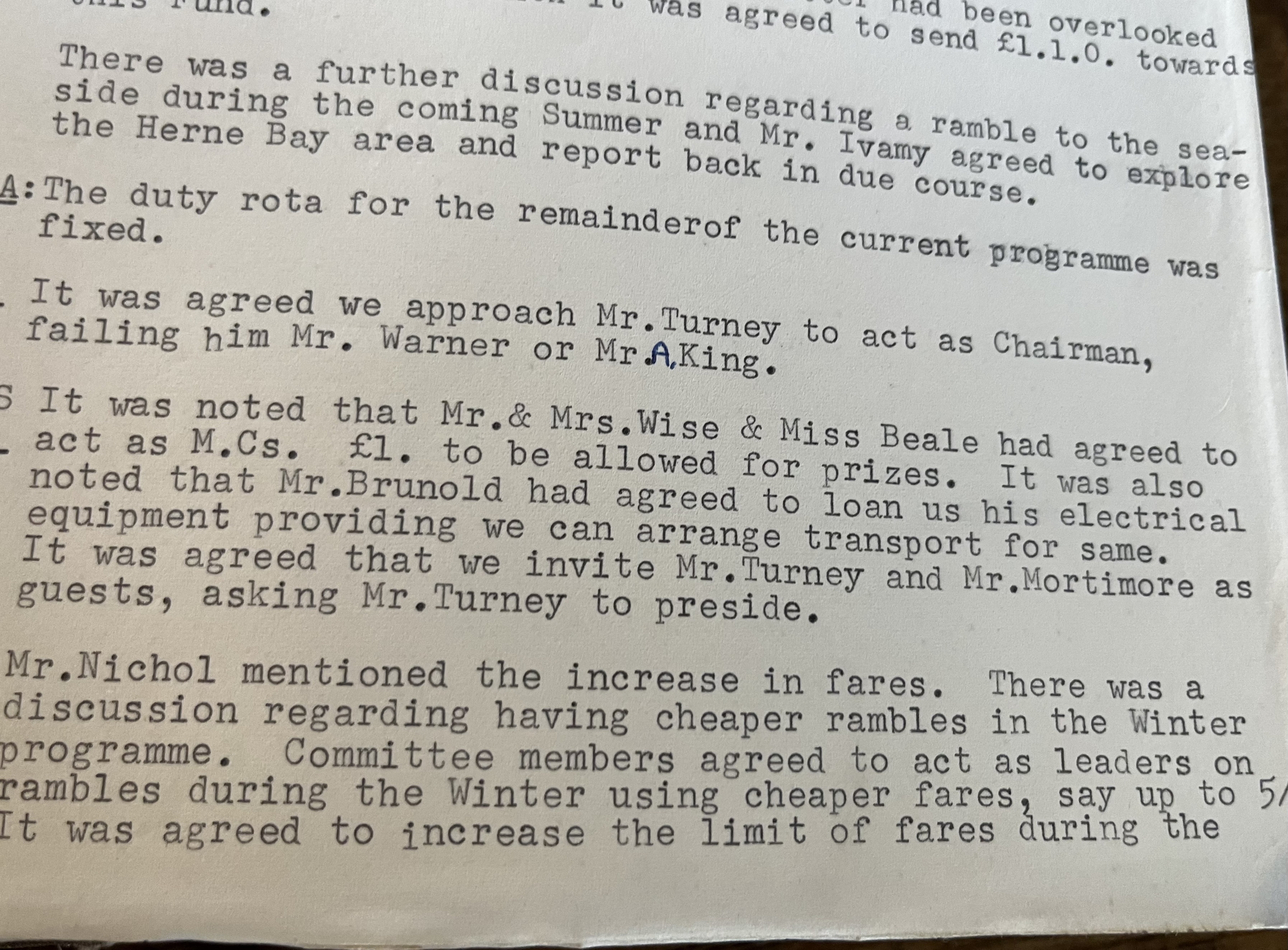
Not the most pre-possessing looking book to turn up in the Oxfam bookshop.
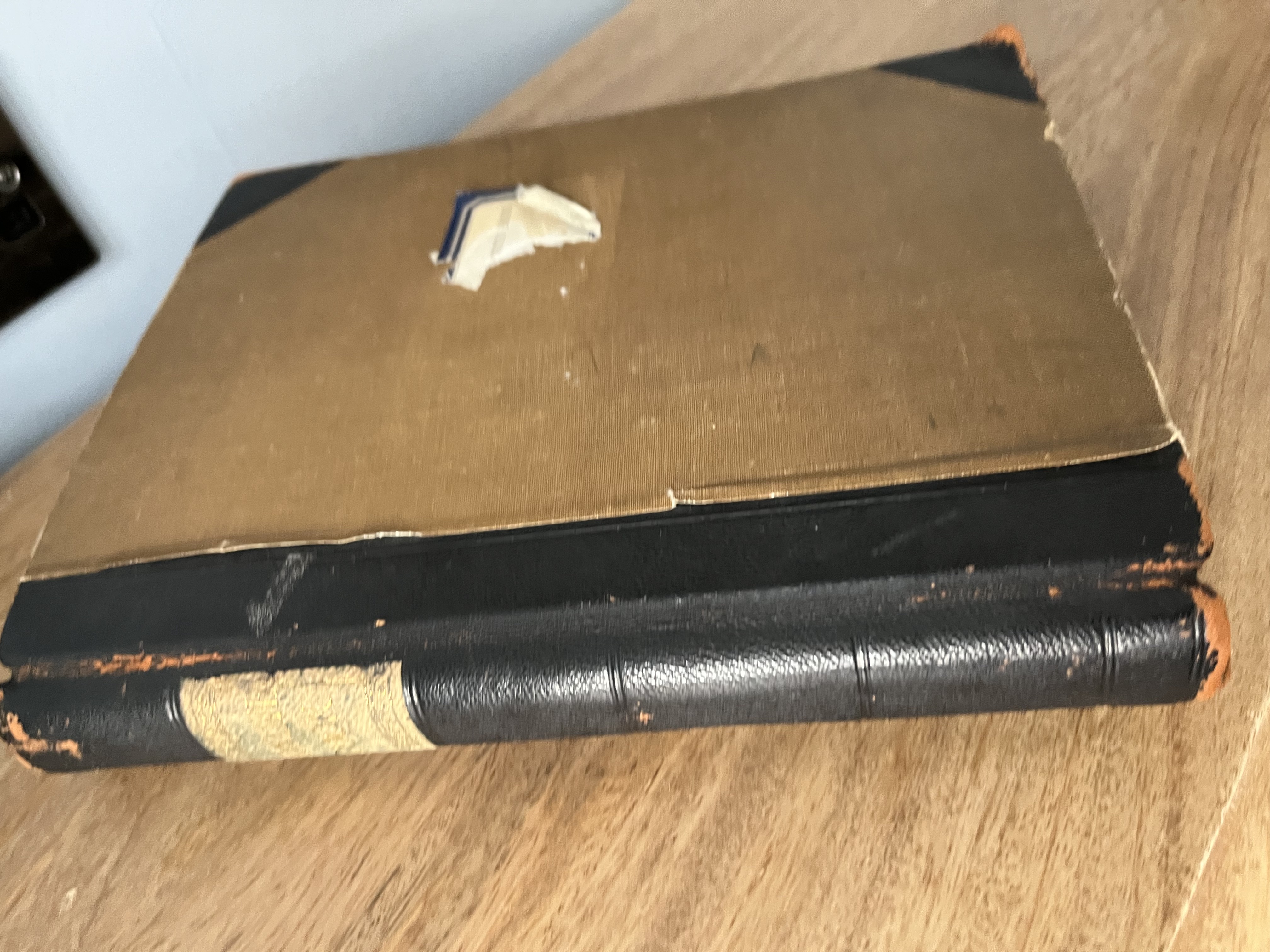
But delve inside and you get glimpses of British post second world war life. It is the minutes of the Sunday Ramblers London group from May 1948 to December 1959.
I understand you may well not be very excited by that prospect but stick with me for the birth of the National Parks, the Festival of Britain, as well as a dash of prim pedantry, endless discussions of social engagements, and a touch of women finally being allowed to have a public role.
A bit of history.
The Ramblers’ Association was born in 1935 and followed the 19th century interest in the natural open air championed by luminaries such as Wordsworth, John Ruskin, Coleridge and Byron
In 1884 James Bryce introduced a ‘ freedom to roam’ bill into Parliament which fails, but the campaign had begun.
Growing cities and industrialisation meant more and more people wanted access to the countryside but by 1914 some 6.8 million English acres have been enclosed – a fifth of all land. No access for ramblers. If you dared, you risked prosecution, angry gamekeepers and in extreme cases, mantraps.
In 1932, 400 ramblers from Manchester and Sheffield organised by 20 year old communist Benny Rothman and the British Workers’ Sports Federation staged a famous mass trespass at Kinder Scout inn the Peak District.
Several involved were imprisoned for up to six months and that turned out not to be a popular move by the authorities.
The campaign for national parks was galvanised and in 1951 the first National Park was created, in the Peak District.
So, not an instant result but then there was a powerful lobby of rich landowners against it because it interfered with their shooting and general understanding that the proletariat should be kept out of view….. just saying.
Right, back to the minutes. And these are the minutes of a London Sunday Ramblers group.
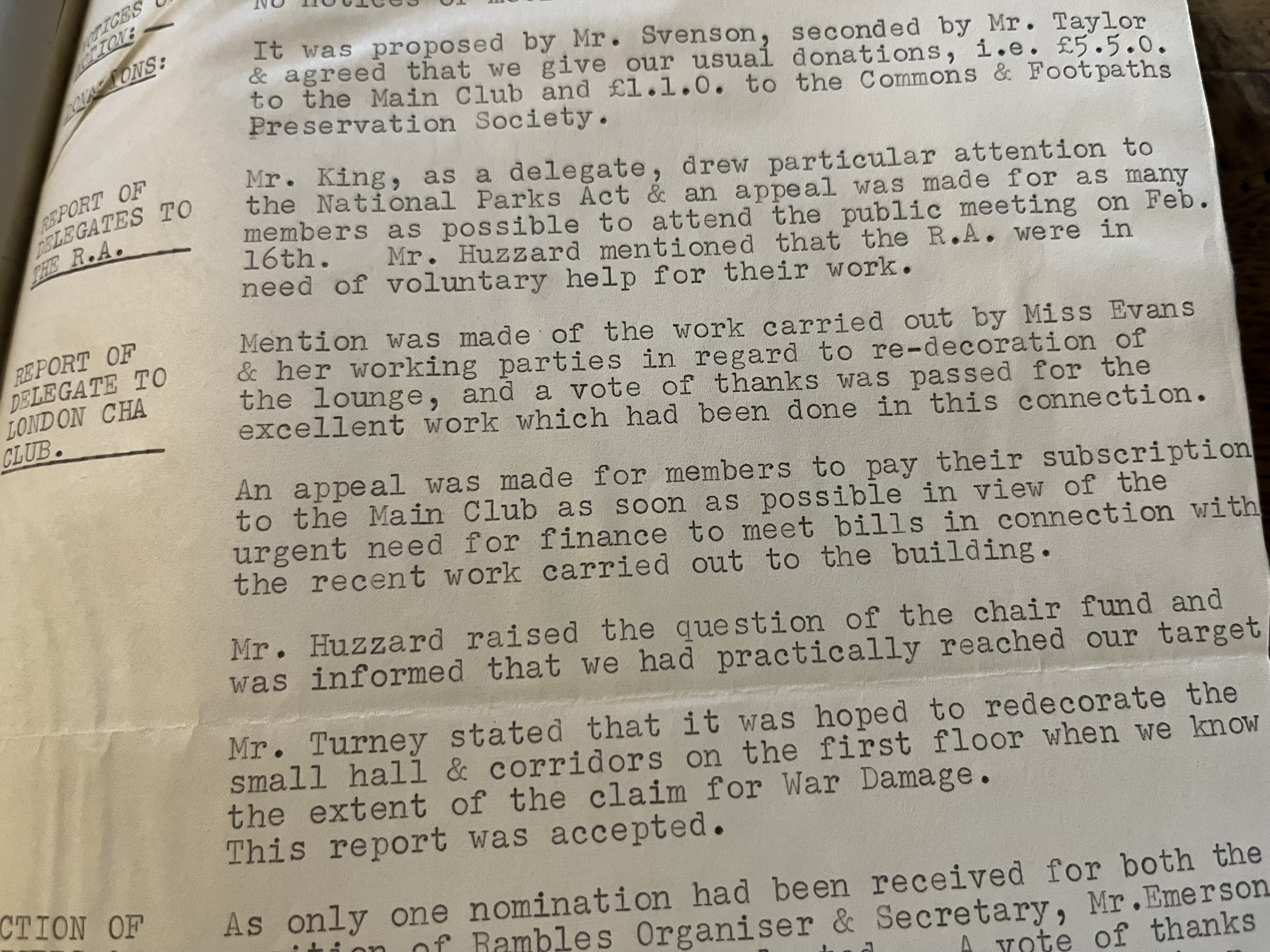
Given the importance of the National Parks campaign, you might have thought it would get more of a mention but the minutes do rather concentrate on more parochial issues.
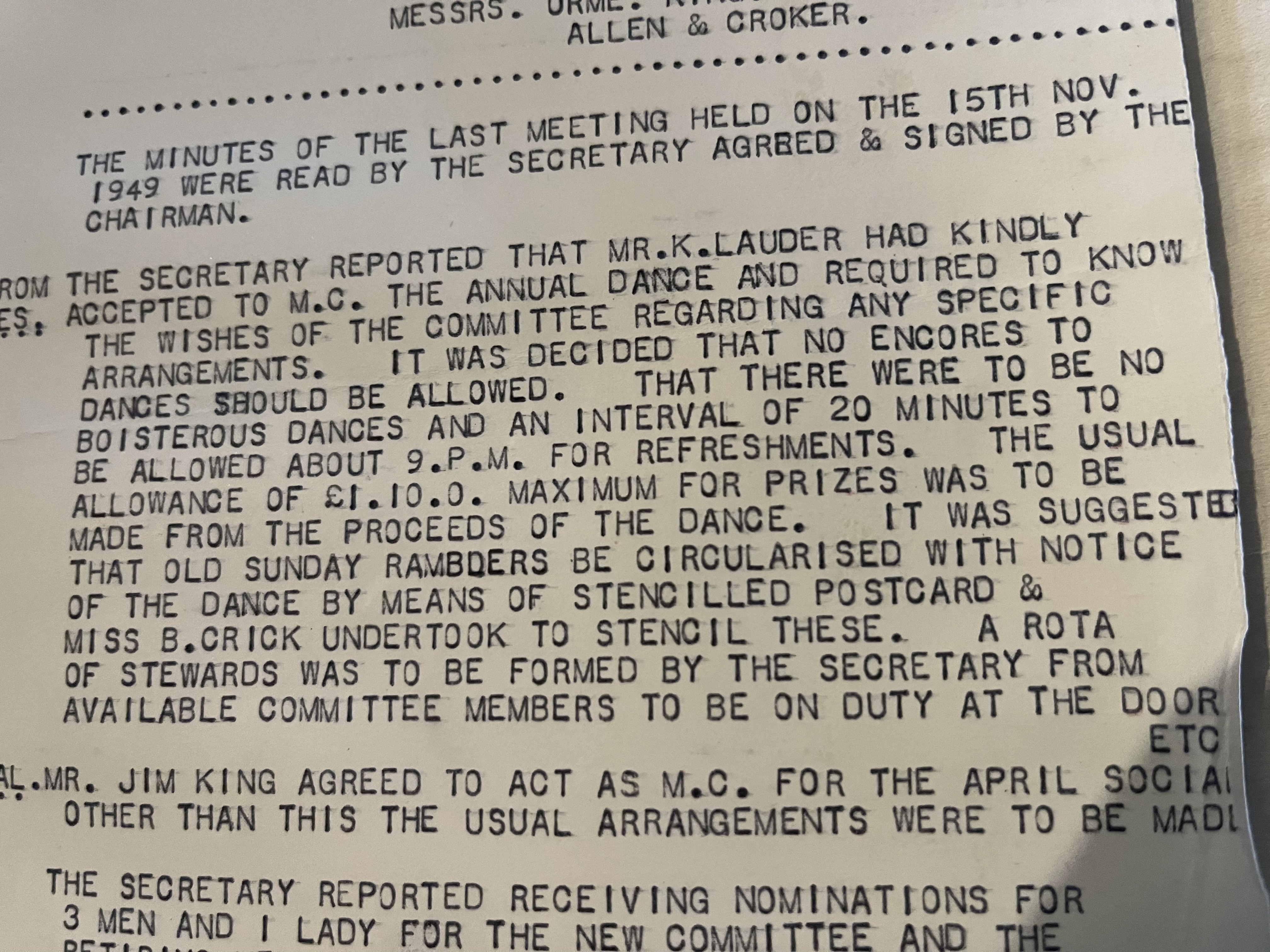
Social events are big in the minutes.
The Christmas dinner, the annual dance, the spring and autumn social, the New Year’s Eve event, etc.
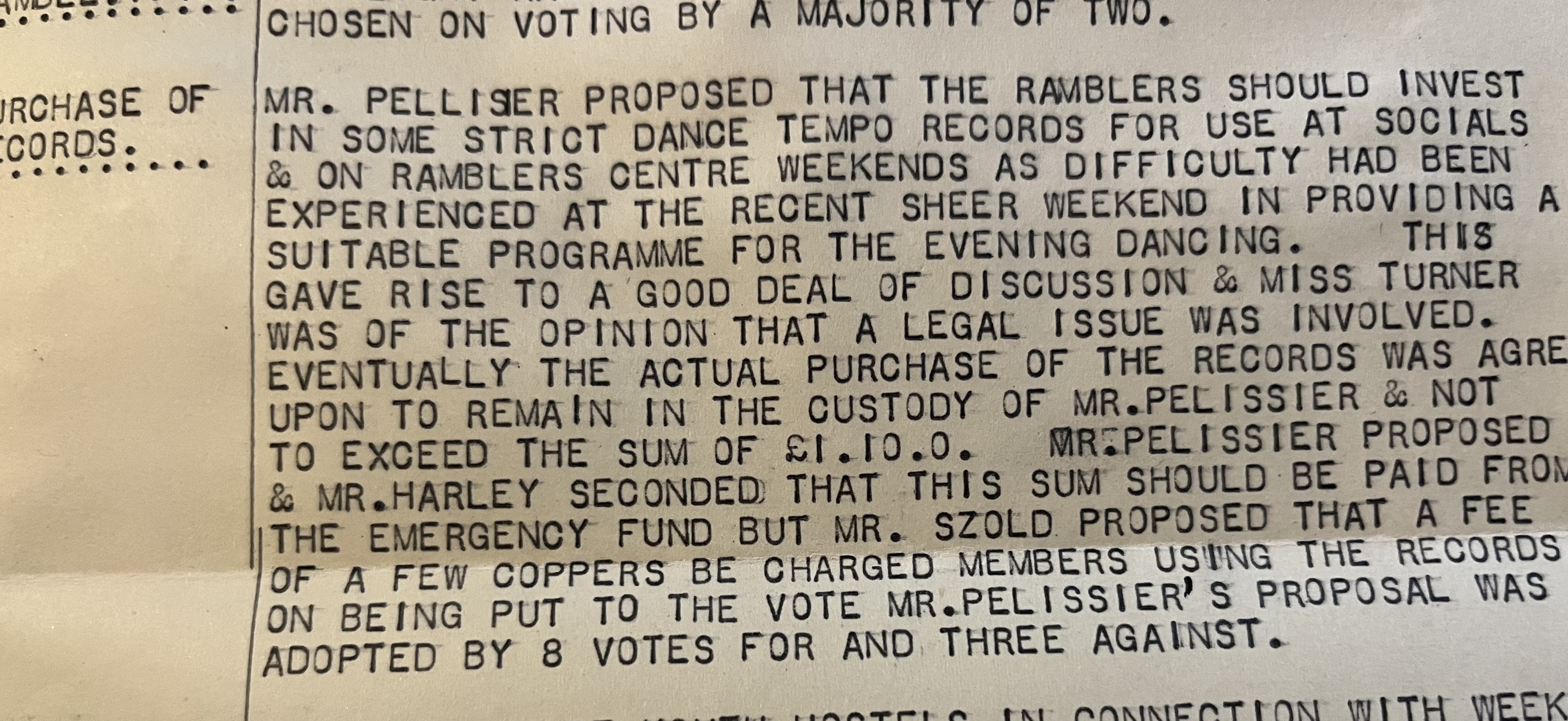
You can imagine the ‘good deal of discussion’…..
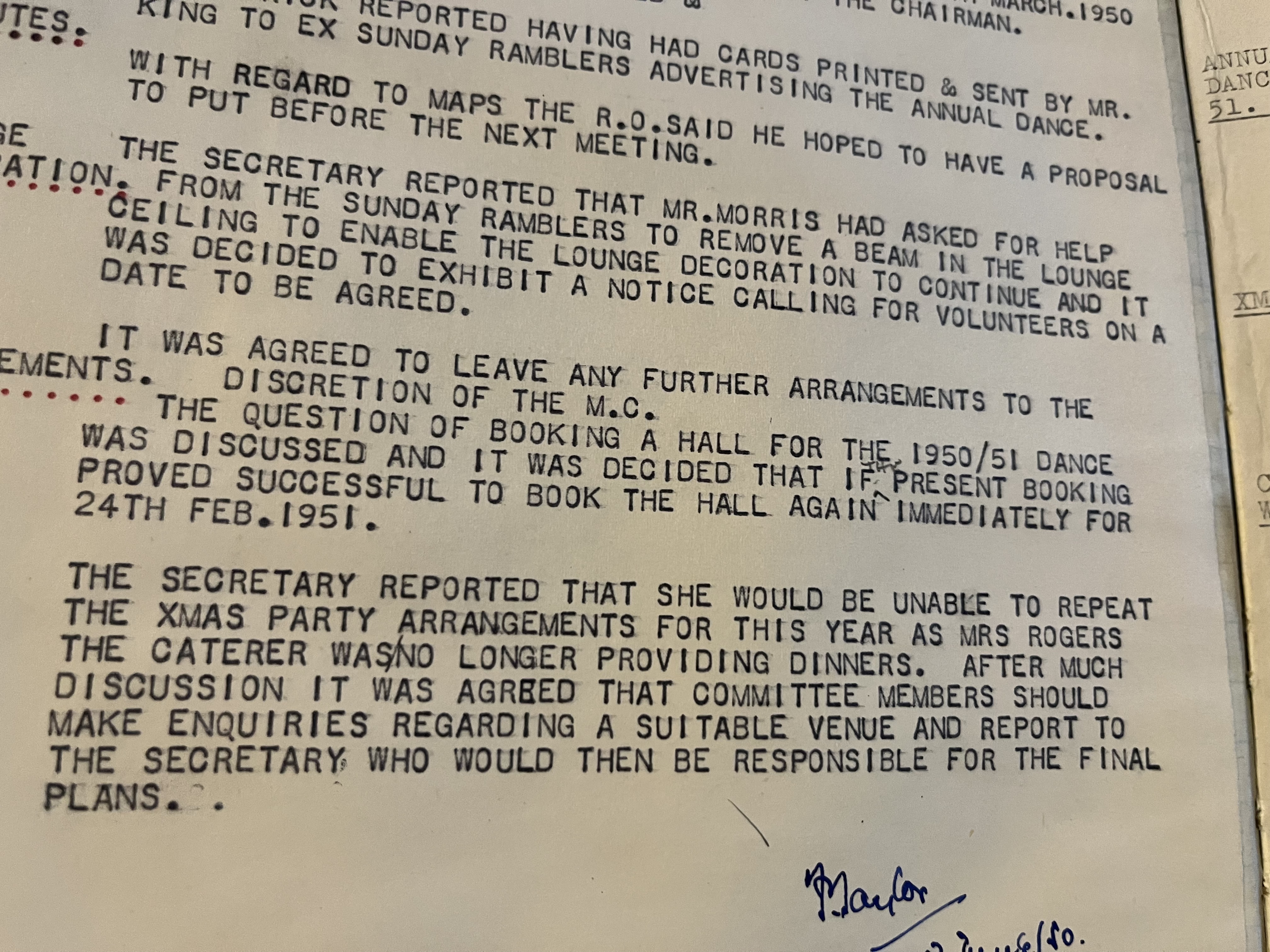
And teas stops for thirsty ramblers also featured heavily.
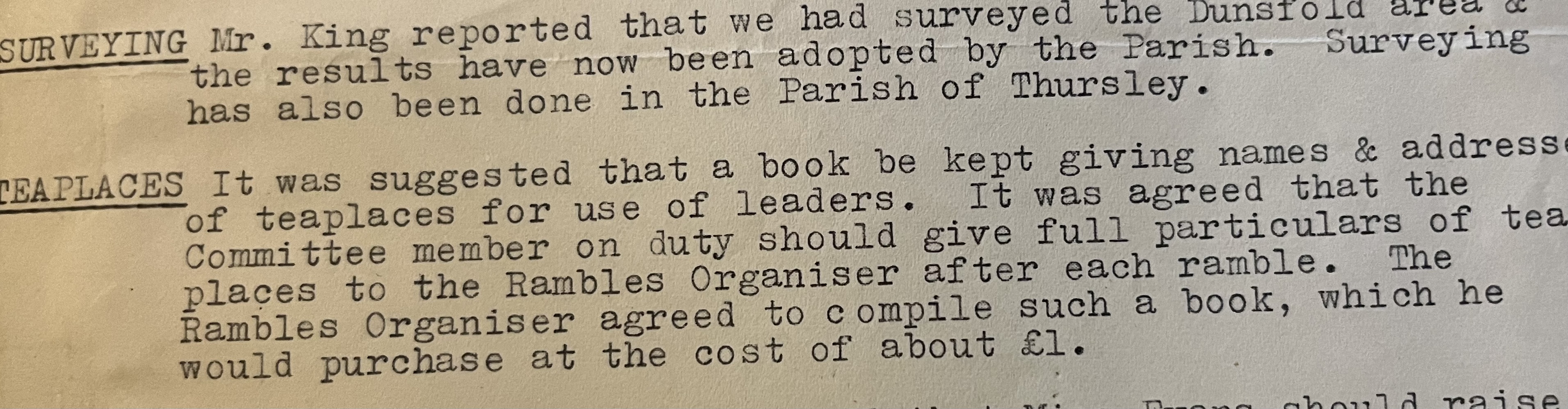
It seems that as note-takers changed we got more – or indeed less – of notes of the actual business of walks.
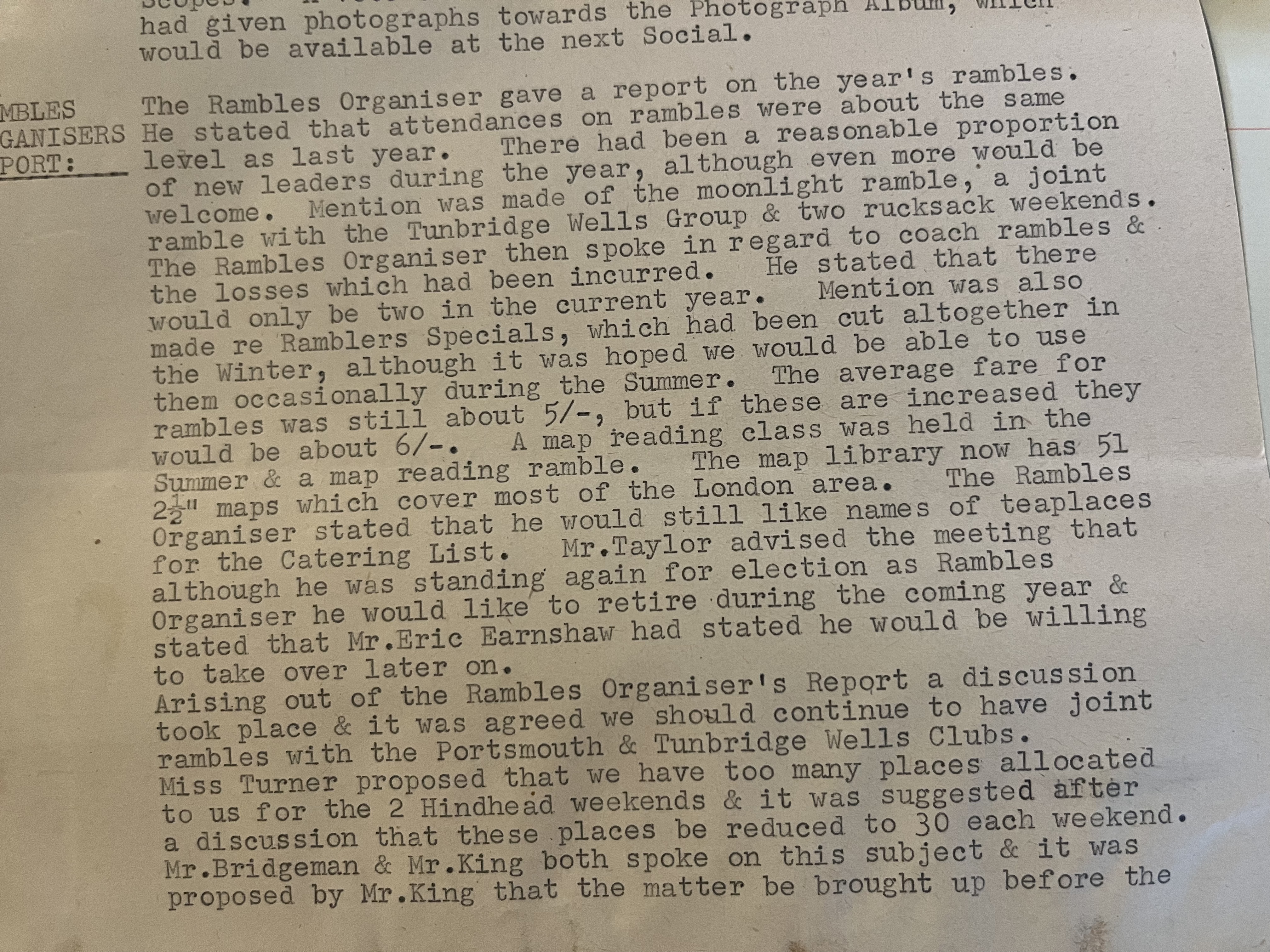
And that was all the mentions to Ramblers Organiser (RO) got in about 8 months of minutes.
There is some pedantry as I said. Not sure who is doing the corrections…..
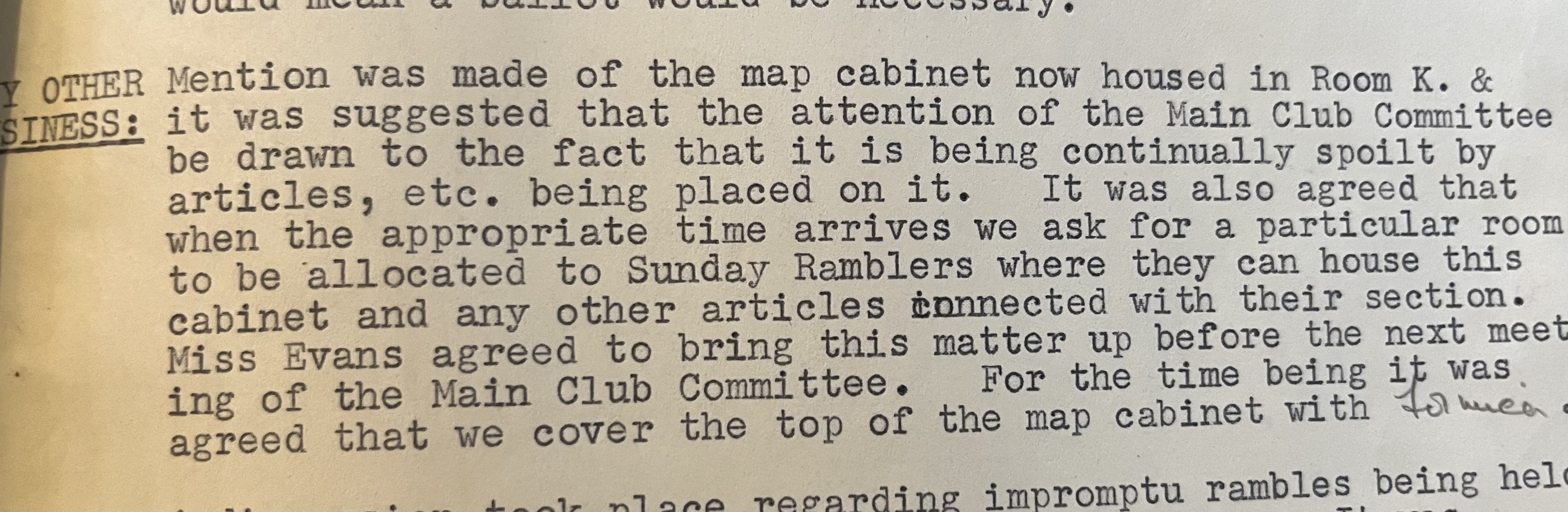
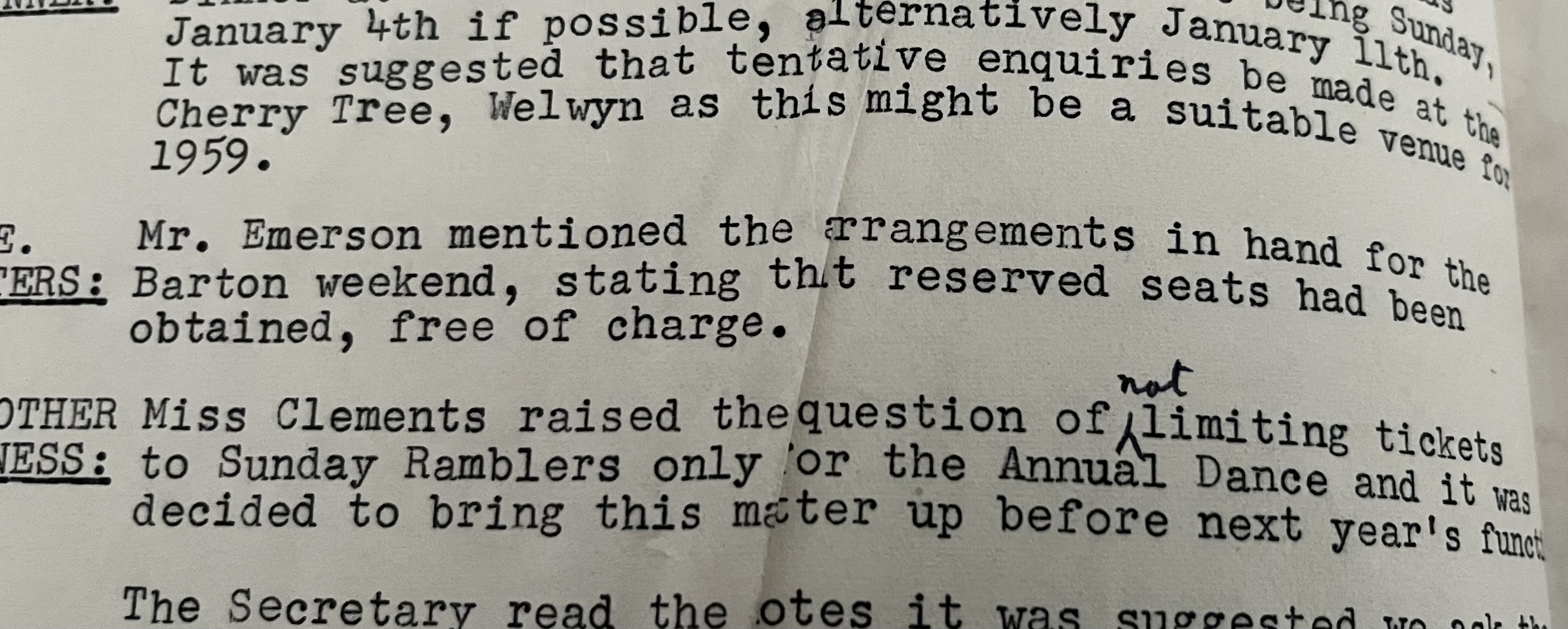
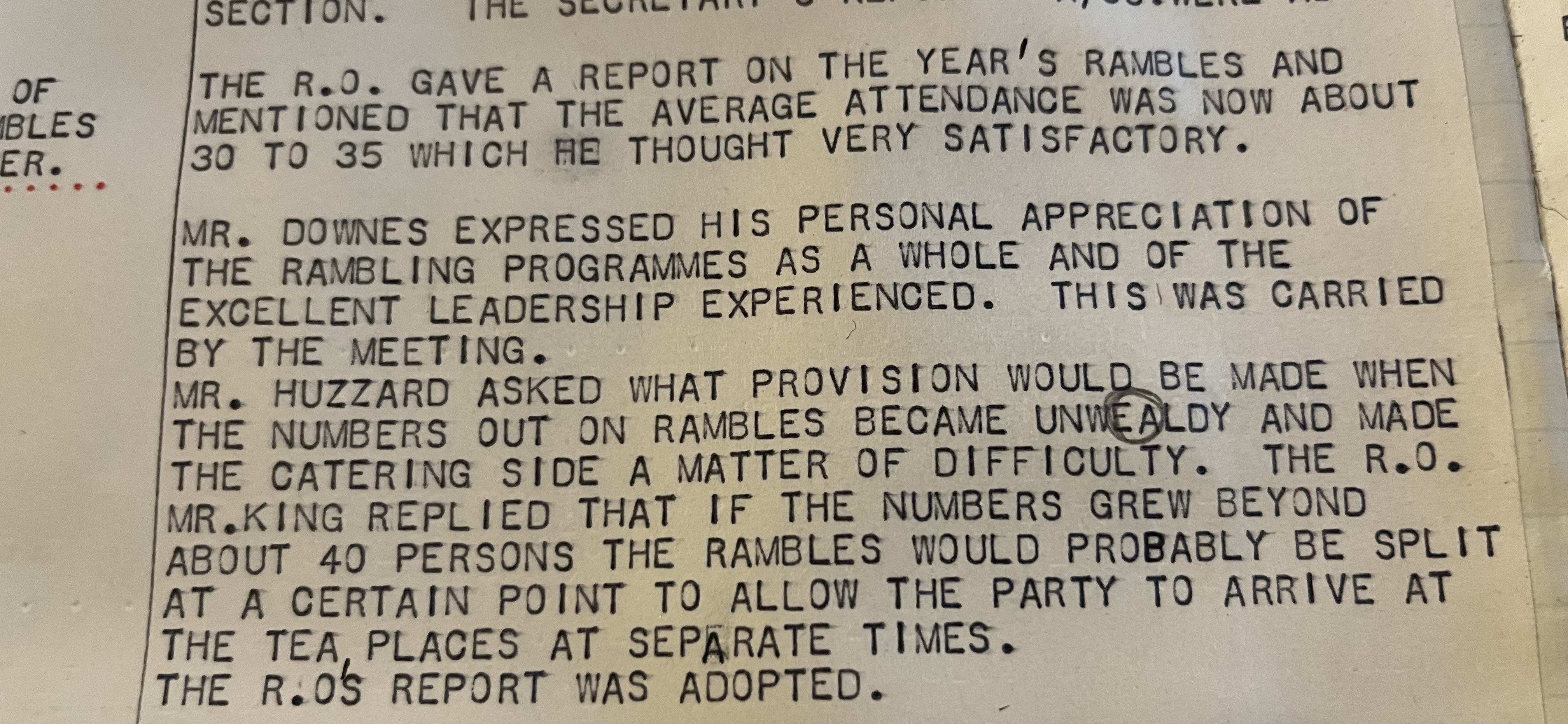
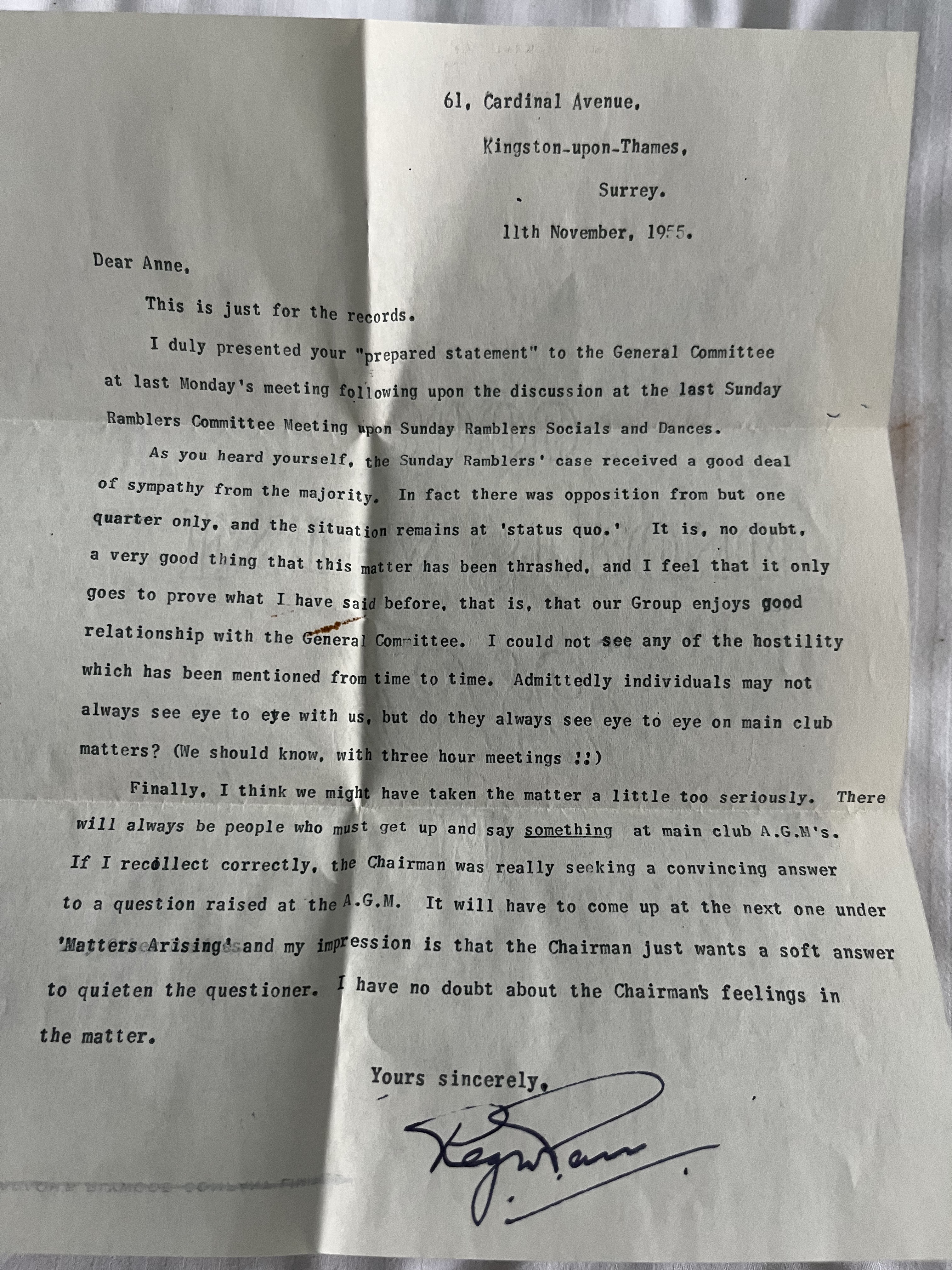
And there is a glimpse into the committee meetings’ discussions. The endless ones. but interestingly – at least to me, you may have given up by now – in letters to someone called Anne and slipped into the book of minutes by different senders. Clandestine gossip over apparently at least three years.
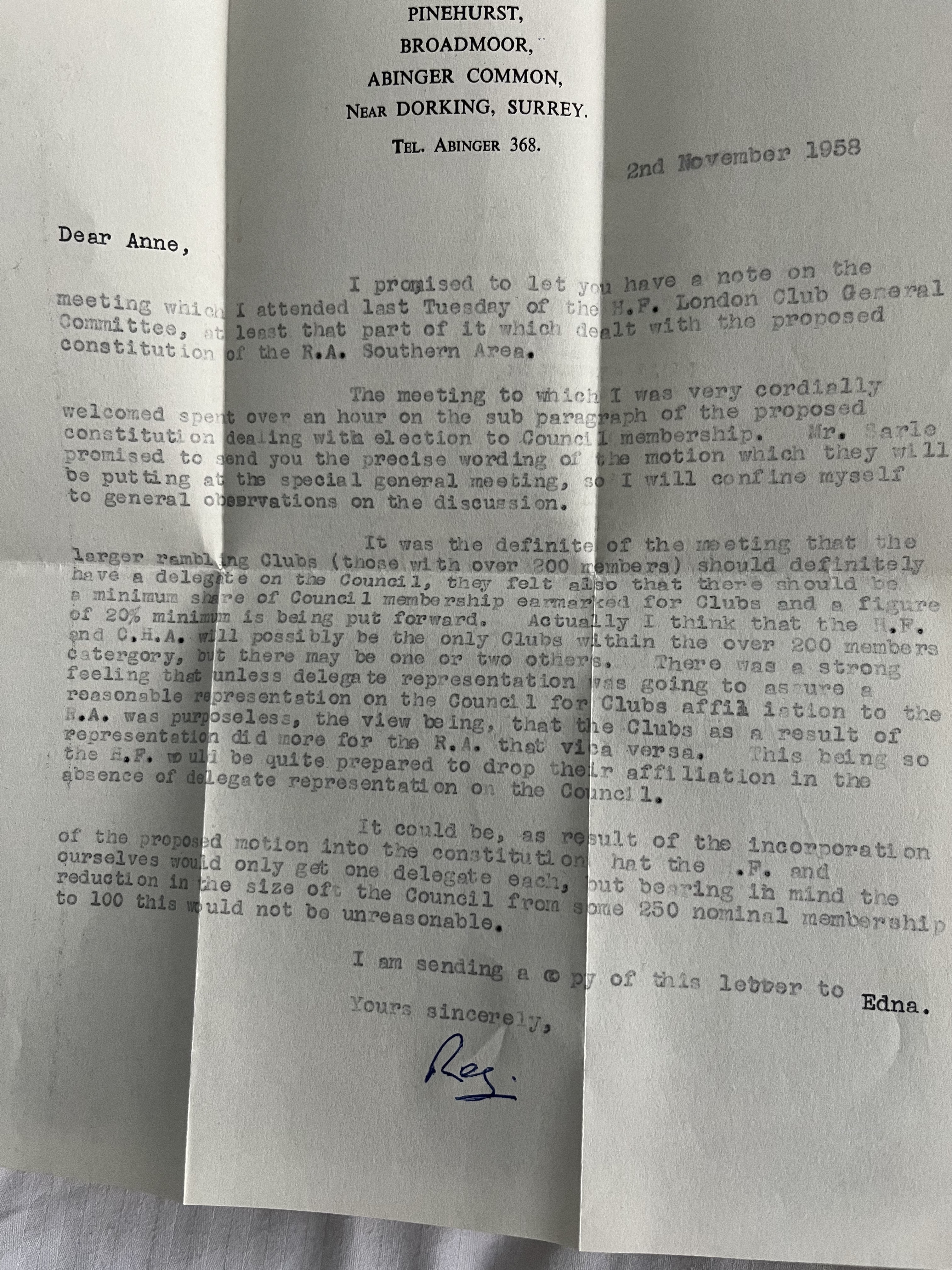
And there are some entires which you really think needed a bit more explanation…
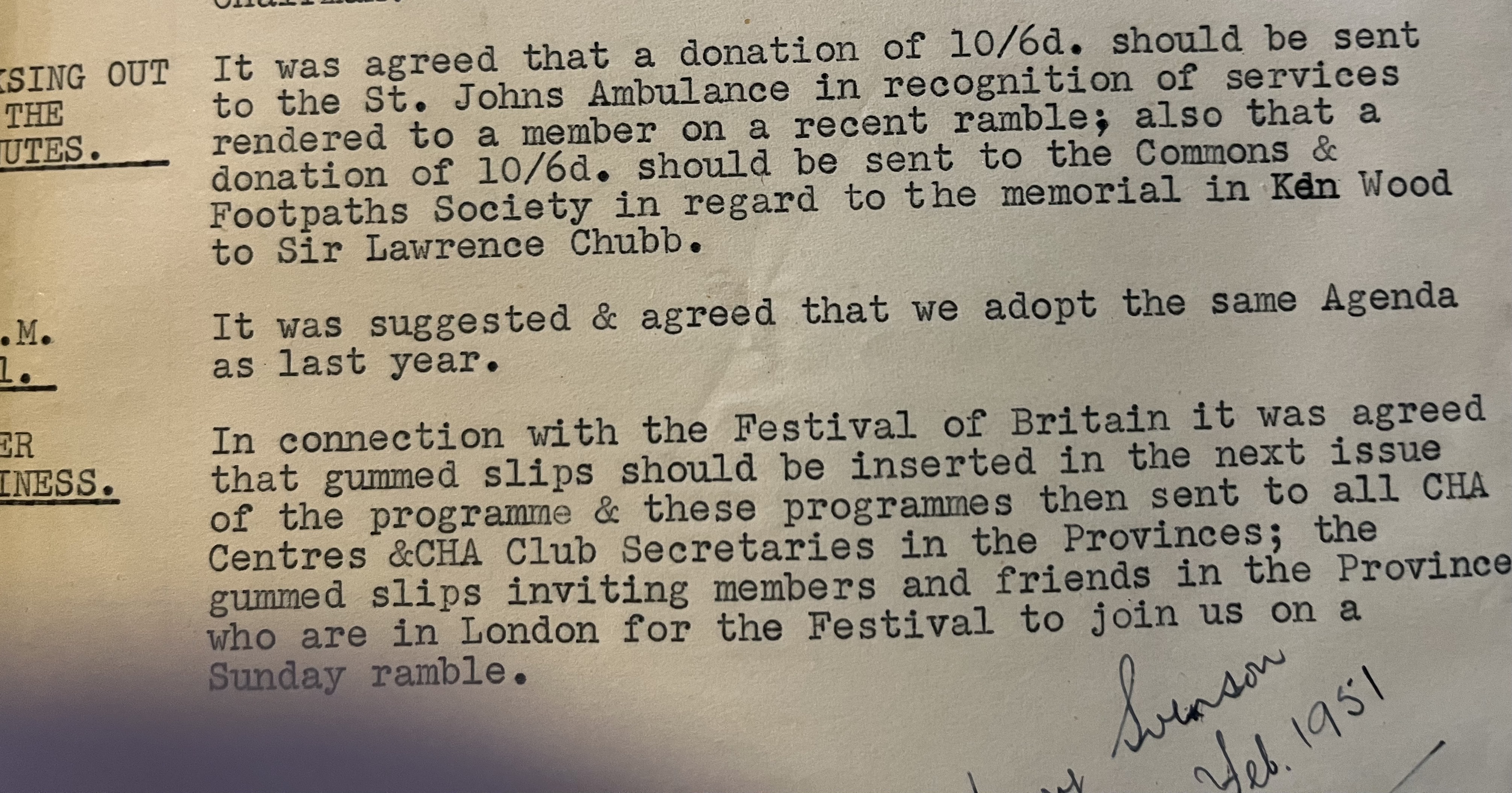
The Festival of Britain was a national exhibition and fair held throughout the United Kingdom in the summer of 1951. Funded chiefly by the government at a cost of £12 million, it was intended to give the British public a sense of recovery and progress after the devastation of the Second World War, and to promote British science, technology, industrial design, architecture and the arts. It proved immensely popular, with more than ten million paid admissions to its six main exhibitions, and helped reshape British arts, crafts and design for a generation. Wikipedia
But in our minutes not as important as discussing details of the ramblers’ social events. It does not get another mention. And barely more of a mention than adopting the same agenda format as last year.
And what were those rumours? Relating needless to say, to social events…
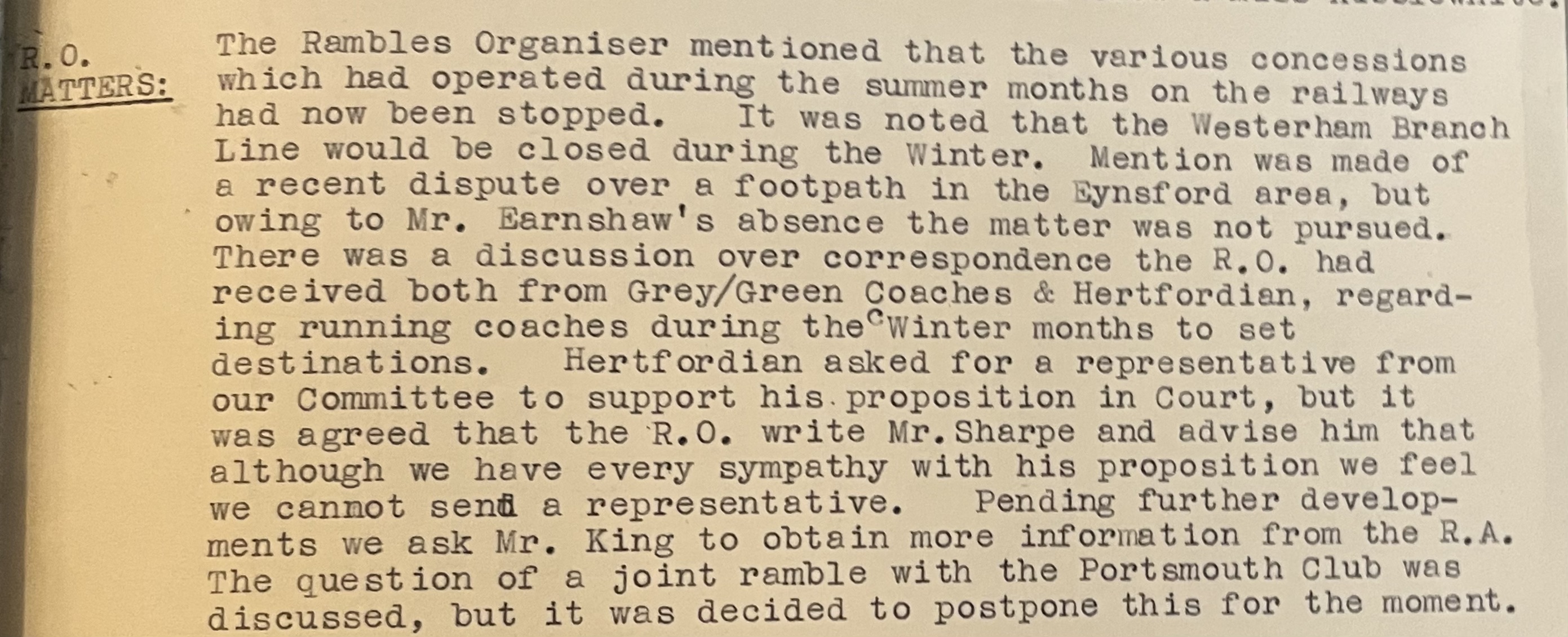
What was all that about?
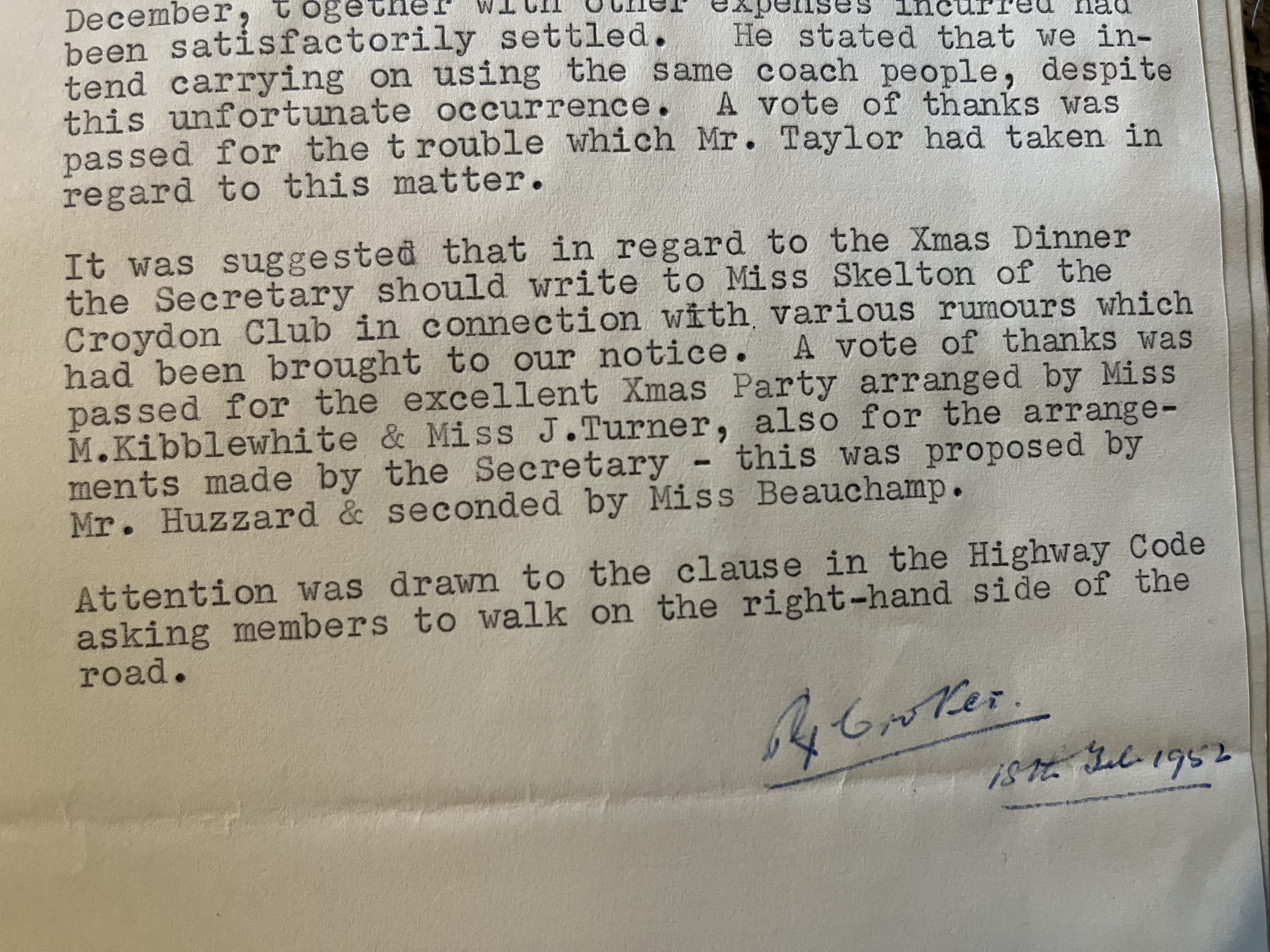
And let me draw your attention to the mention of the Highway Code.
In 1931 there were 2.3 million motor vehicles on British roads and still tens of thousands of horse drawn vehicles.
Pedestrians were often considered in the way of the glamour of driving a car and at fault if they became a casualty. In this dangerous and heady world in the 1930s around 7,000 people lost their lives every year.
By contrast, In 2025, there were 364 pedestrians killed by vehicles – and there were 42.5 million vehicles on British roads.
Of course there is more to those statistics than walking on the right side of the road but it is rule still in use and I for one, notice it when you round a country road bend to find someone walking on the left…. just staying.
There is a lot of mentions of the cost of travelling from London, where this group was based, to country and seaside venues for a good long ramble in the fresh air.
There is endless discussion of the cost of one coach company over another, the difference of one old penny in the cost and juggling different arrangements for group fares.
Apparently the outings using the London tube were not popular – and over time that was true of the moonlit walks….
Going by train was also much discussed. Train strikes were annoying, unreliable timetables and no discount for groups were definitely on the agendas.
And then there is a forerunner of the Beeching Axe.
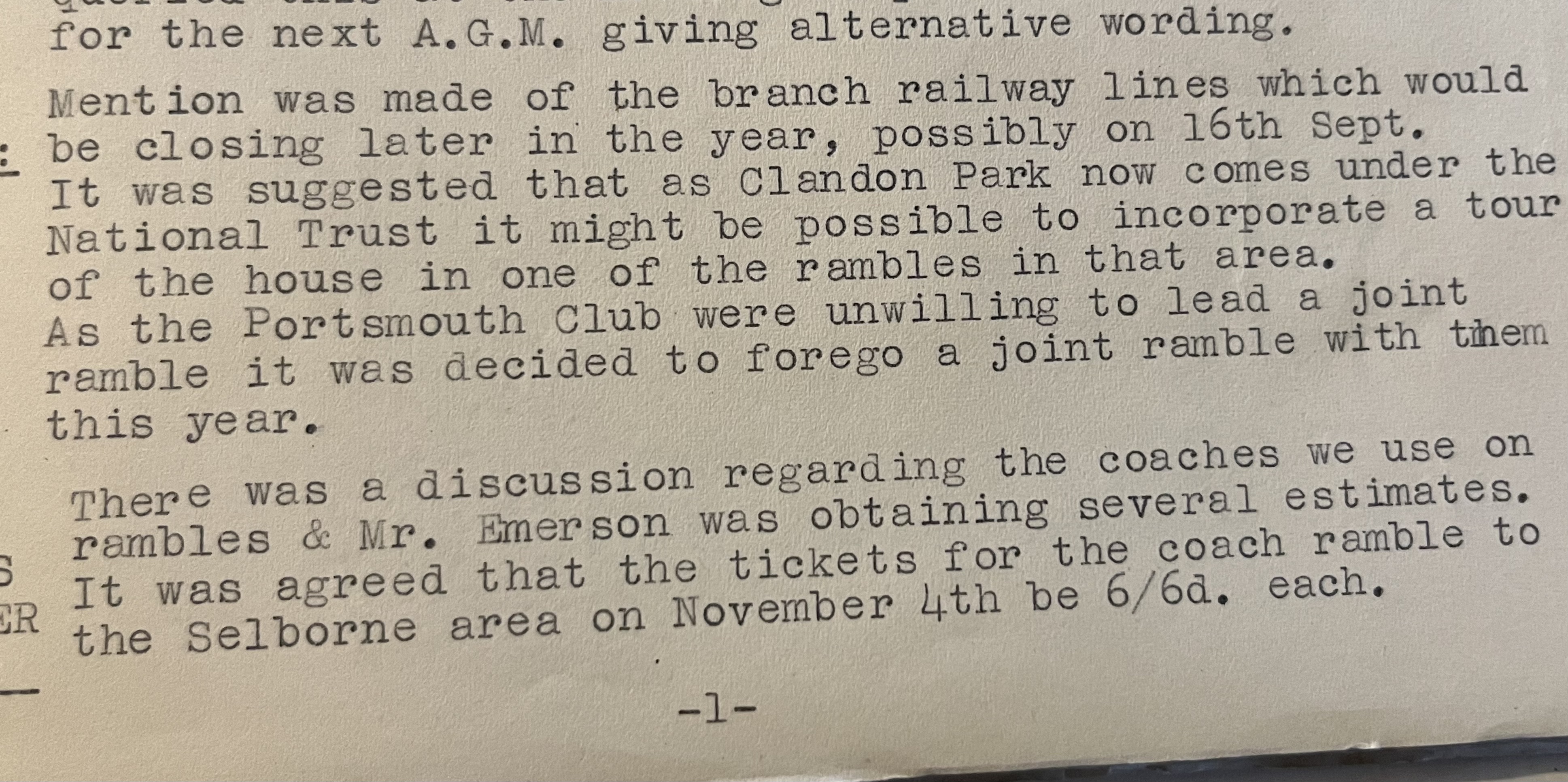
In the 1960s Richard Beeching, then chair of the British Railways Board, wrote a report outlining 2,636 stations an 5,000 miles of railway track to be closed.
Protests protected a few, but the majority were closed as planned.
Interestingly, at least for me, Clandon Station is still open.
Finally, you will be glad to hear, is the promotion of women towards the end of the minutes book.
The misses and ladies have been evident throughout but mostly as note takers and secretaries to the committee (but who was the enigmatic Anne who got letters giving the background gossip to meetings?) and whilst there has always been an MC at all of their many events, this is the first one with women. Mind you there is also a man, just to be safe…
And who knows what the electrical equipment was about? Hopefully not ‘boisterous records’.