There is something about an interesting map donation to the Oxfam bookshop which seems to get all sorts of volunteers interested.
And recently we have had some more than usually volunteer-captivating ones.
In an envelope in the back of the book, a colleague found these.
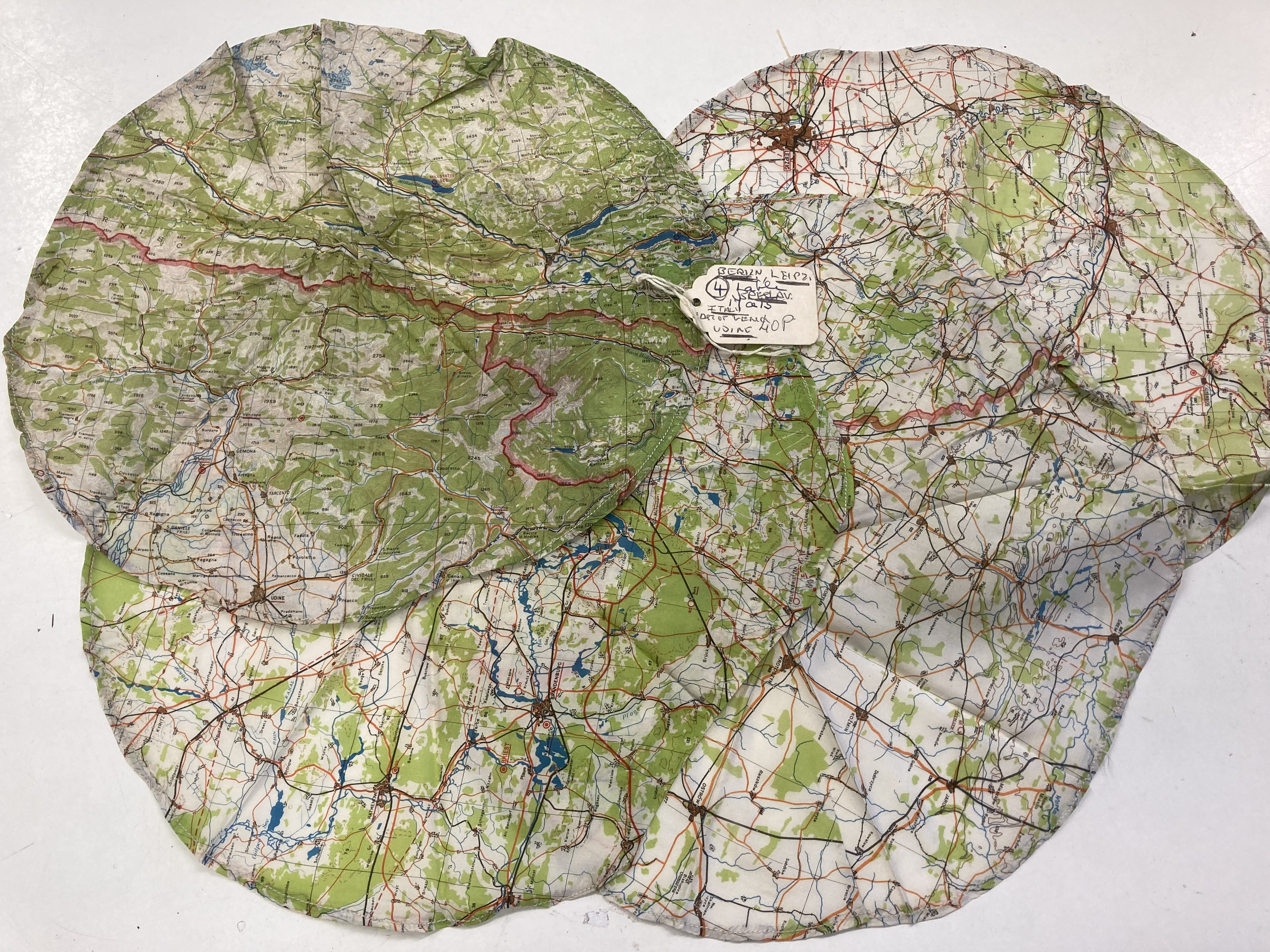
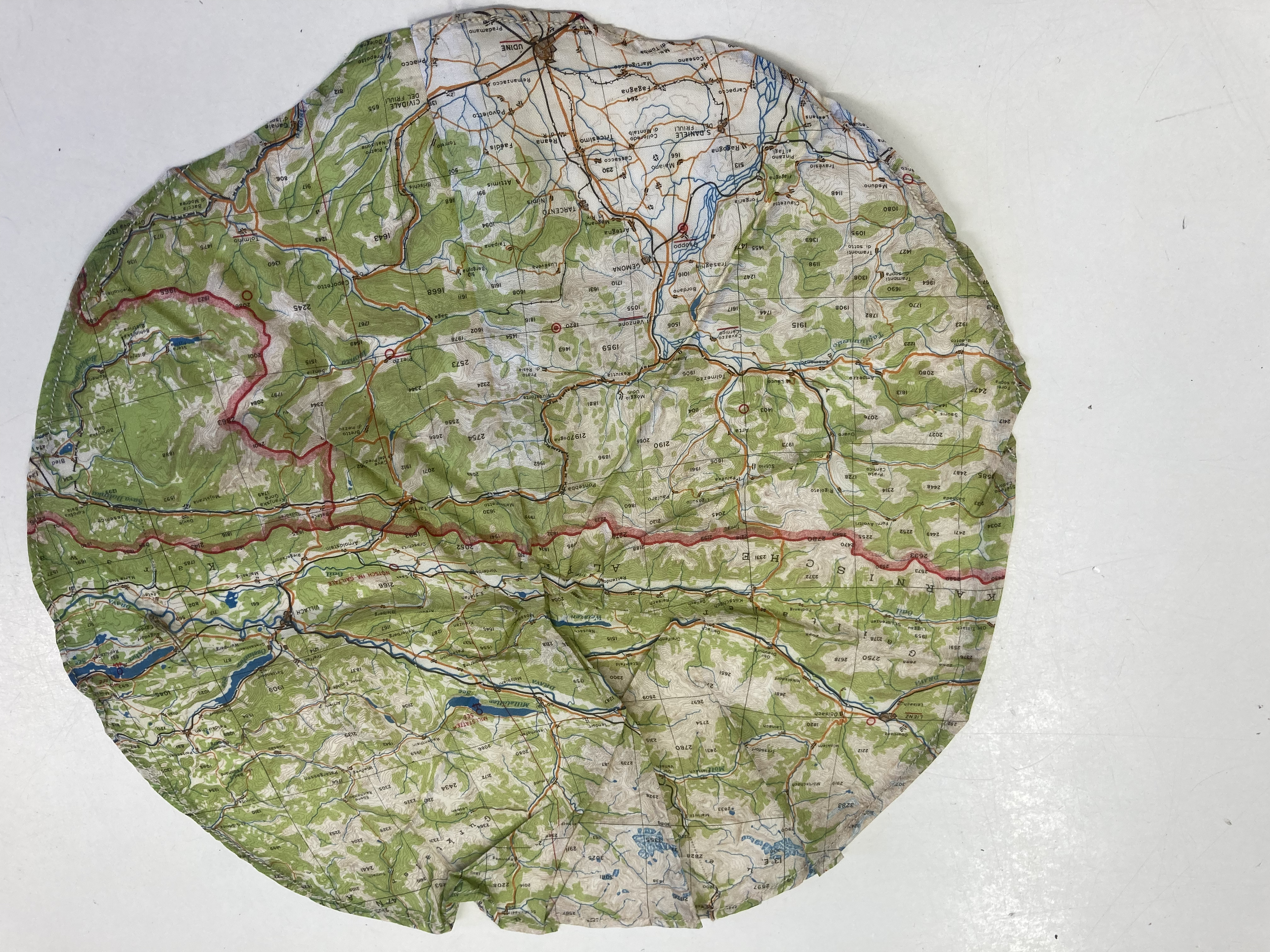
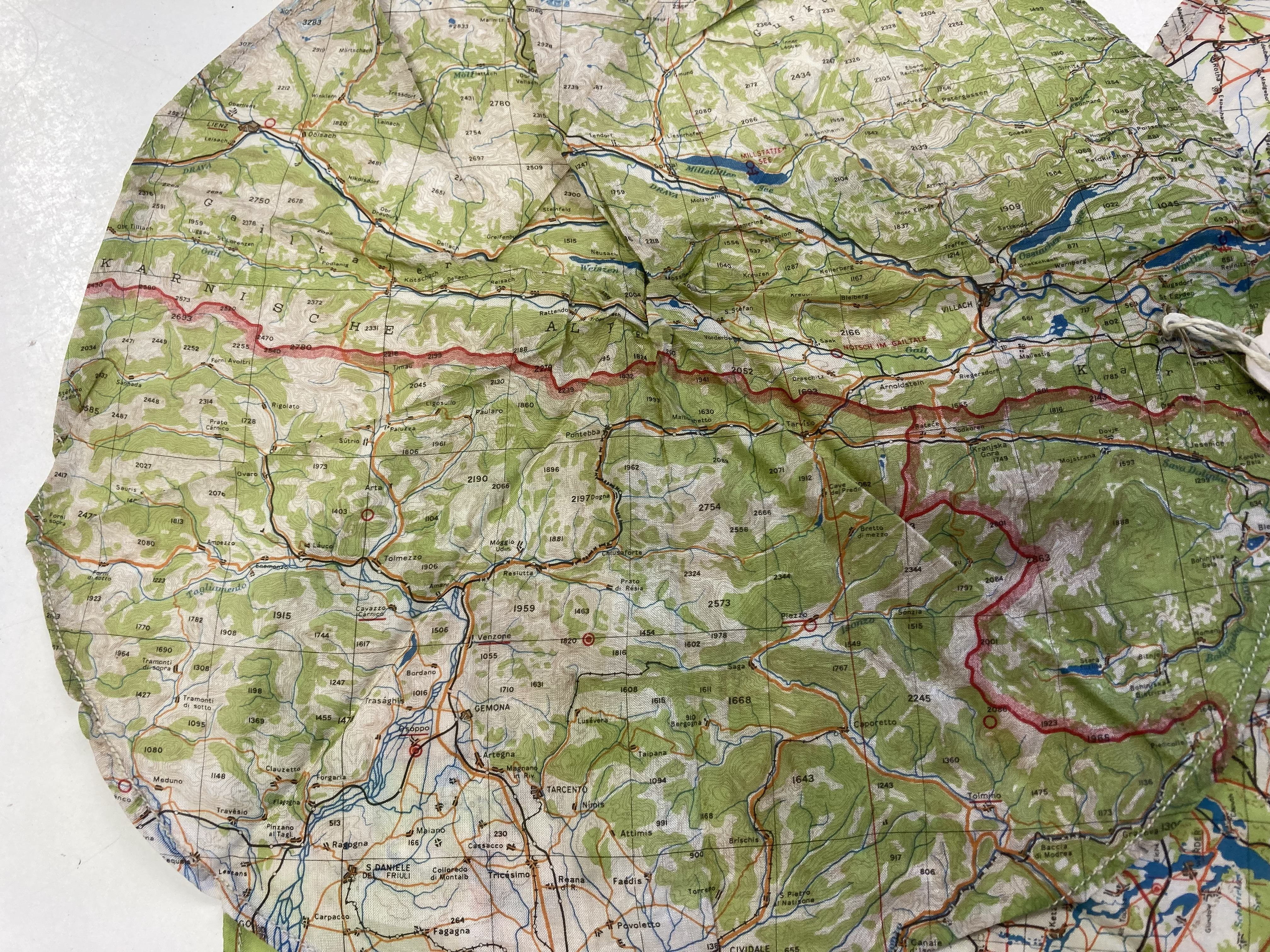
They are the remnants of escape maps.
One of them includes Berlin – so a brave person who went in there.
In case you don’t know, and we didn’t, maps were printed on parachute silk and/or rayon fabric and given to people making their way into ( and hopefully out of ) enemy territory in WW II.
(And if you will excuse me being rather clumsy, they are a nice escape from someone’s house clearance of less than riveting books. Of course, we love all the books donated but you know, now and then……)
Originally, they would have been larger and square and the fact that someone has cut them down to make, what? A small place mat? has rendered them a lot less valuable than they would have been.

The printing is amazingly clear and of course the fabric meant you could scrunch it up to nothing, hide it in your pocket, make into a hatband when in disguise, put into a slit in the lining of a jacket…. ( both true apparently.)
And there was none of that difficult, time-consuming folding and unfolding of a linen or paper map with which anyone whose been on a long walk in familiar territory, leave alone enemy territory, is all too familiar.
Courtesy, as ever, from Wikipedia:
During World War I Australians produced an escape map for use in July 1918 by prisoners in the German Holzminden POW Camp, sections of map were sewn into the clothing of prisoners who escaped via a tunnel to Allied territory.”
Some American intelligence offices visited the UK in 1942 to be briefed on the British efforts in escape and evasion techniques and equipment.
The British MI9 gave the Americans a book or manual called “Per Ardua Libertas” to take back to the US. Published in this manual were examples of each cloth escape and tissue escape map that the British had produced.
After this meeting with the British, the United States began to produce its own escape maps. Most of the American maps supplied by the Army Map Service from World War II were actually printed on rayonacetate materials, and not silk.
However, because of the silky texture of the materials, they were referred to by the more familiar textile name.
During WWII hundreds of thousands of maps were produced by the British on thin cloth and tissue paper. The idea was that a serviceman captured or shot down behind enemy lines should have a map to help him find his way to safety if he escaped or, better still, evade capture in the first place.
Many of these maps were also used in clandestine wartime activities.

Apparently, 35,000 servicemen and men and women on secret missions escaped safely during WW II and it is estimated half of them used some form of escape or evasion map to do it.
But it wasn’t just servicemen ( and maybe women on secret missions) who had these maps.
And they weren’t all made of silk or rayon:
The cloth maps were sometimes hidden in special editions of the Monopoly board game sets sent to the prisoners of war camps. The marked game sets also included foreign currency (French and German, for example), compasses and other items needed for escaping Allied prisoners of war.Escape maps were also printed on playing cards distributed to Prisoners of War which could be soaked and peeled apart revealing the escape map. Other maps were hidden inside spools of cotton thread in sewing kits. “Due to the inherent strength and extremely compact nature of the MI9mulberry leaf tissue maps, they could be wound into twine and then rolled into the core of cotton reels.
I have disappeared down a bit of an WW II escape rabbit hole so do feel free to leave if you don’t need to know anymore.
But before you go, we will put our unfortunately-mangled maps for sale online and I will wonder whose were they? What was the story of if and how they were used, why were they cut down….
For anyone still with me, I was wondering what MI9 was.
It was:
MI9, the BritishDirectorate of Military Intelligence Section 9, was a highly secret department of the War Office between 1939 and 1945.
During World War II it had two principal tasks: (1) assisting in the escape of Alliedprisoners of war (POWs) held by the Axis countries, especially Nazi Germany; and (2) helping Allied military personnel, especially downed airmen, evade capture after they were shot down or trapped behind enemy lines in Axis-occupied countries.
During World War II, about 35,000 Allied military personnel, many helped by MI9, escaped POW camps or evaded capture and made their way to Allied or neutral countries after being trapped behind enemy lines.
The best-known activity of MI9 was creating and supporting escape and evasion lines, especially in France and Belgium, which helped 5,000 downed British, American and other Allied airmen evade capture and return to duty.
The usual routes of escape from occupied Europe were either south to Switzerland or to southern France and then over the Pyrenees to neutral Spain and Portugal.
MI9 trained Allied soldiers and airmen in tactics for evading and escaping and helped prisoners of war to escape by establishing clandestine communications and providing escape devices to them.
The person credited with creating the various ways to make, give and send escape and evasion maps was Christopher Hutton:
a British soldier, airman, journalist and inventor, best known for his work with MI9.
And, just so you know, MI9 no longer exists but whilst it did, it had a section:
“Q,” staffed by Christopher Hutton and Charles Fraser-Smith, was charged with inventing devices to aid soldiers to evade or escape capture. “Q” was made famous in fiction by the James Bond movies.






 thereluctanthousewife