I don’t regularly work a Saturday afternoon in our Oxfam bookshop, and it is a rare ( but a very nice time) when a book is united with someone who really wanted/needed/appreciated it.
Mostly instead it is nice customers who have been recommended a good paperback fiction book by a friend or a sister, or who has read one of the author’s books and wants to read more – or indeed never tells me why they are buying the book.
But this afternoon was a bit different.
We have a glass cabinet ( I have to say rather thrust upon us by a previous area manager) into which we put ‘specially attractive books.’
I put books in there that I really hope will sell because they are delightful/interesting/unusual – but often the book-buying public of Petersfield finds them less so…..
Anyway, the one I put in a few days before my Saturday shift was not really a book.
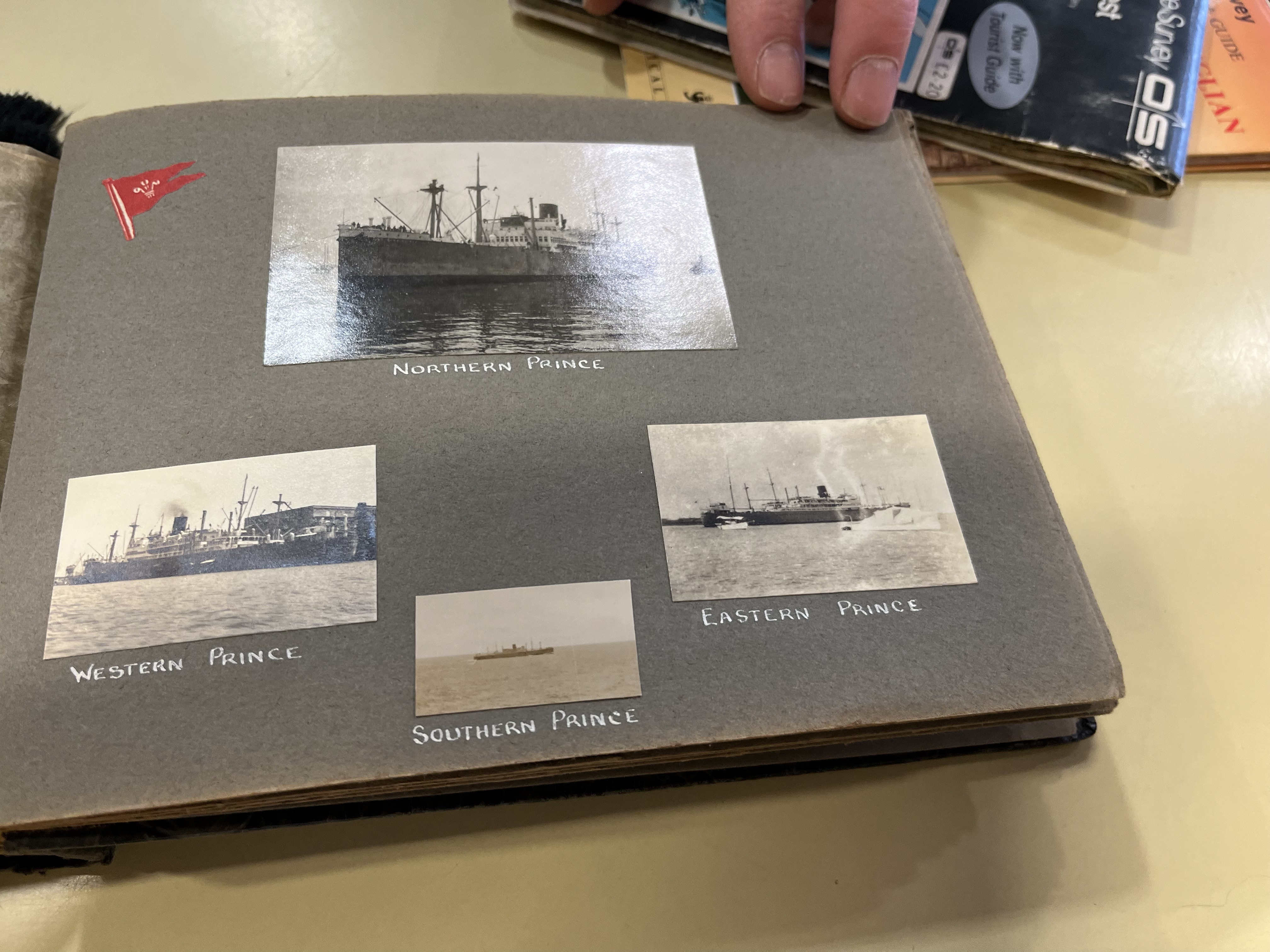
It was a photograph album of ships.
It was donated by who knows who.
It had no name of the ‘author.’
Every page was completed and every page had a tissue guard – that, just in case you didn’t know, means a bit of photographic tissue paper to protect the photographs.
Except, I am not sure they were photos – some were the size of old-fashioned cigarette cards, some the size of postcards, some bigger.
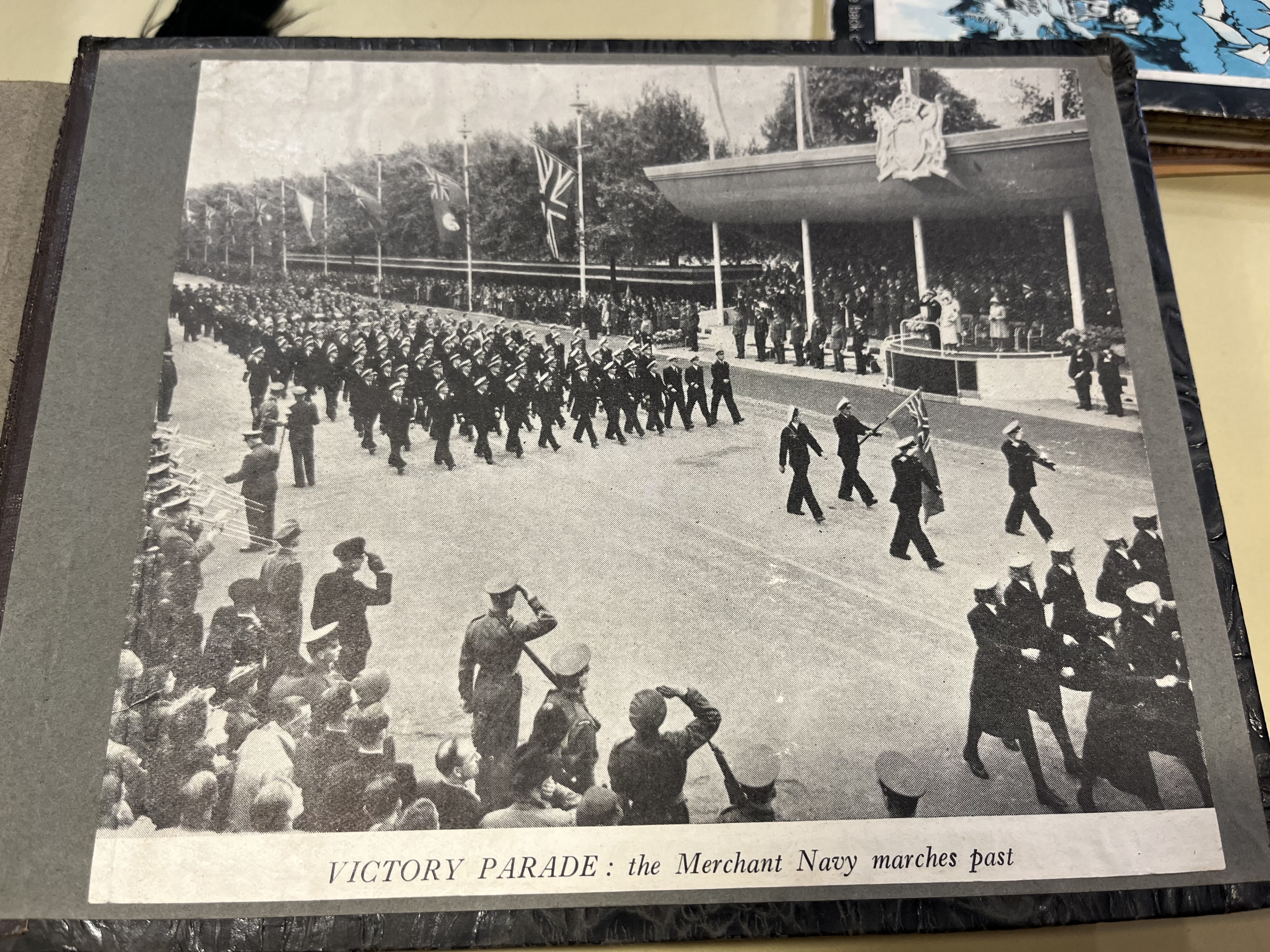
Most of the images, it seemed to me, with a relatively cursory look, were merchant shipping vessels and at the end of the book was an image of the merchant navy victory parade at the end of World War II.
I had looked at this and wondered who as the person who put it together?
But assiduous readers of this blog ( and that must be just me ) will remember I disappeared down a rabbit hole of naval mutinies a while ago and so I decided not to take on any research into this album.
I steeled my heart, as the best beloved would say, picked a figure out of the air and put it in the cabinet for £20.
So, there I am on a busy Saturday afternoon and someone asks if he might take it out and have a look at it.
Of course. And just then the shop was not too busy so we started talking about it.
Then customers started wanting to pay for books, asking for books we might have not on display, wanting to know whether the book they had seen ‘about two weeks ago and it was about, well I am not really sure but something to do with… have you still got it?’
So I left the man and his wife leafing through the album until the shop went a bit quieter again, and he said something along the lines of:
‘I am going to buy this and try and find out who he was. There must be ways of finding out the crew on all these ships and if there is a name which appears on all of them or at least some of them.’
A man after my own heart.
I asked him if he would let me know what he found out, if he ever does.
I have given him my name and phone number and one of these fine days I might find out what he has found out.
‘It is amazing and rather sad,’ he said, ‘that a family have let this history go.’
But he doesn’t work in an Oxfam shop where you get all sorts of donations and think why did you let that go?
But, as someone donating the other day said, ‘ I hope you can find someone who likes old stuff because we don’t.’
It is no secret among my friends and family that I do like to do a bit of cooking and so although I am ruthless about throwing away donated and dated cookery books, old and interesting ones do catch my attention.
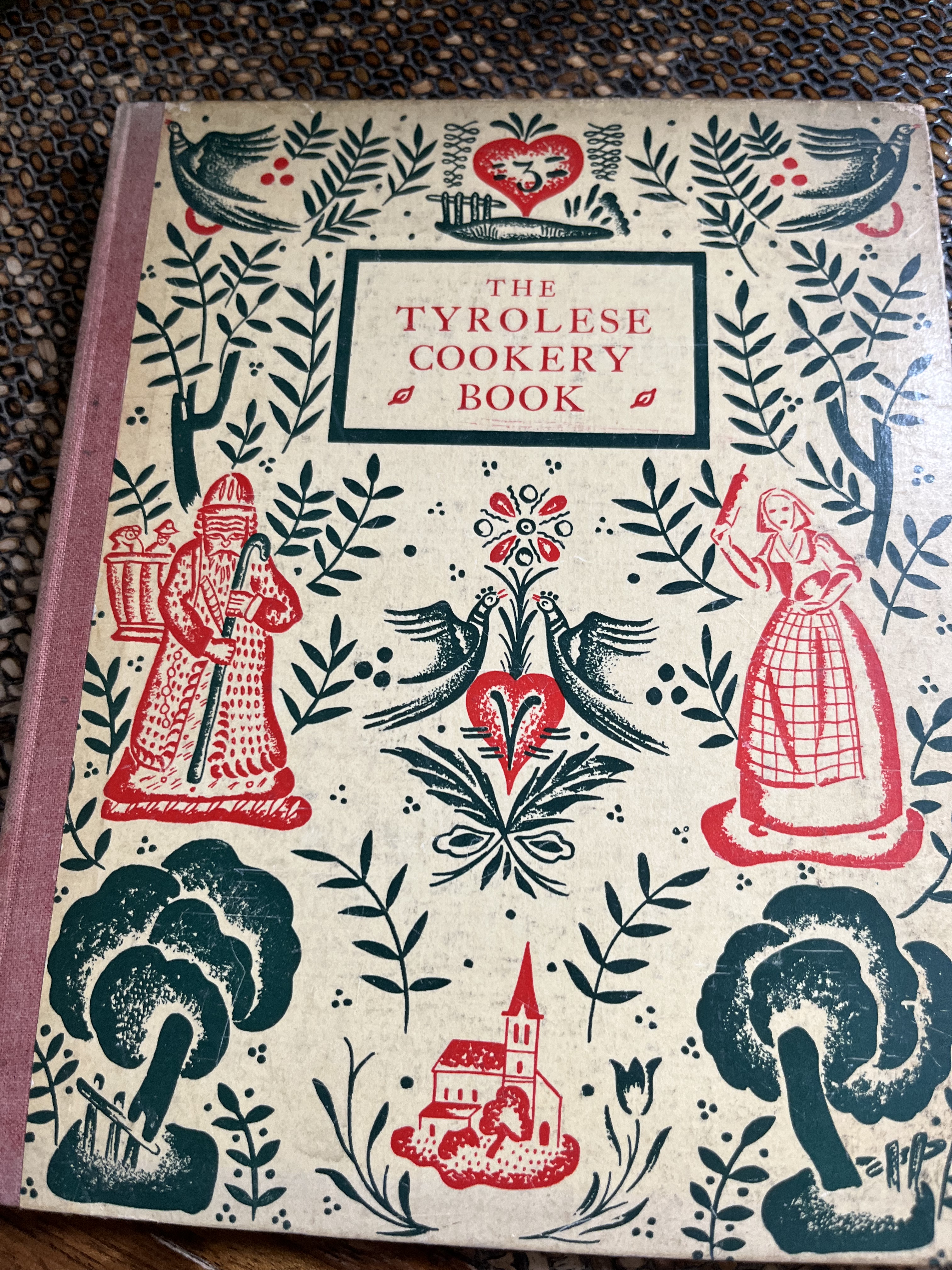
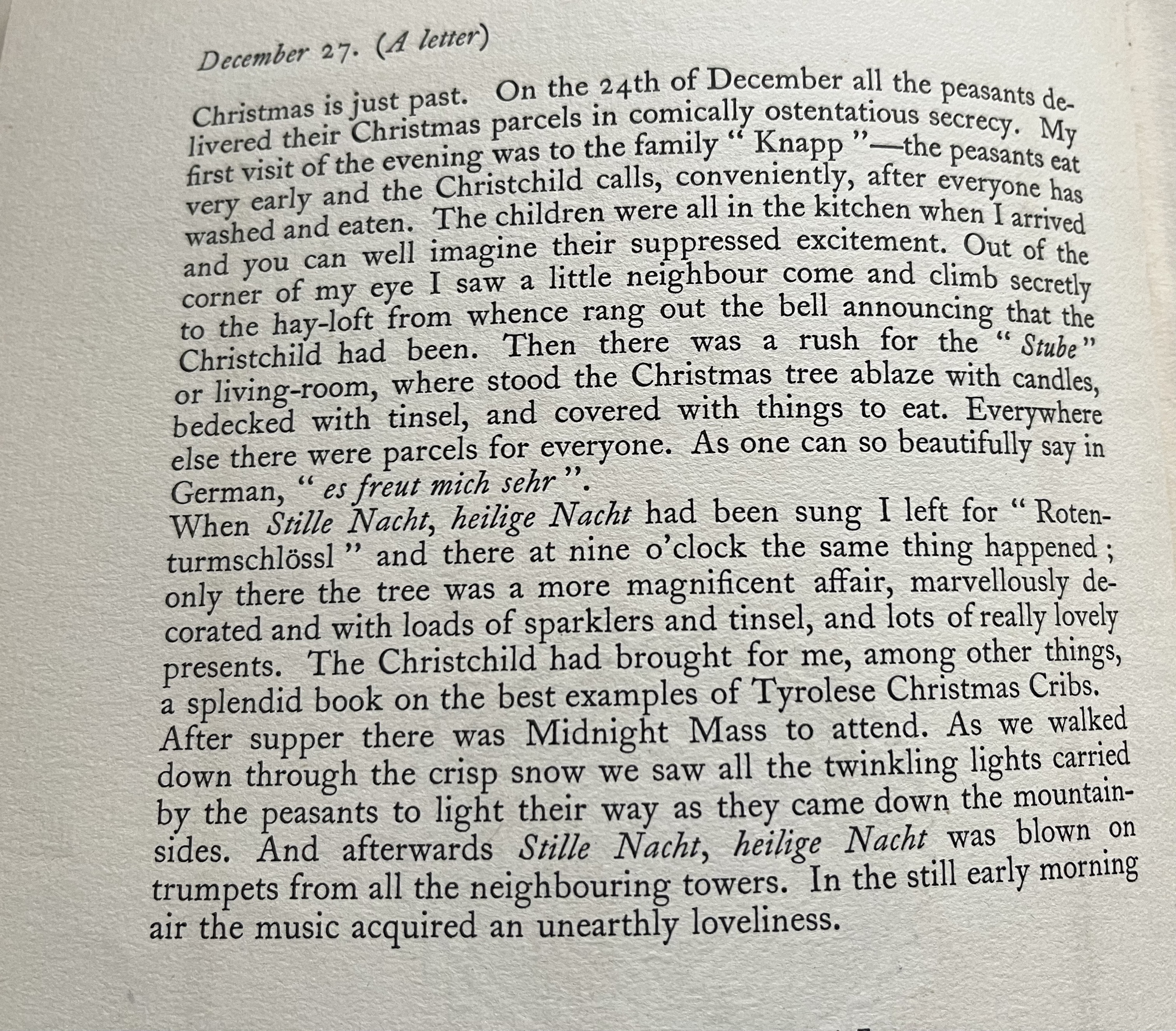
So, fellow ordinary cooks – no special stuff here – you might want to read on and be entertained by David de Bethel (the cook book writer and illustrator) as he spends time in the Tyrol oscillating apparently between pestering Anna the cook at a rather posh schloss called ‘the Castle with the Little Red Tower’ and the Knapp’s ‘peasant house.’
Before we start, this was published in 1937 ( there are no mentions of what would have been the political ‘issues’ of the time but plenty of references to the mores of the time.)
I have no idea who he was except to have a quick search and find he wrote other cookery books from his travels in France and perhaps he ended up involved in the New Zealand Players Theatre Trust with his wife Joan who was a potter.
But I haven’t confirmed he is the same man, so let’s just go with the cookery writer.
So here is why he went:
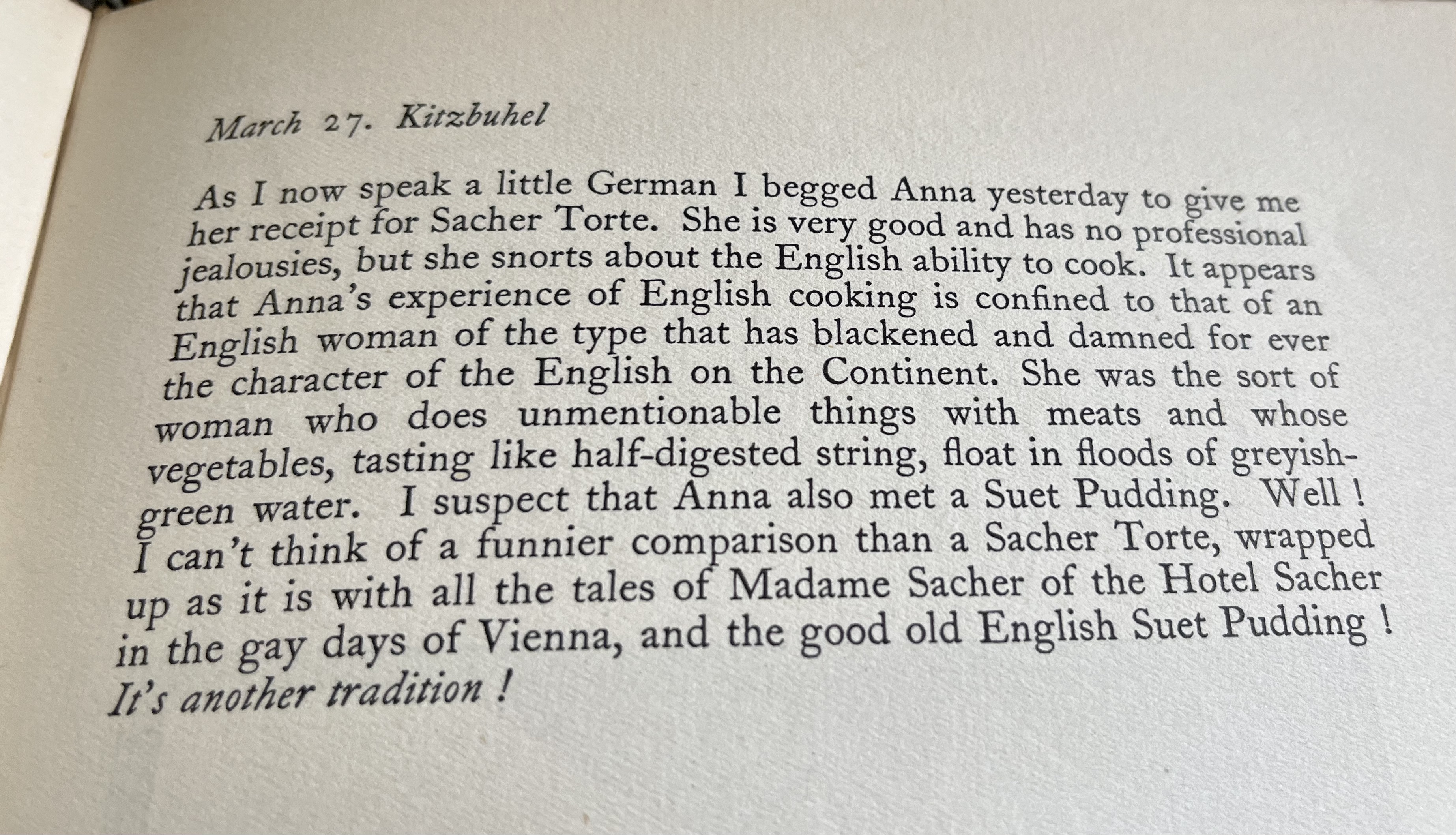
And it must be said, though he is not complimentary about all Austrian cooking, he is later equally willing to report the disdain of Anna for, as he described, the type of English cook who has ‘damned forever the character of the English on the Continent’ by their appalling cooking.
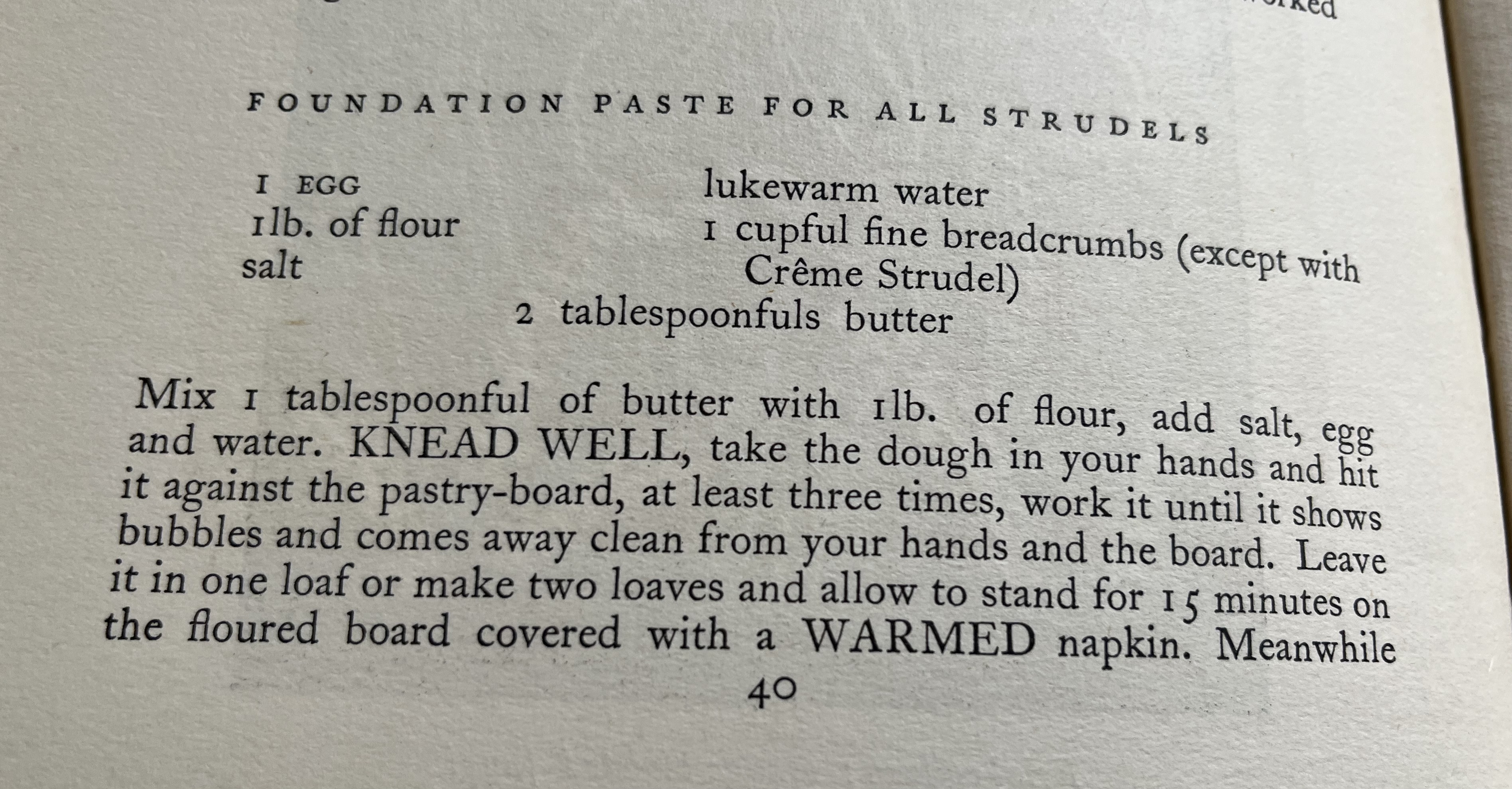
It is a characteristic of old cookery books that they just don’t have the detail you would expect from a Jamie, Nigella, Nigel….
If you bear with me, there will be another piece on a similar vein of ‘Ok if you regularly cook and potter in the kitchen over the years/tears and work out what works with what and how, then you can work this out but if you are not that person, you need a lot more advice on how that recipe is going to work.’
I think it must be that in those days, cooking was much more ‘if you had a cook, they knew how to do it, and if you didn’t, you knew how to do it.’
Prepared meals? What??
Now David, I have to say that stuffed cabbage leaves was one of my specialities in lockdown and my Austrian-born neighbour liked them.
But essentially the cabbage ( and I used Savoy as a much better alternative to white cabbage) was the easy bit – it was the filling and sauce which made the food interesting.
So to have a recipe which is largely about cooking cabbage and only a brief mention of the stuffing, I have to say, sorry, is pretty rubbish.
Mince, rice and parsley could be good but only with a lot more thought and action.
(Happy to supply a better recipe, though I say it myself, if called on to do so.)
David, yes we are on first name terms now, interspersed his recipes with a (slightly florid and Disney-like, but rather charming and interesting diary about the seasons and weather and customs.)
If you are wondering about the recipe for bilberry fritters, essentially it is: make some fritters and add bilberries.
There are times when his recipes have more detail but I have to say a) I would never use the time I have left in life to make a strudel and b) if I should somehow change my mind on that one, I would not be relying on David to tell me how to do it – great read though and love the love letter thing AND CAPITAL LETTERS.
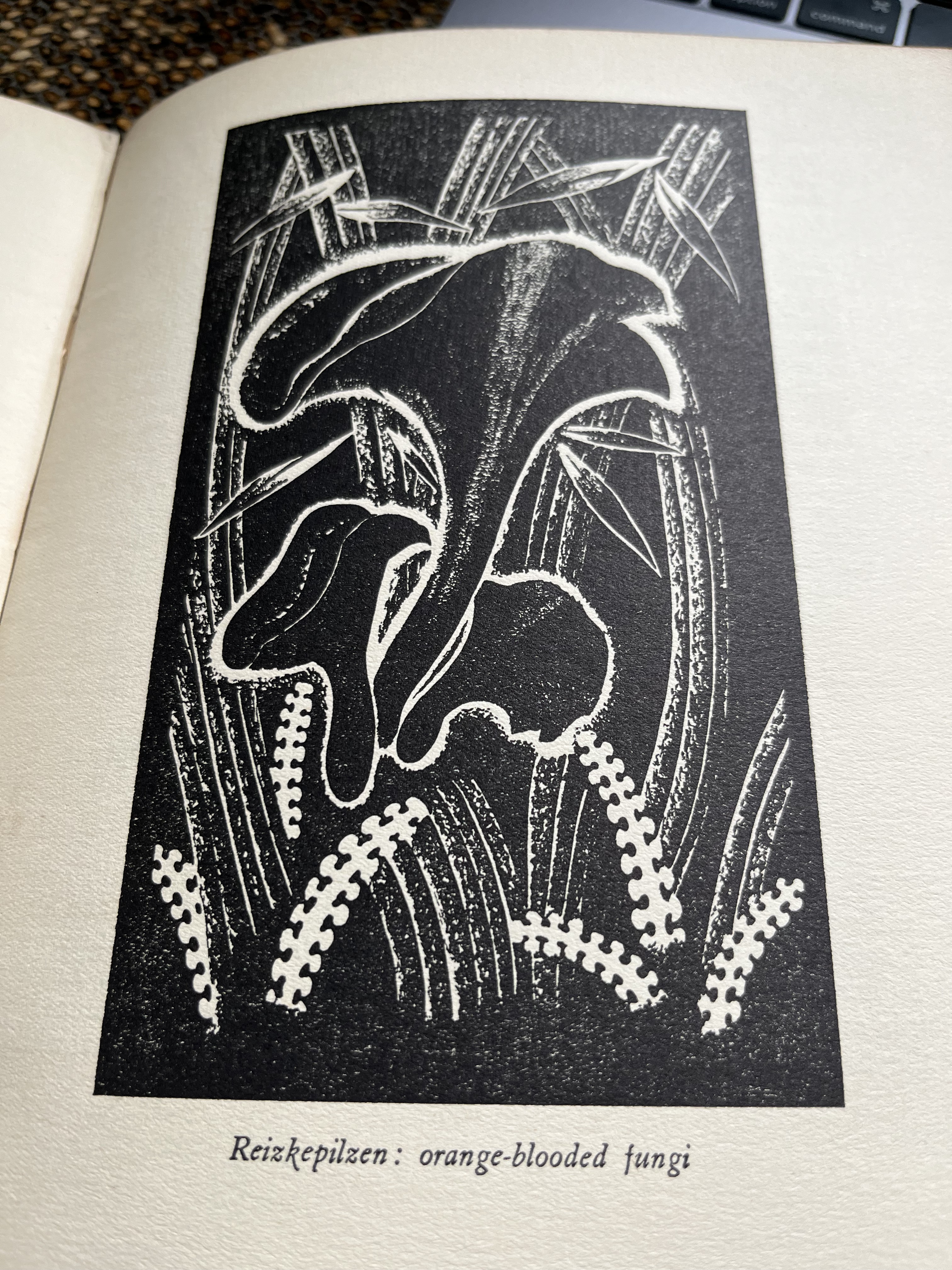
Fungi foraging is much more of a thing now but I remember my grandmother soaking button mushrooms to make sure they were safe to eat and anything other than those white things were never to be countenanced, so I understand David’s comments on this.
By the way, Sarah Gamp was a ‘dissolute, sloppy and generally drunk’ character in Dickens’ Martin Chuzzlewit who always carried an umbrella, so an umbrella became called a Gamp. I am assuming that is what David is referring to.)
I am not sure that ‘most people’ hunt foxes but could tell you a tale of being at a pre-Vienna ball dinner (in my posh days) where talk was of the days they went hunting around the cemeteries of the city….. just saying.
So, thank you David.
I am not sure that I will be doing that many of your recipes (though being a potato fan, Sauerkraut with potato pancakes might feature one day) but it was a great read.
So, who knew there were so many mutinies in the Navy? Well I didn’t. Apart from Mutiny on the Bounty, I had heard of not much of the (seemingly) many others.
I am (still) on my research of a book about Admiral Duncan and the letter tucked inside, so if you haven’t read the relevant previous blog, you might find it a bit strange that I am writing about mutinies – don’t feel obliged to go back, after all you might just be interested in Navy ill-discipline.
But just in case you are in for the long haul – and it will be a long one, here is what I found which started this search.
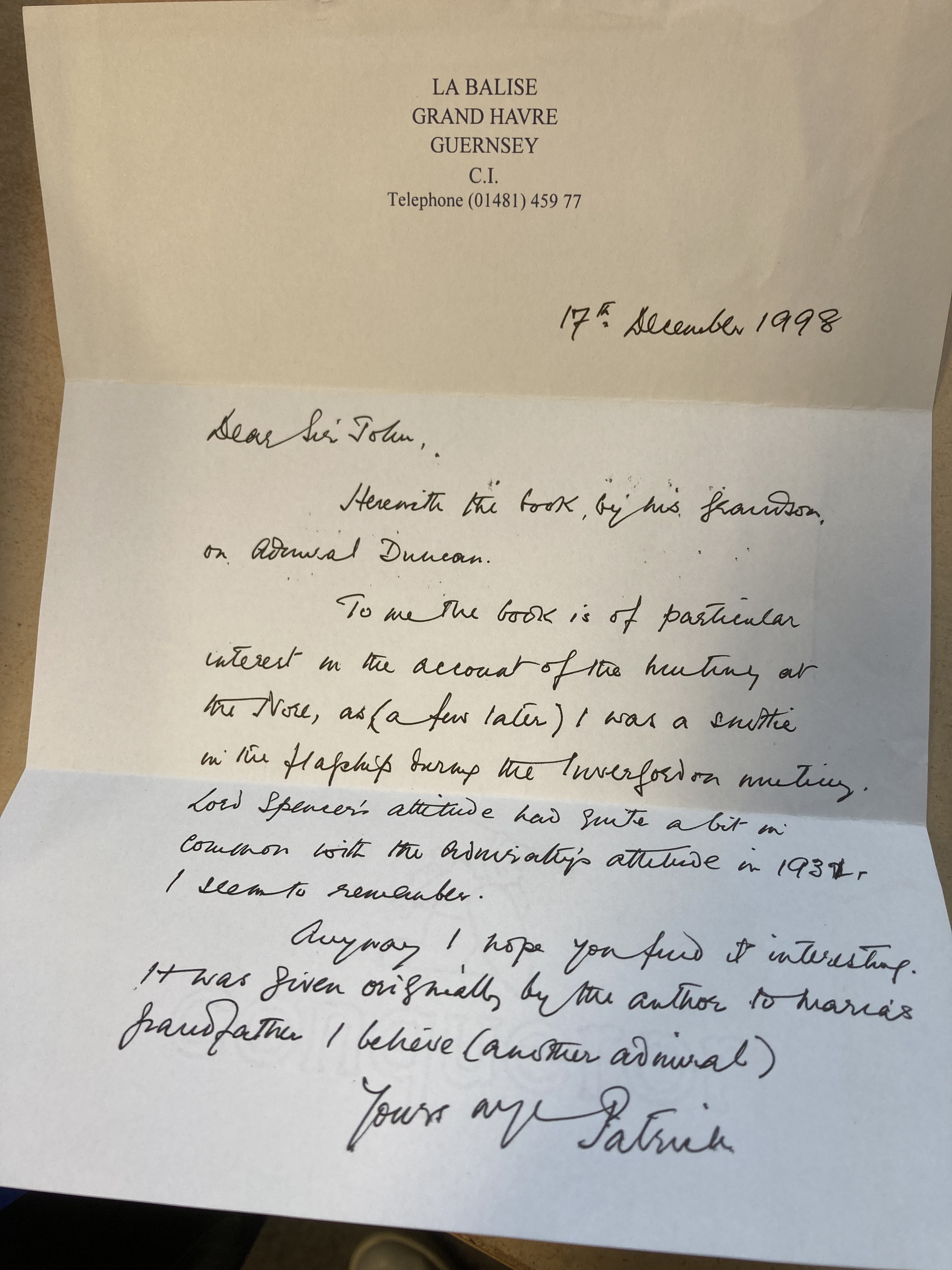
I need to find out about Patrick, his wife Maria, her grandfather and one day perhaps, Sir John.
Meanwhile back to mutinies.
My kind friend who does know about these things sent me this:
‘There were quite a few mutinies over the centuries, usually involving more than one ship when the fleet was at anchor (often for extended periods), and were due to government pay cuts or the state of the victuals as a result of corruption in the Victualling Board or yards – so pesky civilians at fault.
The more concerning ones from the Admiralty viewpoint were those on individual ships far from home – hence the Naval Discipline Act which unlike the other services allowed captains to award up to 2 years imprisonment.
Incidentally, WRNs were never subject to that act, and could just walk away.
The Captain’s safe used to have a confidential reference book on how to deal with mutinies. The only bit I remember was not to try to re-establish order while only wearing underpants.
Needless to say, we now have a joint Armed Forces Discipline Act and anything serious is handed over to civilian lawyers.’
I have two mutinies I want to investigate – the Nore mutiny for Admiral Duncan and the one Patrick was involved in – Invergordon.
But first some background to mutinies in 1797 – a big year for mutinies:
‘In September 1797, the crew of Hermione mutinied in the West Indies, killing almost all the officers in revenge for a number of grievances, including throwing into the sea without proper burial, the bodies of three men killed by falling from the rigging in a desperate attempt not to be the last men on deck, which was punishable by flogging.The Hermione was taken by the crew to the Spanish port of La Guaira.
On 27 December, the crew of Marie Antoinette murdered their officers and took their ship into a French port in the West Indies. Other mutinies took place off the coast of Ireland and at the Cape of Good Hope and spread to the fleet under Admiral Jervis off the coast of Spain. ‘ Wikipedia
So, if you are up for this, help yourself to a tot of rum and settle down.
(But given that this series of blogs is all about wandering about the Navy, books and history, here is a digression, and as a digression on a digression, who’d have thought the rum ration was still in action in 1970, and who’d thought it was not available in 1797 when the mutinies in this blog were in action?..)
‘The rum ration, or “tot”, from 1850 to 1970 consisted of one-eighth of an imperial pint (71 ml) of rum at 95.5 proof, given out at midday.
Senior ratings (petty officers and above) received their rum neat, whilst for junior ratings it was diluted with two parts of water to make three-eighths of an imperial pint (213 ml) of grog.
Rum, due to its highly flammable nature, was stored in large barrels in a special rum store in the bowels of the ship. The rum ration was served from one particular barrel, known as the “Rum Tub”.
Not all sailors necessarily drew their rum: each had the option to be marked in the ship’s books as “G” (for Grog) or “T” (for Temperance).
Sailors who opted to be “T” were given threepence (3d) a day instead of the rum ration, although most preferred the rum.
Sailors under 20 were not permitted a rum ration, and were marked on the ship’s books as “UA” (Under Age).’ Wikipedia
So back to mutinies.
In 1797 two mutinies broke out.
One in Portsmouth, the Spithead mutiny, and one in Nore in the Thames Estuary.
Apparently, the Spithead mutiny was more a kind of strike for better conditions whilst the Nore mutiny had more political overtones – and that is the one which involves Admiral Duncan.
When I say ‘apparently’ I am relying on a Wikipedia entry on these mutinies.
Now, I am a big fan of Wikipedia, rely on it frequently and yes, do send money to keep it going.
And all the entries are anonymous but sometimes you get the feel of the person behind what they are writing, and this entry has the whiff of a chap who is rather formal, has a Naval background and is not a fan of leftie politics. ( Of course I could be wrong.)
So, he (I’m assuming) writes (comments in italics are mine):
‘Seamen’s pay rates had been established in 1658, and because of the stability of wages and prices, they were still reasonable as recently as the 1756–1763 Seven Years’ War; however, high inflation during the last decades of the 18th century had severely eroded the real value of the pay. In recent years, pay raises had also been granted to the army, militia, and naval officers.
You can rather imagine that for people seeing their bosses getting a pay rise when they were told they shouldn’t grumble about the reasonableness of their own more meagre pay, set about 100 years before, during a period of high inflation, might just be just a bit annoying. Nothing like our own times of course.
And, ‘until 19th-century reforms improved conditions, the Royal Navy was additionally known to pay wages up to two years in arrears.
The Navy always withheld six months’ pay as a standard policy, in order to discourage desertion.
At the same time, the practice of coppering the submerged part of hulls, which had started in 1761, meant that British warships no longer had to return to port frequently to have their hulls scraped, and the additional time at sea greatly altered the rhythm and difficulty of seamen’s work.
The Royal Navy had not made adjustments for any of these changes, and was slow to understand their effects on its crews.
If you are still with me when I get onto the Invergordon mutiny (1931 rather than 1797 ) you might well see that little in the way of attitude had changed.
Impressment (a common practice) meant that some of the seamen were onboard ship against their wills.
That, is press gangs and meant that men between 18 and 55 years old and capable of being seafaring were ‘taken into naval force with, or without, notice.’
The army tried it for two years from 1778 to 1780 and then gave it up. The Navy held onto it for a long time: 1664-1815.
The new wartime quota system meant that crews had many landsmen from inshore (including some convicted criminals sent in lieu of punishment) who did not mix well with the career seamen, leading to discontented ships’ companies.’ Wikipedia
So, you as a well practised sailor, knowing your stuff, your colleagues/mates etc etc then find you are alongside men who know nothing about sailing and have a criminal past. It may be that that criminal past mattered less than the fact those men didn’t know how to hoist a sail….
The Nore mutiny 1797, as promised earlier:
The crew of Sandwich at anchor at Nore, seized control of their ship and several other crews did likewise. Because they were scattered, they set up their own elected delegates to make demands on the Admiralty – or indeed anyone who might listen.
The crews elected Richard Parker as President of Delegates of The Fleet and drew up demands which included pardons, a pay rise and modifications to The Articles Of War.
Mutinous assembly. Uttering words of sedition and mutiny. Contempt to superior officers. If any person in or belonging to the fleet shall make or endeavor to make any mutinous assembly upon any pretence whatsoever, every person offending herein, and being convicted thereof by the sentence of the court martial, shall suffer death: and if any person in or belonging to the fleet shall utter any words of sedition or mutiny, he shall suffer death, or such other punishment as a court martial shall deem him to deserve: and if any officer, mariner, or soldier on or belonging to the fleet, shall behave himself with contempt to his superior officer, being in the execution of his office, he shall be punished according to the nature of his offence by the judgement of a court martial.
Richard Parker became known as the President of the Floating Republic – and this was the time that the French Revolution was stretching its influence.
Imagine the effort the English establishment were harnessing so they they could ‘manage the disturbance.’
The mutineers extended their demands and partially blockaded London but they couldn’t make it work and the mutiny failed.
Parker was convicted of treason and piracy and hanged from the yardarm of Sandwich, the vessel where the mutiny had started.
In the reprisals that followed, 29 were hanged, 29 were imprisoned, and nine were flogged, while others were sentenced to transportation to Australia.
If you have made it here, thank you and yet, and yet, there is more……
We start thinking the unthinkable very early on in the Oxfam bookshop – we think about Christmas from August onwards.
Yes, I can imagine your rolling eyes, and indeed the rolling eyes of professional shop designers who obviously start thinking about Christmas in January.
But bear with me, if you can.
So, long-time readers may know that from August (maybe even July) we start putting aside books which are in such lovely condition a customer could buy them and give them to someone who would never know they were second hand. ( And we can get a bit more money for them.)
Mind you, I have to say that most of our customers say they are on a mission to buy from charity shops, or they have a family contract to buy second hand books to ‘indulge’ in the Icelandic tradition of having Christmas Eve when everyone in the house eats and reads a book.
Or they are looking for ‘table presents’ – ‘do you have a book which will interest my godson who is really into physics, and my niece who is into jewellery-making, and my friend who loves ghost stories?’ etc etc
That was a fun hunt last Christmas Eve, and the lovely customer-couple bough £50 worth of books.
But the primary issue is making the window look good. Really good.
And that is the primary job of my great colleague who, I may tell you, made Narnia in our window last year.
She does the window displays and I do the table displays (which is also in the window but requires a lot less effort.)
So, what to do this year.
Now, my Best Beloved will say that I have lots of bright ideas but few ever make it into reality unless there is someone picking them up and doing what is needed.
And, that is (sadly) true – lots of my good ideas have thus fallen by the wayside.
But my idea for the Christmas window seems to have got traction.
Want to know what it is?
Oh, go on then.
So we have decided to do a Cluedo window.
There will be the dead Mr Black slumped over a desk in the ‘library’ in the window.
And the nod to Christmas will be a fake window in the real window ‘looking through’ to snow.
There will be lots of books about murder mysteries on his ‘library’ bookshelves.
And, thanks to the BB suggestion, we will have clues around the shop.
For those of you who don’t know the Cluedo board game – are there any such people? – we are going with the early version.
So, Mrs White was the cook so there will be old-fashioned ladles hanging from the cookery book section and a book in that section with a cover (we will have made) called Mrs White’s Country House Recipes.
I have arranged to borrow a vicar’s collar from ( not entirely surprisingly, a vicar I know) and it will be in our religious books section with a bible ‘owned’ by the Rev Green.
Miss Scarlett is proving a challenge so far because although we take clothes donations and sell them online, not many people associate us with a clothes shop so my hunt for a bright red evening dress is proving a bit difficult.
Do let me know if you have one to spare.
Colonel Mustard will be a pot of Colman’s mustard in the section of military history and somewhere/somehow we will make/find a suitable moustache to go alongside.
Mrs Peacock is going to be peacock feathers around the shop. But again, if anyone has a peacock model/trinket/statue/garden adornment they don’t need, I would love to borrow.
For Professor Plum, we will have a mortar board and (maybe) a gown alongside a pile of academic books.
And then we are on to the weapons.
We need a dagger – well the BB has one (actually several) so that is covered but we are not supposed to have those in the shop so that will need some ‘display finessing’.
A candlestick – we have at least several we can lend to the shop.
Lead piping – well, we will make something which looks like that but that can’t actually injure a volunteer or customer.
Rope is easy-peasy but again, we will try and ensure that no volunteer is injured/murdered in the making of this Christmas display……
What is proving really hard is finding a fake revolver – today’s parents don’t like their children playing with guns these days.
In my part of Deepest Sussex there is a man whose business is making posh shooting weapons but I am not sure that Oxfam will wear me borrowing a beautifully designed real thing…..
Now, just as a PS, we have had no end of Cluedo sets donated to the shop in the past.
Do we have one now, no of course not.
But a quick WhatsApp messages to my village has turned one up. Of course it did.
There are times when I really like being a Reluctant Sussex Housewife.
As you may have gathered by now, I spend most of my time these days (though in my Oxfam ‘youth’ things were different) looking at what we call the Old and Interesting books donated to the shop.
And, as you may have gathered over the years, many of the books I look at might be old but not necessarily very interesting, but there are enough to make my Oxfam life fascinating (sometimes.)
And I’d really like to tell you about some of the more interesting. But some other time.
I could tell you of the work of many another volunteer – from those who sort, wash, iron and put online the clothes we have had donated ( yes, in despite of being a bookshop), those who then pack them up and send them off, the classical music expert already sorting out special stuff to keep back for Christmas ( yes that word is already being mentioned), the sorting out of Oxfam cards into their allotted slots in the spinner, and so much/many more.
But I don’t know what they do as well as I know what I do, so here is my Monday just as an example of what happens behind the scenes :
I arrived at 8am, wrote and distributed the weekly volunteer update – what we took last week in the shop, counting up the online sales of books, jewellery, music and the odd stuff – a pair of gold, fur-lined gloves ( in July?), the treen boot-jack with integrated boot tools which has been on sale for six months and has finally sold etc etc.
I left to do my pilates class – yes I am a Sussex housewife – and got back at about 10.15 by which time everyone had worked up their questions about what felt like a million things, queries about what to do, :
What was happening with the table and the window, plans for the front-facer books (in case you have forgotten, these are books displayed so you can see their front covers and therefore and really, are more attractive and sell better), where to put the latest donations, and was this book especially interesting, could we have tea and coffee, and by the way did you buy some milk? etc etc.
And could I find a few very small jewellery donations which weren’t yet listed online to fill the miniature pirate cask in the window?
By the way, the window looked great thanks to someone who does a great job at making it so – with the help of the manager’s mother who has knitted rats for the pirates display….
But I needed to put not for sale stickers on the inflatable seagulls (yes seagulls and pirates of course) belonging to another volunteer and clear up some of the window display ‘leftovers’.
I found some jewellery.
Could I find some theme of books for the corner display and clear off the previous display – in case you want to know – books about Japan and a few Japanese artefacts.
So, no I couldn’t think of anything on a theme so just brought down (from the semi-organised chaos upstairs) some lovely-looking, interesting books.
(They sold really well and that means there were gaps, and our smart, great manager said she stood and looked at the gaps in the display the next day and tried to work out what the theme was…… today, we re-filled it with great books we had been wondering where to show them off.)
In the meantime, back in Monday, I had asked someone I knew to come in an PAT test ( proving the items are electrically safe) some model railway stuff which we have had buried behind the boxes of vinyl ( yes they have been there for, well, some months.)
(He needed coffee, space, a conversation, thanks and time to be acknowledged.)
So, I have no idea what these things are but apparently they are worth some £20 each. I also have no idea how to describe them but I will wait until next Monday when a volunteer who knows a bit about this stuff, tells me how to write them up for an Oxfam online listing.
Then two other volunteers came in and they had questions, something just to mention, tea requirements, change for the till because there were two ten pound notes – no good if someone buys a £2.49 book with (yet) another.
So, that was a trip to the bank.
And in between all that, there were donations.
Now, we have an amazing volunteer who cuts through donations like a knife through butter – everything sorted into those that need to go to ‘another’ place ( yes that is a euphemism) and those which will sell, are first editions, signed, unusual.
But there is a rule that says five minutes after he leaves, there is another arrival of donations – and they needed to be dealt with.
Suffice it to say, I was a bit tired at the end of my (extended) shift on Monday.
But in all that I found a book which has been a dandy of a research project and might be worth a good deal.
I think I may have said before the if you wait long enough there a book on every subject under the sun will come into our Oxfam bookshop – and today we had a bit of a niche-book bonanza.
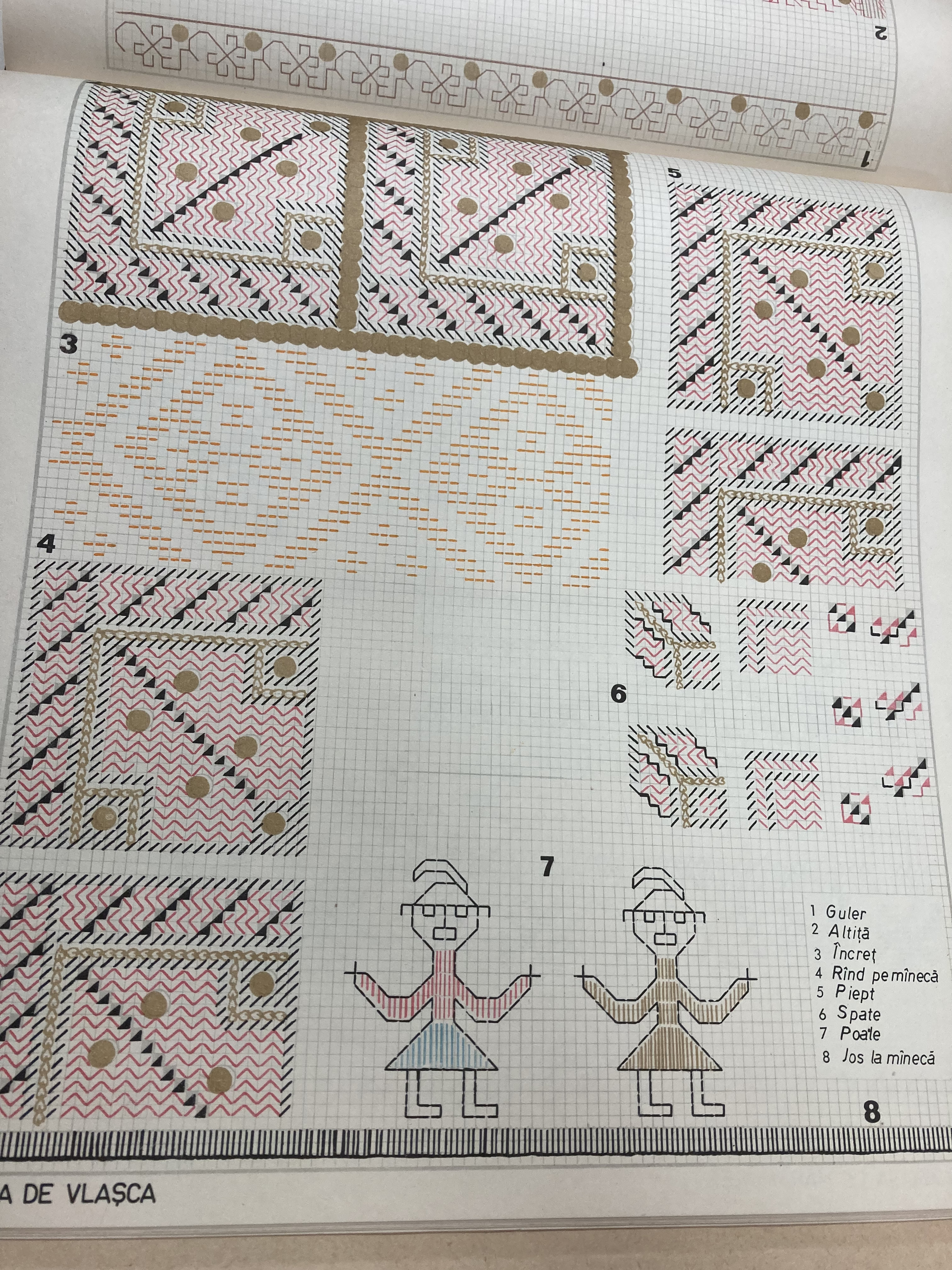
So, in case you are not clear, this is a book on the embroidery of traditional Romanian costumes, with patterns and with a Romanian text – not something we get every day in our Petersfield bookshop. (Apparently worth £50 and should you be interested, it is for sale on Oxfam online.)
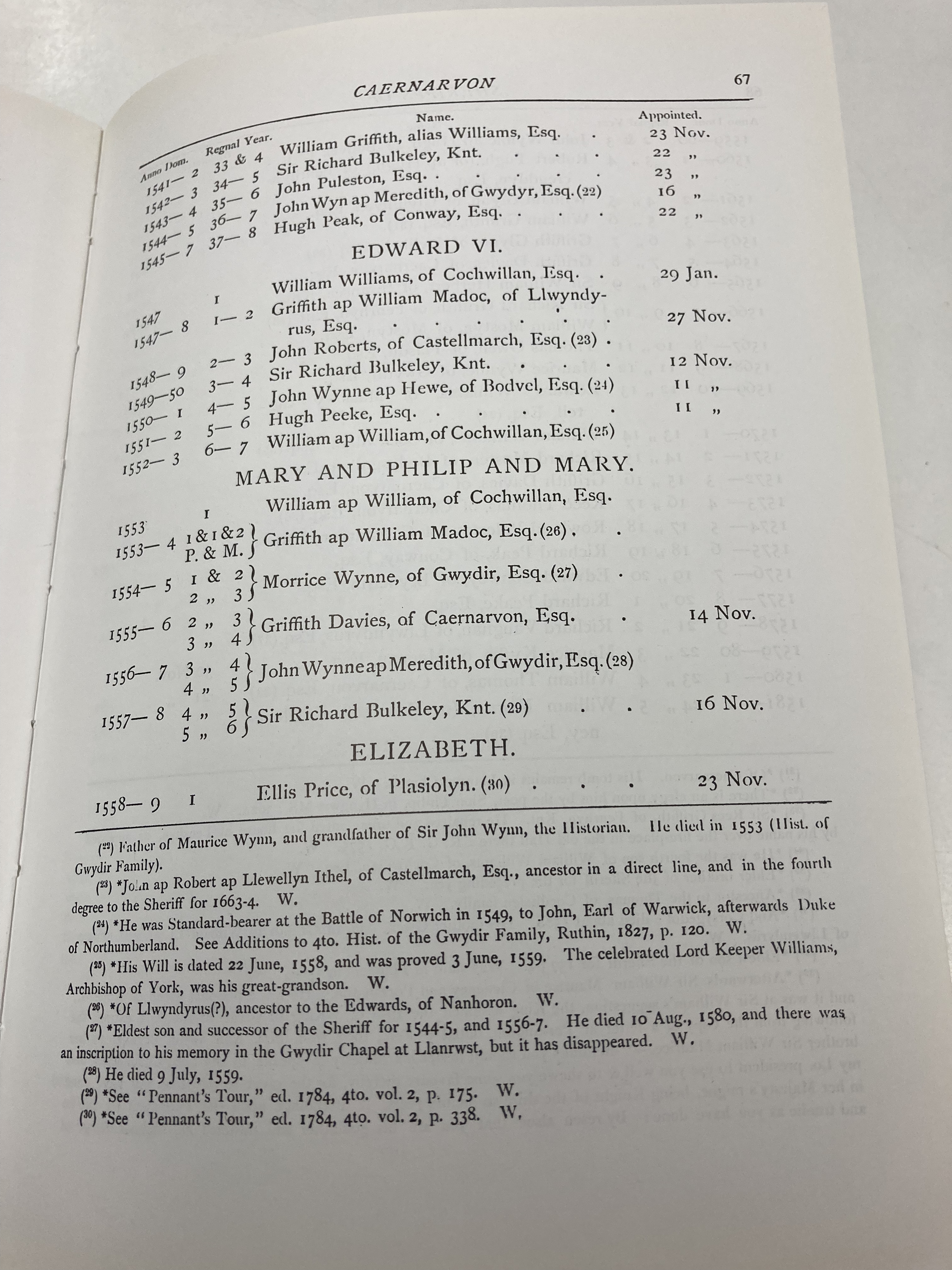
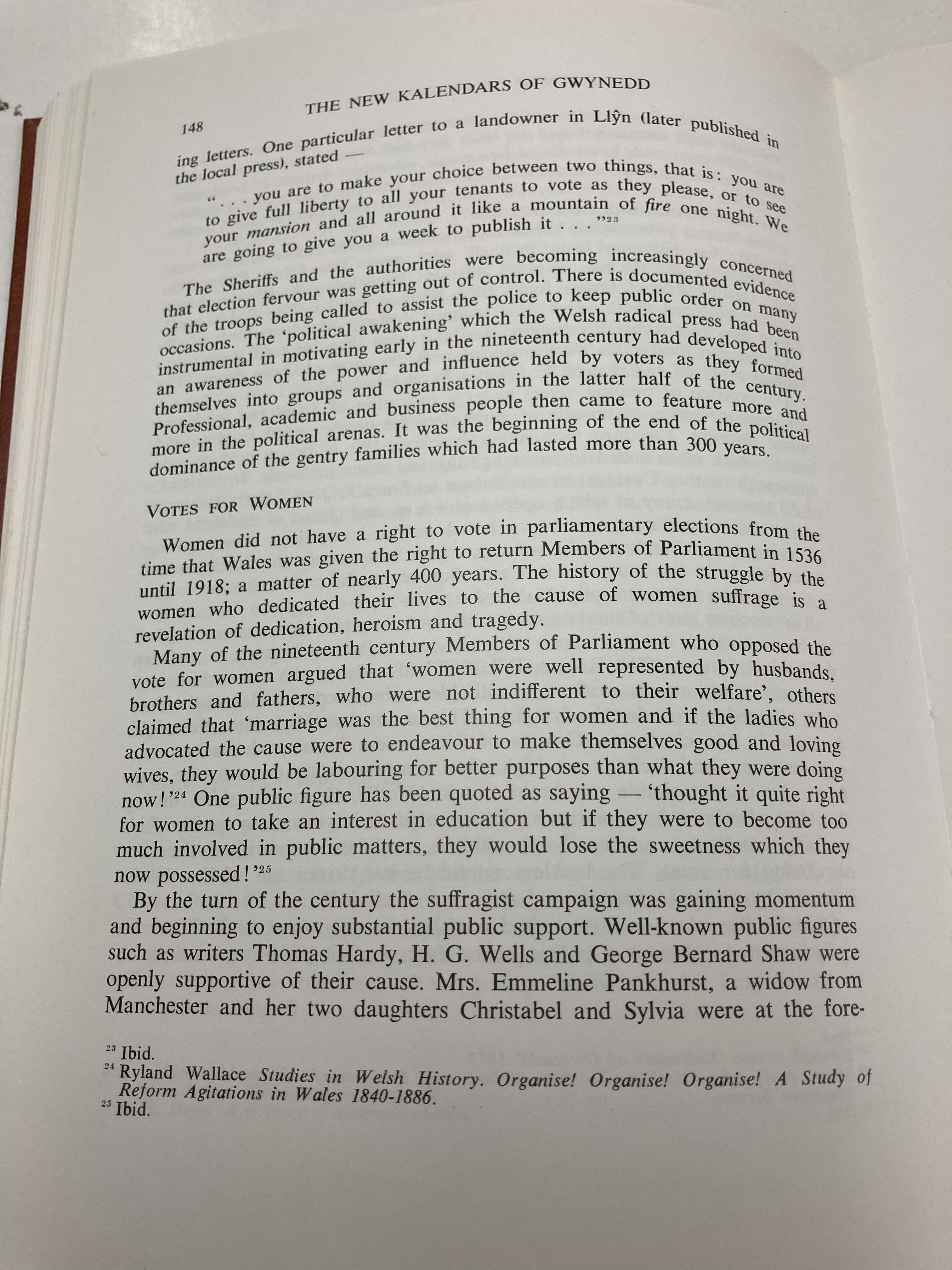
This, is a record of the High Sheriffs of Gwynedd from, as it promises, from 1284 to 1993.
Not what I expected from the title – Kalendars? No I don’t know why a Kalendar is a list of High Sheriffs.
But as far as I can work out, it means a list – and in Danish it is a calendar.
Ok I should do more research but I won’t – any research welcome on a (virtual) postcard.
According to a letter inside the book the author said it was out of print pretty quickly.
But he kept ‘ a few copies’ and he gave this one to a Major Corbett, a High Sheriff in the 1990s and donator was indeed another High Sheriff 1989-1990.
No idea how, or why, it ended up with us.
There is quite a lot ( not that I have read it all) of political history as well as the list of the HS.
It has rarely been a time when serendipity and coincidence have worked out so well for our Oxfam bookshop.
I have said before, and no doubt will say again, one of the delights of volunteering in an Oxfam shop is serendipity – you can’t order stuff, you can only open a box, delve through a carrier bag, and find what you find, look at something which makes you smile.
This, dear reader, is a long list so don’t say you weren’t warned.
So, where will we start.
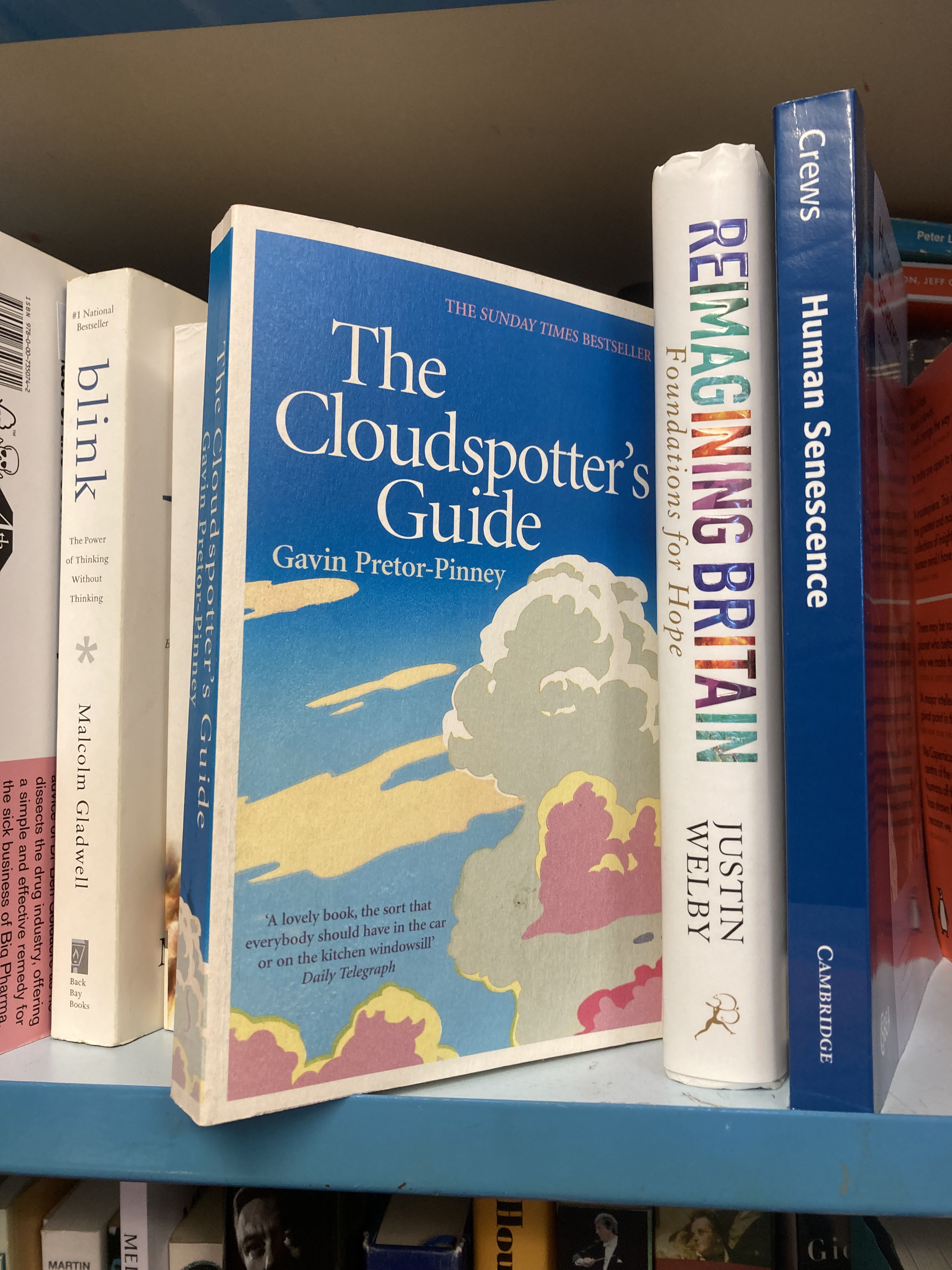
Someone came into the shop and asked for books on weather.
He said his family had decided not only would they shop for Christmas gifts in charity shops, they had a theme – weather.
We we always, always have books on weather – clouds formations, climate change etc etc – but not this time.
Three of us scoured the shop upstairs and down, but nothing.
Of course, after Christmas we have had lots of books which would fit the bill, but nothing at the time – sorry customer.
On the other hand, here is a good news story.
So, a couple came in, the same day, and asked for for an old leather-covered bible. Not a request we get often.
And we often have one.
But not this time.
Apparently, their son had confirmed as a Christian as an adult and he loved second-hand stuff, shopping in charity shops etc.
And, they were not in a great hurry so I took their phone number, and said I would let them know if I found one.
One day, after the planning and work ( bearing in mind we have been doing this since August) and whoo-ha of Christmas, I had time to set out, clear out, rootle through the stash of ‘old and interesting’ books and found a bible dictionary which was not only leather bound, but presentation bound.
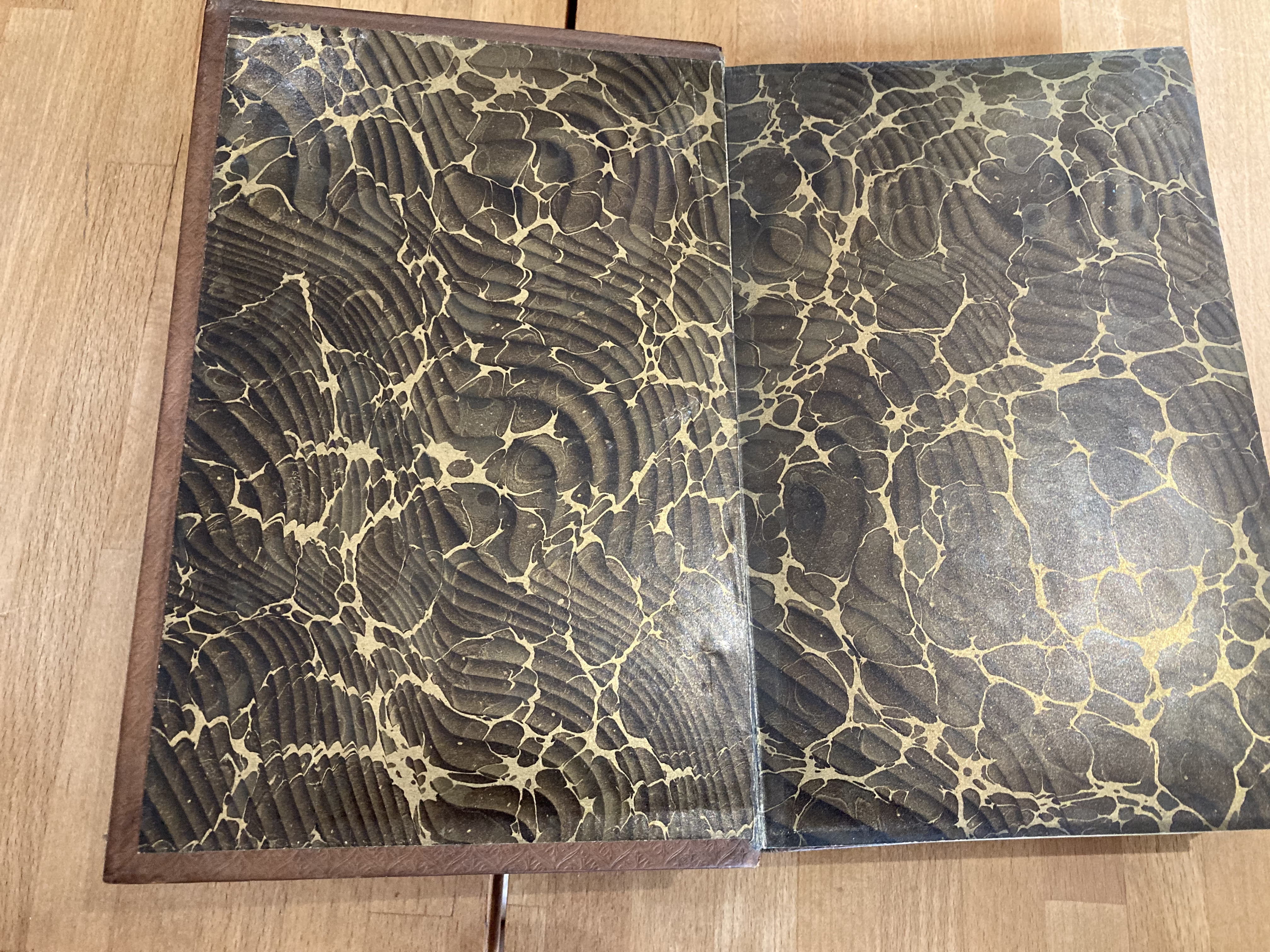
(That means, just in case you don’t know, it was bound especially to present to a student with a presentation certificate pasted inside. And it had marbled boards and page ends – no I don’t have a picture so you need to Google what that means if you are interested.)
And, sorry I did not take any photos.
It seemed to me to be a long shot of what the customers wanted ,but called them anyway saying they were under no pressure to buy, just a thought.
They turned up about an hour later, were delighted, paid twice what we had priced it at, and bought a coffee-table book (we had had for a very long time) on the most beautiful bibles in the world.
Later he sent me a text message saying how delighted they were and how much they had appreciated the ‘effort’ we had made to get what they wanted.
As ever, there is something special about uniting a book with someone who is going to really appreciate it.
Next, serendipity and coincidence is more prosaic.
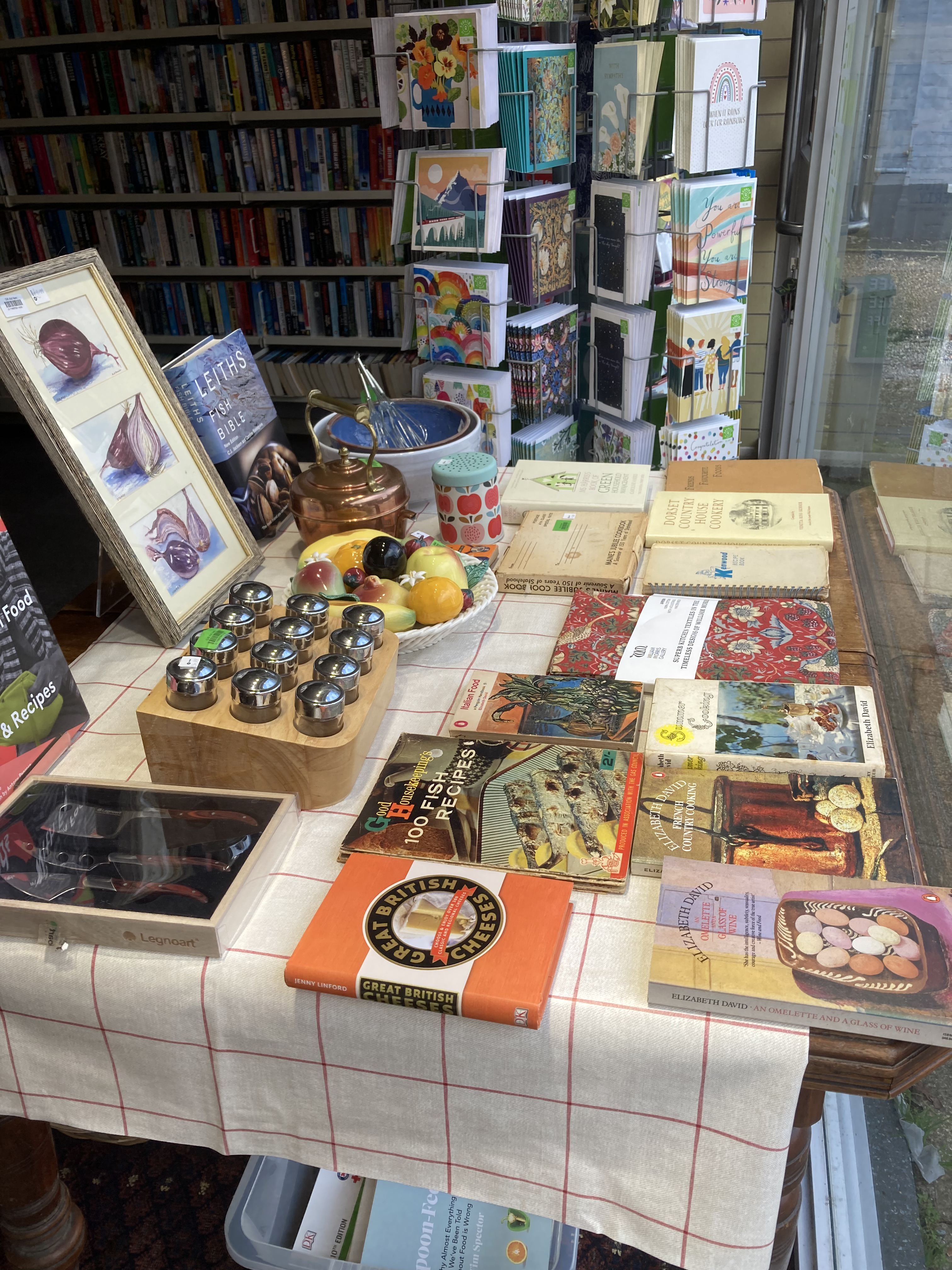
So, after Christmas I was thinking about that table to out out and I thought of cookery – what a surprise, my friends might say – and had a few old books and magazines relating to cookery which I thought might make a (slightly) interesting table.
I was upstairs sorting all this stuff out to fill a table when the volunteer downstairs let me know there had been a(another) donation.
When I abandoned my task and went downstairs, I found the donation included a copper kettle, a kitchen bowl, a set of cheese knives.
Sorted.
Finally, and thank you for keeping going this far, the end is nigh.
Sometimes I have a plan weeks in advance about table displays but sometimes I come in on a Monday and wonder how I am going to make it work.
On one of these Mondays recently, I decided to put out books that were set in different countries.
Of course there were a few travel books, but also novels, history, etc etc.
Now, there is nothing as useful as signalling your rather arcane theme than a prop and hey ho, someone, about twenty minutes later, donated a globe and some foreign coins. Thank you whoever you are.
And on the same day that it was announced Ronald Blythe had died at the age of 100 – most famously the author of Akenfield. Guess what I found stashed behind a pile of Jane Austen and John Betjamin…..
This is nearly the end.
Sometimes you have a donation which is not so much a delightful, serendipitous addition to your plan, as something you have to take a deep breath and think how on earth are we going to make this work.
A horse’s saddle.
Well, yes that was a bit of a surprise as a donation because it is not often we, as a book and music shop, get a saddle as a donation.
Apparently, someone brought it in and said her mother, a rider, had died and asked her daughter to give one each of her saddles to three charity shops in the town. (have to say, I have not seen saddles popping up all over town…)
So, instead of getting a bonus for a pre-planned display, we have had to build one around it. We have a lovely display of countryside and the saddle is front and centre.
God only knows what we do with it if it doesn’t sell – us volunteers, are so fed up of moving it out of the way in order to go to the loo.
And just as we thought we had sorted one large, in the way, unusual donation, we got a guitar.
One of our great volunteers was called in to tell us what it was worth. Some calling around and he came up with a price – £175 – a big deal for us.
So, my plans for the table were jettisoned smartly and here’s hoping it will sell before we have to drill holes in the wall and ‘erect’ a guitar holder.
Fingers crossed we have a guitar playing horse rider shopping in Petersfield this week…..
If you want a good Oxfam story, this is one of my better ones.
But dear reader, there is what we called as journalists, a long dropped intro.
Which means you have to wade through some stuff before you get to the nub of the story.
Here are a few things I have said before and all of them happened today:
1)If you wait long enough there will be every printed thing/book/pamphlet turn up in your Oxfam shop – there is something printed on every topic you could ever imagine.
2)There is a good home for some special books – places they belong.
3) It is a such a buzz to pick out something dusty and strange and make 2) happen and get some money for Oxfam, and make people happy.
Well, of course not every printed item turned up today, but at the bottom of a book of not very interesting books, something really unusual turned up.
How it turned up in an Oxfam shop in Petersfield, I will never know and sometimes as a book sorter, I really wish I could hear the story of the donation. But we very rarely do – and I mean very rarely.
After all, someone comes in with a few boxes of books and if we are lucky we can ask them to Gift Aid them ( if they do we get 25% extra from the government on every book we sell), and they are on their way.
Often they are bringing in books from aged/dead/going-into-a-care-home parents and really haven’t looked at what there is.
Anyway, enough delay, let me tell you what I found:
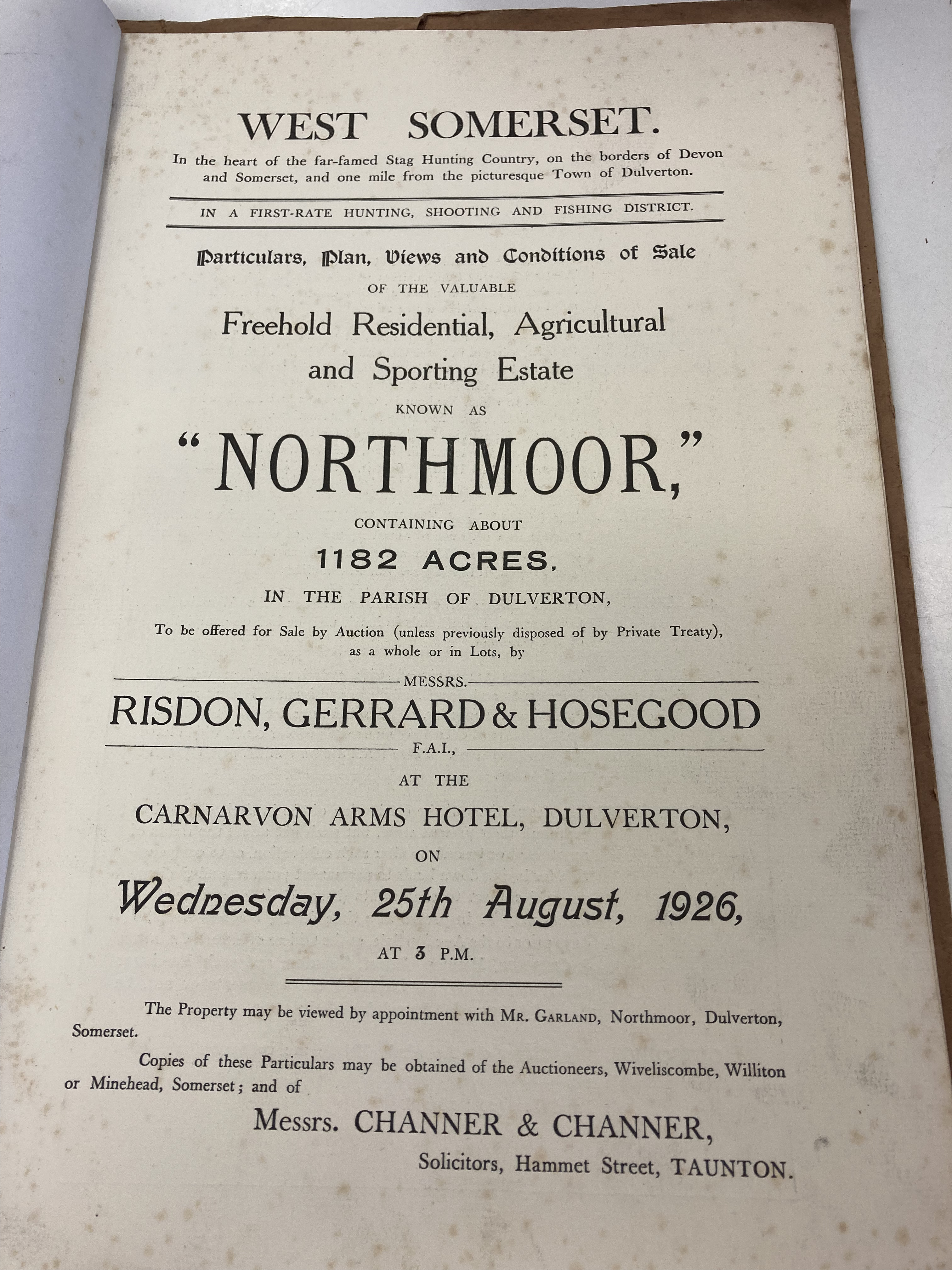
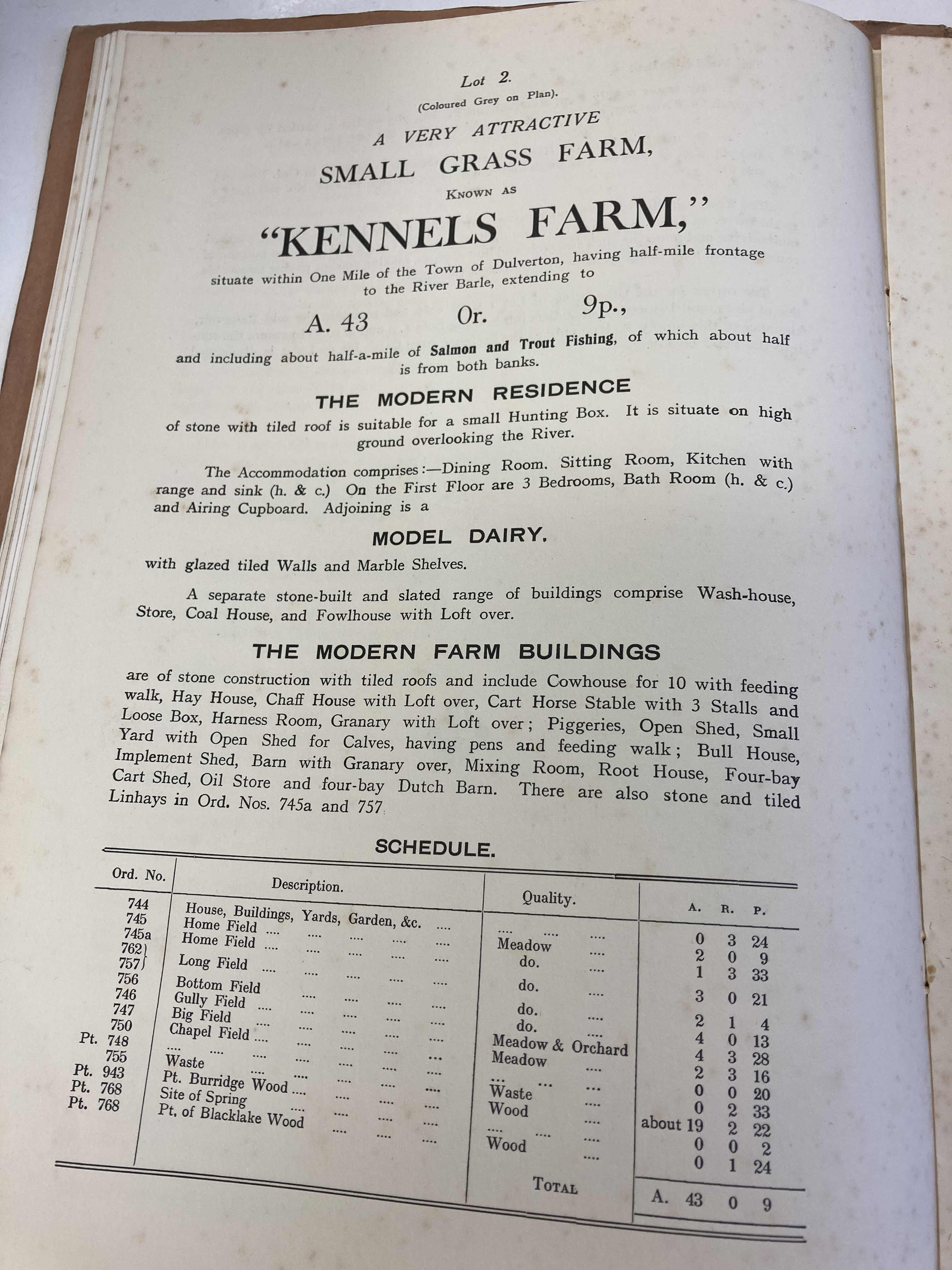
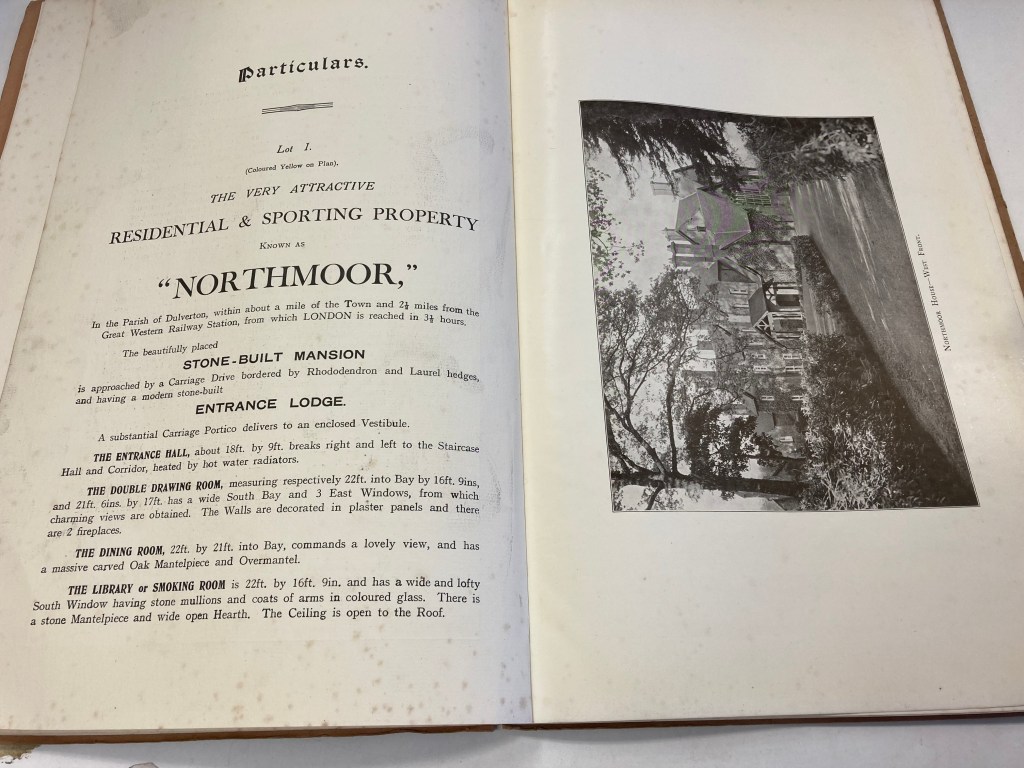
This is the particulars for a major estate sale in 1926.
Now, I couldn’t find another one for sale – which needless to say dear reader, means it is rare and a rather interesting read.
A bit of research, thanks Wikipedia, meant that I found out the estate was bought by Colonel Edward Clayton from the Wills family – indeed should that be ringing a vague bell, they were the founders of Imperial Tobacco Company and ‘in 1966 was the family with the largest number of millionaires in the British Isles, with 14 members having left fortunes in excess of one million pounds since 1910.’
In 1994 Edward’s son sold it on to Ralph and Suzanne Nicolson who now run the house as what looks like a very nice indeed holiday let.
Clearly, a phone call needed to be made.
It turns out the family had tried to buy the a copy of the particulars but weren’t successful so they are said ‘Yes please’ to buying our donation.
So, if you are still with me, lets’ go to Warren Hastings.
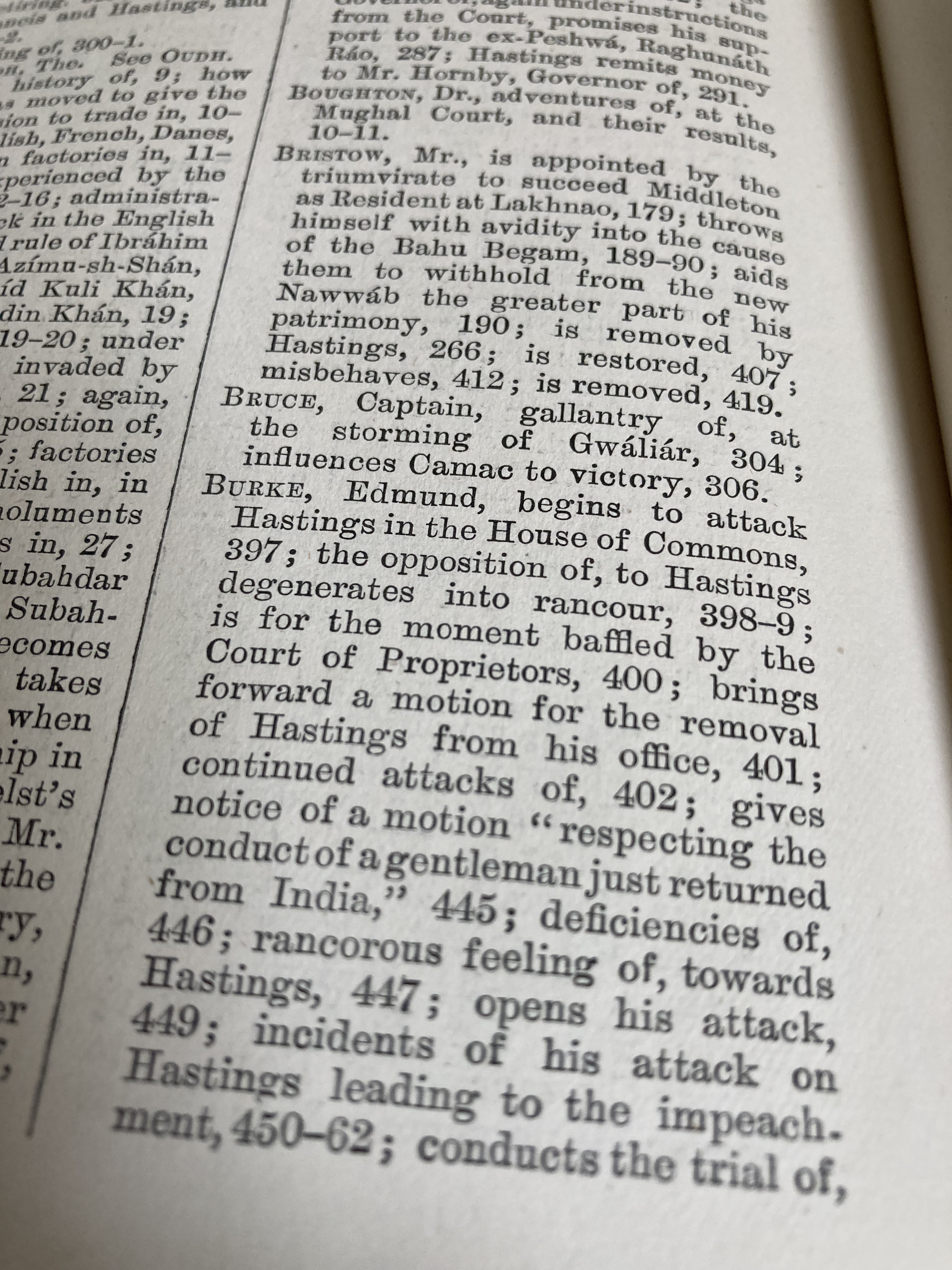
He who went through an impeachment trial brought on by Edmund Burke and whose biography appeared in our shop.
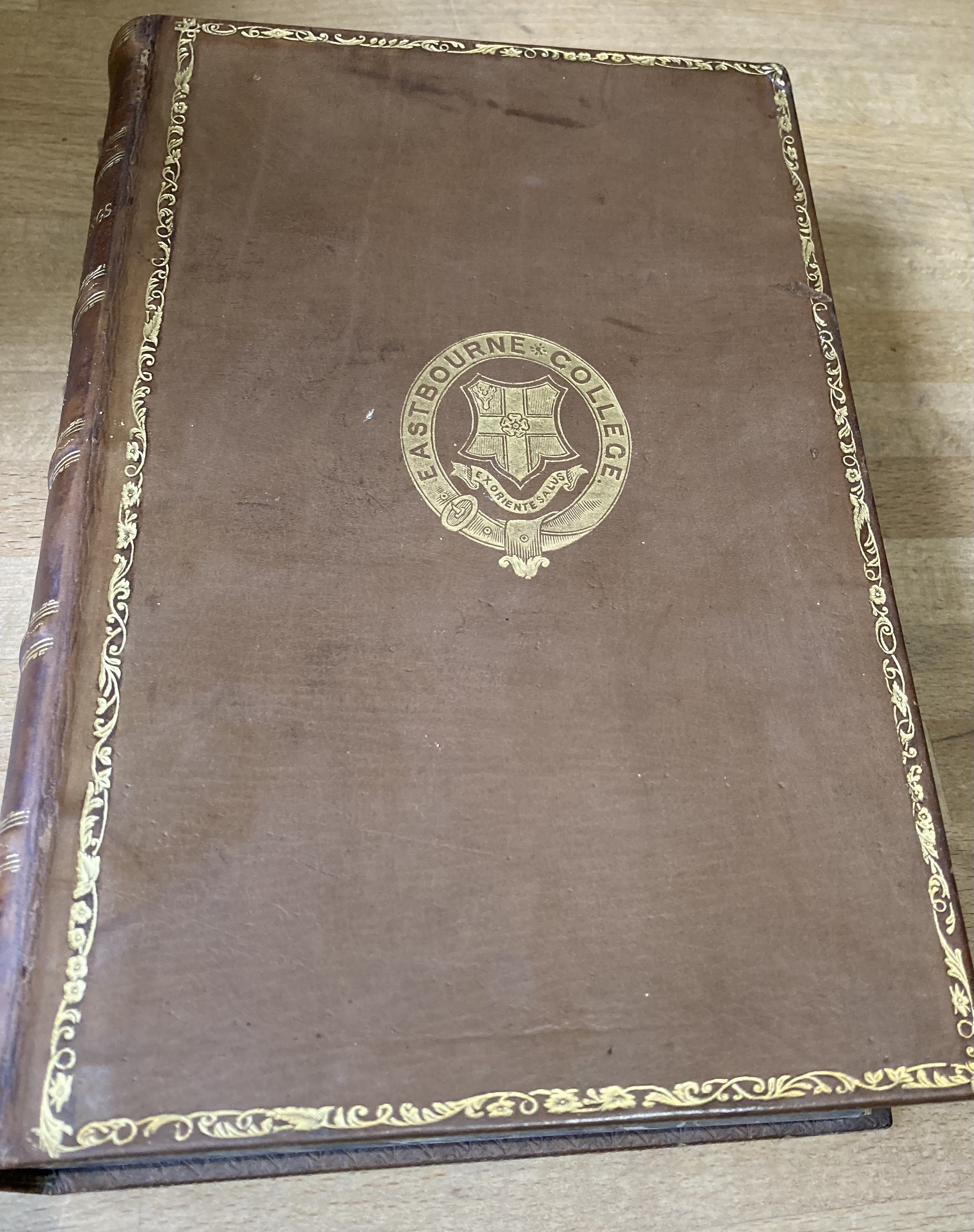
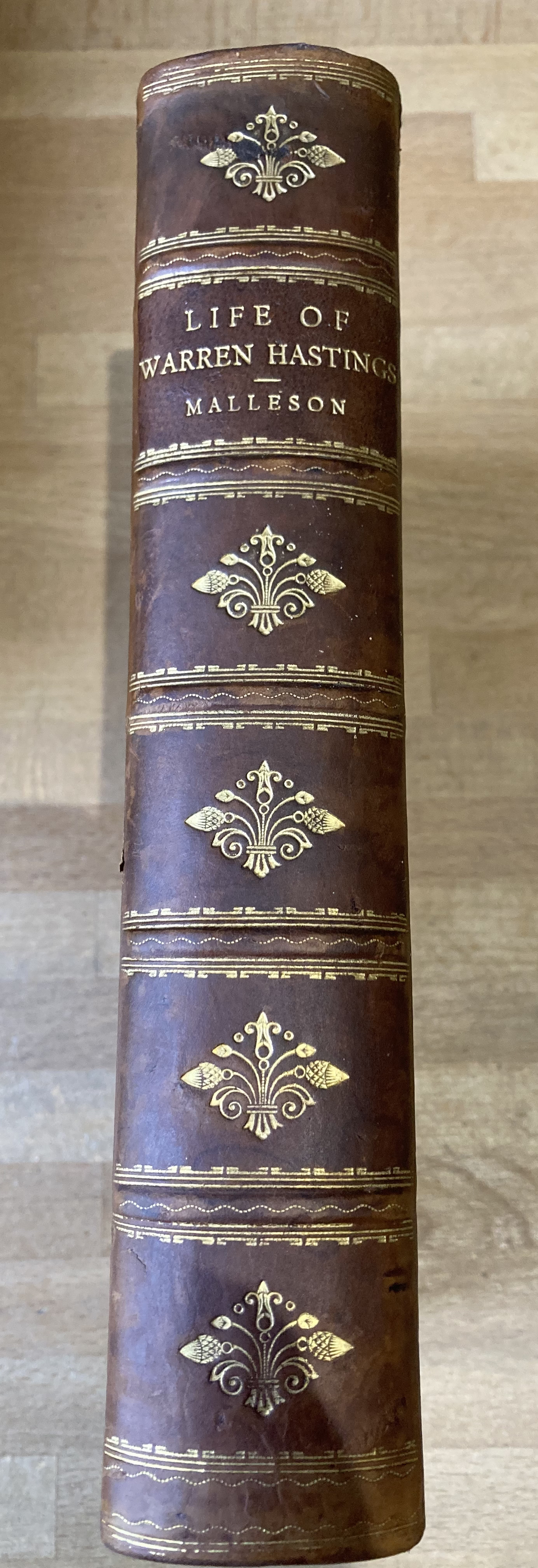
Malleson’s Life of Warren Hastings bound by the Relfe Brothers with a presentation binding but no presentation certificate.
If you want a translation of that paragraph let me tell you a bit more.
Usually with a binding like this, you would usually get a printed presentation certificate pasted inside with teacher handwriting saying something like ‘to George Robertson for excellent marks in history.’
Now, the Refle Brothers are really well known quality book-binders but can you find their story/history on Google? – well actually no.
No Wikipedia page – and yes I do give Jimmy Wales some money for all the use I make of his site.
So, if you look you can find books for sale with Relfe bidding and they are pricey, but you can’t find out anything about them – or at least, I haven’t yet.
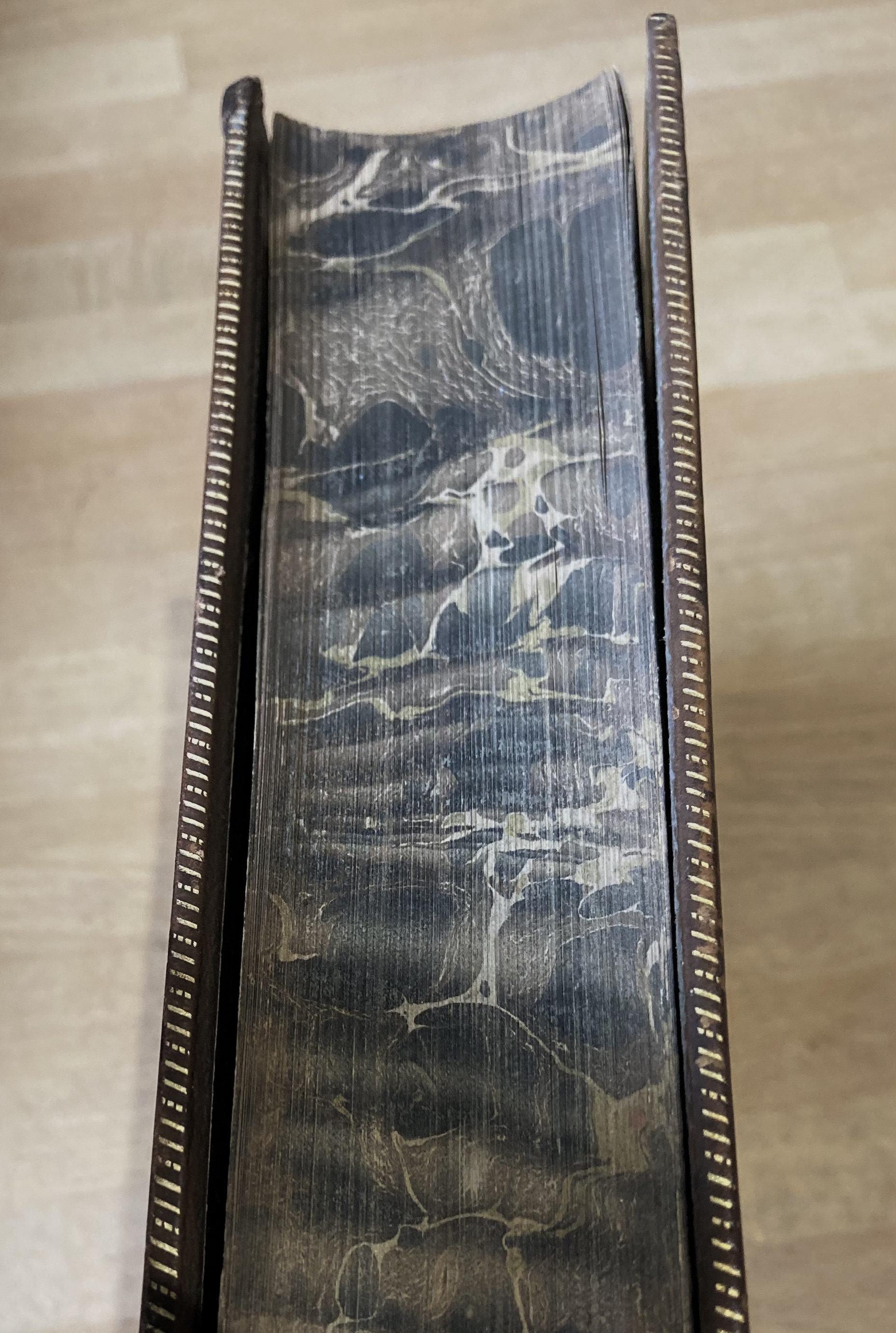
The page edges are marbled and I have flicked them to see if you do that a picture appears. If that was the case we would have a while lot more money to look forward to.
So next time you see a book in a charity shop with marbled edges, just give them a flick and happily pay the money they are asking.
Now, you often get good bindings on really boring books and I am not sure that the boy ( usually) who got it was terribly excited about reading it.
Indeed the copy we have looks pretty much unread….
But see the hand-tooled gilt and the spine bands and the original marbled insides. Nice, very nice.
Now back to Warren Hastings.
So Edmund Burke took two days to read the charges in Hastings’ impeachment. Mainly they were related to embezzlement, extortion and coercion.
The House of Commons sat for 148 days over seven years to hear this case.
In 1795 the House of Lords acquitted him and the East India Company, for whom Hastings worked, gave him a pension of £4,000 per year backdated to when he arrived back in England.
Hastings said the legal fees had pretty much bankrupted him but then he had lived in ‘considerable style’ in his London house throughout the trial……
And in 1788 he bought an estate in Gloucestershire for £54,000 had the house remodelled classical and Indian decoration, and gardens landscaped, and re-built its Norman church……not that living on lentils and no heating then. ( See also Rushi Sunak, again.)
Meanwhile, the East India Company was not just about trading.
Originally chartered as the “Governor and Company of Merchants of London Trading into the East-Indies”,the company rose to account for half of the world’s trade during the mid-1700s and early 1800s, particularly in basic commodities including cotton, silk, indigo dye, sugar, salt, spices, saltpetre, tea, and opium.
The company also ruled the beginnings of the British Empire in India. (Wikipedia)
(Should you need to know more see my Best Beloved’s one-day-to-be-published history of Europe book.)
The EIC was either the beginnings of the glorious British Empire on which the sun never set, or the rapacious company implying all sorts of greedy, coercive, pseudo-rulers who imposed, stole, acted with impunity and had little interest in recognising they were not in charge – and indeed they became in charge.
I leave you to decide.
According to a site called History Reclaimed, ‘The impeachment of Warren Hastings was an act of imperial soul-searching unparalleled in history. Although Hastings was eventually acquitted, his trial was a warning to all future imperial proconsuls that they too could be called to account by the British Parliament.
He was the first British Governor-General who launched India’s cultural renaissance way back in the 1780s. Of all Britain’s imperial proconsuls, Warren Hastings was undoubtedly the most curious and learned about Indian culture and famously declared: “I love India a little more than my own country”.
He became fluent in Bengali and had a good working knowledge of Urdu and Persian, the languages of the Mughal elite. One of his most enlightened acts as Governor-General was to promote the founding of the Calcutta Asiatic Society in 1784.’
And, according to Wikipedia, ‘He and Robert Clive are credited with laying the foundation of the British Empire in India.
Getting a bit of an idea where Malleson is coming from.
Malleson was certainly on his side – a hagiography I would suggest but then with a Relfe binding, someone is going to buy this book because they have judged it by its cover.
This is about a book from 1796 which has arrived in Oxfam Petersfield in 2022.
And about a coincidence.
Be warned, there is a lot of this – I got a mild dose of Covid so was at home with time….
But at least this time there are some pictures.
Ignorance of the provenance of book is the lot of a charity bookshop. Indeed, I am not even clear which of our volunteers, put it aside for me to look at.
Anyway, we have it, and what an interesting book it is. (Value, you Antiques Roadshow aficionados, will come later.)
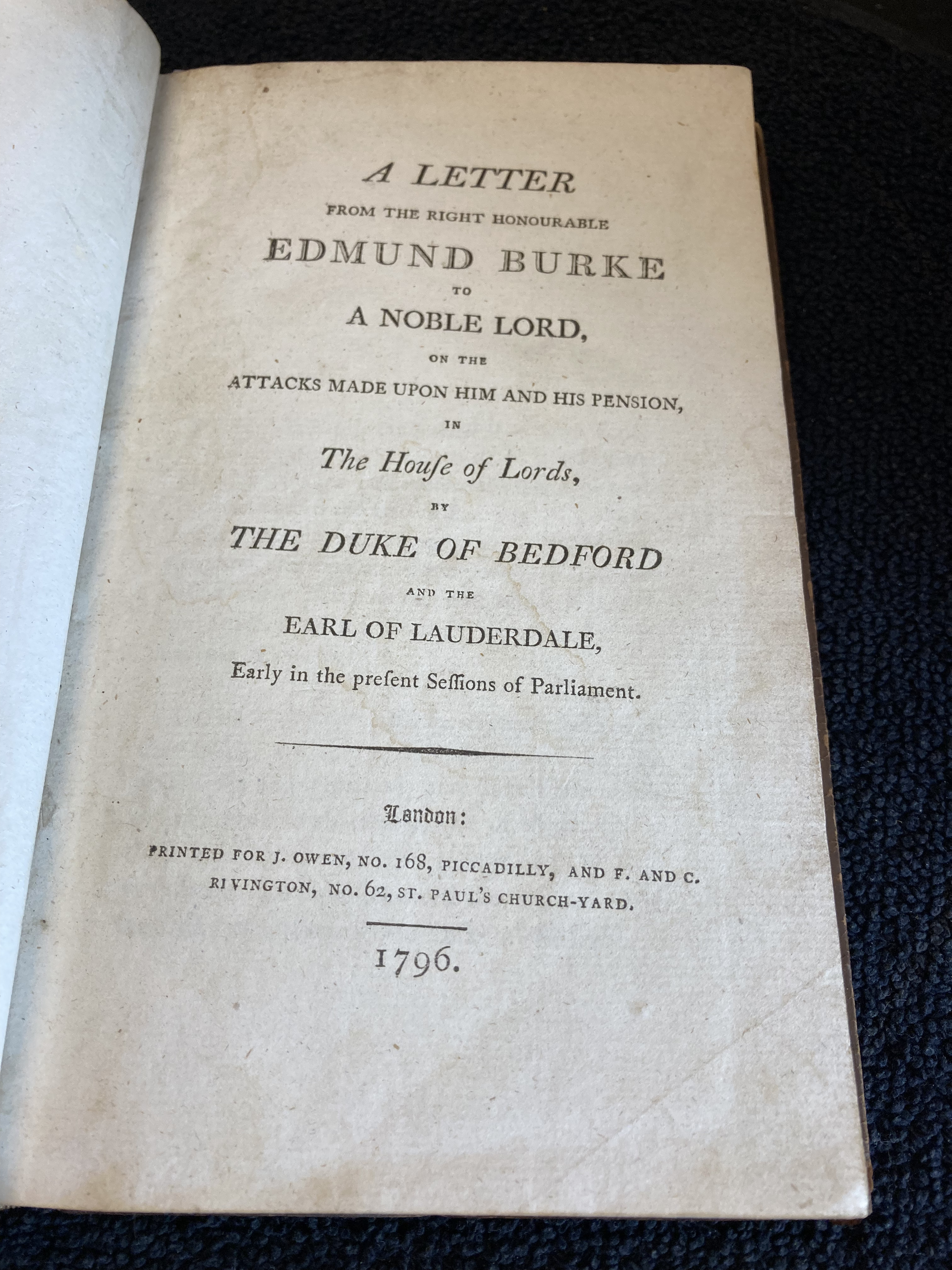
So this is a bound volume of three letters by Edmund Burke and for those of you who think who? Here is some info – actually, quite a lot of info.
‘The only thing necessary for the triumph of evil is for good men to do nothing.’
And:
‘Nobody made a greater mistake than he would did nothing because he could do only a little.’
Obviously, he was no feminist, but apparently he was anti-slavery.
He was also, depending on who you read, a founder of Conservatism and/or ‘a wet and a Eurosceptic’ according to the Beaconsfield Historical Society.
He wanted to be the Earl Of Beaconsfield and George III wanted him to be, but Burke’s son died so he couldn’t have a peerage. Life peers were only introduced in 1958 so if you didn’t have a male line to take it on, you didn’t get it.
What he did get was a handsome pension which was criticised by the Earls of Bedford and Lauderdale hence this:
His argument was that at least he had earned his pension by unstinting public service whereas the earls got their money by inheritance alone.
‘I was not, like his Grace of Bedford, swaddled, and rocked and dandled into a Legislator’
And he wrote in one of our letters, ‘Loose libels ought to be passed by silence and contempt.’
Meanwhile in a 1771 letter to the Duke of Richmond, Burke wrote that ‘persons in your station of life ought to have long views. You people of great families and hereditary trusts and fortunes are not like such as I am … we are but annual plants that perish with our season and leave no sort of trace behind.’
Oh yes, he had a good turn of phrase.
And according to Martin Greenberg, who also has a good turn of phrase:
In Letter to a Noble Lord (1796), Burke replied with a crushing force to two whippersnapper peers, obscenely rich enthusiasts of the philosophes and the French Revolution, who had attacked him for accepting a pension from the crown. He set his lifetime of accomplishments against the nothing of their juvenile efforts, his defense of their inherited rank and acres against their coquetting with a power whose universal ambition, if it were able to reach across the water, would have swept away all that they were and owned with a grin. Burke’s prose–sober-paced, weighty, powerful to the point of being overbearing–has always close behind its argumentation a reserve of poetic energy which now gleams, now flashes, and now, as in this letter, explodes in a fireworks of dazzling metaphors, a storm of epical-satirical language that tosses around the duke and earl, great galleons of the nobility, like little cockboats. ‘
Now I am not directly making any comparisons with current British politics but if you want to, be my guest.
Our book was published in 1796, the year before Burke died.
Other things that were happening in 1796 include:
Jane Austen starts writing Pride and Prejudice,
George Washington gave his farewell address warning against partisan politics ( that worked then),
The British government began work on a 40 acre site at Norman Cross near Peterborough to become the world’s first prisoner of war camp,( who knew, and might need some more investigation)
At Christmas 1796, the French Navy nearly landed an army of 15,000 troops at Bantry Bay in Ireland.
And Napoleon was appointed head of the French Army in Italy which was to have some significant ramifications….
Hence:
Breathe easier, I am not going to give you a history of the Napoleonic Wars (though my Best Beloved can if you are interested.)
Burke wasn’t a fan of the French Revolution on the grounds because of its ‘origins and the class of people who were the driving force behind the Revolution’.
Basically, he didn’t believe that the French urban working class, or the peasantry, could be trusted with legislative or political powers.
He had the view that only the ‘educated’ could be reliably left to run any country.
So, you can get the text of these letters online and you can buy them in the original but very rarely, infact, very, very rarely can you buy one from 1796 printed on such good quality paper – and in an original binding. Most of them have lost their binding or were never bound at all – just get them out there, the printers must have said.
The paper is impressive. Very little foxing ( that’s the brown spots on the pages of old books) and it feels strong and thick and well cut, and well bound – impressive for such an old book.
We looked for a paper watermark but there wasn’t one. And I found out that this ‘book’ went into 11 editions in 1796. That is a lot of editions, and though the print run would have been the kind of print run were are used to, that is a lot of books.
And there are five raised gilt bands with gilt titling on the spine and gilt banding on the front and back boards.
Interestingly, at the bottom of each page there is the first word, or part of the word, of the next page. I have not seen this before, but maybe that is my ignorance.
It is also justified which means that the left and right margins are the same – and means that words are sometime broken up, or spaces are stretched to make the text fit the margins.
(That can make reading hard on the eye because different spacing seems disjointed. Our book, I have to say had a very good typesetter because it is easy to read.)
Is it about making sure the pages are in the right order? Possibly, but they are numbered.
Well, now you know a bit about how books are described online…..
And all that has been taught to me by someone who knows amore about books than I will ever do and who is the man who comes in ( when called up) and tells me what to look at, what to reasearch, what to learn…. and teaches me to expand what I know from the back of a postage stamp’s worth to, oh maybe a small postcard.
Waiting for the valuation? Well because it is bound and in great condition we are hoping for £275.
Maybe it will be sold asap or maybe it will take some time and be less than that – that’s the way it works.
Now, if you have got to the end of this and still have a memory of a mention of a coincidence….
So, Burke got his pension (I gather £2,500) in no small part for his work as Chairman of the Commons Select Committee on East India Company Affairs.
And he impeached Warren Hastings.
So when I went into the box of books that have been put aside for me to look at, under the Burke letters I found a handsome book – a biography of Warren Hastings….
I have no idea whether they were donated together or this is one of those coincidences that happen in the life of a bookshop when no providence can be found.
More of that next time.
And, we have another book from 1796, The History of America – perhaps more on that too.

























 thereluctanthousewife