Planning In Advance – do you have revolver?

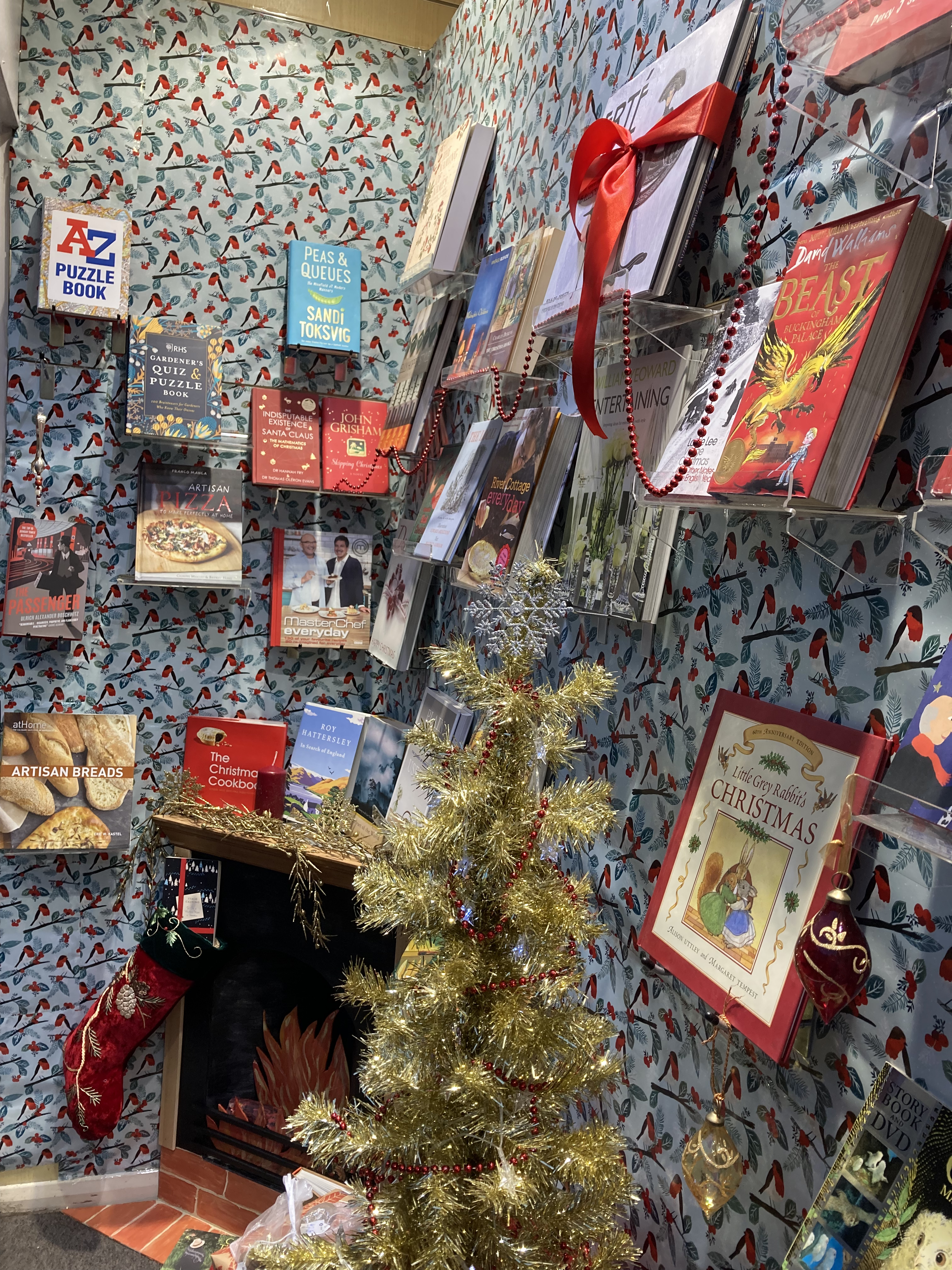
We start thinking the unthinkable very early on in the Oxfam bookshop – we think about Christmas from August onwards.

Yes, I can imagine your rolling eyes, and indeed the rolling eyes of professional shop designers who obviously start thinking about Christmas in January.

But bear with me, if you can.

So, long-time readers may know that from August (maybe even July) we start putting aside books which are in such lovely condition a customer could buy them and give them to someone who would never know they were second hand. ( And we can get a bit more money for them.)

Mind you, I have to say that most of our customers say they are on a mission to buy from charity shops, or they have a family contract to buy second hand books to ‘indulge’ in the Icelandic tradition of having Christmas Eve when everyone in the house eats and reads a book.

Or they are looking for ‘table presents’ – ‘do you have a book which will interest my godson who is really into physics, and my niece who is into jewellery-making, and my friend who loves ghost stories?’ etc etc  

That was a fun hunt last Christmas Eve, and the lovely customer-couple bough £50 worth of books.

But the primary issue is making the window look good. Really good.

And that is the primary job of my great colleague who, I may tell you, made Narnia in our window last year.

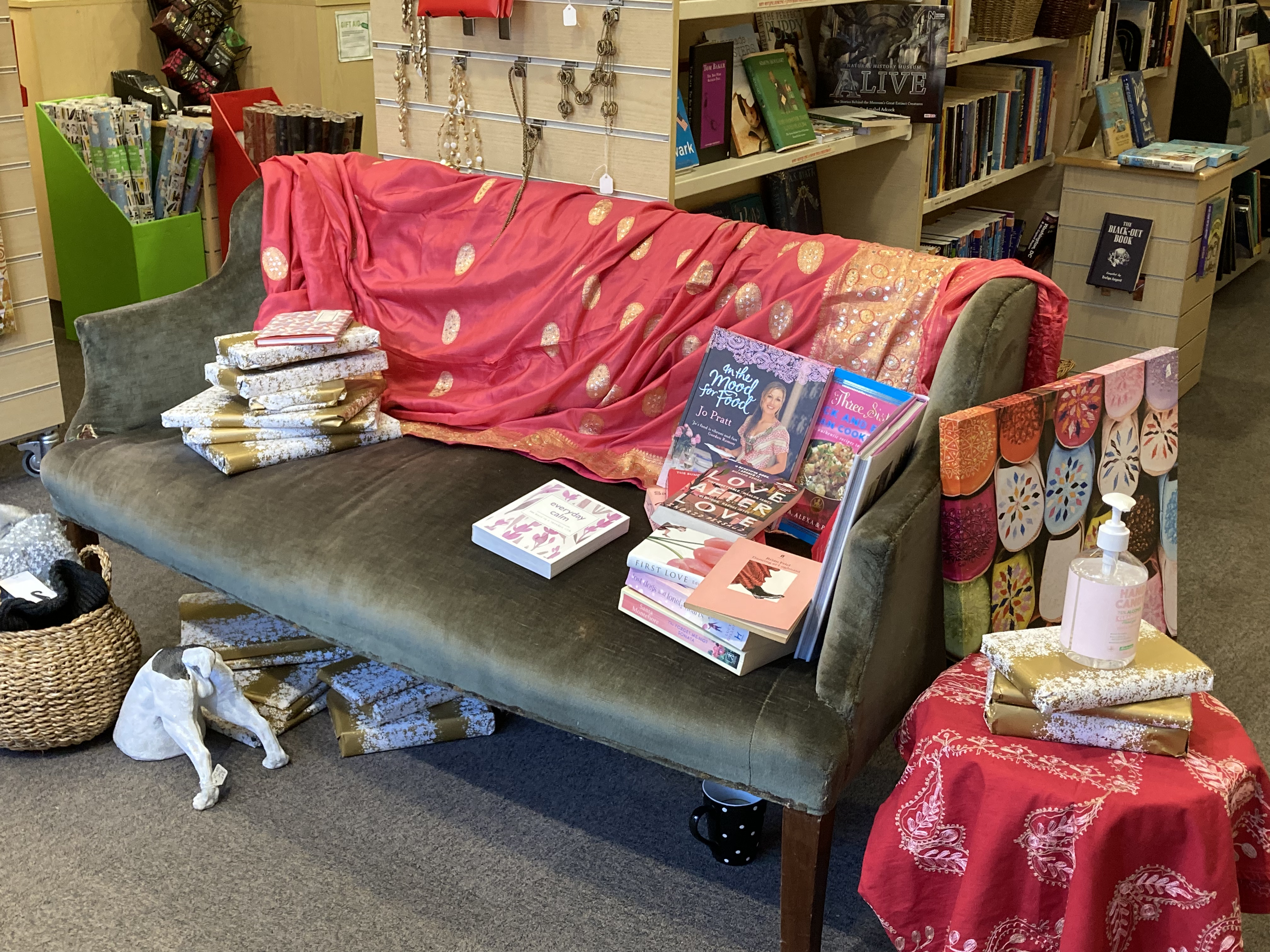
She does the window displays and I do the table displays (which is also in the window but requires a lot less effort.)

So, what to do this year.

Now, my Best Beloved will say that I have lots of bright ideas but few ever make it into reality unless there is someone picking them up and doing what is needed.

And, that is (sadly) true – lots of my good ideas have thus fallen by the wayside.

But my idea for the Christmas window seems to have got traction.

Want to know what it is?

Oh, go on then.

So we have decided to do a Cluedo window.

There will be the dead Mr Black slumped over a desk in the ‘library’ in the window.

And the nod to Christmas will be a fake window in the real window ‘looking through’ to snow.

There will be lots of books about murder mysteries on his ‘library’ bookshelves.

And, thanks to the BB suggestion, we will have clues around the shop.

For those of you who don’t know the Cluedo board game – are there any such people? – we are going with the early version.

( Here in case you need it: https://en.wikipedia.org/wiki/List_of_Cluedo_characters )

So, Mrs White was the cook so there will be old-fashioned ladles hanging from the cookery book section and a book in that section with a cover (we will have made) called Mrs White’s Country House Recipes.

I have arranged to borrow a vicar’s collar from ( not entirely surprisingly, a vicar I know) and it will be in our religious books section with a bible ‘owned’ by the Rev Green.

Miss Scarlett is proving a challenge so far because although we take clothes donations and sell them online, not many people associate us with a clothes shop so my hunt for a bright red evening dress is proving a bit difficult. 

Do let me know if you have one to spare.

Colonel Mustard will be a pot of Colman’s mustard in the section of military history and somewhere/somehow we will make/find a suitable moustache to go alongside.

Mrs Peacock is going to be peacock feathers around the shop. But again, if anyone has a peacock model/trinket/statue/garden adornment they don’t need, I would love to borrow.

For Professor Plum, we will have a mortar board and (maybe) a gown alongside a pile of academic books.

And then we are on to the weapons.

We need a dagger – well the BB has one (actually several) so that is covered but we are not supposed to have those in the shop so that will need some ‘display finessing’.

A candlestick – we have at least several we can lend to the shop.

Lead piping – well, we will make something which looks like that but that can’t actually injure a volunteer or customer.

Rope is easy-peasy but again, we will try and ensure that no volunteer is injured/murdered in the making of this Christmas display……

What is proving really hard is finding a fake revolver – today’s parents don’t like their children playing with guns these days.

In my part of Deepest Sussex there is a man whose business is making posh shooting weapons but I am not sure that Oxfam will wear me borrowing a beautifully designed real thing…..

Now, just as a PS, we have had no end of Cluedo sets donated to the shop in the past.

Do we have one now, no of course not.

But a quick WhatsApp messages to my village has turned one up. Of course it did.

There are times when I really like being a Reluctant Sussex Housewife.

One Morning

As you may have gathered by now, I spend most of my time these days (though in my Oxfam ‘youth’ things were different) looking at what we call the Old and Interesting books donated to the shop.

And, as you may have gathered over the years, many of the books I look at might be old but not necessarily very interesting, but there are enough to make my Oxfam life fascinating (sometimes.)

And I’d really like to tell you about some of the more interesting. But some other time.

I could tell you of the work of many another volunteer – from those who sort, wash, iron and put online the clothes we have had donated ( yes, in despite of being a bookshop), those who then pack them up and send them off, the classical music expert already sorting out special stuff to keep back for Christmas ( yes that word is already being mentioned), the sorting out of Oxfam cards into their allotted slots in the spinner, and so much/many more.

But I don’t know what they do as well as I know what I do, so here is my Monday just as an example of what happens behind the scenes :

I arrived at 8am, wrote and distributed the weekly volunteer update – what we took last week in the shop, counting up the online sales of books, jewellery, music and the odd stuff – a pair of gold, fur-lined gloves ( in July?), the treen boot-jack with integrated boot tools which has been on sale for six months and has finally sold etc etc.

I left to do my pilates class – yes I am a Sussex housewife – and got back at about 10.15 by which time everyone had worked up their questions about what felt like a million things, queries about what to do, : 

What was happening with the table and the window, plans for the front-facer books (in case you have forgotten, these are books displayed so you can see their front covers and therefore and really, are more attractive and sell better), where to put the latest donations, and was this book especially interesting, could we have tea and coffee, and by the way did you buy some milk? etc etc.

And could I find a few very small jewellery donations which weren’t yet listed online to fill the miniature pirate cask in the window?

By the way, the window looked great thanks to someone who does a great job at making it so – with the help of the manager’s mother who has knitted rats for the pirates display….

But I needed to put not for sale stickers on the inflatable seagulls (yes seagulls and pirates of course) belonging to another volunteer and clear up some of the window display ‘leftovers’.

I found some jewellery.

Could I find some theme of books for the corner display and clear off the previous display –  in case you want to know – books about Japan and a few Japanese artefacts.

So, no I couldn’t think of anything on a theme so just brought down (from the semi-organised chaos upstairs) some lovely-looking, interesting books. 

(They sold really well and that means there were gaps, and our smart, great manager said she stood and looked at the gaps in the display the next day and tried to work out what the theme was……  today, we re-filled it with great books we had been wondering where to show them off.)

In the meantime, back in Monday, I had asked someone I knew to come in an PAT test ( proving the items are electrically safe) some model railway stuff which we have had buried behind the boxes of vinyl ( yes they have been there for, well, some months.)

(He needed coffee, space, a conversation, thanks and time to be acknowledged.)

So, I have no idea what these things are but apparently they are worth some £20 each. I also have no idea how to describe them but I will wait until next Monday when a volunteer who knows a bit about this stuff, tells me how to write them up for an Oxfam online listing.

Then two other volunteers came in and they had questions, something just to mention, tea requirements, change for the till because there were two ten pound notes – no good if someone buys a £2.49 book with (yet) another.

So, that was a trip to the bank.

And in between all that, there were donations.

Now, we have an amazing volunteer who cuts through donations like a knife through butter – everything sorted into those that need to go to ‘another’ place ( yes that is a euphemism) and those which will sell, are first editions, signed, unusual.

But there is a rule that says five minutes after he leaves, there is another arrival of donations – and they needed to be dealt with.

Suffice it to say, I was a bit tired at the end of my (extended) shift on Monday.

But in all that I found a book which has been a dandy of a research project and might be worth a good deal. 

More of that another time.

Salvaged

We get a lot of history books into the Oxfam shop, but not many written by hand.

And though perhaps not actually strictly a history book, it is a book which is a part of history.

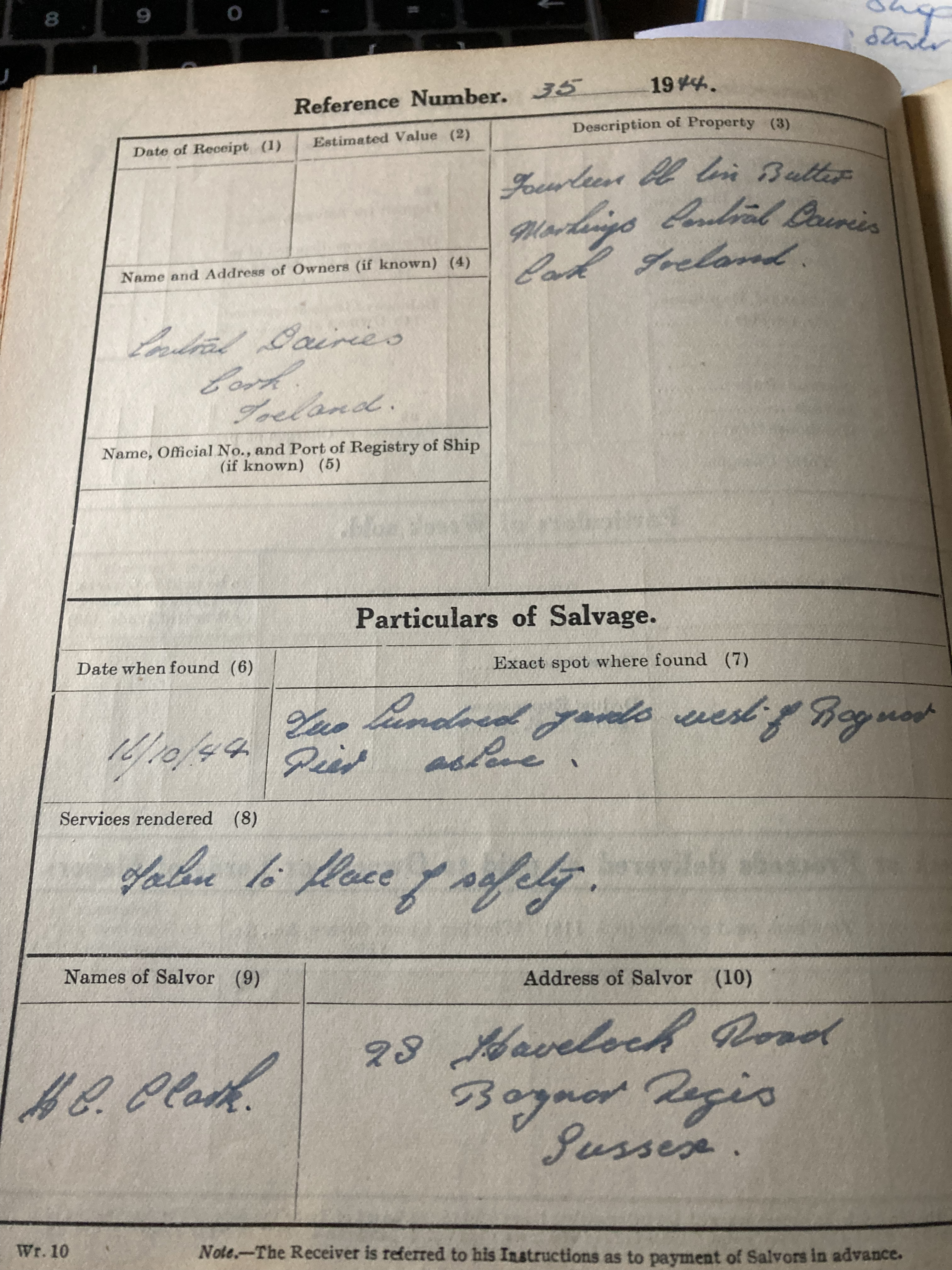
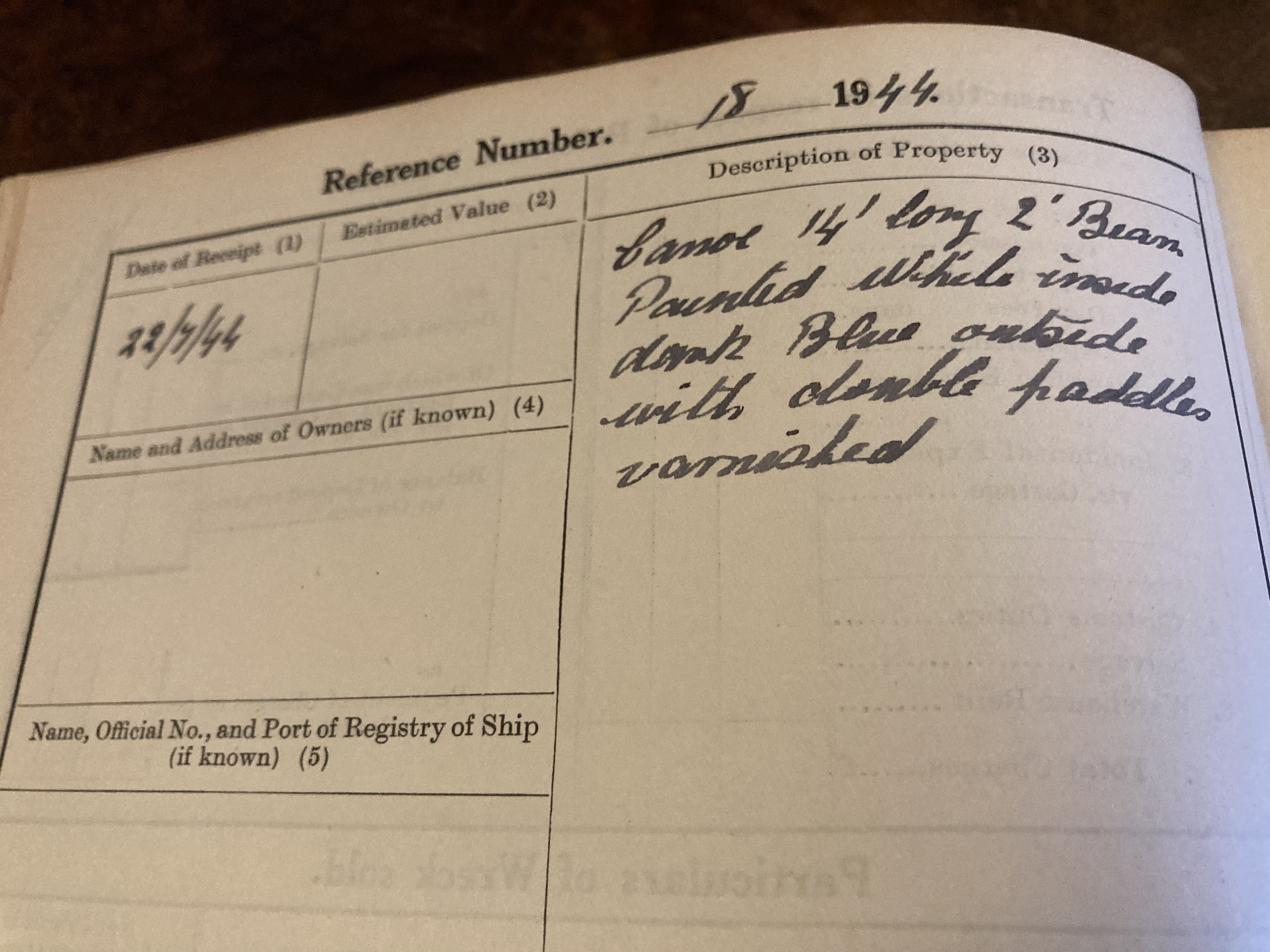
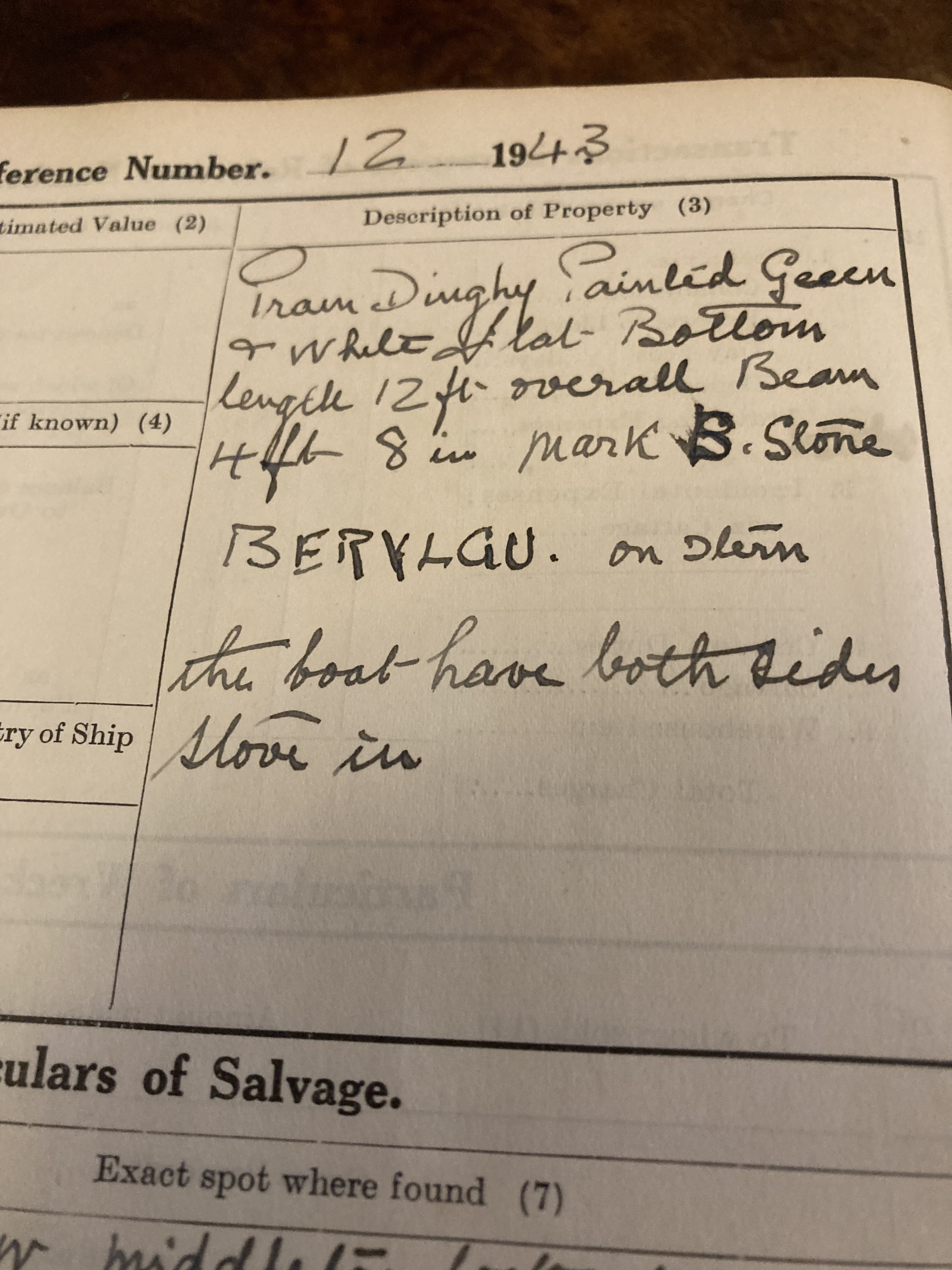
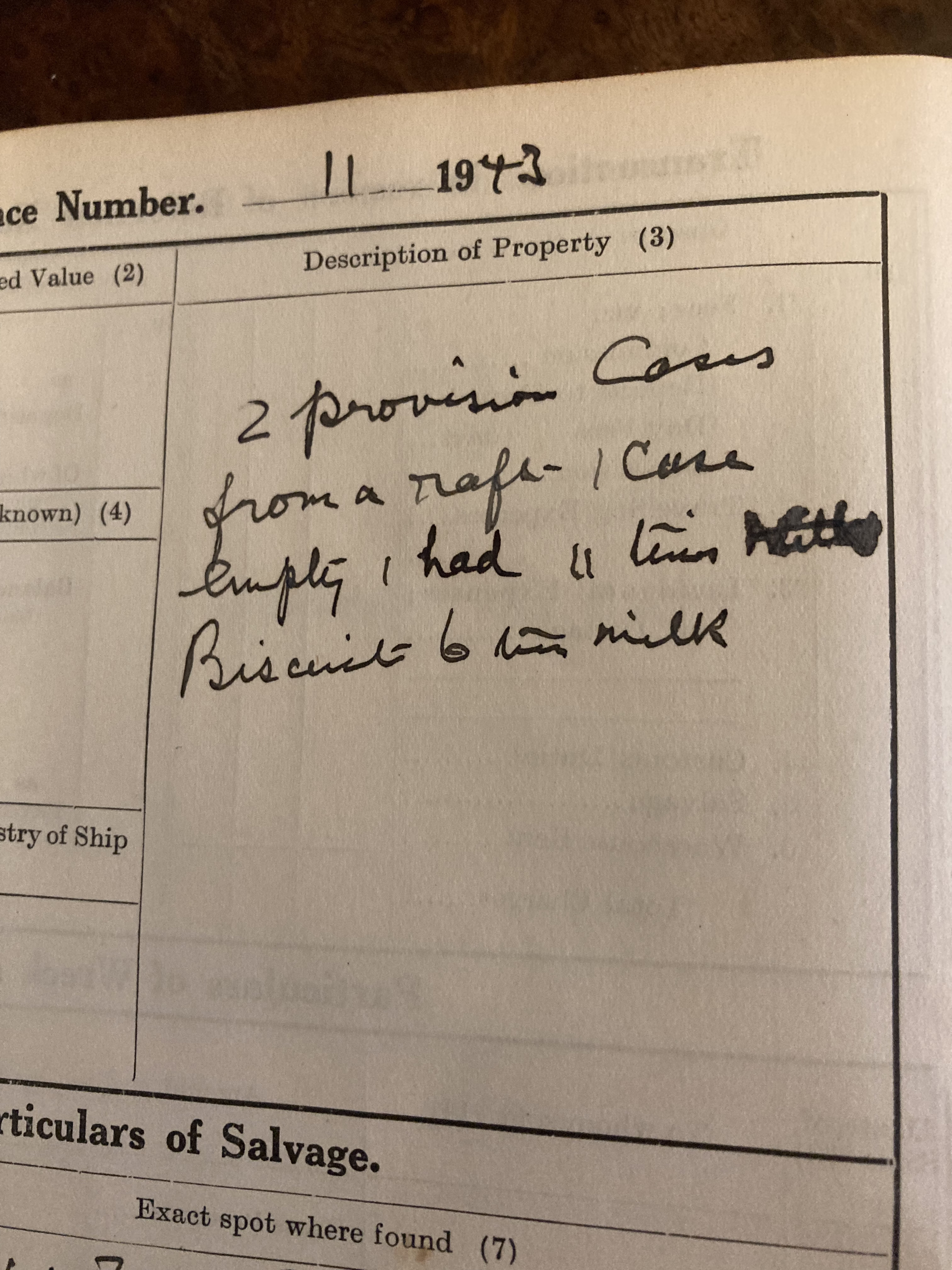
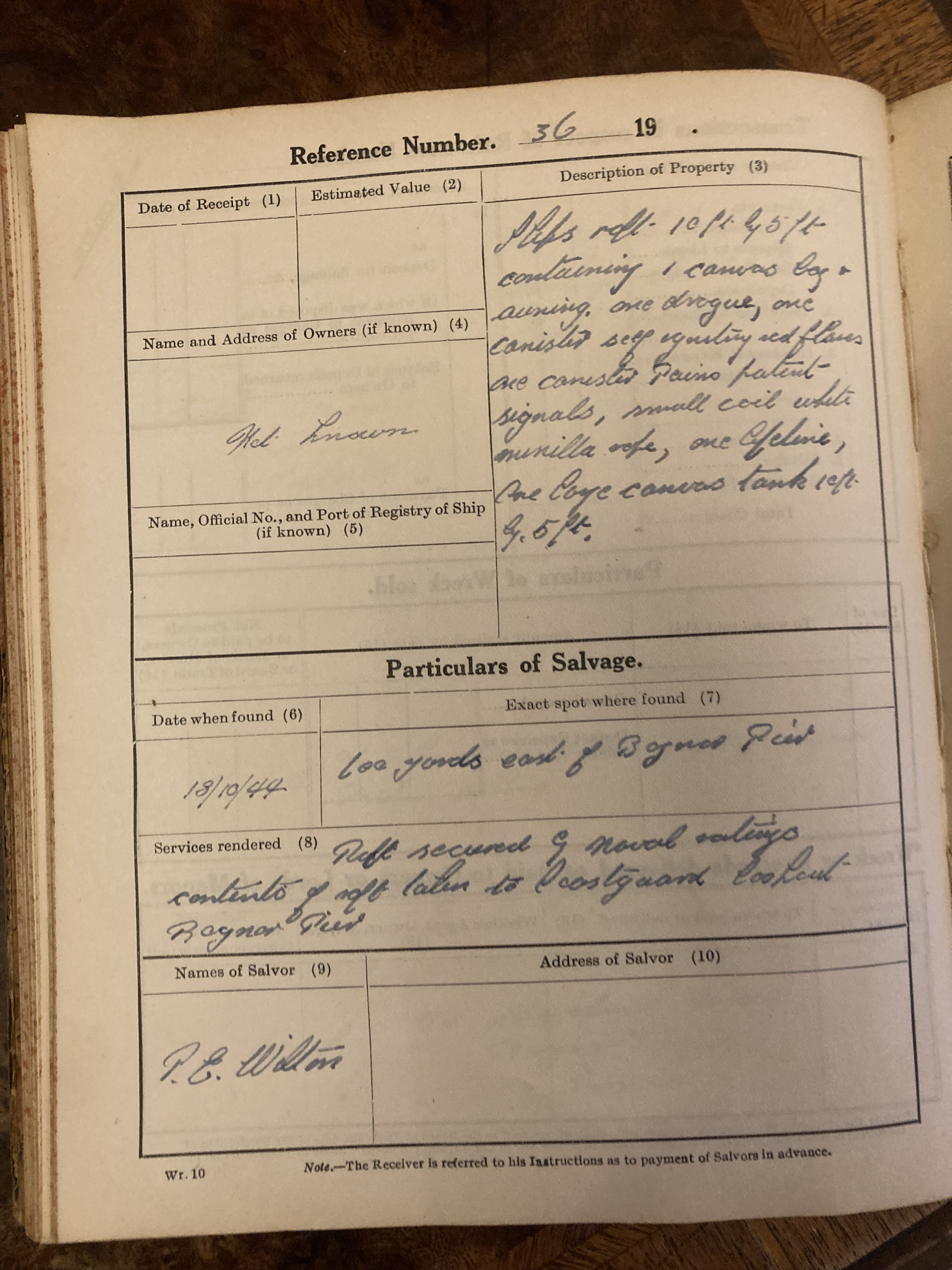
This nicely (but now rubbed and faded on the outside,) marbled book holds a record of wartime salvage off the Sussex coast.

Before your mind wanders to a romantic story of villagers pillaging loot under the cover of darkness as the waves of the channel swish along a hidden slice of coastline, stop it.

This is a series of terse listings of what, where and who from 1943 to 1947.

Written, I am thinking, by men who were charged with creating a log to keep officialdom happy or at least undemanding, or just to have a record of what appeared on ‘their’ shores.

The title page is blank so they ignored the boxes asking who they were  – and if you read it carefully, you will see that perhaps officialdom was looking for a few more details. 

They knew what was found, where and who carried out the salvage but as to what it was worth, who was paid what as a result or who the owners were – it is all a mystery to us and perhaps them.

There is different handwriting as we move through the book and the years – some more legible and some a fraction less terse, but nowhere are we getting the backstory.

What ship shed its load of rubber? There were various amounts of rubber found at various dates, in places from ‘ bottom of sea lane, Angmering-on-Sea’ to five yards below the High Water Mark outside the Pheonix Club, Alma Hotel, Middleton-on-Sea, and one bale of unmarked rubber on the foreshore of the Craigwell Estate.

I have no idea who was filling in these entries and what official capacity they held, but we do get an idea if who was doing the salvaging.

Quite a number were Canadian soldiers – not entirely surprisingly as there were a lot in Sussex and presumably were allowed onto the fortified beach when ordinary locals weren’t.

But there were salvaging civilians including E W Morris, Lorry Driver, 50 Highfield Road, Bognor Regis.

And, Richard Davie, Police Constable, Police Cottage, East Preston, Sussex.

J O’Connell of Admiralty Road, Felpham salvaged ‘Paraffin Wax approx 150 lbs no marks.’

The names don’t repeat – with the exception of Constable Davie which might point to locals handing stuff over to him whether completely to not – so presumably these were not professional salvagers unless there was a significant number of them vying for stuff all along the Sussex coast.

I am assuming that most of what was found was flotsam (being the stuff that was not deliberately thrown overboard) as opposed to jetsam which was, you won’t be surprised to hear, was jettisoned.

And there are other more interesting finds than rubber or paraffin so, if you have the time and energy to read on.

It seems as if the entries all refer to things which ended up on the shore and indeed quite a lot is listed as being pulled above the high water mark.

But more portable stuff was ‘taken to a place of safety’ and interestingly, that place is rarely identified.

I could run away with the idea that places of safety might include shed, kitchen cupboards, or under counters but there is the official record – however thin and terse – of what arrived on land so presumably the salvagers were an honest lot.

For instance:

There are a number of dinghies, and a canoe complete with oars.

With a couple of exceptions, none of the boats had names. Perhaps that was common in the war, but where did they come from? What happened to the people in them? Why were people out in dinghies, or indeed canoes in the channel during a war?

Finally, perhaps the saddest entries are those of ships’ life rafts

Hopefully, we will find someone who wants to research/appreciate/understand this brief record of an aspect of Sussex coastal wartime history – if we do, I will let you know.

More than books

There are all sorts of strange things donated to Oxfam bookshops and recently we seem to have had our fair share. 

I have covered this theme before but do you know what, it still keeps happening. All these were donated in the last week.

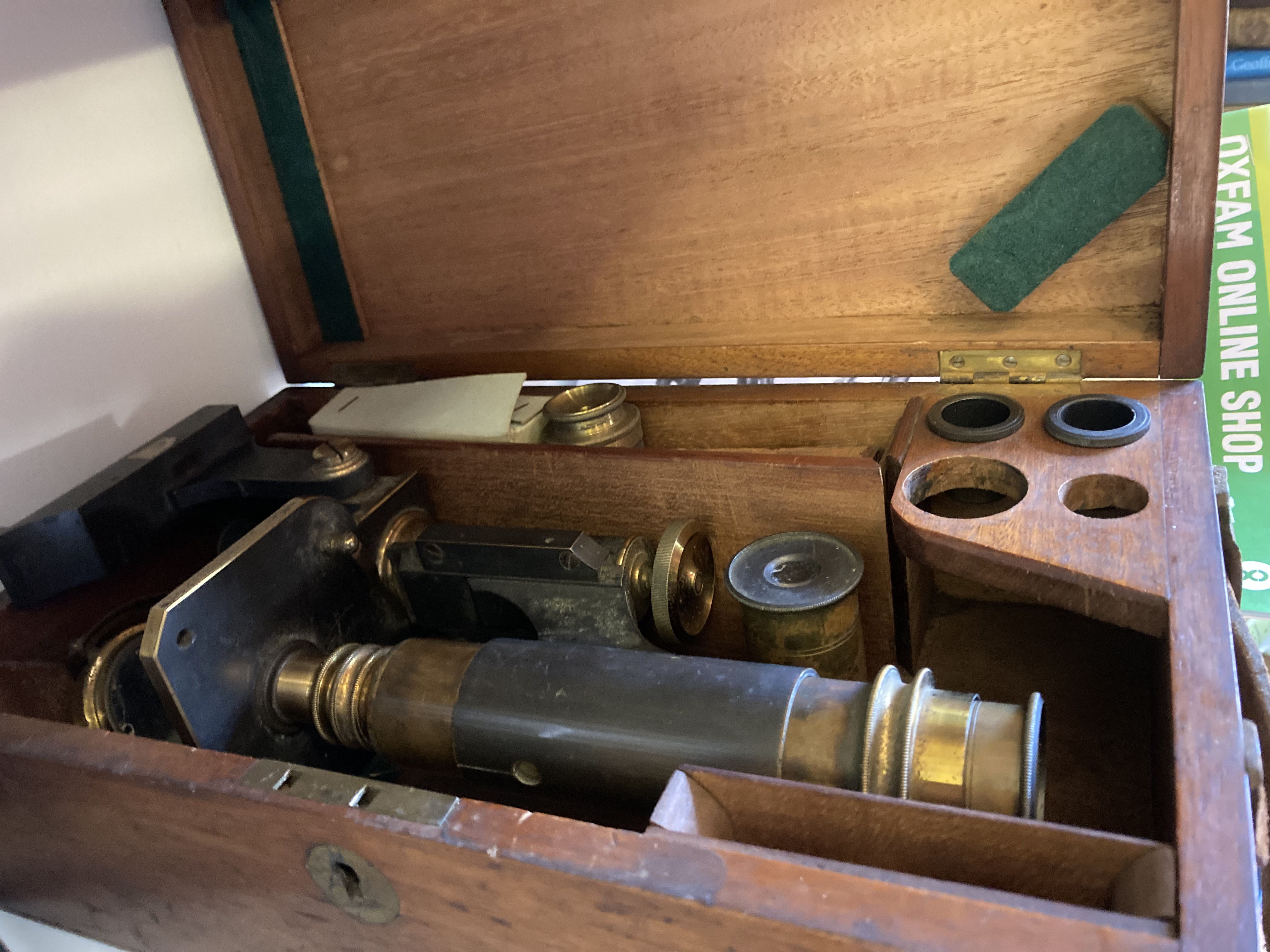
Here is a microscope, from we think, the mid to late 1800s.

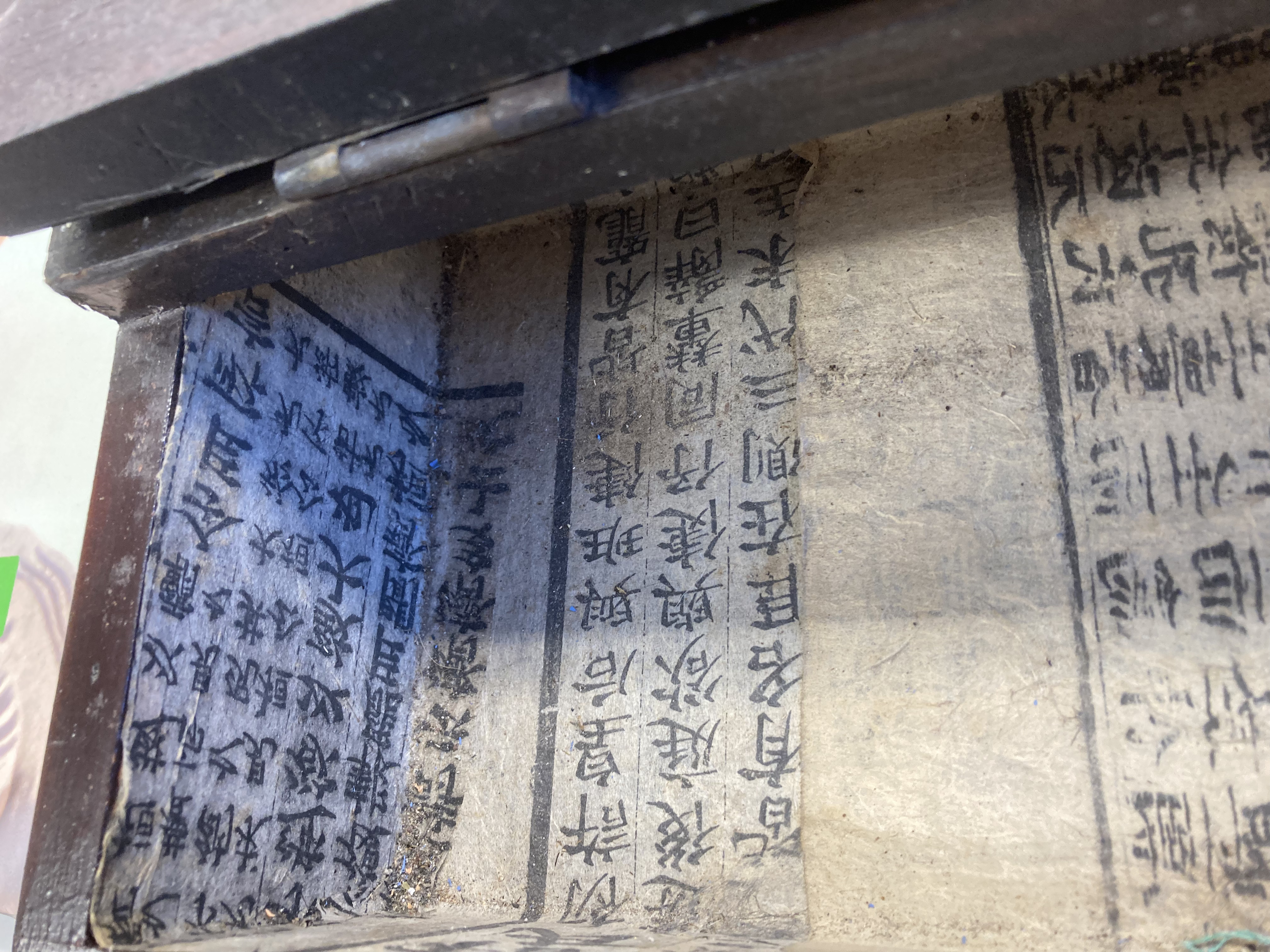
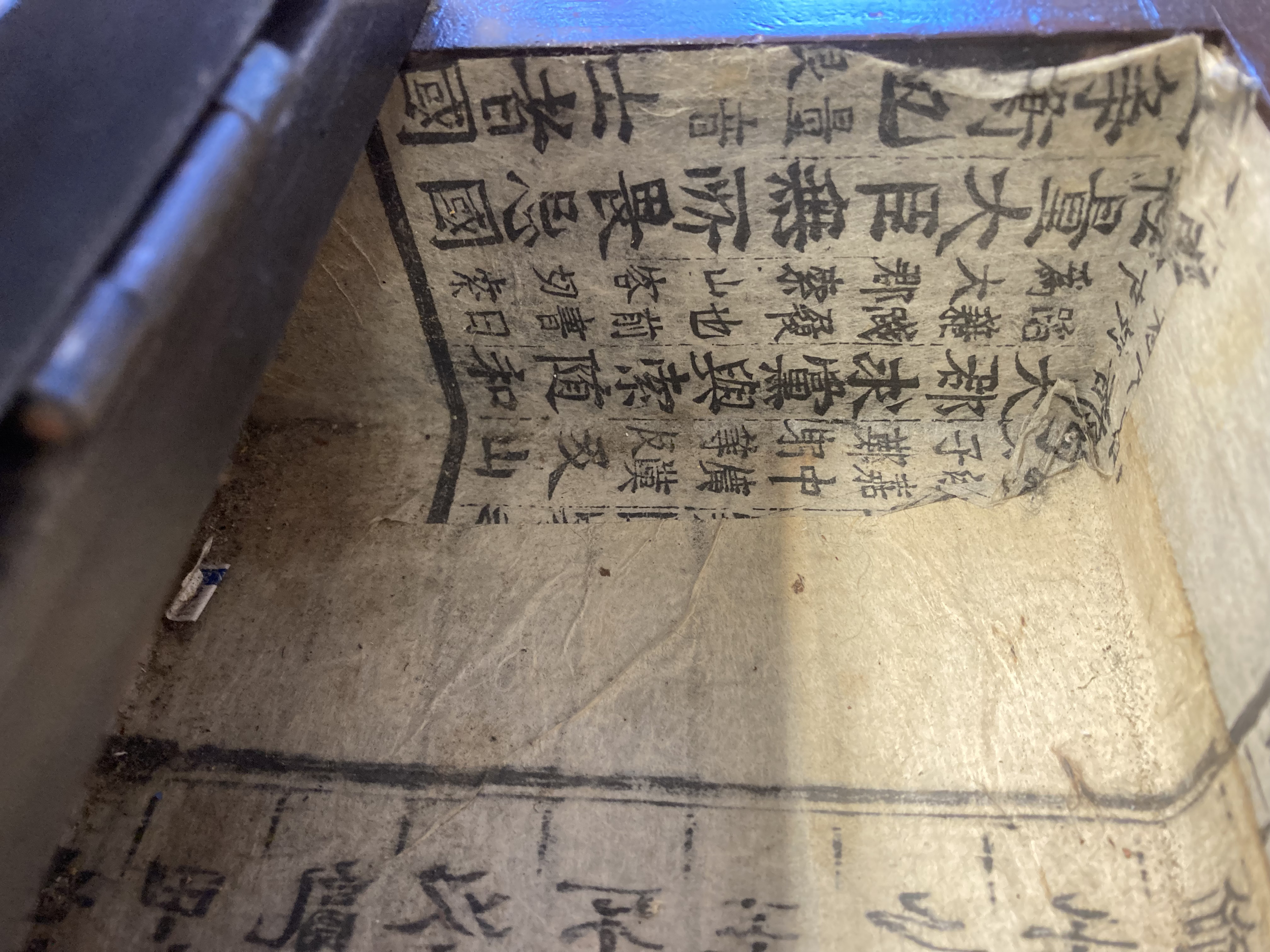
Here is a box lined with what I think (but don’t know) is Japanese script/newspaper – but from what era? 

A pair of shell casings from WW1 – not trench art, just casings, presumably brought home and you have to wonder what was the story behind bringing them back.

The box was donated by a fellow volunteer who won it at an auction at the Australian High Commissioner’s event in Singapore many years ago – as you do.

He (the volunteer, not the commissioner) told me it was the box that had held the surrender papers from the Japanese navy at the end of WWII – but he was joking. 

He had no idea what/when/why it was.

I would like to know what the script says – it is the classified adds from the Tokyo Times in September 1970 or a confirmation this was owned by the under secretary to the under secretary of the Emperor sending out a secret message to Matthew Perry – the first foreigner ‘allowed” into Japan for 200 years?

So, what to do with them?

‘You can do a Japanese table display,’ said my manager.

But we would need Japanese books…

And yes, the next donation she sorted was a bag full of Japanese books – there are some book gods out there….

As for the microscope. It has no name on it so not an absolute treasure, but a volunteer who knows about cameras (close enough) was called in to check it out. 

It was probably a school microscope dating from the mid to late 1800s. Brass, solid, in a box, used and re-used by schoolboys (no doubt, no girls) and who knows whether it inspired a child into science where he (undoubtedly) did some good science work which is benefiting us today….

And, our volunteer found out one like it – for sale on E-bay. Ours has ‘ original patina’ as they say on Antiques Roadshow, but that one was all polished up.

He was sneery about the polishing and thought the original condition would please someone who wanted the original/ripe for rescue microscope –  and very sure that ours will make more than the £94 the other one went for on E-bay.

By serendipitous coincidence, we had already been gathering books to do a window on science and technology and now we have a star artefact/prop.

The microscope will be in an Oxfam window near me in the next few weeks and there will be a lot of fingers crossed hoping that a microscope restorer looking for a new project will be walking around Petersfield…….

Well, we will see and I will tell you.

In the serendipity of an Oxfam bookshop, we had already been collecting books for a window of science and technology through the ages – so the microscope will be out star (non-book) performer.

As for the shell casings.

Well they are not crafted into trench art and so our best hope is that the metal might be worth something – or/and, fingers crossed people, there is someone out there ( book-shopping in Petersfield) who wants some undecorated WW1 memorabilia.

And some William Morris Sanderson fabrics and a pair of curtains.I thought they’d gone out, in and back out of fashion, but turns out they are still worth a bit.

Arts and Crafts, I thought. 

Well, of course, I hear you saying.

But what I plan/hope/can to do with them is for another time.

Serendipity and Coincidence

It has rarely been a time when serendipity and coincidence have worked out so well for our Oxfam bookshop.

I have said before, and no doubt will say again, one of the delights of volunteering in an Oxfam shop is serendipity – you can’t order stuff, you can only open a box, delve through a carrier bag, and find what you find, look at something which makes you smile.

This, dear reader, is a long list so don’t say you weren’t warned.

So, where will we start.

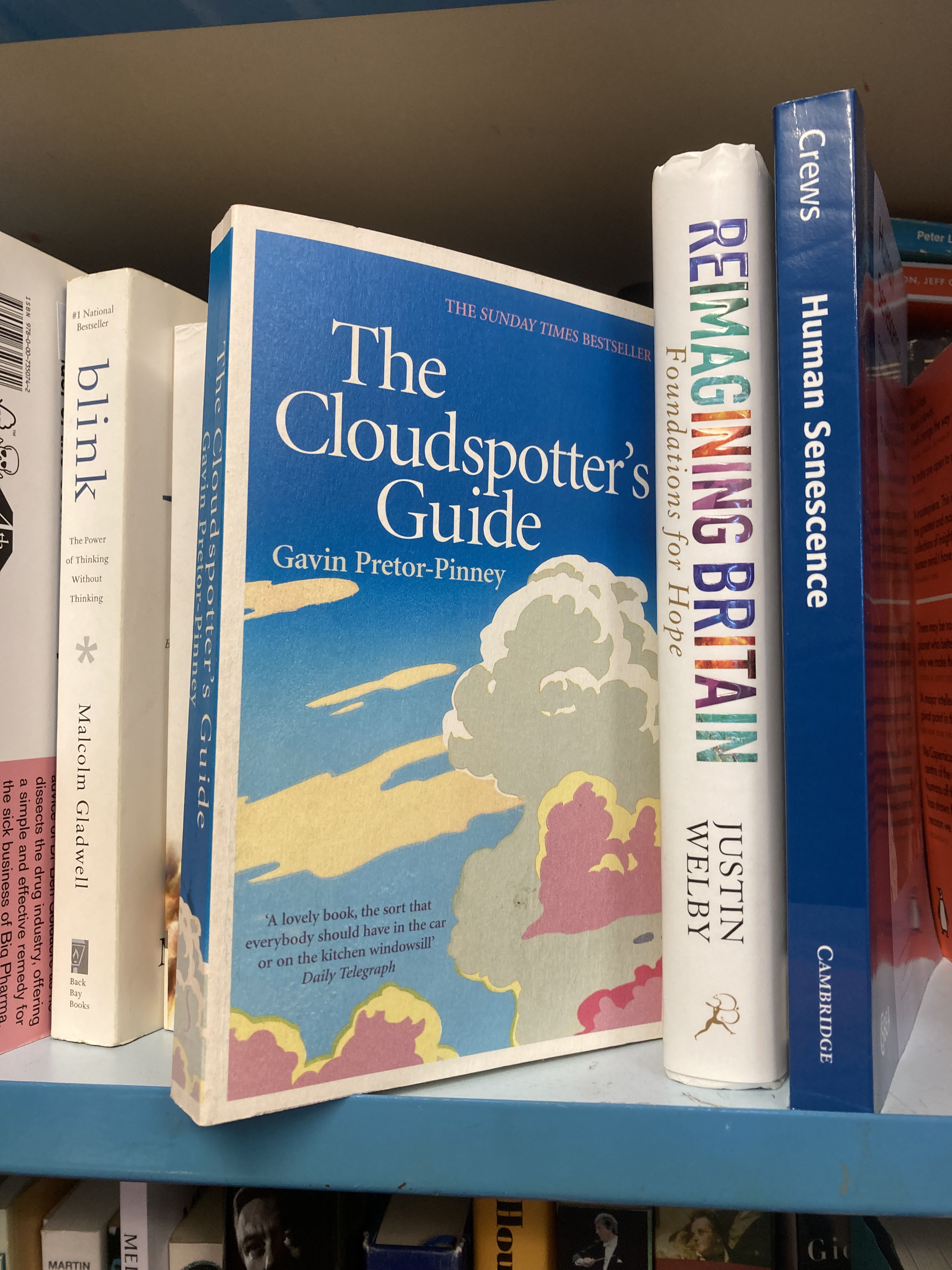
Someone came into the shop and asked for books on weather. 

He said his family had decided not only would they shop for Christmas gifts in charity shops, they had a theme – weather.

We we always, always have books on weather – clouds formations, climate change etc etc – but not this time.

Three of us scoured the shop upstairs and down, but nothing. 

Of course, after Christmas we have had lots of books which would fit the bill, but nothing at the time – sorry customer.

On the other hand, here is a good news story.

So, a couple came in, the same day, and asked for for an old  leather-covered bible. Not a request we get often.

And we often have one.

But not this time.

Apparently, their son had confirmed as a Christian as an adult and he loved second-hand stuff, shopping in charity shops etc.

And, they were not in a great hurry so I took their phone number, and said I would let them know if I found one.

One day, after the planning and work ( bearing in mind we have been doing this since August) and whoo-ha of Christmas, I had time to set out, clear out, rootle through the stash of ‘old and interesting’ books and found a bible dictionary which was not only leather bound, but presentation bound.

(That means, just in case you don’t know, it was bound especially to present to a student with a presentation certificate pasted inside. And it had marbled boards and page ends – no I don’t have a picture so you need to Google what that means if you are interested.)

And, sorry I did not take any photos.

It seemed to me to be a long shot of what the customers wanted ,but called them anyway saying they were under no pressure to buy, just a thought.

They turned up about an hour later, were delighted, paid twice what we had priced it at, and bought a coffee-table book (we had had for a very long time) on the most beautiful bibles in the world.

Later he sent me a text message saying how delighted they were and how much they had appreciated the ‘effort’ we had made to get what they wanted.

 As ever, there is something special about uniting a book with someone who is going to really appreciate it.

Next, serendipity and coincidence is more prosaic.

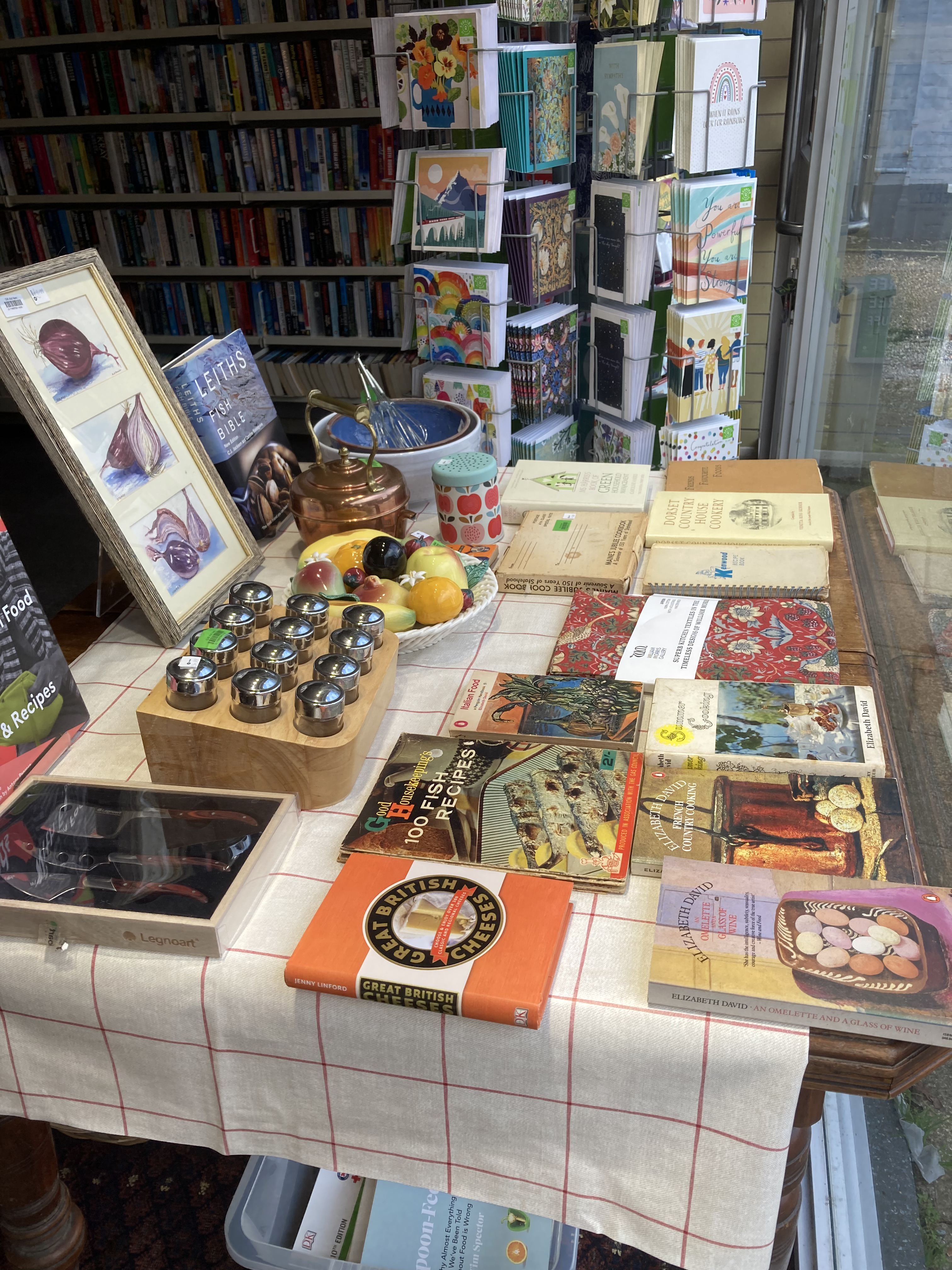
So, after Christmas I was thinking about that table to out out and I thought of cookery – what a surprise, my friends might say – and had a few old books and magazines relating to cookery which I thought might make a (slightly) interesting table.

I was upstairs sorting all this stuff out to fill a table when the volunteer downstairs let me know there had been a(another) donation.

When I abandoned my task and went downstairs, I found the donation included a copper kettle, a kitchen bowl, a set of cheese knives.

Sorted.

Finally, and thank you for keeping going this far, the end is nigh.

Sometimes I have a plan weeks in advance about table displays but sometimes I come in on a  Monday and wonder how I am going to make it work.

On one of these Mondays recently, I decided to put out books that were set in different countries.

Of course there were a few travel books, but also novels, history, etc etc. 

Now, there is nothing as useful as signalling your rather arcane theme than a prop and hey ho, someone, about twenty minutes later, donated a globe and some foreign coins. Thank you whoever you are.

And on the same day that it was announced Ronald Blythe had died at the age of 100 – most famously the author of Akenfield. Guess what I found stashed behind a pile of Jane Austen and John Betjamin…..

This is nearly the end.

Sometimes you have a donation which is not so much a delightful, serendipitous addition to your plan, as something you have to take a deep breath and think how on earth are we going to make this work.

A horse’s saddle.

Well, yes that was a bit of a surprise as a donation because it is not often we, as a book and music shop, get a saddle as a donation.

Apparently, someone brought it in and said her mother, a rider, had died and asked her daughter to give one each of her saddles to three charity shops in the town. (have to say, I have not seen saddles popping up all over town…)

So, instead of getting a bonus for a pre-planned display, we have had to build one around it. We have a lovely display of countryside and the saddle is front and centre.

God only knows what we do with it if it doesn’t sell – us volunteers, are so fed up of moving it out of the way in order to go to the loo.

And just as we thought we had sorted one large, in the way, unusual donation, we got a guitar.

One of our great volunteers was called in to tell us what it was worth. Some calling around and he came up with a price – £175 – a big deal for us.

So, my plans for the table were jettisoned smartly and here’s hoping it will sell before we have to drill holes in the wall and ‘erect’ a guitar holder.

Fingers crossed we have a guitar playing horse rider shopping in Petersfield this week…..

A Day Of Coins

Serendipity is part of the charm of working in the Oxfam bookshop. Usually it as about books but yesterday, it was about a remarkable you man, coins and stamps.

Now I don’t often work a Saturday afternoon but I have to say it is always interesting – a different demographic from a weekday, and busier – less time to do the titivating, tidying, sorting stuff that you can do Monday to Friday.

( As ever, a long-read warning but it is a heartening story so you might want to carry on at least for a bit.)

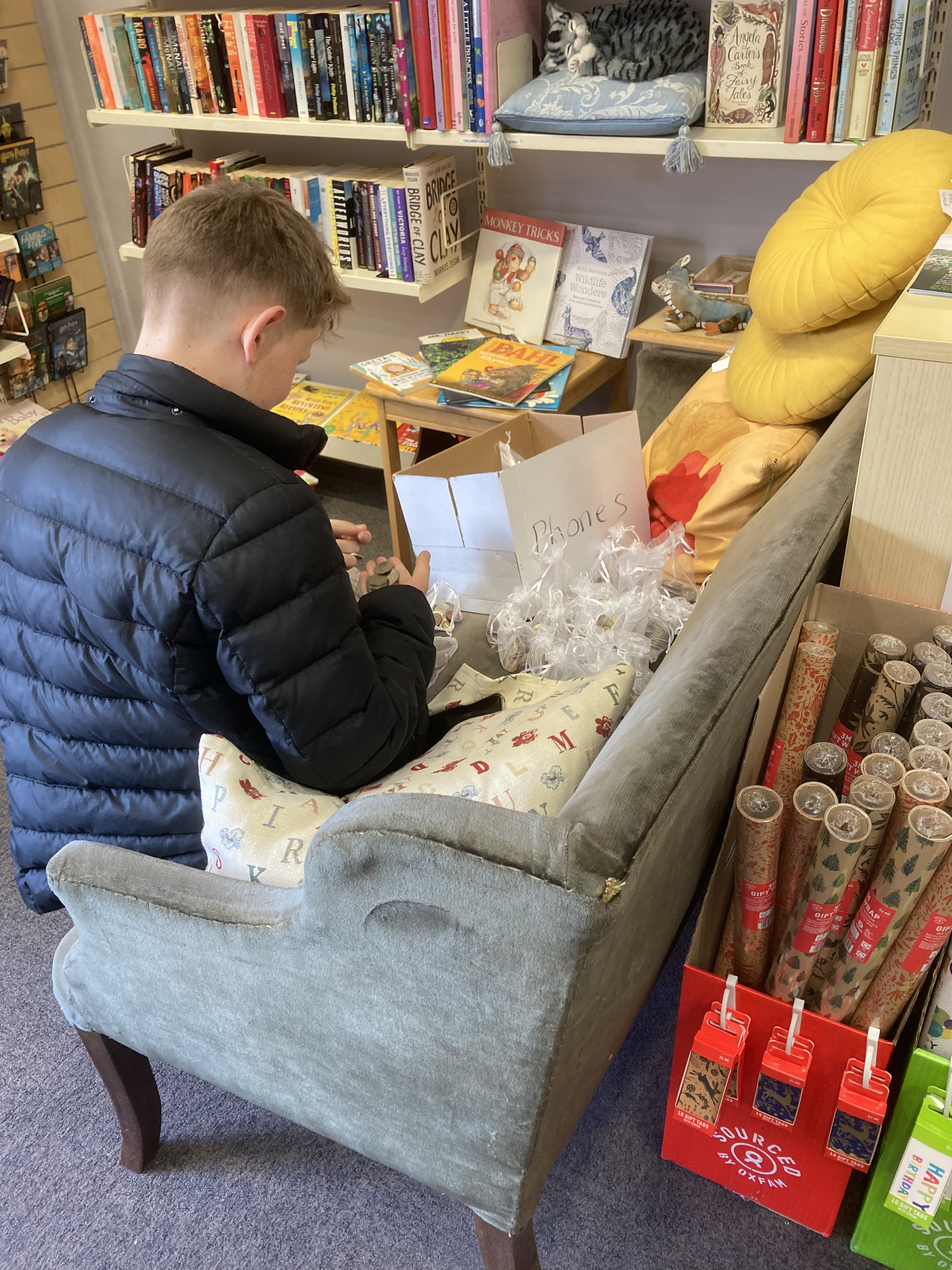
Anyway, there I am at the till with two Duke of Edinburgh Award young people doing their volunteering stints when in walks a young person of say 13 years old. ( I am surrounded by young people and it is making me feel old….)

The DofE young women are doing books, but he is not interested in books, he asks me if we have any pre-decimal coins, foreign coins and/or stamps.

Well, as it happens we did have a load of coins which a lovely volunteer ( at the other end of the age spectrum) had sorted into organza bags. 

Last year we had unearthed a stash shoved under a workbench in the shop and which had been there for some years – and we sold them in aforementioned bags.

People bought them to put sixpences or threepences into their Christmas puddings, or bags of old pennies to ‘amaze’ their grandchildren, or foreign banknotes to play Monopoly with. We did well.

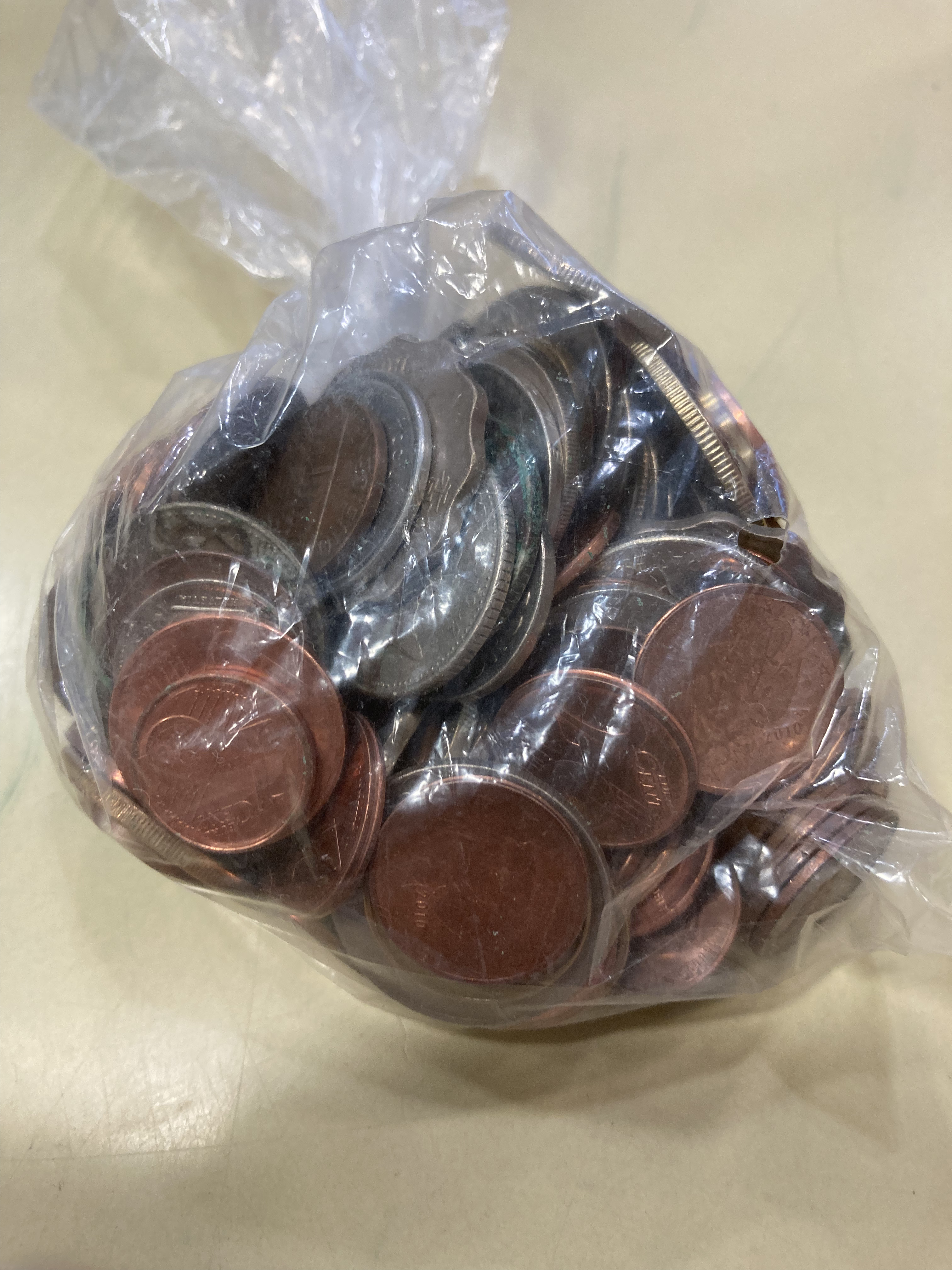
In case you need to see what the pences are:

So, she and I had decided to do the same this year and she waded through bags and bags and sorted them into pre-decimal British coins, foreign coins, silver coloured, brass coloured, etc etc. They were in a box upstairs.

‘Well,’ I said to the young man I will call Tom, ‘ We do have some. Do you want to have a look?’

He did and spent more than an hour sitting on our shop sofa, riffling through and telling me – and indeed customers – about when silver sixpences were phased out (1947), what the print runs of Penny Red stamps meant in terms of value, pulling out the incredibly light ( probably made from Aluminium) coins from Romania and much more.

He told me/us that his grandfather was a coin and stamp dealers and left Tom his collection – now stored in a large container – which is now working through.

Some of the stamps are now at Gibbons, he has sold some of his own and his grandfather’s collection and used the first money to buy a dog – but, he admitted, his Mum does most of the dog walking and feeding. Well what a surprise.

Customers came and went and Tom carried on, still telling me stuff in between me taking money from book buyers.

At one point, there was him, me and just one customer who said, ‘ I have a bag of old coins and I have never know what to do with it. Could I bring it here and and if there is anything valuable, I am sure you will identify it and Oxfam can benefit?’

‘Yes,’ said Tom and I together.

So, he eventually left taking some stamps and coins to research, and coins he had bought.

‘Thank you so much for trusting me with these,’ he said.

‘Well, I have your phone number and I do trust you. And thank you for an interesting afternoon,’ I said.

‘I’ll be back,’ he said – and I am sure he will.

Book buyers kept me busy until almost closing time when a young woman came in and said,’ This is a long shot but do you take old and foreign coins?”

‘Yes, we do’ I said and she gave me the last donation of the day.

It was indeed a day of coins.

A Day of Reuniting

If you want a good Oxfam story, this is one of my better ones. 

But dear reader, there is what we called as journalists, a long dropped intro.

Which means you have to wade through some stuff before you get to the nub of the story.

Here are a few things I have said before and all of them happened today:

1)If you wait long enough there will be every printed thing/book/pamphlet turn up in your Oxfam shop – there is something printed on every topic you could ever imagine.

2)There is a good home for some special books – places they belong.

3) It is a such a buzz to pick out something dusty and strange and make 2) happen and get some money for Oxfam, and make people happy.

Well, of course not every printed item turned up today, but at the bottom of a book of not very interesting books, something really unusual turned up. 

How it turned up in an Oxfam shop in Petersfield, I will never know and sometimes as a book sorter, I really wish I could hear the story of the donation. But we very rarely do – and I mean very rarely. 

After all, someone comes in with a few boxes of books and if we are lucky we can ask them to Gift Aid them ( if they do we get 25% extra from the government on every book we sell), and they are on their way. 

Often they are bringing in books from aged/dead/going-into-a-care-home parents and really haven’t looked at what there is.

Anyway, enough delay, let me tell you what I found:

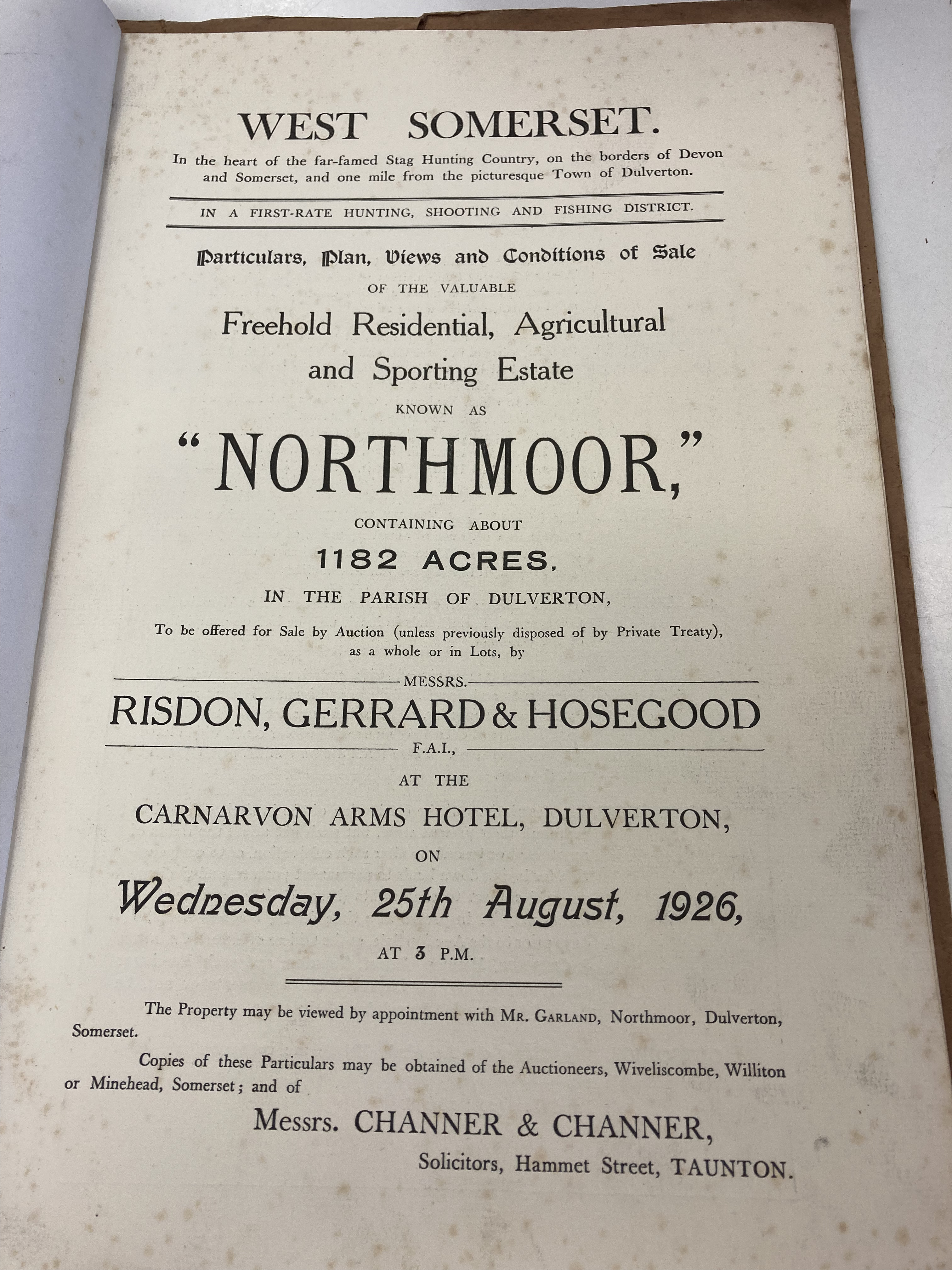
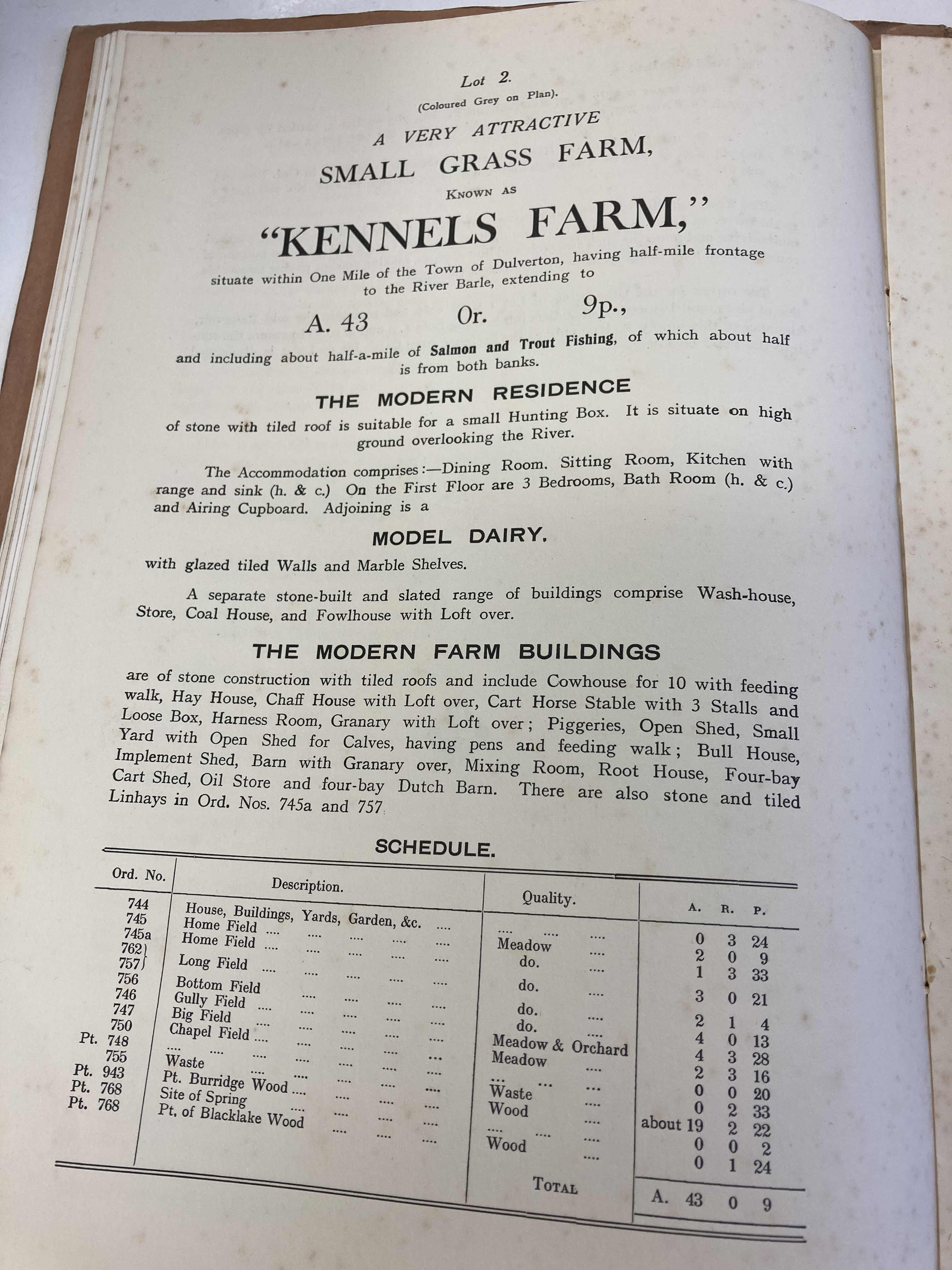
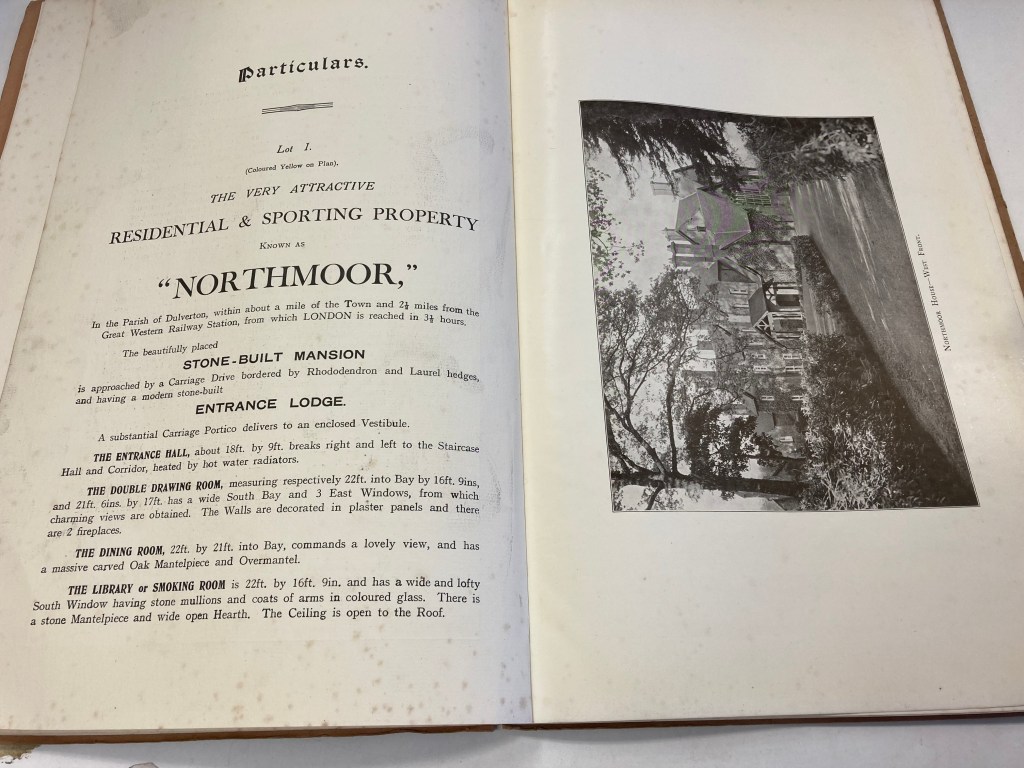
This is the particulars for a major estate sale in 1926.

Now, I couldn’t find another one for sale – which needless to say dear reader, means it is rare and a rather interesting read.

A bit of research, thanks Wikipedia, meant that I found out the estate was bought by Colonel Edward Clayton from the Wills family – indeed should that be ringing a vague bell, they were the founders of Imperial Tobacco Company and ‘in 1966 was the family with the largest number of millionaires in the British Isles, with 14 members having left fortunes in excess of one million pounds since 1910.’

In 1994 Edward’s son sold it on to Ralph and Suzanne Nicolson who now run the house as what looks like a very nice indeed holiday let. 

Clearly, a phone call needed to be made.

It turns out the family had tried to buy the a copy of the particulars but weren’t successful so they are said ‘Yes please’ to buying our donation.

Now, that is what I call a good day’s reuniting.

A lot of time to research

This is about a book from 1796 which has arrived in Oxfam Petersfield in 2022.

And about a coincidence.

Be warned, there is a lot of this – I got a mild dose of Covid so was at home with time….

But at least this time there are some pictures.

Ignorance of the provenance of book is the lot of a charity bookshop. Indeed, I am not even clear which of our volunteers, put it aside for me to look at.

Anyway, we have it, and what an interesting book it is. (Value, you Antiques Roadshow aficionados, will come later.)

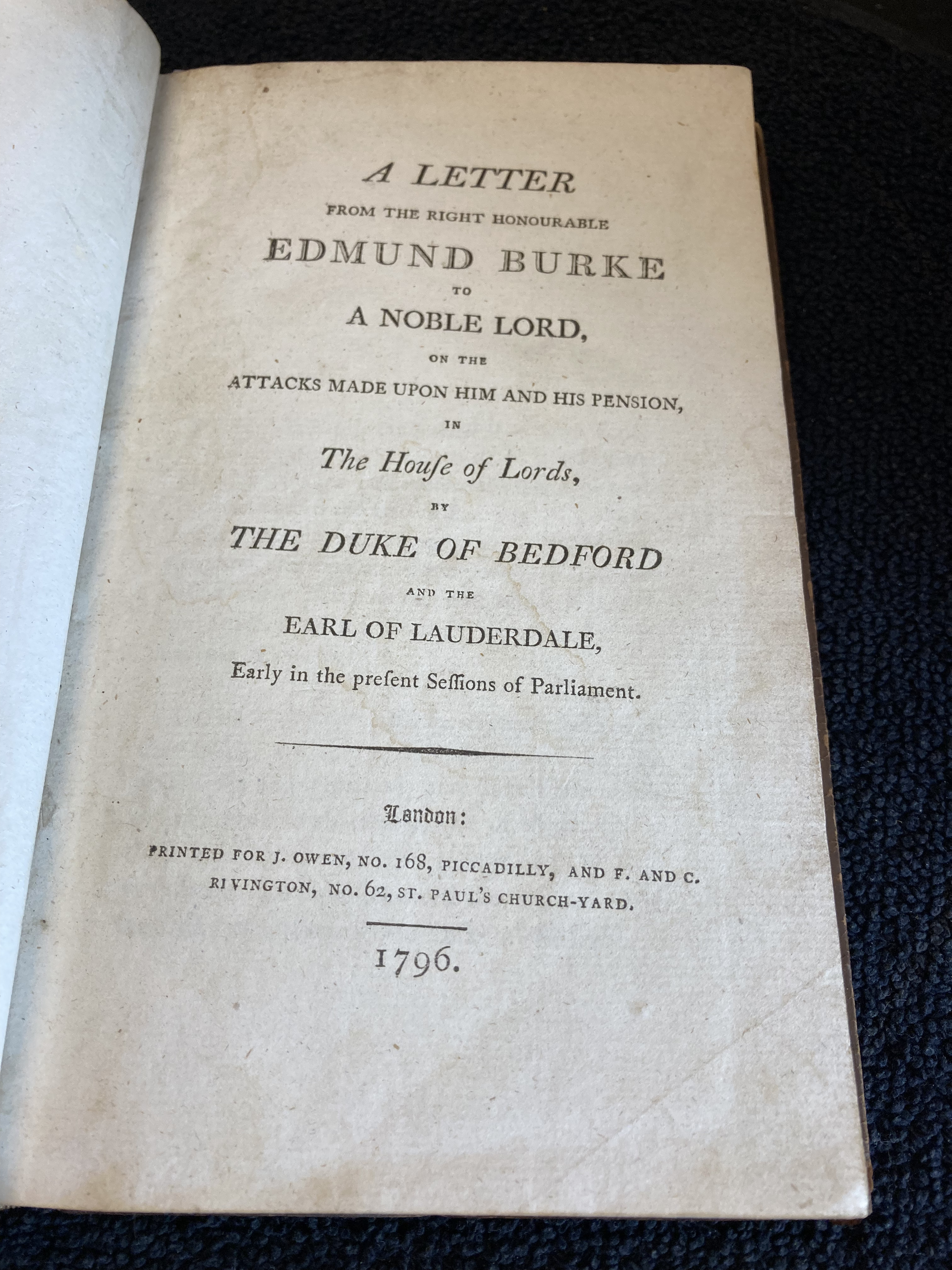
So this is a bound volume of three letters by Edmund Burke and for those of you who think who? Here is some info – actually, quite a lot of info.

https://en.wikipedia.org/wiki/Edmund_Burke#Later_life

And here are a couple of quotes which may chime:

‘The only thing necessary for the triumph of evil is for good men to do nothing.’

And:

‘Nobody made a greater mistake than he would did nothing because he could do only a little.’

Obviously, he was no feminist, but apparently he was anti-slavery.

He was also, depending on who you read, a founder of Conservatism and/or ‘a wet and a Eurosceptic’ according to the Beaconsfield Historical Society.

He wanted to be the Earl Of Beaconsfield and George III wanted him to be, but Burke’s son died so he couldn’t have a peerage. Life peers were only introduced in 1958 so if you didn’t have a male line to take it on, you didn’t get it.

What he did get was a handsome pension which was criticised by the Earls of Bedford and Lauderdale hence this:

His argument was that at least he had earned his pension by unstinting public service whereas the earls got their money by inheritance alone.

‘I was not, like his Grace of Bedford, swaddled, and rocked and dandled into a Legislator’

And he wrote in one of our letters, ‘Loose libels ought to be passed by silence and contempt.’ 

Meanwhile in a 1771 letter to the Duke of Richmond, Burke wrote that ‘persons in your station of life ought to have long views. You people of great families and hereditary trusts and fortunes are not like such as I am … we are but annual plants that perish with our season and leave no sort of trace behind.’

Oh yes, he had a good turn of phrase.

And according to Martin Greenberg, who also has a good turn of phrase:

In Letter to a Noble Lord (1796), Burke replied with a crushing force to two whippersnapper peers, obscenely rich enthusiasts of the philosophes and the French Revolution, who had attacked him for accepting a pension from the crown. He set his lifetime of accomplishments against the nothing of their juvenile efforts, his defense of their inherited rank and acres against their coquetting with a power whose universal ambition, if it were able to reach across the water, would have swept away all that they were and owned with a grin. Burke’s prose–sober-paced, weighty, powerful to the point of being overbearing–has always close behind its argumentation a reserve of poetic energy which now gleams, now flashes, and now, as in this letter, explodes in a fireworks of dazzling metaphors, a storm of epical-satirical language that tosses around the duke and earl, great galleons of the nobility, like little cockboats. ‘

Now I am not directly making any comparisons with current British politics but if you want to, be my guest.

Our book was published in 1796, the year before Burke died. 

Other things that were happening in 1796 include:

Jane Austen starts writing Pride and Prejudice, 

George Washington gave his farewell address warning against partisan politics ( that worked then), 

The British government began work on a 40 acre site at Norman Cross near Peterborough to become the world’s first prisoner of war camp,( who knew, and might need some more investigation)

At Christmas 1796, the French Navy nearly landed an army of 15,000 troops at Bantry Bay in Ireland. 

And Napoleon was appointed head of the French Army in Italy which was to have some significant ramifications….

Hence: 

Breathe easier, I am not going to give you a history of the Napoleonic Wars (though my Best Beloved can if you are interested.)

Burke wasn’t a fan of the French Revolution on the grounds because of its ‘origins and the class of people who were the driving force behind the Revolution’. 

Basically, he didn’t believe that the French urban working class, or the peasantry, could be trusted with legislative or political powers.

He had the view that only the ‘educated’ could be reliably left to run any country.

So, you can get the text of these letters online and you can buy them in the original but very rarely, infact, very, very rarely can you buy one from 1796 printed on such good quality paper – and in an original  binding. Most of them have lost their binding or were never bound at all – just get them out there, the printers must have said.

The paper is impressive. Very little foxing ( that’s the brown spots on the pages of old books) and it feels strong and thick and well cut, and well bound – impressive for such an old book.

We looked for a paper watermark but there wasn’t one. And I found out that this ‘book’ went into 11 editions in 1796. That is a lot of editions, and though the print run would have been the kind of print run were are used to, that is a lot of books.

And there are five raised gilt bands with gilt titling on the spine and gilt banding on the front and back boards.

Interestingly, at the bottom of each page there is the first word, or part of the word, of the next page. I have not seen this before, but maybe that is my ignorance.

It is also justified which means that the left and right margins are the same – and means that words are sometime broken up, or spaces are stretched to make the text fit the margins.

(That can make reading hard on the eye because different spacing seems disjointed. Our book, I have to say had a very good typesetter because it is easy to read.)

Is it about making sure the pages are in the right order? Possibly, but they are numbered.

Well, now you know a bit about how books are described online…..

And all that has been taught to me by someone who knows amore about books than I will ever do and who is the man who comes in ( when called up) and tells me what to look at, what to reasearch, what to learn…. and teaches me to expand what I know from the back of a postage stamp’s worth to, oh maybe a small postcard.

Waiting for the valuation? Well because it is bound and in great condition we are hoping for £275.

Maybe it will be sold asap or maybe it will take some time and be less than that – that’s the way it works.

Now, if you have got to the end of this and still have a memory of a mention of a coincidence….

So, Burke got his pension (I gather £2,500) in no small part for his work as Chairman of the Commons Select Committee on East India Company Affairs.

And he impeached Warren Hastings.

So when I went into the box of books that have been put aside for me to look at, under the Burke letters I found a handsome book – a biography of Warren Hastings….

I have no idea whether they were donated together or this is one of those coincidences that happen in the life of a bookshop when no providence can be found.

More of that next time.

And, we have another book from 1796, The History of America – perhaps more on that too.

Catch Up

So, it has been a while so here is a quick dash through the last few weeks before we get back to maps, coins and support networks.

Yes, thank you, we did well in the bookshop over Christmas. Not astounding but certainly enough to keep our heads above water with a certain air of pride.

The manager has permanently gone and we are waiting (with bated breath) for a new one.

And now we are in the dull days of trying to make silk purses out of quite a lot of sows’ ears.

All our best stock was thrown at Christmas and so we are left with the rather tired and weary – though we still get a few delights.

It is not that we don’t get donations, it is just that popular though vegetarianism is, no one wants to buy a dog-eared cookery book from the 1990s – where is an Ottolenghi when you need several?

Courtesy of central Oxfam, we were allocated several boxes of unsold Spur’s merchandise. Yes, the football club Tottenham Hotspur.

Why anyone thought the Spurs baby grows and woolly hats and picture frames would sell in a bookshop in Petersfield is beyond me ( they didn’t).

But such is their faith that we have just taken delivery of another two large boxes….

And there was one cupboard left to clear  – accessible once we got the manager’s keys back.

In it we found a full father Christmas outfit and decorations – not much use locked away until after the festive season.

And why the key to this was kept on the manager’s personal bunch of keys, well your guess is as good as mine.

There was a Hornby train set, a copy of the Petersfield post from 2009, lots of old Oxfam publicity material, a fine wood plane, another old map – yes indeed – two whisks and a mixing bowl, a used artist’s palette, a flat cap, marching compass, a stash of pendants, two silver napkin rings, a pair of new kitchen taps and a night vision monocular.

There was a time when I railed against the manager’s hoarding but now I am disappointed that we might be getting to the end of treasure hunting ( and selling.)

Mind you we do have a lot of cupboard space.

Track & Typewriters

For anyone (at all) still with me on this, now for the models railway and typewriter – not a sentence I would have expected to write.

I knew nothing about model railways but an Oxfam instinct made me say yes when someone donating boxes of books said, ‘By the way, do you want some model railway stuff?’

And, I have watched enough (actually more than enough) Antiques Roadshow to know that can be valuable stuff.

It came in four large boxes and an old suitcase, and I went to get my haircut.

‘Don’t suppose you know anyone who knows about model railways?’ I said.

‘Strange you should say that,’ said my hairdresser, ‘ One of my kid’s godfather is a model railway enthusiast.’

So, the lovely model railway enthusiast and ex-real-train-driver came to help and spent an afternoon looking at what we had.

Lots of it is not of much value but will make a lovely display on the table. 

Some of it, we might be able to sell online.

We have track by the plenty – straight and curved; we have signal boxes and signals; we have a suspension bridge; we have old 125 carriages; we have freight wagons; we have christmas trees; we have grass coloured stuff and pink stuff for putting blossom on your model trees….

(And that is more semi colons than I have used in a long time.)

And, I now know considerably more about model railway stuff than I ever thought I would.

I do know quite a bit about typewriters.

When I was a young journalist, shortly after the Boer War, we had never heard of desktop computers.

We had shared or communal typewriters – never quite enough to go round if we were all in newsroom at once.

And indeed, one of the (shared) typewriters was a really old ‘upright’ one which probably explains why I bash the keys of my Mac too hard indeed.

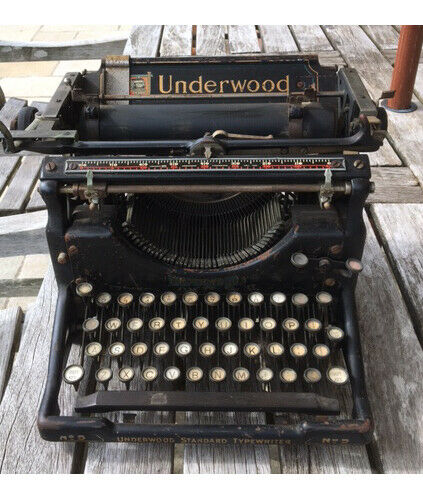
not quite as old as this but a very close cousin

When you were on the day shift you went into the newsroom and grabbed a typewriter and hoped to get a half way decent one.

One of them, I remember, was so well used the ‘e’ had worn out. So, once you had typed your story, you had to go back through it pencilling in all the ‘e’s missing from your deathless prose.

For every story we wrote, we had two sheets of very thin, poor paper and sandwiched inside was a sheet of carbon paper so we had a copy of what we wrote in case the newspaper got sued and needed to prove what we had written.

Some (indeed sometimes, most) of what we wrote ended up on the spike – literally a sharp spike on the news editor’s desk on which he (and it was always a he) impaled stories that were not going to make it into the next day’s paper.

If you wanted to look up some background to a story, you would go to the librarian and ask for the relevant packet.

And it was a cardboard packet of newspaper clippings and sometimes spiked copy which he ( and it always was a he) had thought to save and file under that particular packet heading – it was sometimes (often) a lottery as to what was in any packet and how relevant its contents might be to what you wanted to research.

We would have thanked any god for Google.

So, after the rinse aid and tins of salmon, I was very gratified to find this.

It turns out to be worth £50. ( Thanks to those very same gods for eBay.)

We will put it on the table with books that would (probably) have been written on a typewriter – not a quill, or fountain pen or a laptop.

So, Hemmingway, Enid Blyton, F Scott Fitzgerald, E E Nesbit, George Orwell, John Steinbeck, James Joyce, C S Lewis, Sylvia Plath and any others I can rootle around and find.

The danger of this plan is that the typewriter sells immediately and customers look rather bemused at the random collection of books – but for £50 I am willing to risk that.