So, if you are still with me, lets’ go to Warren Hastings.
He who went through an impeachment trial brought on by Edmund Burke and whose biography appeared in our shop.
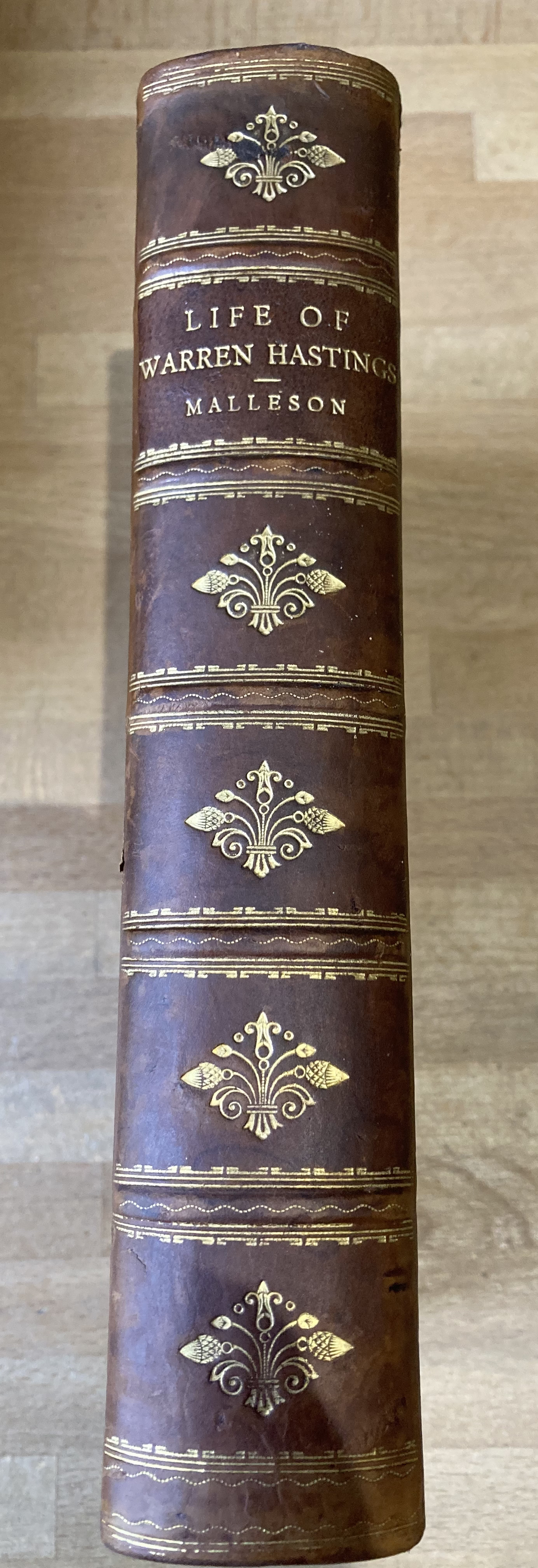
Malleson’s Life of Warren Hastings bound by the Relfe Brothers with a presentation binding but no presentation certificate.
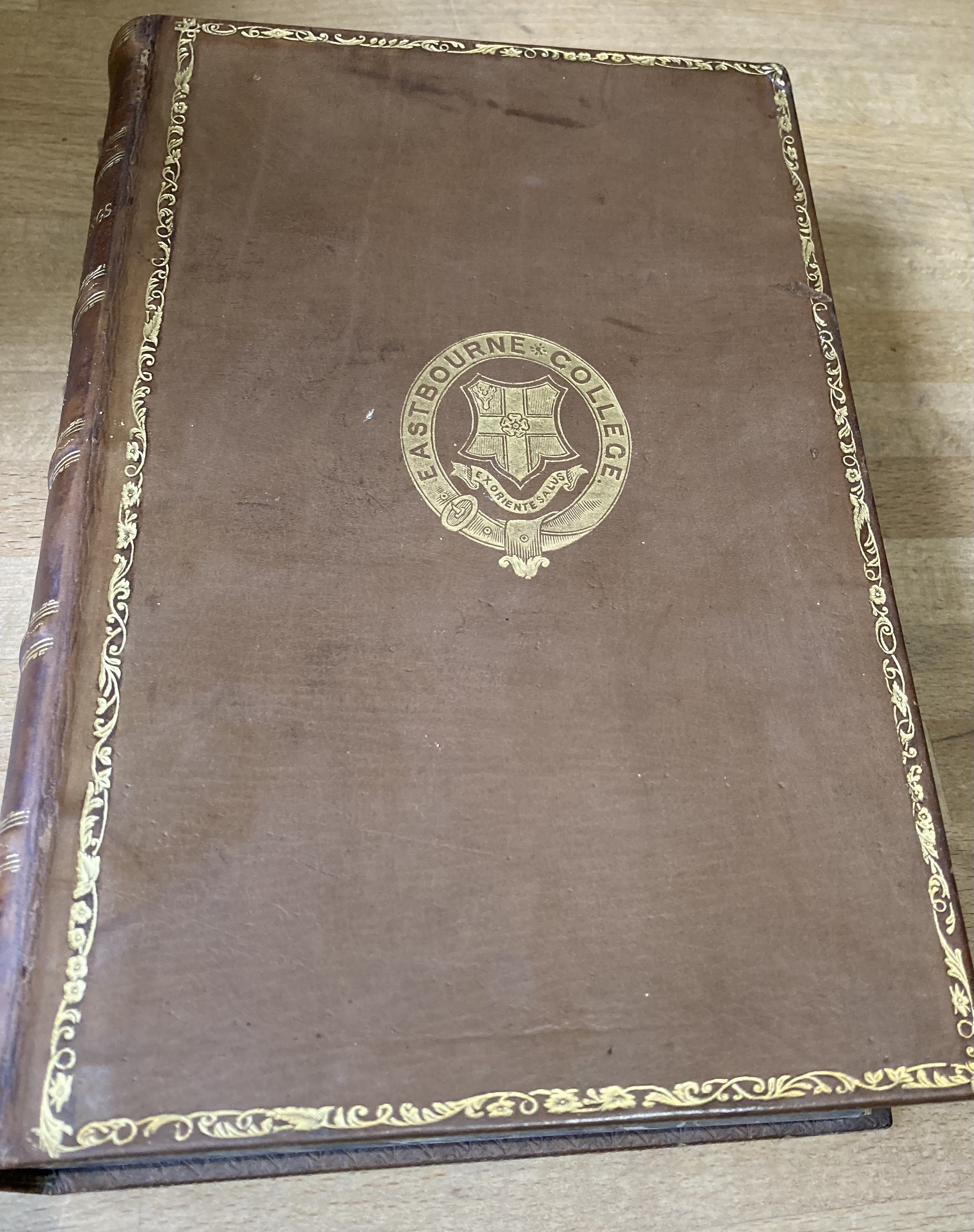
If you want a translation of that paragraph let me tell you a bit more.
Usually with a binding like this, you would usually get a printed presentation certificate pasted inside with teacher handwriting saying something like ‘to George Robertson for excellent marks in history.’
Now, the Refle Brothers are really well known quality book-binders but can you find their story/history on Google? – well actually no.
No Wikipedia page – and yes I do give Jimmy Wales some money for all the use I make of his site.
So, if you look you can find books for sale with Relfe bidding and they are pricey, but you can’t find out anything about them – or at least, I haven’t yet.
The page edges are marbled and I have flicked them to see if you do that a picture appears. If that was the case we would have a while lot more money to look forward to.
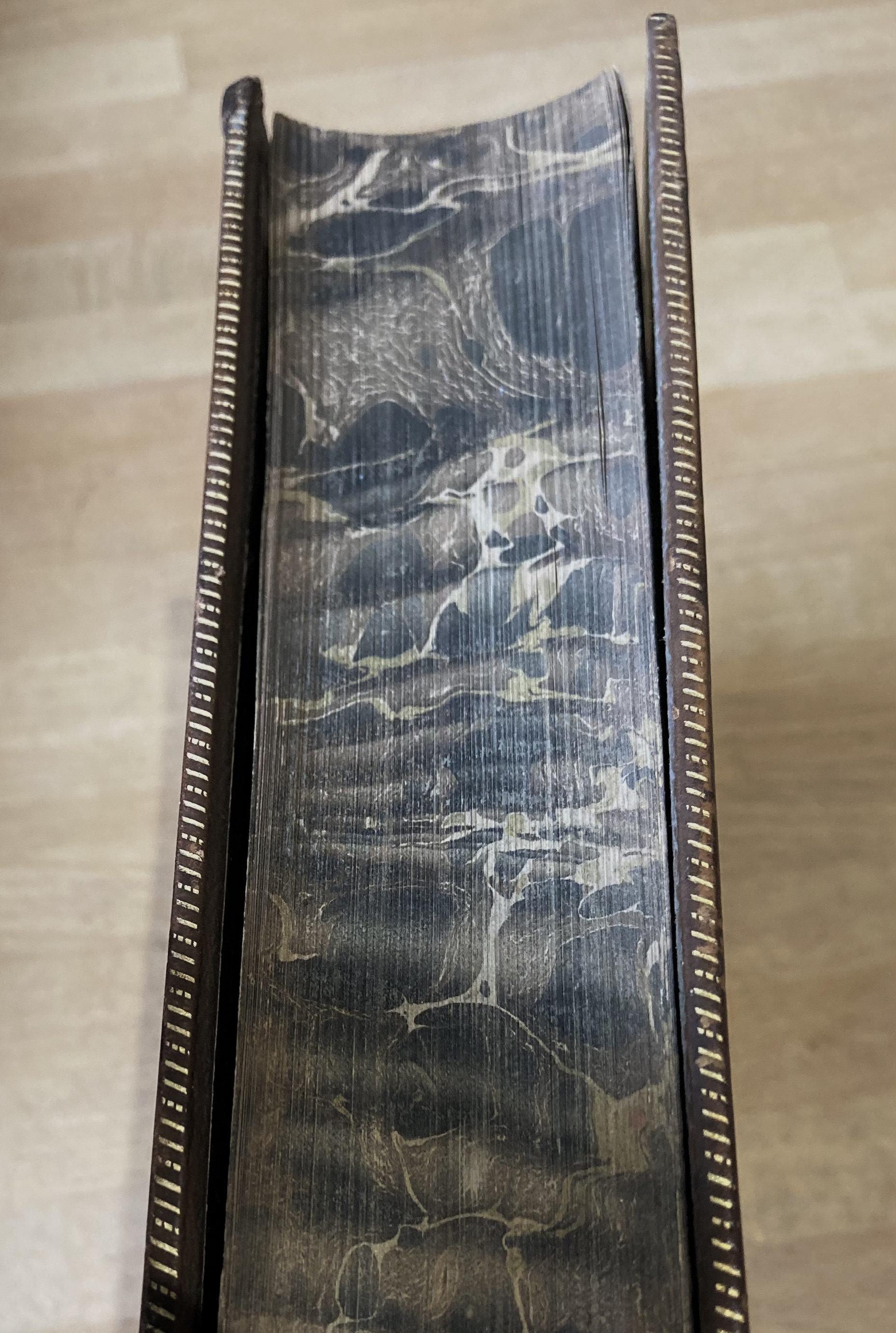
So next time you see a book in a charity shop with marbled edges, just give them a flick and happily pay the money they are asking.
Now, you often get good bindings on really boring books and I am not sure that the boy ( usually) who got it was terribly excited about reading it.
Indeed the copy we have looks pretty much unread….
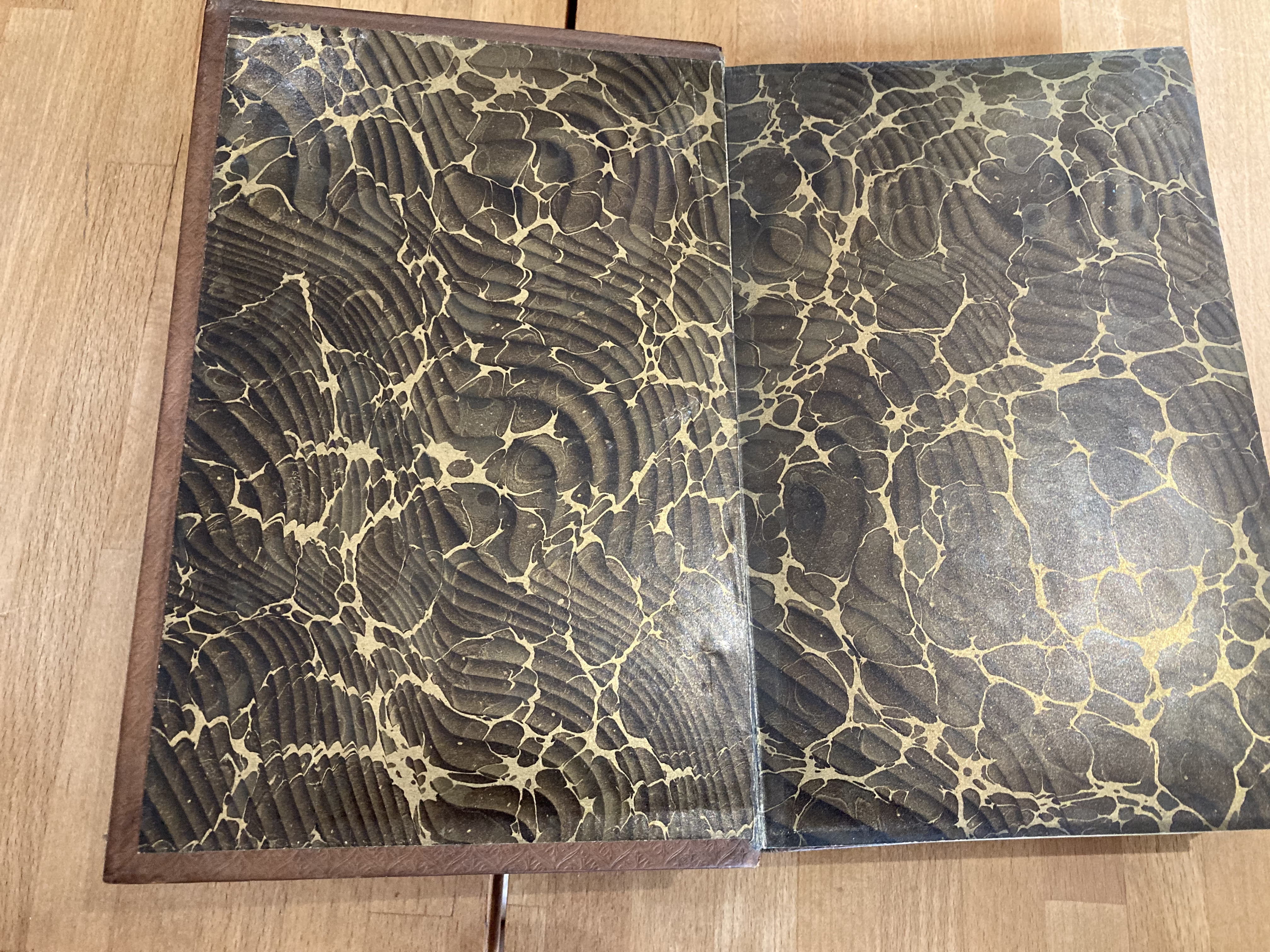
But see the hand-tooled gilt and the spine bands and the original marbled insides. Nice, very nice.

Now back to Warren Hastings.
So Edmund Burke took two days to read the charges in Hastings’ impeachment. Mainly they were related to embezzlement, extortion and coercion.
The House of Commons sat for 148 days over seven years to hear this case.
In 1795 the House of Lords acquitted him and the East India Company, for whom Hastings worked, gave him a pension of £4,000 per year backdated to when he arrived back in England.
Hastings said the legal fees had pretty much bankrupted him but then he had lived in ‘considerable style’ in his London house throughout the trial……
And in 1788 he bought an estate in Gloucestershire for £54,000 had the house remodelled classical and Indian decoration, and gardens landscaped, and re-built its Norman church……not that living on lentils and no heating then. ( See also Rushi Sunak, again.)
Meanwhile, the East India Company was not just about trading.
Originally chartered as the “Governor and Company of Merchants of London Trading into the East-Indies”,the company rose to account for half of the world’s trade during the mid-1700s and early 1800s, particularly in basic commodities including cotton, silk, indigo dye, sugar, salt, spices, saltpetre, tea, and opium.
The company also ruled the beginnings of the British Empire in India. (Wikipedia)
(Should you need to know more see my Best Beloved’s one-day-to-be-published history of Europe book.)
The EIC was either the beginnings of the glorious British Empire on which the sun never set, or the rapacious company implying all sorts of greedy, coercive, pseudo-rulers who imposed, stole, acted with impunity and had little interest in recognising they were not in charge – and indeed they became in charge.
I leave you to decide.
According to a site called History Reclaimed, ‘The impeachment of Warren Hastings was an act of imperial soul-searching unparalleled in history. Although Hastings was eventually acquitted, his trial was a warning to all future imperial proconsuls that they too could be called to account by the British Parliament.
He was the first British Governor-General who launched India’s cultural renaissance way back in the 1780s. Of all Britain’s imperial proconsuls, Warren Hastings was undoubtedly the most curious and learned about Indian culture and famously declared: “I love India a little more than my own country”.
He became fluent in Bengali and had a good working knowledge of Urdu and Persian, the languages of the Mughal elite. One of his most enlightened acts as Governor-General was to promote the founding of the Calcutta Asiatic Society in 1784.’
And, according to Wikipedia, ‘He and Robert Clive are credited with laying the foundation of the British Empire in India.
Getting a bit of an idea where Malleson is coming from.
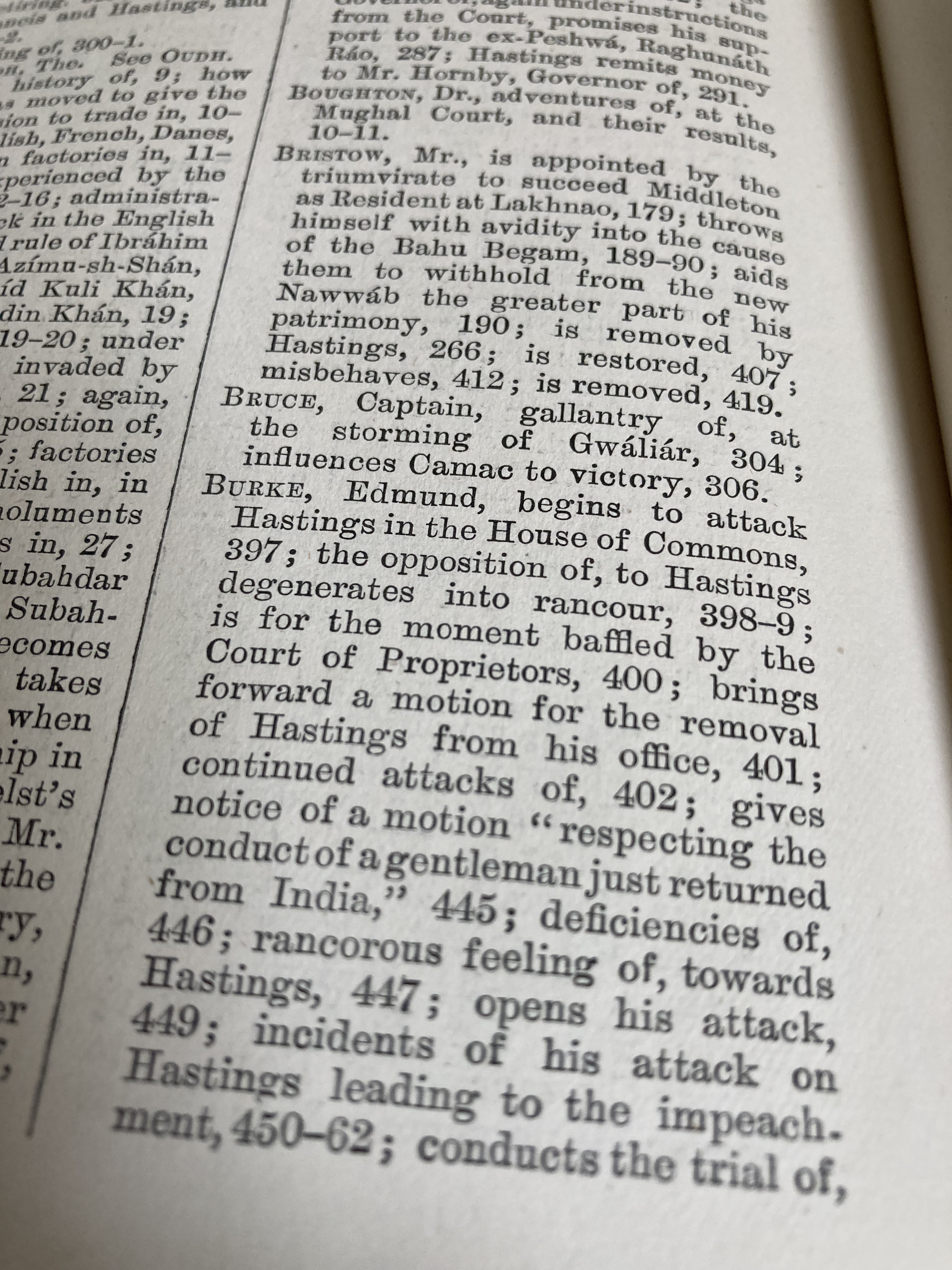


Malleson was certainly on his side – a hagiography I would suggest but then with a Relfe binding, someone is going to buy this book because they have judged it by its cover.
 thereluctanthousewife