Very Niche Books

I think I may have said before the if you wait long enough there a book on every subject under the sun will come into our Oxfam bookshop – and today we had a bit of a niche-book bonanza.
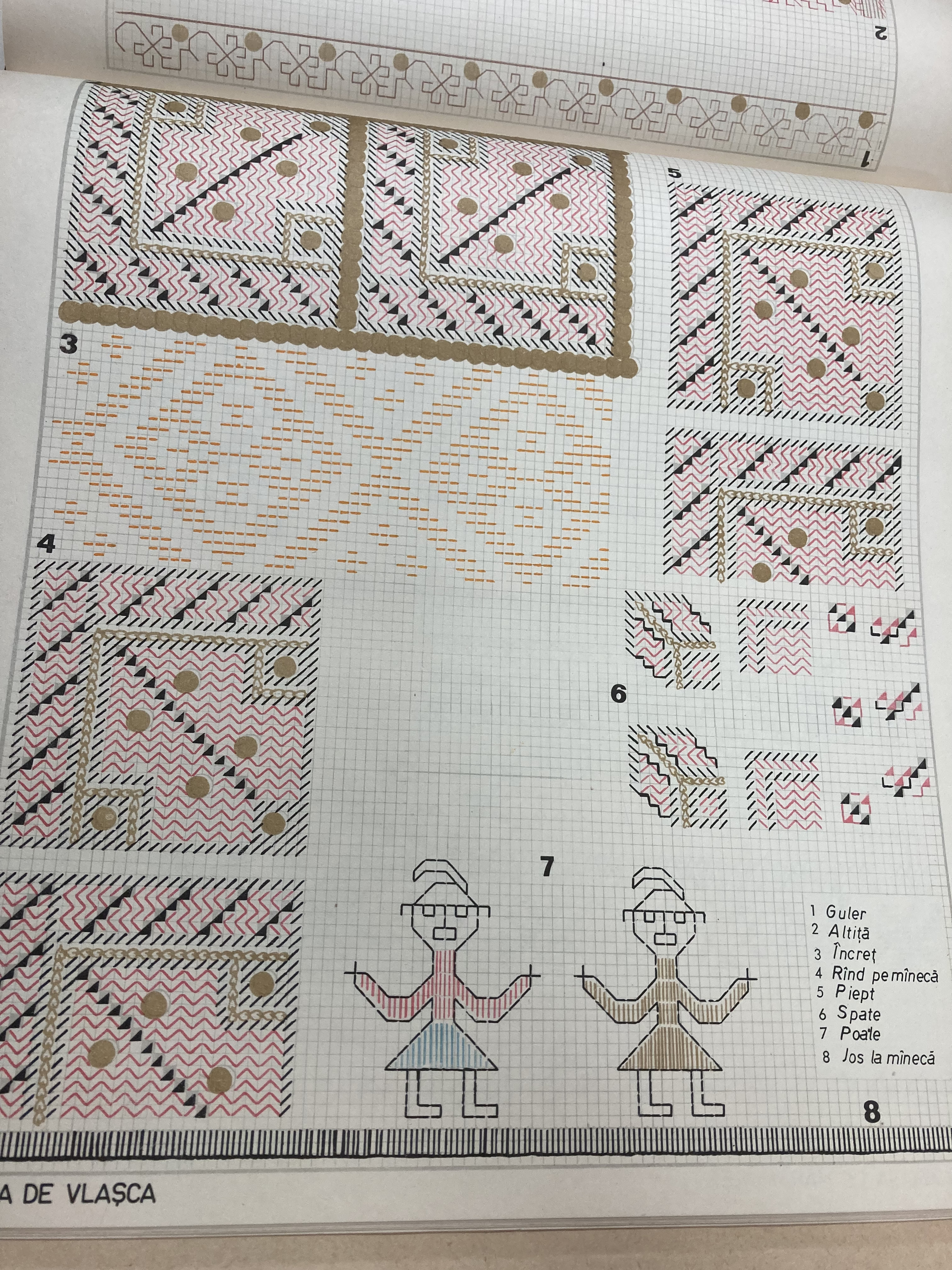
So, in case you are not clear, this is a book on the embroidery of traditional Romanian costumes, with patterns and with a Romanian text – not something we get every day in our Petersfield bookshop. (Apparently worth £50 and should you be interested, it is for sale on Oxfam online.)

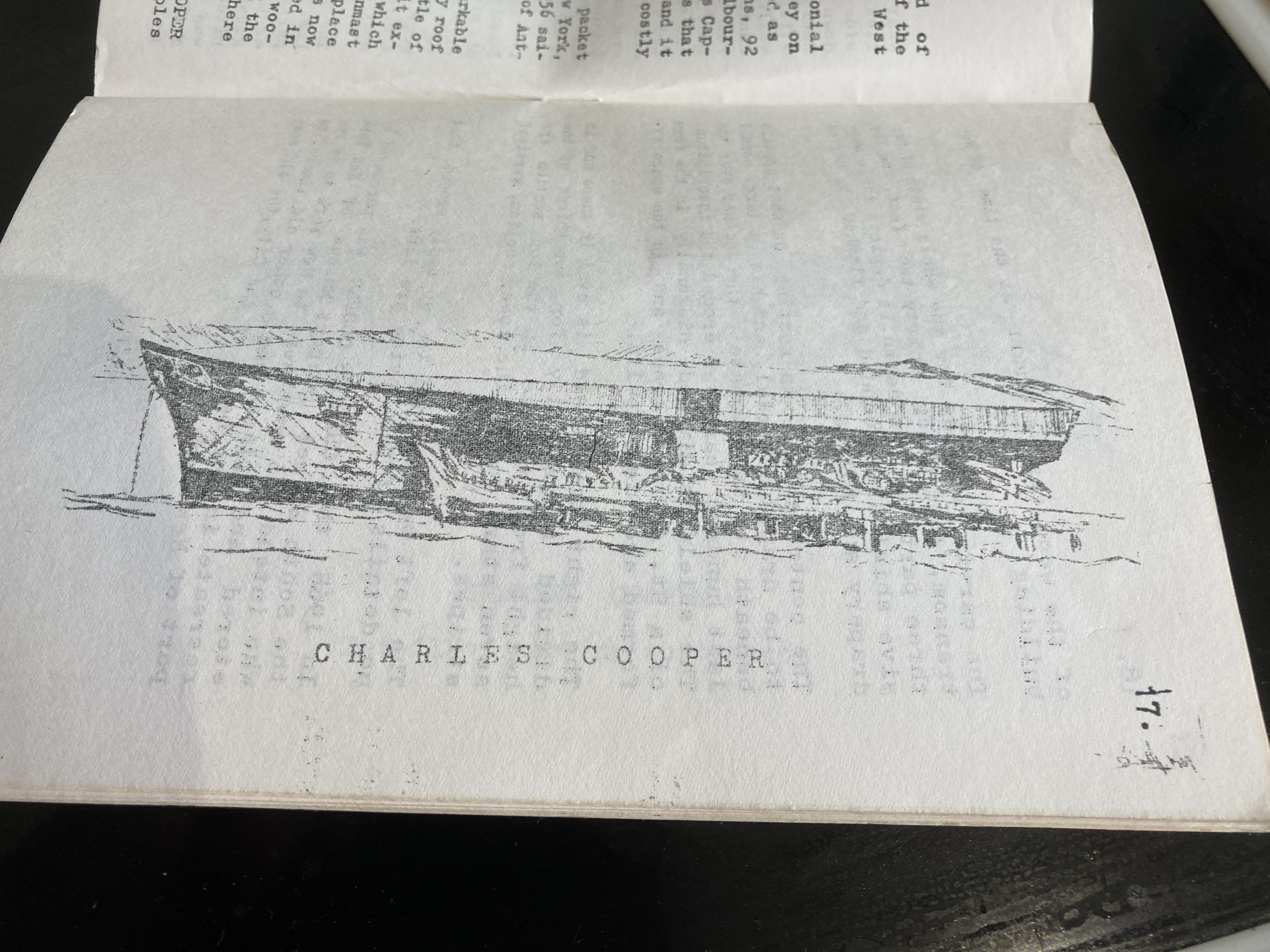
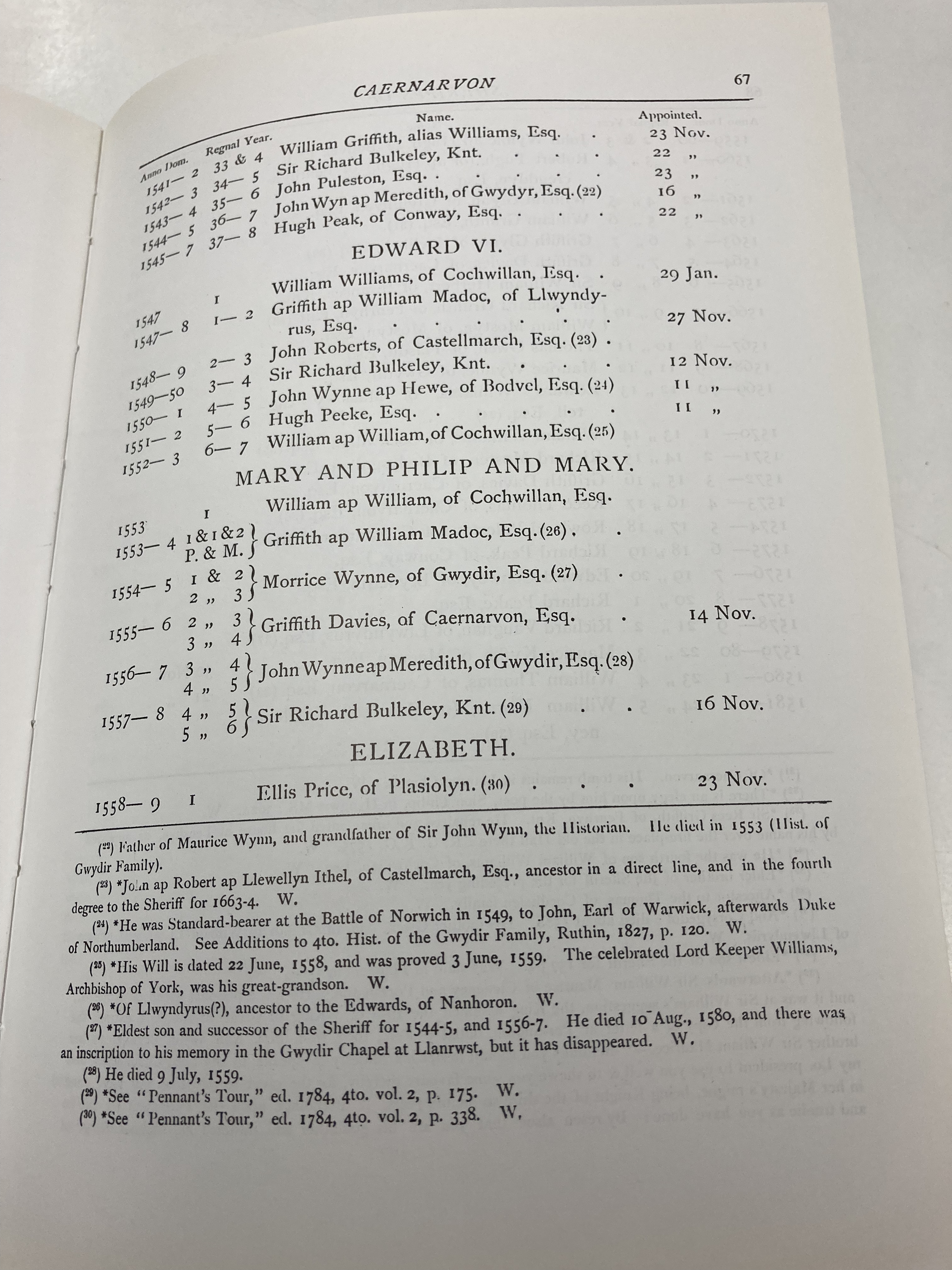
This, is a record of the High Sheriffs of Gwynedd from, as it promises, from 1284 to 1993.

Not what I expected from the title – Kalendars? No I don’t know why a Kalendar is a list of High Sheriffs.

But as far as I can work out, it means a list – and in Danish it is a calendar.

Ok I should do more research but I won’t – any research welcome on a (virtual) postcard.

According to a letter inside the book the author said it was out of print pretty quickly.

But he kept ‘ a few copies’ and he gave this one to a Major Corbett, a High Sheriff in the 1990s and donator was indeed another High Sheriff 1989-1990.

No idea how, or why, it ended up with us.

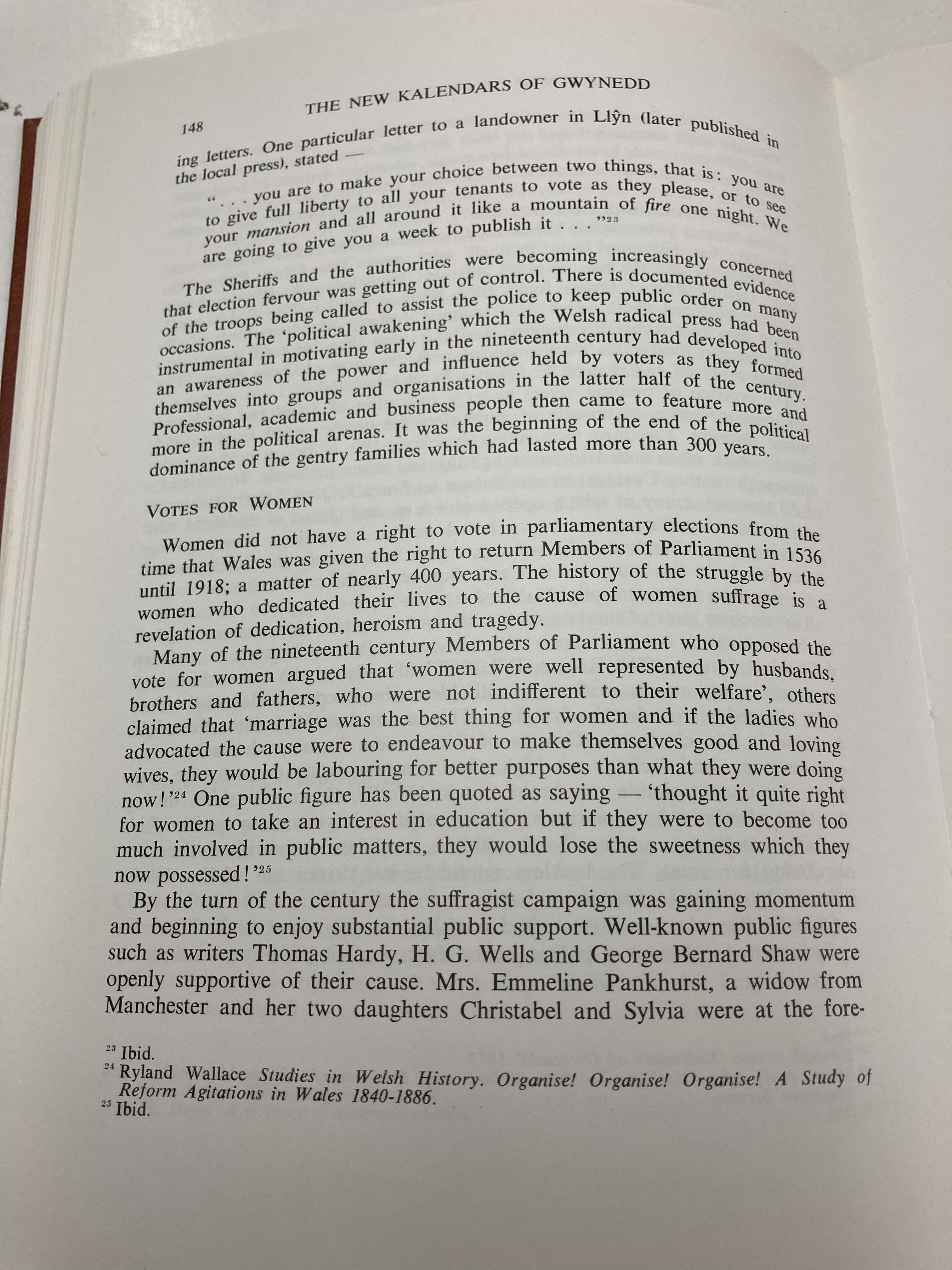
There is quite a lot ( not that I have read it all) of political history as well as the list of the HS.

And finally ……

I rest my case.

Packing

As I may have mentioned before, we went holidaying in Greece. 

That makes us among the most privileged people on the planet and yes, somewhat guilty about the flying – rationing ourselves to once a year is hardly self-denial.

Talking about self-denial – packing.

Now, we have been on Mediterranean holidays for many years, and what is more, this time we went back to the same Greek island as last year.

So, packing should have been a doddle. 

But, and yes I am hoping you are saying ‘but’ too.

And at this point I need to tell you the Best Beloved has to use two sticks to get around so any heavily-packed suitcase falls to me to move around – another good reason for packing lightly – you would think.

There were days in my youth when my job involved a lot of travel and I could pack fast, lightly, for all the necessary occasions  – a smart Rubic’s cube of a small case, and all sorted.

Apparently, I have lost this skill.

So, despite the fact that we both know what the holiday will involve, we take so much more than we need/ever wear.

Did the BB need four shirts? – actually two of them will go home unused.

Just for example.

On my part, I have an image in my head of an early evening when I shower after a day visiting somewhere, being on the beach etc etc.

I will then slip on something casual but rather nice and heading out to dinner.

I never do this.

Yesterday we ate ( a very good) lunch in what we had been swimming in, with a bit of a cover-up item – actually a worn every day, charity shop jersey ‘dress’.

And ate supper ‘at home’.

The day before? see above.

Probably ( actually very probably,) I will never wear the fancy patterned trousers, the other pair of shorts, three of the four white T-shirts, the glamorous orange top, the white shirt I bought (surprisingly for me) at full price and not from a charity shop.

The BB will not wear the nice linen trousers he brought (neither will I wear mine), or the other pair of trousers – useful though they seemed in Deepest Sussex. 

He has worn the same shorts every day. 

I needed a cardigan and denim jacket – really? It is in the low 30s centigrade.

The BB brings snorkelling gear for me every year in the hope I will overcome my irrational fear of putting my head underwater and go looking for small fish – in my defence, there aren’t many.

So, for all the complaining about lifting and moving a heavy case and a pull-along, I only have ourselves to blame.

We have every intention of coming back here next year, not least because it works for the BB – and probably to the same apartment. 

It would be good to be able to leave a bag of stuff here that we only use here – flip-flops, snorkels (see above), a few clothes, factor 50 sun cream…. 

But I am guessing Panos, the apartment owner would rather we took them home and learned to pack better.

I certainly would.

Grated Tomatoes

Have you ever grated a tomato? I can almost hear the shouts (from my small but perfectly formed group of readers) saying what?? Open a can of nice Italians. Job done.

But dear reader(s) I am here to tell you that though it is a more lengthy process than opening a can, it can be really worth it.

If, at this point you are still not convinced, you need to go and find something else to do – knit your own jumper, dig up the ground elder (though that is a thankless task) etc etc.

Anyway, if you are still with me, let me tell you again good things are possible with a grated tomato.

But first you need to hear a story about sausages.

As long-standing friends will know, I work at some events across the year which are a mix of gardening exhibitors/stallholders and large marquees of food and other artisan makers of everything from jewellery to pottery.

Anyway (again) one of our food stands serving sausages is called Giggly Pig http://www.gigglypig.co.uk/sayhello.html

Yes, the lovely Tracy is an ex-con turned pig farmer – who knew? and employs other ex-cons to work on the farm, come to the shows – and sell sausages.

I bought some, and some of which which were pork and fennel. (They are excellent and please buy some if you can.Tracy’s vision and making it work – just saying.)

Rootling around in the freezer one day I found them, and rootling around in the fridge I found a fennel bulb.

And I had some properly nice tomatoes.

So, here is what I did.

No of course it is not a proper recipe, but a general idea of what you can do…

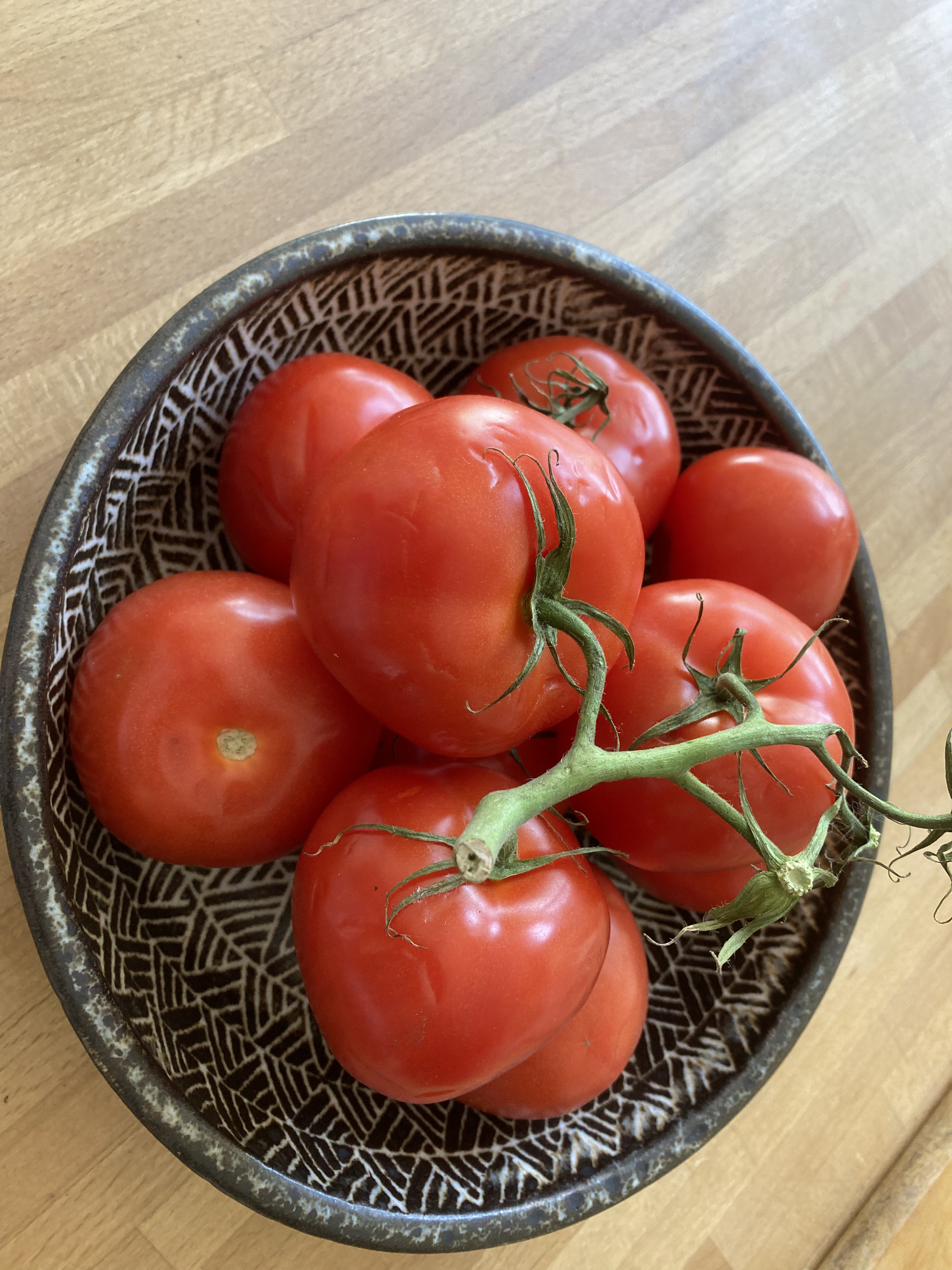
Grate your tomatoes. Get your usual cheese grater, cut tomatoes in half and grate against the large grater side. The skins stop you grating your fingers.

Put what all of what you get into a pan/casserole. I was using a Le Creuset inherited from my mother who sent me off to university with them, and I have them still. But other not-so-posh pans will do nicely.

Better tomatoes, better result, so please don’t do this out of season. And even in season, keep the tomatoes out of the fridge so they have chance to develop their flavour.

At this point I would like to say firmly, that no, a tin of tomatoes, however good, will not do instead. 

You need the thinner ‘sauce’.

Now, take your fennel bulb and cut around the tough centre and keep the fronds for decoration.

Cut the layers into slices and fry gently in butter, be generous – yes not that healthy but it does work, believe me.

It takes a while but you should either eat fennel raw ( in a salad with orange, say) or very well cooked and softened – and in this case you want it well cooked.

Cook your sausages however you like.

Add some Marigold bouillon to the tomatoes, a splash of white wine and at this point you can slice up some new or old potatoes and add them in and then cook gently.

You might need a pinch of sugar if your tomatoes are not just perfect – which mine weren’t.

Keep tasting the sauce and add pepper, more bouillon, whatever, if you need it.

Now, if you want a thick sauce, then take some of it out of the pan with some of the potatoes and whizz them up with a hand-blender and put back into the pan.

Either way, then add fennel and its butter, cut up sausages and snipped fennel fronds and serve to an appreciative Best Beloved and neighbours.

By the time I remembered too late that I should have taken a photo ( beautifully lit) of the finished product – but hey ho, it had gone and no one wants a picture of the washing up in waiting.

Juggling Chairs

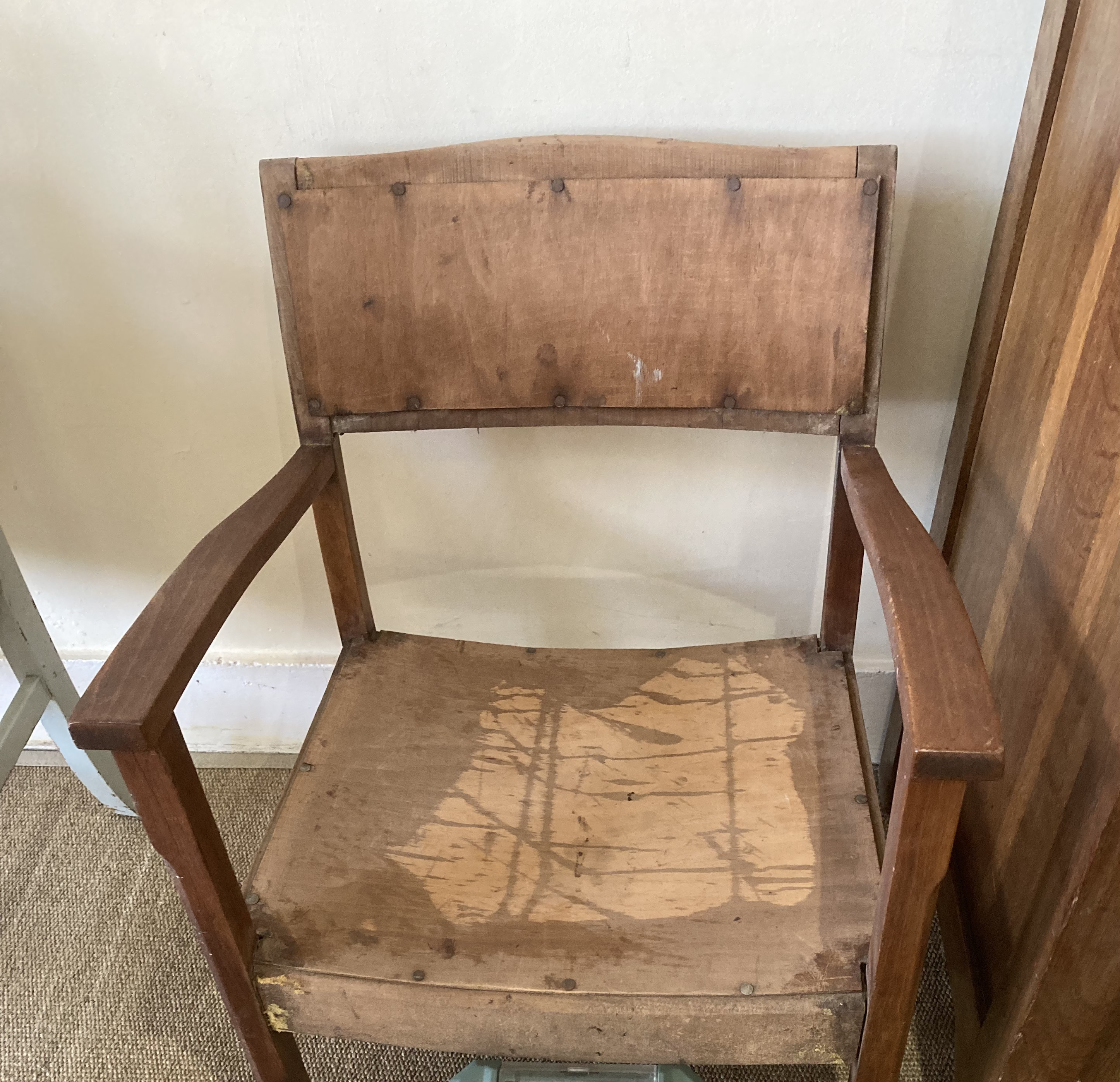
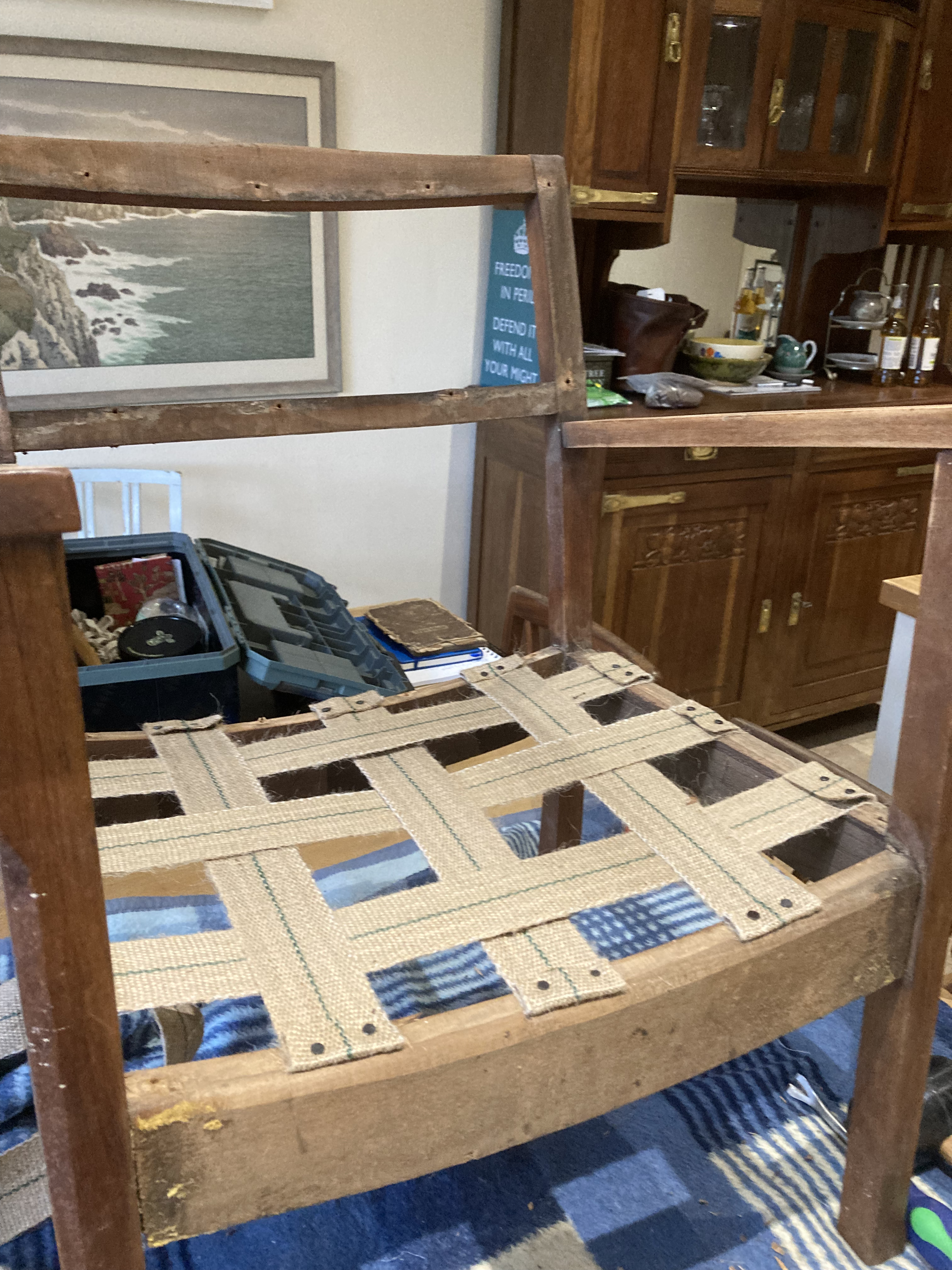
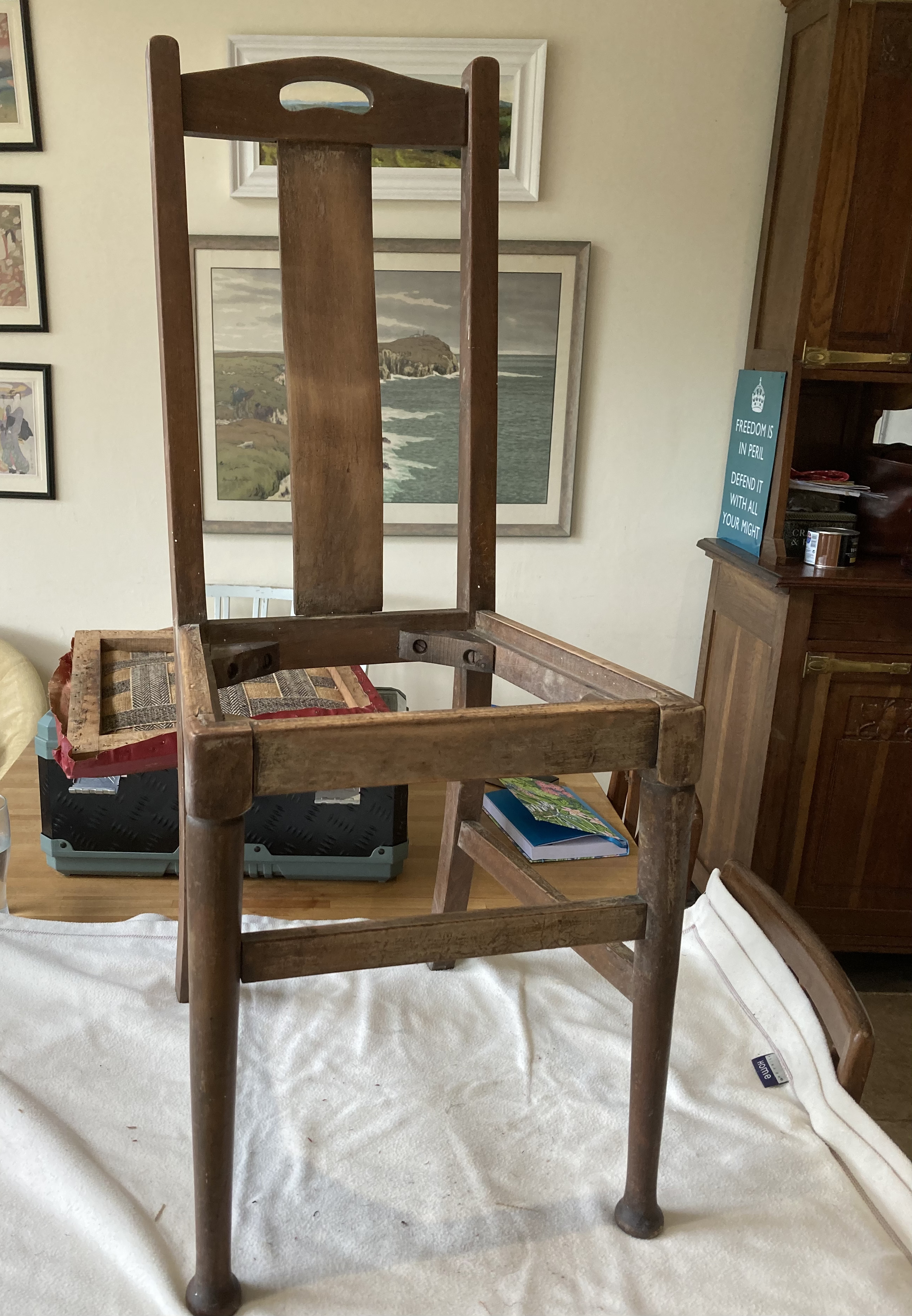
If you are a hobby upholsterer, you have a house with absolutely no shortage of chairs. And, at the moment we have what could charitably be called a glut. 

One came useful when we had to create an Oxfam window display for Charle’s coronation, of course we did.

Those who know me well, will instantly realise this was not a display I had been planning for months, looking forward to eagerly, putting even a bit of my heart and soul into, but there you go, it has to be done.

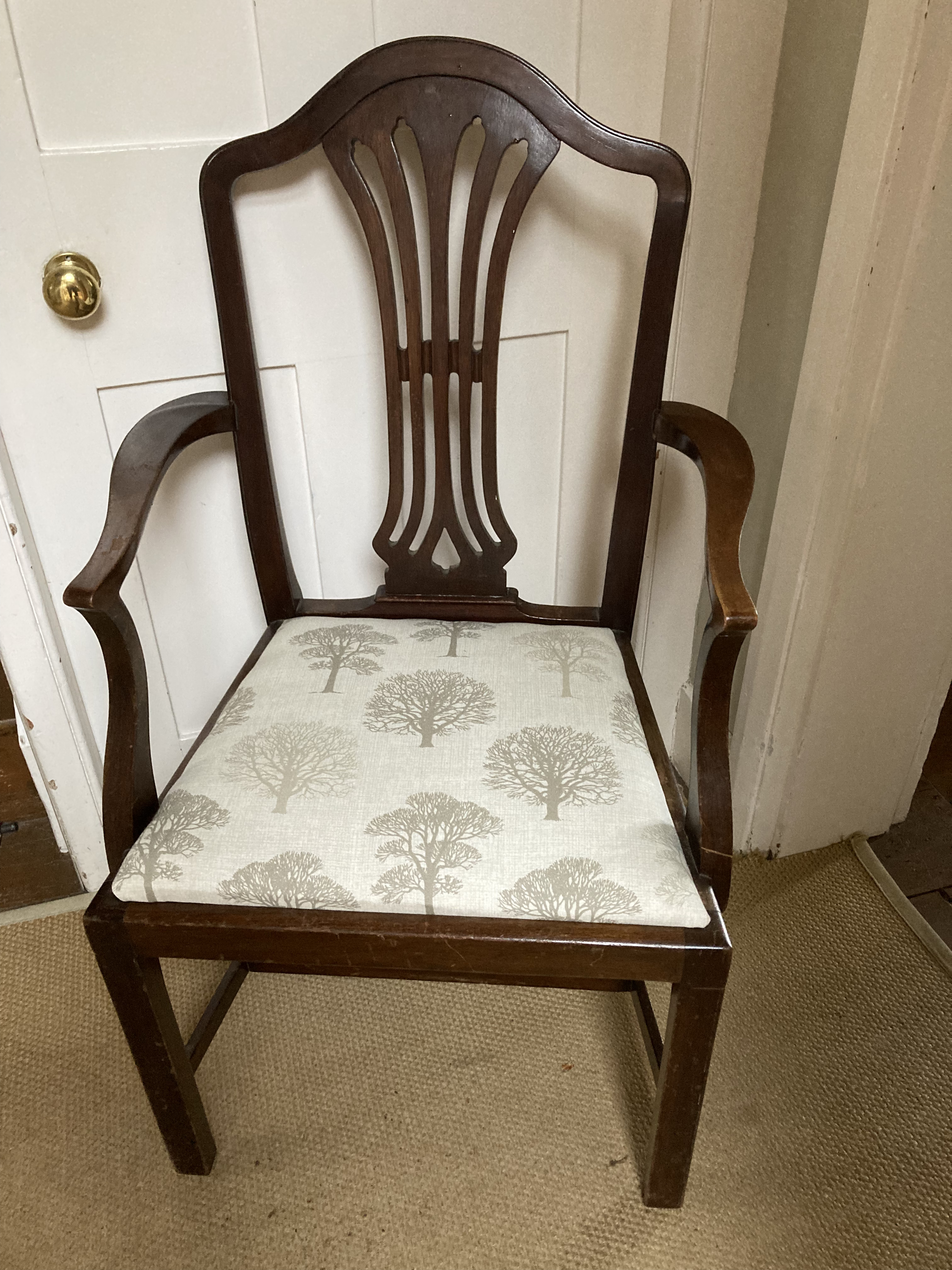
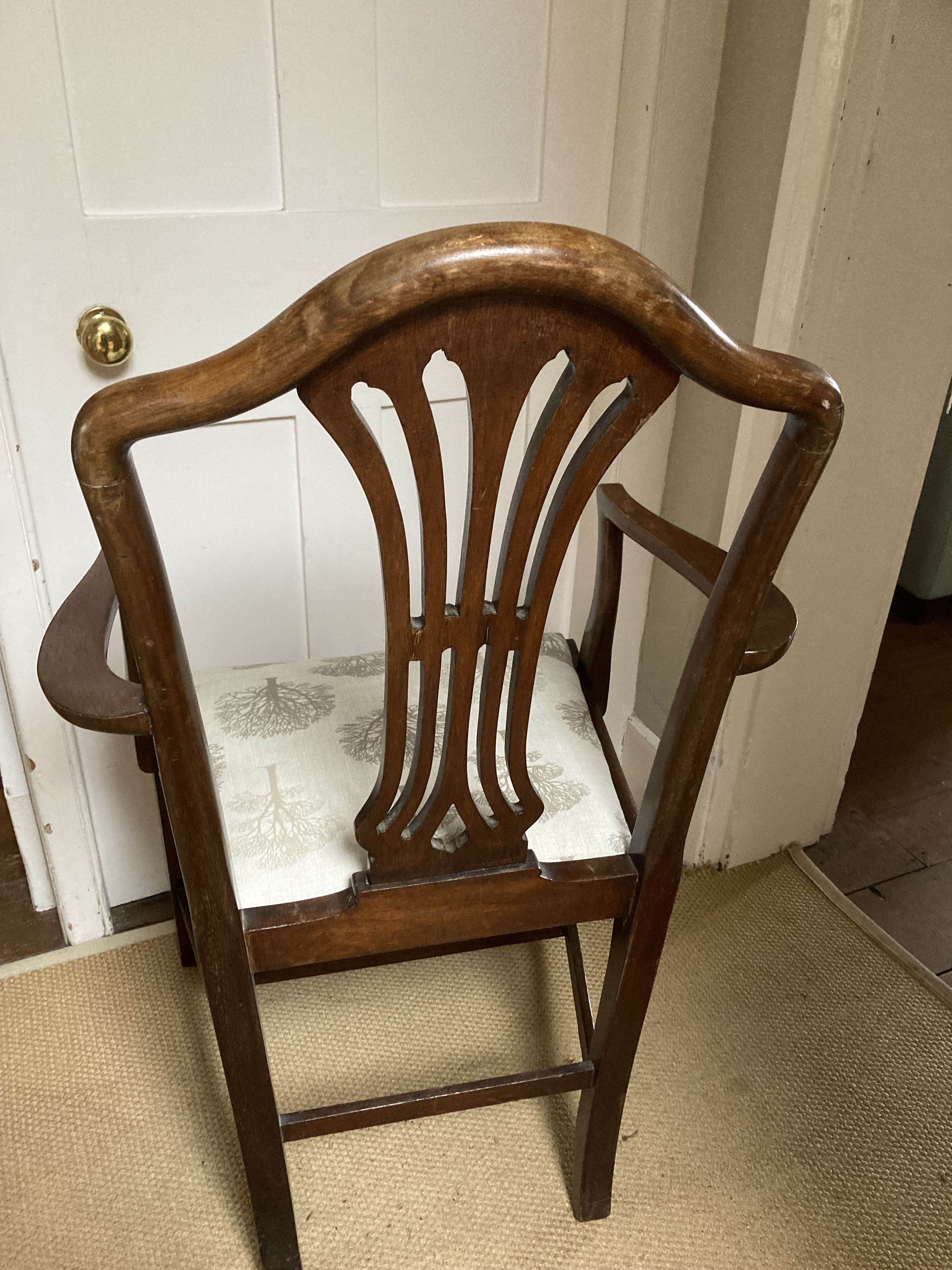
I had a chair – thrown in for free when I bought some others to seat our extended Christmas lunch numbers.

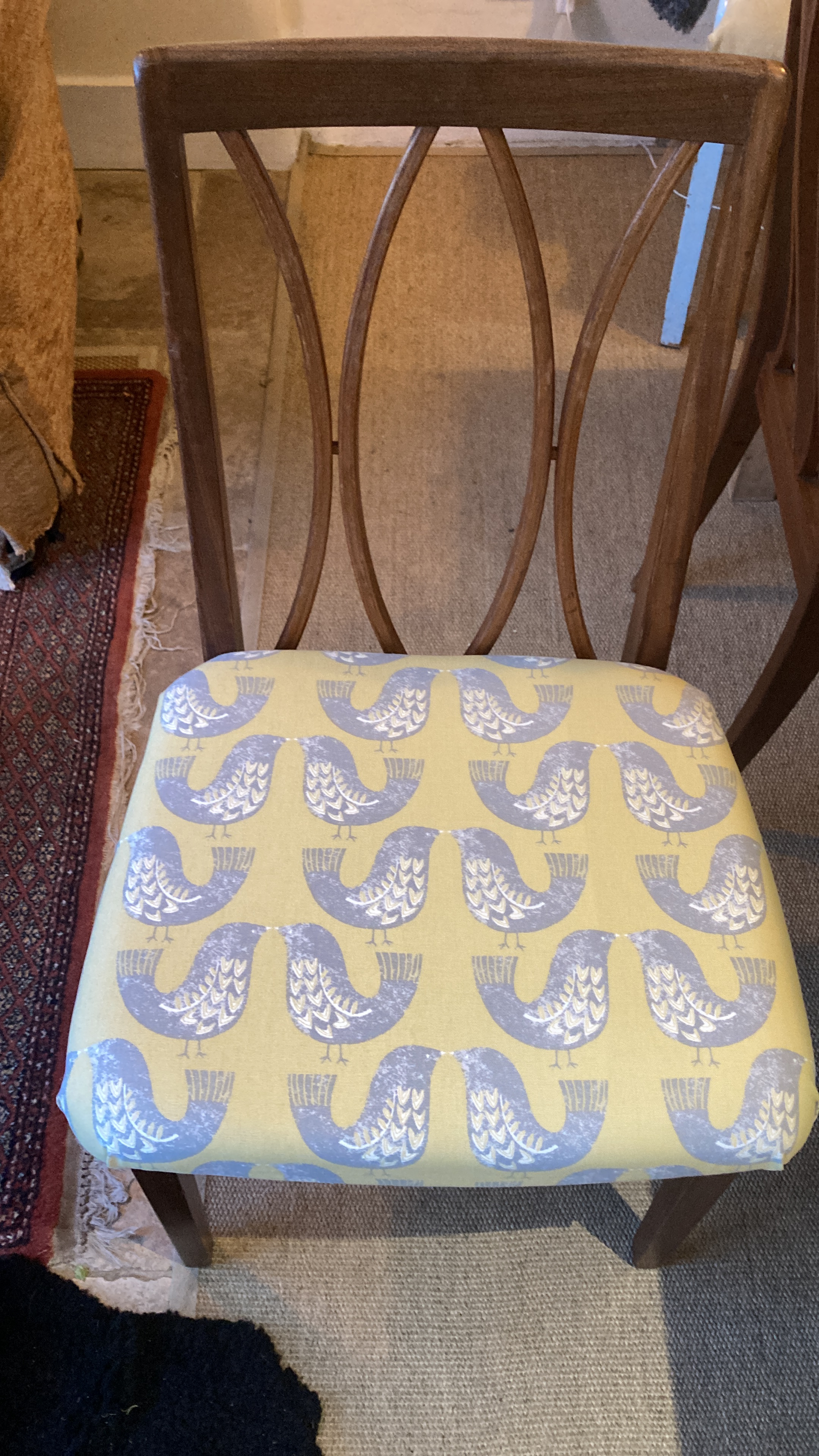
And I thought it could pass for a bit regal. I decided to recover the seat with some tree fabric as a nod to environmental credentials.

And I nipped up the road to one of those shops which sell everything as long as it came from China, and bought a blow up crown. 

I have to say, the design wasn’t great and it took for ever to even semi-inflate and deflated itself before Charles had made it back to Buck House.

Still, it’s the thought that counts.

Using red, white and blue china and books, I thought I had created something which would pass muster in a restrained kind of a way – but other volunteers had other ideas and once my back was turned, the table was festooned in flags and pictures of Charles and all sorts.

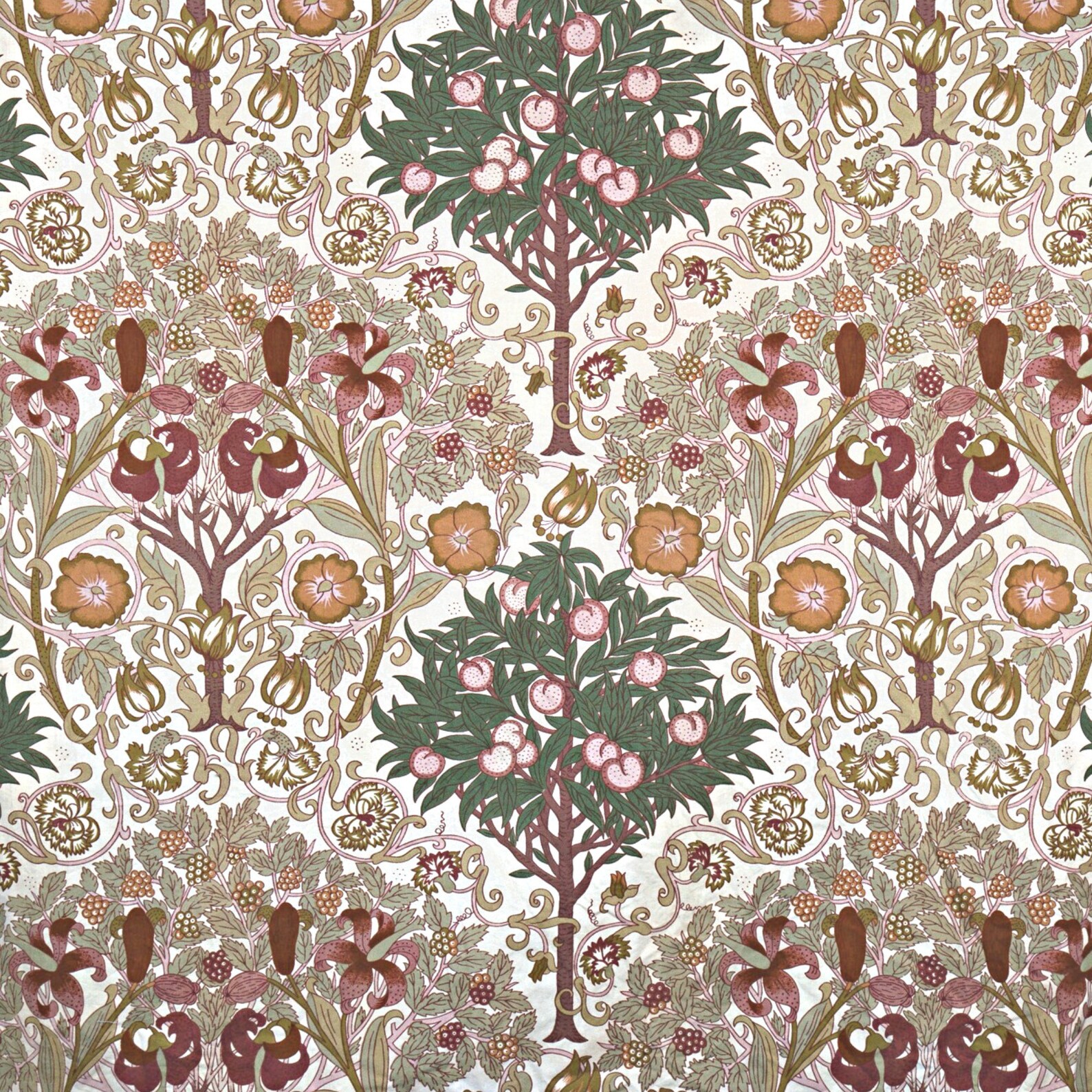
I’m planning on re-doing the seat so that it is more William Morris (see below) and less Charles III in the hope that too will find somewhere else to live. What do you think?

(This is nothing do with with chairs but is a small diversion in Oxfam serendipity.

As I was assembling the display, another volunteer called in with a shoe box. She had been at her U3A antiques course in a local pub when the landlady came over with said shoe box.

Apparently it was stuff left behind, unclaimed lost property and she wanted to give it to a charity shop. 

Our volunteer bagged it for Oxfam and on opening it we found a set of Queen Elizabeth coronation spoons and George VI coronation cake forks. 

The spoons sold before I had time to nip upstairs and take a photo of them so you will just have to imagine.)

Anyway, back to chairs.

Not so long ago someone donated a bag full of Sanderson and Liberty fabric from the revival days of William Morris patterns – I am thinking the 1980s country house look.

I thought I would start collecting books with covers which were arts and crafts movement and, at a pinch are nouveau.

Now I know William Morris was not art nouveau and I know that arts and crafts was a very different kind of movement, but us Oxfam book sorters have to make do with what we have and be a bit lateral now and then…

At much the same time someone in the village contacted about some chairs she had inherited/been landed with when her neighbour died.

She was very keen for them not to end up in the tip so I said I would take them and see what I could do.

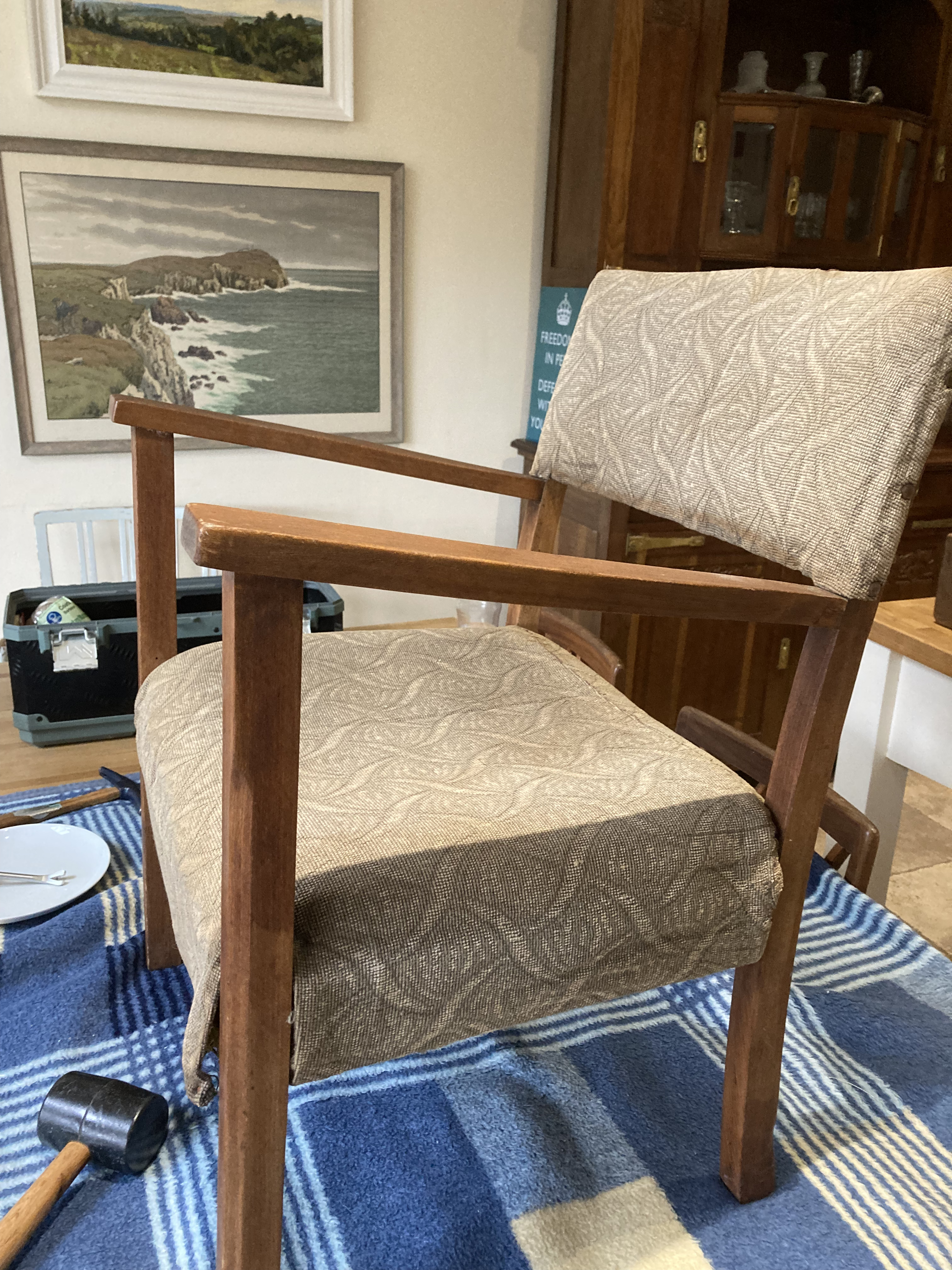
One was a simple, small, low chair which needed something better than the Draylon stretch cover with large purple flowers. Underneath, it had that raised scratchy fabric that I remember from a great aunt’s house.

It was not a thing of loveliness inside or out so it needed properly re-doing, from bottom to top.

Anyway rootling through the donated fabric I found a piece of Honeysuckle Minor which I thought would do nicely.

And it did.

So, the plan is to have the chair on the table with the lengths of other fabrics and the books and to see if the book-buying public of Petersfield have nostalgia for the 1980s or even the 1850s.

Meanwhile, I had listed it for sale and, sweet though it is, I was surprised to have someone wanting to buy it the next day.

Luckily, being a nice person, she agreed to have (now) her chair in the Oxfam window for a week.

In fact she seemed rather chuffed.

A couple of months ago, rootling around in the Red cross shop, I found some GPlan dining chairs and known the mid-century stuff is popular, I bought them and thought I would make a bit of a profit in doing them up and selling them.

After trying the patience of the fixers and tinkerers at our monthly Repair Cafe, and all four were sound and fixed, I set about the upholstery.

Then my Best Beloved took a fancy to them and suggested we got rid of our in-use chairs (also reupholstered by me and made sound by someone else.)

I was not hopeful that they would sell – being brown furniture which is certainly not all the rage.

So, imagine my surprise when I had barely time to put the kettle on after pressing the button to get them listed online, when there was a ping and someone who had the right period of house said, yes please.

And she was really pleased with them in her dining room.

But, by contrast, this nice mid-century Habitat chair was not sold when I was pretty sure it would. And is now getting in the way in the kitchen – not one the BB wants to adopt.

But, among the ‘inherited’ chairs I have now ‘inherited’ is a set of dining chairs which I really like.

They need fixing, hello Repair Cafe, and then de-varnishing and then re-upholstering by which time – someway off – I am rather hoping the BB will take to them and then I can start looking for a new home for the GPlan ones.

Such is the life of the hobby upholsterer.

Bastions Breached

There are few bastions left between me as I think of myself and the caricature of a Sussex housewife I seem to be becoming – and one of the few was breached today.

( Do you breach a bastion and if you do, do you have an undefended citadel? I’m sure my Best Beloved will put me right on this.)

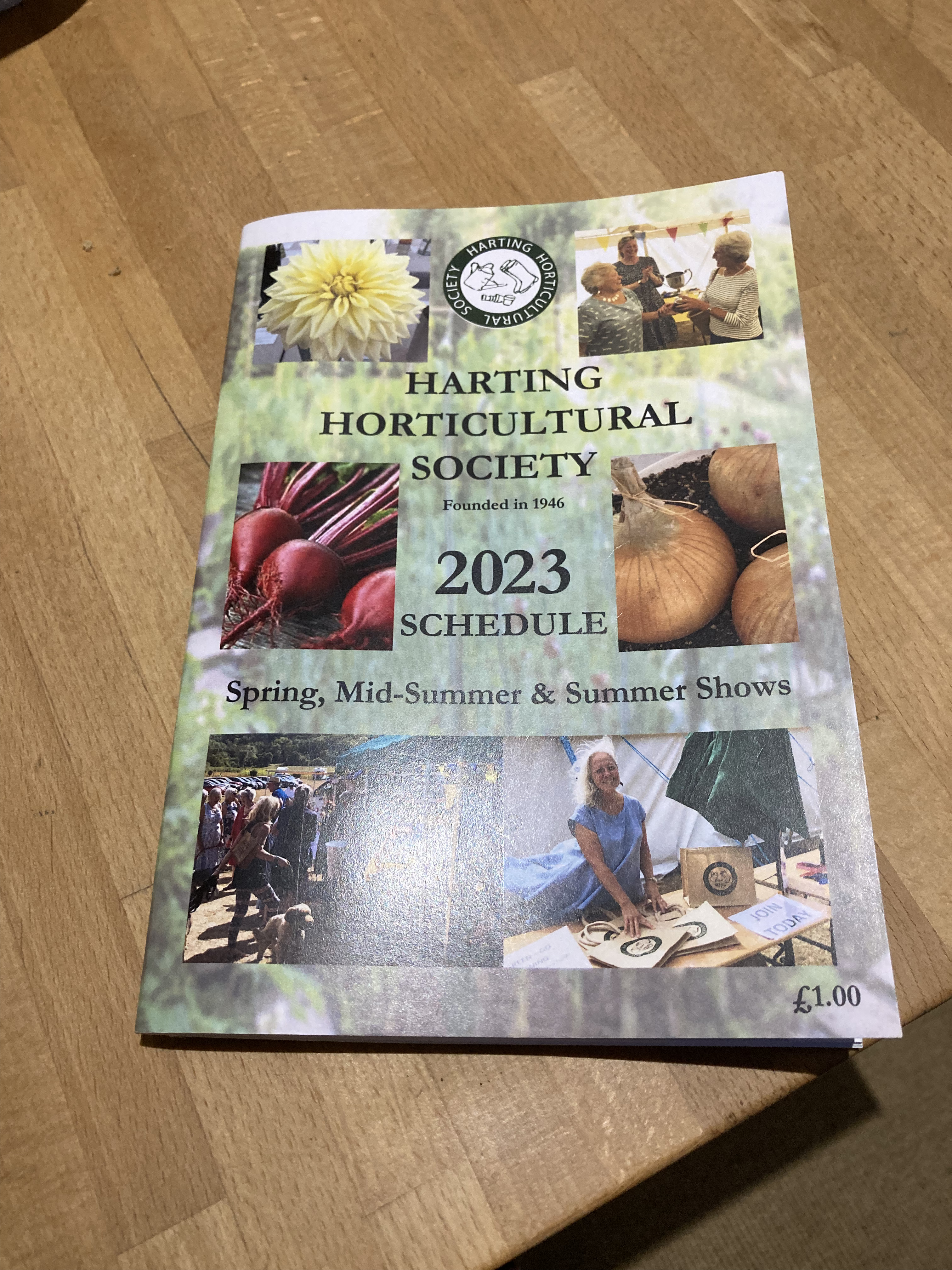
Anyway, suffice it to say I put entries into the village horticultural society spring show.

Those who know me well might find themselves taking a sharp intake of breath – I certainly did.

Now, you need to know this is not so much a jolly village event when people turn up with their daffs in a vase, or a couple of hyacinths, or a pickle they made last Autumn.

Well actually they do but they have to be within the rules of the national Horticultural Society which seem to be quite finickity – and are judged by visiting experts.

Your pickle or jam:

I never even thought about the daffodils:

Yes indeed.

The BB was very supportive and a whole lot better than me at flower arranging so this is what we put in the hellebore class: 

And a hyacinth.

By the way that vase is Roman glass – it did me no good.

Neither did the fact that we knew nothing about how to make sure hellebores don’t droop.

(Apparently, I learn form YouTube much too late, you should pick the ones that have set seed, or score the stems, maybe plunge  them briefly into boiling water and then into cold water…….)

Other, more experienced Sussex housewives obviously knew what they were doing.

But there was a cooking class and one of the categories was a leek and cheese tart. Now, I can make that with my eyes closed ( as they say).

I was a bit distracted when I made it and it didn’t turn out as my best ever so I thought I might scrap it and make another one.

But one of the few bastions left was the thought that I would not be true to myself if I found myself re-cooking an entry to the village horticultural society spring show.

So I didn’t.

I took it down to the village hall and told my good friend (very good gardener but not keen on cooking) and who said she had nothing in the fridge, she could have it for supper.

This is what the judge said:

My friend said she could imagine my face when I read those comments – mind you she also said she didn’t care as it was her supper.

So, I am assuming that she is eating it without worrying about the fact I hadn’t trimmed the pastry as well as I could. In fact I am sure she is.

I was expecting to think ‘OK done that once and that is more than enough.’ 

But alarmingly, I found myself back at home leafing through the list of categories for the summer show and ticking what I think I might enter.

Another bastion breached.

Salvaged

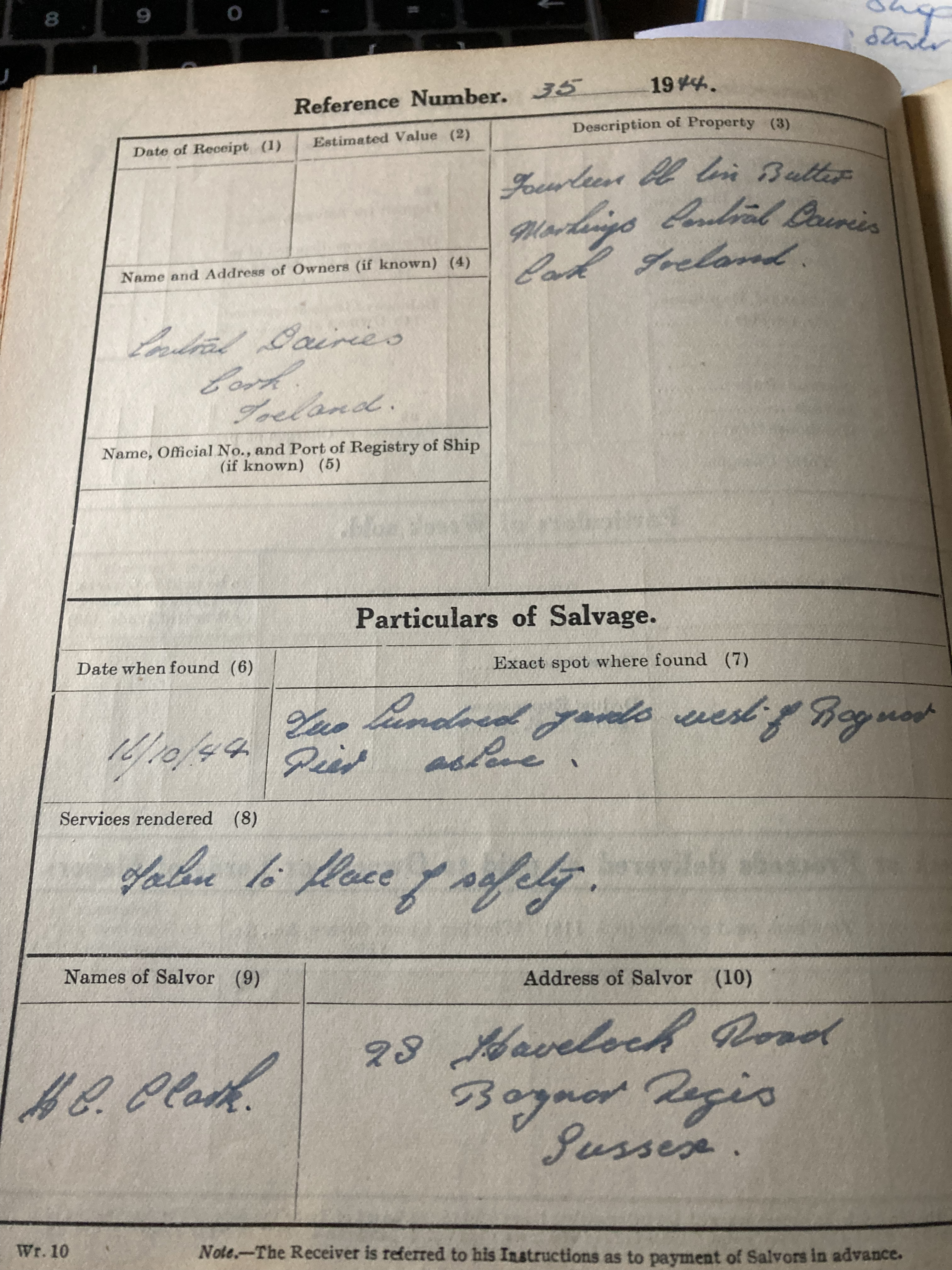
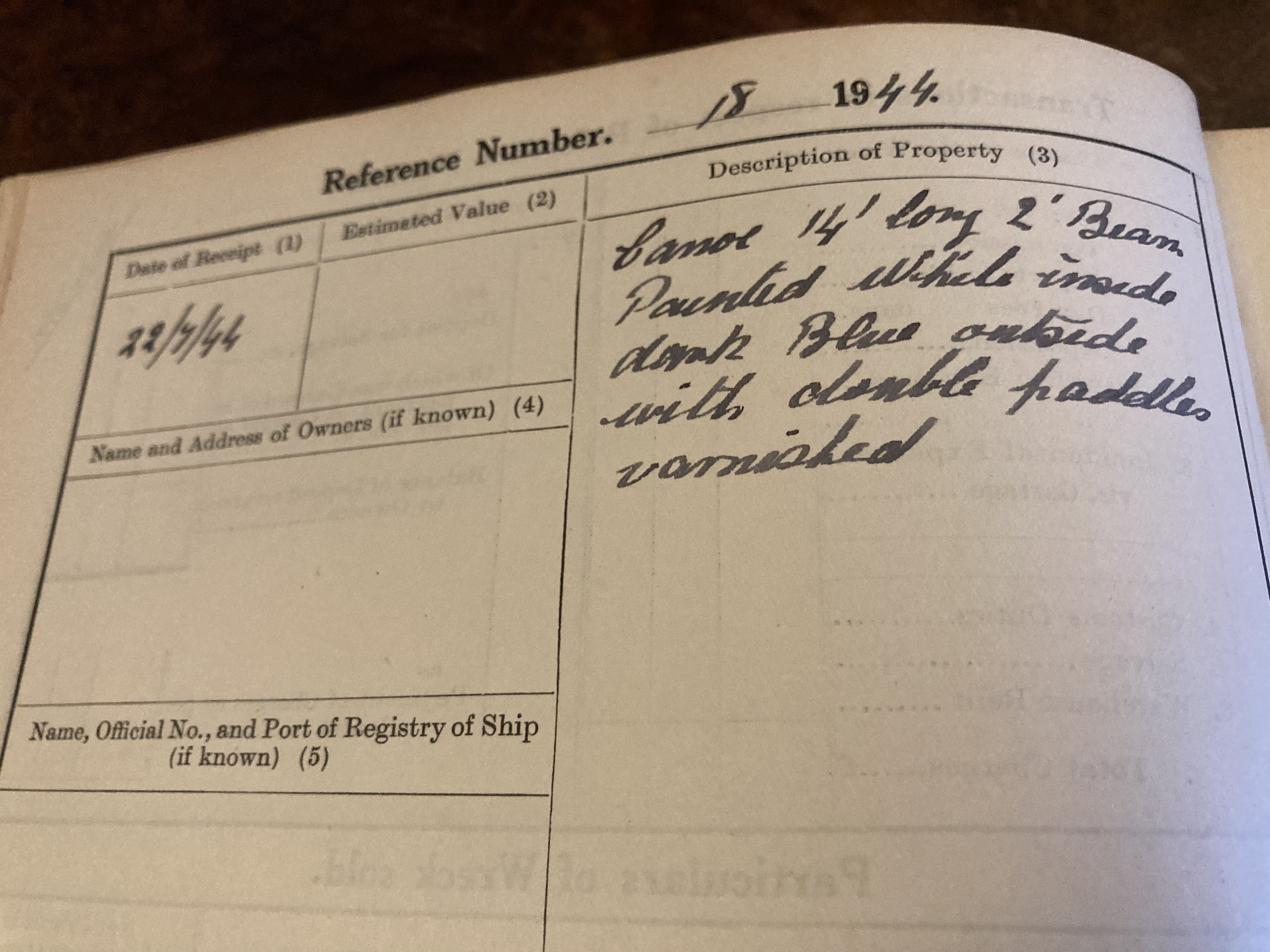
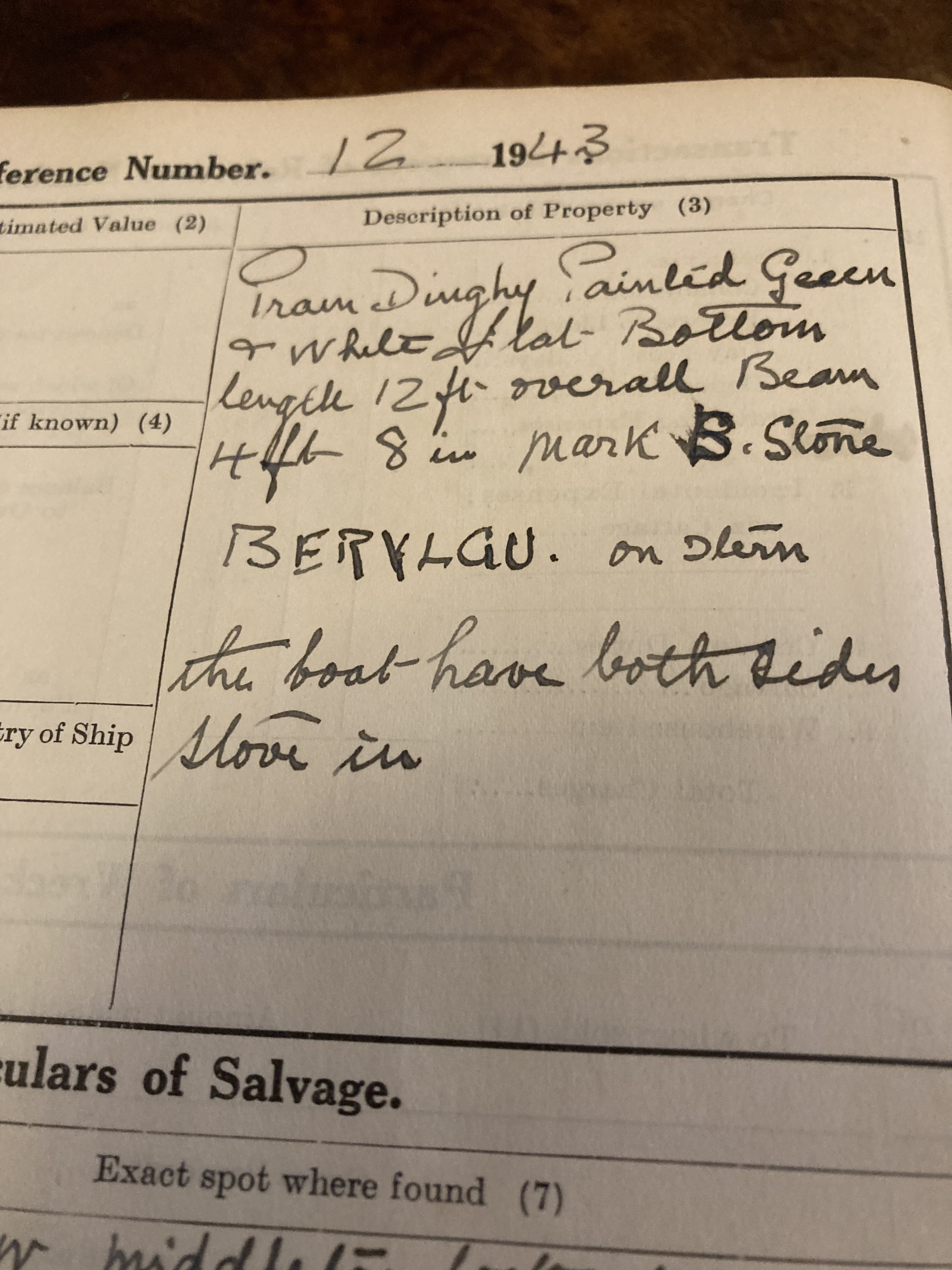
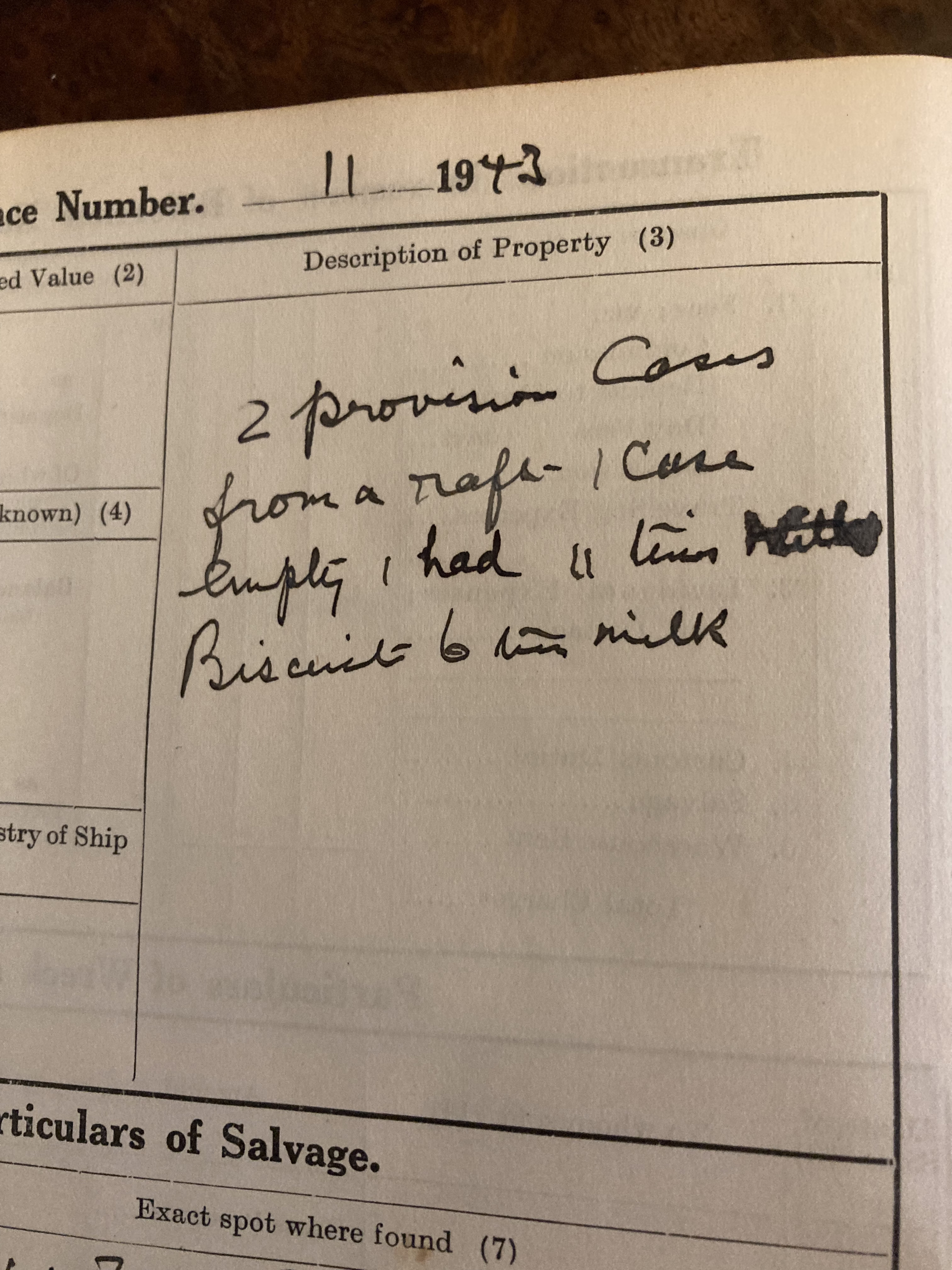
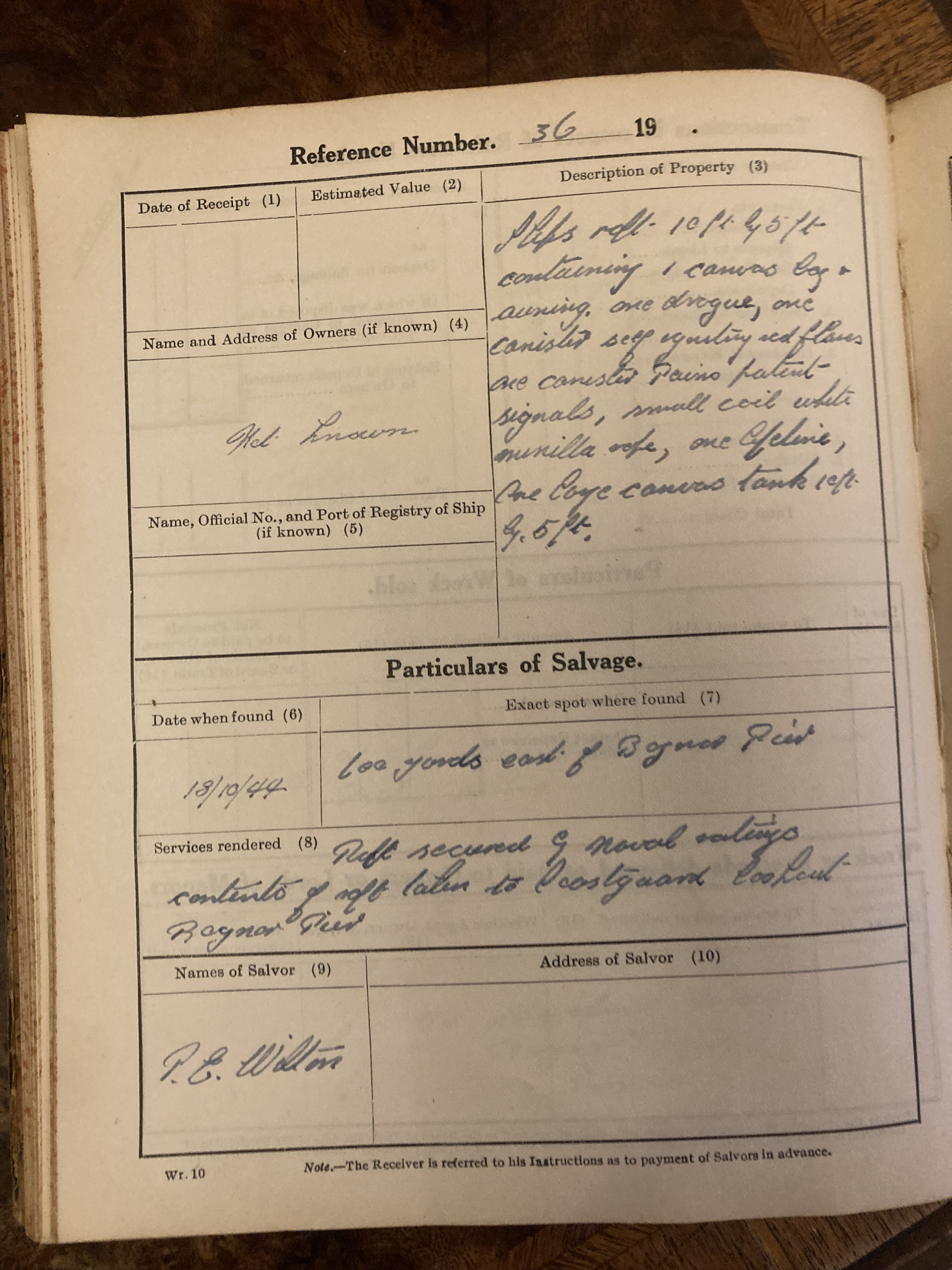
We get a lot of history books into the Oxfam shop, but not many written by hand.

And though perhaps not actually strictly a history book, it is a book which is a part of history.

This nicely (but now rubbed and faded on the outside,) marbled book holds a record of wartime salvage off the Sussex coast.

Before your mind wanders to a romantic story of villagers pillaging loot under the cover of darkness as the waves of the channel swish along a hidden slice of coastline, stop it.

This is a series of terse listings of what, where and who from 1943 to 1947.

Written, I am thinking, by men who were charged with creating a log to keep officialdom happy or at least undemanding, or just to have a record of what appeared on ‘their’ shores.

The title page is blank so they ignored the boxes asking who they were  – and if you read it carefully, you will see that perhaps officialdom was looking for a few more details. 

They knew what was found, where and who carried out the salvage but as to what it was worth, who was paid what as a result or who the owners were – it is all a mystery to us and perhaps them.

There is different handwriting as we move through the book and the years – some more legible and some a fraction less terse, but nowhere are we getting the backstory.

What ship shed its load of rubber? There were various amounts of rubber found at various dates, in places from ‘ bottom of sea lane, Angmering-on-Sea’ to five yards below the High Water Mark outside the Pheonix Club, Alma Hotel, Middleton-on-Sea, and one bale of unmarked rubber on the foreshore of the Craigwell Estate.

I have no idea who was filling in these entries and what official capacity they held, but we do get an idea if who was doing the salvaging.

Quite a number were Canadian soldiers – not entirely surprisingly as there were a lot in Sussex and presumably were allowed onto the fortified beach when ordinary locals weren’t.

But there were salvaging civilians including E W Morris, Lorry Driver, 50 Highfield Road, Bognor Regis.

And, Richard Davie, Police Constable, Police Cottage, East Preston, Sussex.

J O’Connell of Admiralty Road, Felpham salvaged ‘Paraffin Wax approx 150 lbs no marks.’

The names don’t repeat – with the exception of Constable Davie which might point to locals handing stuff over to him whether completely to not – so presumably these were not professional salvagers unless there was a significant number of them vying for stuff all along the Sussex coast.

I am assuming that most of what was found was flotsam (being the stuff that was not deliberately thrown overboard) as opposed to jetsam which was, you won’t be surprised to hear, was jettisoned.

And there are other more interesting finds than rubber or paraffin so, if you have the time and energy to read on.

It seems as if the entries all refer to things which ended up on the shore and indeed quite a lot is listed as being pulled above the high water mark.

But more portable stuff was ‘taken to a place of safety’ and interestingly, that place is rarely identified.

I could run away with the idea that places of safety might include shed, kitchen cupboards, or under counters but there is the official record – however thin and terse – of what arrived on land so presumably the salvagers were an honest lot.

For instance:

There are a number of dinghies, and a canoe complete with oars.

With a couple of exceptions, none of the boats had names. Perhaps that was common in the war, but where did they come from? What happened to the people in them? Why were people out in dinghies, or indeed canoes in the channel during a war?

Finally, perhaps the saddest entries are those of ships’ life rafts

Hopefully, we will find someone who wants to research/appreciate/understand this brief record of an aspect of Sussex coastal wartime history – if we do, I will let you know.

More than books

There are all sorts of strange things donated to Oxfam bookshops and recently we seem to have had our fair share. 

I have covered this theme before but do you know what, it still keeps happening. All these were donated in the last week.

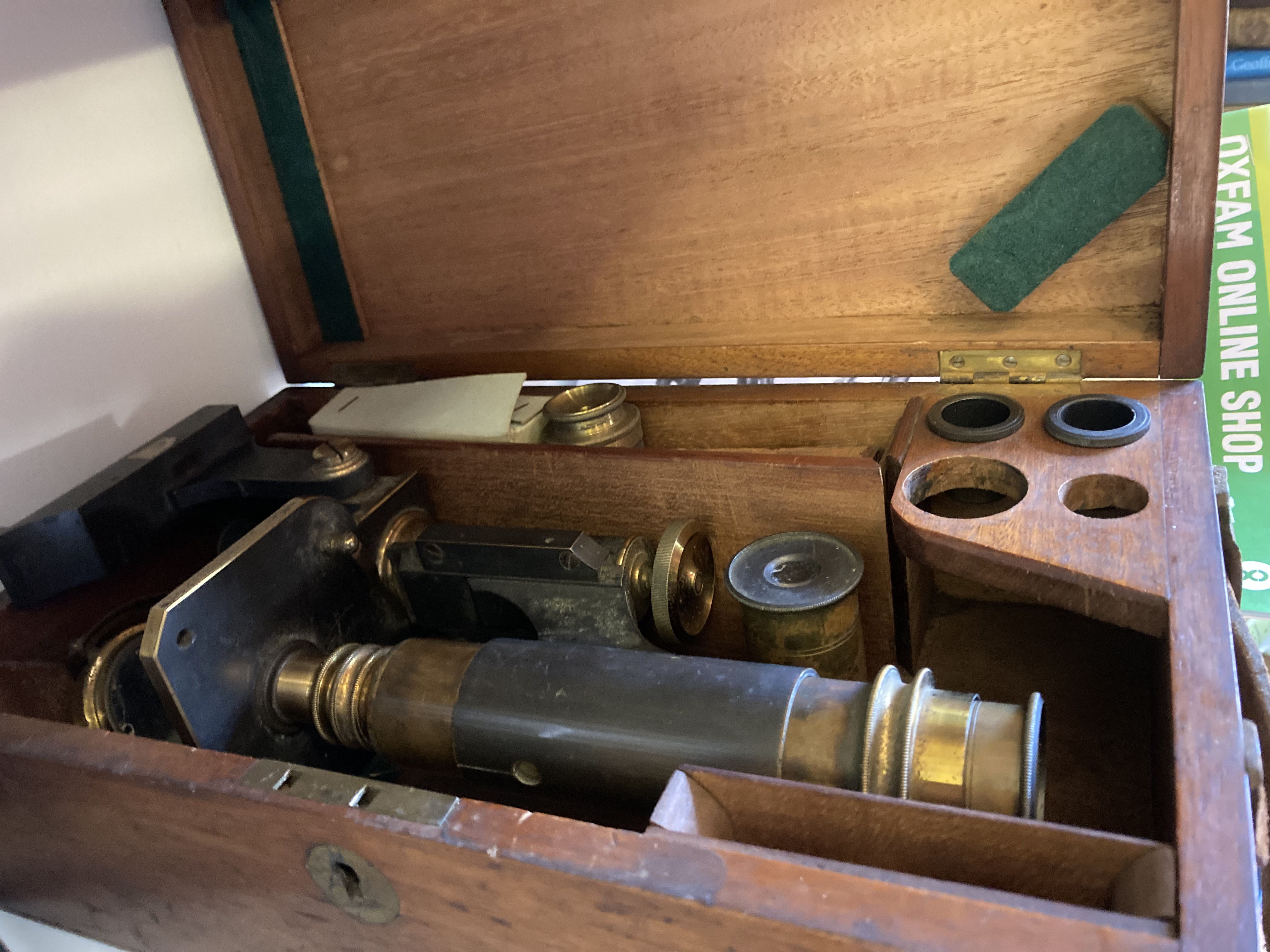
Here is a microscope, from we think, the mid to late 1800s.

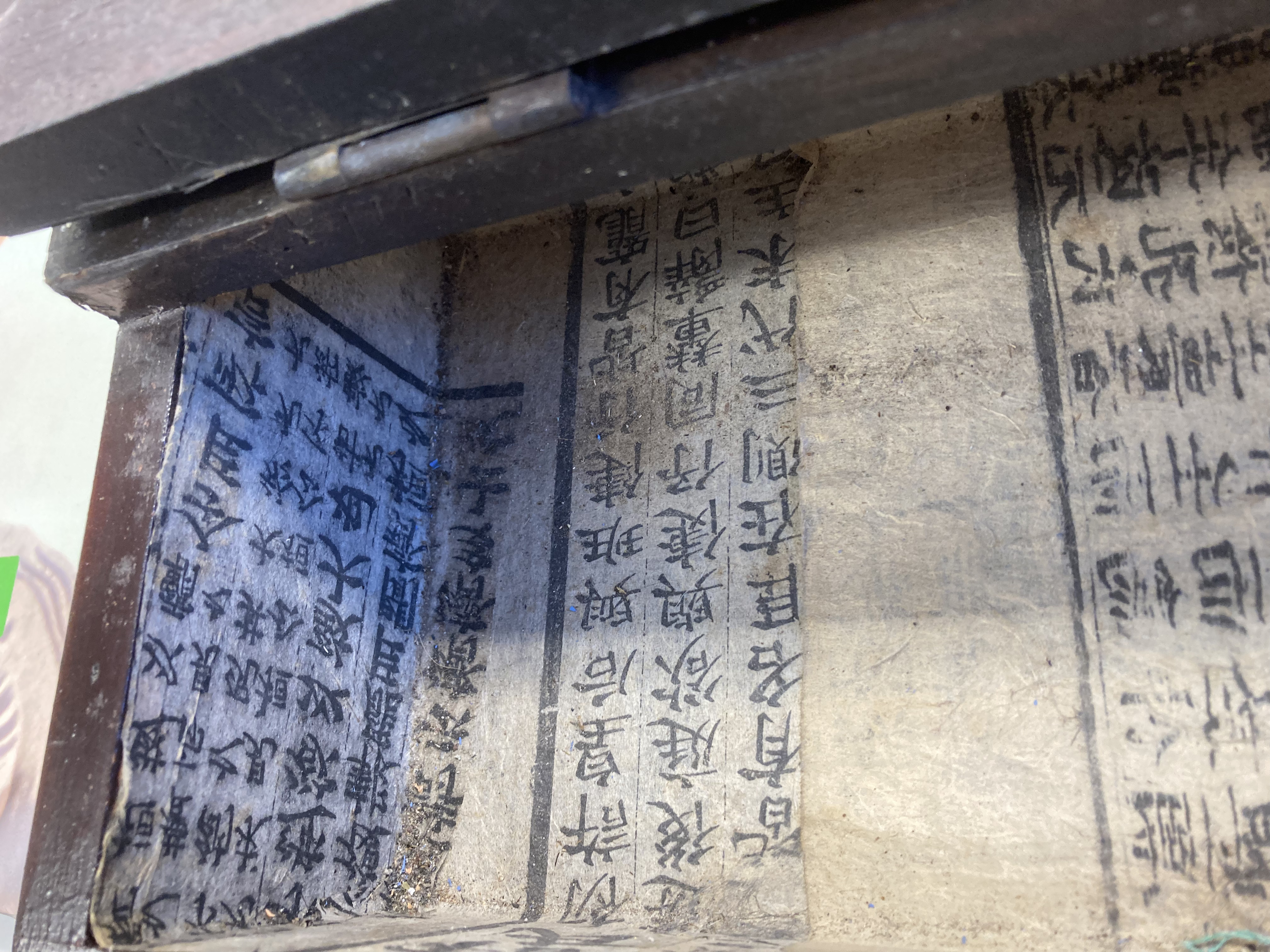
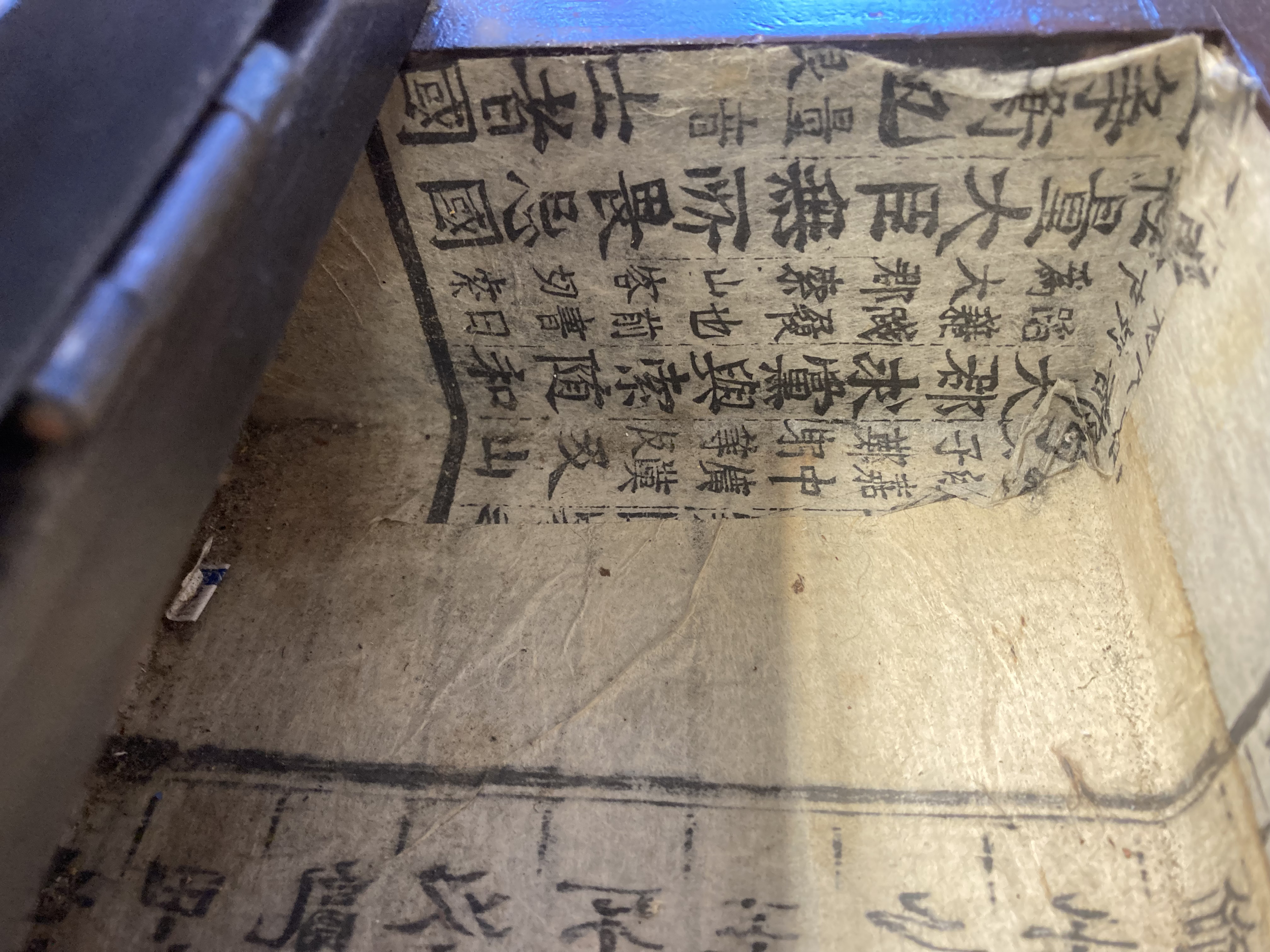
Here is a box lined with what I think (but don’t know) is Japanese script/newspaper – but from what era? 

A pair of shell casings from WW1 – not trench art, just casings, presumably brought home and you have to wonder what was the story behind bringing them back.

The box was donated by a fellow volunteer who won it at an auction at the Australian High Commissioner’s event in Singapore many years ago – as you do.

He (the volunteer, not the commissioner) told me it was the box that had held the surrender papers from the Japanese navy at the end of WWII – but he was joking. 

He had no idea what/when/why it was.

I would like to know what the script says – it is the classified adds from the Tokyo Times in September 1970 or a confirmation this was owned by the under secretary to the under secretary of the Emperor sending out a secret message to Matthew Perry – the first foreigner ‘allowed” into Japan for 200 years?

So, what to do with them?

‘You can do a Japanese table display,’ said my manager.

But we would need Japanese books…

And yes, the next donation she sorted was a bag full of Japanese books – there are some book gods out there….

As for the microscope. It has no name on it so not an absolute treasure, but a volunteer who knows about cameras (close enough) was called in to check it out. 

It was probably a school microscope dating from the mid to late 1800s. Brass, solid, in a box, used and re-used by schoolboys (no doubt, no girls) and who knows whether it inspired a child into science where he (undoubtedly) did some good science work which is benefiting us today….

And, our volunteer found out one like it – for sale on E-bay. Ours has ‘ original patina’ as they say on Antiques Roadshow, but that one was all polished up.

He was sneery about the polishing and thought the original condition would please someone who wanted the original/ripe for rescue microscope –  and very sure that ours will make more than the £94 the other one went for on E-bay.

By serendipitous coincidence, we had already been gathering books to do a window on science and technology and now we have a star artefact/prop.

The microscope will be in an Oxfam window near me in the next few weeks and there will be a lot of fingers crossed hoping that a microscope restorer looking for a new project will be walking around Petersfield…….

Well, we will see and I will tell you.

In the serendipity of an Oxfam bookshop, we had already been collecting books for a window of science and technology through the ages – so the microscope will be out star (non-book) performer.

As for the shell casings.

Well they are not crafted into trench art and so our best hope is that the metal might be worth something – or/and, fingers crossed people, there is someone out there ( book-shopping in Petersfield) who wants some undecorated WW1 memorabilia.

And some William Morris Sanderson fabrics and a pair of curtains.I thought they’d gone out, in and back out of fashion, but turns out they are still worth a bit.

Arts and Crafts, I thought. 

Well, of course, I hear you saying.

But what I plan/hope/can to do with them is for another time.

Carrots, Onions, Celery and Potatoes

‘Soffitto, is an aromatic mix of onion, carrot and celery, is the base for most sauces, soups, stews and braises in Italian cuisine. A ratio of 2:1:1 of onion, carrot and celery is generally agreed on, but some regions of Italy prefer to include other aromatics such as garlic, parsley, rosemary and bay. In some instances, bacon or pancetta is also added for an even richer flavour base.

Soffitto is the Italian word for ‘fried slowly, as after the vegetables have been finely diced they are then gently cooked in a generous amount of olive oil and sometimes butter. Traditionally chopped with a mezzaluna and stirred with a wooden spoon, the soffritto should be cooked until dorata (golden brown). Doing so releases all the flavours from the vegetables, resulting in a rich basis to begin any dish.’

Well, thank you Great British Chefs website.

( I just want to say that I cut and pasted that from their website but might like to point out that whilst soffritto means sauted slowly, soffitto means a ceiling. I am nothing if not a bit slapdash, but just saying.)

Now, I am a huge fan of soffritto and indeed, sorry to admit this but I stole a mezzaluna from a rented apartment in Brussels owned by an Italian woman, and I use it all the time – even now in Deepest Sussex.

I have to say in my defence, she was getting in house clearers after we left, and her corner bath with jacuzzi jets was rubbish. Just saying.

In case you need to know, a mezzaluna is a curved blade with handles either end and very useful for chopping things finely – herbs for example, but in this case onions, celery and carrots for home-made soffritto.

I might get back to making my own soffritto in large and time-consuming batches and freezing them, but for now Waitrose is a great help.

There isn’t a meal of the right sort which can’t be improved by some soffritto.

Any stew/casserole, stuffed cabbage leaves, soup, the alarming-sounding but actually very good lentil cottage pie….

And, whilst on the subject of there is the soffritto passata which also comes ready made.

I am sure that there is a reader or two out there, sucking their lips with disapproval at the thought of processed food, but on the health stakes, we are not talking a frozen deep fried mars bar here, people.

These are the bases for some good home-cooked food.

Chop up some celery and carrot and slowly sauté it gently in some olive oil, not too much because you want it to caramelised not stew. Peel and chop up some potatoes. When the celery and carrot are slightly carmalised, its takes say half an hour, add in some onions and garlic and, oh a bay leaf or two, some oregano and you could add a sachet of ready-done soffritto, just to add even more depth and body but you don’t have to.

Add in the bottle of passata and the potatoes and cook until the potatoes are soft, and you have a soup.

I add in some stock made with Marigold bouillon powder to thin it out a bit. Maybe a slurp of chilli flavoured oil. One way or another, you will need to add some seasoning.

And should you have some leftover greens they can go in, or indeed finely sliced raw greens put in when the potatoes have cooked for a bit but still need a few more minutes.

If you are in a hurry, you can skip the caramelising half hour, but it does make a difference.

Or you can just add a sachet of the ready made soffritto to the passata, add a bit of water and you are done.

Whilst we are on the subject of potatoes – well I am anyway – my life would be very sad indeed if potatoes were not around.

All shapes and sizes, all flavours, endlessly useful, cheap, versatile and yes I know, heavy on the carbs but until I am diagnosed with diabetes or a strange allergy to potassium, they will stay well up my favourite foods list.

( I may have mentioned before but one of my desert island meals would be a good salad and chips. Indeed, it might be the meal I rescue from the waves.)

Anyway, I could bore you with potatoes recipes but before I do that, I was interested to find out that Maris Piper, a very useful and easy to please variety is, perhaps unsurprisingly, the most popular variety in Britain.

I was hoping the name had some romantic history but apparently, the Maris came from the Maris Lane where the plant breeding institute which had spent many years making sure this new high yield, disease -resistant potato variety, was located.

The Piper was suggested by the main scientist’s son – and he, the main scientist, won The Queen’s Award for Technology in 1982 for his potato. Who’d have thought?

Wrongly but entertainingly, the slang word for potato, spud, was said to have originated in the initial letters of the Society for the Prevention of Unwholesome Diet.

Apparently, but boringly, it is more likely to be based on derivations of the word for a small knife/dagger/blade which was used to dig a hole in which to plant the potatoes.

As for King Edwards:

‘It was bred by a gardener in Northumberland who called it ‘Fellside Hero’ and passed into the hands of a grower in Yorkshire and in turn a potato merchant in Manchester who having no use for it passed it onto John Butler of Lincolnshire. He in turn purchased all the seed stocks available and multiplied the variety on 50 acres of land before renaming the variety King Edward on the advice of a potato merchant.’ Wikipedia

I do wish I was buying Fellside Hero rather than a dead rather uninteresting monarch….

I am writing this on a wet and dark February evening in Derbyshire, so the sweet, just-harvested-from-the-garden, first early potatoes feel like a long way away.

A bowl or Rockets, or Jazzy or Vivaldi – bring on early summer.

And the idea of nipping back to France and having lovely yellowy Ratte potatoes in a little bistro somewhere also seems unlikely – not that they are not grown but ‘nipping to France’ is a much more laughable idea than it used to be what with one thing (Brexit) and another….

I think I have said this before but there is little better than mint butter with new potatoes and it has amazed me during my many years on the planet, there are people out there who have never heard of this.

So good salted butter left out of the fridge to soften. Fresh mint (from the garden if you can) chopped with a mezzaluna or sharp knife. Mix two together and slather on the freshest new potatoes you can lay your hands on.

Meanwhile, on dreary Sundays, bubble and squeak.

My friend Wikipedia, says the name derives from the noise the frying ingredients made in the pan – but when it was first named that, in the 17th century, and the ingredients were beef and onions.

My friend Wikipedia, also gives you a whole page on recipes and recommendations from chefs. The twentieth century , based on potatoes, recipe started when rationing meant potatoes were a more likely ingredient than lots of leftover beef. And cabbage is the traditional vegetable.

But, potato cooks, feel free to use what you fancy. As long as you start with mashed ( quite coarsely ) with butter but no milk or egg, potatoes, feel emboldened.

My grandmother always called spring onions scallions and they were always added – not raw you understand but cooked. Some pre-fried bacon or leftover meat, chopped up brussel sprouts, herbs like dill or parsley and roasted garlic,…. I have, though only once, used gently sauted red peppers and won’t be doing that again – wrong vibe all round.

However, some variations would be considered heresy and do you know what, I don’t care.

Some cooked cauliflower mixed in and then some cheese.

Yes I know that does not count as bubble and squeak, but with a little grainy mustard in the mix and should you be of that disposition, a slice of good ham underneath, who’s going to quibble on names?

So, make your potatoes and whatever you are putting in with them. Make them into fishcake sized patties, put in the fridge until you need them, but at least 30 minutes.

Heat some olive oil and if you like, a dollop more butter, and fry until brown and then turn over and again fry until nicely, deliciously, crisply browned.

You have your Sunday supper – Antiques Roadshow or The Great Pottery Throwdown, fire lit, and all is well with our world.

.

Russians in America

As I have mentioned before, ad nauseam you might think, coincidence is a major part of the enjoyment of working in an Oxfam bookshop.

These are rather esoteric coincidences, but that’s what you get sometimes so buckle up.

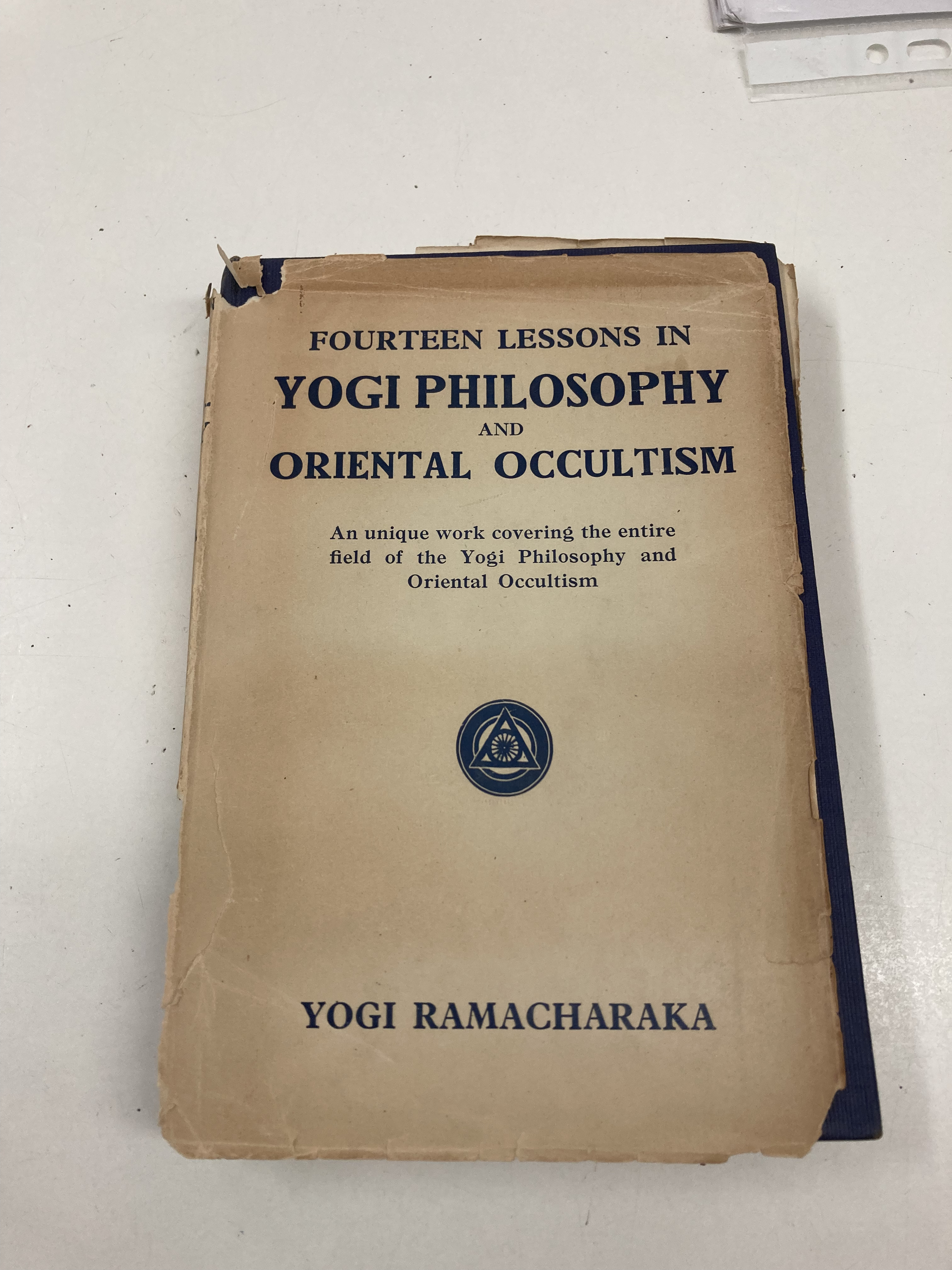
Someone rang to ask if we wanted some volumes published by the Haklyut Society and I said yes. 

I had seen a few before and know them to be nothing-if-not-niche history books. And worth putting online.

They came in in pristine condition and the donor admitted he had not read all of them from cover to cover.

Now, given that among the donation were three volumes of The Artic Whaling Journals of William Scoresby the Younger – I am not entirely surprised.

( Though I was surprised to note this must have been where Phillip Pullman got his name for the artic explorer Scoresby in his Northern Lights Trilogy. 

Are you keeping up?)

Now, if you were thinking, ‘Well, they’ll be sat on the shelves for a while.’ You are wrong, they had sold before I got back to the shop to take a photo for this blog and to prove I was telling the truth about them.

Anyway, there were also two volumes of Russian California.

So,

‘Sailors from the Russian Empire explored along the northern coast of California. In 1812, the Russian-American Company established a trading post and small fortification at Fort Ross on the North Coast.Fort Ross was primarily used to supply Russia’s Alaskan colonies with food supplies. The settlement did not meet much success, failing to attract settlers or establish long term trade viability, and was abandoned by 1841.’

I am not sure how you would get two volumes out of that but as the Haklyut Society publishes ‘scholarly editions of primary records of voyages and travels’ maybe there were more bored settling Russian sailors writing diaries than one might expect.

And they seem to be convinced that the Russians came earlier and left later than Wikipedia thought.

So, I can hear you asking, who was this Haklyut who inspired this society of arcane travel history books publishing society?

Well, first of all his name is pronounced Hak’loowt which I found good to know as I had been struggling with various alternatives.

No, not Dutch as you might think.

Born and bred in Herefordshire – that was a surprise (and indeed the area I grew up in, by coincidence.)

Their family taking their name from the ‘Forest of Cluid in Radnorland’ apparently.

Richard’s father was a dealer in furs and was a member of the Worshipful Company of (aptly-named) Skinners.

Richard had a good education, got ordained, was around in Elizabeth and James I’s court and the was a significant promoter of the colonisation of America and was the chief promoter of a petition for ‘letters patent’ to colonise Virginina.

So, now you are feeling a lot more educated on Haklyut than you were an hour ago. No, it is fine, don’t thank me.

Anyway, on the same day that the Haklyut books came in, our champion donations-sorter came upstairs with a map.

And there it is showing Alaska ‘owned’ by the Russians.

The map was printed in 1865, just two years before the Americans bought it for $7.2m dollars. See below.

Now I disappeared down a rabbit hole of the history of Russians in Alaska and below is a short summary of what I found out – but feel free to think that you might not need to have even a very short version of this corner of history.

By the time the sale treaty was signed, Russians had been in Alaska for 125 years.

In 1741, Vitus Bering (he of the straits fame) was spurred on/ordered by Peter The Great to find out what happened after the end of Siberia. 

One voyage failed but on the second one they found the edge of Alaska. Bering died of scurvy but his ship mates returned loaded up with skins of sea otters, foxes and seals – and whetted the fur-appetite of Russian dealers.

So, the Russians headed back to Alaska asap.

Alaska wasn’t empty of people. There were an estimated 100,000 native people living there.

There were some trading arrangements set up but relations were not great once the Russians started taking leaders’ children as hostages and using their more powerful weaponry, for example.

On the Aleutian Islands, again for example, a pre-Russian population of about 17,000 plummeted to 1,500 as a result of disease, capture or fighting.

And they brought over Russian Orthodox missionaries to do what missionaries tend to do. And, the most visible trace of the Russian colonial period in contemporary Alaska is the nearly 90 Russian Orthodox parishes with a membership of over 20,000 men, women, and children, almost exclusively indigenous people. 

In search of somewhere just a little bit more clement and less demanding that you were a very rugged man, the Russians headed south and set up a trading relationship with the Spanish and Fort Ross in 1812 – just 90 miles north of San Francisco Bay. 

Fort Ross in its early days

Russian Orthodox Church Fort Ross

But they were half a globe away from St Petersburg, it was tough, cold and 

By the middle of the 19th century, profits from Russia’s North American colonies were in steep decline. Competition with the British Hudson’s Bay Company had brought the sea otter to near extinction, while the population of bears, wolves, and foxes on land was also nearing depletion. Faced with the reality of periodic Native American revolts, the political ramifications of the Crimean War, and unable to fully colonise the Americas to their satisfaction, the Russians concluded that their North American colonies were too expensive to retain. Eager to release themselves of the burden, the Russians sold Fort Ross in 1842, and in 1867, after less than a month of negotiations, the United States accepted Emperor Alexander II‘s offer to sell Alaska. The purchase of Alaska for $7.2 million ended Imperial Russia’s colonial presence in the Americas.’ Wikipedia

So the wildlife and local people were killed off. And, of course, that is not just the prerogative of Russians. See also America, the British Empire and many, many others.

And one man’s ‘revolt’ is another person’s definition of fighting to reclaim their own land, customs, rights. 

Life Lessons

Recently I spent a weekend with my amazing niece and because we hadn’t seen each other for ages, I treated us to a lovely place in Derbyshire – and taught her another thing.

The place was the kind of pub with rooms that all pubs with rooms should be – nicely done rooms, great staff, very good food, a busy bar with walkers, family gatherings and a carpet of dogs.

So, we relished the comfy beds, she got a lot of use out of the roll top bath, and we ignored the rule that you can’t eat chips on consecutive days.

We successfully charity shopped – who knew that either of use needed a nest of 1960s plastic tables or a ski jacket when no skiing was on the horizon – mind you its cold up north.

The rest of this weekend is between me and my lovely niece – what we talked about, her extraordinarily thoughtful takes on issues personal and political, bigger breakfasts than we had planned, why we laughed, what she is thinking of doing, what made her eyes widen when I told her about my past. ( In my defence, she did ask.)

I’d like to claim that as her aunt I have taught her valuable stuff about how to live life, what I have learned and could pass on to her but actually it boils down to two things she has already taken to heart, and one which I taught her this weekend.

My niece is the only one of my nearest and dearest who does not need nagging into drinking enough water during the day. 

Water drinking is an aunt/niece badge of honour and we compare notes about how annoying it is to try and get people we care for to do more than take an occasional sip of the liquid of life.

Now, we can talk about that for a long time but we won’t bore the rest of you – except to say a pint of water – just that lovely stuff from the tap – would do you the power of good and no coffee/tea/coke/ginger beer is not the same thing. Actually.

It didn’t stop us drinking wine, but we did have large water chasers. Just saying.

The second life lesson I taught her was something I also taught her early on in life and another thing which has stuck.

There is something very good about a bacon sandwich made with pesto and a really good in season tomato.

So, before you sneer and reach for ketchup of brown sauce, give it a try.

You can toast the bread or not, up to you.

Butter on one slice, pesto on the other. Thinly sliced tomato, crispy bacon. And you are done.

The third lesson in life came this weekend when my amazing niece was shown, took it to her heart and relished, the delight of chips dipped in peppercorn sauce.

It would be great to be able to say that I had taught her to appreciate herself as much as I do, that I had given her life skills to navigate her way through life with an inner happiness, or a love of amazing challenges or just remembering me in a good way, but a couple of tasty ways to eat and appreciation of a large drink of water will have to do.

She will more than manage the rest of her life on her own.